
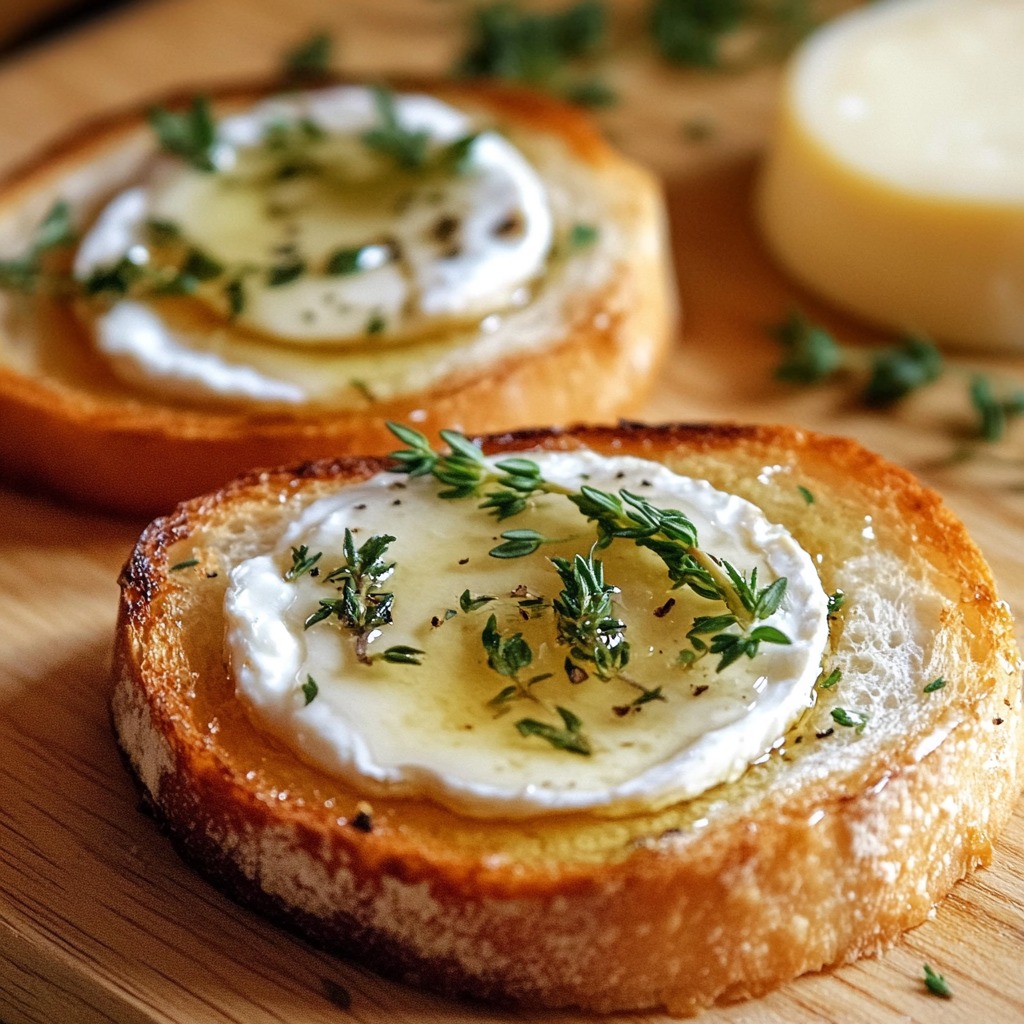
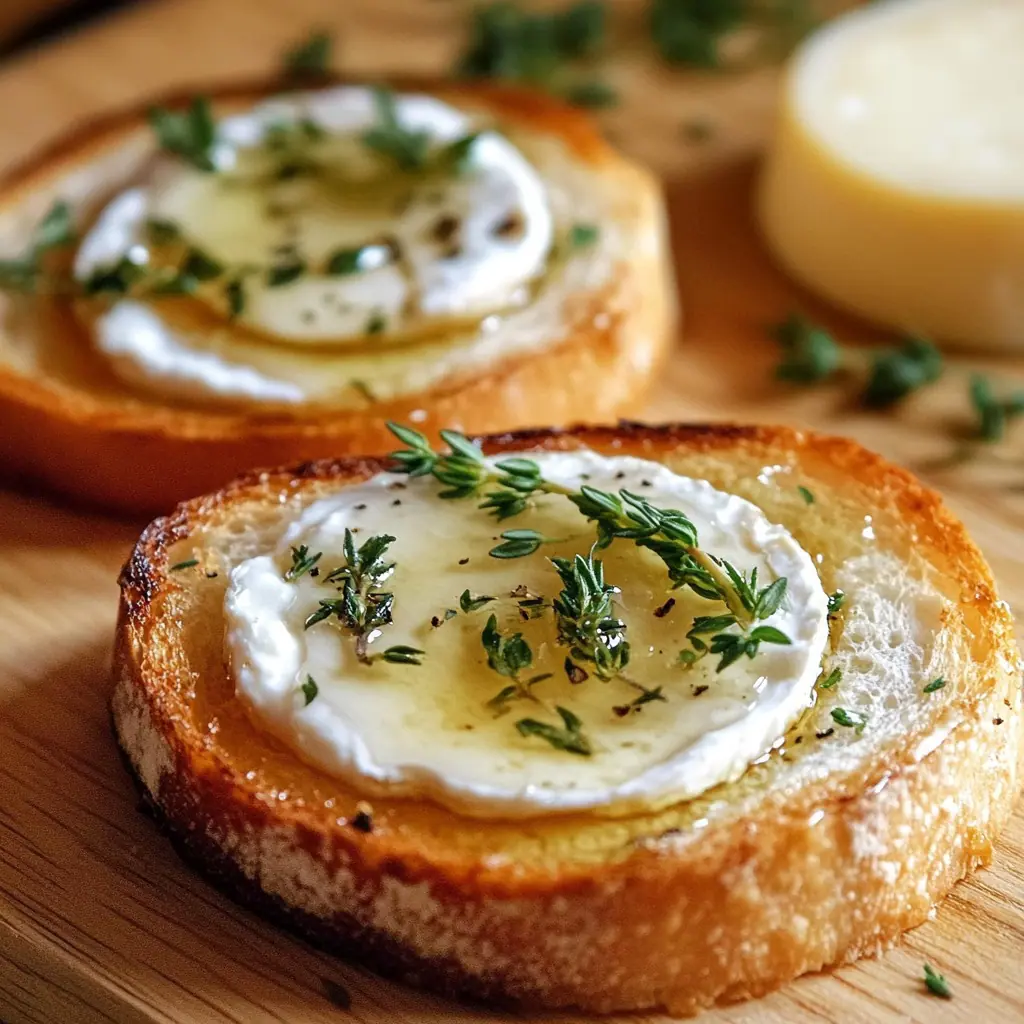
Some combinations in cooking are so harmonious that they have survived centuries unchanged — and the pairing of goat cheese, honey, and thyme is exactly that kind of timeless classic. These honey and thyme goat cheese toasts take 15 minutes from start to finish, require only three main ingredients, and consistently rank among the most requested appetizers at every gathering where they appear. Crisp baguette, creamy chèvre, fragrant honey, and aromatic thyme — simple, French, perfect.
The beauty of this recipe lies in how well these three elements understand each other. The goat cheese — tangy, creamy, slightly crumbly — provides the rich, dairy backbone. The honey — sweet, floral, slightly viscous — plays against the acidity of the cheese to create a sweet-tangy tension that keeps you reaching for the next piece. The fresh thyme — herbal, slightly piney, with a whisper of lemon — ties the two together and adds the aromatic complexity that transforms a two-ingredient snack into something genuinely sophisticated.
Why This Combination Never Fails
- The classic sweet-tangy tension: Honey and goat cheese is one of the most celebrated pairings in French aperitif culture. The acidity of the cheese sharpens the honey; the honey rounds the acidity of the cheese. They balance each other perfectly.
- Thyme as the bridge: Without thyme, this is just cheese and honey on toast. With it, the dish has an aromatic dimension and Mediterranean character that makes it feel complete and considered.
- Universal appeal: The mild, accessible flavor profile works for every guest — even those who claim to dislike goat cheese often enjoy this topping when it is balanced by honey.
- Effortless elegance: These toasts look carefully crafted, yet require nothing more than toasting bread and spreading cheese.
The Ingredients Explained
1 Baguette
A day-old baguette is ideal for this recipe — slightly drier bread toasts more evenly and achieves a better crunch than very fresh bread, which can remain soft in the center even after toasting. Cut the baguette at a slight diagonal to get oval slices with more surface area — they hold more topping and look more elegant. Aim for slices of about 1.5 to 2 cm thickness (approximately 3/4 inch). Brush each slice with a very thin coat of olive oil before toasting for a more even golden color and an additional layer of flavor.
If you want to be more precise, lay the slices on a baking sheet and toast them under the broiler for 2 to 3 minutes per side, watching carefully. Broiler toasting gives a more consistent golden color than a toaster. Alternatively, a grill pan creates attractive char marks that add a rustic, smoky dimension to the toast base.
200 g (7 oz) Fresh Goat Cheese (Chèvre)
Fresh French chèvre in a log shape is the most practical form for this recipe — it slices cleanly into rounds that sit perfectly on the toast. Use dental floss to cut the log into rounds of about 1 cm thickness for the cleanest, least crumbly cuts. If you only have crumbled goat cheese, let it come to room temperature and press it onto the toast — it will adhere well when slightly soft. The goat cheese should be applied generously — not a thin smear but a proper layer that stands slightly proud of the toast edge, creating a visible, satisfying mound of creamy cheese.
3 Tablespoons Honey and Fresh Thyme
For the honey, choose a variety with enough character to stand up to goat cheese: lavender honey from Provence, acacia with its delicate floral notes, chestnut honey for something more robust and complex, or wildflower for versatility. Avoid very mild or neutral honeys that disappear against the strong personality of the cheese. Apply the honey in a generous drizzle directly over the cheese — the heat of the toast will make it flow slightly into the cheese, which is exactly what you want.
Fresh thyme is strongly preferred over dried. Strip the tiny leaves from 4 to 5 stems and scatter them immediately over the honey and cheese while still warm. The warmth releases the thyme’s essential oils and makes the herb’s aroma bloom instantly — dried thyme cannot replicate this effect. If thyme is unavailable, fresh rosemary (very finely minced) or fresh oregano leaves are the closest substitutes.
Nutritional Value
Goat cheese is nutritionally superior to many other cheeses in several ways: it contains slightly fewer calories than cow’s milk cheese of similar texture, has a higher proportion of medium-chain fatty acids (easier for the body to metabolize), and is often better tolerated by those sensitive to cow’s milk proteins. It delivers protein, calcium, phosphorus, and vitamins A and B2. Honey contributes antioxidants, trace minerals, and antimicrobial properties. Thyme contains thymol, a natural antiseptic compound, as well as vitamin C, vitamin K, iron, and manganese. A serving of two to three toasts provides a balanced mix of protein, healthy fats, and complex carbohydrates.
Notes
Step-by-Step Method
Toast the Baguette
Preheat the broiler or a grill pan to medium-high heat. Slice the baguette diagonally into 1.5 cm rounds. Brush both sides lightly with olive oil. Toast until golden on both sides — about 2 to 3 minutes per side under the broiler, or 3 to 4 minutes per side on a grill pan. Watch carefully; bread goes from golden to burnt very quickly under a broiler. The toast should be completely crisp through — not just browned on the surface — so the topping does not make it soggy.
Top and Serve
While the toasts are still warm, place a round of goat cheese on each slice. Press gently so it adheres. Drizzle each with 1/2 teaspoon of honey — be generous. Scatter fresh thyme leaves immediately over the honey. If you want a warm, slightly melted cheese effect, return the topped toasts to the broiler for 60 to 90 seconds. The cheese will soften, the edges will begin to lightly brown, and the honey will bubble slightly. Serve immediately.
Variations Worth Trying
- Walnut and honey: Add a crushed walnut half on top of the honey for textural contrast and a nutty bitterness that pairs beautifully with both the cheese and honey.
- Fig jam version: Replace honey with a small dollop of fig jam — a slightly more complex, jammy sweetness that pairs equally well with chèvre.
- Caramelized onion base: Spread a thin layer of sweet caramelized onion on the toast before the goat cheese for a savory-sweet depth that transforms the entire bite.
- Prosciutto wrap: Drape a thin slice of prosciutto over the cheese before adding honey for a salty-sweet-creamy experience.
Wine Pairing
These toasts are practically designed to be served with wine. A glass of Sancerre or Pouilly-Fumé (both Loire Valley Sauvignon Blancs with natural affinity for goat cheese) is the classic pairing. A Viognier with its floral, stone-fruit character echoes the honey notes beautifully. If you prefer red, a light, low-tannin Pinot Noir from Burgundy or a Saumur-Champigny complements without overwhelming. For a sparkling option, a Crémant de Bourgogne or a good quality Cava both work superbly with the sweet-tangy profile of the topping.
Storage
These toasts are best assembled and eaten within 20 minutes of preparation. The toast will soften as the cheese and honey release moisture over time. If preparing for a large party, toast the bread up to 2 hours ahead (store uncovered at room temperature) and keep the goat cheese sliced and the honey measured, then assemble in batches as needed throughout the event. The thyme can be stripped from the stems up to 1 hour ahead.
Frequently Asked Questions
Can I use a different bread?
Absolutely. Sourdough rounds, rye crispbread, gluten-free crackers, or even walnut bread all work. Each base changes the character of the bite — walnut bread in particular is extraordinary with goat cheese and honey.
Can these be made in advance?
Assemble no more than 20 to 30 minutes before serving. The longer they sit, the softer the toast becomes. For parties, prepare all components ahead and assemble at the last moment.
Final Thoughts
Honey and thyme goat cheese toasts have earned their place at the top of the French aperitif canon. They are fast, beautiful, reliably delicious, and endlessly adaptable. Master the three-ingredient base version and you will have a recipe that serves you for life, at every gathering from casual weeknight wine to formal dinner party. Start simple. Start now.
