
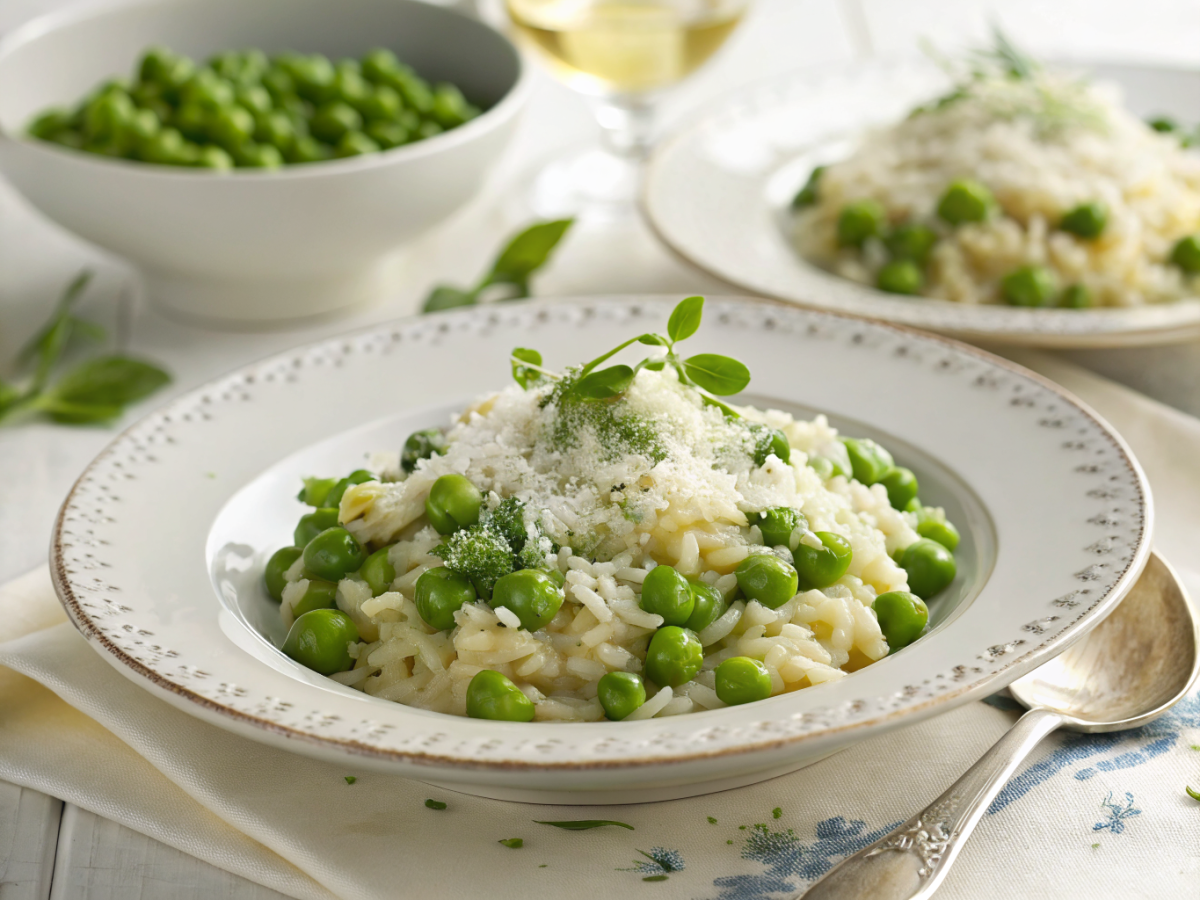
Spring Pea Risotto With Parmesan Everyone Will Ask You To Make Again
Ingredients
Method
- Heat the vegetable broth in a medium saucepan and keep it warm over low heat throughout the cooking process.
- In a large heavy-bottomed pan or Dutch oven, heat 2 tablespoons butter and olive oil over medium heat. Add the diced onion and cook for 4-5 minutes until softened and translucent. Add minced garlic and cook for another minute until fragrant.
- Add the Arborio rice to the pan and stir constantly for 2-3 minutes until the grains are lightly toasted and coated with the butter mixture. The edges should become slightly translucent.
- Pour in the white wine and stir continuously until the wine is almost completely absorbed by the rice, about 2 minutes.
- Add the warm broth one ladle at a time, stirring frequently and allowing each addition to be absorbed before adding the next. Continue this process for about 18-20 minutes until the rice is creamy and tender but still has a slight bite.
- When the rice is almost done, stir in the peas and cook for 2-3 minutes until they are tender and bright green. Remove from heat.
- Stir in the remaining tablespoon of butter and the grated Parmesan cheese. Season with salt and pepper to taste. Let rest for 2 minutes, then serve immediately with extra Parmesan on top.
Nutrition
Notes
Tried this recipe?
Let us know how it was!Spring Pea Risotto With Parmesan: 5 Easy Tips for Perfect Results
Making the perfect risotto doesn’t have to be intimidating. The key to achieving that signature creamy texture lies in patience and proper technique. With just a few simple guidelines, you’ll master this classic Italian dish in no time.
First, always use warm broth when adding liquid to your rice. Cold liquid shocks the rice and interrupts the cooking process, preventing proper starch release. Keep your vegetable or chicken broth simmering in a separate pot throughout the cooking process.
Second, stir frequently but not constantly. Stirring helps release the starches that create risotto’s signature creaminess, but over-stirring can make the rice gummy. Aim for a gentle stir every 30 seconds to one minute.
Third, add your broth gradually, one ladle at a time. Wait until each addition is almost completely absorbed before adding more liquid. This gradual process allows the rice to cook evenly and develop its characteristic texture.
Fourth, don’t skip the final step of adding cold butter and extra Parmesan off the heat. This technique, called “mantecatura” in Italian, creates an incredibly silky, luxurious finish. The cold butter emulsifies with the starchy liquid, binding everything together beautifully.
Fifth, serve immediately for the best texture and flavor. Risotto waits for no one – it continues to absorb liquid as it sits, becoming thicker and less creamy over time. Have your guests seated and ready when you’re finishing the dish.
Why You’ll Love This Spring Pea Risotto With Parmesan
This risotto celebrates seasonal ingredients at their peak freshness. Sweet spring peas burst with natural sweetness that pairs beautifully with the savory, umami-rich Parmesan cheese. The bright green color makes this dish as visually stunning as it is delicious.
The cooking process itself is surprisingly meditative and rewarding. While risotto has a reputation for being fussy, the rhythmic stirring and gradual addition of broth creates a calming kitchen experience. You’ll find yourself looking forward to making this dish again and again.
This recipe is incredibly versatile and adapts well to dietary preferences. You can easily make it vegetarian by using vegetable broth, or add protein like grilled chicken or shrimp for a heartier meal. The base technique remains the same regardless of your modifications.
The combination of textures is absolutely divine. Creamy rice surrounds tender peas, while crispy Parmesan shavings on top add a delightful contrast. Each spoonful offers multiple layers of flavor and mouthfeel that keep you coming back for more.
Unlike many elaborate dishes, this risotto requires relatively few ingredients. You likely have most of what you need in your pantry already. The simplicity of the ingredient list allows each component to shine without overwhelming complexity.
Core Ingredients for Spring Pea Risotto With Parmesan
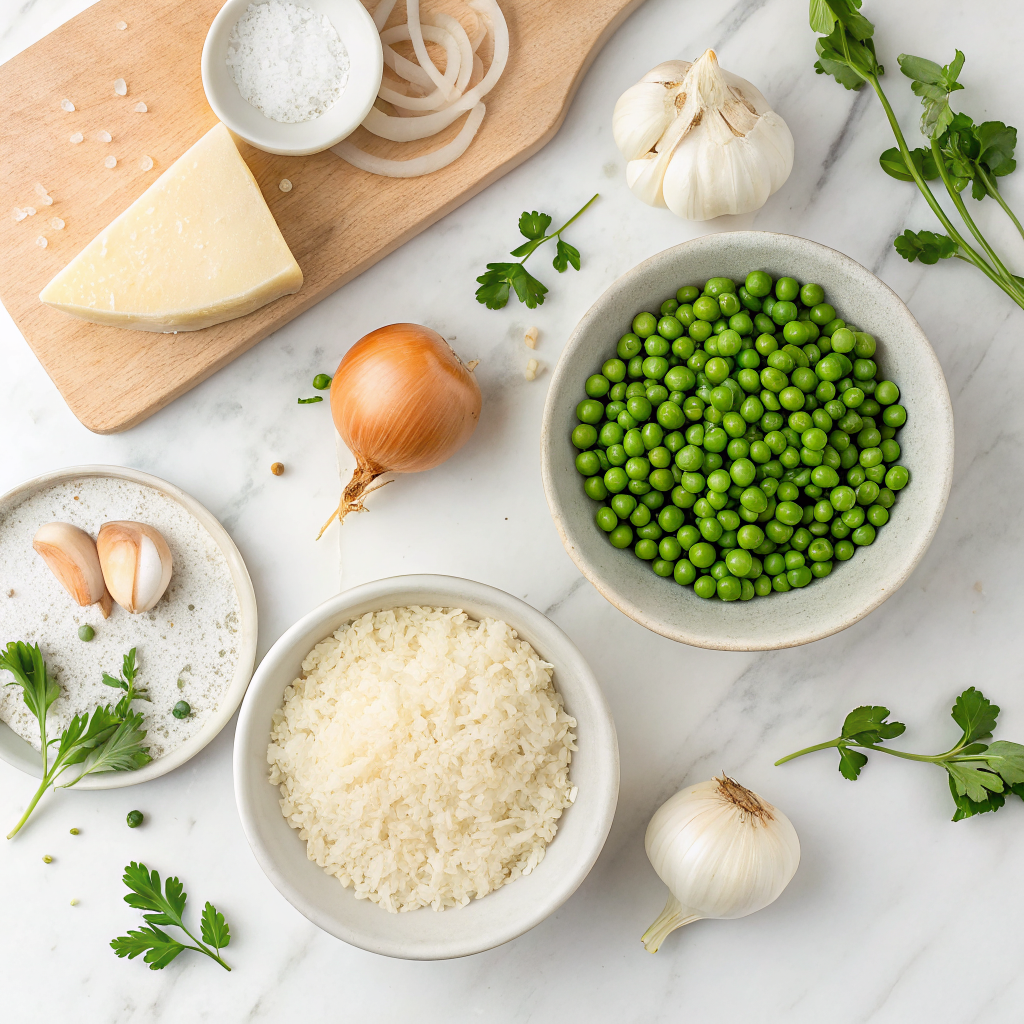
Arborio rice forms the foundation of any great risotto. This short-grain Italian rice contains high levels of amylopectin starch, which creates the characteristic creamy texture when released during cooking. Look for high-quality Arborio rice at your local grocery store or Italian market.
Fresh or frozen peas work beautifully in this recipe. Spring peas are ideal when in season, offering unmatched sweetness and tenderness. Frozen peas are an excellent alternative year-round, as they’re flash-frozen at peak ripeness to preserve their flavor and nutrients.
Authentic Parmigiano-Reggiano cheese makes a significant difference in the final dish. This aged Italian cheese brings complex, nutty flavors that complement the sweet peas perfectly. Grate it fresh just before using for the best flavor and texture.
Quality broth is essential for building flavor throughout the cooking process. Homemade vegetable or chicken broth provides the richest taste, but store-bought options work well too. Choose low-sodium varieties so you can control the salt level in your finished dish.
Dry white wine adds acidity and depth to the risotto. A crisp Pinot Grigio or Sauvignon Blanc works wonderfully, cutting through the richness of the cheese and butter. Use a wine you’d enjoy drinking, as the quality directly impacts your dish’s flavor.
Unsalted butter and good olive oil provide richness and help create that luxurious, velvety texture. Use European-style butter with higher fat content if possible. Extra virgin olive oil adds fruity notes that enhance the overall flavor profile.
Fresh aromatics like shallots and garlic form the flavor base. Shallots offer a milder, sweeter taste than onions, making them perfect for delicate risotto. Mince them finely so they melt into the dish, providing flavor without overwhelming texture.
Fresh herbs like mint, basil, or parsley brighten the finished dish. A handful of chopped herbs stirred in at the end adds freshness and visual appeal. Choose herbs that complement spring flavors and enhance the natural sweetness of the peas.
How to Make Spring Pea Risotto With Parmesan: Step-by-Step
Begin by preparing your mise en place, gathering all ingredients and equipment before you start cooking. Heat your broth in a separate saucepan and keep it warm over low heat throughout the cooking process. Measure out your rice, grate your cheese, and have everything within easy reach.
Heat two tablespoons of olive oil and one tablespoon of butter in a large, heavy-bottomed pan over medium heat. Add finely minced shallots and cook for 2-3 minutes until softened and translucent but not browned. Add minced garlic and cook for another 30 seconds until fragrant.
Add the Arborio rice to the pan and toast it for 2-3 minutes, stirring constantly. The grains should become slightly translucent around the edges while remaining white in the center. This toasting step adds a subtle nutty flavor and helps the rice maintain its shape during cooking.
Pour in half a cup of white wine and stir until it’s almost completely absorbed. The wine will sizzle and steam as it hits the hot pan, deglazing any flavorful bits stuck to the bottom. This step adds acidity that balances the richness of the cheese and butter.
Begin adding warm broth one ladle at a time, stirring frequently. Wait until each addition is almost completely absorbed before adding the next ladle. This process typically takes 18-22 minutes, and you’ll use about 4-5 cups of broth total.
After about 15 minutes of cooking, when the rice is nearly tender, stir in your peas. Fresh peas need only 3-4 minutes to cook, while frozen peas need just 2-3 minutes. Adding them toward the end preserves their bright color and sweet flavor.
Taste the rice to check for doneness – it should be tender with a slight bite in the center. The consistency should be loose and flowing, not thick or stiff. If needed, add a bit more broth to achieve the proper texture.
Remove the pan from heat and vigorously stir in cold butter and freshly grated Parmesan. This final step creates an emulsion that makes the risotto incredibly creamy and luxurious. Stir energetically for 30-60 seconds until everything is fully incorporated.
Season with salt and freshly ground black pepper to taste. Remember that Parmesan is salty, so taste before adding additional salt. Stir in fresh herbs if using, reserving some for garnish on top.
Serve immediately in warm bowls, topped with extra Parmesan shavings, a drizzle of good olive oil, and fresh herbs. The risotto should flow slightly when spooned onto the plate, creating a creamy pool. Enjoy while hot for the best texture and flavor.
Nutrition & Health Benefits
Spring peas are nutritional powerhouses packed with vitamins, minerals, and fiber. They’re an excellent source of vitamin K, which supports bone health and proper blood clotting. Peas also provide vitamin C, boosting immune function and acting as a powerful antioxidant in the body.
The protein content in peas makes this dish more satisfying than many other rice-based meals. Combined with the protein from Parmesan cheese, this risotto provides a decent amount of plant-based and dairy protein. This combination helps keep you full and satisfied for hours after eating.
Arborio rice provides complex carbohydrates that offer sustained energy throughout the day. Unlike refined grains, the starch in Arborio rice releases slowly, preventing rapid blood sugar spikes. This makes risotto a more balanced option for maintaining steady energy levels.
Parmesan cheese contributes calcium for strong bones and teeth. It’s also rich in phosphorus, which works alongside calcium to support skeletal health. The aged nature of Parmesan means it’s naturally lower in lactose, making it easier to digest for some people.
The olive oil in this recipe provides heart-healthy monounsaturated fats. These beneficial fats help reduce inflammation and support cardiovascular health. Extra virgin olive oil also contains polyphenols, powerful antioxidants that protect cells from damage.
One serving of this risotto contains approximately 350-400 calories, depending on portion size and exact ingredients used. It provides a balanced mix of carbohydrates, protein, and healthy fats. For more information on balanced meals, check out these dinner recipes that focus on nutrition and flavor.
Variations & Substitutions
Transform this recipe into a protein-packed meal by adding grilled chicken, sautéed shrimp, or pan-seared scallops. Add the cooked protein at the very end, stirring it gently into the finished risotto. This creates a complete one-dish meal perfect for satisfying larger appetites.
Experiment with different vegetables to suit the seasons or your preferences. Asparagus, zucchini, and spinach all work beautifully in place of or alongside the peas. Cut vegetables into small, uniform pieces so they cook evenly with the rice.
Make this recipe vegan by substituting nutritional yeast and cashew cream for the Parmesan and butter. Use vegetable broth and add a splash of lemon juice at the end for brightness. The texture won’t be identical, but you’ll still achieve a creamy, flavorful dish.
Try using different cheeses for varied flavor profiles. Pecorino Romano offers a sharper, saltier taste, while Grana Padano provides a milder, sweeter flavor. Goat cheese or mascarpone stirred in at the end creates an ultra-creamy, tangy variation.
Add lemon zest and juice for a brighter, more refreshing version. The citrus cuts through the richness and enhances the spring flavors beautifully. Add the zest with the peas and stir in fresh lemon juice just before serving.
Incorporate crispy pancetta or prosciutto for a savory, meaty element. Cook the pancetta first and use the rendered fat to sauté your aromatics. Crumble the crispy pieces on top as a garnish for added texture and flavor.
For a lighter version, reduce the butter and cheese slightly and increase the fresh herbs. This creates a brighter, less heavy dish while maintaining good flavor. The risotto will be slightly less creamy but still delicious and satisfying.
Serving Suggestions
Serve this risotto as an elegant first course for a multi-course Italian dinner. Portion it into small bowls or plates, allowing 3/4 to 1 cup per person as an appetizer. Follow with a light protein and salad for a well-balanced, restaurant-style meal.
Pair this dish with a crisp white wine that complements its creamy richness. A Pinot Grigio, Vermentino, or Soave works wonderfully, offering acidity that cuts through the butter and cheese. Serve the wine slightly chilled for the most refreshing experience.
Create a complete meal by serving the risotto alongside grilled or roasted proteins. Pan-seared salmon, herb-crusted chicken breast, or grilled lamb chops all pair beautifully with this creamy rice dish. The risotto serves as both starch and vegetable side in one convenient preparation.
Add a simple arugula salad dressed with lemon vinaigrette for freshness and contrast. The peppery greens and bright citrus dressing balance the rich, creamy risotto perfectly. Toss the salad just before serving to maintain crisp, fresh leaves.
Garnish creatively to elevate the presentation and add textural interest. Crispy fried sage leaves, toasted pine nuts, or microgreens make beautiful, flavorful toppings. A drizzle of high-quality olive oil and freshly cracked black pepper add the finishing touch.
For casual entertaining, serve the risotto family-style in a large, warm serving bowl. Let guests help themselves, passing around extra Parmesan and fresh herbs at the table. This creates a warm, convivial atmosphere perfect for relaxed gatherings.
Common Mistakes to Avoid
Never rinse your Arborio rice before cooking, as this washes away the surface starch needed for creaminess. The starch is what creates risotto’s signature texture, so you want to preserve every bit of it. Simply measure your rice directly from the package into the pan.
Avoid adding all the broth at once, which results in boiled rice rather than proper risotto. The gradual addition allows the rice to release starch slowly, creating that creamy consistency. Patience is truly the secret ingredient in perfect risotto.
Don’t use cold broth, which slows down the cooking process and creates uneven results. Keep your broth at a gentle simmer throughout cooking so each addition maintains the pan’s temperature. This ensures consistent cooking and proper starch release.
Resist the urge to walk away from the stove for extended periods. While you don’t need to stir constantly, regular attention prevents sticking and ensures even cooking. Set a timer to remind yourself to check and stir every minute or so.
Don’t overcook the peas, which causes them to lose their vibrant color and sweet flavor. Add them near the end of cooking and watch them carefully. Overcooked peas turn dull and mushy, detracting from the dish’s visual appeal and taste.
Avoid making risotto too far in advance, as it doesn’t reheat well. The rice continues absorbing liquid as it sits, becoming thick and gluey. If you must prepare ahead, undercook slightly and finish with extra broth when reheating.
Don’t skimp on the final addition of butter and cheese, which creates the luxurious finish. This step, though it seems indulgent, is essential for authentic texture and flavor. The cold butter creates an emulsion that makes the risotto silky and cohesive.
Storage & Meal Prep Tips
Store leftover risotto in an airtight container in the refrigerator for up to three days. Press plastic wrap directly onto the surface before sealing to prevent a skin from forming. Let it cool to room temperature before refrigerating to maintain the best texture.
Reheat risotto gently on the stovetop with additional broth or water. Add liquid gradually, stirring frequently, until the risotto returns to a creamy consistency. Avoid microwaving if possible, as it can create hot spots and uneven texture.
Transform leftover risotto into crispy arancini or risotto cakes for a delicious second meal. Form the cold risotto into balls or patties, coat in breadcrumbs, and fry until golden. These make excellent appetizers or light lunches with a side salad.
Prep ingredients ahead to streamline the cooking process when you’re ready to make the dish. Grate cheese, chop aromatics, and measure rice in advance. Store prepped ingredients in separate containers in the refrigerator until cooking time.
Freeze leftover risotto in individual portions for quick future meals. Spread it flat in freezer bags, removing as much air as possible before sealing. Frozen risotto keeps for up to two months and reheats reasonably well with added liquid.
Consider making a larger batch of risotto base without the peas and cheese. Cook the rice with aromatics and broth, then cool and refrigerate. When ready to serve, reheat with additional broth and finish with fresh peas and cheese for better results.
For meal prep purposes, prepare components separately and combine when serving. Cook the rice base, blanch peas, and grate cheese ahead of time. This allows you to assemble fresh risotto quickly on busy weeknights while maintaining quality.
Final Thoughts on Spring Pea Risotto With Parmesan
This Spring Pea Risotto With Parmesan proves that simple ingredients, when treated with care and proper technique, create extraordinary results. The combination of creamy rice, sweet peas, and nutty cheese delivers comfort and elegance in equal measure. Whether you’re cooking for family or entertaining guests, this dish never fails to impress.
The meditative process of making risotto offers a welcome break from hectic daily routines. Standing at the stove, stirring rhythmically, and watching the dish come together provides a sense of accomplishment and calm. The reward at the end makes every minute of attention worthwhile.
Don’t be intimidated by risotto’s reputation for being difficult or fussy. With these tips and techniques, you’ll master this classic dish quickly and gain confidence in your cooking abilities. Each time you make it, you’ll discover new nuances and develop your own personal touches.
This recipe celebrates the best of spring produce while remaining accessible year-round with frozen peas. It’s a dish that connects us to Italian culinary traditions while allowing for creative personal expression. Make it your own by experimenting with the variations and finding your favorite combination.
For more delicious meal ideas, explore our collection of quick and easy meals that bring restaurant-quality results to your home kitchen. Whether you’re seeking weeknight dinners or special occasion dishes, you’ll find inspiration for every cooking adventure. Happy cooking!
Frequently Asked Questions
Can I make Spring Pea Risotto With Parmesan ahead of time?
While risotto is best served immediately, you can prepare components ahead and finish the dish just before serving. Cook the rice base until nearly done, then cool and refrigerate. When ready to serve, reheat gently with additional broth, then add peas, butter, and Parmesan for the freshest results.
What’s the best rice substitute if I don’t have Arborio?
Carnaroli or Vialone Nano rice are excellent Italian alternatives that create similar creamy textures. These short-grain varieties contain high starch content like Arborio. Avoid long-grain rice like basmati or jasmine, as they won’t produce the characteristic creaminess that makes Spring Pea Risotto With Parmesan so special.
How do I know when my risotto is done?
Properly cooked risotto should have rice grains that are tender with a slight firmness in the center, known as “al dente.” The consistency should be loose and flowing, not thick or stiff – Italians describe it as “all’onda” or wave-like. Taste several grains to ensure even cooking throughout the dish.
Can I use frozen peas instead of fresh?
Absolutely! Frozen peas work beautifully in this recipe and are often sweeter than fresh peas since they’re frozen at peak ripeness. Add them directly from frozen during the last 2-3 minutes of cooking. There’s no need to thaw them first, and they’ll heat through quickly while maintaining their bright color and sweet flavor.
