
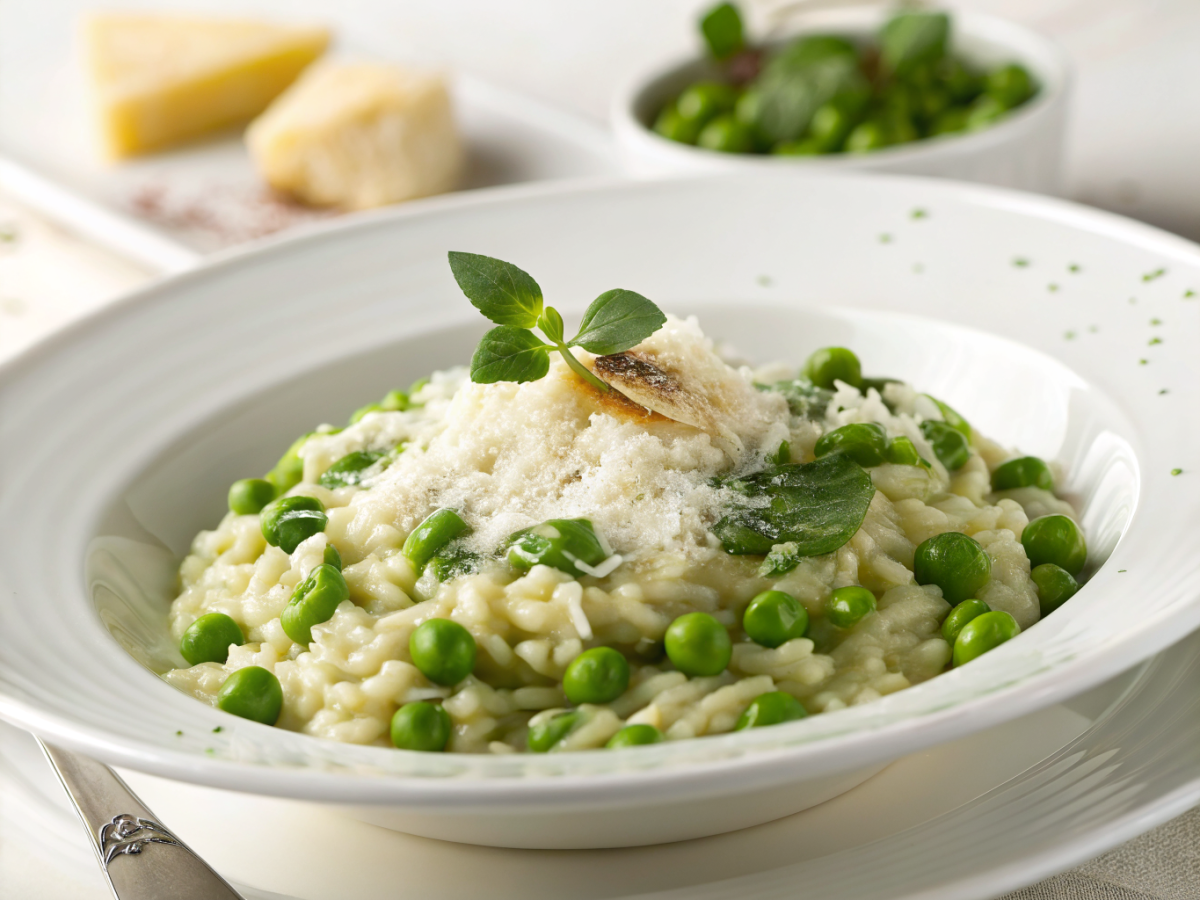
Spring Pea Risotto With Parmesan Everyone Will Ask You To Make Again
Ingredients
Method
- Heat the vegetable broth in a medium saucepan and keep it warm over low heat throughout the cooking process.
- In a large heavy-bottomed pan or Dutch oven, heat the olive oil over medium heat. Add the diced onion and cook for 3-4 minutes until softened and translucent, stirring occasionally.
- Add the arborio rice to the pan and stir constantly for 2 minutes until the grains are well coated with oil and slightly toasted around the edges.
- Pour in the white wine and stir continuously until the wine is almost completely absorbed by the rice, about 2-3 minutes.
- Begin adding the warm broth one ladle at a time, stirring frequently. Wait until each addition is almost completely absorbed before adding the next ladle. Continue this process for about 18-20 minutes until the rice is creamy and tender but still has a slight bite.
- When the rice is almost done, stir in the peas and cook for an additional 3-4 minutes until the peas are tender and heated through.
- Remove from heat and stir in the butter and Parmesan cheese until melted and creamy. Season with salt and pepper to taste. Serve immediately with extra Parmesan on top if desired.
Notes
Spring Pea Risotto With Parmesan: 5 Easy Tips for Perfect Results
Creating the perfect risotto requires attention to detail, but these five essential tips will guide you toward success every time. The key lies in understanding how Arborio rice releases its starches to create that signature creamy texture without any heavy cream. Mastering these fundamentals transforms a simple rice dish into an unforgettable culinary experience.
First, always use warm broth when making risotto to maintain consistent cooking temperature throughout the process. Adding cold liquid to hot rice causes temperature fluctuations that result in uneven cooking and a less creamy final product. Keep your vegetable or chicken broth simmering in a separate pot on the stove while you prepare your risotto.
Second, stir frequently but not constantly—about every 30 seconds allows the rice to release starch while preventing it from sticking to the pan. This rhythmic stirring creates the creamy consistency risotto is famous for without turning the rice mushy. The gentle agitation encourages starch release while maintaining the rice’s al dente texture at its core.
Third, add your broth one ladle at a time and wait until it’s almost completely absorbed before adding more liquid. This gradual addition method allows the rice to slowly release its starches and absorb maximum flavor from the broth. Rushing this process by adding too much liquid at once results in soupy, undercooked rice.
Fourth, toast your Arborio rice in butter or olive oil before adding any liquid to enhance its nutty flavor and help each grain maintain its shape. This crucial step takes just two to three minutes but makes a remarkable difference in the final dish’s taste and texture. You’ll know the rice is properly toasted when it becomes slightly translucent around the edges.
Fifth, finish your risotto off the heat with cold butter and freshly grated Parmesan cheese to create an ultra-creamy, glossy texture known as “mantecatura” in Italian cooking. This final enrichment brings all the flavors together and adds luxurious richness without overwhelming the delicate pea flavor. The residual heat gently melts the cheese and butter into a silky, cohesive sauce.
Why You’ll Love This Spring Pea Risotto With Parmesan
This recipe celebrates the arrival of spring with fresh, vibrant ingredients that awaken your palate after months of hearty winter meals. The natural sweetness of spring peas pairs beautifully with the savory depth of aged Parmesan cheese, creating a balanced flavor profile that appeals to both adults and children. It’s an impressive dish that looks and tastes like it came from an upscale Italian restaurant.
Unlike many complicated recipes, this risotto comes together in about 30 minutes from start to finish, making it perfect for busy weeknight dinners. You don’t need any special equipment beyond a heavy-bottomed pot and a wooden spoon to achieve professional results. The hands-on cooking process is actually quite meditative and therapeutic after a long day.
The versatility of this dish makes it suitable for various occasions, from casual family dinners to elegant dinner parties. Serve it as a main course for vegetarians or as a sophisticated side dish alongside roasted chicken or grilled fish. The beautiful green color from the peas makes it visually stunning on any table setting.
This risotto is also incredibly adaptable to what you have available in your kitchen or at the market. Fresh or frozen peas work equally well, making this recipe accessible year-round even when fresh spring peas aren’t in season. You can adjust the consistency to your preference, making it slightly looser for a more traditional Italian style or thicker if you prefer.
The nutritional benefits add another reason to love this dish, as peas provide protein, fiber, and essential vitamins while the Parmesan contributes calcium and additional protein. Unlike cream-heavy risottos, this version gets its luxurious texture from proper technique and cheese alone, keeping it relatively light. It’s a satisfying meal that won’t leave you feeling overly full or sluggish.
Core Ingredients for Spring Pea Risotto With Parmesan
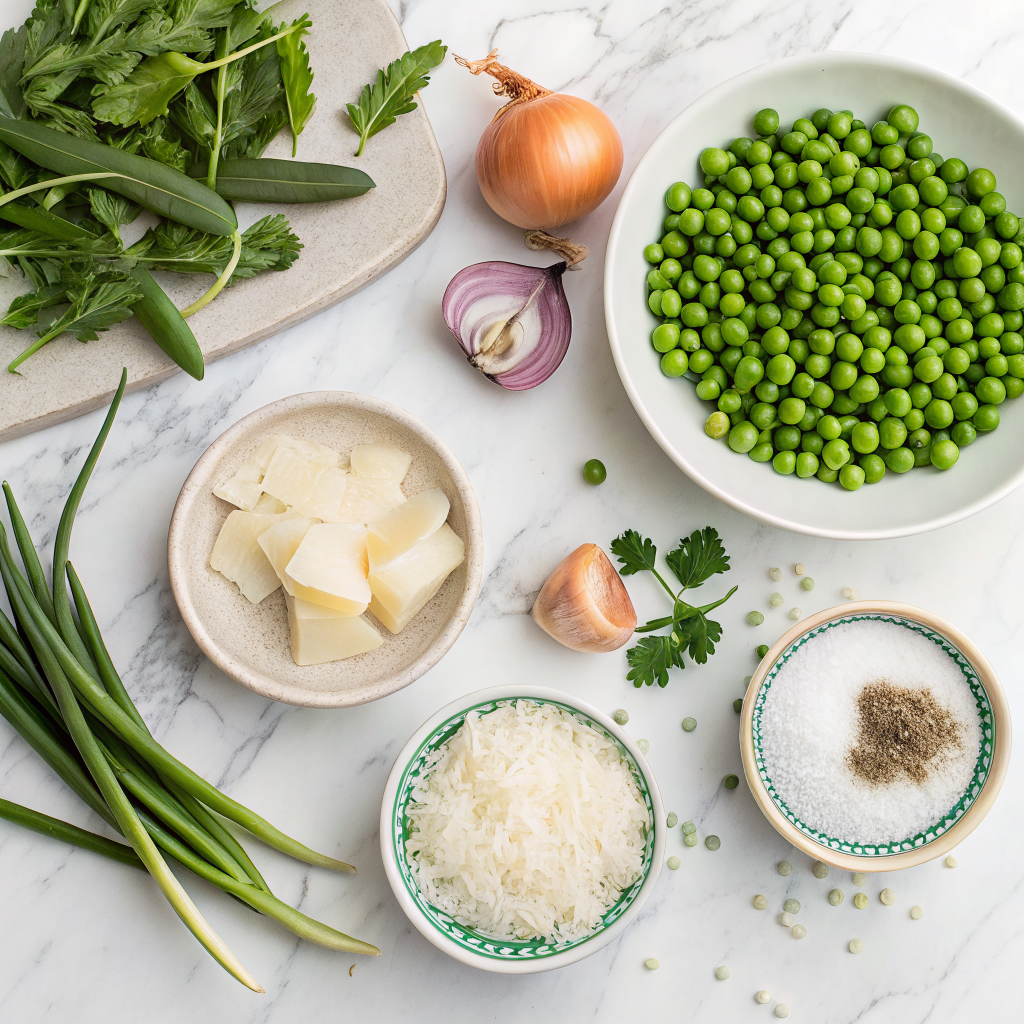
The foundation of exceptional risotto starts with Arborio rice, a short-grain Italian rice variety with high starch content that creates the dish’s signature creaminess. Look for authentic Italian Arborio rice at your grocery store, though Carnaroli or Vialone Nano rice also work beautifully. Avoid using long-grain rice varieties like basmati or jasmine, as they won’t produce the proper creamy texture.
Fresh or frozen spring peas provide the star ingredient that gives this risotto its vibrant color and sweet flavor. If using fresh peas, you’ll need about 1½ cups shelled from approximately 1½ pounds of pea pods. Frozen peas are an excellent alternative and often more convenient, requiring no shelling and available year-round with consistent quality.
Parmesan cheese must be authentic Parmigiano-Reggiano for the best flavor and texture in your risotto. Buy a wedge and grate it fresh yourself rather than using pre-grated cheese, which contains anti-caking agents that prevent smooth melting. You’ll need about 1 cup of freshly grated cheese, divided between stirring into the risotto and garnishing the finished dish.
Vegetable or chicken broth forms the cooking liquid that the rice gradually absorbs, infusing it with flavor throughout the cooking process. Homemade broth delivers superior taste, but high-quality store-bought broth works perfectly fine for weeknight cooking. You’ll need approximately 5 to 6 cups of broth kept warm in a separate pot on the stove.
Shallots and garlic provide aromatic depth that enhances the overall flavor profile without overpowering the delicate pea taste. One large shallot finely minced and two cloves of garlic create the perfect aromatic base. These aromatics are sautéed in butter or olive oil before adding the rice for maximum flavor development.
Dry white wine adds acidity and complexity that balances the richness of the butter and cheese in the finished dish. Choose a wine you’d enjoy drinking, such as Pinot Grigio, Sauvignon Blanc, or a dry Vermouth. About ½ cup of wine is added after toasting the rice and before beginning to add the broth.
Butter and olive oil work together to create richness and prevent burning during the initial sautéing stage. Use unsalted butter so you can control the salt level in your dish, and choose a good-quality extra virgin olive oil for the best flavor. You’ll need about 3 tablespoons of butter total and 2 tablespoons of olive oil.
Additional ingredients include fresh herbs like mint, basil, or parsley for brightness, lemon zest for a citrusy lift, and salt and pepper for seasoning. These finishing touches add layers of flavor that elevate your risotto from good to extraordinary. Fresh herbs should be added at the very end to preserve their vibrant color and fresh taste.
How to Make Spring Pea Risotto With Parmesan: Step-by-Step
Step 1: Prepare Your Ingredients and Equipment. Begin by gathering all your ingredients and measuring them out before you start cooking, a practice known as mise en place. Finely mince your shallot and garlic, grate your Parmesan cheese, and measure out your rice and peas. Have your warm broth ready in a pot on the stove with a ladle nearby for easy addition.
Step 2: Sauté the Aromatics. Heat 2 tablespoons of olive oil and 1 tablespoon of butter in a large, heavy-bottomed pot or Dutch oven over medium heat. Add the minced shallot and cook for 2-3 minutes until softened and translucent but not browned. Stir in the garlic and cook for another 30 seconds until fragrant, being careful not to let it burn.
Step 3: Toast the Rice. Add 1½ cups of Arborio rice to the pot and stir constantly for 2-3 minutes until the grains become slightly translucent around the edges. This toasting process is crucial for developing flavor and helping the rice maintain its shape during cooking. You should hear a gentle clicking sound as you stir the rice against the bottom of the pot.
Step 4: Add the Wine. Pour in ½ cup of dry white wine and stir constantly until the wine is almost completely absorbed by the rice. The alcohol will evaporate during this process, leaving behind acidity and flavor complexity. This step takes about 2 minutes and marks the beginning of the gradual liquid addition process.
Step 5: Begin Adding Broth. Add one ladle (about ¾ cup) of warm broth to the rice and stir frequently until the liquid is almost completely absorbed. Continue this process, adding one ladle of broth at a time and stirring regularly, for about 18-20 minutes. The rice should be tender but still have a slight firmness in the center when you bite into a grain.
Step 6: Prepare the Peas. While the risotto cooks, blanch your fresh peas in boiling salted water for 2 minutes, then drain and shock them in ice water to preserve their bright green color. If using frozen peas, simply thaw them under warm running water. Reserve about ½ cup of peas for pureeing and keep the rest whole for texture contrast.
Step 7: Create the Pea Puree. Blend the reserved ½ cup of peas with 2-3 tablespoons of warm broth until smooth and vibrant green. This puree will be stirred into the risotto at the end to intensify the pea flavor and create a beautiful green hue throughout the dish. You can use a blender, food processor, or immersion blender for this step.
Step 8: Finish the Risotto. When the rice is tender but still al dente, remove the pot from heat and vigorously stir in 2 tablespoons of cold butter, ¾ cup of grated Parmesan, the pea puree, and the whole peas. This final step, called mantecatura, creates the creamy, glossy texture that defines perfect risotto. Taste and adjust seasoning with salt and pepper as needed.
Step 9: Rest and Serve. Let the risotto rest for 1-2 minutes to allow the flavors to meld and the consistency to settle slightly. The finished risotto should flow slowly when you tilt the pot, with a consistency similar to thick soup. Serve immediately in warm bowls, garnished with additional Parmesan, fresh herbs, and a drizzle of good olive oil.
Nutrition & Health Benefits
Spring peas are nutritional powerhouses packed with vitamins A, C, and K, along with essential minerals like iron, magnesium, and potassium. One cup of peas provides approximately 8 grams of protein and 7 grams of fiber, making them an excellent plant-based protein source. These nutrients support immune function, bone health, and digestive wellness while keeping you satisfied longer after eating.
The dinner recipes featuring whole grains like Arborio rice provide complex carbohydrates that offer sustained energy without the blood sugar spikes associated with refined grains. Arborio rice contains B vitamins that support metabolism and nervous system function. The resistant starch in properly cooked rice may also support gut health by feeding beneficial bacteria.
Parmesan cheese contributes high-quality protein, calcium, and phosphorus essential for strong bones and teeth throughout life. Despite being a cheese, Parmesan is relatively low in lactose, making it easier to digest for those with mild lactose sensitivity. The umami-rich flavor means a little goes a long way, allowing you to add significant taste without excessive calories.
This risotto provides a balanced macronutrient profile with carbohydrates from the rice, protein from the peas and cheese, and healthy fats from the olive oil and butter. One serving contains approximately 350-400 calories, making it a reasonable main course option for most dietary plans. The dish is naturally vegetarian and can be made gluten-free since rice contains no gluten.
The fresh herbs often added as garnish provide antioxidants and anti-inflammatory compounds that support overall health. Mint aids digestion, basil has antibacterial properties, and parsley is rich in vitamin K and antioxidants. These herbs add nutritional value alongside their flavor contributions to the finished dish.
Variations & Substitutions
Create a lemon-herb variation by adding the zest of one lemon and a handful of fresh mint or basil to the finished risotto. The bright citrus notes complement the sweet peas beautifully and add a refreshing element perfect for warm spring evenings. Finish with a squeeze of fresh lemon juice just before serving to enhance the citrus flavor even more.
For a protein-boosted version, stir in cooked shrimp, grilled chicken, or pan-seared scallops during the final minutes of cooking. These additions transform the risotto from a side dish into a complete, protein-rich meal. The delicate flavors of seafood pair especially well with the sweet peas and don’t overpower the dish’s springtime character.
Try an asparagus and pea combination by adding blanched asparagus pieces along with the peas for even more spring vegetable goodness. Cut the asparagus into 1-inch pieces and blanch them for 2-3 minutes until tender-crisp. This variation adds textural interest and doubles down on the seasonal vegetable theme.
Make it dairy-free by substituting nutritional yeast for Parmesan cheese and using olive oil instead of butter for the final enrichment. While the texture won’t be quite as creamy, you’ll still achieve delicious results with concentrated umami flavor from the nutritional yeast. Add a splash of plant-based cream if you want extra richness.
Create a bacon and pea version by rendering diced pancetta or bacon at the beginning and using the fat to sauté your aromatics. The smoky, salty pork flavor creates an entirely different but equally delicious profile that appeals to meat lovers. Reserve some crispy bacon pieces to sprinkle on top as a garnish for added texture.
For a truffle-enhanced luxury version, finish the risotto with a drizzle of white truffle oil and shaved fresh truffle if you can find it. The earthy truffle flavor elevates this already elegant dish into something truly special for celebrations. Use truffle oil sparingly as its intense flavor can easily overwhelm the delicate pea taste.
Substitute farro or barley for a heartier, nuttier grain option that adds more fiber and creates a different texture profile. These grains take longer to cook than Arborio rice, so adjust your cooking time accordingly and add more broth as needed. The result is a more rustic, substantial dish perfect for cooler spring evenings.
Serving Suggestions
Serve this risotto as an elegant main course for a vegetarian dinner party alongside a crisp green salad with lemon vinaigrette. The light, acidic salad provides a refreshing contrast to the rich, creamy risotto and helps cleanse the palate between bites. Add some crusty bread for soaking up any remaining risotto from the bowl.
Present it as a sophisticated side dish with roasted chicken, grilled lamb chops, or pan-seared fish for a complete meal. The mild, creamy risotto complements rather than competes with grilled or roasted proteins. Consider serving it alongside other spring vegetables like roasted carrots or sautéed asparagus for a seasonal feast.
For a casual family meal, pair the risotto with simple grilled sausages and a tomato salad for balanced flavors and textures. The richness of the sausage works wonderfully with the creamy rice, while the acidic tomatoes cut through the heaviness. This combination is kid-friendly while still feeling special enough for adults to enjoy.
Create an impressive appetizer course by serving small portions in individual ramekins or small bowls as a first course before a lighter main dish. Garnish each portion with a few whole peas, a basil leaf, and a small curl of Parmesan for an Instagram-worthy presentation. This approach works beautifully for dinner parties where you want to showcase your cooking skills.
Transform leftovers into crispy risotto cakes by forming chilled risotto into patties and pan-frying them until golden and crispy on both sides. These cakes make excellent appetizers or a fun lunch option served with a simple arugula salad. The crispy exterior contrasts beautifully with the creamy interior for textural interest.
Common Mistakes to Avoid
The most frequent error is adding too much broth too quickly, which results in soupy, undercooked rice that never develops the proper creamy texture. Remember that risotto should be thick enough to slowly spread across a plate when served, not run like soup. Add broth gradually and wait for absorption before adding more liquid.
Using cold broth straight from the refrigerator dramatically slows the cooking process and creates temperature fluctuations that lead to unevenly cooked rice. Always keep your broth warm in a separate pot on the stove throughout the cooking process. This simple step ensures consistent cooking temperature and better starch release from the rice.
Over-stirring the risotto can break down the rice grains too much, creating a gluey, porridge-like consistency instead of the desired creamy texture with distinct grains. Stir frequently but not constantly—about every 30 seconds is sufficient to prevent sticking while allowing proper starch release. Give your arm a break and trust the process.
Adding the Parmesan cheese while the pot is still on the heat can cause the cheese to become stringy and separate rather than melting smoothly into the risotto. Always remove the pot from heat before stirring in the cheese and final butter for the smoothest, creamiest results. The residual heat is sufficient to melt the cheese properly.
Overcooking the peas turns them from bright green and sweet to dull olive-colored and mushy with a less appealing flavor. Blanch fresh peas briefly or add frozen peas at the very end of cooking to preserve their color and texture. The peas should be tender but still have a slight pop when you bite into them.
Using pre-grated Parmesan cheese instead of freshly grated from a block results in a grainy texture because of the anti-caking agents added to packaged cheese. These additives prevent the cheese from melting smoothly into the risotto, creating an inferior final product. Invest in a wedge of real Parmigiano-Reggiano and grate it yourself for dramatically better results.
Storage & Meal Prep Tips
Store leftover risotto in an airtight container in the refrigerator for up to 3 days, though the texture will change as the rice continues to absorb liquid. Press plastic wrap directly onto the surface of the risotto before covering to prevent a skin from forming on top. The risotto will thicken considerably as it cools, which is normal and expected.
Reheat risotto gently on the stovetop over low heat, adding small amounts of warm broth or water to restore the creamy consistency. Stir frequently and be patient—rushing the reheating process can result in scorched rice on the bottom of the pan. You can also reheat individual portions in the microwave, adding a splash of liquid and stirring every 30 seconds.
Freezing risotto is possible but not ideal, as the texture changes significantly when frozen and thawed due to the starch structure breaking down. If you must freeze it, portion it into individual servings and freeze for up to 1 month in freezer-safe containers. Thaw overnight in the refrigerator and reheat gently with added liquid to restore some of the original creaminess.
Prep ingredients ahead of time by mincing shallots and garlic, grating cheese, and measuring out rice up to a day before cooking. Store prepped ingredients in separate containers in the refrigerator until ready to use. This advance preparation makes weeknight cooking much faster and less stressful when you’re short on time.
Blanch and freeze fresh peas when they’re in season to enjoy this recipe year-round with peak-season flavor. Spread blanched and shocked peas on a baking sheet to freeze individually before transferring to freezer bags for easy portioning. Home-frozen peas often taste better than commercially frozen ones because you control the timing and quality.
Consider making a double batch of risotto and transforming half into risotto cakes for the next day’s lunch or dinner. This approach maximizes your cooking time investment and provides variety in how you enjoy the dish. The cakes can be formed ahead and refrigerated until ready to pan-fry.
Final Thoughts on Spring Pea Risotto With Parmesan
Mastering the art of making Spring Pea Risotto With Parmesan opens up a world of possibilities for impressive yet approachable home cooking. The techniques you learn from this recipe translate to countless other risotto variations throughout the year with different seasonal vegetables and flavor profiles. Once you understand the basic method, you’ll find yourself creating your own signature versions based on what looks good at the market.
This dish perfectly captures the essence of spring cooking with its fresh, vibrant flavors and beautiful presentation that celebrates the season’s bounty. The combination of sweet peas, nutty Parmesan, and creamy rice creates comfort food that feels light and appropriate for warmer weather. It’s the kind of recipe you’ll return to year after year when the first spring peas appear at farmers’ markets.
Don’t be intimidated by risotto’s reputation for being difficult or requiring constant attention—with proper technique and patience, anyone can achieve restaurant-quality results at home. The hands-on cooking process is actually quite enjoyable and meditative, providing a welcome break from the day’s stresses. Embrace the rhythm of stirring and adding broth as a form of culinary meditation that results in delicious rewards.
Whether you’re cooking for a special occasion or simply want to elevate a weeknight dinner, this Spring Pea Risotto With Parmesan delivers impressive results without requiring advanced skills or hard-to-find ingredients. The recipe is forgiving enough for beginners while offering enough refinement to satisfy experienced cooks looking for a reliable go-to dish. Share it with friends and family, and watch it become one of their most-requested recipes in your repertoire.
Frequently Asked Questions
Can I make Spring Pea Risotto With Parmesan ahead of time?
While risotto is best served immediately after cooking, you can prepare it up to 2 hours ahead and keep it warm by spreading it on a baking sheet, covering with foil, and placing in a 200°F oven. Alternatively, undercook the rice slightly, spread it on a sheet pan to cool, then finish cooking just before serving by reheating with additional broth. The texture won’t be quite as perfect as freshly made, but this method works well for entertaining when timing is crucial.

HomeCook Legacy Kitchen is the editorial name of homecooklegacy.com. Recipes on this site are drafted with the help of AI tools and published by the HomeCook Legacy team. Please check ingredients, cooking times and food-safety guidance for your own situation.