
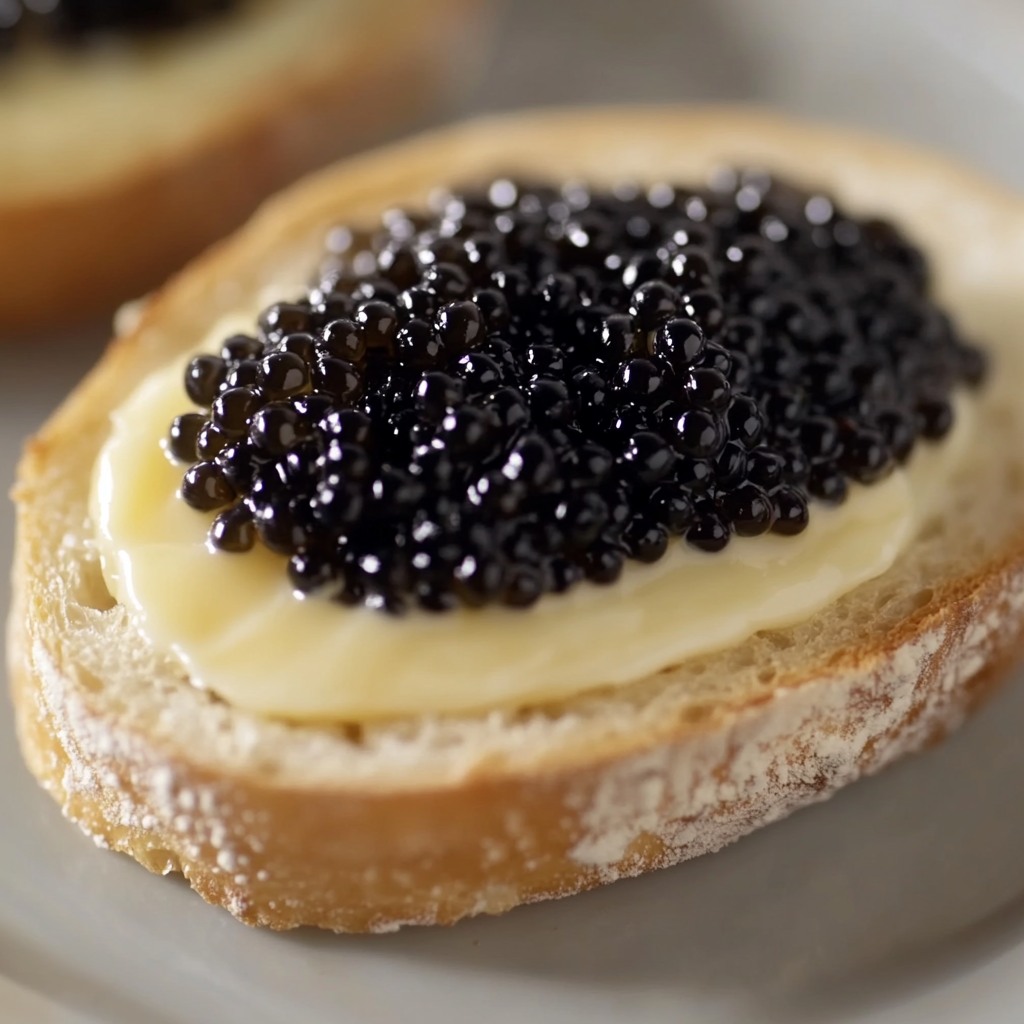
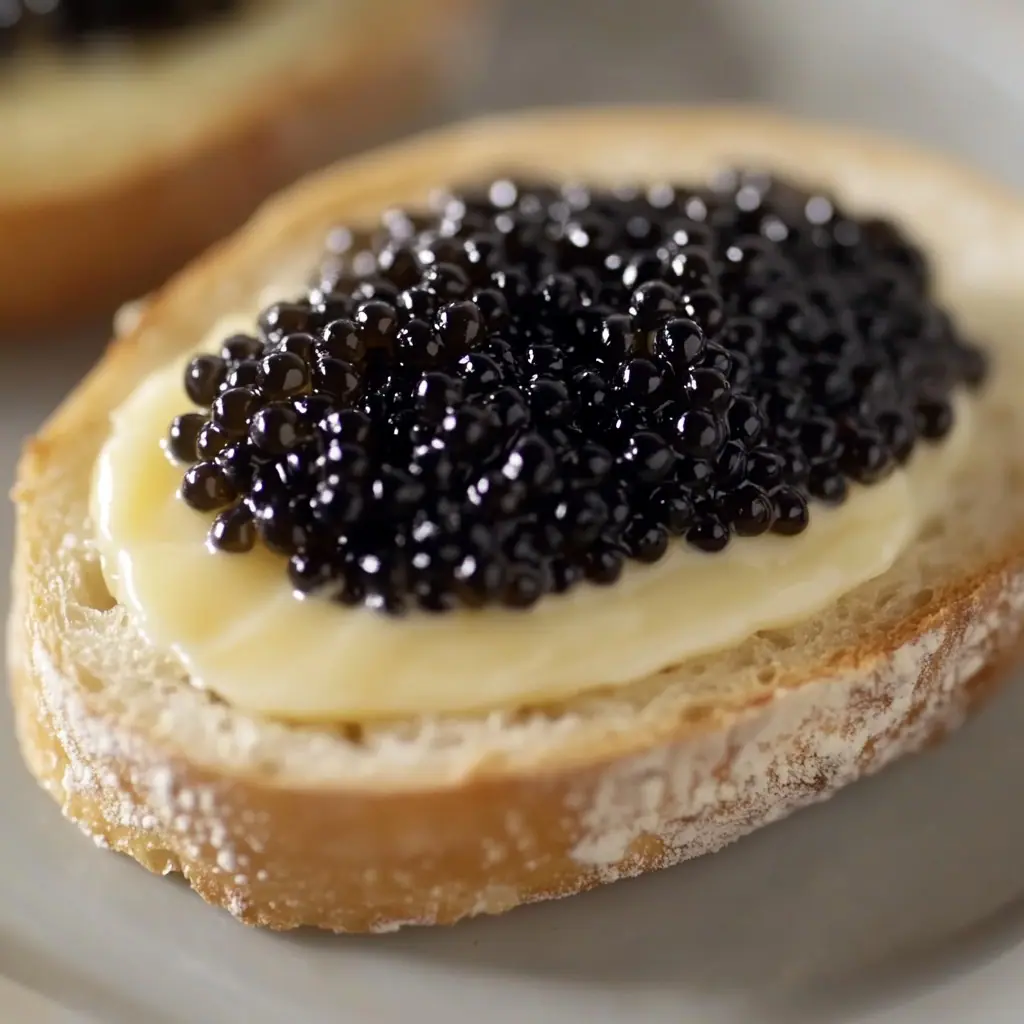
There are appetizers, and then there are experiences. These black caviar and melted butter toasts belong firmly in the second category. Three impeccably chosen ingredients — crisp toasted bread, high-quality unsalted butter, and real black caviar — come together to create one of the most refined and memorable bites in the entire appetizer repertoire. No technique required, no cooking beyond making toast. Just three ingredients at their absolute best.
The simplicity of this recipe is intentional and essential. With only three components, each one must be perfect — there is nowhere to hide. The toast must be golden and crisp; the butter must be fresh, high-fat, and fragrant; the caviar must be genuine. When these elements align, the result is transcendent: the mineral brininess of the caviar, the rich fatty sweetness of the butter, and the neutral crunch of the bread create a three-note chord that resonates on the palate long after the bite is gone.
A Brief History of Caviar on Toast
Caviar has been considered a luxury food since the 10th century, when Persian and Russian royalty first prized sturgeon roe as a delicacy. The combination of caviar with buttered bread or blini became the canonical way to serve it in 19th-century Russia and quickly spread through European aristocratic circles. Today it remains the universal standard for caviar service because the fat in butter perfectly coats the palate and allows the complex flavor of the caviar to unfold slowly and fully, rather than being overwhelmed by competing ingredients.
Choosing the Right Ingredients
The Bread
Classic choices include thin-sliced white sandwich bread cut into neat rounds or squares, pumpernickel rye for a deeper, slightly bitter contrast, or blini-style buckwheat pancakes for the most traditional pairing. Whatever you choose, the toast must be genuinely crisp — not just warm — so it provides structural support for the toppings and textural contrast to the silky caviar. Cut the toasts small (2 to 3 inches / 5 to 7 cm) so each one is a perfect two-bite appetizer.
Avoid strongly flavored breads — sourdough with an assertive tang, seeded bread, or anything with herbs — that would compete with the delicate caviar. The bread should be a neutral vehicle, never the star of the show.
The Butter
Butter quality matters enormously here. Choose an unsalted European-style butter with a fat content of at least 82%, or ideally 84% to 86%. These high-fat butters — French brands like Beurre de Baratte, Bordier, or Échiré are benchmarks — have a deeper, creamier, more complex flavor than standard butter, with notes of hazelnut and cream that complement caviar beautifully. Salted butter introduces competing sodium that can overwhelm the natural brininess of caviar, so always go unsalted.
The butter is melted and applied in a generous layer while the toast is still warm, so it seeps slightly into the surface and bonds the two layers together. Let it cool to room temperature before adding the caviar — caviar should never touch anything hot, as heat destroys its delicate texture and flavor.
The Caviar
Black caviar comes from sturgeon roe, and the quality and price vary enormously by species. Beluga, Ossetra, and Sevruga are the classic triumvirate, with Beluga (now protected and mostly farmed) commanding the highest prices. For this recipe, a high-quality farmed Ossetra or Siberian sturgeon caviar — now widely available from sustainable aquaculture operations — delivers exceptional flavor at a more accessible price point. The roe should be firm, glossy, and individually distinct, never mushy or clumped. It should smell cleanly of the sea, never fishy or ammoniated.
If caviar is beyond your current budget, high-quality trout roe, salmon roe (ikura), or Avruga herring roe all make excellent substitutes that honor the spirit of this recipe while remaining accessible.
Why Simplicity Wins Here
Some recipes require complexity to succeed. This one requires the opposite: restraint. Classic caviar service deliberately avoids lemon (which acidulates the fat and mutes the brine), onion (which overpowers), and excessive seasoning (which competes). The three-ingredient approach is not a limitation — it is a discipline. Every element must earn its place, and nothing is allowed to distract from the star: the caviar.
Notes
Step-by-Step Instructions
Toast the Bread
Slice your bread thinly and cut into your desired shape — rounds with a cookie cutter or neat rectangles with a knife. Toast in a toaster or under a broiler until golden and completely crisp. If using a broiler, watch carefully — thin bread can go from perfect to burnt in under a minute. Set aside on a rack to cool slightly while you prepare the butter.
Apply the Butter
Melt the butter gently in a small saucepan over low heat — do not let it brown or bubble. Brush or spoon a generous layer of melted butter over each toast while it is still warm. The butter should pool slightly in the surface texture of the bread. Allow the toasts to cool to room temperature (this takes only 5 to 10 minutes). The butter will firm slightly, creating a stable base for the caviar.
Add the Caviar
Using a non-metallic spoon — mother of pearl is traditional and ideal, but a plastic or ceramic spoon works fine — place a generous teaspoon of caviar atop each buttered toast. Metal spoons can impart a metallic flavor to the delicate roe, so avoid them. Do not press or spread; simply place and let the roe settle naturally. Serve immediately, within 5 minutes of assembly.
Pairing Recommendations
The classic beverage pairing for caviar is ice-cold vodka in the Russian tradition, or a glass of very dry, unoaked Champagne — Blanc de Blancs from the Côte des Blancs is considered the ideal match, as its high acidity and mineral salinity echo the caviar. A very dry, mineral Chablis Premier Cru or a good Muscadet sur Lie also pair exceptionally well. For a non-alcoholic option, sparkling water with a thin lemon slice cleanses the palate between bites without interfering with the caviar.
Serving Protocol
Caviar toasts should be assembled at the last possible moment and served immediately. Pre-assembled toasts left sitting for more than 10 minutes become soggy as the caviar releases moisture into the bread. If serving to a crowd, prepare all components in advance and assemble in batches of 4 to 6 at a time, sending them out on small slate boards or individual spoons directly to guests. The experience of tasting caviar on a freshly made toast — still warm from the toaster, with cool, glossy roe on top — is incomparably better than eating one that has been sitting.
Accessible Caviar Alternatives
- Salmon roe (ikura): Large, vibrant orange-red pearls with a pronounced oceanic flavor. Beautiful, delicious, and affordable. The visual impact is spectacular.
- Trout roe: Smaller than salmon roe, with a milder, creamier flavor. An excellent mid-range option.
- Lumpfish caviar: The most budget-friendly black roe option. Saltier and less nuanced than sturgeon caviar, but visually similar and perfectly acceptable for casual entertaining.
- Avruga: Made from herring roe and colored black, Avruga delivers a genuine oceanic flavor at a fraction of the cost of real caviar.
Storage
Caviar should be kept refrigerated at 28 to 32°F (-2 to 0°C) and consumed as close to its opening date as possible, ideally within 24 to 48 hours of opening. Never freeze caviar — freezing ruptures the roe membranes and destroys the texture irreparably. Toasts can be prepared up to a day in advance and stored in an airtight container at room temperature. Butter can be melted and applied up to 2 hours ahead; simply let the toasts rest at room temperature until needed.
Frequently Asked Questions
How much caviar per toast?
A generous teaspoon (about 5 g) per toast is the classic serving. For cocktail hour, plan approximately 15 to 20 g of caviar per guest (3 to 4 toasts each).
Can I add garnishes?
Purists say no. If you must, a tiny leaf of fresh dill or a single chive tip is acceptable. A very small drop of crème fraîche is also traditional. Avoid lemon, onion, and any strong flavors that compete with the caviar.
Final Thoughts
These black caviar and melted butter toasts are the pinnacle of what a three-ingredient appetizer can be. They celebrate restraint, quality, and the belief that the best food needs nothing added. Serve them once and they will become a signature of your entertaining — the bite your guests remember and talk about for years.
