
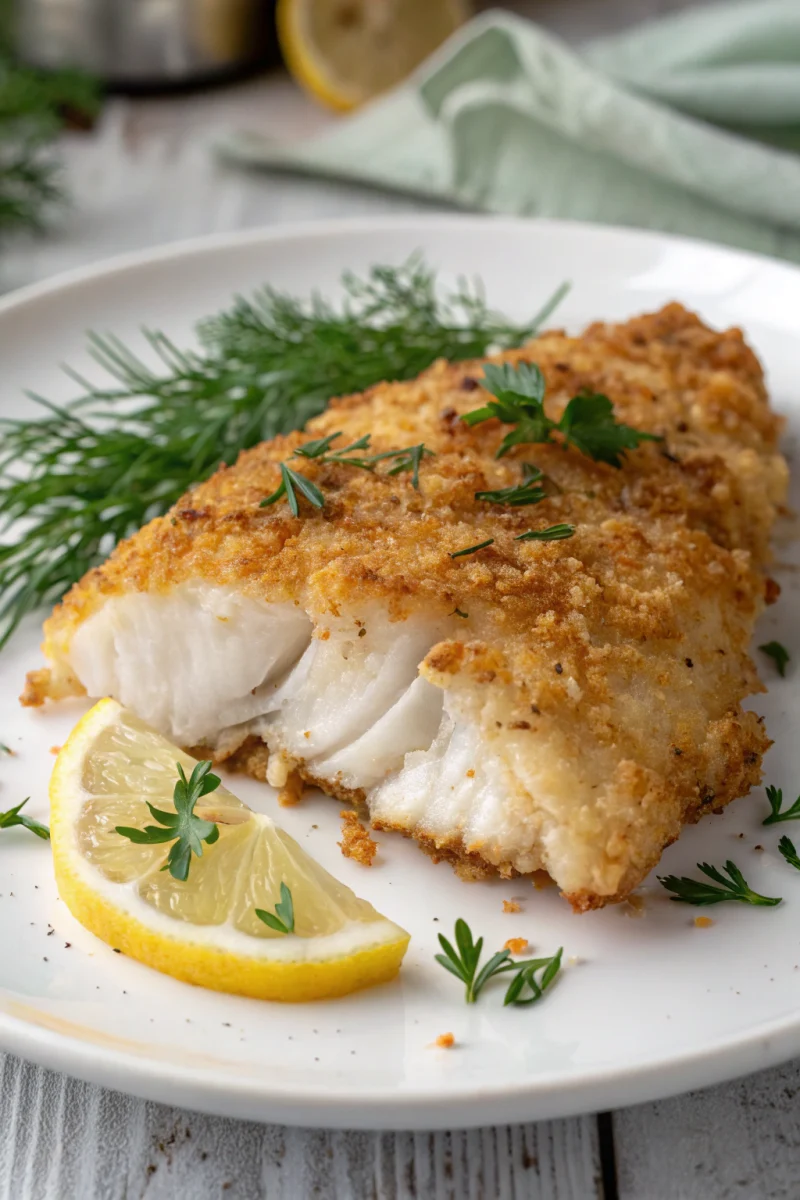
This air fryer fish recipe is a HomeCookLegacy favorite — simple to make and absolutely delicious.
Air Fryer Fish — Mastering the Art of Perfectly Cooked, Flavorful Fillets
Air Fryer Fish is one of the easiest ways to get restaurant-style fillets at home: crisp edges, tender flakes, and clean flavor—without deep frying and without turning your kitchen into an oil-splatter zone. This guide shows you how to choose the right fish, season it well, and cook it to the correct internal temperature so it’s safe, moist, and never rubbery.
If you’ve tried air fryer fish once and ended up with a dry fillet, an undercooked center, or breading that fell off, don’t worry—those issues are almost always technique (and easily fixed). With the right prep and timing, you’ll get consistent results on cod, tilapia, pollock, haddock, salmon, and more.
Important safety baseline: Fish should reach a safe minimum internal temperature of 145°F / 62.8°C. Use a food thermometer for reliable doneness. (Official guidance: USDA FSIS safe temperature chart.)
Reference: Safe Minimum Internal Temperature Chart (USDA FSIS)
Q: Do I really need a thermometer for Air Fryer Fish?
A: It’s the easiest way to prevent both undercooking and dryness. Pull fish right when it hits 145°F / 63°C in the thickest part.
Table of Contents
- Why Air Fryer Fish Matters in Winter
- Core Ingredients (and what they do)
- Step-by-Step Method: Perfect Air Fryer Fish
- How to Know It’s Done (without guessing)
- Healthy Variations (breaded, unbreaded, spicy)
- Serving Suggestions (sides + sauces)
- Common Mistakes to Avoid
- Storage Tips & Reheating
- FAQ
Why Air Fryer Fish Matters in Winter
During cold months, we naturally crave warm, satisfying meals—but that doesn’t mean dinner has to be heavy. Air Fryer Fish is a winter winner because it delivers comfort and nutrition quickly, making it ideal for weeknights when you want something hearty but still light enough to feel good afterward.
Fish is naturally high in protein and, depending on the type, can provide omega-3 fats (especially salmon, sardines, trout, and mackerel). If you’re trying to build a balanced winter routine—more protein, more nutrient-dense foods, fewer “fried” cravings—the air fryer is a smart tool. You get crisp texture with minimal oil, and you avoid the lingering smell and cleanup of pan-frying.
If you want guidance on choosing fish varieties and balancing intake (including mercury considerations), see: Advice about Eating Fish (FDA)
Q: Is Air Fryer Fish actually healthier than frying?
A: Usually, yes—because you can get crisp texture with far less oil. The exact “healthiness” depends on breading, portion size, and sides.
Core Ingredients
The original draft you shared listed soup-style ingredients (onion, carrots, celery, broth, barley). For a truly corrected Air Fryer Fish article, the core ingredients need to match what makes fish fillets crisp and flavorful in an air fryer: the fish itself, a light coating (optional), and seasonings that complement delicate flesh.
Core Ingredients for Air Fryer Fish (Fillets)
- Fish fillets (about 500–700g total): cod, haddock, pollock, tilapia, halibut, salmon, trout, etc.
- Oil (1–2 tbsp): olive oil or avocado oil—just enough to help seasoning stick and promote browning.
- Salt + pepper: the non-negotiables for clean flavor.
- Seasoning blend: paprika, garlic powder, onion powder, thyme, or a lemon-pepper mix.
- Optional crisp coating: panko breadcrumbs, crushed cornflakes, or almond flour (gluten-free option).
- Optional binder: egg wash or Dijon mustard (helps breading stick).
- Lemon: brightness that makes fish taste “fresh” even in winter.
Tip: For best results, start with fish that is dry on the surface. Pat fillets thoroughly with paper towels before seasoning—this is one of the biggest differences between “crispy” and “steamed.”
For safe selection and handling of fish and shellfish, see: Safe Selection and Handling of Fish and Shellfish (FoodSafety.gov)
Q: Which fish is easiest for beginners in the air fryer?
A: Cod, pollock, haddock, and tilapia are forgiving because they cook quickly and have mild flavor. Just don’t overcook.
Step-by-Step Method: Perfect Air Fryer Fish
This method gives you two paths: unbreaded (fast, clean, high-protein) and lightly breaded (extra crisp, classic “fish fillet” vibe). Both are reliable—you choose based on your mood and what you’re serving with.
Timing + Temperature (Quick Guide)
Cook time varies by thickness and air fryer model. Use temperature as your “truth.”
Step 1 — Prep the fish (no shortcuts)
- Pat dry the fish very well.
- Check for pin bones (especially salmon) and remove with tweezers.
- If using frozen fish, thaw safely, then pat dry. (Avoid cooking from fully frozen if you want crisp results—surface moisture is the enemy.)
Q: Can I cook Air Fryer Fish from frozen?
A: You can, but it’s harder to get crisp texture. For the best fillets, thaw first, pat dry, then cook.
Step 2 — Season (unbreaded option)
In a bowl, toss fish with:
- 1–2 tbsp oil
- 1 tsp salt (adjust to taste)
- 1/2 tsp pepper
- 1 tsp paprika
- 1 tsp garlic powder
- 1/2 tsp dried thyme (optional)
Let it sit 5 minutes while you preheat—this helps seasoning “melt” into the fish.
Step 2B — Breaded option (classic crispy fillets)
- Make a station: (1) flour or cornstarch, (2) egg wash, (3) panko + seasoning.
- Lightly coat fillets in flour/cornstarch (shake off excess).
- Dip in egg wash (or brush with Dijon for a sharper flavor).
- Press into seasoned panko, then mist the top with oil spray for better browning.
Q: Why does my breading fall off in the air fryer?
A: Usually the fish is wet or you skipped the “dry layer” (flour/cornstarch). Pat dry and build the coating in thin, even layers.
Step 3 — Air fry
- Preheat your air fryer to 200°C / 390°F for 3–5 minutes.
- Lightly oil the basket (or use perforated parchment made for air fryers).
- Arrange fillets in a single layer with space between them (no overlapping).
- Cook 9–12 minutes for average thickness, flipping halfway if unbreaded (breaded fillets can be flipped gently or left if coating is delicate).
- Check internal temperature: remove when the thickest part reaches 145°F / 63°C.
- Rest 2 minutes, then finish with lemon.
Don’t guess doneness: FoodSafety.gov also recommends cooking seafood to safe minimum internal temperatures—use your thermometer for confidence.
Reference: Safe Minimum Internal Temperatures (FoodSafety.gov)
How to Know It’s Done (Without Guessing)
Perfect Air Fryer Fish is about precision. Fish turns from translucent to opaque as it cooks, and it begins to flake when gentle pressure is applied with a fork. But visuals can mislead—especially with thicker fillets and breaded coatings—so internal temperature is the gold standard.
- 145°F / 63°C in the thickest part = safe and properly cooked.
- If you prefer slightly softer texture on salmon, you can pull it a touch earlier for texture preference, but food safety guidance still emphasizes reaching safe minimum temps for seafood.
- If your fillet is thin, it may reach temperature faster than you expect—start checking early.
If you want additional context on seafood selection and freshness, see: Selecting and Serving Fresh and Frozen Seafood Safely (FDA)
Q: My fish is cooked but not crispy—what happened?
A: Most often the surface was wet, the basket was crowded, or you didn’t use a light oil mist on breading. Dry the fish and leave airflow space.
Healthy Variations
Air Fryer Fish is naturally flexible. You can keep it clean and simple, go spicy, or build it into a filling bowl with grains and vegetables. Below are variations that keep the method intact while changing the flavor direction.
1) Mediterranean lemon-herb
- Season with oregano + thyme + garlic + lemon zest
- Finish with chopped parsley and a squeeze of lemon
Q: What’s the easiest way to make fish taste “fresh”?
A: Lemon + salt + a little garlic powder. Add lemon at the end so it stays bright.
2) Spicy paprika (weeknight favorite)
- Smoked paprika + cayenne + black pepper
- Serve with yogurt sauce or a quick slaw
3) Gluten-free crispy
- Use crushed rice cereal, cornflake crumbs, or almond flour
- Mist lightly with oil spray for browning
4) “Bowl” style (warm, winter-friendly)
If you liked the “one bowl” comfort idea from your draft, here’s the corrected version: serve Air Fryer Fish over a warm base (brown rice, quinoa, barley, or roasted vegetables), then top with the fillet and a sauce.
- Base: quinoa + sautéed greens
- Protein: Air Fryer Fish fillet
- Sauce: lemon tahini or yogurt-dill
Related internal ideas on your site that pair well with fish dinner planning: Honey-Glazed Salmon and Roasted Garlic Herb Potatoes.
Q: What grains work best for a fish bowl dinner?
A: Quinoa and brown rice are easy and neutral. Barley is heartier and great in winter.
Serving Suggestions
Air Fryer Fish works with classic sides (potatoes, slaw) and also with lighter options (salads, roasted vegetables). The goal is balance: fish is delicate, so pair it with brightness, crunch, or creaminess—but avoid sides that overpower it.
Easy side ideas
- Roasted potatoes or sweet potato wedges
- Simple cabbage slaw with lemon
- Steamed green beans with olive oil
- Warm rice bowl with sautéed spinach
Fast sauces (2 minutes)
- Lemon yogurt sauce: yogurt + lemon + salt + dill
- Quick tartar: mayo + chopped pickles + lemon
- Garlic aioli: mayo + garlic + lemon zest
Q: What’s the best “kid-friendly” sauce for fish?
A: A mild lemon-yogurt dip or a simple tartar sauce tends to be the easiest win.
Common Mistakes to Avoid
Most Air Fryer Fish problems come from three things: moisture, crowding, and overcooking. Fix those, and you’re basically unstoppable.
- Skipping the pat-dry step: wet fish steams instead of crisping.
- Overcrowding the basket: airflow is the “fryer” part. Give space.
- Too much breading: thick coatings fall off and stay pale.
- Too high heat without checking: outside browns, inside overcooks.
- Cooking by time only: use a thermometer and pull at 145°F / 63°C.
Q: Why does fish dry out so fast in the air fryer?
A: Fish is lean and delicate. Once it goes past doneness, moisture evaporates quickly. Temperature-check early and pull on time.
Storage Tips
Air Fryer Fish is best right after cooking, but leftovers can still be good if you store and reheat correctly.
How to store
- Cool for about 20–30 minutes (don’t leave out for too long).
- Refrigerate in an airtight container for up to 3 days.
- Freeze up to 2 months if needed (texture may soften slightly after thawing).
How to reheat (best methods)
- Air fryer: 175°C / 350°F for 3–5 minutes (restores crispness).
- Oven: 175°C / 350°F for 8–10 minutes on a rack.
- Avoid microwaving if you want crisp texture (it steams).
Q: Can I meal-prep Air Fryer Fish for lunches?
A: Yes—store fillets separately from wet sauces, and reheat in the air fryer for best texture.
Nutrition Facts (Per Serving)
Nutrition varies based on fish type and whether you bread it. As a general estimate for a moderate portion of unbreaded white fish:
- Calories: ~200–320
- Protein: ~25–40g
- Carbs: 0–15g (higher if breaded)
- Fat: ~6–14g (higher with salmon or heavier oil)
For background on fish as a nutrient source (including omega-3s), see: Fish: Friend or Foe? (Harvard T.H. Chan School of Public Health)
Q: Which fish is best for omega-3s?
A: Salmon, sardines, trout, and mackerel are among the richer omega-3 options. White fish is leaner but still high in protein.
FAQ
Can I use frozen fish?
Yes, but for the best results, thaw it safely first, then pat it very dry. Cooking from frozen is convenient, but surface moisture makes crisp texture harder to achieve.
How can I make it creamier or “comfort food” style?
Instead of changing the fish itself, build comfort into the plate: serve over mashed potatoes, add a yogurt-dill sauce, or pair with a warm grain bowl and roasted vegetables.
What’s the best “broth” or base for winter comfort?
For fish, skip broth-based cooking in the air fryer—use bowl-building instead: warm grains, greens, or roasted vegetables as the base, then top with the crisp fillet.
How long does it last?
Up to 3 days in the fridge (airtight), and up to 2 months frozen (best texture when reheated in the air fryer).
Conclusion
Air Fryer Fish proves that a fast dinner can still feel special: crisp outside, flaky inside, and full of flavor with minimal effort. If you keep three rules—pat dry, don’t crowd, and pull at 145°F / 63°C—you’ll get consistently great fillets that fit perfectly into cozy winter meals and meal prep plans alike.

HomeCook Legacy Kitchen is the editorial name of homecooklegacy.com. Recipes on this site are drafted with the help of AI tools and published by the HomeCook Legacy team. Please check ingredients, cooking times and food-safety guidance for your own situation.