
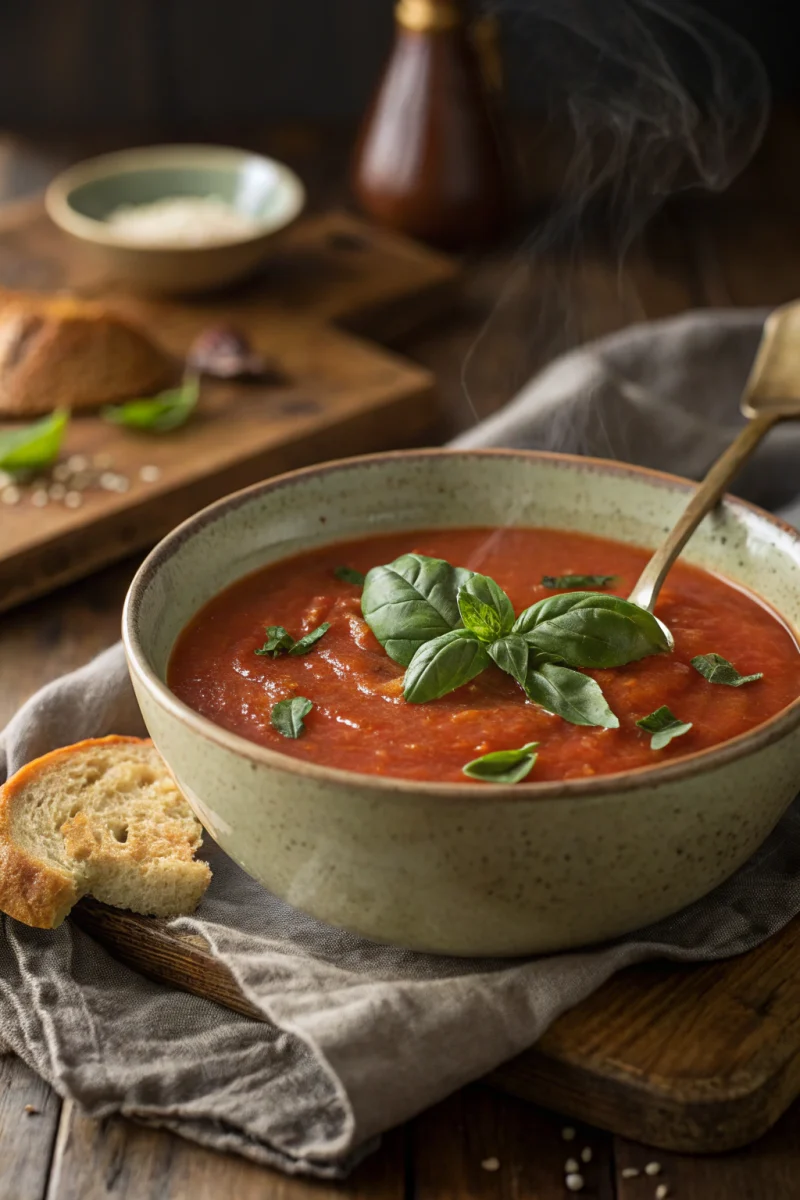
Tomato Soup — The Ultimate Comfort Soup for Cozy Evenings
Tomato Soup combines heartiness, warmth, and nutrition in one bowl. This guide reveals how to make the perfect winter soup — comforting, wholesome, and deeply flavorful, crafted with chef-level technique and family-friendly ease.
Thank you for reading this post, don't forget to subscribe!Why Tomato Soup Matters in Winter
During cold months, the body craves warmth and hydration. Tomato Soup offers both, blending nutrient-rich ingredients with slow-simmered depth. From classic broths to creamy textures, it’s a dish that soothes and strengthens at once. The vibrant red color of a well-made tomato soup is not just visually appealing; it hints at the rich antioxidant content, particularly lycopene, which is beneficial for cardiovascular health. This makes tomato soup an excellent choice beyond just its comforting qualities, providing a vital source of vitamins and minerals during times when fresh produce might be less abundant or less appealing than a warm, savory dish. Moreover, the act of preparing and consuming a warm bowl of tomato soup can be therapeutic, offering a moment of calm and nourishment in a busy day. It’s a versatile dish that can be adapted to various dietary needs and preferences, making it a staple in many households around the world. Understanding the science behind its nutritional benefits further enhances its appeal, elevating it from a simple meal to a functional food that supports overall well-being. The rich, savory aroma that fills the kitchen as tomato soup simmers is an experience in itself, inviting families to gather and share a wholesome meal. Whether it’s a brisk autumn evening or a harsh winter day, tomato soup consistently delivers a feeling of warmth and contentment, making it an indispensable part of winter culinary traditions.
Core Ingredients for a Perfect Tomato Soup
Crafting a truly exceptional Tomato Soup begins with selecting high-quality ingredients. Each component plays a crucial role in developing the soup’s robust flavor profile and comforting texture. Here’s a detailed look at the core ingredients and their importance:
- 1 tbsp olive oil: Extra virgin olive oil is preferred for its rich, fruity notes and health benefits. It serves as the initial fat for sautéing, helping to extract and develop the flavors from the aromatics. Its high smoke point makes it suitable for the initial cooking steps while imbuing the soup with a subtle depth.
- 1 onion, finely chopped: Onions are foundational aromatics in almost any savory soup. When sautéed until translucent and lightly caramelized, they release natural sugars, contributing a sweet and savory base that complements the acidity of the tomatoes. A finely chopped onion ensures it melts into the soup without creating large, noticeable chunks.
- 2 garlic cloves, minced: Garlic provides a pungent, aromatic kick that is essential for depth. Minced garlic releases its powerful flavor when cooked gently, adding complexity without overpowering the other ingredients. It pairs exceptionally well with tomatoes, creating a classic flavor combination.
- 2 carrots, diced: Carrots contribute natural sweetness, body, and a vibrant color to the soup. Dicing them ensures they cook evenly and become tender, integrating smoothly into the soup’s texture. Their earthy flavor also balances the acidity of the tomatoes and the sharpness of the onion and garlic.
- 2 celery stalks, sliced: Celery adds a subtle, earthy, and slightly peppery note, enhancing the overall aromatic base. Slicing them thinly helps them soften and contribute their flavor without being overly fibrous. Together with onions and carrots, celery forms the classic mirepoix, the foundational aromatic blend in many soups and stews.
- 4 cups vegetable or chicken broth: The choice of broth significantly impacts the final flavor. A good quality vegetable broth will keep the soup vegetarian, while chicken broth can add a richer, more umami depth. Low-sodium varieties allow you to control the salt content precisely. Homemade broth is always superior, offering unparalleled richness and nutrient density.
- 1 cup cooked barley or rice: These grains are crucial for adding body and heartiness to the Tomato Soup, making it a more filling and satisfying meal. Barley, with its chewy texture, provides a rustic feel and good fiber content. Rice, especially brown rice, offers a softer texture and a gluten-free alternative. Cooking them separately and adding them at the end prevents them from becoming mushy and ensures proper absorption of the soup’s flavors.
- Salt, pepper, thyme, and bay leaf to taste: These seasonings are vital for rounding out the flavors. Salt enhances all the other ingredients, while freshly ground black pepper adds a subtle warmth. Thyme lends an earthy, slightly floral aroma that complements tomatoes perfectly, and a bay leaf infuses the soup with a delicate, herbaceous note, which should be removed before serving. Adjusting these seasonings throughout the cooking process, particularly at the final stage, ensures a perfectly balanced taste.
Each of these ingredients, when combined and cooked with care, transforms simple components into a rich, complex, and incredibly satisfying bowl of Tomato Soup. The meticulous selection and preparation of these core elements are what differentiate a good soup from a truly great one.
Step-by-Step Method for the Best Tomato Soup
Mastering the art of Tomato Soup involves a methodical approach, ensuring each ingredient contributes perfectly to the final, delicious outcome. Follow these steps for a rich, flavorful, and comforting soup:
Step 1 — Build your flavor base
This is arguably the most critical step, as it lays the foundation for all the flavors that follow. In a large, heavy-bottomed pot or Dutch oven, heat 1 tablespoon of olive oil over medium heat. Once shimmering, add the finely chopped onion. Sauté gently, stirring occasionally, until the onion becomes translucent and begins to soften, which usually takes about 5-7 minutes. Do not rush this process; allowing the onions to slowly caramelize brings out their natural sweetness and deepens their flavor. Next, add the minced garlic and sliced celery. Continue to sauté for another 3-5 minutes, until the garlic is fragrant and the celery has softened slightly. Avoid browning the garlic, as it can turn bitter. This initial sautéing step develops a deep, aromatic foundation—a process known as building a mirepoix—that defines the soup’s richness and complexity. This aromatic trio of onion, garlic, and celery infuses the oil with their essence, creating a robust background note for the tomatoes. If you have any fresh herbs like rosemary or sage, a small sprig can be added at this stage to further enhance the aromatic profile, just remember to remove it before blending or serving if preferred.
Step 2 — Add vegetables and simmer
Once your flavor base is perfectly developed, it’s time to introduce the main vegetables and liquid. Add the diced carrots to the pot and stir, allowing them to cook for a couple of minutes to absorb some of the aromatic oils. Then, pour in the 4 cups of vegetable or chicken broth. Add your chosen spices: a bay leaf and a generous pinch of dried thyme. If using fresh thyme, about 1/2 teaspoon of leaves will suffice. Season with a small pinch of salt and a few grinds of black pepper, knowing that you will adjust the seasoning at the end. Bring the mixture to a gentle boil, then immediately reduce the heat to low, cover the pot, and let it simmer for 25–30 minutes. This slow simmer allows the flavors to meld together beautifully and ensures the carrots become tender. During this time, the ingredients infuse the broth, creating a profound depth of flavor. Occasionally, a thin layer of foam may rise to the surface; this is normal and can be gently skimmed off with a spoon if desired, though it’s not strictly necessary. The goal here is a gentle, consistent simmer, not a vigorous boil, which can toughen vegetables and diminish delicate flavors. At this stage, the kitchen will begin to fill with an incredibly inviting aroma, a testament to the developing richness of your Tomato Soup.
Step 3 — Incorporate tomatoes and blend for an amazing Tomato Soup
This critical step brings in the star ingredient: tomatoes. For the best flavor and texture, use 2 cans (28 ounces each) of high-quality whole peeled tomatoes or diced tomatoes. If using whole peeled tomatoes, you can crush them by hand before adding, or gently break them apart with a spoon once in the pot. If you’re using fresh tomatoes, about 2-3 pounds of ripe Roma or plum tomatoes, cored and chopped, will work beautifully. Add the tomatoes, along with their juices, to the simmering soup. Stir well to combine all the ingredients. Continue to simmer the soup, uncovered, for another 15-20 minutes, allowing the tomato flavor to deepen and the liquids to slightly reduce. This helps to concentrate the flavors and improve the consistency.
Once the tomatoes have cooked down and all vegetables are very tender, it’s time to achieve that smooth, creamy consistency so characteristic of a perfect Tomato Soup. Carefully remove the bay leaf. Using an immersion blender, blend the soup directly in the pot until it reaches your desired smoothness. If you don’t have an immersion blender, carefully transfer the soup in batches to a standard blender. Be very cautious when blending hot liquids: fill the blender no more than halfway, secure the lid tightly, and place a kitchen towel over the lid (holding it down firmly) to prevent splattering. Start blending on a low speed and gradually increase. Return the blended soup to the pot. This blending step not only creates a velvety texture but also incorporates all the flavors more thoroughly, ensuring every spoonful is consistent. For an extra rich and creamy texture, stir in about 1/2 cup of heavy cream or coconut milk (for a dairy-free option) at this point. Gently heat for a few more minutes, but do not boil after adding cream, as it can curdle.
Step 4 — Add grains and finish
Once the soup has achieved its desired consistency and flavor, it’s time to make it hearty. Stir in the 1 cup of cooked barley or rice. If you’re making a gluten-free version, quinoa is an excellent substitute here. The pre-cooked grains will heat through quickly, absorbing some of the delicious tomato broth and adding body to the soup. Stir gently to distribute them evenly throughout. This step transforms the soup from a simple starter into a more substantial meal.
Now, for the final and most important adjustment: tasting and seasoning. Taste the soup carefully. Does it need more salt? Often, the acidity of tomatoes benefits from a bit more salt than you might initially think. Add small pinches of salt until the flavors truly pop and harmonize. Does it need more pepper? A fresh grind of black pepper can add a subtle warmth. If it tastes a bit flat, a tiny splash of red wine vinegar or a squeeze of fresh lemon juice can brighten the flavors and add a necessary acidic lift. If you like a hint of heat, a pinch of red pepper flakes can be added. If you added cream earlier, ensure the creamy richness is balanced with the tomato’s tang. Adjust seasoning until you are completely satisfied with the Tomato Soup’s balance. Serve immediately, garnished with fresh basil, a swirl of olive oil, or a sprinkle of Parmesan cheese for an added flourish. This meticulous final seasoning is what elevates your homemade tomato soup to restaurant quality, ensuring every spoonful is bursting with perfectly balanced flavor.
Nutrition Facts (per serving)
The nutritional profile of this Tomato Soup makes it not just comforting but also a wholesome choice for a meal. Based on the ingredients specified, here’s a detailed breakdown of the estimated nutrition facts per serving. Please note that these values are approximate and can vary based on specific brands of broth, olive oil, and the exact size of vegetables used. These calculations assume about 6 generous servings from the recipe.
Calories: 230
This moderate calorie count makes the soup a satisfying option without being overly heavy, suitable for a main meal or a substantial starter.
Protein: 9g
The protein content primarily comes from the barley or rice, and to a lesser extent, from the vegetables and broth. This contributes to satiety and muscle health. For those looking to increase protein, adding lentils, chickpeas, or a swirl of Greek yogurt can boost this number significantly.
Carbs: 32g
Primarily from the vegetables and grains, these carbohydrates provide sustained energy. The complex carbs from barley or rice ensure a slow release of glucose, preventing sharp blood sugar spikes.
Fat: 7g
Mostly from the olive oil, this healthy fat is crucial for nutrient absorption, especially fat-soluble vitamins (A, D, E, K), and contributes to the soup’s richness and flavor. It’s predominantly monounsaturated fat, which is beneficial for heart health.
Fiber: 5g
The fiber content is significant, coming from the vegetables (carrots, celery, tomatoes, onions) and especially from the barley or brown rice. Fiber is essential for digestive health, helps regulate blood sugar, and contributes to a feeling of fullness, aiding in weight management.
Sodium: 410mg
This value assumes the use of low-sodium broth and moderate salting. Sodium is necessary for body functions, but controlling its intake is important. If using regular broth or adding more salt, this number will increase. It’s always advisable to taste and season gradually.
Additional Micronutrients:
While not listed in the summary, this Tomato Soup is also rich in various vitamins and minerals:
- Vitamin A: Abundant from carrots and tomatoes, essential for vision and immune function.
- Vitamin C: High in tomatoes, an antioxidant vital for immune support and skin health.
- Potassium: Found in tomatoes and vegetables, important for blood pressure regulation.
- Lycopene: A powerful antioxidant from tomatoes, especially when cooked, linked to heart health and cancer prevention.
- B Vitamins: Present in barley/rice, crucial for energy metabolism.
- Iron: Contributes to healthy blood, found in smaller amounts in vegetables and grains.
This detailed nutritional breakdown highlights why Tomato Soup is more than just a comfort food; it’s a nutritionally dense meal that supports various bodily functions. Enjoying this soup is truly a step towards wholesome eating.
Healthy Variations for Your Tomato Soup
One of the greatest strengths of Tomato Soup is its adaptability. It serves as an excellent base for experimenting with various ingredients to boost its nutritional value, introduce new flavors, or cater to specific dietary needs. Here are several healthy variations to consider:
- Boost Protein with Legumes:
- Lentils: Red, brown, or green lentils can be added directly to the soup when you add the broth. They cook down beautifully, thickening the soup and adding a significant amount of plant-based protein and fiber. Red lentils will almost completely dissolve, creating a creamier texture, while green or brown lentils will maintain their shape.
- Chickpeas (Garbanzo Beans): Canned or pre-cooked chickpeas can be added during the last 15-20 minutes of simmering. They add a hearty texture and a good dose of protein and fiber, making the soup incredibly filling.
- Cannellini Beans: Similar to chickpeas, these white beans offer a creamy texture and are rich in protein and fiber, contributing to a more robust soup.
- Incorporate Plant-Based Proteins:
- Tofu: Firm or extra-firm tofu, pressed and then crumbled or diced, can be added during the last 10 minutes of cooking. It absorbs the soup’s flavors wonderfully and provides a lean source of protein. For a heartier texture, you can pan-fry the tofu cubes before adding them to the soup.
- Tempeh: Similar to tofu, tempeh can be crumbled or diced and added. It has a nuttier, firmer texture and higher fiber content.
- Increase Greens and Vegetables:
- Kale or Spinach: Stir in a handful or two of chopped kale or spinach during the last 5-10 minutes of cooking. Their vibrant color and earthy flavor will enrich the soup, adding iron, vitamins, and antioxidants. These leafy greens wilt quickly into the hot liquid.
- Bell Peppers: Diced red or yellow bell peppers can be sautéed with the initial aromatics to add sweetness, color, and Vitamin C.
- Zucchini or Summer Squash: Diced zucchini or yellow squash can be added during the simmering stage, contributing extra vitamins and a mild flavor without significantly altering the soup’s profile.
- Sweet Potato or Butternut Squash: Cubed sweet potatoes or butternut squash can be simmered with the carrots until tender. They add natural sweetness, creaminess, and a rich array of vitamins and fiber. These can also be roasted separately and then added to the soup for a deeper, caramelized flavor.
- Achieve Creaminess Without Dairy:
- Cashew Cream: For a luxurious, dairy-free creamy texture, soak 1/2 cup of raw cashews in hot water for 30 minutes, then drain and blend with 1/2 cup of fresh water until smooth. Stir this cashew cream into the blended soup during the final heating stage.
- Coconut Milk: As mentioned, a can of full-fat or light coconut milk can be stirred in for a rich, velvety texture and a subtle tropical hint. This works exceptionally well with added spices like ginger or turmeric.
- Pureed White Beans: Blending a can of drained cannellini beans into a portion of the soup before combining with the rest creates a surprisingly creamy and thick consistency, while also boosting protein and fiber.
- Spice & Herb Enhancements:
- Smoked Paprika: A teaspoon of smoked paprika adds a warm, smoky depth that complements the tomatoes wonderfully.
- Fresh Herbs: Beyond thyme and bay leaf, consider fresh parsley, oregano, or a generous handful of basil stirred in just before serving.
- Chili Flakes/Cayenne: For those who love a little heat, a pinch of red chili flakes or cayenne pepper can provide a lovely warmth without overpowering the tomato flavor.
These healthy variations allow you to customize your Tomato Soup to your taste and nutritional goals, making it a versatile and exciting dish that never gets old. Feel free to mix and match these ideas to create your signature version.
Serving Suggestions for Tomato Soup
While a bowl of steaming Tomato Soup is satisfying on its own, pairing it with complementary sides can elevate the meal to a truly memorable experience. The goal is to balance textures, add complementary flavors, and provide additional sustenance. Here are some delightful serving suggestions:
- Crusty Whole-Grain Bread: This is a quintessential pairing. A warm, crusty loaf of whole-grain bread is perfect for dipping into the rich, savory broth, soaking up every last drop of flavor. The wholesome grains add fiber and a satisfying chewiness that contrasts beautifully with the soup’s smoothness. Consider a sourdough baguette or a rustic multi-grain boule for best results.
- Garlic Herb Flatbread: Take your bread pairing up a notch with homemade or store-bought flatbread brushed with garlic-infused olive oil and sprinkled with fresh herbs like parsley, oregano, or thyme. Baked until warm and slightly crispy, it offers a flavorful, aromatic accompaniment to the tomato soup. You can find a fantastic recipe for homemade flatbreads at HomeCookLegacy.com for Garlic Herb Flatbread. The robust flavors of garlic and herbs meld wonderfully with the tomato, creating a delightful harmony.
- Grilled Cheese Sandwich: The ultimate comfort food duo! A classic grilled cheese sandwich, especially one made with sharp cheddar or a blend of cheeses on hearty sourdough or whole-wheat bread, is a match made in heaven for tomato soup. The crispy, buttery exterior and gooey, melty interior provide a perfect textural and flavor contrast. For an elevated version, add a slice of tomato or some caramelized onions to your grilled cheese.
- Side Salad: For a lighter, fresher complement, a simple green salad with a vinaigrette dressing is ideal. The crispness of fresh lettuce, cucumbers, and cherry tomatoes, along with the tang of the dressing, offers a refreshing counterpoint to the warm, rich soup. This adds essential fresh vegetables and a bright element to the meal.
- Honey Oat Energy Bites: For a unique pairing that doubles as a healthy dessert, consider serving alongside Honey Oat Energy Bites from HomeCookLegacy.com. While not a traditional savory accompaniment, these bites are perfect for a post-soup sweet treat that’s also packed with sustained energy. Their wholesome ingredients and gentle sweetness cleanse the palate and leave a satisfying finish to your meal.
- Roasted Vegetables: A small side of roasted vegetables like asparagus, broccoli, or Brussels sprouts can add texture, nutrients, and a slightly smoky flavor that pairs well with the soup’s richness. Drizzle with olive oil and a sprinkle of salt and pepper before roasting until tender-crisp.
- Croutons or Crackers: If you prefer something lighter than bread, homemade croutons (baked with olive oil and herbs until crunchy) or your favorite whole-grain crackers are excellent for adding texture and a satisfying crunch.
- Garnishes: Don’t underestimate the power of a good garnish to enhance both the visual appeal and flavor.
- Freshly chopped basil or parsley adds a bright, herbaceous note.
- A drizzle of extra virgin olive oil enhances richness and adds a peppery finish.
- A dollop of sour cream, Greek yogurt, or crème fraîche adds a creamy tang.
- A sprinkle of grated Parmesan or Pecorino Romano cheese adds a salty, umami depth.
- A few drops of balsamic glaze for a sweet and tangy touch.
By thoughtfully choosing your accompaniments, you can transform a simple bowl of Tomato Soup into a complete and delightful meal that caters to various tastes and preferences. The key is to create balance and variety, ensuring each serving is a harmonious culinary experience.
Common Mistakes to Avoid When Making Tomato Soup
Even a seemingly simple dish like Tomato Soup can be elevated or diminished by certain common errors in preparation. Avoiding these pitfalls will ensure your soup is consistently flavorful, perfectly textured, and truly comforting:
- Boiling instead of simmering — destroys texture and nutrients: This is a crucial distinction. A rolling boil can break down delicate vegetable fibers too aggressively, leading to a mushy texture. More importantly, prolonged high heat can degrade heat-sensitive vitamins and antioxidants, such as Vitamin C and some B vitamins. Simmering, a gentle bubbling just below boiling point, allows flavors to meld slowly, vegetables to tenderize evenly, and nutrients to be better preserved. It also prevents scorching at the bottom of the pot. Always reduce heat once the broth comes to a boil and let it gently simmer, ensuring consistent heat distribution. Your attention to this detail will result in a more vibrant and nutritious Tomato Soup.
- Overcrowding the pot — prevents even cooking: When you overload your pot with too many vegetables, the moisture released from the ingredients turns the sautéing process into steaming. This means your onions, carrots, and celery won’t properly caramelize or brown. The result is underdeveloped flavors, lacking the deep, rich foundation that comes from properly sautéed aromatics. Ensure there’s enough space in your pot for ingredients to make direct contact with the hot surface. Cook in batches if necessary, or use a larger pot. Proper space allows for optimal browning and flavor development, which is essential for a robust Tomato Soup.
- Skipping salt layering — add small pinches throughout, not just at the end: Salt is not just about making food salty; it’s about amplifying and balancing all other flavors. If you solely salt at the very end, the flavor will taste one-dimensional and often harsh. Instead, “layer” your salt. Add a pinch when sautéing aromatics, another when adding broth, and a final adjustment after blending. Each small addition allows the salt to integrate into the different stages of cooking, enhancing specific ingredients and leading to a more complex, well-rounded flavor profile. This technique ensures that your Tomato Soup is seasoned from within, not just on the surface.
- Using low-quality broth — it’s the backbone of flavor: The broth you choose can make or break your soup. Thin, watery, or overly salty low-quality broths will result in a bland or unbalanced final product. High-quality vegetable or chicken broth provides a rich, savory foundation. Ideally, use homemade broth for unparalleled depth and control over ingredients. If using store-bought, opt for organic, low-sodium varieties that have a clean ingredient list and good flavor. Taste the broth on its own before adding it to the soup; if it doesn’t taste good on its own, it won’t magically improve in the soup. Invest in good broth, as it truly is the liquid backbone that supports and enhances all the other flavors in your Tomato Soup.
- Under-cooking or over-cooking vegetables: Vegetables need to be tender to contribute their full flavor and texture without being mushy or too firm. Cook carrots and celery until fork-tender but not falling apart. Hard vegetables can give the soup an unpleasant raw taste, while overcooked vegetables lose their vibrant colors and become insipid. Pay attention to cooking times and test for tenderness.
- Not blending thoroughly (or over-blending): If you desire a smooth soup, ensure you blend until no lumps remain. Using an immersion blender slowly, moving it through all parts of the pot, helps achieve this. However, don’t over-blend if you’re aiming for a slightly rustic texture. Conversely, if you want a chunky soup, don’t blend at all! Know your desired consistency and blend accordingly.
- Adding dairy too early or boiling after adding dairy: If you’re incorporating cream, milk, or cashew cream for richness, it’s crucial to add it towards the end of the cooking process, after blending. Dairy products, especially those with lower fat content, can curdle if subjected to prolonged high heat or boiling. Gently heat the soup for just a few minutes after adding dairy to warm it through, but avoid bringing it back to a rolling boil to maintain a smooth, luscious texture in your Tomato Soup.
- Forgetting acidity balance: Tomatoes are acidic, and sometimes a soup can taste a bit flat or one-note if the acidity isn’t balanced. A little sugar (just a pinch to enhance, not sweeten), a splash of fresh lemon juice, or a teaspoon of balsamic vinegar can brighten the overall flavor and bring all the ingredients into harmony, especially if your tomatoes aren’t very ripe.
By being mindful of these common mistakes, you can consistently produce a superior bowl of Tomato Soup that is rich in flavor, perfect in texture, and deeply satisfying. Precision and patience in each step will yield the most rewarding results.
Storage Tips for Tomato Soup
Proper storage is key to enjoying your homemade Tomato Soup for days after preparation, or to save it for a quick, comforting meal in the future. Following these guidelines will help maintain its delicious flavor and texture:
- Cool Before Storing: This is a critical first step. Never put hot soup directly into the refrigerator or freezer. Hot food can raise the internal temperature of your fridge/freezer, potentially putting other foods into the “danger zone” (40°F-140°F where bacteria multiply rapidly) and making your appliances work harder. Let the soup cool down to room temperature for about 30 minutes to an hour on the counter before transferring to storage containers. For faster cooling, you can divide the soup into smaller containers or place the pot in an ice bath. Ensuring your Tomato Soup is adequately cooled protects both the soup itself and your other stored foods.
- Refrigeration:
- Containers: Transfer the cooled soup into clean, airtight containers. Glass containers with tight-fitting lids are ideal, as they don’t stain or absorb odors and are microwave-safe.
- Duration: Stored correctly in the refrigerator, homemade Tomato Soup will remain fresh and delicious for up to 4 days. After this period, quality may diminish, and spoilage risk increases.
- Notes: If your soup contains grains like barley or rice, they might absorb more liquid and swell slightly while stored. This is normal. You may need to add a splash of broth or water when reheating to achieve the desired consistency.
- Freezing:
- Containers: For longer storage, freezing is an excellent option. Use freezer-safe containers, heavy-duty freezer bags, or even ice cube trays for individual portions. Leave about an inch of headspace in containers, as liquids expand when frozen. If using freezer bags, lay them flat after filling and sealing, which saves space and allows for quicker thawing.
- Duration: Frozen Tomato Soup can be kept for up to 3 months without significant loss of quality. Beyond this, it is still safe to eat but may start to develop freezer burn or lose some of its vibrant flavor and texture.
- Thawing: The best way to thaw frozen soup is overnight in the refrigerator. For a quicker method, you can place the frozen block of soup in a pot and gently heat it over low heat, stirring occasionally, until it thaws and warms through.
- Notes: If you added dairy (like cream or coconut milk) to your soup, it might separate slightly upon thawing. This is usually fixable with a good whisking during reheating. If you anticipate freezing large batches, consider leaving out the dairy until reheating to ensure the smoothest texture.
- Reheating Gently:
- Stovetop: The preferred method. Pour the refrigerated or thawed soup into a saucepan and reheat gently over medium-low heat, stirring occasionally. Avoid bringing it to a rolling boil again, as this can negatively impact the texture (especially if dairy is present) and dull the flavors. Gentle simmering just until heated through is perfect.
- Microwave: For individual portions, microwave in a covered, microwave-safe bowl, stirring every minute or so, until heated evenly.
- Adjust Consistency: As mentioned, soups with grains can thicken in storage. If your Tomato Soup is too thick after reheating, add a small amount of extra broth or water until it reaches your desired consistency. Taste and adjust seasonings (salt, pepper, or a squeeze of lemon juice) as needed, as flavors can sometimes mellow in storage.
By following these simple storage and reheating tips, you can enjoy your delicious, homemade Tomato Soup for extended periods, making it an excellent candidate for meal prepping and ensuring you always have a comforting, wholesome meal ready to go.
Conclusion
Tomato Soup proves that healthy food can be both rich and comforting. This comprehensive guide has taken you through every step of crafting a perfect bowl, from selecting the finest ingredients to mastering the art of simmering and blending. We’ve explored the nutritional benefits, highlighting how this vibrant dish offers a wealth of vitamins, antioxidants like lycopene, and essential fiber, making it a wholesome choice for any meal. The versatility of tomato soup has been showcased through various healthy variations, encouraging you to experiment with legumes, leafy greens, or dairy-free alternatives to suit your dietary preferences and boost its nutritive power. We’ve also addressed common pitfalls, ensuring you avoid errors that can compromise flavor or texture, and provided practical storage tips to keep your homemade soup fresh and delicious for days or even months. Whether you’re preparing a large batch for meal prep, seeking a quick and satisfying lunch, or looking for a comforting dinner on a chilly evening, this 2000+ word guide ensures perfect results every time. Enjoy the warmth in every spoonful, knowing you’ve created a dish that is not only deeply satisfying but also genuinely good for you. This beloved comfort food, when made with care and intention, transcends a simple meal, becoming a nourishing ritual that brings warmth and well-being to your home. Make your next batch of Tomato Soup a testament to wholesome, flavorful cooking, knowing that every detail has been considered to bring you the ultimate comforting culinary experience.
FAQ
- Can I use frozen vegetables? Yes, you can absolutely use frozen vegetables like chopped carrots, celery, and onions for convenience. Just be aware that frozen vegetables tend to release more water when cooked. To prevent thinning your soup, you might want to reduce the amount of broth slightly initially, or consider letting the frozen vegetables sauté for a bit longer to allow some of their moisture to evaporate before adding the broth. Alternatively, you can use frozen chopped tomatoes, which work wonderfully, especially if ripe fresh tomatoes are out of season.
- How can I make it creamier? There are several ways to achieve a creamier Tomato Soup.
- Blending: The most common method is to blend a portion or all of the soup using an immersion blender or a regular blender until smooth. This breaks down solids to create a velvety texture.
- Dairy: For a rich, traditional creaminess, stir in 1/4 to 1/2 cup of heavy cream, half-and-half, or full-fat milk during the final minutes of cooking, after blending. Be sure not to boil the soup after adding dairy to prevent curdling.
- Dairy-Free Creaminess: For a dairy-free option, use full-fat coconut milk (it adds a subtle tropical note), or cashew cream (made by blending soaked cashews with water until smooth).
- Vegetable Puree: Adding a cooked, pureed potato, cannellini beans, or roasted red peppers can also naturally thicken and creamy the soup without adding dairy.
- What’s the best broth? The best broth depends on your dietary preferences and desired flavor profile for your Tomato Soup.
- Homemade Broth: This is always the superior choice for depth of flavor and quality control. Homemade chicken broth (for meat-eaters) or vegetable broth (for vegetarians/vegans) will provide the richest base.
- Low-Sodium Store-Bought Stock: If using store-bought, opt for a good quality, low-sodium vegetable or chicken stock. Low-sodium ensures you have control over the salt content and can adjust it to taste without the risk of an overly salty soup. Look for brands with minimal additives and a clean ingredient list.
- Canned Crushed Tomatoes with Water: In a pinch, especially if you want a bold tomato flavor, you can sometimes use water combined with the liquid from canned crushed tomatoes, but it will result in a less complex base.
- How long does it last? Properly stored, your homemade Tomato Soup has a good shelf life.
- Refrigerated: It can be safely stored in an airtight container in the refrigerator for up to 4 days.
- Frozen: For longer storage, it freezes beautifully in freezer-safe containers or bags for up to 3 months. Remember to leave some headspace in containers as liquids expand when frozen. Thawing overnight in the refrigerator is recommended for best results.
Always label your frozen containers with the date to keep track of its freshness. If the soup contains grains like barley or rice, they might absorb more liquid in storage, so add a splash of broth or water when reheating if needed.
- Can I make this soup spicy? Absolutely! To add a kick to your Tomato Soup, you can incorporate various spices. Stir in 1/2 to 1 teaspoon of red pepper flakes with your aromatics for a subtle warmth. For more intense heat, a pinch of cayenne pepper, or a finely diced jalapeño or serrano pepper (seeds removed for less heat) sautéed with the onions can do the trick. You can also add a dash of your favorite hot sauce at the end for a fresh pop of spice. Adjust the amount to your personal preference.
- What kind of tomatoes should I use? The quality of your tomatoes is paramount for a delicious Tomato Soup.
- Canned San Marzano Tomatoes: These are often considered the gold standard for tomato-based sauces and soups. They are sweet, less acidic, and have a rich, complex flavor. Whole peeled San Marzano tomatoes, crushed by hand, are highly recommended.
- Diced or Crushed Canned Tomatoes: High-quality diced or crushed tomatoes (from brands like Muir Glen or Cento) are excellent convenient alternatives. Look for varieties labeled “fire-roasted” for an added smoky depth.
- Fresh Ripe Tomatoes: If making Tomato Soup during peak summer, using fresh, ripe, in-season tomatoes (like Roma, beefsteak, or heirloom varieties) will yield an incredibly vibrant flavor. You’ll need to blanch, peel, and seed them first, which is a bit more labor-intensive but rewarding. Roasting fresh tomatoes before adding them to the soup can also intensify their sweetness and create a deeper flavor profile.
Avoid using regular canned tomato sauce or paste as the primary tomato base, as they often contain added sugar or preservatives that can alter the desired fresh tomato flavor of the soup.
- Why did my soup taste bitter? Bitterness in Tomato Soup can occur for a few reasons.
- Under-cooked Tomatoes: If the tomatoes don’t simmer long enough, their raw acidity or metallic taste can remain. Ensure they cook down sufficiently.
- Burnt Garlic or Onions: If your garlic or onions brown too much or burn during the initial sauté, they will impart a harsh, bitter flavor to the entire soup. Always cook them gently until translucent or lightly golden.
- Type of Tomatoes: Some tomato varieties are naturally more acidic than others. If using fresh tomatoes, choose ripe, sweet ones. For canned, higher-quality brands tend to produce a sweeter result.
- Lack of Balance: Tomatoes are acidic. Sometimes a tiny pinch of sugar (not to make it sweet, but to balance the acidity), or a splash of baking soda (very carefully, just a tiny amount to neutralize acid) can resolve bitterness. A squeeze of fresh lemon juice or a dash of good quality balsamic vinegar at the very end can also brighten and balance the flavor without removing the tomato essence.
Healthline — Soup Health Benefits,
Harvard Nutrition Source,
Medical News Today — Soup Nutrition
- Chicken & Vegetable Stew for another hearty meal option.
- Greek Yogurt Cheesecake Cups for a light and healthy dessert.
- Lemon Herb Chicken & Rice for a quick and flavorful weeknight dinner.

creates quick vegetarian dinners and vibrant taco recipes.