
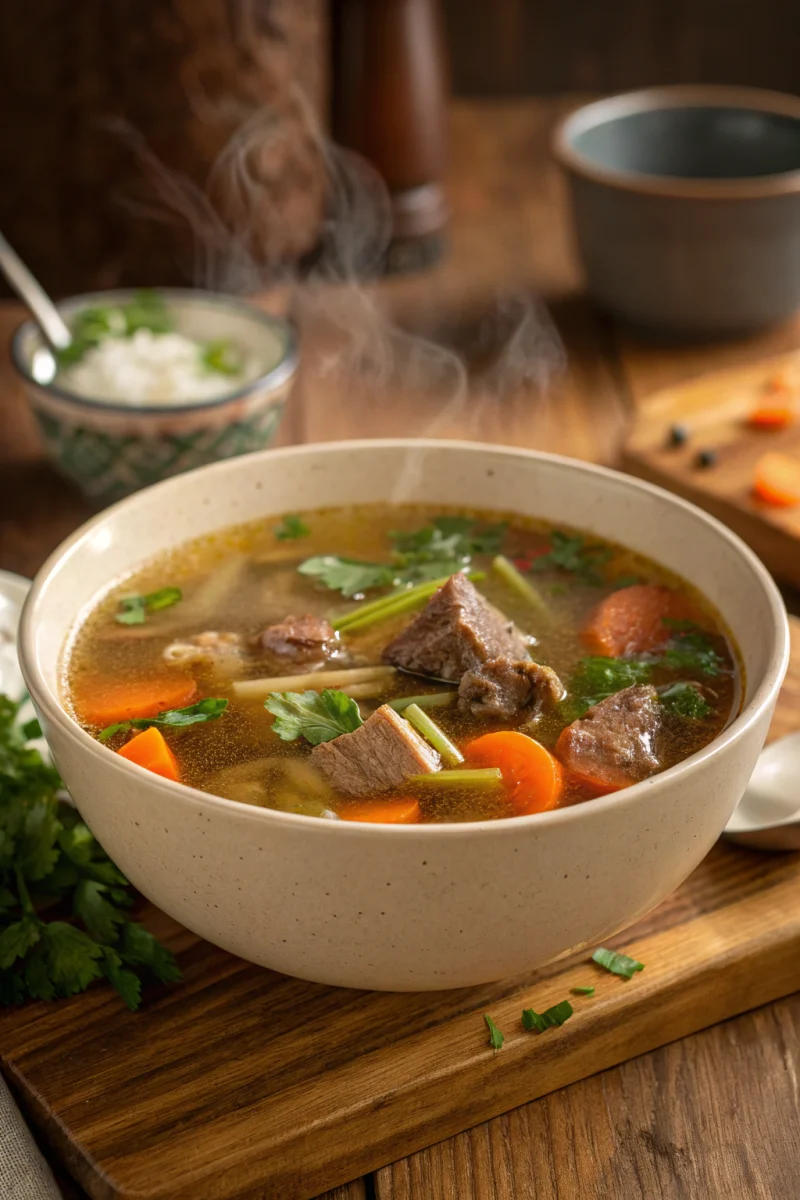
L’Alchimie du Bouillon d’Os — Réconfort en Bol pour les Soirées d’Hiver
Le bouillon d’os incarne à lui seul l’essence des plats qui nous enveloppent. Cette recette dévoile comment mijoter le bouillon parfait — un remède réconfortant, généreux en saveurs, où la précision du chef rencontre la simplicité du foyer.
Why Bone Broth Matters in Winter
During cold months, the body craves warmth and hydration. Bone Broth offers both, blending nutrient-rich ingredients with slow-simmered depth. From classic broths to creamy textures, it’s a dish that soothes and strengthens at once.
Core Ingredients for a Nourishing Bone Broth
Crafting a truly exceptional **Bone Broth** begins with selecting high-quality ingredients. While the basic concept is simple—bones, water, and a long simmer—the nuanced flavors come from incorporating aromatic vegetables and herbs. This foundational recipe is designed to yield a rich, gelatinous broth packed with flavor and nutrients.
- **Marrow Bones (Beef or Poultry):** Approximately 2-3 pounds. For beef, opt for knuckle, neck, and marrow bones. For poultry, use backs, necks, and feet. Roasting these bones beforehand significantly deepens the flavor and color of your bone broth.
- **Vegetables:**
- 1 large yellow onion, roughly chopped (peel on for color and nutrients)
- 2-3 carrots, roughly chopped
- 2-3 celery stalks, roughly chopped
- 1 head of garlic, halved horizontally (no need to peel individual cloves)
- **Herbs and Spices:**
- 2-3 bay leaves
- 1 tablespoon whole black peppercorns
- A few sprigs of fresh thyme or rosemary (optional, but highly recommended)
- 1 tablespoon apple cider vinegar (helps extract minerals from the bones)
- **Water:** Enough to cover all ingredients by about 2-3 inches (typically 1 gallon, or 4 liters).
- **Salt:** To taste, added at the end.
Step-by-Step Method for Perfect Bone Broth
Making **Bone Broth** is more of a patient art than a complicated science. The key is allowing ample time for the ingredients to meld and for the collagen and minerals to leach from the bones into the liquid, creating a truly restorative and flavorful broth. Follow these steps for an exquisite result.

Step 1 — Build your flavor base: Roasting the Bones
This is arguably the most crucial step for a rich, deeply colored, and intensely flavored bone broth, especially when using beef or lamb bones. While optional for chicken bones, it’s highly recommended for a superior finish.
- Preheat your oven to 400°F (200°C).
- Arrange your bones in a single layer on a large baking sheet.
- Roast for 30-45 minutes, or until the bones are nicely browned and caramelized. This process develops complex flavors through the Maillard reaction.
- Once roasted, carefully transfer the bones to a large stockpot (8-quart or larger is ideal). If there are any browned bits stuck to the baking sheet, add a splash of water and scrape them up with a spatula—these are packed with flavor!
Step 2 — Add Aromatics, Cover with Water, and Bring to a Simmer
Once your bones are in the pot, it’s time to introduce the supporting cast that will add depth and complexity to your **Bone Broth**.
- Add the roughly chopped onion, carrots, celery, and halved garlic head to the pot with the roasted bones.
- Pour in enough cold water to cover all the ingredients by at least 2-3 inches. Using cold water helps to slowly extract impurities, leading to a clearer broth.
- Add the apple cider vinegar. This acidic component aids in drawing minerals and collagen from the bones.
- Add the bay leaves, whole peppercorns, and any fresh herbs like thyme or rosemary.
- Place the pot over medium-high heat and bring it slowly to a gentle boil.

Step 3 — Skim, Simmer, and Patiently Wait
The magic of **Bone Broth** happens during the long simmering process. Patience is truly a virtue here.
- Once the liquid reaches a gentle boil, reduce the heat immediately to the lowest setting. You want to maintain a bare simmer, where only a few small bubbles break the surface. Do not boil vigorously, as this can make the broth cloudy and extract unwanted flavors.
- As the broth simmers, impurities will rise to the surface in the form of foam or scum. Use a ladle or a fine-mesh skimmer to carefully remove and discard this foam during the first few hours of simmering. This step is crucial for achieving a clear and clean-tasting broth.
- Cover the pot partially with a lid, allowing some steam to escape.
- Simmer your **Bone Broth** for a minimum of 6 hours for chicken bones and 12-24 hours for beef or lamb bones. The longer simmer time for larger bones allows for maximum extraction of nutrients and gelatin, resulting in a richer product.
- Monitor the water level periodically, especially if simmering for longer durations. If the liquid reduces too much, add more hot water to ensure the ingredients remain submerged.
Step 4 — Strain and Finish
After the extensive simmer, it’s time to separate your golden elixir from the solids.
- Remove the pot from the heat.
- Carefully ladle the contents through a fine-mesh sieve or colander lined with cheesecloth into another large, heatproof container. Be gentle to avoid disturbing any sediment.
- Discard the bones and spent vegetables. You’ve extracted all their goodness!
- Allow the **Bone Broth** to cool slightly at room temperature for about an hour before refrigerating. As it cools, a layer of fat will typically solidify on top. This fat cap can be skimmed off and discarded (or saved for cooking) once the broth is completely chilled. The broth itself should ideally turn into a wobbly jelly-like consistency when cold, indicating a high concentration of collagen and gelatin.
- Taste your finished **Bone Broth** and season generously with salt to your preference. Remember, broth is often intentionally under-salted during cooking so it can be adapted for various culinary uses.

Nutrition Facts (per serving of plain Bone Broth)
While specific nutrition can vary greatly depending on the bones used, cooking time, and dilution, a typical serving of homemade **Bone Broth** (approx. 1 cup) offers a valuable nutrient profile (Healthline):
- Calories: 30-50
- Protein: 6-10g (primarily from gelatin)
- Carbohydrates: 0-1g
- Fat: 0-2g (if fat is skimmed)
- Sodium: 80-120mg (without added salt)
- **Key Micronutrients**: Contains trace amounts of calcium, magnesium, phosphorus, silicon, sulfur, and other minerals, as well as glucosamine, chondroitin, and hyaluronic acid.
Health Benefits of Bone Broth: A Deep Dive
**Bone Broth** isn’t just a delicious culinary staple; it’s also revered for its potential health-promoting properties, many of which stem from its rich content of collagen, gelatin, amino acids, and minerals extracted from the bones and connective tissues during the long simmering process (Harvard Health). Let’s explore some of these benefits:
Gut Health: The Power of Gelatin and Amino Acids
One of the most widely acclaimed benefits of **Bone Broth** revolves around its impact on gut health. The primary component responsible for this is gelatin, which is essentially cooked collagen. When you consume gelatin, it acts as a hydrophilic colloid, meaning it attracts and holds water, which can aid in digestion (Medical News Today). More specifically, gelatin (and its constituent amino acids like glutamine) is believed to help:
- **Seal the Gut Lining**: Proponents suggest that gelatin can help repair and protect the mucosal lining of the digestive tract, potentially beneficial for conditions like “leaky gut syndrome” (intestinal permeability).
- **Aid Nutrient Absorption**: By supporting gut integrity, it may improve the absorption of nutrients from other foods.
- **Support Healthy Digestion**: The gelatin can help food move smoothly through the digestive tract and is gentle on the stomach, making it a soothing choice for those with digestive sensitivities.
Joint Health: Collagen and Its Allies
The same collagen that benefits your gut also plays a critical role in your joints. Collagen is the main protein found in connective tissues like cartilage, tendons, and ligaments. As we age, our natural collagen production declines, which can contribute to joint stiffness and pain. Consuming **Bone Broth** provides a dietary source of collagen, along with other compounds vital for joint health:
- **Collagen and Gelatin**: These can help rebuild and maintain cartilage, which cushions joints.
- **Glucosamine and Chondroitin**: Naturally present in cartilage, these compounds are often taken as supplements for joint health, and a good **Bone Broth** provides them in a bioavailable form.
- **Hyaluronic Acid**: This substance helps lubricate joints and is a key component of synovial fluid.
Immune Support: A Nutrient-Rich Boost
A healthy gut is often linked to a strong immune system, and **Bone Broth** supports both. Beyond gut health, the diverse minerals and amino acids can directly contribute to immune function:
- **Amino Acids**: Glycine, proline, and arginine (present in high amounts) have various immune-modulating effects. Glycine, for example, is critical for glutathione synthesis, a powerful antioxidant.
- **Minerals**: Essential minerals like zinc and selenium, extracted from the bones, play direct roles in immune cell function.
- **Hydration**: Staying well-hydrated is fundamental for immune health, and sipping warm **Bone Broth** is an excellent way to do so.
Skin, Hair, and Nails: The Beauty Benefits of Collagen
Collagen is the structural protein that gives skin its elasticity and strength, and it’s also crucial for healthy hair and nails. Regular consumption of **Bone Broth** can contribute to:
- **Improved Skin Elasticity**: Supplementing with collagen has been shown to improve skin hydration and elasticity, potentially reducing the appearance of wrinkles.
- **Stronger Hair and Nails**: The building blocks of protein in **Bone Broth** can help fortify hair strands and reduce nail brittleness.
In essence, **Bone Broth** is more than just a culinary delight; it’s a centuries-old remedy, offering a comprehensive array of nutrients that support various bodily functions, making it a valuable addition to a health-conscious diet.
Healthy Variations & Enhancements for Your Bone Broth
Once you’ve mastered the basic **Bone Broth** recipe, the possibilities for customization are endless. You can tailor your broth to specific dietary needs, flavor preferences, or simply to use up ingredients you have on hand. Here are some ideas for healthy variations and enhancements:
Adding Lean Proteins for a More Substantial Meal
Transform your **Bone Broth** from a base into a hearty meal by adding proteins:
- **Shredded Chicken/Turkey**: Add cooked, shredded poultry during the last few minutes of reheating for a quick chicken noodle-style soup.
- **Lentils or Chickpeas**: For plant-based protein, cooked lentils or chickpeas can be stirred in. They also add fiber and a satisfying texture.
- **Tofu or Tempeh**: Cubed and lightly pan-fried tofu or tempeh can be added for a vegan-friendly protein boost.
- **Cooked Ground Meat**: Lean ground beef or turkey, lightly seasoned, can make your **Bone Broth** more filling.
Boosting with Extra Vegetables and Greens
Increase the nutritional density and fiber content of your **Bone Broth** by incorporating more vegetables:
- **Leafy Greens**: Stir in kale, spinach, chard, or bok choy during the last 5-10 minutes of cooking until wilted. They add vitamins, minerals, and a vibrant color.
- **Root Vegetables**: Diced parsnips, turnips, or sweet potatoes can be added during the simmering phase to absorb the broth’s flavors and soften.
- **Mushrooms**: Sliced fresh or dried (rehydrated) mushrooms enhance umami and provide additional nutrients.
- **Cruciferous Vegetables**: Small florets of broccoli or cauliflower can be added towards the end of reheating to cook until tender-crisp.
Herbs, Spices, and Aromatics for Flavor Elevation
Don’t underestimate the power of fresh herbs and spices to transform the flavor profile of your **Bone Broth**:
- **Fresh Herbs**: Beyond the initial bay leaves and thyme, consider finishing your **Bone Broth** with fresh parsley, cilantro, dill, or chives for brightness.
- **Ginger and Turmeric**: Add sliced fresh ginger and turmeric root during the last hour of simmering for anti-inflammatory benefits and a warm, earthy flavor.
- **Spices**: A pinch of red pepper flakes for heat, a dash of smoked paprika for depth, or a whisper of star anise for an exotic note can be wonderful.
- **Lemon or Lime Juice**: A squeeze of citrus at the end brightens flavors and adds a zesty finish.
Creating a Creamy Bone Broth
For a richer, more luxurious texture, you can opt for a creamy **Bone Broth**:
- **Blending**: Once your broth is strained, blend about one-third of the broth with some softened vegetables (like a roasted sweet potato or a handful of steamed cauliflower) until smooth, then stir it back into the main pot. This adds creaminess without dairy.
- **Dairy-Free Options**: Stir in a splash of full-fat coconut milk or a plant-based cashew cream during the last few minutes of reheating.
- **Traditional Dairy**: For those who consume dairy, a small amount of heavy cream or full-fat Greek yogurt (stirred in off the heat to prevent curdling) can create a wonderfully rich consistency.
Enhancing Nutritional Value
- **Seaweed**: A small piece of Kombu seaweed added during simmering can boost mineral content and umami (remove before straining).
- **Nutritional Yeast**: Stirred into a cup of warm **Bone Broth**, it adds a cheesy, savory flavor and B vitamins.
By experimenting with these variations, you can keep your **Bone Broth** exciting, ensuring it remains a versatile and cherished part of your healthy eating regimen.
Serving Suggestions & Pairings for Your Bone Broth
Once you’ve crafted a beautiful batch of **Bone Broth**, the next step is enjoying it! While it’s fantastic on its own, it also serves as an incredibly versatile ingredient. Here are numerous ways to serve and pair your homemade elixir:
As a Simple, Soothing Beverage
- **Pure and Warm**: The simplest and most direct way to enjoy **Bone Broth** is to warm a mugful and sip it like tea. This is especially comforting in the morning, between meals, or before bed. Add a pinch of sea salt, a grind of black pepper, and perhaps a slice of fresh ginger or a squeeze of lemon.
- **Morning Elixir**: Many health enthusiasts drink a cup of warm **Bone Broth** first thing in the morning to kickstart digestion and hydration.
The Foundation for Hearty Soups and Stews
Your **Bone Broth** is a superior base for almost any soup or stew recipe. Replace commercial broth or water with your homemade broth for an instant upgrade in flavor and nutrition.
- **Noodle Soups**: Use it as the base for chicken noodle soup, ramen, pho, or any Asian-inspired noodle dish. The rich flavor will shine.
- **Vegetable Soups**: Elevate simple vegetable soups like minestrone, kale and white bean, or hearty root vegetable stews.
- **Creamy Soups**: Even creamy soups benefit from a flavorful broth beneath the dairy or plant-based cream.
- For further inspiration, check out our Chicken & Vegetable Stew, where **Bone Broth** can truly make the flavors sing.
Enhancing Grains and Legumes
Cook your grains and legumes in **Bone Broth** instead of water for an incredible boost to flavor and nutrient content.
- **Rice and Quinoa**: Use broth when cooking rice, quinoa, farro, or couscous. Your grains will absorb the rich flavors, making them more delicious and nourishing. This can turn a simple side dish into a flavorful complement to any meal.
- **Lentils and Beans**: When cooking dried lentils or beans from scratch, using **Bone Broth** infuses them with a savory depth that water simply cannot achieve.
Sauces and Gravies
**Bone Broth** adds body and intense flavor to sauces and gravies, reducing the need for artificial thickeners or excessive seasoning.
- **Pan Sauces**: Deglaze your pan with **Bone Broth** after searing meat or vegetables to create a quick, flavorful sauce.
- **Gravies**: Use it as the liquid component for homemade gravies, particularly for holiday roasts.
Perfect Pairings
Consider what complements the rich, savory notes of your **Bone Broth**:
- **Crusty Bread**: A simple, crusty whole-grain bread or sourdough is perfect for dipping into a warm bowl. You might even want to try our Garlic Herb Flatbread for a truly aromatic accompaniment.
- **Hard Cheeses**: A side of aged cheddar or Parmesan can offer a nice contrast to the broth’s warmth.
- **Fresh Herbs and Spices**: Always have fresh parsley, cilantro, spring onions, or a dash of chili flakes on hand to brighten individual servings.
- **Lemon or Lime Wedges**: A squeeze of citrus adds a refreshing zing and can cut through the richness.
Creative Combinations
Don’t limit yourself to traditional uses. **Bone Broth** can be a secret ingredient in many dishes:
- **Smoothies**: A small amount of chilled **Bone Broth** (yes, really!) can add undetectable protein to a savory green smoothie.
- **Scrambled Eggs or Omelets**: A tablespoon whisked into eggs can add moisture and nutrients.
Whether you’re enjoying it on its own or incorporating it into your culinary creations, **Bone Broth** is a versatile and beneficial addition to any kitchen. For another comforting meal idea that benefits from a good broth, explore our Lemon Herb Chicken & Rice.
Common Mistakes to Avoid When Making Bone Broth
Making **Bone Broth** is straightforward, but certain missteps can lead to a less-than-stellar result. Avoiding these common mistakes will help you achieve a clear, flavorful, and nutrient-dense broth every time.
Boiling Instead of Simmering: The Cloudiness Culprit
- **The Mistake**: Allowing your broth to come to a rolling boil and maintaining it for hours.
- **Why it’s Bad**: Vigorous boiling emulsifies fat and causes proteins to break down too rapidly and disperse throughout the liquid, resulting in a cloudy, greasy, and sometimes bitter-tasting broth. It also can extract more impurities from the bones.
- **The Fix**: After bringing the water to a gentle boil, immediately reduce the heat to the lowest setting. You want a bare simmer—just a few small bubbles breaking the surface, like a slow-moving lava lamp. This gentle heat allows for a slow, steady extraction of nutrients and gelatin, yielding a clear and clean-flavored **Bone Broth**.
Not Roasting Bones: Missing Out on Max Flavor
- **The Mistake**: Tossing raw bones directly into the pot, especially beef, lamb, or larger poultry bones.
- **Why it’s Bad**: While raw bones still produce broth, roasting them first creates a significant depth of flavor, color, and aroma through the Maillard reaction. This caramelization is crucial for a richly savory **Bone Broth**.
- **The Fix**: Always roast beef, lamb, and even large chicken bones (like backs or necks) in a hot oven (400°F/200°C) for 30-45 minutes until deeply browned. Don’t forget to deglaze the roasting pan with a little water and add those flavorful bits to your stockpot.
Using Too Little Water: Diluting the Goodness
- **The Mistake**: Not adding enough water to fully cover the bones and aromatics.
- **Why it’s Bad**: If ingredients aren’t fully submerged, they won’t properly contribute to the broth, and the concentrated liquid can reduce too quickly, leaving you with less yield. You risk uneven extraction and possibly burning ingredients that aren’t submerged.
- **The Fix**: Ensure your bones and vegetables are covered by at least 2-3 inches of cold water at the start. If simmering for many hours, check the water level periodically and top up with hot water if necessary to keep the ingredients submerged.
Not Skimming Impurities: The Cloudy, Off-Flavor Issue
- **The Mistake**: Neglecting to skim the foam and scum that rises to the surface during the initial stages of simmering.
- **Why it’s Bad**: This foam consists of denatured proteins and impurities that can make your **Bone Broth** cloudy and give it an off-flavor.
- **The Fix**: During the first 1-2 hours of simmering, use a fine-mesh skimmer or a spoon to gently lift and discard any foam or scum that collects on the surface. This step is essential for a clear, clean-tasting broth.
Short Simmer Time: Undercooked Potential
- **The Mistake**: Not simmering your **Bone Broth** long enough.
- **Why it’s Bad**: A short simmer (e.g., 2-4 hours) doesn’t allow enough time for the collagen to break down into gelatin and for all the beneficial minerals and amino acids to be fully extracted from the bones. You’ll end up with a weaker, less gelatinous, and a less nutritionally dense broth.
- **The Fix**: Commit to the proper simmering times: at least 6-8 hours for poultry bones and a minimum of 12-24 hours for beef or lamb bones. Some even go up to 36-48 hours for beef bones for maximum extraction. The longer the simmer (within reason), the richer and more beneficial your **Bone Broth** will be.
Overcrowding the Pot: Uneven Extraction and Flavor
- **The Mistake**: Stuffing too many bones and vegetables into a pot that is too small.
- **Why it’s Bad**: An overcrowded pot prevents proper circulation of water around the ingredients, leading to uneven cooking and less efficient extraction of flavors and nutrients. It also makes it harder to skim impurities.
- **The Fix**: Use a large stockpot (8 quarts or more for typical home batches). Ensure there’s enough space for the ingredients to be submerged and for the water to move freely. If you have too many bones, make two smaller batches or invest in a larger pot.
Skipping Salt Layering: Bland Broth Until the End
- **The Mistake**: Adding no salt until the very end, or adding too much too soon.
- **Why it’s Bad**: If you add salt too early, as the broth reduces, it can become excessively salty. If you add it all at the end, the flavor might not be as well integrated. Leaving it unsalted entirely leaves it bland.
- **The Fix**: It’s generally best to add very little (or no) salt during the initial simmering. Once the **Bone Broth** is strained, and before storage, taste it. Then, season it to your preference. This allows you to control the final salt level perfectly, especially if you plan to reduce it further for sauces or use it in other highly seasoned dishes.
By being mindful of these common pitfalls, you’ll be well on your way to consistently producing exceptional homemade **Bone Broth** that is both delicious and incredibly nourishing.
Storage Tips for Preserving Your Bone Broth Gold
After dedicating hours to developing a rich and nutritious batch of **Bone Broth**, proper storage is key to preserving its quality, flavor, and extending its shelf life. Here’s how to store your liquid gold effectively:
Cooling Down Safely and Quickly
This is a critical first step to prevent bacterial growth and ensure safety.
- **Cool Immediately**: Once you’ve strained your **Bone Broth**, allow it to cool down to room temperature for no more than 1 hour. Never put hot broth directly into the refrigerator, as it can raise the temperature of other foods and hinder rapid cooling.
- **Ice Bath Method (Optional but Recommended)**: For larger batches, to speed up cooling, place the pot of broth into a sink filled with ice water, stirring occasionally. This helps it cool quickly and prevents it from staying in the “danger zone” (40°F to 140°F / 5°C to 60°C) where bacteria multiply rapidly.
- **Ventilation**: If storing in containers, leave them uncovered or slightly ajar during the initial cooling phase in the refrigerator to allow heat to escape.
Refrigeration: Short-Term Storage
For immediate use or within the week, the refrigerator is your best friend.
- **Airtight Containers**: Once completely cooled, transfer your **Bone Broth** into clean, airtight glass jars (like mason jars) or BPA-free plastic containers.
- **Shelf Life**: Properly stored **Bone Broth** will last safely in the refrigerator for up to **4-5 days**.
- **Fat Cap**: As the broth chills, a layer of fat will solidify on top. This fat cap acts as a natural seal, further protecting the broth from spoilage. You can leave it on until ready to use, then easily skim it off, or remove it before storage if you prefer.
Freezing: Long-Term Preservation
For longer storage, freezing is the ideal method. This allows you to make large batches and have **Bone Broth** readily available whenever you need it.
- **Portioning**: Freeze your **Bone Broth** in various portion sizes to suit your needs:
- **Ice Cube Trays**: For small amounts to add to sauces or to sip, freeze in ice cube trays. Once frozen, pop out the cubes and transfer them to a freezer-safe bag. Each cube is typically 1 ounce.
- **Muffin Tins**: For larger, ½ cup portions, muffin tins work well.
- **Freezer-Safe Containers**: Store in 1-cup or 2-cup portions in freezer-safe plastic containers or glass jars (ensure they are freezer-safe and leave at least an inch of headspace to account for expansion).
- **Freezer Bags**: Heavy-duty freezer bags are excellent for larger quantities. Lay them flat to freeze, then stack them vertically to save space.
- **Labeling**: Always label your containers with the date they were made.
- **Shelf Life**: Frozen **Bone Broth** can be safely stored for up to **6-12 months**. While safe beyond this, flavor and quality may start to degrade.
Reheating Your Bone Broth
When you’re ready to enjoy your stored **Bone Broth**:
- **From Refrigerator**: Gently reheat over medium heat in a saucepan until warm, avoiding a rolling boil to preserve delicate flavors and nutrients.
- **From Freezer**:
- **Thawing**: The safest way to thaw frozen broth is in the refrigerator overnight.
- **Direct Heat**: Alternatively, you can place frozen broth cubes or blocks directly into a saucepan over low-medium heat, stirring occasionally until melted and warm.
- **Avoid Boiling**: Just as in the initial simmer, avoid boiling forcefully during reheating. A gentle warmth is all you need.
Signs of Spoilage
Always trust your senses. Discard your **Bone Broth** if you notice any of the following:
- An off or sour smell.
- Any signs of mold (even tiny spots).
- A cloudy appearance or unusual sediment after refrigeration (beyond the natural fat cap or gelatin).
By following these storage guidelines, you can ensure that every serving of your homemade **Bone Broth** is as nourishing and flavorful as the first, making it a convenient and healthy addition to your daily routine.
Conclusion
**Bone Broth** proves that healthy food can be both rich and comforting. This comprehensive guide has walked you through everything from selecting the right bones to perfecting the long, gentle simmer, and even how to store your precious liquid gold. We’ve explored its profound health benefits, from supporting gut health and robust joints to fortifying your immune system and enhancing skin vitality.
Whether you’re sipping a warm mug on a chilly evening, using it as a foundational base for a hearty soup, or boosting the nutrition of your grains and sauces, **Bone Broth** offers unparalleled versatility and warmth. By avoiding common mistakes and embracing patient preparation, you’ll consistently achieve a clear, gelatinous, and deeply flavorful broth that will become a staple in your home.
Embrace the tradition of this ancient elixir and make it a cornerstone of your winter wellness routine. With this 2000+ word guide, you’re now equipped to create perfect **Bone Broth** every time – delivering warmth, nutrition, and comfort in every spoonful, and truly enriching your home cooking legacy.
FAQ About Bone Broth
- Can I use frozen vegetables? Yes, you can absolutely use frozen vegetables like carrots, celery, and onions for your **Bone Broth**. They work just as well as fresh and can be a convenient option. Just be aware that frozen vegetables might release a bit more water, so you might need to slightly reduce the overall amount of water you add initially, or allow a slightly longer simmer time, to achieve a concentrated flavor.
- How can I make my Bone Broth creamier? For a naturally creamy texture without dairy, you have a couple of options:
- **Blend a Portion**: Once your **Bone Broth** is strained, scoop out about one-third of the broth along with some cooked, soft vegetables (like a roasted sweet potato, white beans, or even some of the cooked carrots from the broth itself if you want a subtle vegetable flavor). Blend until completely smooth, then stir this creamy mixture back into the main batch of broth.
- **Add Starchy Vegetables**: Include starchy vegetables like parsnips, turnips, or a small potato during the simmering phase. Once cooked through, a portion of these can be blended with some broth and returned to the pot.
- **Dairy-Free Options**: For a richer, dairy-free creamy **Bone Broth**, stir in a splash of full-fat coconut milk or a plant-based cashew cream during the last few minutes of reheating in your individual serving.
- What’s the best type of broth to use if I’m not making homemade Bone Broth? If time doesn’t permit homemade **Bone Broth**, look for high-quality store-bought options. Prioritize:
- **”Bone Broth” Specific Labels**: These usually indicate a longer simmer time and higher collagen content than regular “stock.”
- **Organic and Grass-Fed**: If possible, choose broths made from organic, grass-fed beef or pasture-raised poultry for superior quality and nutrient profile.
- **Low-Sodium**: Opt for low-sodium or unsalted versions so you can control the seasoning yourself.
- **Minimal Ingredients**: Look for a short ingredient list with real food items (bones, vegetables, herbs, water, salt). Avoid broths with added sugars, artificial flavors, or excessive preservatives.
- How long does Bone Broth last? Properly stored, your homemade **Bone Broth** lasts:
- **4-5 days** in an airtight container in the refrigerator.
- Up to **6-12 months** in a freezer-safe, airtight container in the freezer. Always label with the date of preparation for best practice.
- Is it okay if my Bone Broth doesn’t “gel” in the refrigerator? While a good gel is often seen as a sign of high collagen content (and is desirable), it’s not a definitive indicator of a bad broth. Several factors influence gelling, including the type and amount of bones used (marrow bones and chicken feet are high in gelatin), the amount of water, and the simmer time. Your **Bone Broth** can still be incredibly nutritious and flavorful even if it doesn’t gel solid. Its nutritional benefits, particularly amino acids and minerals, are still present.
Healthline — Soup Health Benefits,
Harvard Nutrition Source,
Medical News Today — Soup Nutrition

creates quick vegetarian dinners and vibrant taco recipes.