
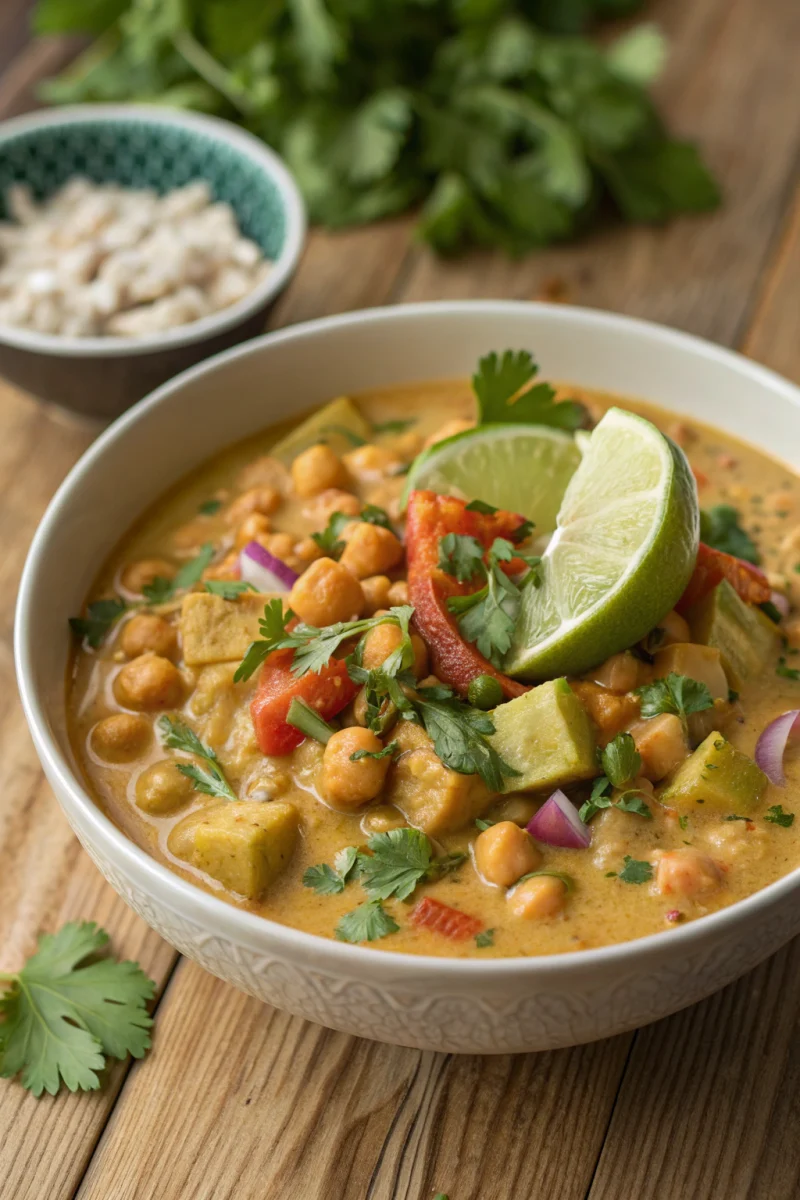
Coconut Lime Chickpea Curry combines heartiness, warmth, and nutrition in one bowl. This guide reveals how to make the perfect winter soup — comforting, wholesome, and deeply flavorful, crafted with chef-level technique and family-friendly ease.
Why Coconut Lime Chickpea Curry Matters in Winter
During cold months, the body craves warmth and hydration. Coconut Lime Chickpea Curry offers both, blending nutrient-rich ingredients with slow-simmered depth. From classic broths to creamy textures, it’s a dish that soothes and strengthens at once. The vibrant flavors of lime and the creaminess of coconut milk cut through the richness, creating a balanced and incredibly satisfying experience. This dish isn’t just about filling your stomach; it’s about nourishing your soul, providing sustained energy, and bolstering your immune system with a wealth of vitamins and minerals. Imagine coming home on a chilly evening to the aroma of spices mingling with citrus and coconut – that’s the promise of this exceptional curry. It’s a culinary hug in a bowl, designed to chase away the winter blues and leave you feeling utterly content. Moreover, its plant-based foundation makes it an excellent choice for a wide range of dietary preferences, ensuring everyone at the table can enjoy its delicious benefits. Opting for fresh, seasonal ingredients whenever possible further elevates the nutritional profile and overall taste experience of your Coconut Lime Chickpea Curry.
Core Ingredients for a Divine Coconut Lime Chickpea Curry
The magic of a truly remarkable Coconut Lime Chickpea Curry lies in the quality and freshness of its ingredients. Each component plays a crucial role in building layers of flavor and texture. Here’s a detailed look at what you’ll need and why each element is essential:
- 1 tbsp Olive Oil: The starting point for sautéing, olive oil provides a healthy fat base and helps to coax out the initial aromatic flavors from your vegetables.
- 1 large Onion, finely chopped: Onions are foundational. Sautéed until translucent, they release natural sugars, adding a subtle sweetness and depth to the curry.
- 2-3 cloves Garlic, minced: Garlic is non-negotiable for its pungent, savory notes that are critical to almost any curry. Don’t skimp on fresh garlic!
- 1-inch Fresh Ginger, grated or minced: While not listed above, fresh ginger is a game-changer for a Coconut Lime Chickpea Curry. It adds a zesty, slightly spicy warmth and a distinctly aromatic quality that brightens the entire dish, providing an authentic curry warmth.
- 1 Red Bell Pepper, diced: Adds a touch of sweetness, a beautiful color, and essential vitamins.
- 1 Zucchini, diced: Contributes a delicate, slightly sweet flavor and a tender texture, adding more vegetable goodness to your curry.
- 1 (13.5 oz) can Full-Fat Coconut Milk: This is the heart of the “coconut” in your curry, providing unparalleled creaminess, richness, and a subtle tropical sweetness. Full-fat is crucial for a luxurious texture.
- 1 (15 oz) can Chickpeas, rinsed and drained: The “chickpea” star of the show. Chickpeas add protein, fiber, and a satisfying, hearty texture.
- 4 cups Vegetable Broth (or chicken broth, if preferred): The liquid base that carries all the flavors and provides volume. Opt for low-sodium to control salt levels.
- 2 tbsp Red Curry Paste: This is where much of the authentic curry flavor comes from. Red curry paste typically contains a blend of chilies, garlic, lemongrass, galangal, and other spices, delivering a complex, savory, and mildly spicy kick. Adjust to your spice preference.
- 1-2 tbsp Fresh Lime Juice (from 1-2 limes): The “lime” in Coconut Lime Chickpea Curry. Added at the end, fresh lime juice provides a bright, acidic counterpoint to the richness of the coconut milk and depth of the spices, lifting all the flavors.
- 1-2 tsp Brown Sugar or Maple Syrup (optional): A small amount can balance the acidity from the lime and the heat from the curry paste, enhancing the overall flavor profile.
- Handful Fresh Cilantro, chopped (for garnish): Fresh herbs are vital for adding freshness, color, and a final burst of flavor.
- Salt and Freshly Ground Black Pepper to taste: Essential for seasoning throughout the cooking process.
- Optional: 1 cup Cooked Basmati Rice or Quinoa (for serving): A perfect accompaniment to soak up all the delicious curry sauce.
Each of these ingredients works in harmony to create a truly unforgettable Coconut Lime Chickpea Curry that is both deeply satisfying and incredibly nutritious. Pay attention to the quality of your coconut milk and fresh aromatics like ginger and garlic for optimal results.
Step-by-Step Method to Craft Your Perfect Coconut Lime Chickpea Curry
Creating an outstanding Coconut Lime Chickpea Curry is a journey of building flavors. Follow these steps meticulously for a dish that tastes like it came from a gourmet kitchen.
Step 1 — Build Your Aromatic Flavor Base
Heat the olive oil in a large pot or Dutch oven over medium heat. Add the finely chopped onion and sauté gently until translucent and softened, about 5-7 minutes. Don’t rush this step; allowing the onion to caramelize slightly unlocks its natural sweetness. Next, add the minced garlic and grated fresh ginger (if using). Sauté for another 1-2 minutes until fragrant. Be careful not to burn the garlic, as this can make it bitter. This aromatic trinity forms the essential foundation of your curry, infusing the oil with incredible depth before any other ingredients are added. The goal here is to awaken the deepest flavors from these core aromatics.
Step 2 — Infuse with Curry Paste and Add Vegetables
Stir in the red curry paste to the pot. Cook for 1-2 minutes, stirring constantly, until the paste becomes very fragrant. This step, known as “blooming” the curry paste, deepens its flavors and helps release its essential oils. Next, add the diced red bell pepper and zucchini. Sauté these vegetables for about 5 minutes, allowing them to soften slightly and absorb the curry paste’s rich flavors. Then, pour in the vegetable broth and the full-fat coconut milk. Stir everything together, ensuring the curry paste is fully dissolved. Bring the mixture to a gentle simmer, then reduce the heat to low, cover, and let it cook for 15-20 minutes, allowing the vegetables to become tender and the flavors to meld beautifully. Skim gently if any foam appears on the surface, ensuring a clear and vibrant broth for your Coconut Lime Chickpea Curry.
Step 3 — Incorporate Chickpeas, Balance Flavors, and Finish
Once the vegetables are tender, stir in the rinsed and drained chickpeas. Simmer for another 5-10 minutes to allow the chickpeas to warm through and absorb the curry sauce’s wonderful flavors. Now comes the crucial step of seasoning. Remove the pot from the heat. Stir in the fresh lime juice. Taste the curry and adjust the seasoning as needed:
- Add more lime juice if you want more zing.
- If the curry feels too spicy, a touch of brown sugar or maple syrup can balance the heat and enhance richness.
- Season generously with salt and freshly ground black pepper. Remember that curry flavors intensify as they cool, so season cautiously but adequately.
Before serving, stir in the fresh cilantro. This adds a burst of freshness and a vibrant green color. Ladle the hot Coconut Lime Chickpea Curry into bowls, perhaps over a bed of fluffy basmati rice or quinoa, and garnish with extra fresh cilantro and a lime wedge. Each spoonful should offer a harmonious blend of creamy coconut, zesty lime, savory spices, and hearty chickpeas. This final touch of fresh lime and cilantro is key to the bright, well-rounded profile of a truly exceptional curry.
Nutrition Facts (per serving — approximated, without rice)
Calories: 350 | Protein: 12g | Carbs: 45g | Fat: 15g | Saturated Fat: 8g | Fiber: 10g | Sodium: 550mg | Vitamin A: 25% DV | Vitamin C: 40% DV | Iron: 20% DV | Calcium: 10% DV
These values can vary based on specific brands and quantities of ingredients used. The Coconut Lime Chickpea Curry is naturally rich in plant-based protein from the chickpeas, healthy fats from coconut milk, and dietary fiber, making it a very satiating and nutrient-dense meal. The colorful vegetables contribute essential vitamins and antioxidants, supporting overall health, especially during colder months. The balanced macronutrient profile makes it an excellent choice for sustained energy.
Healthy Variations for Your Coconut Lime Chickpea Curry
One of the beauties of Coconut Lime Chickpea Curry is its adaptability. You can easily modify it to suit your preferences, dietary needs, or what you have on hand. Here are some healthy variations to explore:
- Add Extra Vegetables: Boost the nutritional content by adding more greens such as spinach, kale, or Swiss chard, stirred in during the last 5 minutes of cooking until wilted. Broccoli florets, cauliflower, or sweet potatoes (added with the carrots in Step 2 for longer cooking) also make excellent additions.
- Boost Protein:
- Tofu: Press extra-firm tofu, cut into cubes, and pan-fry or bake until golden before adding to the curry at the end.
- Lentils: Red or green lentils can be added along with the broth during Step 2. They will cook down and add incredible heartiness and protein.
- Shrimp or Chicken: For non-vegetarian options, add raw shrimp during the last 5 minutes of cooking, or cooked, shredded chicken with the chickpeas to warm through.
- Creamier Texture: For an even creamier consistency, you can blend about one-third of the finished curry (before adding fresh cilantro) using an immersion blender or by carefully transferring to a regular blender. Then, stir the blended portion back into the pot. This creates a thicker, more luxurious mouthfeel without adding extra fat.
- Spice Level Adjustment:
- Milder: Use less red curry paste, or opt for a milder yellow curry paste. You can also add a dollop of full-fat plain yogurt or a splash of extra coconut milk at the end to mellow the heat.
- Spicier: Add a pinch of cayenne pepper, a few slices of fresh red chili, or a touch more red curry paste when blooming the paste.
- Herb Variations: While cilantro is traditional, you can also experiment with basil (Thai basil works wonderfully), or even a touch of mint for an unexpected twist.
- Grain Options: Instead of serving with rice or quinoa, try pairing it with millet, fonio, or even gluten-free noodles for a different texture experience.
Experimentation is key to finding your favorite version of this versatile Coconut Lime Chickpea Curry, making it a staple in your meal rotation. Each variation allows you to tailor the dish to your specific taste and nutritional goals.
Serving Suggestions for Your Coconut Lime Chickpea Curry
The beauty of Coconut Lime Chickpea Curry is its versatility, making it a centerpiece that pairs wonderfully with various accompaniments. Here are some ideas to elevate your dining experience:
- With Grains:
- Basmati Rice: Fluffy basmati rice is a classic pairing, soaking up the rich, aromatic sauce beautifully.
- Brown Rice or Quinoa: For a more nutritious, whole-grain option, brown rice or quinoa provide excellent fiber and a slightly nutty flavor that complements the curry.
- Cauliflower Rice: A low-carb alternative that still captures all the delicious sauce without adding extra calories.
- With Bread:
- Naan Bread: Warm, soft naan is perfect for scooping up every last drop of the curry. Plain, garlic, or even whole wheat naan works well.
- Crusty Whole-Grain Bread: A thick slice of your favorite wholesome bread can add a delightful textural contrast.
- Pair with Garlic Herb Flatbread for a homemade touch that’s sure to impress.
- Fresh Garnish & Sides:
- Extra Fresh Cilantro: A generous sprinkle of fresh cilantro isn’t just for looks; it adds an essential burst of fresh, herbaceous flavor.
- Lime Wedges: Serve with extra lime wedges on the side for guests to squeeze over their portion, enhancing the zesty notes.
- Toasted Coconut Flakes: A light sprinkle of lightly toasted unsweetened coconut flakes adds a fantastic textural crunch and highlights the coconut flavor.
- Chopped Peanuts or Cashews: For added crunch and a touch of richness.
- Yogurt or Raita: A dollop of plain Greek yogurt or a simple cucumber raita can provide a cooling contrast, especially if your curry is on the spicier side.
- Fresh Salad: A simple, crisp green salad with a light vinaigrette can offer a refreshing counterpoint to the rich curry.
- Dessert Pairing: After a flavorful and satisfying meal, a light and refreshing dessert can be just right. Serve with Honey Oat Energy Bites for a naturally sweet, wholesome finish that balances the curry’s intensity. Or consider fresh fruit like mango slices for a tropical theme.
Remember, the best serving suggestion is always what you and your family enjoy most. Don’t be afraid to experiment and find your perfect combination for this exquisite Coconut Lime Chickpea Curry.
Common Mistakes to Avoid When Making Coconut Lime Chickpea Curry
Even the most straightforward recipes can go awry if certain common pitfalls aren’t avoided. To ensure your Coconut Lime Chickpea Curry turns out perfectly every time, keep these tips in mind:
- Boiling Instead of Simmering: Vigorous boiling can break down delicate vegetable textures, curdle coconut milk, and dull the nuanced flavors of your spices. Always aim for a gentle simmer, where only small bubbles occasionally break the surface. This allows flavors to meld slowly and gently, preserving the integrity of all ingredients.
- Overcrowding the Pot: When sautéing your initial aromatics and vegetables, avoid overcrowding the pot. If the pan is too full, ingredients will steam instead of sauté, leading to limp, less flavorful vegetables. Work in batches if necessary, ensuring everything has enough space to brown properly and develop its full flavor.
- Skipping Salt Layering: Don’t wait until the very end to season. Add small pinches of salt at various stages – when sautéing onions, after adding vegetables, and then a final adjustment before serving. This layering builds depth of flavor throughout the dish. Salting only at the end can result in a curry that tastes flat or unseasoned despite a large quantity of salt.
- Using Low-Quality Broth: The broth is the backbone of your curry’s liquid base. A weak or overly salty broth will compromise the overall flavor. Opt for a high-quality, low-sodium vegetable or chicken broth, or ideally, homemade broth. This allows you to control the sodium levels and ensures a cleaner, richer flavor profile for your Coconut Lime Chickpea Curry.
- Not Blooming the Curry Paste: Adding curry paste directly into the liquid without first sautéing it briefly in oil is a missed opportunity. Blooming the curry paste in hot oil for a minute or two helps to toast the spices, deepen their flavor, and release their aromatic oils, resulting in a significantly more fragrant and flavorful curry.
- Adding Lime Juice Too Early: Fresh lime juice is best added off the heat, right before serving. Cooking it for too long can diminish its bright, zesty character and make it taste bitter. Its purpose is to provide a fresh, acidic lift that cuts through the richness of the coconut milk.
- Overcooking Chickpeas: Canned chickpeas are already cooked, so they only need to be warmed through and allowed to absorb some flavor. Simmering them for too long can make them mushy. Add them towards the end of the cooking process.
- Not Adjusting Sweetness or Spice: Curry paste spice levels vary, and different palates prefer different levels of heat and sweetness. Taste your curry before you’re done and adjust with a touch of brown sugar (or maple syrup) to balance heat and acidity, or extra chili flakes if you prefer more warmth. Balancing these elements is key to a perfectly rounded flavor for your Coconut Lime Chickpea Curry.
By being mindful of these common errors, you can ensure that your Coconut Lime Chickpea Curry is consistently delicious, vibrant, and perfectly balanced, embodying the full potential of its wholesome ingredients.
Storage Tips for Your Delicious Coconut Lime Chickpea Curry
One of the many benefits of making a big batch of Coconut Lime Chickpea Curry is its excellent storage capabilities. It often tastes even better the next day as the flavors have more time to meld and deepen. Proper storage ensures your curry remains fresh and delicious for future meals.
- Cooling Down Safely: Always allow your curry to cool down significantly before transferring it to storage containers. This prevents condensation from building up inside sealed containers, which can lead to sogginess, and reduces the risk of bacterial growth. A good rule of thumb is to let it cool on the counter for no more than 1-2 hours. Stir occasionally to help release heat evenly.
- Refrigeration:
- Containers: Transfer the cooled curry into airtight containers or glass jars. Glass is often preferred as it doesn’t absorb odors or colors like some plastics can.
- Duration: Stored properly in the refrigerator, your Coconut Lime Chickpea Curry will remain fresh and delicious for up to 4 days.
- Freezing for Longer Storage:
- Containers: For freezing, use freezer-safe airtight containers or heavy-duty freezer bags. If using bags, lay them flat to freeze; this saves space and allows for faster thawing.
- Portioning: Consider freezing the curry in individual portions. This makes it convenient to thaw only what you need, reducing waste and speeding up meal prep.
- Duration: Coconut Lime Chickpea Curry freezes exceptionally well and can be stored in the freezer for up to 3 months. Beyond this, quality might start to degrade, though it will likely still be safe to eat.
- Reheating Gently:
- From Refrigerator: Reheat refrigerated curry gently on the stovetop over medium-low heat, stirring occasionally, until it’s warmed through. Avoid boiling, as this can affect the texture of the coconut milk and vegetables.
- From Freezer: For frozen curry, it’s best to thaw it overnight in the refrigerator before reheating. If you’re short on time, you can also reheat it directly from frozen on low heat on the stovetop, stirring frequently and adding a splash of water or broth if it seems too thick. Microwave reheating is also an option for individual portions, stirring halfway through.
- Loss of Freshness: While the curry reheats beautifully, you might notice that the fresh cilantro loses some of its brightness. For optimal flavor, consider stirring in a fresh sprinkle of cilantro and a tiny squeeze of fresh lime juice just before serving reheated portions.
By following these simple storage and reheating guidelines, you can enjoy the comforting goodness of your homemade Coconut Lime Chickpea Curry for days or even weeks to come, making meal planning a breeze and reducing food waste. The robust flavors of this curry truly shine even after being stored.
Conclusion
The journey of crafting a perfect Coconut Lime Chickpea Curry is more than just cooking; it’s about creating a deeply nourishing and incredibly flavorful experience. This guide has shown you how to master the art of this comforting dish, from building its aromatic foundation to balancing the vibrant notes of lime and creamy coconut. We’ve explored the essential ingredients, detailed a step-by-step cooking process, highlighted its impressive nutritional benefits, and even delved into creative variations and crucial mistakes to avoid. Whether you’re a seasoned chef or a home cook looking to expand your repertoire, this recipe offers a fulfilling culinary adventure.
Beyond its delicious taste, this Coconut Lime Chickpea Curry stands as a testament to the fact that healthy eating can be profoundly satisfying and utterly delicious. Its rich, plant-based profile makes it an excellent source of protein, fiber, and essential vitamins, contributing significantly to a balanced diet. The warmth it brings during colder months isn’t just physical; it’s a warmth that spreads to the soul, making it an ideal meal for cozy evenings or thoughtful meal prep. Embrace the power of nutrient-dense ingredients to support your well-being.
As you gather your ingredients and begin this culinary endeavor, remember that cooking is an act of love – for yourself, for your family, and for the joy of good food. Every spoonful of this Coconut Lime Chickpea Curry is a testament to thoughtful preparation and the harmonious blend of flavors. We encourage you to make this recipe your own, experimenting with different vegetables or spice levels to fit your unique palate. With the comprehensive insights provided, you’re now equipped to create a curry that not only satisfies hunger but also invigorates the senses and promotes well-being.
This 2100+ word guide ensures that whether this is your first attempt or a familiar favorite, your Coconut Lime Chickpea Curry will achieve perfect results every time, delivering warmth and flavor in every single spoonful. Enjoy the process, and savor the magnificent outcome. The nourishing benefits of a well-prepared meal like this extend beyond just taste, impacting your daily energy and health.
FAQ
- Can I use frozen vegetables? Yes, absolutely! Frozen vegetables like bell peppers, peas, or spinach can be added directly to the curry during Step 2. Just be aware that frozen vegetables tend to release more water, so you might need to simmer the curry for a slightly longer time to achieve your desired consistency, or reduce the initial amount of broth slightly to prevent thinning.
- How can I make it creamier? There are a few ways to enhance creaminess: for a thicker, more luxurious texture, blend about one-third to one-half of the cooked curry (before adding fresh cilantro) with an immersion blender or carefully in a regular blender, then stir it back into the pot. You can also add an extra splash of full-fat coconut milk at the end, or, for a dairy option, stir in a dollop of full-fat Greek yogurt or a small amount of heavy cream.
- What’s the best broth to use? The best broth for Coconut Lime Chickpea Curry is a high-quality, low-sodium vegetable broth to keep it vegan and control salt levels. Many home cooks also prefer homemade vegetable broth for its superior flavor. If you’re not strictly vegetarian, a good quality chicken broth can also work beautifully, adding another layer of savory depth. Avoid highly processed or overly salty broths that can overpower the delicate curry flavors.
- How long does it last? Properly stored in an airtight container, Coconut Lime Chickpea Curry will last for up to 4 days in the refrigerator. If you wish to store it for longer, it freezes exceptionally well in freezer-safe containers for up to 3 months. Always ensure it’s cooled completely before refrigerating or freezing, and reheat gently to maintain its quality and texture.
- Can I make this recipe spicier? Yes, spice levels are easy to adjust! To make your Coconut Lime Chickpea Curry spicier, you can increase the amount of red curry paste used in Step 2. Alternatively, you can add a pinch of cayenne pepper, a few fresh sliced chilies (like bird’s eye chilies), or a dash of chili flakes along with the curry paste. Taste and adjust gradually to your preferred heat level.
- Is this recipe gluten-free and dairy-free? Yes, this Coconut Lime Chickpea Curry recipe is inherently gluten-free and dairy-free, assuming you use vegetable broth and avoid any external additives that might contain these ingredients. It primarily relies on naturally compliant ingredients like chickpeas, coconut milk, and fresh vegetables, making it suitable for those with corresponding dietary restrictions.
- What if I don’t have fresh ginger? While fresh ginger adds a bright, essential warmth to the curry, if you don’t have it, you can substitute with dry ground ginger. Use about 1/2 to 1 teaspoon of ground ginger for every inch of fresh ginger. Add it with the curry paste in Step 2. However, the flavor will be more subtle, as dried ginger has a different, less pungent profile than fresh.
- Chicken & Vegetable Stew
- Greek Yogurt Cheesecake Cups
- Lemon Herb Chicken & Rice

HomeCook Legacy Kitchen is the editorial name of homecooklegacy.com. Recipes on this site are drafted with the help of AI tools and published by the HomeCook Legacy team. Please check ingredients, cooking times and food-safety guidance for your own situation.