
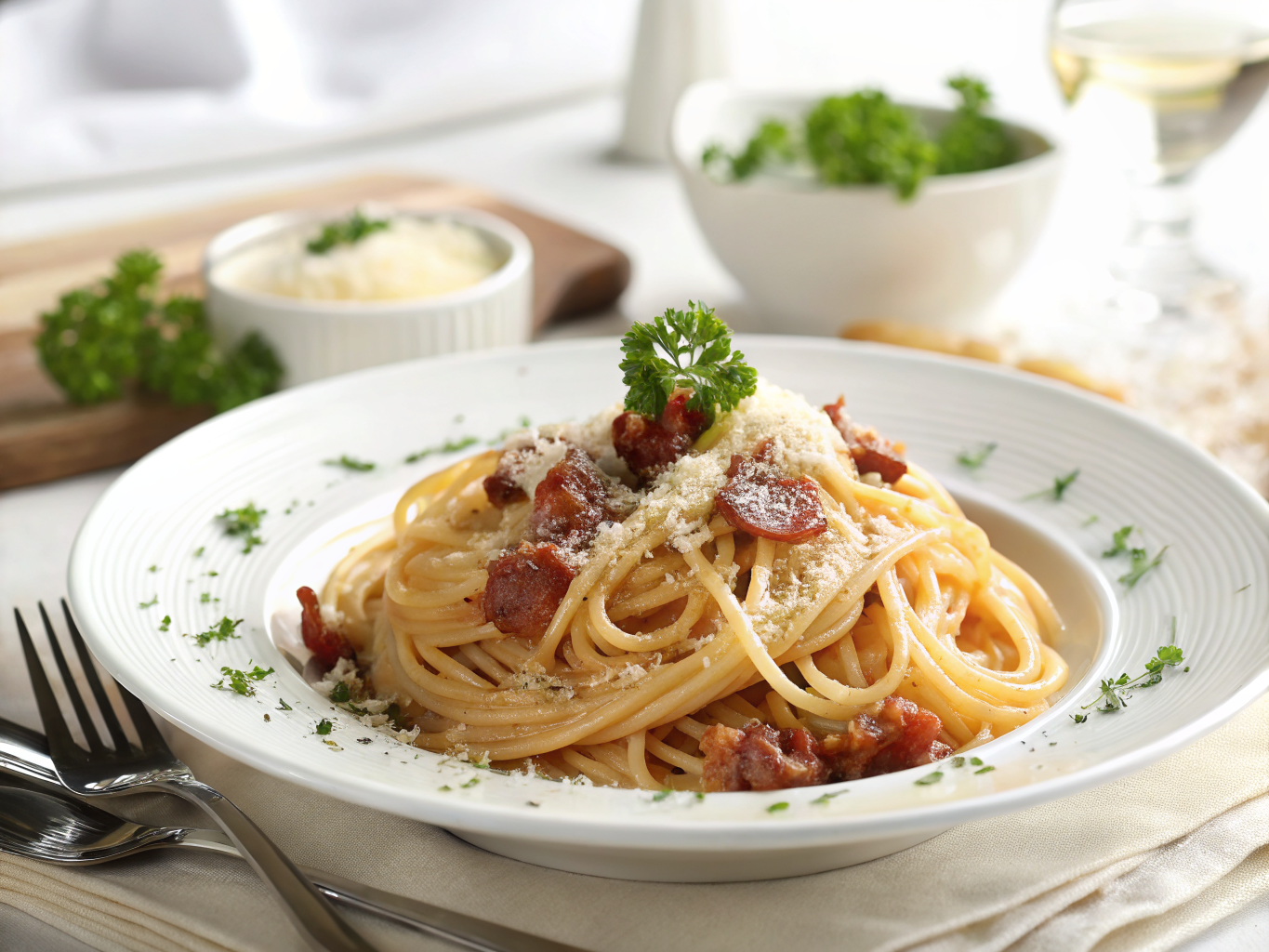
Pasta Carbonara
Ingredients
Method
- Bring a large pot of salted water to a boil. Add the pasta and cook according to package directions until al dente, about 8-10 minutes. Reserve 2 cups of pasta cooking water before draining.
- While pasta cooks, add guanciale to a large cold skillet. Turn heat to medium and cook, stirring occasionally, until the fat renders and guanciale is crispy, about 8-10 minutes. Turn off heat and set aside.
- In a medium bowl, whisk together egg yolks, whole eggs, grated Pecorino Romano, and black pepper until well combined and smooth.
- Add the drained pasta directly to the skillet with the guanciale. Toss to coat the pasta in the rendered fat. Let cool for 1-2 minutes off heat.
- Remove skillet from heat completely. Add the egg and cheese mixture to the pasta, tossing vigorously and constantly. Add reserved pasta water a few tablespoons at a time, continuing to toss until the sauce is creamy and coats the pasta without scrambling.
- Continue adding pasta water and tossing until you achieve a silky, glossy sauce that clings to each strand of pasta. The sauce should be creamy, not dry or watery.
- Serve immediately in warm bowls, topped with additional grated Pecorino Romano and freshly ground black pepper.
Nutrition
Notes
Tried this recipe?
Let us know how it was!Pasta Carbonara is one of Rome’s four iconic pasta dishes, standing alongside Cacio e Pepe, Amatriciana, and Gricia as pillars of Italian culinary tradition. This deceptively simple recipe combines just a handful of ingredients—guanciale, eggs, Pecorino Romano cheese, black pepper, and pasta—to create a luxuriously creamy sauce without a drop of cream. The magic happens when the residual heat from the pasta transforms raw eggs into a silky, coating sauce that clings to every strand of spaghetti.
Thank you for reading this post, don't forget to subscribe!What makes this Pasta Carbonara recipe so special is its authenticity and respect for traditional Roman cooking methods. Unlike many Americanized versions that add cream, peas, or chicken, this recipe stays true to its roots while being accessible for home cooks. The result is a dish that’s rich, satisfying, and surprisingly quick to prepare, making it perfect for weeknight dinners or impressive enough for entertaining guests.
Why This Pasta Carbonara Recipe Works Every Time
The success of this Pasta Carbonara recipe lies in understanding the science behind emulsification. When hot pasta is tossed with the egg and cheese mixture, the residual heat gently cooks the eggs without scrambling them, creating that signature creamy texture. The starchy pasta water acts as a crucial emulsifying agent, binding the fat from the guanciale with the egg proteins and cheese to form a cohesive, glossy sauce.
Traditional carbonara relies on timing and temperature control rather than complicated techniques. The key is removing the pan from direct heat before adding the egg mixture, allowing the pasta’s warmth to do the work gradually. This method ensures you achieve the perfect consistency every time without the risk of ending up with scrambled eggs.
Another reason this recipe stands out is its emphasis on quality ingredients. Since there are so few components, each one plays a starring role in the final dish. Using authentic Pecorino Romano instead of Parmesan, sourcing real guanciale rather than bacon, and selecting the right pasta shape all contribute to an exceptional result that honors the dish’s Roman heritage.
Core Ingredients for an Authentic Pasta Carbonara Recipe
The foundation of any great Pasta Carbonara recipe begins with guanciale, the cured pork jowl that provides a distinctive flavor profile unlike any substitute. Guanciale has a higher fat-to-meat ratio than pancetta or bacon, creating a richer, more unctuous base for the sauce. The fat renders during cooking, becoming the vehicle that carries the pork’s savory flavor throughout the dish while providing the necessary lipids for proper emulsification.
Pecorino Romano cheese is the traditional choice for carbonara, offering a sharp, salty, and slightly tangy flavor that balances the richness of the eggs and pork. This sheep’s milk cheese has been produced in the Lazio region for over two thousand years, making it an integral part of Roman culinary identity. Grate it fresh just before using, as pre-grated cheese contains anti-caking agents that can interfere with the sauce’s smooth texture.
The eggs in this recipe should be the freshest you can find, as they’re barely cooked and form the creamy base of the sauce. Most authentic recipes call for whole eggs plus additional yolks to increase richness and ensure proper emulsification. The proteins in the eggs coagulate gently when exposed to the pasta’s heat, creating that luxurious coating without becoming grainy or curdled.
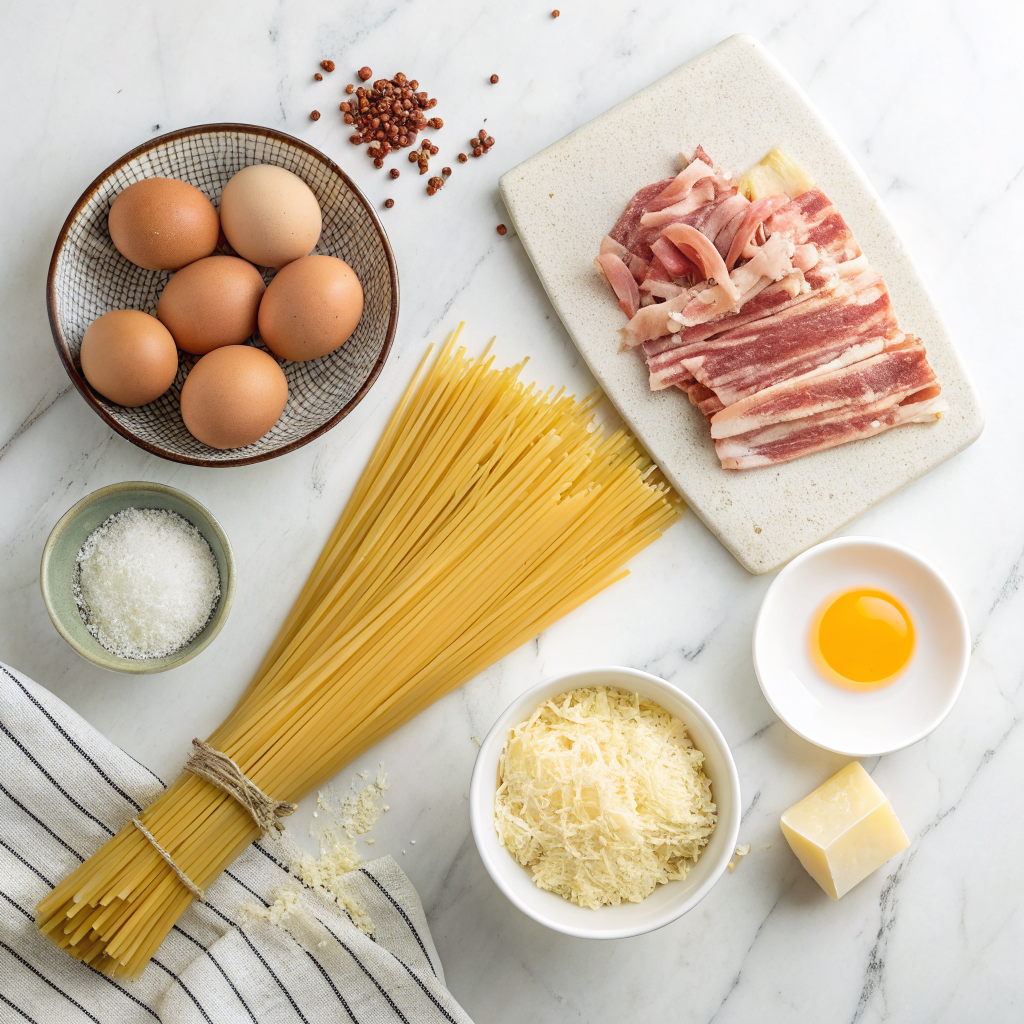
Freshly ground black pepper is more than just a seasoning in carbonara—it’s one of the defining flavors of the dish. Coarsely ground pepper adds a pleasant heat and aromatic quality that cuts through the richness of the sauce. Toast the peppercorns briefly in the rendered guanciale fat to unlock even more complex flavors and aromatic compounds.
The pasta itself matters more than many people realize when making this Pasta Carbonara recipe. Long pasta shapes like spaghetti, rigatoni, or bucatini work best because they provide maximum surface area for the sauce to cling to. According to Harvard School of Public Health, choosing quality pasta made from durum wheat semolina ensures better texture and nutritional value.
Step-by-Step Instructions for Perfect Pasta Carbonara
Preparing Your Ingredients
Before you begin cooking this Pasta Carbonara recipe, prepare all your ingredients and have them ready at arm’s reach. Cut the guanciale into small strips or lardons about a quarter-inch thick, keeping the pieces uniform so they render evenly. Grate your Pecorino Romano cheese finely, using a microplane if possible for the smoothest texture in the final sauce.
In a large bowl, whisk together the whole eggs and extra yolks until completely combined and slightly frothy. Add the grated Pecorino Romano to the eggs and whisk until you have a thick, paste-like consistency. Season this mixture with a generous amount of freshly ground black pepper, remembering that this is one of the dish’s signature flavors and shouldn’t be skimped on.
Bring a large pot of water to a rolling boil and salt it generously—it should taste like seawater. This is your only opportunity to season the pasta itself, so don’t be shy with the salt. Keep a large measuring cup nearby to reserve pasta cooking water, which will be essential for achieving the perfect sauce consistency.
Cooking the Guanciale
Place the guanciale strips in a large, cold skillet—preferably one large enough to eventually hold all the pasta. Starting with a cold pan allows the fat to render slowly and evenly without burning the meat. Turn the heat to medium and let the guanciale cook gently, stirring occasionally, for about eight to ten minutes.
The guanciale is ready when it’s golden and crispy on the edges but still tender, with most of its fat rendered into the pan. The rendered fat should be clear and fragrant, creating a flavorful base for your sauce. If you’re using a carbon steel or cast iron pan, this is when it develops a beautiful fond on the bottom that adds extra depth to the dish.
Once the guanciale reaches the perfect crispy-chewy texture, remove the pan from heat and let it cool slightly while you finish cooking the pasta. This cooling period is crucial for the next step, ensuring the pan isn’t too hot when you add the egg mixture. You can explore more dinner recipes on our site that use similar techniques.
Cooking and Combining the Pasta
Add your pasta to the boiling salted water and cook it until it’s just shy of al dente—about one minute less than the package directions suggest. The pasta will continue cooking when you toss it with the sauce, so undercooking it slightly prevents it from becoming mushy. Stir occasionally during cooking to prevent the strands from sticking together.
About thirty seconds before the pasta is ready, reserve at least two cups of the starchy pasta cooking water. This liquid gold contains dissolved starches that act as an emulsifier, helping to bind the sauce together into a creamy, cohesive coating. The cloudier the water, the more starch it contains and the better it will work in your sauce.
Using tongs or a pasta spider, transfer the pasta directly from the pot to the skillet with the guanciale. Don’t drain the pasta in a colander—you want some of that starchy water to come along with it. Toss the pasta vigorously with the guanciale and rendered fat for about thirty seconds, allowing the noodles to absorb the pork flavor.
Creating the Creamy Sauce
This is the most critical moment in executing this Pasta Carbonara recipe perfectly. Make absolutely sure the pan is off the heat and has cooled for at least two minutes before proceeding. Pour the egg and cheese mixture over the pasta, then immediately begin tossing vigorously with tongs, lifting and turning the pasta to distribute the egg mixture evenly.
As you toss, gradually add splashes of the reserved pasta water, a few tablespoons at a time. The combination of the pasta’s residual heat, the starchy water, and constant agitation will transform the raw egg mixture into a silky, creamy sauce. This process should take about two to three minutes of continuous tossing and should never happen over direct heat.
The sauce is ready when it coats the pasta in a glossy, cream-like layer that’s neither too thick nor too runny. It should have the consistency of heavy cream and cling to each strand of pasta without pooling at the bottom of the pan. If the sauce seems too thick, add more pasta water; if it’s too thin, the residual heat and continued tossing will help it thicken.
Nutritional Benefits of Pasta Carbonara
While Pasta Carbonara might seem indulgent, it actually provides a balanced combination of macronutrients when consumed in appropriate portions. The eggs offer high-quality protein containing all nine essential amino acids, supporting muscle maintenance and overall cellular function. Each serving provides approximately fifteen to twenty grams of protein, making it a satisfying meal that helps maintain stable blood sugar levels.
The Pecorino Romano cheese adds not only flavor but also significant amounts of calcium, phosphorus, and vitamin B12. According to Healthline, cheese can be part of a healthy diet when consumed in moderation, providing beneficial nutrients and healthy fats. The cheese in this Pasta Carbonara recipe also contributes conjugated linoleic acid, which has been studied for potential health benefits.
The pasta itself, especially when made from durum wheat, provides complex carbohydrates that offer sustained energy throughout the day. When cooked al dente, pasta has a lower glycemic index than when overcooked, meaning it causes a more gradual rise in blood sugar. The resistant starch formed when pasta cools slightly also offers prebiotic benefits for gut health.
That said, this Pasta Carbonara recipe is calorie-dense due to the guanciale’s fat content and the cheese. A typical serving contains approximately 450-600 calories, depending on portion size and ingredient proportions. For those watching their intake, the dish can be enjoyed as part of a balanced diet by controlling portion sizes and pairing it with a large green salad.
Creative Variations on Traditional Pasta Carbonara
Protein Alternatives
While purists insist on guanciale for an authentic Pasta Carbonara recipe, practical home cooks sometimes need to make substitutions. Pancetta offers the closest alternative, though it’s leaner and less intensely flavored than guanciale. Cook it the same way, rendering the fat slowly to develop maximum flavor and achieve crispy edges.
For those who can’t find Italian cured meats, thick-cut bacon can work in a pinch, though it will give the dish a smokier, less authentic flavor profile. Choose bacon without added sugar or strong smoking, as these can overpower the delicate egg and cheese sauce. Some cooks even experiment with duck bacon or turkey bacon for different flavor dimensions.
A vegetarian version can be created using smoked mushrooms or crispy fried zucchini to replace the guanciale, though this diverges significantly from tradition. You’ll need to add olive oil or butter for the necessary fat content that helps create the creamy sauce. While not traditional, these adaptations make the essential technique accessible to those with dietary restrictions.
Cheese Variations
Traditional recipes call exclusively for Pecorino Romano, but many modern interpretations blend it with Parmigiano-Reggiano for a milder, less salty flavor. A 50-50 mixture offers complexity while making the dish more approachable for those who find pure Pecorino too intense. Both cheeses should still be freshly grated for the best melting properties and smoothest sauce.
Some regional variations use Grana Padano, another Italian hard cheese with Protected Designation of Origin status. This cheese falls somewhere between Pecorino and Parmigiano in terms of sharpness and salt content. Experiment with different cheese combinations to find your preferred balance, keeping in mind that the cheese is a primary flavor component in this Pasta Carbonara recipe.
Pasta Shape Options
While spaghetti is the classic choice for carbonara, other pasta shapes work beautifully with this sauce. Rigatoni’s ridges and hollow center capture the creamy sauce, making each bite incredibly satisfying. Bucatini, with its thin hole running through the center, offers an interesting textural contrast and holds sauce both inside and out.
Short pasta shapes like mezze maniche or tortiglioni also work well, especially when you want a heartier, more rustic presentation. The key is choosing shapes with texture or ridges that help the sauce adhere rather than slipping off. You can find more ideas for different pasta preparations in our collection of traditional Italian recipes.
Perfect Serving Suggestions for Pasta Carbonara
This Pasta Carbonara recipe shines as a main course, but thoughtful accompaniments can elevate the entire meal. A simple arugula salad with lemon vinaigrette provides a refreshing, peppery contrast to the rich, creamy pasta. The acidity and bitterness of the greens cut through the fat content, cleansing your palate between bites and preventing flavor fatigue.
Crusty Italian bread is a classic accompaniment, perfect for soaking up any sauce left on the plate. Toast thick slices and rub them with a cut garlic clove, then drizzle with quality extra virgin olive oil for a simple bruschetta. The bread’s crispy texture contrasts beautifully with the creamy pasta, adding another dimension to the meal.
For wine pairing, choose a crisp, acidic white wine like Verdicchio or Frascati, both from the Lazio region where carbonara originated. These wines have enough acidity to cut through the richness while complementing the pork and cheese flavors. If you prefer red wine, opt for a light-bodied, high-acid option like Barbera or Chianti that won’t overwhelm the delicate sauce.
Serve the carbonara immediately after preparation, as it doesn’t hold well once plated. The sauce continues to thicken as it cools, potentially becoming gluey if left to sit too long. Present it in warm bowls with an extra grating of Pecorino Romano and a crack of black pepper on top for visual appeal and enhanced flavor.
Common Mistakes to Avoid When Making Pasta Carbonara
Temperature Control Issues
The most frequent mistake when preparing this Pasta Carbonara recipe is adding the egg mixture to pasta that’s too hot, resulting in scrambled eggs rather than creamy sauce. Always remove the pan from heat and let it cool for at least two minutes before adding the eggs. The residual heat from the pasta should be sufficient to gently cook the eggs without overcooking them.
Conversely, if the pasta cools too much, the eggs won’t cook at all, leaving you with a raw, runny sauce that never achieves the proper consistency. Finding the sweet spot requires practice and attention to timing. Working quickly but deliberately, ensuring constant movement, and having all ingredients prepared in advance helps you maintain the ideal temperature range.
Using the Wrong Ingredients
Substituting bacon for guanciale changes the dish’s entire flavor profile, introducing smoke and sweetness that aren’t present in authentic carbonara. While bacon can work in a pinch, it’s important to understand you’re making an Americanized version rather than the traditional Roman preparation. Similarly, using Parmesan instead of Pecorino Romano results in a milder, less characteristic sauce.
