
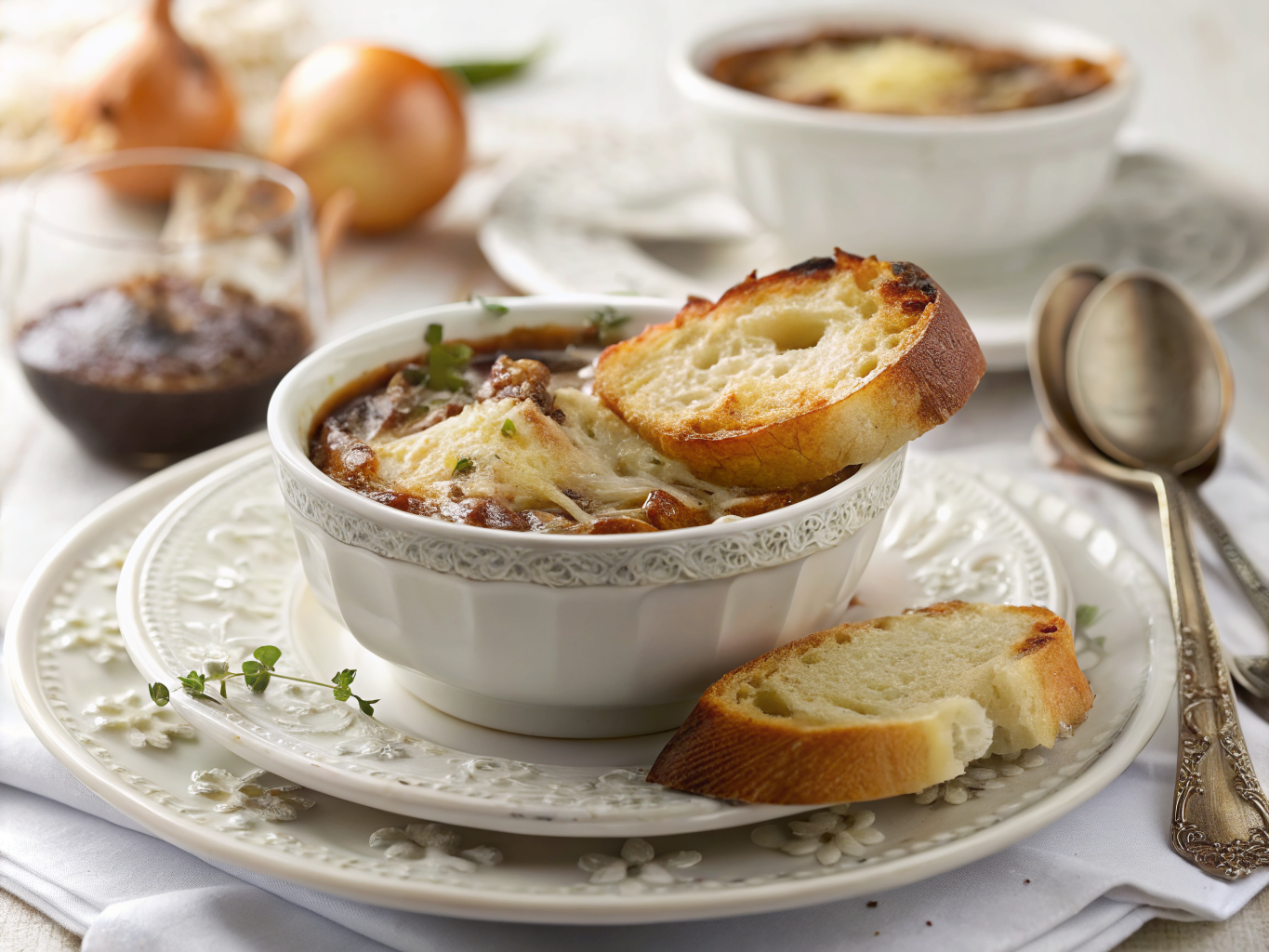
French Onion Soup
Ingredients
Method
- Melt butter in a large pot over medium-high heat. Add sliced onions and sugar, stirring frequently. Cook for 20-25 minutes until onions are deeply golden brown and caramelized.
- Add minced garlic and cook for 1 minute until fragrant. Pour in white wine and scrape up any browned bits from the bottom of the pot. Cook for 2-3 minutes until wine reduces by half.
- Add beef broth, thyme sprigs, salt, and pepper. Bring to a boil, then reduce heat and simmer for 10 minutes. Remove thyme sprigs.
- While soup simmers, toast baguette slices in the oven at 400°F for 5 minutes until lightly golden and crispy.
- Preheat broiler. Ladle soup into oven-safe bowls. Top each with 2 slices of toasted bread and generously cover with shredded gruyère cheese.
- Place bowls on a baking sheet and broil for 2-3 minutes until cheese is melted, bubbly, and golden brown. Watch carefully to prevent burning.
- Carefully remove bowls from oven (they will be very hot). Let cool for 2-3 minutes before serving.
Nutrition
Notes
Tried this recipe?
Let us know how it was!There’s something undeniably magical about a steaming bowl of French onion soup, with its deeply caramelized onions swimming in rich beef broth and topped with a bubbling golden crust of melted Gruyère cheese. This classic French bistro dish has captivated food lovers for centuries, and today you’ll discover how to recreate this restaurant-quality experience right in your own kitchen. Whether you’re planning an elegant dinner party or simply craving comfort food with sophistication, this French Onion Soup recipe delivers authentic flavor without requiring professional chef skills.
The beauty of this traditional soup lies in its simplicity—humble onions transformed through patient caramelization into something extraordinary. While the ingredient list is refreshingly short, the depth of flavor achieved is nothing short of remarkable. This comprehensive guide will walk you through every detail, from selecting the right onions to achieving that perfect cheese pull that makes French onion soup so Instagram-worthy.
Why This French Onion Soup Recipe Works Every Time
Unlike many complicated French recipes that intimidate home cooks, this French Onion Soup recipe succeeds because it focuses on proper technique rather than obscure ingredients. The secret isn’t in finding rare components but in understanding how heat, time, and patience work together to develop flavor. Most failed attempts at this soup result from rushing the caramelization process, but our detailed instructions ensure you’ll know exactly what to look for at each stage.
This recipe has been tested and refined to work with standard home kitchen equipment—no specialized tools required. You’ll use a heavy-bottomed pot, a wooden spoon, and your oven’s broiler to create results that rival expensive French restaurants. The technique of properly caramelizing onions is a fundamental cooking skill that will elevate countless other dishes in your repertoire beyond just this soup.
What makes this particular version exceptional is the balanced combination of sweet caramelized onions, savory beef stock, a hint of wine for acidity, and that irresistible cheese topping. Each element plays a crucial role, and we’ll explain not just the “how” but the “why” behind each step. Understanding the science behind the cooking process empowers you to adjust and perfect the recipe according to your preferences.
Core Ingredients for Authentic French Onion Soup
The foundation of any outstanding French Onion Soup recipe begins with selecting quality ingredients, though fortunately, nothing exotic is required. Yellow onions are traditional and recommended for their perfect balance of sweetness and sulfurous depth when caramelized. You’ll need approximately four large yellow onions (about two pounds), which will cook down significantly during the caramelization process to create that signature concentrated flavor.
Butter and olive oil work in tandem to sauté the onions, with butter providing richness and olive oil raising the smoke point to prevent burning. For the liquid base, high-quality beef stock is essential—homemade is ideal, but a good store-bought version works perfectly well. Dry white wine or dry sherry adds crucial acidity and complexity, cutting through the richness and balancing the sweetness of the onions.
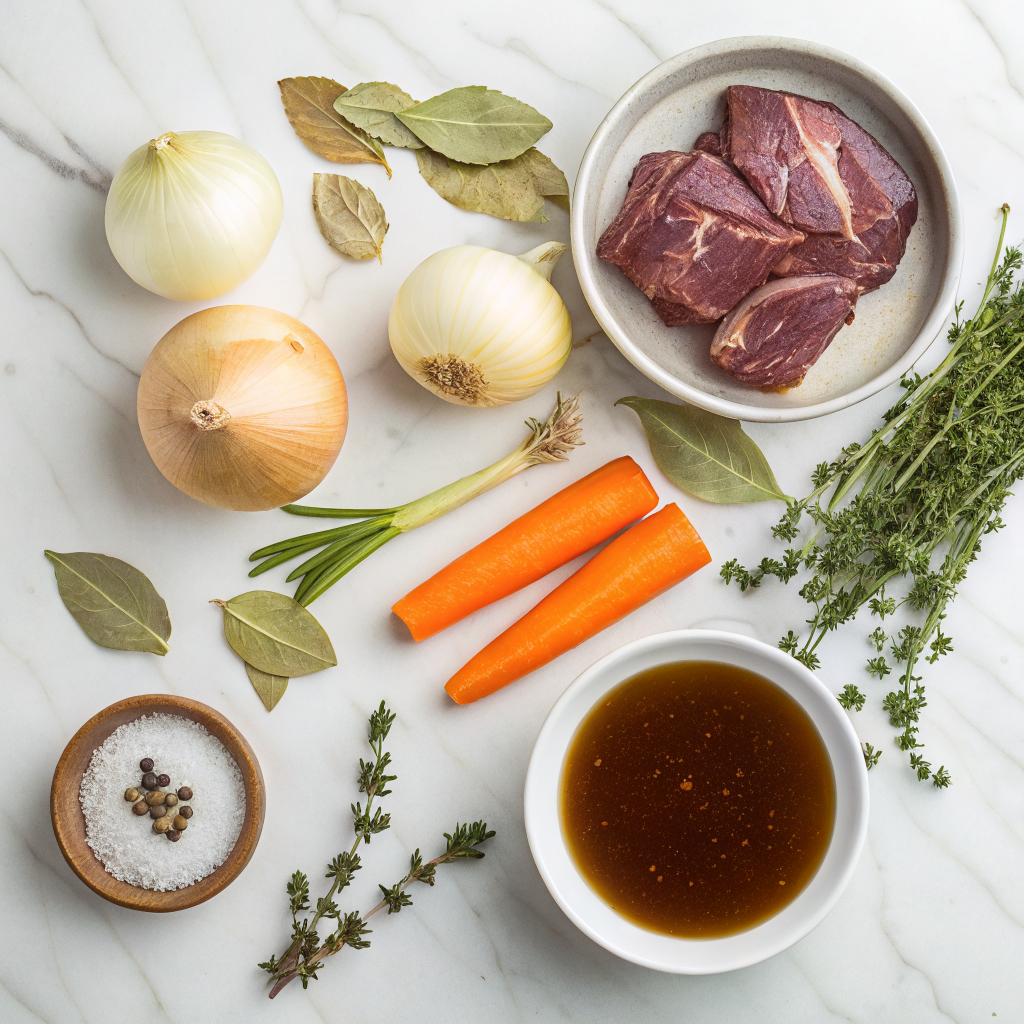
For the iconic topping, you’ll need crusty French bread or baguette slices and authentic Gruyère cheese. While some recipes suggest Swiss cheese as a substitute, genuine Gruyère provides a more authentic flavor with its nutty, slightly sweet characteristics that melt beautifully. Fresh thyme, bay leaves, salt, and black pepper round out the aromatics, while a touch of brandy or cognac is optional but adds an extra layer of sophistication to your soup recipes.
Complete Ingredient List
- 4 large yellow onions (about 2 pounds), thinly sliced
- 3 tablespoons unsalted butter
- 2 tablespoons olive oil
- 1 teaspoon sugar (optional, to aid caramelization)
- 4 cloves garlic, minced
- 8 cups high-quality beef stock
- 1 cup dry white wine or dry sherry
- 2 bay leaves
- 4-5 sprigs fresh thyme
- Salt and freshly ground black pepper to taste
- 1 French baguette, sliced into 1-inch rounds
- 2 cups shredded Gruyère cheese
- 2 tablespoons brandy or cognac (optional)
Step-by-Step Instructions for Perfect French Onion Soup
Creating this French Onion Soup recipe requires patience, but the process itself is straightforward and deeply rewarding. Begin by slicing your onions uniformly—consistency in thickness ensures even cooking. Slice them about ¼-inch thick in half-moon shapes, working from root to stem for the most structurally sound pieces that won’t fall apart during the long cooking time.
Step 1: Caramelize the Onions
Heat your butter and olive oil in a large, heavy-bottomed pot or Dutch oven over medium heat until the butter melts and begins to foam. Add all your sliced onions—yes, the pot will look extremely full at first, but they’ll reduce dramatically. Stir to coat the onions in fat, then let them cook, stirring every five to seven minutes.
This caramelization process is the soul of your French Onion Soup recipe and cannot be rushed—it takes 40 to 50 minutes to properly develop. As moisture evaporates, the onions will shrink, soften, and gradually turn a rich golden brown, then eventually a deep caramel color. If they start to stick or darken too quickly, reduce your heat slightly and add a tablespoon of water to deglaze the pan.
The goal is to develop deep, sweet flavors through the Maillard reaction without burning. If you see any black bits forming, your heat is too high. The onions should smell sweet and nutty, not acrid or burnt. Optional: sprinkle in a teaspoon of sugar during the last 10 minutes of caramelization to enhance browning.
Step 2: Build the Flavor Base
Once your onions reach a beautiful deep golden-brown color, add the minced garlic and cook for one to two minutes until fragrant. Be careful not to burn the garlic, which can happen quickly at this stage. Pour in your wine or sherry, using a wooden spoon to scrape up all the flavorful browned bits stuck to the bottom of the pot—this is called deglazing and adds tremendous depth.
Let the wine simmer for about three to four minutes until it reduces by half and the alcohol smell mellows. This concentrates the flavor and cooks off the harsh alcohol notes while retaining the wine’s complexity. Add your brandy or cognac now if using, allowing it to cook for another minute.
Step 3: Simmer the Soup
Add your beef stock, bay leaves, and fresh thyme sprigs to the pot, stirring to combine everything thoroughly. Bring the mixture to a boil over high heat, then immediately reduce to a gentle simmer. Let the soup simmer uncovered for at least 30 minutes, though 45 minutes to an hour is even better for developing deeper flavors.
As it simmers, taste and adjust seasoning with salt and black pepper—remember that the cheese topping will add saltiness, so season conservatively. The soup should have a rich, deep brown color and an aroma that makes your kitchen smell like a Parisian bistro. Remove and discard the bay leaves and thyme stems before serving.
Step 4: Prepare the Cheese Croutons
While your soup simmers, prepare the bread topping by slicing your baguette into one-inch rounds. Arrange these on a baking sheet and toast them in a 350°F oven for about 10 minutes, flipping halfway through, until they’re lightly golden and crisp on both sides. These toasted bread rounds serve as a raft for the melted cheese and prevent sogginess.
For extra flavor, you can rub the toasted bread lightly with a cut clove of garlic or brush them with a bit of olive oil before toasting. Make sure they’re thoroughly dried out so they can support the heavy cheese topping without dissolving into the soup.
Step 5: Assemble and Broil
Ladle your hot soup into oven-safe bowls or crocks, filling them about three-quarters full. Place one or two toasted bread rounds on top of each bowl, depending on the size of your vessels. Generously pile shredded Gruyère cheese over the bread, covering it completely and even letting some cheese drape over the edges of the bowl.
Arrange your soup-filled bowls on a sturdy baking sheet for easy handling and place them under a preheated broiler. Watch carefully—this happens quickly! Broil for two to four minutes until the cheese melts, bubbles, and develops golden-brown spots. The soup underneath should be bubbling at the edges, and the cheese should be gloriously melted with some delicious caramelized bits on top.
Pro Tip: Place your oven rack in the second-highest position rather than the very top to prevent the cheese from burning before it fully melts. Every broiler heats differently, so keep a close watch during this final step.
Nutritional Benefits of French Onion Soup
While this French Onion Soup recipe is certainly an indulgent comfort food, it also offers notable nutritional benefits, particularly from its star ingredient. Onions are rich in antioxidants, particularly quercetin, which has anti-inflammatory properties and may support heart health according to research from Healthline. They’re also an excellent source of vitamin C, vitamin B6, and folate.
The beef stock provides protein and minerals, particularly when made from bones, which release beneficial compounds like collagen and glycine during long simmering. The Harvard T.H. Chan School of Public Health notes that onions contain prebiotics that feed beneficial gut bacteria, supporting digestive health. The fermentable fibers in onions help maintain a healthy microbiome.
Gruyère cheese contributes calcium, protein, and vitamin B12, though it also adds significant calories and saturated fat—a reason to enjoy this soup in moderation as part of a balanced diet. One serving of this French Onion Soup recipe typically contains approximately 350-450 calories, depending on the amount of cheese used. For those watching sodium intake, using low-sodium stock and controlling added salt can make this dish more suitable for various dietary needs.
Creative Variations on the Classic Recipe
While traditional French Onion Soup recipe preparations are wonderful, experimenting with variations can keep this classic fresh and exciting. For a lighter version, substitute chicken or vegetable stock for beef stock, creating a different but equally delicious flavor profile. This vegetarian variation works beautifully when you caramelize the onions especially well to compensate for the absence of beef’s umami richness.
Try incorporating different cheese varieties or combinations—aged white cheddar adds sharpness, while Emmental provides authentic Swiss Alpine character similar to Gruyère. Some cooks enjoy mixing Gruyère with Parmesan for extra complexity and a slightly salty, nutty finish. For an adventurous twist, add a tablespoon of balsamic vinegar during the final simmering stage to enhance the sweetness and add tangy depth.
Consider mixing onion varieties for more complex flavor—combine yellow onions with sweet Vidalia onions or add a red onion or two for color and slightly different taste notes. Adding sliced mushrooms during the caramelization process creates an earthier, more robust soup that mushroom lovers will adore. Fresh herbs beyond thyme—such as rosemary or sage—can provide interesting aromatic variations worth exploring in your cooking journey with quick and easy meals.
Perfect Pairings and Serving Suggestions
This French Onion Soup recipe shines as a starter course for an elegant dinner party or serves beautifully as a main course for a lighter meal. When serving as an appetizer, use smaller portion sizes in ramekins or small crocks, allowing each guest to experience the drama of breaking through that cheese crust. Pair it with a simple green salad dressed with vinaigrette to provide a fresh, crisp contrast to the soup’s richness.
For wine pairings, the same dry white wine you used in cooking makes an excellent accompaniment—try a crisp Chardonnay, Sauvignon Blanc, or even a dry Riesling. If you prefer red wine, choose something light to medium-bodied like a Pinot Noir or Beaujolais, which won’t overpower the soup’s delicate balance. The acidity in these wines cuts through the richness of the cheese and complements the caramelized onions beautifully.
Consider serving your soup alongside a crusty baguette with butter, a cheese board featuring the same Gruyère you used in the recipe, or a simple charcuterie plate. For a complete French bistro experience at home, follow this soup with a classic like steak frites, coq au vin, or a simple roasted chicken with herbs. The soup’s richness means lighter main courses work best when it serves as a starter.
Common Mistakes to Avoid
The most frequent error when preparing a French Onion Soup recipe is rushing the caramelization process, which is truly the foundation of the entire dish. Onions caramelized for only 15-20 minutes will be softened and translucent but won’t have developed the deep, complex sweetness that characterizes authentic French onion soup. Commit to the full 40-50 minutes, and your patience will be rewarded with incomparably rich flavor.
Another common mistake involves using the wrong type of bowls for broiling—not all bowls are oven-safe or broiler-safe. Verify that your serving vessels can withstand high heat before assembling your soup for the final broiling step. Standard ceramic or porcelain bowls may crack under the broiler’s intense heat, so invest in proper French onion soup crocks or verify your bowls’ heat tolerance.
Over-salting represents another pitfall to avoid, especially before adding the cheese topping. Gruyère has natural saltiness, and beef stock often contains significant sodium, so season conservatively throughout the cooking process. You can always add more salt at the table, but you cannot remove it once added. Additionally, using pre-shredded cheese rather than freshly grated Gruyère affects both melt quality and flavor—pre-shredded varieties contain anti-caking agents that prevent smooth melting.
Finally, many home cooks use insufficient stock or make their soup too thick, resulting in an overly concentrated, almost stew-like consistency. Traditional French Onion Soup recipe should have a brothy consistency with plenty of liquid surrounding the onions. The ratio should be approximately two cups of onions to eight cups of liquid for proper balance and texture.
Storage and Reheating Guidelines
Proper storage ensures you can enjoy your French Onion Soup recipe for several days after preparation, making it excellent for meal prep. Store the soup base separately from the bread and cheese topping for best results. The soup itself keeps well in an airtight container in the refrigerator for up to five days, and the flavors often improve after a day as they meld together.

creates quick vegetarian dinners and vibrant taco recipes.