
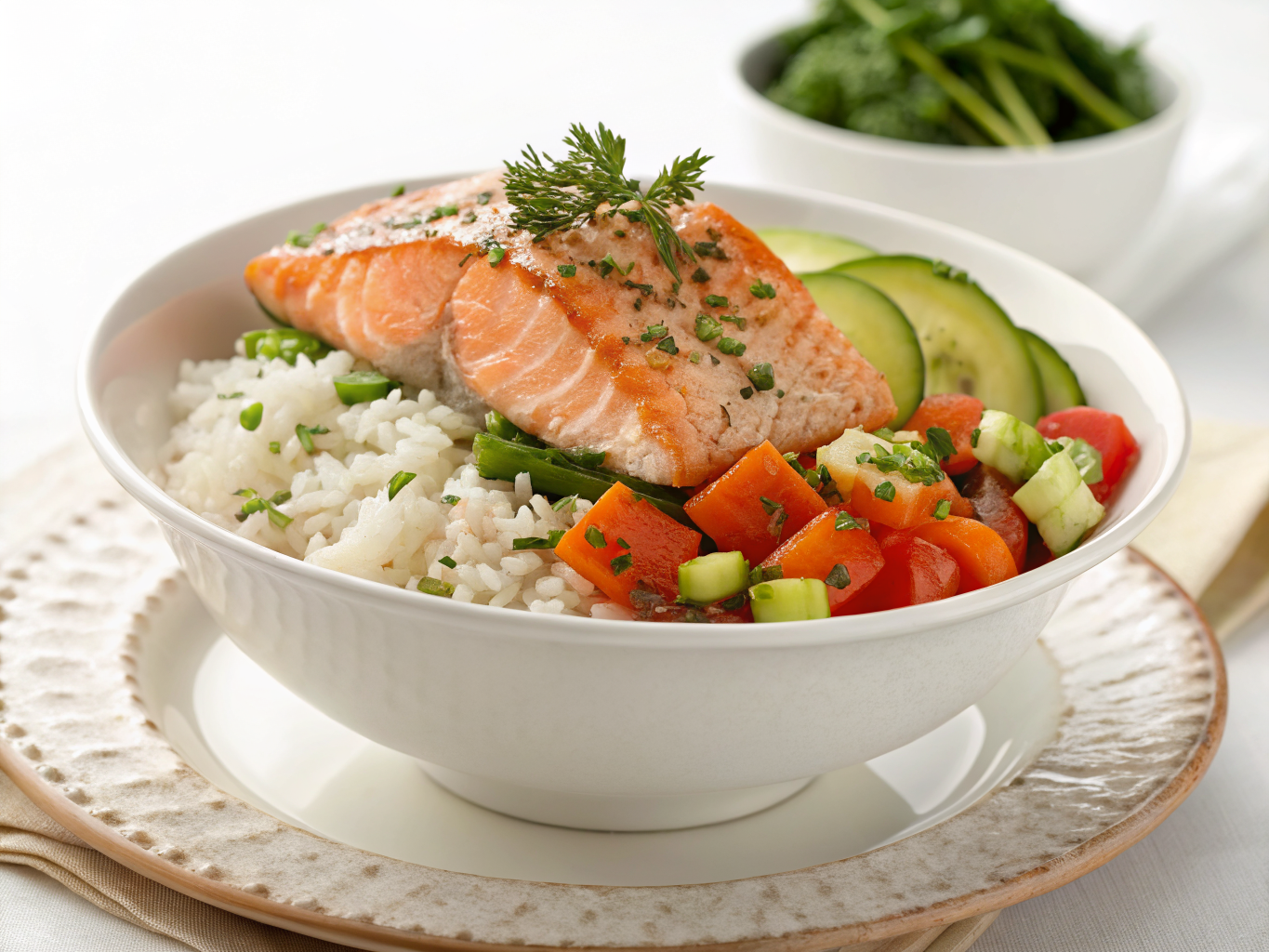
Ultimate Salmon Rice Bowl Recipe
Ingredients
Method
- Place the cooked rice in a microwave-safe bowl. Break the salmon into chunks and place on top of the rice.
- Drizzle soy sauce, mayonnaise, and sriracha over the salmon and rice. Add a few drops of sesame oil.
- Place a piece of parchment paper or paper towel over the bowl to create steam. Microwave on high for 1-2 minutes until heated through.
- Remove from microwave and use a fork to break up the salmon completely and mix everything together until well combined.
- Top with sliced avocado, torn seaweed sheets, kimchi if using, and sliced green onions.
- Mix everything together one more time if desired, or enjoy with distinct layers. Serve hot and enjoy your viral salmon rice bowl.
Nutrition
Notes
Tried this recipe?
Let us know how it was!\n\nThis viral Salmon Rice Bowl has taken social media by storm, combining flaky salmon, fluffy rice, and umami-rich seasonings into one irresistible meal. Inspired by the simplicity of salmon rice bowl emily mariko’s famous TikTok creation, this recipe delivers restaurant-quality flavor in your own kitchen. Whether you’re meal prepping for the week or need a quick weeknight dinner, this bowl checks all the boxes.
The Ultimate Salmon Rice Bowl in 20 Minutes
This Salmon Rice Bowl recipe transforms simple ingredients into a flavor-packed meal that’s ready faster than takeout delivery. The combination of tender salmon, perfectly seasoned rice, and fresh toppings creates a harmonious balance of textures and tastes. It’s become a staple in kitchens worldwide thanks to its foolproof method and customizable nature.
What makes this recipe special is how it maximizes flavor while minimizing effort. You’ll use leftover rice and salmon, making it an excellent way to reduce food waste while creating something truly delicious. The technique of mixing everything together with ice and seaweed creates a unique texture that’s both comforting and exciting.
Why You’ll Love This Salmon Rice Bowl
This recipe solves the eternal question of what to do with leftover salmon and rice. Instead of reheating them separately and ending up with dry, uninspiring food, you’ll create something that tastes even better than the original meal. The method locks in moisture and infuses every grain of rice with savory flavor.
Busy weeknights become stress-free when you have this recipe in your arsenal. From start to finish, you’ll spend less than 20 minutes in the kitchen, yet the result looks and tastes like you spent hours perfecting it. The minimal cleanup is another bonus that makes this a true weeknight hero.
- Ready in under 20 minutes with minimal active cooking time
- Uses leftover ingredients, reducing food waste and saving money
- Packed with omega-3 fatty acids and high-quality protein
- Infinitely customizable to suit dietary preferences and taste
- Requires only basic kitchen equipment and simple techniques
Core Ingredients for Salmon Rice Bowl
The beauty of this recipe lies in its simplicity, requiring just a handful of quality ingredients to create something extraordinary. Each component plays a crucial role in building layers of flavor and texture. Here’s what you’ll need to make this viral sensation in your own kitchen.
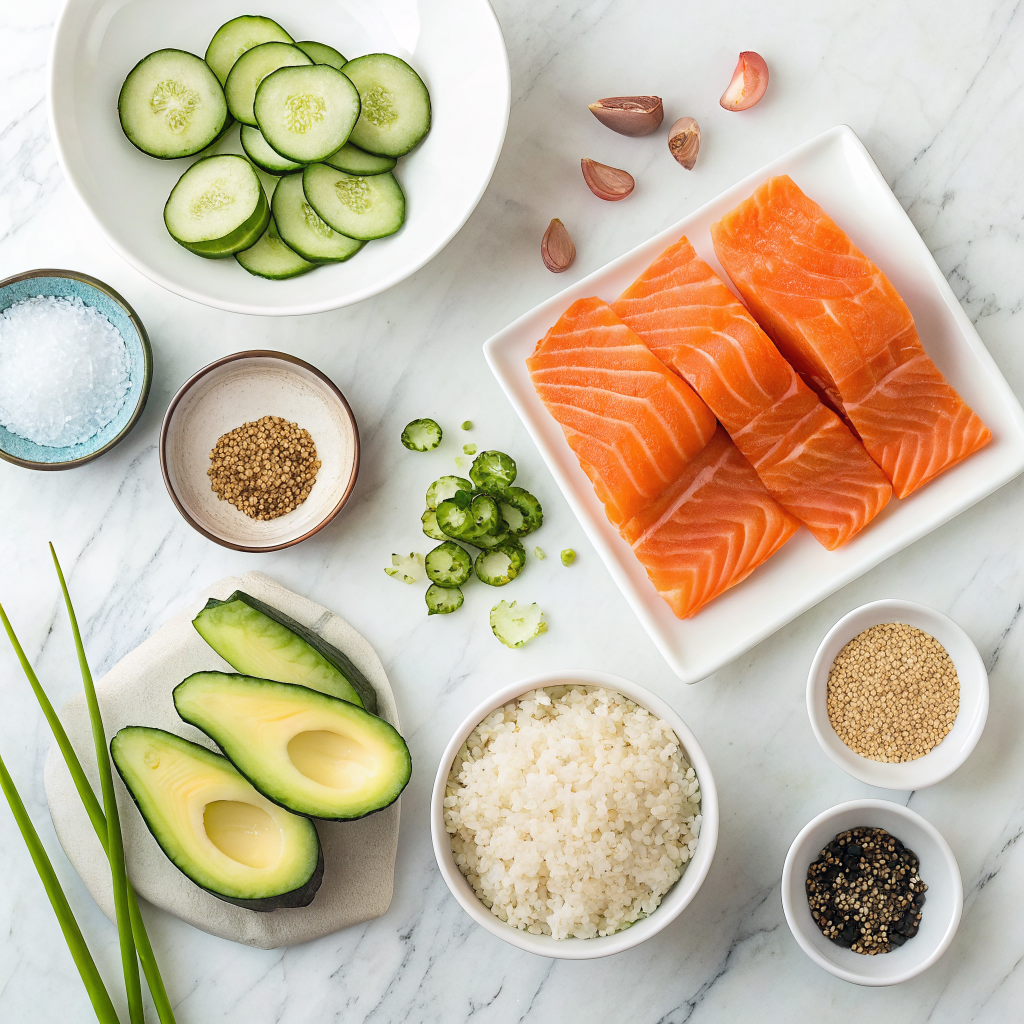
- Cooked salmon (6-8 oz): Leftover baked, grilled, or pan-seared salmon works perfectly; the fish should flake easily with a fork
- Cooked white rice (1.5 cups): Day-old rice is ideal as it’s slightly drier and absorbs flavors better than freshly cooked rice
- Soy sauce (2 tablespoons): Provides the essential umami base; use low-sodium if you’re watching salt intake
- Sriracha or hot sauce (1-2 teaspoons): Adds heat and complexity; adjust to your preferred spice level
- Mayonnaise (1-2 tablespoons): Creates creaminess and helps bind the ingredients together
- Roasted seaweed sheets: Adds a subtle oceanic flavor and satisfying crunch when torn into pieces
- Ice cube (1-2 cubes): The secret ingredient that creates steam when microwaved, keeping everything moist
- Kimchi or pickled vegetables: Optional but highly recommended for tangy contrast and probiotic benefits
- Avocado slices: Adds healthy fats and creamy texture that balances the bold flavors
- Green onions and sesame seeds: Finishing touches that add freshness and visual appeal
How to Make Salmon Rice Bowl: Step-by-Step
- Prepare your base: Add the cooked rice to a microwave-safe bowl, breaking up any clumps with a fork. Place the cooked salmon on top of the rice, breaking it into large chunks but keeping some texture. This layering is important because it allows the fish to steam while the rice reheats.
- Add the flavor components: Drizzle soy sauce and sriracha over the salmon and rice, distributing evenly. Add a dollop of mayonnaise on top, which will melt and create a creamy sauce. Place one or two ice cubes directly on top of the mixture—this is the game-changing trick that creates steam.
- Cover and microwave: Tear a sheet of roasted seaweed into smaller pieces and place them over the ingredients. Cover the bowl with a microwave-safe plate or lid, leaving a small gap for steam to escape. Microwave on high for 90 seconds to 2 minutes, until the ice has melted and everything is heated through.
- Mix vigorously: Remove the bowl carefully as it will be hot. Using a fork or spoon, mix everything together with enthusiasm—this is where the magic happens. The vigorous mixing breaks down the salmon into smaller pieces, distributes the seasonings, and creates a creamy, cohesive texture throughout.
- Add fresh toppings: Once mixed, add your desired toppings like sliced avocado, kimchi, or pickled vegetables. These fresh elements provide temperature contrast and bright flavors that complement the warm, savory base. Don’t skip this step as it elevates the dish from good to exceptional.
- Garnish and serve: Sprinkle with sliced green onions and sesame seeds for visual appeal and added flavor. If you want extra richness, drizzle a little more soy sauce or add a few drops of sesame oil. Serve immediately while the rice is warm and the toppings are cool.
- Enjoy with seaweed: Use additional pieces of roasted seaweed as edible spoons to scoop up the rice mixture. This adds an interactive element to the meal and provides that satisfying crunch with every bite. The combination of textures makes each mouthful interesting and delicious.
Pro tip: If you don’t have leftover salmon, you can quickly pan-sear a fresh fillet with salt and pepper for 3-4 minutes per side. Let it rest for a minute before adding it to your bowl for the best texture and flavor distribution.
Nutrition & Health Benefits
This bowl is a nutritional powerhouse that delivers a balanced combination of protein, healthy fats, and complex carbohydrates. A typical serving provides approximately 450-550 calories, 30-35 grams of protein, and substantial amounts of omega-3 fatty acids. The nutrient density makes it an excellent choice for anyone focused on wholesome eating without sacrificing flavor.
Salmon stands out as one of the healthiest proteins available, loaded with EPA and DHA omega-3s that support heart and brain health. The combination of protein and healthy fats helps keep you satisfied for hours, preventing the energy crashes associated with less balanced meals. Adding vegetables and fermented foods like kimchi increases the fiber and probiotic content even further.
According to Healthline, regular consumption of fatty fish like salmon can reduce inflammation, support brain function, and may lower the risk of heart disease. The omega-3 fatty acids in salmon are particularly beneficial for cognitive health and mood regulation.
Research from Harvard’s Nutrition Source confirms that eating fish twice weekly, especially fatty varieties like salmon, contributes to a heart-healthy diet and provides essential nutrients that are difficult to obtain from other sources. The combination of high-quality protein and beneficial fats makes salmon an optimal choice for muscle maintenance and overall wellness.
Variations & Substitutions
This recipe is incredibly adaptable to different dietary needs and flavor preferences. You can easily modify it based on what you have in your refrigerator or pantry. Here are some popular variations that maintain the spirit of the original while offering new taste experiences.
- Vegan version: Replace salmon with crispy baked tofu, tempeh, or marinated mushrooms; use vegan mayonnaise and add extra vegetables like edamame for protein
- Gluten-free: Substitute regular soy sauce with tamari or coconut aminos; ensure all other ingredients are certified gluten-free
- Lower calorie: Use cauliflower rice instead of white rice, reduce mayonnaise to one teaspoon, and add more vegetables to increase volume without calories
- Spicy kick: Add gochujang (Korean chili paste) instead of sriracha, top with fresh jalapeños, and include spicy kimchi for layered heat
- Mediterranean twist: Use Greek yogurt instead of mayo, add cucumber and tomatoes, finish with a squeeze of lemon and fresh dill
- Protein boost: Add a soft-boiled or fried egg on top, include edamame, or mix in some shredded chicken for extra protein
Serving Suggestions
This bowl is a complete meal on its own, but you can enhance the experience with complementary sides and beverages. Serve it in a wide, shallow bowl to showcase all the colorful toppings and make mixing easier. A cold beverage like iced green tea or sparkling water with lemon pairs beautifully with the rich, savory flavors.
For a more substantial meal, serve alongside a light cucumber salad dressed with rice vinegar or a simple miso soup. The fresh, crisp vegetables provide textural contrast to the creamy rice bowl. If you’re entertaining, set up a toppings bar so guests can customize their bowls with various add-ons like different pickled vegetables, sauces, and garnishes.
Pair this with our Asian Cucumber Salad for a complete meal that balances rich and refreshing flavors perfectly.
Common Mistakes to Avoid
Even though this recipe is straightforward, a few common pitfalls can affect the final result. Being aware of these issues will help you achieve perfect results every time you make this viral sensation.
- Using freshly cooked rice: Fresh rice is too moist and sticky, resulting in a mushy texture; always use day-old rice or spread fresh rice on a sheet pan to cool and dry slightly before using
- Skipping the ice cube: The ice is essential for creating steam that reheats everything evenly without drying out the ingredients; without it, your salmon may become rubbery and the rice can dry out
- Not mixing thoroughly: Gentle stirring won’t achieve the signature creamy texture; you need to mix vigorously to break down the salmon and distribute the sauces throughout every grain of rice
- Overcooking in the microwave: Microwaving too long makes the salmon tough and the rice hard; start with 90 seconds and add time in 15-second increments if needed
- Adding all toppings before microwaving: Fresh vegetables and avocado should be added after heating to maintain their texture and temperature contrast; only the rice, salmon, and seasonings go in the microwave
Storage & Meal Prep Tips
This recipe works wonderfully for meal prep, though it’s best to store components separately for optimal freshness. Keep cooked salmon and rice in separate airtight containers in the refrigerator for up to three days. Store sauces and toppings separately as well, assembling the bowl only when you’re ready to eat.
When reheating, follow the same method as the original recipe: combine rice and salmon in a bowl with an ice cube and microwave until heated through. The ice cube trick works just as well with meal-prepped ingredients as it does with day-old leftovers. This makes it easy to enjoy this meal multiple times throughout the week without any loss of quality.
For longer storage, you can freeze cooked salmon for up to two months in a freezer-safe container. Thaw overnight in the refrigerator before using in this recipe. While you can freeze cooked rice, it’s so quick to make fresh rice that most people prefer to cook it in larger batches and refrigerate for the week instead.
More Recipes You’ll Love
If you enjoyed this recipe, explore more from our collection of quick and satisfying meals:
- Teriyaki Chicken Bowl with Vegetables
- Spicy Tuna Poke Bowl
- Korean Beef Bowl with Gochujang
- Restaurant-Style Shrimp Fried Rice
For additional guidance on incorporating more fish into your diet, check out Medical News Today’s nutrition section for more on healthy eating patterns and the benefits of omega-3 rich foods.
Final Thoughts on Salmon Rice Bowl
This viral recipe has earned its popularity by delivering maximum flavor with minimal effort and simple ingredients. The genius lies in the technique—using ice to create steam, mixing vigorously to create creaminess, and layering fresh toppings for textural contrast. It’s a perfect example of how smart cooking methods can transform everyday leftovers into something special.
Whether you’re a college student looking for budget-friendly meals, a busy professional needing quick dinners, or simply someone who loves delicious food, this recipe deserves a permanent spot in your rotation. Give it a try tonight and discover why millions of people have fallen in love with this simple yet satisfying bowl.
Frequently Asked Questions About Salmon Rice Bowl
How long does it take to make Salmon Rice Bowl?
The entire recipe takes just 15-20 minutes from start to finish if you’re using leftover salmon and rice. The actual hands-on time is only about 5 minutes, with most of the time spent on microwaving and mixing. If you need to cook fresh salmon, add an additional 10 minutes to the total time.
Can I make Salmon Rice Bowl ahead of time?
You can prep the components ahead, but it’s best to assemble and heat the bowl right before eating for optimal texture and temperature. Store cooked salmon and rice separately in the refrigerator for up to three days. Keep fresh toppings like avocado and vegetables separate until serving time to maintain their freshness and crunch.
What are the best substitutes for salmon in Salmon Rice Bowl?
Tuna, trout, or mackerel work excellently as fish alternatives, providing similar omega-3 benefits and flaky texture. For non-fish options, try grilled chicken, crispy tofu, or tempeh seasoned with the same sauces. Canned salmon is also a budget-friendly option that works surprisingly well in this recipe.
Is Salmon Rice Bowl healthy?
Yes, this bowl is highly nutritious, providing lean protein, omega-3 fatty acids, and complex carbohydrates in one balanced meal. A typical serving contains around 450-550 calories with substantial protein to keep you satisfied. You can make it even healthier by adding more vegetables, using brown rice, or reducing the mayonnaise for a lighter version.

creates quick vegetarian dinners and vibrant taco recipes.