
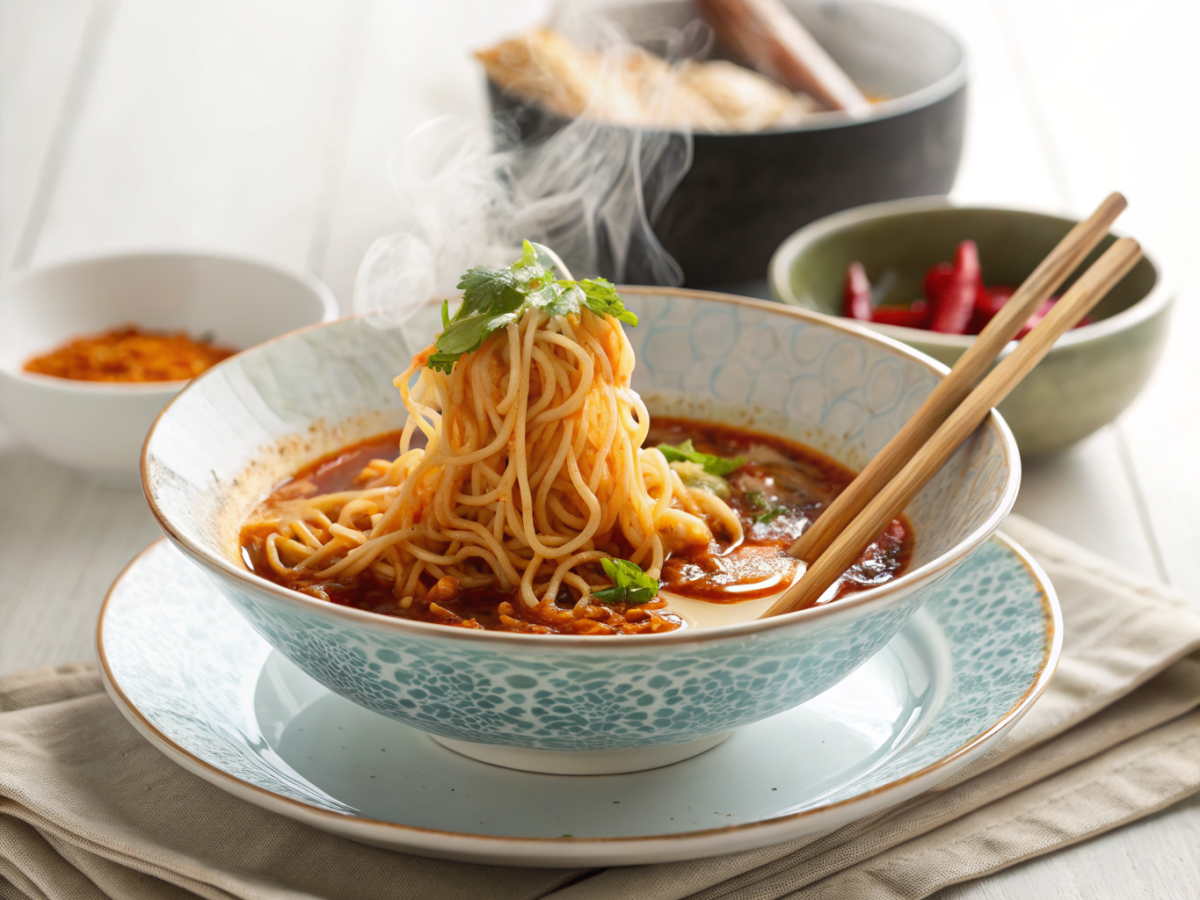
The Secret to Perfect Chili Oil Ramen
Ingredients
Method
- Heat vegetable oil in a small saucepan over medium heat until it reaches 350 degrees Fahrenheit. Place chili flakes and minced garlic in a heat-safe bowl. Carefully pour the hot oil over the chili flakes and garlic, stirring immediately. Let it cool for 5 minutes.
- In a large pot, bring chicken broth to a boil over high heat. Add soy sauce and sesame oil, stirring to combine. Reduce heat to medium-low and keep warm.
- In a separate pot, bring water to a boil and cook ramen noodles according to package directions, usually 3-4 minutes. Drain the noodles and rinse briefly under cold water.
- Boil eggs for exactly 6 minutes, then transfer to an ice bath. Once cooled, peel and slice in half lengthwise.
- Divide the cooked noodles among four serving bowls. Ladle the hot broth over the noodles, filling each bowl about three-quarters full.
- Top each bowl with 2-3 tablespoons of the prepared chili oil, one egg half, and sliced green onions.
- Serve the ramen hot, allowing diners to stir the chili oil throughout the broth before eating. Add extra chili oil to taste.
Notes
nnThis Chili Oil Ramen recipe transforms ordinary instant noodles into a restaurant-quality meal bursting with spicy, savory flavors. With just a handful of ingredients and minimal cooking time, you’ll create a bowl of noodles that’s infinitely better than anything from a package. The secret lies in the aromatic chili oil that coats every strand of noodles with rich, complex heat.
Chili Oil Ramen: Perfect Recipe in 25 Minutes
Making exceptional chili oil ramen at home doesn’t require culinary school training or exotic ingredients. The beauty of this dish lies in its simplicity and the way each component builds upon the last to create layers of flavor. When done correctly, the chili oil becomes the star, infusing every bite with warmth and depth.
The foundation of great ramen starts with understanding how heat, fat, and aromatics work together. Chili oil acts as both a flavoring agent and a textural element that clings to noodles better than water-based sauces. This creates an even distribution of spice and flavor throughout your bowl.
Traditional ramen shops spend hours perfecting their broths, but this quick method delivers comparable satisfaction in a fraction of the time. The key is building flavor through technique rather than time. By properly blooming your spices in oil and layering your ingredients strategically, you achieve complexity without the wait.
Why You’ll Love This Chili Oil Ramen
This recipe delivers restaurant-quality results without the premium price tag or lengthy preparation time. You’ll have a steaming bowl of delicious noodles ready in under 30 minutes, making it perfect for busy weeknights. The customizable spice level means everyone from heat novices to chili enthusiasts can enjoy it.
The versatility of this dish makes it a staple recipe you’ll return to again and again. You can easily adapt it based on what’s in your refrigerator, adding proteins, vegetables, or toppings as desired. It’s equally satisfying as a quick lunch or a comforting dinner option.
Unlike many quick meals, this ramen doesn’t sacrifice nutrition for convenience. The homemade chili oil contains beneficial compounds from garlic and ginger, while you control the sodium content. Adding fresh vegetables and quality protein transforms it into a balanced, complete meal.
The aromatic experience of making this dish fills your kitchen with incredible smells that build anticipation. The sizzle of aromatics hitting hot oil, the fragrance of toasted sesame, and the visual appeal of ruby-red chili oil all contribute to the sensory pleasure. It’s cooking that engages all your senses before you even take the first bite.
Core Ingredients for Chili Oil Ramen
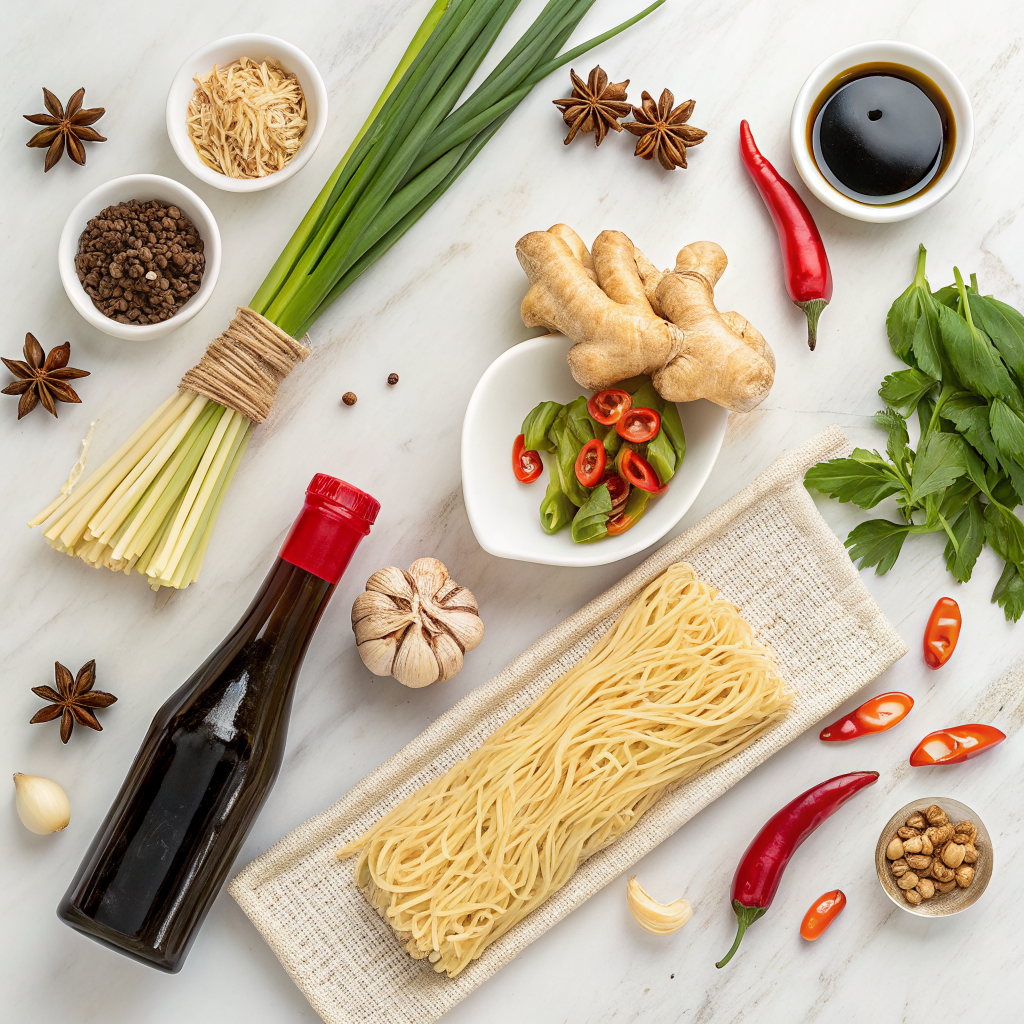
The ingredient list for this recipe is refreshingly short, focusing on quality over quantity. Each component plays a specific role in building the final flavor profile. Sourcing good ingredients makes a noticeable difference, though you don’t need specialty store items for excellent results.
For the Chili Oil
- Neutral oil (½ cup): Vegetable, canola, or grapeseed oil works best as they won’t overpower other flavors
- Korean chili flakes (¼ cup): Gochugaru provides the perfect heat level and vibrant color without excessive spiciness
- Sichuan peppercorns (1 tablespoon): These add a unique numbing sensation and complex flavor dimension
- Garlic (6 cloves): Minced fresh garlic creates aromatic depth when gently fried in oil
- Fresh ginger (2-inch piece): Grated ginger adds brightness and cuts through the richness
- Sesame seeds (2 tablespoons): Toasted sesame contributes nutty flavor and textural interest
- Soy sauce (3 tablespoons): Provides umami and saltiness that balances the heat
- Rice vinegar (1 tablespoon): A touch of acidity brightens the entire dish
For the Ramen Bowl
- Fresh or dried ramen noodles (2 portions): Fresh noodles offer better texture, but quality dried noodles work wonderfully
- Chicken or vegetable broth (3 cups): A flavorful base that carries the chili oil throughout the dish
- Soft-boiled eggs (2): The jammy yolk enriches the broth and adds protein
- Green onions (4 stalks): Sliced thinly for fresh, sharp flavor contrast
- Bok choy or spinach (2 cups): Adds nutritional value and textural variety
- Sesame oil (1 teaspoon): A finishing touch that amplifies the nutty notes
The quality of your noodles significantly impacts the final result, so choose wisely. Fresh ramen noodles from Asian markets provide the best texture with their springy, chewy quality. If using dried noodles, avoid the seasoning packets that come with instant ramen and use only the noodles themselves.
Your chili flakes determine both the heat level and color of your oil. Korean gochugaru offers mild to medium heat with gorgeous red color, while Chinese chili flakes tend to be spicier. You can also mix different types of chili flakes to customize the heat and flavor profile to your preference.
How to Make Chili Oil Ramen: Step-by-Step
The process of making this dish involves two main components that come together at the end. First, you’ll create the aromatic chili oil that forms the flavor foundation. Then you’ll prepare the noodles and assemble everything into a cohesive, delicious bowl.
Making the Chili Oil
Begin by preparing all your aromatics before heating any oil, as the cooking process moves quickly once started. Mince the garlic finely, grate the ginger, and measure out your chili flakes and Sichuan peppercorns. Having everything ready prevents burning and ensures even cooking.
Heat your neutral oil in a small saucepan over medium-low heat until it reaches approximately 300°F. You can test the temperature by dropping in a single sesame seed; it should sizzle gently but not violently. This moderate temperature allows aromatics to infuse the oil without burning.
Add the Sichuan peppercorns first and let them sizzle for about 30 seconds until fragrant. Next, add the minced garlic and grated ginger, stirring constantly for 1-2 minutes until they turn golden but not brown. The goal is to extract maximum flavor while maintaining a sweet, not bitter, taste.
Remove the pan from heat and immediately add the chili flakes and sesame seeds. The residual heat will toast them perfectly without burning. Stir well and let the mixture cool for 2 minutes before adding the soy sauce and rice vinegar, which will sizzle and steam when they hit the hot oil.
Allow the chili oil to cool to room temperature, during which time the flavors will meld and deepen. This can be made ahead and stored in an airtight container in the refrigerator for up to two weeks. In fact, the flavor improves after sitting for a day as the aromatics continue to infuse the oil.
Preparing the Ramen
Bring your broth to a gentle simmer in a medium saucepan while you prepare the other components. If using store-bought broth, enhance it by adding a few slices of ginger, a smashed garlic clove, and a splash of soy sauce. These simple additions dramatically improve the depth of flavor and make it taste more homemade.
Prepare your soft-boiled eggs by bringing a pot of water to a rolling boil. Gently lower room-temperature eggs into the water and cook for exactly 6.5 minutes for a jammy yolk. Immediately transfer them to an ice bath to stop the cooking process, then peel carefully under running water.
Cook your ramen noodles according to package directions, typically 2-4 minutes for fresh noodles or 3-5 minutes for dried. Slightly undercook them by 30 seconds as they’ll continue cooking when added to the hot broth. Drain the noodles and rinse briefly under cold water to stop the cooking and remove excess starch.
Blanch your greens in the simmering broth for just 1-2 minutes until wilted but still vibrant. Remove them with tongs and set aside. This method seasons the vegetables while infusing their flavor into the broth, creating layers of taste throughout the dish.
Assembly and Serving
Divide the cooked noodles between two large bowls, creating a nest shape that will hold the toppings. Ladle the hot broth over the noodles, filling each bowl about three-quarters full. The broth should be steaming hot to properly warm all the components.
Add 2-3 tablespoons of your prepared chili oil to each bowl, swirling it gently to distribute the oil and aromatics. The oil will float on top, creating an attractive layer of red that promises spicy deliciousness. Don’t stir too vigorously; you want some oil pooling on the surface for visual appeal.
Arrange your toppings artfully: halve the soft-boiled eggs to reveal their golden yolks, place the blanched greens to one side, and scatter sliced green onions over everything. Add a final drizzle of sesame oil and perhaps some extra sesame seeds for garnish. The presentation should be as appealing as the taste.
Serve immediately while everything is hot, with extra chili oil on the side for those who want more heat. Provide chopsticks and spoons so diners can enjoy both the noodles and the flavorful broth. The first bite should deliver a perfect balance of spice, umami, and comfort that makes you want to explore more quick and easy meal recipes like this one.
Nutrition & Health Benefits
This ramen bowl offers more nutritional value than you might expect from such a comforting dish. A single serving provides approximately 450-550 calories, depending on your toppings and portion size. The balance of carbohydrates from noodles, protein from eggs, and healthy fats from the oil creates a satisfying meal that keeps you full for hours.
The chili oil itself contains several beneficial compounds that go beyond just adding flavor. Capsaicin from the chili flakes has been shown to boost metabolism and may aid in weight management. Garlic provides immune-supporting properties, while ginger offers anti-inflammatory benefits that support overall health.
The protein content can be easily adjusted by adding chicken, tofu, shrimp, or additional eggs. Each soft-boiled egg contributes about 6 grams of high-quality protein along with essential vitamins and minerals. The greens add fiber, vitamins A and C, and important minerals like iron and calcium.
Compared to restaurant ramen or instant noodles with seasoning packets, this homemade version allows you to control sodium levels. You can reduce the soy sauce or use low-sodium broth to decrease salt content significantly. For those interested in balanced nutrition, check out other recipes that balance indulgence with nutritional value.
The healthy fats from sesame oil and the cooking oil help your body absorb fat-soluble vitamins from the vegetables. These fats also contribute to satiety, helping you feel satisfied after eating. Choosing quality oils like grapeseed or avocado oil can increase the omega-3 content of your meal.
Variations & Substitutions
This versatile recipe adapts easily to different dietary needs and flavor preferences. The basic framework remains the same while you customize the details to suit your taste or what’s available in your pantry. Experimentation often leads to discovering your perfect personal version.
Protein Variations
Beyond soft-boiled eggs, numerous protein options work beautifully with this dish. Thinly sliced pork belly, cooked until crispy, adds richness and textural contrast. Grilled chicken breast or thighs provide a leaner option that still delivers satisfying protein.
For seafood lovers, shrimp, scallops, or even crab meat transform this into a luxurious seafood ramen. Vegetarians can use crispy tofu, tempeh, or additional eggs to meet their protein needs. Each protein brings its own character while still harmonizing with the spicy chili oil.
Spice Level Adjustments
Control the heat by adjusting the amount and type of chili flakes you use. For mild ramen, reduce the chili flakes to 2 tablespoons and remove the Sichuan peppercorns entirely. For extra spicy versions, add fresh sliced Thai chilies or a spoonful of chili paste to the oil.
You can also create a two-tier spice system by keeping the base broth mild and serving extra chili oil on the side. This allows each diner to customize their heat level without making multiple versions. It’s particularly helpful when serving both adults and children.
Noodle Alternatives
While traditional ramen noodles work best, several alternatives accommodate different dietary needs. Rice noodles create a gluten-free version with a different but equally enjoyable texture. Shirataki noodles offer a low-carb, low-calorie option for those watching their intake.
Udon noodles provide a thicker, chewier experience that holds up well to the rich broth. Even soba noodles work, adding nutty buckwheat flavor that complements the chili oil. Each noodle type changes the character of the dish while maintaining the essential flavor profile.
Vegetable Options
The vegetable component is highly flexible based on season and preference. Mushrooms like shiitake, enoki, or wood ear add umami and meaty texture. Bean sprouts provide crunch, while corn kernels add sweetness that balances the heat.
Cabbage, napa cabbage, or Brussels sprouts work well when thinly sliced and briefly cooked. Snap peas, broccoli, or asparagus bring color and nutrition to the bowl. Choose vegetables that cook quickly or can be eaten slightly crisp to maintain their texture and nutritional value.
Serving Suggestions
This ramen shines as a complete meal on its own, but certain accompaniments enhance the experience. The right side dishes and beverages create a more rounded dining experience. Consider the balance of flavors and textures when planning your complete meal.
Serve with crispy gyoza or spring rolls for textural contrast to the soft noodles. The crunchy exterior of these fried items provides a satisfying counterpoint. A simple cucumber salad dressed with rice vinegar offers refreshing relief from the rich, spicy broth.
Pickled vegetables like kimchi, pickled radish, or ginger provide acidic brightness that cuts through the oil. These fermented foods also add probiotic benefits and complex flavors. A small dish of pickles on the side allows diners to add bites of acidity as they work through their bowl.
For beverages, cold beer pairs exceptionally well with spicy ramen, with the carbonation cleansing your palate between bites. Green tea offers a traditional, lighter option that doesn’t compete with the flavors. For non-alcoholic choices, consider refreshing smoothie recipes that provide cooling contrast to the heat.
When entertaining, consider setting up a ramen bar where guests can customize their bowls. Provide the base noodles and broth, then offer various toppings, proteins, and spice levels. This interactive approach makes the meal more engaging and ensures everyone gets exactly what they want.
Common Mistakes to Avoid
Even with a straightforward recipe like this, certain pitfalls can diminish your results. Understanding these common errors helps you avoid them and achieve perfect ramen every time. Small details make the difference between good and exceptional.
Overheating the Oil
The most frequent mistake is heating the oil too high, which burns the aromatics and creates bitter flavors. Keep your temperature moderate and watch carefully as garlic and ginger cook. If anything starts to brown too quickly, immediately remove the pan from heat.
Use a thermometer if you’re unsure about oil temperature, aiming for 275-300°F. The oil should shimmer but not smoke. Remember that residual heat continues cooking even after removing from the burner, so factor that into your timing.
Overcooking the Noodles
Mushy noodles ruin the textural experience of ramen, yet many people overcook them out of habit. Set a timer and taste-test 30 seconds before the package suggests. The noodles should still have a slight bite since they’ll soften further in the hot broth.
Rinsing cooked noodles under cold water stops the cooking process and removes excess starch that can make the broth gummy. This step takes only seconds but significantly improves the final texture. Don’t skip it even when you’re in a hurry.
Underseasoning the Broth
Plain broth lacks the depth needed to support all the other flavors in your bowl. Even quality store-bought broth benefits from enhancement with aromatics and seasonings. Taste your broth before assembling and adjust with soy sauce, salt, or a splash of mirin as needed.
The broth should taste slightly over-seasoned on its own since the noodles and other components will dilute it. Think of it as the foundation that supports everything else. A weak foundation results in a disappointing overall experience.
Improper Egg Cooking
Achieving the perfect jammy yolk requires precision timing and temperature control. Start with room-temperature eggs rather than cold ones to prevent cracking. Use a timer for exact cooking, and don’t skip the ice bath, which stops carryover cooking.
Peeling soft-boiled eggs can be tricky, so do it gently under running water. Slightly older eggs peel more easily than very fresh ones. If your eggs aren’t cooperating, don’t worry too much about perfect appearance; they’ll still taste delicious.
Storage & Meal Prep Tips
Strategic meal prep makes enjoying this ramen even easier on busy days. Certain components store well while others are best made fresh. Understanding what to prepare ahead and what to cook last minute optimizes both convenience and quality.
Storing the Chili Oil
The chili oil is the perfect make-ahead component, actually improving in flavor as it sits. Store it in an airtight glass jar in the refrigerator for up to two weeks. The oil will solidify when cold, so remove it 30 minutes before using or microwave briefly to liquify.
Always use a clean spoon when scooping out chili oil to prevent contamination. The oil acts as a preservative for the aromatics, but introducing moisture or food particles can reduce its shelf life. Label your jar with the date to track freshness.
Preparing Ingredients in Advance
Wash and chop your vegetables up to two days ahead, storing them in airtight containers in the refrigerator. Slice green onions and keep them in a damp paper towel to maintain freshness. Pre-portion your noodles so you can cook them quickly when ready to eat.
Soft-boiled eggs can be prepared up to three days in advance and stored unpeeled in the refrigerator. Keep them in water to prevent the shells from drying out and sticking. Peel them just before serving for the best appearance and texture.
Storing Leftovers
Store leftover components separately rather than as assembled bowls for best quality. Keep broth, noodles, and toppings in individual containers. This prevents the noodles from absorbing all the liquid and becoming bloated and mushy.
Leftover assembled ramen doesn’t store well, as the noodles continue absorbing broth and lose their texture. If you must store assembled ramen, consume it within 24 hours and expect softer noodles. Reheat gently to avoid further overcooking the components.
Freezing Options
The chili oil doesn’t freeze well due to texture changes, but you can freeze the broth in portions for quick future meals. Use ice cube trays for small portions or freezer bags for larger quantities. Frozen broth keeps for up to three months.
Cooked noodles don’t freeze successfully, so always cook them fresh. However, you can freeze uncooked fresh noodles if you’ve purchased more than you need. Most proteins like cooked chicken or pork freeze well and can be added directly to hot broth to reheat.
Final Thoughts on Chili Oil Ramen
Mastering this Chili Oil Ramen recipe opens the door to countless quick, satisfying meals that rival restaurant quality. The techniques you’ve learned here apply to many other Asian noodle dishes, expanding your cooking repertoire significantly. Once you’ve made the chili oil a few times, the process becomes second nature and takes minimal effort.
The beauty of this dish lies in its adaptability to your personal preferences and dietary needs. Whether you prefer it vegetarian, loaded with protein, mild, or explosively spicy, the basic framework accommodates all variations. This flexibility means you’ll never tire of it even if you make it weekly.
Don’t be intimidated by making your own chili oil; it’s far simpler than it appears and infinitely better than store-bought versions. The aromatics you choose and the care you take in preparation shine through in every spoonful. Your homemade version will have a freshness and vibrancy that commercial products simply can’t match.
This recipe represents the intersection of convenience and quality that modern home cooking demands. You don’t need hours or exotic equipment to create something truly special. With basic ingredients and straightforward techniques, you can produce restaurant-quality results in your own kitchen, perfect for those exploring more delicious dinner recipes.
As you continue making this dish, you’ll develop your own signature touches and preferred variations. Perhaps you’ll discover that you love extra ginger or prefer a different vegetable combination. These personal adaptations transform a recipe into your recipe, something uniquely yours that reflects your taste preferences.
Frequently Asked Questions
Can I use instant ramen noodles for this recipe?

HomeCook Legacy Kitchen is the editorial name of homecooklegacy.com. Recipes on this site are drafted with the help of AI tools and published by the HomeCook Legacy team. Please check ingredients, cooking times and food-safety guidance for your own situation.