
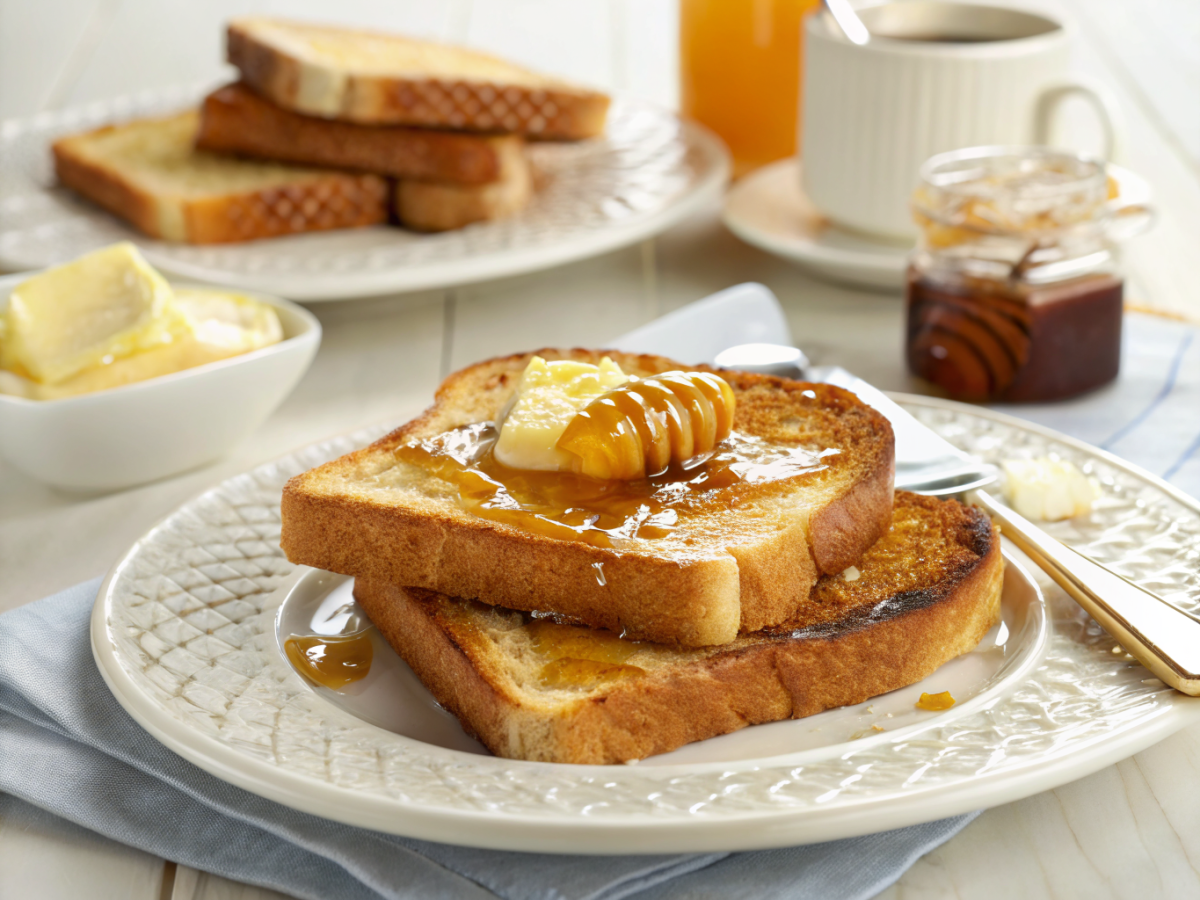
Honey Butter Toast Recipe: 5 Easy Tips for the Best Results

The secret to perfect honey butter toast

The Secret to Perfect Honey Butter Toast

Golden, crispy toast slathered with sweet honey butter that melts into every bite for the ultimate breakfast treat.
Prep Time 5 minutes
Cook Time 8 minutes
Total Time 13 minutes
Servings: 4 servings
Course: Breads & Baked Goods
Cuisine: American
Calories: 285

Ingredients
  

  • 4 slices thick-cut bread brioche or white bread works best
  • 6 tablespoons unsalted butter softened to room temperature
  • 3 tablespoons honey pure honey preferred
  • 1/4 teaspoon vanilla extract
  • 1/8 teaspoon sea salt fine grain
  • 1 tablespoon butter for toasting the bread
  • 1 teaspoon cinnamon optional, for sprinkling

Method
 

  1. In a medium bowl, combine the softened butter, honey, vanilla extract, and sea salt. Mix vigorously with a fork or whisk until completely smooth and fluffy, about 2 minutes. The mixture should be light and creamy.
  2. Heat a large skillet or griddle over medium heat. Add 1 tablespoon of butter and let it melt, swirling to coat the pan evenly.
  3. Place the bread slices in the skillet and cook for 3-4 minutes on the first side until golden brown and crispy. Flip and cook for another 2-3 minutes on the second side until evenly toasted.
  4. Remove the toast from the skillet and immediately spread a generous amount of honey butter on the hot toast while it is still warm. The heat will help the honey butter melt into the bread.
  5. If desired, sprinkle a light dusting of cinnamon over the honey butter toast for extra flavor.
  6. Serve the honey butter toast immediately while warm and the butter is still melting. Enjoy with your favorite breakfast beverage.

Nutrition

Calories: 285kcalCarbohydrates: 28gProtein: 4gFat: 18gSodium: 245mgFiber: 1g

Notes

The secret to perfect honey butter toast is using room temperature butter so it whips up light and fluffy. Make extra honey butter and store it in the refrigerator for up to 2 weeks. For the crispiest toast, use day-old bread as it has less moisture and will crisp up better in the pan.

Tried this recipe?

Let us know how it was!
\n\nHoney Butter Toast is the ultimate breakfast indulgence that combines crispy golden bread with a luscious sweet and creamy topping. This simple yet sophisticated dish has taken social media by storm, and for good reason—it delivers restaurant-quality flavor in just minutes. Whether you’re looking for a quick weekday breakfast or an impressive brunch centerpiece, this recipe will become your new morning obsession.Thank you for reading this post, don't forget to subscribe!

Honey Butter Toast: 5 Easy Tips for Perfect Results

Creating the perfect slice starts with understanding the delicate balance between crispy bread and creamy, melted topping. The secret lies in using quality ingredients and mastering the timing of each component. With these five essential tips, you’ll achieve bakery-style results every single time.

First, always use room temperature butter to ensure smooth spreading and even melting. Cold butter tears the bread and creates uneven coverage, while overly soft butter soaks in too quickly. Second, toast your bread to a deep golden brown—this creates the essential crispy foundation that prevents sogginess.

Third, use raw, unfiltered honey for the most complex flavor profile and natural sweetness. Fourth, apply the honey butter mixture while the toast is still hot to achieve that signature glossy finish. Finally, don’t skip the pinch of sea salt—it elevates the sweetness and creates an addictive sweet-salty balance that keeps you coming back for more.

Why You’ll Love This Honey Butter Toast

This recipe requires only five basic ingredients that you likely already have in your pantry. The simplicity means you can whip up this delicious treat any morning without special shopping trips. It’s the perfect solution for those times when you want something special but don’t have hours to spend in the kitchen.

The texture contrast is absolutely divine—crispy, crunchy toast meets silky, luxurious honey butter. Each bite delivers a satisfying crunch followed by creamy sweetness that melts on your tongue. This sensory experience transforms ordinary breakfast into something truly memorable.

Beyond taste and texture, this recipe is incredibly versatile and customizable. You can adjust the sweetness level, experiment with different bread types, or add creative toppings. It works equally well as a quick breakfast, afternoon snack, or even a unique dessert option for dinner parties.

The preparation time is minimal—you’ll have hot, delicious toast ready in under ten minutes. This makes it ideal for busy mornings when you need something more exciting than plain cereal. Plus, it’s budget-friendly without sacrificing quality or flavor, making gourmet breakfast accessible to everyone.

Core Ingredients for Honey Butter Toast

The foundation of this recipe starts with bread selection, which dramatically impacts the final result. Choose thick-sliced bread with a sturdy structure—sourdough, brioche, or Texas toast work beautifully. Avoid thin sandwich bread, which becomes soggy and can’t support the generous honey butter topping.

Honey butter toast ingredients

Unsalted butter is essential for controlling the salt level in your final dish. You’ll need about four tablespoons of high-quality butter at room temperature. European-style butter with higher fat content creates an even richer, more luxurious spread that coats your palate beautifully.

Raw honey provides the signature sweetness and distinctive flavor profile. Look for local honey if possible, as it offers unique floral notes based on regional flowers. Avoid artificial honey or corn syrup blends, which lack the depth and complexity of real honey.

Fine sea salt enhances all the flavors and prevents the dish from tasting one-dimensional. Just a small pinch makes the honey taste sweeter and the butter taste richer. This ingredient might seem optional, but it’s truly the secret weapon that professional chefs use.

Optional vanilla extract adds aromatic warmth and complexity to the honey butter mixture. Just half a teaspoon transforms the flavor from simple to sophisticated. You can also experiment with cinnamon, cardamom, or other warm spices for seasonal variations.

How to Make Honey Butter Toast: Step-by-Step

Begin by preparing your honey butter mixture while your bread toasts. In a small bowl, combine four tablespoons of softened butter with two tablespoons of honey. Use a fork to mash and stir until completely smooth and well incorporated, with no butter lumps remaining.

Add a small pinch of sea salt and optional vanilla extract to your honey butter. Mix thoroughly until the salt dissolves completely into the mixture. Taste and adjust sweetness or salt according to your preference—this is your opportunity to customize the flavor profile.

Toast your bread slices to a deep golden brown color using your preferred method. A toaster oven, regular toaster, or skillet all work well for this step. The key is achieving even browning on both sides with a crispy exterior that will hold up to the topping.

Immediately after toasting, while the bread is still piping hot, spread a generous layer of honey butter on top. The heat from the toast will melt the butter slightly, creating that signature glossy appearance. Work quickly to ensure the butter melts evenly across the entire surface.

For an extra touch of elegance, drizzle additional honey over the buttered toast in a decorative pattern. This creates visual appeal and adds pockets of pure honey sweetness throughout. You can also sprinkle flaky sea salt, crushed nuts, or fresh berries on top for added texture and flavor.

Serve immediately while still warm for the best texture and flavor experience. The contrast between hot, crispy toast and melting honey butter is what makes this dish truly special. If you’re serving multiple people, keep finished toast warm in a low oven until all slices are ready.

Nutrition & Health Benefits

While this dish is certainly an indulgent treat, it does offer some nutritional benefits when enjoyed in moderation. Honey contains antioxidants, enzymes, and trace minerals that refined sugar lacks. Raw honey also has antibacterial properties and may help soothe sore throats and support immune function.

Butter provides fat-soluble vitamins A, D, E, and K that are essential for various bodily functions. When sourced from grass-fed cows, butter also contains beneficial omega-3 fatty acids and CLA. The fat content helps you feel satisfied and provides sustained energy throughout your morning.

Whole grain bread options add fiber, B vitamins, and complex carbohydrates to this breakfast treat. Sourdough bread offers additional benefits through fermentation, which makes nutrients more bioavailable and easier to digest. Traditional baking methods can enhance the nutritional profile of bread-based recipes.

One serving typically contains approximately 250-300 calories, depending on bread thickness and butter quantity. The carbohydrate content provides quick energy, while the fat helps slow digestion for more stable blood sugar. For a more balanced meal, pair this toast with protein-rich foods like eggs or Greek yogurt.

To make this recipe slightly healthier, consider using whole wheat or multigrain bread for added fiber. You can also reduce the butter quantity slightly or use a butter-olive oil blend. However, remember that this is meant to be an occasional indulgence, so don’t stress too much about making it perfectly healthy.

Variations & Substitutions

Transform this basic recipe into countless variations by experimenting with different bread types. Brioche creates an ultra-rich, dessert-like version, while sourdough adds tangy complexity. Cinnamon raisin bread brings built-in spice and sweetness, and challah offers a slightly sweet, tender crumb that’s absolutely divine.

Try flavored honey varieties to create unique taste experiences with minimal effort. Lavender honey adds floral sophistication, while buckwheat honey provides deep, molasses-like richness. Orange blossom honey contributes citrus notes, and chestnut honey offers earthy, slightly bitter undertones that balance the sweetness beautifully.

Add spices to your honey butter mixture for seasonal variations that keep this recipe exciting year-round. Cinnamon and nutmeg create a cozy fall version, while cardamom adds exotic warmth. Ginger provides spicy kick, and pumpkin pie spice transforms this into a holiday-worthy treat.

For dairy-free versions, substitute plant-based butter or coconut oil for traditional butter. Coconut oil adds tropical flavor that pairs surprisingly well with honey. Make sure to use refined coconut oil if you want to avoid the coconut taste, or embrace it for an island-inspired twist.

Create a vegan version by using plant-based butter and substituting maple syrup or agave nectar for honey. While the flavor profile changes slightly, you’ll still achieve that delicious sweet and salty combination. Add a touch of nutritional yeast to the mixture for a subtle buttery flavor boost.

Top your toast with additional ingredients for more complex flavor and texture profiles. Sliced bananas and chopped walnuts create a satisfying crunch, while fresh berries add tartness and color. Cream cheese spread underneath the honey butter adds tangy richness, and a sprinkle of cinnamon sugar creates extra sweetness.

Serving Suggestions

This toast shines as the centerpiece of a leisurely weekend brunch spread. Serve alongside scrambled eggs, crispy bacon, and fresh fruit for a balanced meal. The sweetness of the toast contrasts beautifully with savory breakfast proteins, creating a restaurant-quality brunch experience at home.

Pair with your favorite hot beverage for an elevated breakfast ritual. Strong coffee cuts through the sweetness, while chai tea complements the honey beautifully. Hot chocolate creates an ultra-indulgent combination, and herbal tea provides a lighter, more refreshing accompaniment.

Transform this into an impressive dessert by cutting the toast into elegant triangles or strips. Arrange on a serving platter with fresh whipped cream, berries, and a dusting of powdered sugar. This presentation elevates the simple toast into something worthy of dinner party guests.

For afternoon tea service, cut the toast into small squares or use cookie cutters for decorative shapes. Serve on a tiered stand with other tea sandwiches and pastries. The sweet honey butter provides nice contrast to savory tea sandwiches and makes for an Instagram-worthy spread.

Create a breakfast charcuterie board featuring this toast alongside other complementary items. Include fresh and dried fruits, nuts, yogurt, cheese, and additional honey for drizzling. This interactive serving style is perfect for gatherings where guests can customize their own plates.

If you’re exploring more breads and baked goods recipes, this toast serves as an excellent gateway to more complex baking projects. It’s also perfect alongside other quick and easy meals when you need something simple yet satisfying.

Common Mistakes to Avoid

The most frequent error is using cold butter straight from the refrigerator. Cold butter is impossible to spread smoothly and will tear your toast, creating an uneven, unappealing result. Always let your butter sit at room temperature for at least 30 minutes before beginning.

Under-toasting the bread leads to soggy, disappointing results that lack the essential textural contrast. Your toast should be deeply golden brown with a crispy exterior that can support the honey butter. Don’t be afraid to toast longer than you think—darker toast holds up much better.

Using too much honey butter might seem like a good idea, but it can overwhelm the bread. A generous but controlled layer allows you to taste both the bread and the topping. Excess butter also makes the toast greasy and difficult to eat, dripping everywhere instead of staying put.

Skipping the salt is a critical mistake that results in flat, one-dimensional flavor. Salt doesn’t make the dish taste salty—it enhances sweetness and creates depth. Even just a tiny pinch makes a remarkable difference in the final flavor profile.

Letting the toast cool before applying the honey butter prevents that gorgeous melted, glossy appearance. The residual heat from the toast is essential for creating the signature look and texture. Always work quickly and apply the butter while the toast is still hot from the toaster.

Using low-quality ingredients significantly impacts the final result in such a simple recipe. Since there are so few components, each one needs to shine. Quality ingredients make all the difference in simple recipes where flavors can’t hide behind complex preparations.

Storage & Meal Prep Tips

The honey butter mixture can be prepared several days in advance and stored in the refrigerator. Keep it in an airtight container for up to two weeks, allowing it to come to room temperature before using. You can also make a large batch and keep it on hand for quick breakfast preparation throughout the week.

For longer storage, honey butter freezes beautifully for up to three months without losing flavor or texture. Portion it into tablespoon-sized amounts using an ice cube tray or small containers. This allows you to thaw only what you need for each use, maintaining freshness.

Pre-slice your bread and store it in the freezer for ultimate convenience. Frozen bread slices toast directly from the freezer without thawing, saving precious morning minutes. This strategy ensures you always have the right bread on hand without worrying about it going stale.

Unfortunately, assembled toast doesn’t store well and should be eaten immediately after preparation. The moisture from the honey butter will make the toast soggy within minutes. If you must prepare ahead, keep the components separate and assemble just before serving.

For meal prep purposes, focus on preparing the honey butter mixture rather than the complete dish. Store individual portions in small containers alongside pre-sliced bread. In the morning, you’ll only need to toast and assemble, making breakfast incredibly quick and easy.

If you have leftover honey butter after breakfast, use it in creative ways throughout the day. Spread it on pancakes, waffles, or muffins for instant flavor enhancement. It also works beautifully melted over roasted vegetables like sweet potatoes or carrots for a sweet-savory side dish.

Final Thoughts on Honey Butter Toast

This Honey Butter Toast recipe proves that simple ingredients can create extraordinary results when prepared with care and attention. The combination of crispy bread, creamy butter, and sweet honey transcends its humble components to deliver pure breakfast bliss. It’s a testament to the power of quality ingredients and proper technique in home cooking.

Whether you’re treating yourself to a special weekend breakfast or impressing brunch guests, this recipe delivers consistent, delicious results. The versatility allows endless customization while maintaining the core elements that make it so appealing. Once you master the basic technique, you’ll find yourself returning to this recipe again and again.

The beauty of Honey Butter Toast lies in its accessibility—anyone can make it, regardless of cooking skill level. Yet despite its simplicity, it feels indulgent and special every single time. This is the kind of recipe that becomes a family tradition, passed down and cherished for generations.

Don’t let the simplicity fool you into thinking this isn’t worth making. Sometimes the most memorable dishes are the ones that let quality ingredients shine without unnecessary complications. Give this recipe a try tomorrow morning, and you’ll understand why it has captured hearts around the world.

Frequently Asked Questions

Can I make Honey Butter Toast in advance for meal prep?

While you can prepare the honey butter mixture several days ahead, the assembled toast must be eaten immediately for best results. The moisture from the honey butter will make the bread soggy if it sits too long. For meal prep, store the honey butter separately and assemble fresh toast each morning. This takes only minutes but ensures you get that perfect crispy-creamy contrast every time.

What type of bread works best for this recipe?

Thick-sliced bread with sturdy structure works best for supporting the honey butter topping without becoming soggy. Sourdough, brioche, Texas toast, and challah are all excellent choices. Avoid thin sandwich bread, which can’t hold up to the generous topping. The bread should toast to a deep golden brown with a crispy exterior for optimal texture contrast.

Can I use salted butter instead of unsalted?

You can use salted butter, but reduce or omit the additional salt in the recipe. Salted butter contains varying amounts of salt depending on the brand, making it harder to control the final flavor. Unsalted butter gives you complete control over the salt level, ensuring perfect balance every time. If you only have salted butter available, taste the mixture before adding any extra salt.

How do I prevent my Honey Butter Toast from becoming too sweet?

Control sweetness by adjusting the honey-to-butter ratio and adding a proper amount of salt. Start with less honey than the recipe calls for and add more to taste. The salt is crucial for balancing sweetness—don’t skip it. Balancing flavors properly is essential in any recipe. You can also use less sweet bread varieties like sourdough instead of brioche to reduce overall sweetness.