
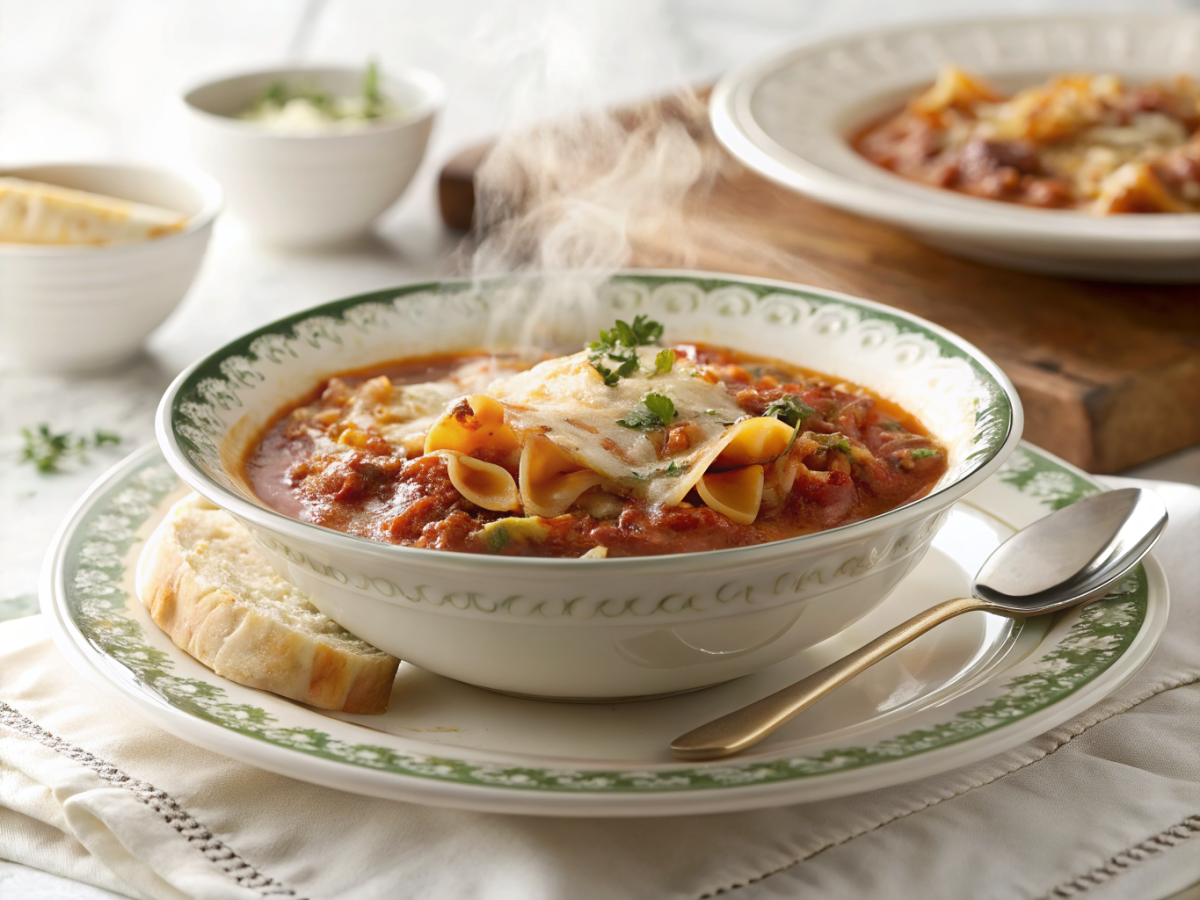
Lasagna Soup Recipe: 5 Easy Tips for the Best Results

Ultimate lasagna soup recipe

Ultimate Lasagna Soup

A hearty and comforting soup that captures all the flavors of classic lasagna in a bowl with rich tomato broth, Italian sausage, and cheesy goodness.
Prep Time 15 minutes
Cook Time 30 minutes
Total Time 45 minutes
Servings: 6 servings
Course: Dinner Recipes
Cuisine: American
Calories: 485

Ingredients
  

  • 1 pound Italian sausage mild or spicy
  • 1 medium onion diced
  • 4 cloves garlic minced
  • 28 ounces crushed tomatoes canned
  • 4 cups chicken broth
  • 2 teaspoons Italian seasoning
  • 8 ounces lasagna noodles broken into pieces
  • 1 cup ricotta cheese
  • 1.5 cups mozzarella cheese shredded
  • 0.5 cup Parmesan cheese grated
  • 2 tablespoons fresh basil chopped

Method
 

  1. In a large pot or Dutch oven over medium-high heat, cook the Italian sausage, breaking it up with a wooden spoon until browned and cooked through, about 6-8 minutes. Drain excess fat if needed.
  2. Add the diced onion to the pot with the sausage and cook for 4-5 minutes until softened. Stir in the minced garlic and cook for 1 minute until fragrant.
  3. Pour in the crushed tomatoes, chicken broth, and Italian seasoning. Stir well to combine. Bring the mixture to a boil, then reduce heat to medium-low and simmer for 10 minutes to allow flavors to meld.
  4. Break the lasagna noodles into bite-sized pieces and add them to the soup. Stir occasionally and cook for 10-12 minutes until the noodles are tender but still slightly firm.
  5. While the noodles cook, combine the ricotta cheese, half of the mozzarella, and half of the Parmesan in a small bowl. Mix until well blended.
  6. Taste the soup and adjust seasoning with salt and pepper as needed. Remove from heat and stir in the fresh basil.
  7. Ladle the hot soup into bowls and top each serving with a generous dollop of the cheese mixture and sprinkle with remaining mozzarella and Parmesan. Serve immediately while hot.

Nutrition

Calories: 485kcalCarbohydrates: 38gProtein: 28gFat: 24gSodium: 1120mgFiber: 4g

Notes

For a lighter version, use turkey sausage instead of pork. The soup thickens as it sits, so add extra broth when reheating leftovers. You can substitute broken lasagna noodles with any short pasta like rotini or penne if needed.

Tried this recipe?

Let us know how it was!
\n\nThis Lasagna Soup transforms the classic Italian comfort food into a hearty, one-pot meal that’s perfect for busy weeknights. All the familiar flavors of traditional lasagna come together in a rich, savory broth with tender pasta, seasoned meat, and melted cheese. This recipe delivers restaurant-quality results in a fraction of the time, making it ideal for family dinners.Thank you for reading this post, don't forget to subscribe!

Lasagna Soup: 5 Amazing Tips for Perfect Results

Creating the perfect bowl of this comforting soup requires understanding a few key techniques. The first tip is to brown your meat thoroughly to develop deep, caramelized flavors that form the foundation of your broth. Second, don’t skip toasting your tomato paste, as this step eliminates any metallic taste and creates a richer base.

Third, cook your pasta separately or add it just before serving to prevent it from becoming mushy and absorbing too much liquid. Fourth, layer your cheeses at serving time rather than cooking them into the soup for the best texture and presentation. Finally, let your soup rest for five minutes after cooking to allow the flavors to meld together beautifully.

These simple techniques elevate your soup from good to exceptional. Each tip addresses a common pitfall that home cooks encounter when making this dish. By following these guidelines, you’ll achieve professional results every single time you prepare this comforting meal.

Why You’ll Love This Lasagna Soup

This recipe combines convenience with incredible flavor, making it a weeknight dinner hero. Unlike traditional layered lasagna that requires an hour or more of baking time, this soup version comes together in about 30 minutes. You get all the satisfaction of classic Italian comfort food without the lengthy preparation or cleanup.

The versatility of this dish makes it perfect for meal planning and feeding a crowd. You can easily double the recipe for gatherings or freeze portions for quick future meals. The soup reheats beautifully, making it ideal for quick easy meals throughout the week when time is limited.

Budget-conscious cooks will appreciate how this recipe stretches ingredients while delivering maximum flavor. Ground meat, canned tomatoes, and basic pantry staples create a filling meal that costs significantly less than dining out. The addition of vegetables boosts nutritional value without compromising the rich, indulgent taste everyone craves.

Families with picky eaters often find this soup more approachable than traditional lasagna. The familiar flavors are presented in a fun, interactive way where everyone can customize their bowl. Kids love the novelty of “deconstructed” lasagna, making dinner time more enjoyable for parents and children alike.

Core Ingredients for Lasagna Soup

Lasagna soup ingredients

The protein base typically consists of one pound of ground Italian sausage or ground beef, though you can use a combination of both. Italian sausage adds wonderful fennel and herb notes, while ground beef provides a milder, classic flavor. Choose your meat based on your family’s preferences and dietary needs for the best results.

Aromatics form the flavor foundation with one diced yellow onion, four minced garlic cloves, and optional diced bell peppers. These vegetables create depth and complexity in your broth. Fresh garlic is essential here, as pre-minced versions lack the pungent, aromatic quality that makes this soup exceptional.

The tomato component includes one 28-ounce can of crushed tomatoes, one 15-ounce can of tomato sauce, and two tablespoons of tomato paste. This trio creates a rich, balanced tomato base with the right consistency. The crushed tomatoes provide texture, while the sauce and paste contribute concentrated flavor and body.

Broth and seasonings include four cups of chicken or beef broth, two teaspoons of dried basil, two teaspoons of dried oregano, and one teaspoon each of salt and black pepper. Italian seasoning can substitute for the individual herbs if preferred. Red pepper flakes add optional heat for those who enjoy a spicy kick in their soup.

Pasta choices include eight ounces of broken lasagna noodles, mafalda, or campanelle pasta. Traditional lasagna noodles broken into bite-sized pieces create an authentic experience. However, any short pasta shape works well and may be easier for younger children to eat with a spoon.

The cheese trio features one cup of ricotta cheese, one and a half cups of shredded mozzarella, and half a cup of grated Parmesan. These cheeses replicate the classic lasagna layers in every spoonful. Fresh mozzarella can replace pre-shredded varieties for an even more luxurious texture and flavor profile.

Fresh garnishes include chopped fresh basil and parsley for brightness and color. These herbs add a pop of freshness that balances the rich, hearty base. Don’t skip the fresh herbs, as they provide an essential contrast to the cooked flavors in the soup.

How to Make Lasagna Soup: Step-by-Step

Begin by heating two tablespoons of olive oil in a large Dutch oven or heavy-bottomed pot over medium-high heat. Add your ground meat and break it apart with a wooden spoon, cooking for 6-8 minutes until completely browned. Drain excess fat if necessary, leaving about one tablespoon in the pot for flavor and to sauté the vegetables.

Add the diced onion to the browned meat and cook for 4-5 minutes until softened and translucent. Stir in the minced garlic and cook for one additional minute until fragrant. This layering technique builds complexity by cooking each ingredient at the optimal time for maximum flavor development.

Push the meat and vegetables to the side of the pot and add the tomato paste to the cleared space. Let it cook undisturbed for 1-2 minutes until it darkens slightly and becomes fragrant. This toasting process removes the raw, tinny taste and concentrates the tomato flavor for a richer final dish.

Stir the tomato paste into the meat mixture, then add the crushed tomatoes, tomato sauce, and broth. Add the dried basil, oregano, salt, and black pepper, stirring to combine all ingredients thoroughly. Bring the mixture to a boil over high heat, then reduce to a gentle simmer.

Allow the soup to simmer uncovered for 15-20 minutes, stirring occasionally to prevent sticking. This simmering time allows the flavors to meld and the soup to thicken slightly. Taste and adjust seasonings as needed, adding more salt, pepper, or herbs according to your preference.

While the soup simmers, cook your pasta according to package directions in a separate pot of salted boiling water. Drain the pasta when it reaches al dente texture, slightly firm to the bite. Keeping pasta separate prevents it from overcooking and becoming mushy in the soup, especially important for leftovers.

To serve, place a portion of cooked pasta in each bowl and ladle the hot soup over top. Add a generous dollop of ricotta cheese, a handful of shredded mozzarella, and a sprinkle of Parmesan. Garnish with fresh basil and parsley for a beautiful presentation that tastes as good as it looks.

For a different approach, you can add the pasta directly to the soup pot during the last 10 minutes of cooking. This method works well if you plan to serve the entire batch immediately. However, the separate cooking method offers more flexibility for meal prep and storage purposes throughout the week.

Pro Cooking Tips

Use a mix of ground beef and Italian sausage for the most complex flavor profile. The beef provides a neutral base while the sausage contributes aromatic spices and herbs. A 50-50 blend creates the perfect balance without overwhelming the other ingredients in your soup.

Deglaze the pot with a splash of red wine after browning the meat for extra depth. The wine adds acidity and complexity that enhances the tomato flavors beautifully. Allow the alcohol to cook off completely for about two minutes before adding the remaining liquid ingredients.

Make a cheese mixture by combining the ricotta with half the mozzarella and Parmesan, plus one egg and chopped fresh basil. This creates a filling similar to traditional lasagna that you can dollop onto each serving. The egg helps bind the cheese mixture, making it creamier and more cohesive when it melts into the hot soup.

Nutrition & Health Benefits

Each serving of this hearty soup provides approximately 380-420 calories, depending on the type of meat and cheese quantities used. The dish offers a balanced macronutrient profile with roughly 25 grams of protein, 35 grams of carbohydrates, and 15 grams of fat. This makes it a satisfying meal that provides sustained energy without being overly heavy or calorie-dense.

The protein content from meat and cheese supports muscle maintenance and keeps you feeling full for hours. Choosing lean ground beef or turkey can reduce the fat content while maintaining the protein benefits. The combination of animal proteins provides all essential amino acids your body needs for optimal function and recovery.

Tomatoes contribute lycopene, a powerful antioxidant linked to heart health and reduced cancer risk. Cooking tomatoes actually increases lycopene bioavailability, making this soup an excellent source of this beneficial compound. The vitamin C in tomatoes also supports immune function and collagen production for healthy skin.

Garlic and onions provide prebiotic fiber that supports gut health and beneficial bacteria. These aromatic vegetables also contain compounds with anti-inflammatory and immune-boosting properties. Regular consumption of allium vegetables like garlic and onions is associated with reduced risk of certain chronic diseases.

To make this recipe more nutritious, add vegetables like spinach, zucchini, or mushrooms during the simmering phase. These additions boost fiber, vitamins, and minerals without significantly altering the classic flavor profile. Leafy greens like spinach wilt quickly and add iron and calcium to your dinner recipes repertoire.

For those monitoring sodium intake, use low-sodium broth and reduce or eliminate added salt. The cheese and meat already contribute significant sodium, so the dish remains flavorful even with less added salt. You can also check out nutritional guidelines for balanced meals to understand portion control better.

Variations & Substitutions

Create a vegetarian version by replacing meat with crumbled firm tofu, lentils, or plant-based ground meat alternatives. Add extra vegetables like diced eggplant, mushrooms, and bell peppers to maintain the hearty texture. Vegetable broth replaces chicken or beef broth, and nutritional yeast can add a savory, umami depth to the soup base.

For a lighter option, use ground turkey or chicken instead of beef or sausage. These leaner proteins significantly reduce the fat content while maintaining the satisfying texture and protein benefits. Turkey works particularly well when seasoned generously with Italian herbs to compensate for its milder natural flavor.

Make it dairy-free by substituting the cheese trio with cashew ricotta, dairy-free mozzarella shreds, and nutritional yeast. Coconut milk-based ricotta alternatives work surprisingly well and provide creaminess without dairy. Many people find these substitutions so satisfying that they don’t miss the traditional cheese at all.

Transform this into a white lasagna soup by using Alfredo sauce instead of tomato-based ingredients. Replace the crushed tomatoes and tomato sauce with heavy cream, butter, and extra Parmesan cheese. This creates a rich, creamy variation that’s perfect for those who prefer cream-based soups over tomato varieties.

Add a Mexican twist by incorporating taco seasoning, black beans, corn, and topping with pepper jack cheese and crushed tortilla chips. Replace Italian herbs with cumin, chili powder, and oregano for a completely different flavor profile. This fusion version shows how adaptable the basic soup concept is to different cuisines and preferences.

For a keto-friendly version, replace pasta with zucchini noodles, cauliflower florets, or simply omit the pasta entirely. The soup remains hearty and satisfying with just the meat, vegetables, and cheese components. This modification dramatically reduces the carbohydrate content while maintaining the comforting, filling nature of the original recipe.

Ingredient Swaps

Swap regular pasta for whole wheat, chickpea, or lentil pasta to increase fiber and protein content. These alternative pastas provide additional nutritional benefits while maintaining a similar texture and taste. Legume-based pastas work particularly well for those looking to boost their high protein recipes collection.

Use fresh tomatoes when they’re in season for the brightest, most vibrant flavor. You’ll need about three pounds of fresh tomatoes, peeled and crushed, to replace the canned varieties. Fresh tomatoes provide a lighter, sweeter taste that really shines during peak summer months when tomatoes are at their best.

Replace dried herbs with fresh ones, using three times the amount since fresh herbs are less concentrated. Fresh basil and oregano provide a brighter, more aromatic flavor than their dried counterparts. Add fresh herbs near the end of cooking to preserve their delicate flavors and vibrant green color.

Serving Suggestions

Serve this soup with crusty Italian bread, garlic bread, or homemade focaccia for dipping and soaking up the flavorful broth. The bread provides textural contrast and helps make the meal even more filling and satisfying. Warm bread fresh from the oven turns this simple soup into a complete, restaurant-quality dining experience at home.

Pair with a simple green salad dressed with balsamic vinaigrette to balance the rich, hearty soup. The crisp, fresh greens and tangy dressing provide a refreshing contrast to the warm, savory flavors. A Caesar salad works particularly well, echoing the Italian theme while adding crunch and brightness to the meal.

For entertaining, set up a toppings bar with various cheeses, fresh herbs, red pepper flakes, and croutons. This interactive approach lets guests customize their bowls according to their preferences. The presentation creates a casual, fun atmosphere perfect for family gatherings or informal dinner parties with friends.

Complement the meal with a medium-bodied red wine like Chianti, Sangiovese, or Montepulciano. These Italian wines have the acidity and structure to cut through the richness of the cheese and meat. For non-alcoholic options, sparkling water with lemon or Italian sodas provide refreshing palate cleansers between bites.

Consider serving smaller portions as an appetizer before a lighter main course like grilled chicken or fish. The soup is substantial enough to satisfy as a starter without being too filling. This approach works well for multi-course dinner parties where you want to showcase several dishes throughout the evening.

Common Mistakes to Avoid

Don’t add the pasta too early or cook it directly in the soup for extended periods. Pasta continues absorbing liquid as it sits, turning mushy and making your soup thick and starchy. Always cook pasta separately or add it just before serving to maintain the ideal texture and consistency.

Avoid using pre-shredded cheese that contains anti-caking agents, as these prevent smooth melting. Freshly shredded cheese from a block melts beautifully and creates a creamier texture in your soup. The extra minute of grating makes a noticeable difference in the final quality and mouthfeel of the dish.

Don’t skip browning the meat thoroughly, as this step develops essential flavor through the Maillard reaction. Pale, steamed meat lacks the depth and complexity that makes this soup truly exceptional. Take the time to achieve golden-brown caramelization for the best possible foundation of flavor.

Resist the urge to use low-fat or fat-free cheese, as these don’t melt properly and can become rubbery. Full-fat dairy products provide the creamy, luxurious texture that makes this soup so comforting and satisfying. The fat content is essential for both flavor and the proper melting characteristics you want in this dish.

Avoid over-simmering the soup, which can cause the tomatoes to become bitter and the flavors to become muddy. A gentle simmer for 15-20 minutes is sufficient to meld the flavors without overcooking. If you need to keep the soup warm, reduce the heat to the lowest setting possible.

Don’t forget to taste and adjust seasonings before serving, as salt levels can vary based on your broth and cheese choices. What tastes perfect at the beginning may need adjustment after simmering and adding cheese. Always taste your food throughout the cooking process for the best results, similar to techniques used in developing complex flavors in braised dishes.

Storage & Meal Prep Tips

Store the soup base and cooked pasta separately in airtight containers in the refrigerator for up to four days. This separation prevents the pasta from absorbing too much liquid and becoming mushy during storage. Combine the components when reheating individual portions for the freshest texture and best quality.

Freeze the soup base without pasta in freezer-safe containers for up to three months. Leave about an inch of headspace to allow for expansion during freezing. Label containers with the date and reheating instructions for easy meal planning and preparation on busy weeknights.

Thaw frozen soup overnight in the refrigerator for the most even, safe defrosting. Alternatively, reheat directly from frozen in a pot over medium-low heat, stirring frequently to prevent scorching. Add a splash of broth or water if the soup has thickened too much during storage.

Reheat individual portions in the microwave for 2-3 minutes, stirring halfway through for even heating. Add freshly cooked pasta and cheese just before serving for the best texture and presentation. The microwave method works perfectly for quick lunches or when family members eat at different times.

Prep components in advance by browning meat, chopping vegetables, and measuring spices up to two days ahead. Store prepped ingredients in separate containers in the refrigerator until ready to cook. This advance preparation reduces active cooking time significantly, making weeknight dinner preparation much less stressful and time-consuming.

Consider batch cooking and freezing individual portions in single-serve containers for grab-and-go lunches. These frozen portions thaw and reheat quickly in the microwave at work or home. This meal prep strategy saves time and money while ensuring you always have a healthy, homemade option available.

Reheating Best Practices

Reheat soup on the stovetop over medium-low heat, stirring occasionally until heated through to 165°F. This gentle reheating method preserves the texture and prevents the dairy from separating or curdling. Add fresh cheese and herbs after reheating for the brightest flavors and most appealing presentation.

If the soup has thickened during storage, thin it with additional broth, water, or even a splash of cream. Soups naturally thicken as they sit because the starches continue absorbing liquid. Adjust the consistency to your preference, keeping in mind that it will thicken slightly as it heats.

Avoid boiling reheated soup, as high heat can cause the cheese to become grainy and the meat to toughen. Low and slow reheating produces the best results with the most appealing texture. Patience during reheating ensures your leftovers taste just as good as the freshly made version, similar to reheating other meat-based dishes properly.

Final Thoughts on Lasagna Soup

This comforting bowl combines all the beloved flavors of traditional lasagna in a convenient, weeknight-friendly format. The recipe proves that you don’t need hours of preparation to enjoy authentic Italian comfort food at home. With simple ingredients and straightforward techniques, anyone can create this restaurant-quality dish that satisfies both family and guests.

The versatility of Lasagna Soup makes it perfect for various dietary needs, preferences, and occasions throughout the year. Whether you’re feeding a crowd, meal prepping for the week, or simply craving comfort food, this recipe delivers. The ability to customize toppings and adjust ingredients ensures that everyone at your table finds something to love in their bowl.

By following the tips and techniques outlined in this guide, you’ll achieve consistent, delicious results every time you make this soup. The separate pasta cooking method, proper seasoning, and quality ingredients make all the difference between good and exceptional. Don’t hesitate to make this recipe your own by experimenting with different proteins, vegetables, and garnishes based on what you have available.

Frequently Asked Questions

Can I make Lasagna Soup in a slow cooker?

Yes, brown the meat and sauté the aromatics first, then transfer everything to your slow cooker with the tomatoes and broth. Cook on low for 6-8 hours or high for 3-4 hours, adding the pasta during the last 30 minutes. This hands-off method works perfectly for busy days when you want dinner ready when you arrive home.

How do I prevent the pasta from getting mushy in Lasagna Soup?

Always cook pasta separately and add it to individual bowls just before serving, or add it to the pot only 10 minutes before serving time. Store leftover pasta separately from the soup base to maintain the best texture. This simple technique ensures your pasta stays perfectly al dente rather than becoming soft and waterlogged.

Can I use no-boil lasagna noodles in this recipe?

Yes, no-boil lasagna noodles work well when broken into pieces and added directly to the simmering soup. They’ll need about 15-20 minutes to cook through completely in the hot liquid. Keep in mind that these noodles will absorb more liquid than pre-cooked pasta, so you may need to add extra broth.

What’s the best way to thicken Lasagna Soup if it’s too thin?

Simmer the soup uncovered for an additional 10-15 minutes to reduce and concentrate the liquid naturally. Alternatively, mix one tablespoon of cornstarch with two tablespoons of cold water and stir it into the simmering soup. You can also add more tomato paste or blend a portion of the soup and stir it back in for a thicker, creamier consistency.