
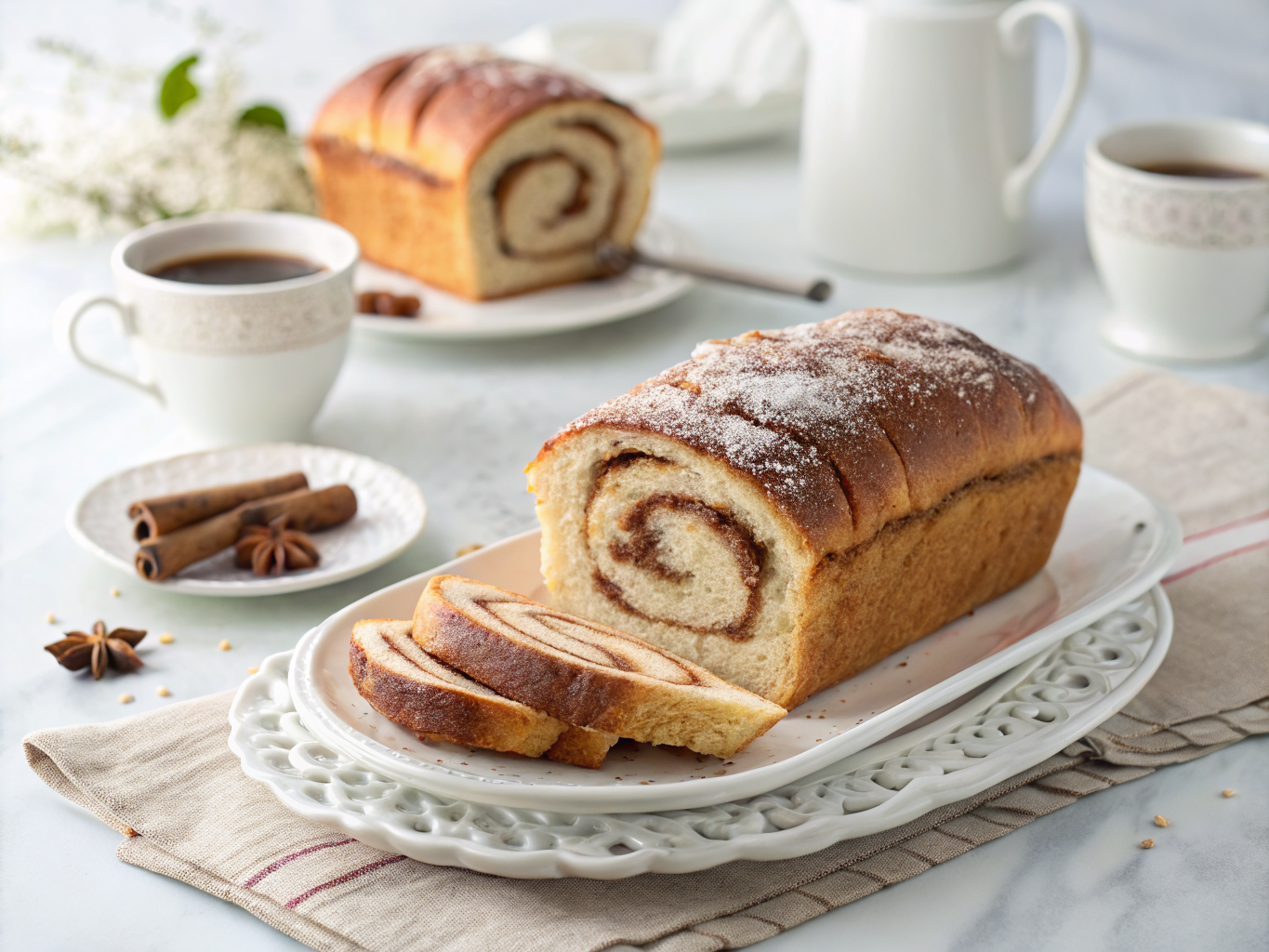
Cinnamon Swirl Bread
Ingredients
Method
- In a large bowl, combine flour, 1/4 cup sugar, yeast, and salt. Add warm milk, melted butter, and egg. Mix until a soft dough forms, then knead for 8-10 minutes until smooth and elastic.
- Place dough in a greased bowl, cover with a clean kitchen towel, and let rise in a warm place for 60-90 minutes until doubled in size.
- Mix 1/2 cup sugar and cinnamon in a small bowl. Punch down dough and roll into a 9x18 inch rectangle. Spread softened butter over the dough, then sprinkle cinnamon sugar mixture evenly over the surface.
- Starting from the short end, tightly roll up the dough into a log. Pinch the seam and ends to seal. Place seam-side down in a greased 9x5 inch loaf pan.
- Cover the pan with a towel and let rise for 45-60 minutes until the dough rises about 1 inch above the rim of the pan. Preheat oven to 350°F during the last 15 minutes of rising.
- Bake for 30-35 minutes until golden brown and the internal temperature reaches 190°F. If the top browns too quickly, tent with aluminum foil.
- Remove from oven and let cool in the pan for 10 minutes, then turn out onto a wire rack to cool completely before slicing.
Nutrition
Notes
Tried this recipe?
Let us know how it was!There’s nothing quite like slicing into a freshly baked loaf of Cinnamon Swirl Bread, revealing those beautiful spirals of cinnamon sugar winding through tender, pillowy bread. This beloved homemade bread transforms ordinary mornings into something special, filling your kitchen with the irresistible aroma of warm cinnamon and fresh-baked goodness. Whether you’re toasting it for breakfast, making French toast, or simply enjoying it with butter, Cinnamon Swirl Bread delivers comfort and flavor in every slice.
Thank you for reading this post, don't forget to subscribe!Making Cinnamon Swirl Bread at home might seem intimidating at first, but with the right techniques and guidance, you’ll discover it’s surprisingly achievable. This recipe walks you through each step of creating a professional-quality loaf that rivals anything you’d find at an artisan bakery. The combination of soft sandwich bread texture with sweet cinnamon ribbons creates a versatile bread perfect for any time of day.
Why This Cinnamon Swirl Bread Recipe Works Every Time
This Cinnamon Swirl Bread recipe has been tested and perfected to ensure consistent, delicious results for home bakers of all skill levels. The secret lies in balancing proper dough hydration, ideal rising times, and the perfect cinnamon-to-sugar ratio. Unlike quick bread recipes that rely on chemical leaveners, this yeast-based bread develops complex flavors through fermentation while maintaining a tender crumb.
The technique used in this recipe prevents common issues like gaps between the swirl and bread, uneven distribution of cinnamon, or a dry, crumbly texture. By incorporating butter into the dough and using a specific rolling method, we create a loaf that stays moist for days. The result is a bread that’s substantial enough for sandwiches yet sweet enough for dessert.
What sets this recipe apart is its adaptability to different kitchen conditions and schedules. You can prepare the dough the night before for fresh bread in the morning, or complete the entire process in one afternoon. The straightforward instructions remove the guesswork from bread-making, making it accessible even if you’ve never worked with yeast before.
Core Ingredients That Make the Difference
The foundation of exceptional Cinnamon Swirl Bread starts with selecting quality ingredients that work together harmoniously. All-purpose flour provides the ideal protein content for a tender yet structured crumb that supports the cinnamon swirl without becoming dense. Active dry yeast or instant yeast both work beautifully, creating the rise and airy texture that makes this bread so appealing.
Whole milk adds richness and creates a softer texture than water-based breads, contributing to the tender crumb that makes this loaf special. Unsalted butter incorporated into the dough provides flavor and keeps the bread moist for several days after baking. Granulated sugar feeds the yeast and adds subtle sweetness to the bread itself, balancing the spiced filling.
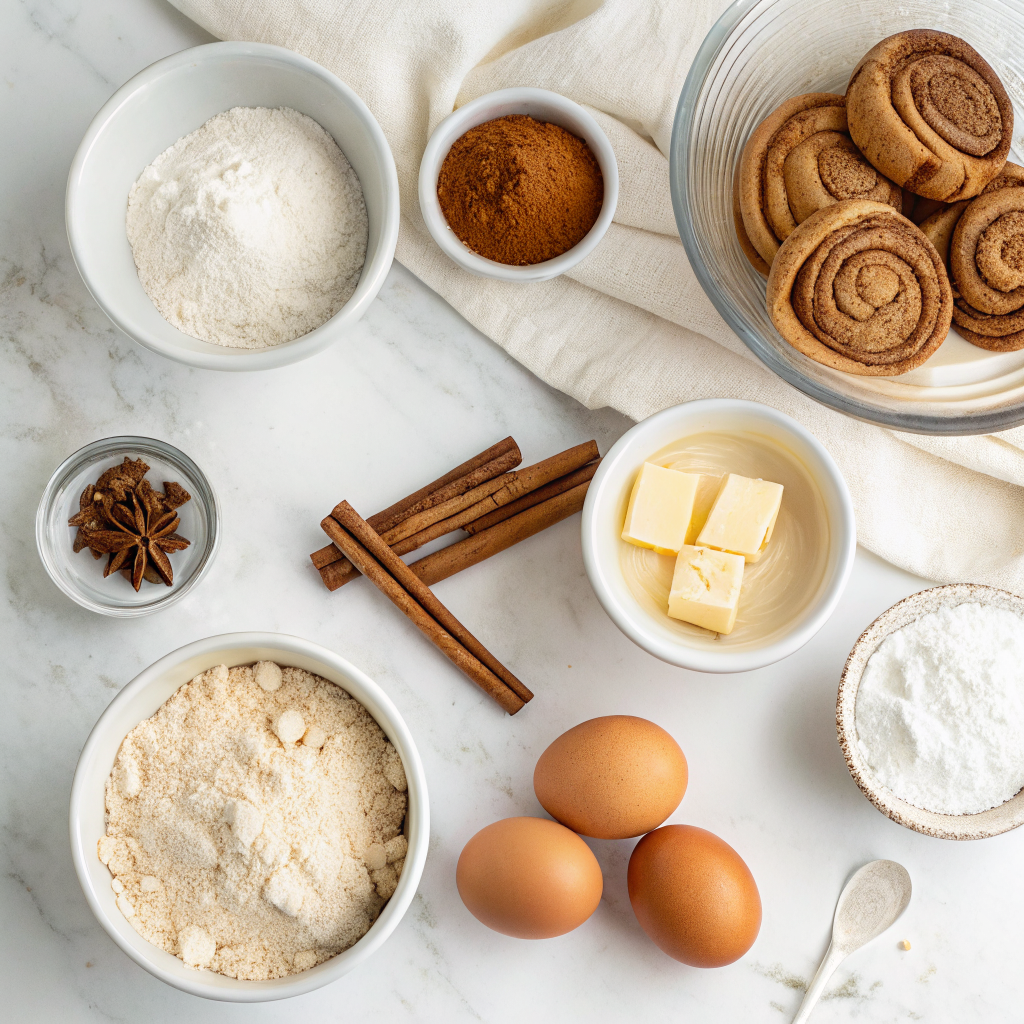
For the signature swirl, ground cinnamon quality matters significantly—fresh cinnamon from a recently opened container delivers more aromatic, potent flavor than older spices. The filling combines granulated sugar with cinnamon in a ratio that creates distinct ribbons without making the bread overly sweet. A small amount of melted butter brushed on the dough before adding the cinnamon sugar helps the filling adhere and prevents gaps.
Salt is essential for controlling yeast activity and enhancing all the flavors in the bread, never skip it even though the amount seems small. One large egg enriches the dough, contributing to both color and structure. According to Healthline, enriched breads with eggs and milk provide more nutrients than basic bread recipes.
Ingredient Quantities at a Glance
- 4 cups all-purpose flour, plus extra for dusting
- 2¼ teaspoons active dry yeast (one standard packet)
- 1 cup whole milk, warmed to 110°F
- ¼ cup unsalted butter, softened
- ¼ cup granulated sugar for the dough
- 1 large egg, room temperature
- 1 teaspoon salt
- ½ cup granulated sugar for the filling
- 2 tablespoons ground cinnamon
- 2 tablespoons melted butter for brushing
Step-by-Step Instructions for Perfect Cinnamon Swirl Bread
Begin by activating your yeast to ensure it’s alive and ready to work its magic. Warm the milk to between 105-115°F—too hot will kill the yeast, while too cold won’t activate it properly. Sprinkle the yeast over the warm milk, add a pinch of the sugar, and let it sit for 5-10 minutes until foamy and fragrant.
In a large mixing bowl, combine the flour, remaining sugar, and salt, whisking to distribute evenly. Create a well in the center and add the yeast mixture, softened butter, and egg. Mix with a wooden spoon until a shaggy dough forms, then turn out onto a lightly floured surface.
Knead the dough for 8-10 minutes until it becomes smooth, elastic, and slightly tacky but not sticky. This develops the gluten structure that gives bread its texture and allows it to rise properly. If using a stand mixer with a dough hook, knead on medium speed for 5-6 minutes.
First Rise and Shaping
Place the kneaded dough in a greased bowl, turning once to coat all sides with oil. Cover with a clean kitchen towel or plastic wrap and let rise in a warm, draft-free location for 60-90 minutes until doubled in size. The ideal rising temperature is between 75-80°F, which encourages active yeast growth without overproofing.
While the dough rises, prepare your cinnamon filling by mixing the sugar and cinnamon together in a small bowl. Grease a 9×5-inch loaf pan thoroughly with butter or non-stick spray, ensuring the bread releases easily after baking. This preparation time also allows you to gather your rolling pin and pastry brush.
Once doubled, punch down the dough to release gas bubbles and turn it out onto a lightly floured surface. Roll the dough into a rectangle approximately 9 inches wide and 18 inches long, with the shorter side facing you. The width should match your loaf pan, while the length will create multiple swirls when rolled.
Creating the Signature Swirl
Brush the melted butter evenly over the entire surface of the rolled dough, leaving a half-inch border along the top edge. This butter layer helps the cinnamon sugar adhere and prevents gaps between the swirl and bread. Sprinkle the cinnamon-sugar mixture uniformly over the buttered surface, gently pressing it into the dough.
Starting from the bottom edge nearest you, tightly roll the dough into a log, keeping even tension throughout. Press the seam firmly to seal, then pinch the ends closed. Place the shaped loaf seam-side down in the prepared pan, tucking the ends under slightly for a neat appearance.
Pro Tip: Rolling too loosely creates gaps in the swirl, while rolling too tightly can cause the bread to burst during baking. Aim for firm but not strained tension as you roll.
Second Rise and Baking
Cover the shaped loaf and allow it to rise for another 45-60 minutes until it crowns about an inch above the pan rim. This second rise, called proofing, ensures a light, airy texture in the finished bread. Don’t rush this step—properly proofed bread has better texture and appearance.
Preheat your oven to 350°F during the last 15 minutes of proofing. For extra shine and color, brush the top of the loaf with milk or beaten egg just before baking. Bake for 35-40 minutes until the top is golden brown and the internal temperature reaches 190°F when measured with an instant-read thermometer.
If the top browns too quickly, tent loosely with aluminum foil during the last 10-15 minutes of baking. Remove the finished loaf from the oven and let it cool in the pan for 10 minutes before turning out onto a wire rack. Allow the Cinnamon Swirl Bread to cool completely before slicing for the cleanest cuts and best texture.
Nutritional Benefits and Considerations
Cinnamon Swirl Bread provides energy primarily from carbohydrates in the flour and sugar, making it an excellent breakfast option when paired with protein. One slice contains approximately 180-200 calories, depending on slice thickness and ingredient variations. The addition of milk and egg provides some protein and essential nutrients like calcium and vitamin D.
Cinnamon itself offers surprising health benefits beyond its delicious flavor profile. According to research highlighted by Harvard School of Public Health, cinnamon contains powerful antioxidants and may help with blood sugar regulation. While the amounts in each slice are modest, regular cinnamon consumption as part of a balanced diet contributes to overall wellness.
For those monitoring their intake, this bread contains moderate amounts of sugar and butter compared to many commercial varieties. Making it at home allows you to control ingredient quality and portions. Consider the bread as an occasional treat rather than a daily staple, or modify the recipe using whole wheat flour and reduced sugar for a more nutritious version.
Each slice provides approximately 4-5 grams of protein, 30-35 grams of carbohydrates, and 5-6 grams of fat. The bread also contains small amounts of iron from the enriched flour and B vitamins that support metabolism. According to Medical News Today, moderate consumption of enriched bread can be part of a healthy, balanced diet.
Creative Variations to Try
Transform your basic Cinnamon Swirl Bread into new flavor experiences by experimenting with different additions and modifications. For a richer version, try Cinnamon Raisin Swirl Bread by sprinkling a half cup of raisins over the cinnamon sugar before rolling. The raisins add natural sweetness and chewy texture that complements the soft bread beautifully.
Create a decadent dessert version by adding a cream cheese filling alongside the cinnamon sugar layer. Beat 4 ounces of softened cream cheese with 2 tablespoons of sugar and spread it over the buttered dough before sprinkling the cinnamon mixture. This variation produces a bread reminiscent of cinnamon rolls in loaf form.
For autumn-inspired flavors, replace half the cinnamon with pumpkin pie spice and add a tablespoon of maple syrup to the filling mixture. This creates a seasonal treat perfect for holiday breakfasts. You might also enjoy our Pumpkin Bread recipe for more fall baking inspiration.
Whole Grain and Healthier Options
Substitute up to half the all-purpose flour with whole wheat flour for added fiber and nutrients without compromising too much texture. The bread will be slightly denser but more nutritious and satisfying. You may need to add an extra tablespoon or two of milk since whole wheat flour absorbs more liquid.
Reduce the sugar in both the dough and filling by up to half for a less sweet version that still showcases the cinnamon flavor beautifully. Use coconut sugar or brown sugar in the filling for deeper, more complex sweetness with a lower glycemic impact. These modifications create a more wholesome bread suitable for everyday eating.
For a dairy-free version, substitute the milk with unsweetened almond milk or oat milk, and replace the butter with coconut oil or vegan butter. The texture remains remarkably similar, making this Cinnamon Swirl Bread accessible to those with dietary restrictions. Check out our collection of dairy-free baking recipes for more alternatives.
Serving Suggestions That Elevate Your Bread
The most classic way to enjoy Cinnamon Swirl Bread is simply toasted with butter melting into every swirl. The heat intensifies the cinnamon aroma and creates crispy edges that contrast beautifully with the soft interior. This simple preparation highlights the bread’s flavor without overwhelming it.
Transform slices into extraordinary French toast by dipping them in an egg and milk mixture, then cooking until golden on both sides. The existing cinnamon flavor eliminates the need for additional spices in your custard mixture. Top with maple syrup, fresh berries, or a dusting of powdered sugar for an indulgent breakfast.
Create delicious bread pudding using cubed day-old Cinnamon Swirl Bread as the base. The cinnamon swirls distribute flavor throughout the custard, creating a dessert that tastes like you spent hours developing complex flavors. Serve warm with vanilla ice cream or caramel sauce for a crowd-pleasing dessert.
Creative Sandwich and Snack Ideas
Use Cinnamon Swirl Bread for unique grilled cheese sandwiches paired with sharp cheddar or brie for a sweet-savory combination. The slight sweetness complements cheese beautifully, creating an unexpected lunch option. Add sliced apples or pears for extra texture and freshness.
Spread cream cheese on toasted slices and top with sliced strawberries for a simple yet elegant breakfast or snack. The tangy cream cheese balances the sweet cinnamon perfectly. This combination also works wonderfully with our homemade strawberry preserves.
Make cinnamon bread croutons by cubing slightly stale bread, tossing with melted butter, and toasting until crispy. These add wonderful texture and flavor to fruit salads, ice cream, or yogurt parfaits. They also make an interesting garnish for pumpkin soup or butternut squash bisque.
Common Mistakes and How to Avoid Them
One of the most frequent issues home bakers encounter is gaps between the cinnamon swirl and the surrounding bread. This happens when the dough isn’t rolled tightly enough or when insufficient butter is used to help the filling adhere. Always brush butter generously and maintain firm, even tension while rolling.
Over-proofing causes bread to rise too much, creating large air pockets and potentially collapsing during baking. Watch your dough carefully during rises—it should double in size but not triple. If your kitchen is very warm, check the dough earlier than the recommended times to prevent over-proofing.
Under-kneading results in dense, heavy bread that doesn’t rise properly because the gluten structure hasn’t developed adequately. Knead until the dough is smooth and elastic, and passes the windowpane test—stretch a small piece between your fingers, and it should form a thin, translucent membrane without tearing.
Temperature and Timing Issues
