

Butternut Squash Soup
Ingredients
Method
- Preheat oven to 400°F. Toss butternut squash cubes with 1 tablespoon olive oil, salt, and pepper. Spread on a baking sheet and roast for 30-35 minutes until tender and lightly caramelized.
- In a large pot, heat remaining olive oil over medium heat. Add diced onion and cook for 5 minutes until softened. Add garlic and ginger, cooking for another minute until fragrant.
- Add the roasted butternut squash to the pot along with the vegetable broth. Bring to a simmer and cook for 10 minutes to allow flavors to meld.
- Using an immersion blender, puree the soup until completely smooth. Alternatively, carefully transfer to a blender in batches and blend until creamy.
- Stir in the coconut milk and nutmeg if using. Heat through for 2-3 minutes, adjusting seasoning with additional salt and pepper to taste.
- Ladle soup into bowls and garnish with a drizzle of coconut milk, toasted pepitas, or fresh herbs if desired. Serve hot.
Nutrition
Notes
Tried this recipe?
Let us know how it was!There’s nothing quite like a bowl of silky roasted Butternut Squash Soup with ginger and coconut milk to warm your soul on a crisp autumn evening. This velvety, nourishing soup combines the natural sweetness of roasted butternut squash with the aromatic warmth of fresh ginger and the rich creaminess of coconut milk. Whether you’re looking for a comforting weeknight dinner or an elegant starter for your holiday table, this butternut squash soup delivers exceptional flavor with surprisingly simple preparation.
Thank you for reading this post, don't forget to subscribe!The beauty of this recipe lies in its ability to transform humble ingredients into something truly spectacular. Roasting the squash brings out its natural caramelized sweetness, while the ginger adds a subtle spicy kick that balances the richness perfectly. The coconut milk creates an incredibly smooth texture that coats your palate without feeling heavy, making this soup both indulgent and surprisingly light.
This Butternut Squash Soup isn’t just delicious—it’s also packed with nutrients that support your health throughout the colder months. From immune-boosting vitamins to anti-inflammatory compounds, every spoonful delivers wellness along with incredible taste. Best of all, this recipe is naturally vegan, gluten-free, and can be prepared ahead of time, making it perfect for busy families and meal prep enthusiasts alike.
Why This Butternut Squash Soup Recipe Works
The secret to exceptional Butternut Squash Soup lies in the roasting technique. By roasting the squash instead of boiling it, you concentrate the natural sugars and develop deeper, more complex flavors that simply can’t be achieved through other cooking methods. The high heat caramelizes the edges of the squash, creating little pockets of sweet, nutty flavor that elevate the entire soup.
The combination of ginger and coconut milk is what truly sets this recipe apart from traditional butternut squash soups. Fresh ginger adds a bright, warming quality that cuts through the richness and prevents the soup from feeling too heavy. The coconut milk provides a silky texture and subtle tropical note that complements the squash’s natural sweetness without overwhelming it.
This recipe also embraces simplicity without sacrificing depth of flavor. Unlike recipes that call for a dozen ingredients, this streamlined approach focuses on quality over quantity. Each ingredient has a purpose and contributes to the final flavor profile, making this soup accessible for cooks of all skill levels while still delivering restaurant-quality results.
The make-ahead friendly nature of this soup makes it ideal for entertaining and meal planning. The flavors actually improve after a day in the refrigerator, allowing the ginger and spices to meld more completely with the squash. You can prepare this soup up to three days in advance, then simply reheat and serve when needed.
Core Ingredients for the Perfect Bowl
Creating the perfect Butternut Squash Soup starts with selecting the right ingredients. The star of the show is, of course, the butternut squash itself—you’ll want to choose a squash that feels heavy for its size with a matte, tan skin free from soft spots. A medium to large squash (about 3 pounds) will yield approximately six generous servings of soup.
Fresh ginger root is non-negotiable in this recipe. While ground ginger can work in a pinch, fresh ginger provides a bright, zesty flavor that ground simply cannot replicate. Look for ginger with smooth, tight skin and a firm texture—wrinkled or soft ginger has lost much of its potency and won’t deliver the same aromatic punch.
For the coconut milk, always opt for full-fat canned coconut milk rather than the carton variety. The canned version contains more coconut cream, which creates that luxuriously silky texture we’re after. Shake the can well before opening to ensure the cream and liquid are fully combined, or if you prefer an even richer soup, use just the cream from the top.
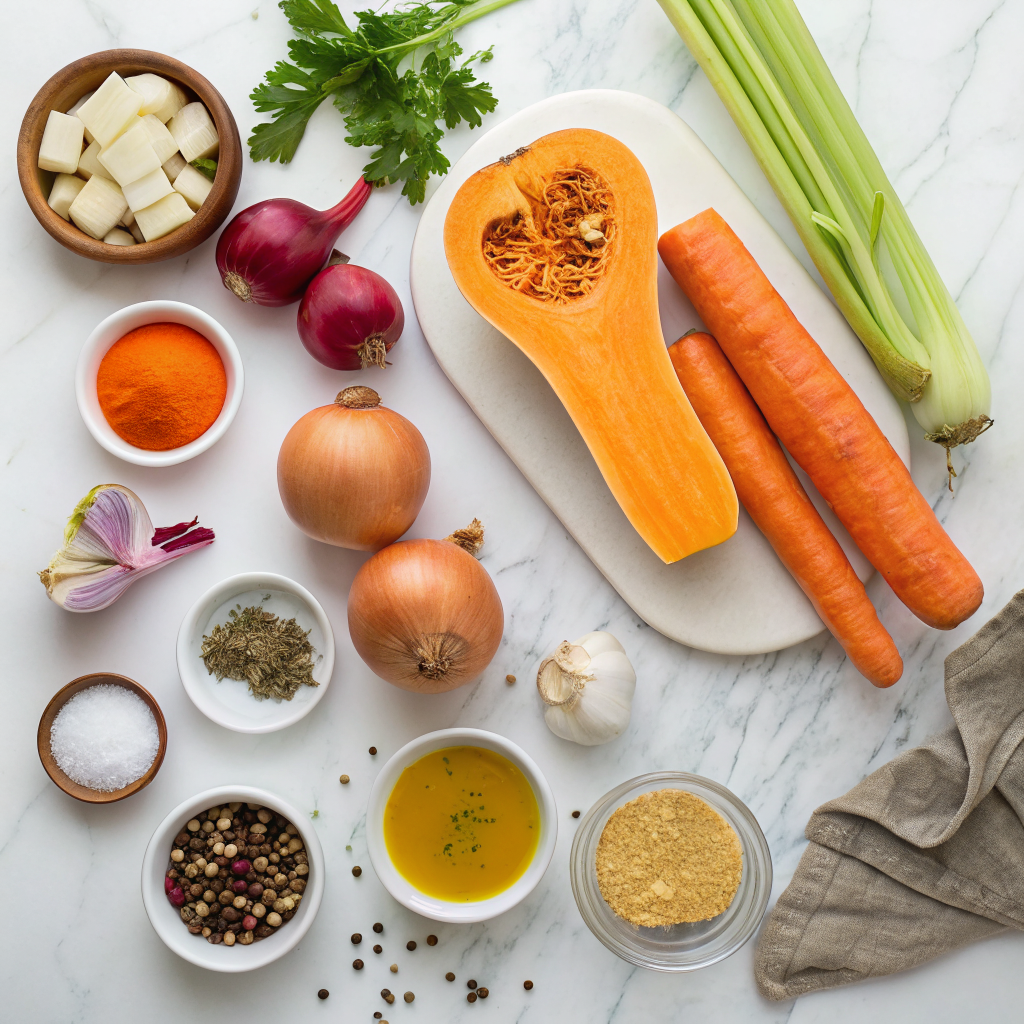
Additional aromatics include onions and garlic, which form the flavor base of the soup. Yellow or white onions work best here, providing a sweet, mellow foundation. Fresh garlic cloves add depth and a subtle pungency that enhances the other flavors without dominating them.
The liquid base consists of vegetable broth, which should be low-sodium if possible so you can control the final seasoning. Quality broth makes a noticeable difference—look for versions made with real vegetables rather than just yeast extract and salt. For additional depth, you can substitute half the broth with water reserved from cooking other vegetables.
Seasoning components include olive oil for roasting, salt, black pepper, and a pinch of nutmeg or cinnamon if desired. These warm spices complement the squash’s natural sweetness without making the soup taste like dessert. A squeeze of fresh lime juice at the end brightens all the flavors and adds a subtle tang that makes the soup irresistible.
Step-by-Step Instructions for Silky Smooth Results
Preparing and Roasting the Squash
Begin by preheating your oven to 425°F (220°C). While the oven heats, prepare your butternut squash by cutting it in half lengthwise using a sharp, sturdy knife. Scoop out the seeds and stringy pulp with a spoon—you can save the seeds for roasting separately if desired, as they make a delicious, nutritious snack.
Drizzle the cut surfaces of the squash with olive oil and season generously with salt and black pepper. Place the squash halves cut-side down on a baking sheet lined with parchment paper. Roasting cut-side down allows the squash to caramelize beautifully while steaming in its own moisture, creating incredibly tender flesh with concentrated flavor.
Roast the squash for 45-55 minutes, until the flesh is completely tender and easily pierced with a fork. The edges should be golden and slightly caramelized. Allow the squash to cool for about 10 minutes until it’s safe to handle, then scoop the flesh from the skin using a large spoon.
Building the Flavor Base
While the squash roasts, prepare your aromatics. Dice one large onion into small pieces and mince 3-4 cloves of garlic. Peel a 2-inch piece of fresh ginger and grate it finely using a microplane or the small holes of a box grater. Having all your aromatics prepped and ready ensures smooth cooking once you begin the soup assembly.
In a large pot or Dutch oven, heat two tablespoons of olive oil over medium heat. Add the diced onion and cook for 5-7 minutes, stirring occasionally, until soft and translucent but not browned. The onions should become sweet and tender, forming the aromatic foundation of your soup.
Add the minced garlic and grated ginger to the pot and cook for another 1-2 minutes, stirring constantly to prevent burning. The kitchen should smell absolutely amazing at this point—the combination of sautéed onions, garlic, and ginger creates an irresistible aroma that builds anticipation for the finished soup.
Combining and Simmering
Add the roasted butternut squash flesh to the pot with the aromatics. Pour in 4 cups of vegetable broth and one 14-ounce can of full-fat coconut milk. Stir everything together, bringing the mixture to a gentle simmer over medium-high heat. The soup doesn’t need to boil vigorously—a gentle simmer is sufficient to meld the flavors.
Allow the soup to simmer for about 15 minutes. This simmering time lets all the flavors marry together and ensures everything is heated through completely. The squash will break down slightly during this time, making it easier to blend into a smooth, creamy consistency.
Blending to Perfection
Remove the pot from heat and allow it to cool slightly for safety. Using an immersion blender, blend the soup directly in the pot until completely smooth and creamy. Work the blender in an up-and-down motion to ensure you catch all the chunks, creating a uniformly silky texture throughout.
If you don’t have an immersion blender, carefully transfer the soup in batches to a regular blender. Never fill the blender more than halfway, and always remove the center cap from the lid, covering the opening with a kitchen towel to allow steam to escape. Blend each batch until silky smooth, then return the blended soup to the pot.
After blending, taste your Butternut Squash Soup and adjust the seasoning as needed. Add salt gradually, tasting as you go—you can always add more but you can’t take it away. A squeeze of fresh lime juice at this stage brightens all the flavors and adds complexity. If the soup seems too thick, thin it with additional broth or coconut milk until it reaches your desired consistency.
Nutritional Benefits and Health Information
This Butternut Squash Soup is not only delicious but also remarkably nutritious. Butternut squash is an excellent source of vitamin A, providing over 400% of your daily needs in a single serving. According to Healthline, this vitamin A comes in the form of beta-carotene, a powerful antioxidant that supports eye health, immune function, and skin health.
The soup is also rich in vitamin C, which works synergistically with the vitamin A to boost immune function during cold and flu season. One serving provides approximately 50% of your daily vitamin C needs. The ginger in the recipe adds additional immune-supporting compounds and has been shown to have anti-inflammatory properties that may help reduce muscle soreness and support digestive health.
Coconut milk contributes healthy medium-chain triglycerides (MCTs), which are easily digested fats that provide quick energy. While coconut milk does contain saturated fat, research from Harvard School of Public Health suggests that the type of saturated fat in coconut may have different metabolic effects than those from animal sources. The key is moderation and balance within an overall healthy diet.
Each serving of this soup contains approximately 200-250 calories, depending on the exact proportions used. It provides about 4 grams of protein, 6-8 grams of fiber, and is naturally low in sodium when made with low-sodium broth. The high fiber content supports digestive health and helps maintain steady blood sugar levels, making this soup a satisfying option that won’t cause energy crashes.
For those following special diets, this Butternut Squash Soup checks many boxes. It’s naturally vegan, dairy-free, gluten-free, and can be made paleo-friendly. The soup is also relatively low on the glycemic index despite the squash’s natural sweetness, thanks to the fiber content and healthy fats from the coconut milk. According to Medical News Today, butternut squash is also a good source of potassium, which helps regulate blood pressure and supports heart health.
Creative Variations to Try
Once you’ve mastered the basic Butternut Squash Soup recipe, there are countless ways to customize it to your taste preferences. For a spicier version, add a pinch of cayenne pepper or a finely minced jalapeño to the aromatics when sautéing. The heat complements the sweetness of the squash beautifully and adds an exciting dimension to the soup.
Try adding other roasted vegetables to increase complexity and nutrition. Carrots, sweet potatoes, or even apples can be roasted alongside the squash and blended into the soup. These additions complement the butternut squash’s flavor while adding their own unique notes—carrots add earthiness, sweet potatoes increase creaminess, and apples contribute subtle tartness.
For a curry-inspired twist, add curry powder or garam masala to the aromatics along with the ginger. Start with one teaspoon and adjust to taste. This variation pairs especially well with a dollop of Greek yogurt (or coconut yogurt for vegan diets) and fresh cilantro as garnish.
Create a more substantial meal by adding protein. Cooked chickpeas, white beans, or lentils can be stirred in after blending for added texture and plant-based protein. For non-vegetarians, shredded rotisserie chicken or cooked sausage also pair wonderfully with the soup’s creamy, slightly sweet profile.
Experiment with different garnishes to transform the presentation and add textural contrast. Toasted pumpkin seeds add crunch and nutty flavor, while a drizzle of coconut cream creates an elegant swirl. Fresh herbs like cilantro, parsley, or chives add brightness, and crispy fried sage leaves provide an upscale restaurant touch.
Serving Suggestions and Pairings
This Butternut Squash Soup shines as both a starter course and a main dish. When serving as a starter, ladle it into small bowls or cups and garnish simply with a drizzle of coconut cream and a few toasted pumpkin seeds. This elegant presentation works beautifully for holiday dinners and special occasions.
For a complete meal, pair the soup with crusty artisan bread for dipping. A sourdough boule or rustic whole grain bread provides the perfect vehicle for scooping up every last drop. You can also serve it alongside a simple green salad dressed with lemon vinaigrette for a light, balanced dinner that’s ready in under an hour.
Grilled cheese sandwiches are a classic companion to soup, and this recipe is no exception. Try a sophisticated version with sharp cheddar and caramelized onions on sourdough, or keep it simple with classic American cheese on white bread. The crispy, buttery sandwich provides satisfying contrast to the soup’s silky smoothness.
Consider serving this soup in bread bowls for a fun, rustic presentation that kids and adults alike will love. Hollow out small round sourdough loaves, brush the insides with olive oil, and toast until golden. Fill with hot soup just before serving. This presentation not only looks impressive but also means one less dish to wash.
For dinner parties, set up a soup bar with various toppings and let guests customize their bowls. Offer options like toasted pumpkin seeds, coconut cream drizzles, fresh herbs, croutons, crispy chickpeas, and a selection of spices. This interactive approach makes the meal more engaging and accommodates different taste preferences. You can find more soup recipes and serving ideas at Home Cook Legacy’s dinner recipes section.
Common Mistakes to Avoid
One of the most frequent mistakes when making butternut squash soup is under-roasting the squash. If the squash isn’t fully tender and caramelized, your soup will lack the depth of flavor that makes it special. Always test the squash with a fork before removing it from the oven—it should be completely soft with no resistance.
Another common error is adding the coconut milk too early and allowing it to boil vigorously. High heat can cause coconut milk to separate or curdle, creating an unpleasant grainy texture. Always add the coconut milk after the soup has come to a simmer, and keep the heat at a gentle level to maintain that silky consistency.
