
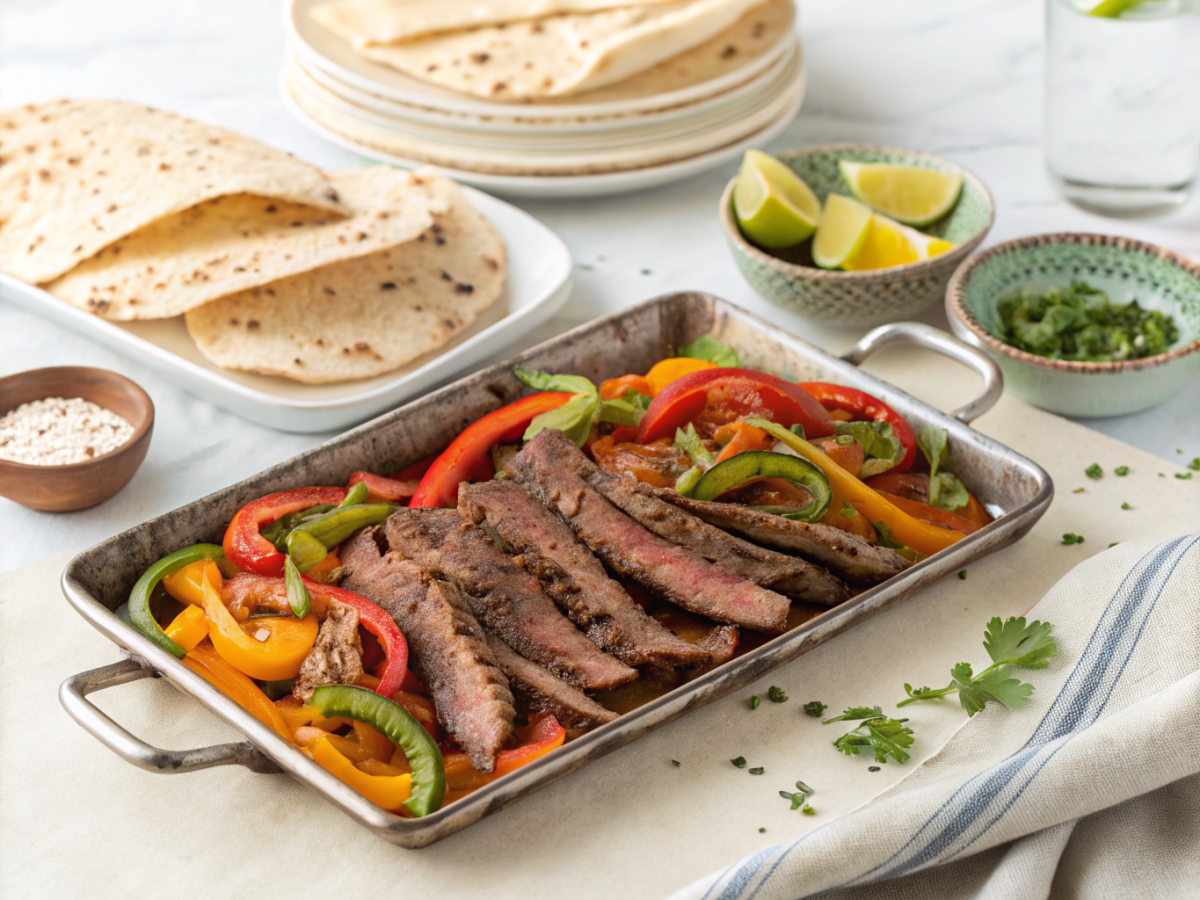
Sheet Pan Steak Fajitas Recipe: 5 Easy Tips for the Best Results

How to make sheet pan steak fajitas at home

Sheet Pan Steak Fajitas

Tender marinated steak with colorful bell peppers and onions roasted together on one sheet pan for easy, flavorful fajitas.
Prep Time 15 minutes
Cook Time 20 minutes
Total Time 35 minutes
Servings: 4 servings
Course: Dinner Recipes
Cuisine: Mexican, Tex-Mex
Calories: 425

Ingredients
  

  • 1.5 pounds flank steak sliced into thin strips
  • 3 medium bell peppers mixed colors, sliced
  • 1 large red onion sliced
  • 3 tablespoons olive oil
  • 2 teaspoons chili powder
  • 1 teaspoon cumin
  • 1 teaspoon garlic powder
  • 1 teaspoon paprika
  • 1 teaspoon salt
  • 2 tablespoons lime juice fresh
  • 8 flour tortillas for serving

Method
 

  1. Preheat your oven to 425 degrees Fahrenheit. Line a large sheet pan with parchment paper or lightly grease it with cooking spray.
  2. In a large bowl, combine the sliced steak with 2 tablespoons olive oil, chili powder, cumin, garlic powder, paprika, salt, and lime juice. Toss well to coat evenly and let marinate for 5-10 minutes.
  3. In another bowl, toss the sliced bell peppers and onions with the remaining 1 tablespoon of olive oil and a pinch of salt.
  4. Spread the seasoned vegetables evenly on the prepared sheet pan. Place the marinated steak strips on top of or alongside the vegetables, ensuring everything is in a single layer for even cooking.
  5. Place the sheet pan in the preheated oven and roast for 15-20 minutes, stirring halfway through, until the steak is cooked to your desired doneness and the vegetables are tender and slightly charred.
  6. Remove from the oven and let rest for 3-5 minutes. Squeeze additional lime juice over the top if desired.
  7. Serve the steak and vegetables in warm flour tortillas with your favorite toppings such as sour cream, guacamole, salsa, cheese, and cilantro.

Nutrition

Calories: 425kcalCarbohydrates: 38gProtein: 32gFat: 16gSodium: 780mgFiber: 5g

Notes

For best results, slice the steak against the grain to ensure maximum tenderness. You can substitute skirt steak or sirloin for the flank steak. Make sure not to overcrowd the pan so the vegetables caramelize properly instead of steaming. Leftovers can be stored in an airtight container in the refrigerator for up to 3 days and reheat beautifully.

Tried this recipe?

Let us know how it was!
\n\nSheet Pan Steak Fajitas are the ultimate weeknight dinner solution that combines bold Tex-Mex flavors with minimal cleanup. This one-pan wonder delivers perfectly seasoned steak strips, caramelized peppers, and tender onions all roasted together for maximum flavor. Whether you’re feeding a hungry family or meal prepping for the week, this recipe transforms simple ingredients into a restaurant-quality meal in under 30 minutes.

Sheet Pan Steak Fajitas: 5 Easy Tips for Perfect Results

Creating restaurant-quality fajitas at home starts with understanding the fundamentals of sheet pan cooking. The key lies in achieving that perfect char on your vegetables while keeping your steak tender and juicy. These five essential tips will transform your fajita game and ensure consistently delicious results every single time.

First, always preheat your sheet pan in a hot oven before adding ingredients. This technique creates an immediate sear that locks in juices and develops those coveted caramelized edges. Second, slice your steak against the grain into thin strips for maximum tenderness.

Third, don’t overcrowd your pan—ingredients need space to roast rather than steam. Fourth, use high heat (around 450°F) to achieve proper browning and char marks. Finally, let your steak rest for five minutes after cooking to redistribute the juices throughout the meat.

Why You’ll Love This Sheet Pan Steak Fajitas Recipe

The beauty of this recipe lies in its simplicity and efficiency. Unlike traditional stovetop fajitas that require constant attention and multiple pans, this sheet pan method allows everything to cook simultaneously. You’ll have more time to prepare sides, set the table, or simply relax while dinner cooks itself.

This recipe is incredibly versatile and accommodates various dietary preferences effortlessly. The high-protein content makes it perfect for fitness enthusiasts, while the abundance of colorful vegetables provides essential nutrients for the whole family. Plus, cleanup is a breeze with just one pan to wash.

Budget-friendly ingredients make this dish accessible for regular rotation in your meal plan. Flank steak or skirt steak provides excellent value without sacrificing flavor or quality. The combination of simple seasonings creates complex flavors that rival your favorite Mexican restaurant.

Meal preppers will appreciate how well these fajitas store and reheat throughout the week. The flavors actually intensify after a day in the refrigerator, making leftovers even more delicious. This recipe easily doubles or triples for batch cooking or feeding a crowd at your next gathering.

Core Ingredients for Sheet Pan Steak Fajitas

Sheet pan steak fajitas ingredients

The foundation of exceptional fajitas starts with selecting quality ingredients that work harmoniously together. Each component plays a crucial role in building layers of flavor and texture. Let’s break down exactly what you’ll need to create this mouthwatering dish.

Protein

Choose 1.5 to 2 pounds of flank steak, skirt steak, or sirloin for optimal results. Flank steak offers the best balance of flavor, tenderness, and affordability for this recipe. Look for meat with good marbling and bright red color for maximum juiciness.

Vegetables

Three large bell peppers in assorted colors (red, yellow, and green) provide sweetness and visual appeal. Two large onions, sliced into thick strips, add savory depth and natural sweetness when caramelized. The combination creates the classic fajita flavor profile everyone loves.

Seasonings and Aromatics

Three tablespoons of olive oil help everything roast beautifully and prevent sticking. Four cloves of minced garlic infuse aromatic flavor throughout the dish. Two teaspoons of chili powder, one teaspoon of cumin, one teaspoon of smoked paprika, and one teaspoon of oregano create the signature fajita seasoning blend.

Finishing Touches

Fresh lime juice brightens all the flavors and adds essential acidity to balance the richness. One teaspoon of salt and half a teaspoon of black pepper season everything perfectly. Fresh cilantro for garnish adds a pop of color and herbaceous freshness to the finished dish.

If you’re looking for more dinner recipes that simplify weeknight cooking, this method works beautifully with various proteins and vegetable combinations.

How to Make Sheet Pan Steak Fajitas: Step-by-Step

Following these detailed instructions ensures perfectly cooked fajitas every time. The process is straightforward, but attention to timing and technique makes all the difference. Let’s walk through each step to guarantee your success in the kitchen.

Step 1: Prepare Your Ingredients

Begin by preheating your oven to 450°F and positioning the rack in the upper third. Slice your steak against the grain into thin strips, approximately 1/4-inch thick for even cooking. Pat the meat dry with paper towels to ensure proper browning rather than steaming.

Cut your bell peppers into 1/2-inch strips, removing all seeds and membranes. Slice onions into similar-sized strips to ensure even cooking alongside the peppers. Uniform sizing is crucial for achieving consistent doneness across all ingredients.

Step 2: Season Everything

In a large mixing bowl, combine chili powder, cumin, smoked paprika, oregano, salt, and pepper thoroughly. Add the sliced steak and toss until every piece is evenly coated with the spice mixture. Let the meat rest for 5-10 minutes to allow the seasonings to penetrate.

In a separate bowl, toss the peppers and onions with two tablespoons of olive oil and half the garlic. Season the vegetables lightly with salt and pepper to enhance their natural sweetness. This separate seasoning ensures balanced flavor in every component.

Step 3: Arrange on Sheet Pan

Spread the seasoned vegetables in an even layer across your largest sheet pan. Make sure they’re not overlapping too much to allow proper caramelization and browning. Place the pan in the preheated oven for 10 minutes to give vegetables a head start.

After 10 minutes, remove the pan and push vegetables to the sides, creating space in the center. Arrange the seasoned steak strips in a single layer in the center of the pan. This timing difference prevents overcooking the steak while ensuring tender-crisp vegetables.

Step 4: Roast to Perfection

Return the pan to the oven and roast for an additional 8-10 minutes for medium doneness. The steak should develop a beautiful crust while the vegetables continue caramelizing at the edges. For well-done steak, add 2-3 additional minutes of cooking time.

Watch carefully during the final minutes to prevent burning, as oven temperatures can vary significantly. The vegetables should be tender with charred edges, and the steak should reach an internal temperature of 135°F for medium. Remove promptly when done to prevent overcooking from residual heat.

Step 5: Rest and Serve

Transfer everything to a serving platter and let rest for 5 minutes before serving. Squeeze fresh lime juice over the entire dish and sprinkle with chopped cilantro for brightness. This resting period allows juices to redistribute, ensuring every bite is tender and flavorful.

Serve immediately with warm tortillas, sour cream, guacamole, shredded cheese, and your favorite toppings. The sizzling presentation straight from the oven creates an impressive display for family dinners. For more quick and easy meal ideas, this technique adapts wonderfully to various proteins.

Nutrition & Health Benefits

This recipe delivers impressive nutritional value while satisfying your cravings for bold, flavorful food. Each serving provides approximately 350-400 calories, 35 grams of protein, 25 grams of carbohydrates, and 12 grams of healthy fats. The high protein content supports muscle maintenance and keeps you feeling satisfied for hours.

Bell peppers are nutritional powerhouses loaded with vitamin C, providing over 150% of your daily requirement per serving. They also contain significant amounts of vitamin A, vitamin B6, and folate for overall health. The variety of colors ensures a diverse range of antioxidants and phytonutrients.

Lean beef provides essential nutrients including iron, zinc, and B vitamins that support energy production and immune function. The protein quality is exceptional, containing all essential amino acids your body needs. Choosing lean cuts keeps saturated fat content moderate while maximizing nutritional benefits.

Onions and garlic offer anti-inflammatory compounds and support cardiovascular health through their sulfur-containing phytochemicals. The olive oil provides heart-healthy monounsaturated fats that aid in nutrient absorption. For more information on balanced meal planning, check out this comprehensive guide to nutritious cooking methods.

This dish fits seamlessly into various eating patterns including low-carb, keto-friendly, and paleo diets when served without tortillas. The vegetables provide fiber for digestive health and blood sugar regulation. The combination of protein, healthy fats, and fiber creates a balanced meal that supports sustained energy levels.

Variations & Substitutions

The versatility of this recipe allows endless customization to suit your preferences and dietary needs. Experimenting with different proteins, vegetables, and seasonings keeps the dish exciting and prevents meal fatigue. Here are some creative variations to inspire your next fajita night.

Protein Alternatives

Substitute chicken breast or thighs for a leaner option that’s equally delicious and budget-friendly. Shrimp works beautifully but requires less cooking time—add them during the last 5 minutes only. Portobello mushrooms or extra-firm tofu create satisfying vegetarian versions that absorb the seasonings wonderfully.

Vegetable Variations

Add sliced zucchini, yellow squash, or mushrooms for extra vegetable variety and nutrition. Cherry tomatoes burst with sweetness when roasted and add beautiful color to the finished dish. Poblano peppers provide mild heat and authentic Mexican flavor for those who enjoy a little kick.

Seasoning Modifications

Create a spicier version by adding cayenne pepper, crushed red pepper flakes, or diced jalapeños. For smoky depth, increase the smoked paprika or add a teaspoon of chipotle powder. Fresh herbs like oregano or cilantro stems mixed into the seasoning blend add aromatic complexity.

Dietary Adaptations

Make this recipe Whole30 compliant by ensuring all seasonings contain no added sugars or additives. For a lower-sodium version, reduce the salt and use fresh spices instead of pre-mixed blends. Those following a high-protein diet can increase the meat portion and add black beans for additional protein.

Serving Suggestions

The presentation and accompaniments elevate this dish from simple weeknight dinner to impressive entertaining fare. Thoughtful serving suggestions enhance both the visual appeal and overall dining experience. Let’s explore the best ways to serve and enjoy your fajitas.

Traditional Accompaniments

Warm flour or corn tortillas are essential for authentic fajita experience and easy eating. Offer both options to accommodate different preferences and dietary restrictions. Heat tortillas directly on a gas flame or in a dry skillet for the best flavor and texture.

Set out a variety of toppings including sour cream, shredded cheese, guacamole, and fresh pico de gallo. Pickled jalapeños, sliced radishes, and lime wedges add brightness and customization options. This build-your-own approach makes dinner interactive and fun for the whole family.

Side Dishes

Mexican rice or cilantro-lime rice complements the fajitas perfectly and rounds out the meal. Refried beans or black beans add fiber, protein, and authentic flavor to your spread. A simple side salad with lime vinaigrette provides freshness and balances the richness of the main dish.

Chips and salsa or queso make excellent appetizers while the fajitas finish cooking. Elote (Mexican street corn) or a corn salad adds sweetness and textural contrast. For inspiration on complementary dishes, explore this collection of satisfying side dish recipes.

Beverage Pairings

Classic margaritas (frozen or on the rocks) are the quintessential fajita pairing for adult gatherings. Mexican beer with lime wedges offers a refreshing, casual option that doesn’t overpower the food. For non-alcoholic choices, agua fresca, horchata, or fresh limeade complement the bold flavors beautifully.

Common Mistakes to Avoid

Understanding potential pitfalls helps you achieve perfect results every time you make this recipe. Many home cooks make the same avoidable errors that compromise texture and flavor. Learning from these common mistakes ensures your fajitas turn out restaurant-quality with every attempt.

Overcrowding the Pan

The most frequent mistake is cramming too many ingredients onto one sheet pan. Overcrowding causes steaming instead of roasting, resulting in soggy vegetables and gray meat. Use two pans if necessary to maintain proper spacing and achieve that essential caramelization.

Cutting Against the Grain

Slicing meat with the grain instead of against it creates tough, chewy fajitas that are difficult to eat. Always identify the direction of the muscle fibers and cut perpendicular to them. This simple technique dramatically improves tenderness and makes every bite more enjoyable.

Not Preheating Properly

Starting with a cold oven or sheet pan prevents proper searing and browning of ingredients. Always allow your oven to fully preheat to 450°F before beginning. Consider placing your empty sheet pan in the oven during preheating for even better searing results.

Overcooking the Steak

Leaving steak in the oven too long results in dry, tough meat that’s disappointing to eat. Remember that carryover cooking continues after removal from the oven, so pull it slightly before your target temperature. Use an instant-read thermometer to ensure accuracy and perfect doneness every time.

Skipping the Rest Period

Cutting into the meat immediately after cooking causes all the precious juices to run out onto the cutting board. Allowing a 5-minute rest redistributes moisture throughout the meat for maximum juiciness. This patience pays off with noticeably more tender and flavorful results.

Storage & Meal Prep Tips

Proper storage techniques extend the life of your fajitas and maintain quality for future meals. These practical tips help you maximize your cooking efforts and reduce food waste. Smart meal prep strategies make this recipe even more convenient for busy weeknight dinners.

Refrigerator Storage

Store cooled fajita mixture in airtight containers in the refrigerator for up to 4 days. Keep the steak and vegetables together or separate them depending on your reheating preferences. Label containers with dates to track freshness and ensure food safety.

For best results, store tortillas separately from the filling to prevent sogginess. Keep toppings like sour cream, guacamole, and cheese in their own containers for maximum freshness. This compartmentalized approach maintains optimal texture and flavor for each component.

Freezer Storage

Freeze cooked fajitas in portion-sized containers or freezer bags for up to 3 months. Remove as much air as possible to prevent freezer burn and maintain quality. Flat-pack freezer bags save space and allow for quicker thawing when you need a fast meal.

Avoid freezing toppings like sour cream, lettuce, and fresh tomatoes as they don’t thaw well. Freeze only the cooked meat and vegetable mixture for best results. Thaw overnight in the refrigerator before reheating for food safety and even warming.

Reheating Methods

Reheat refrigerated fajitas in a skillet over medium-high heat for 5-7 minutes, stirring occasionally. This method restores some of the original texture and prevents mushiness. Add a splash of water or broth if the mixture seems dry during reheating.

Microwave individual portions in 1-minute intervals, stirring between each, until heated through completely. Cover the container with a damp paper towel to retain moisture during reheating. For frozen fajitas, thaw completely before reheating for even warming and best texture.

Meal Prep Strategy

Prepare the seasoning blend and slice vegetables up to 2 days ahead for quick assembly. Store prepped ingredients separately in the refrigerator until ready to cook. This advance preparation makes weeknight cooking incredibly fast and stress-free.

Cook double batches and portion into individual containers for grab-and-go lunches throughout the week. Pair with different accompaniments each day to prevent boredom—rice bowls, salads, or traditional tacos. This strategy saves time and ensures healthy homemade meals are always available.

Final Thoughts on Sheet Pan Steak Fajitas

Sheet Pan Steak Fajitas represent the perfect intersection of convenience, nutrition, and incredible flavor. This recipe proves that impressive, restaurant-quality meals don’t require complicated techniques or extensive cleanup. With just one pan and about 30 minutes, you can create a dinner that satisfies everyone at your table.

The versatility of this dish makes it suitable for various occasions, from casual weeknight dinners to entertaining guests. The customization options ensure you’ll never tire of this recipe, as endless variations keep things interesting. Whether you’re a busy parent, meal prep enthusiast, or cooking novice, this recipe delivers consistent success.

The combination of high-quality protein, colorful vegetables, and bold seasonings creates a balanced meal that supports your health goals. The minimal cleanup and hands-off cooking method free up your time for other priorities. Once you master this technique, you’ll find yourself returning to it again and again.

Don’t hesitate to make this recipe your own by experimenting with different proteins, vegetables, and seasonings. The basic method remains the same regardless of variations, making it an invaluable technique in your cooking repertoire. Start with this classic version, then let your creativity guide future iterations based on your preferences and what’s in season.

Frequently Asked Questions

Can I use a different cut of beef for Sheet Pan Steak Fajitas?

Yes, you can substitute sirloin, ribeye, or even top round for the traditional flank or skirt steak. Each cut offers slightly different texture and flavor profiles, so choose based on your preferences and budget. Just remember to slice against the grain regardless of the cut you select for maximum tenderness in your fajitas.

How do I prevent my vegetables from getting too soft or mushy?

The key is cutting vegetables into uniform 1/2-inch strips and not overcrowding the pan. Give vegetables a 10-minute head start in the oven before adding the steak, which ensures they caramelize properly. Using high heat (450°F) and ensuring good air circulation around each piece promotes roasting rather than steaming.

Can I make Sheet Pan Steak Fajitas ahead of time for meal prep?

Absolutely! These fajitas store beautifully in the refrigerator for up to 4 days or in the freezer for 3 months. Prepare the full recipe, let it cool completely, then portion into airtight containers for easy reheating. The flavors actually intensify after a day, making leftovers even more delicious than the original meal.

What’s the best way to achieve that restaurant-style char on the vegetables?

Use a very hot oven (450°F or higher) and ensure your sheet pan is fully preheated before adding ingredients. Don’t overcrowd the pan, as this creates steam instead of the dry heat needed for caramelization. For extra char, finish under the broiler for 1-2 minutes, watching carefully to prevent burning while achieving those coveted crispy edges.

Pro Tip: For an extra flavor boost, marinate your sliced steak in the seasoning mixture with lime juice for 30 minutes to 2 hours before cooking. This additional step tenderizes the meat and allows the spices to penetrate more deeply. Just pat the meat dry before arranging on the sheet pan to ensure proper browning. For more creative ways to enhance your cooking, explore this resource on maximizing vegetable flavors in various preparations.

Leave a Comment

Recipe Rating