
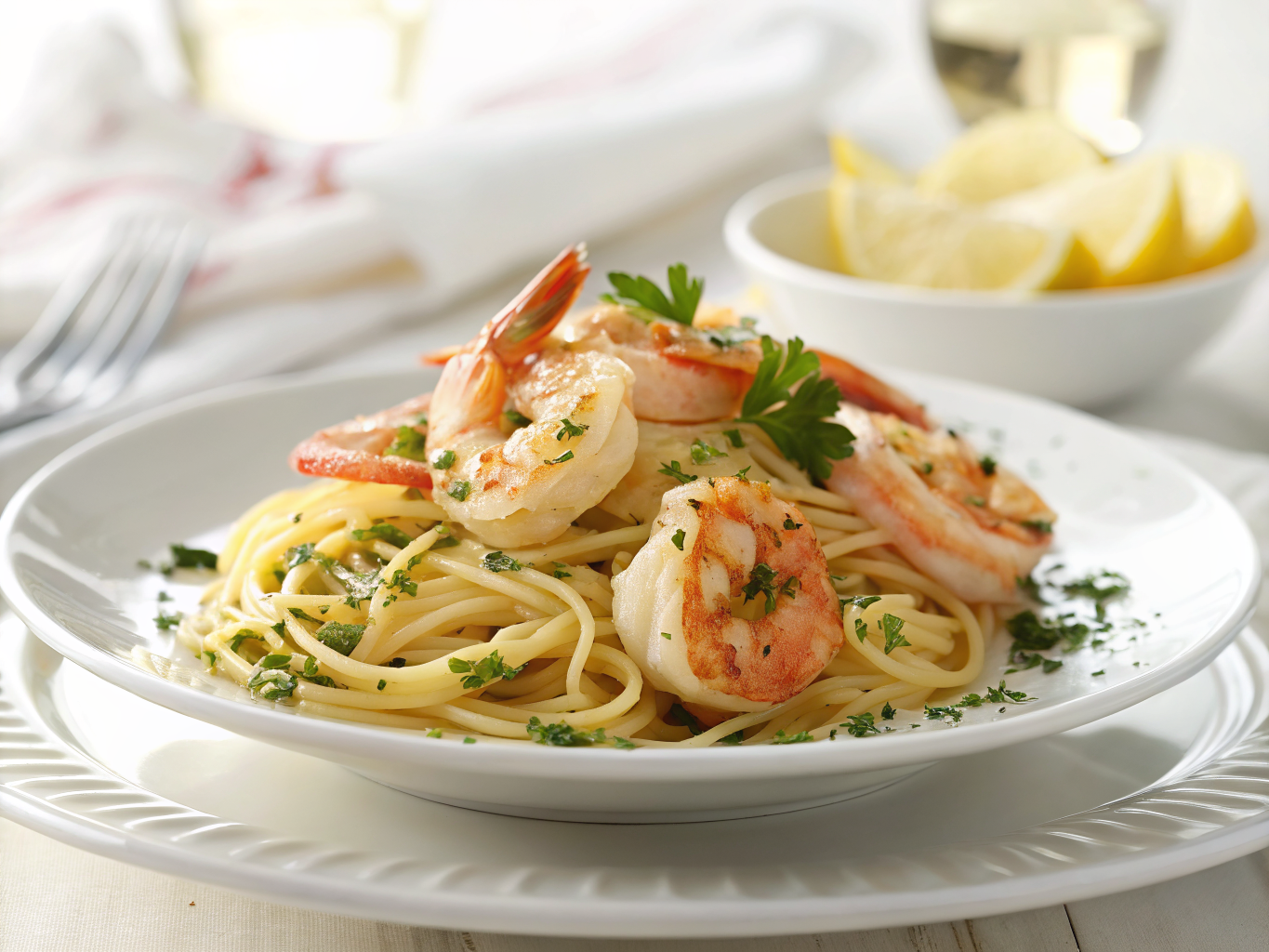
Shrimp Scampi
Ingredients
Method
- Pat shrimp dry with paper towels and season with salt and pepper on both sides.
- Heat 2 tablespoons butter and olive oil in a large skillet over medium-high heat until butter is melted and foaming.
- Add shrimp in a single layer and cook for 2-3 minutes per side until pink and opaque. Remove shrimp to a plate.
- In the same skillet, add garlic and red pepper flakes. Sauté for 30 seconds until fragrant.
- Pour in white wine and lemon juice. Bring to a simmer and cook for 2-3 minutes until slightly reduced.
- Reduce heat to low and stir in remaining 2 tablespoons butter until melted and sauce is smooth.
- Return shrimp to the skillet and toss to coat in the sauce. Sprinkle with fresh parsley and serve immediately over pasta or with crusty bread.
Nutrition
Notes
Tried this recipe?
Let us know how it was!There’s nothing quite like a plate of perfectly cooked shrimp scampi to transport you straight to an Italian coastal restaurant. This classic Shrimp Scampi recipe combines succulent shrimp with a garlicky butter and white wine sauce, finished with bright lemon juice and served over tender linguine. Whether you’re planning a romantic dinner for two or hosting a dinner party, this elegant yet simple dish delivers restaurant-quality results in just 20 minutes.
Thank you for reading this post, don't forget to subscribe!The beauty of this Shrimp Scampi recipe lies in its simplicity and the way each ingredient works together to create layers of flavor. The butter provides richness, the white wine adds depth and acidity, the garlic brings aromatic intensity, and the lemon brightens everything with its zesty finish. When you master this recipe, you’ll have an impressive meal that feels special enough for celebrations yet easy enough for weeknight cooking.
This comprehensive guide will walk you through everything you need to know to create the ultimate shrimp scampi. From selecting the best ingredients to avoiding common mistakes, you’ll discover professional techniques that guarantee perfect results every single time. Let’s dive into this timeless Italian-American favorite that has graced dinner tables for generations.
Why This Shrimp Scampi Recipe Stands Out
What makes this Shrimp Scampi recipe exceptional is the careful balance of flavors and the technique used to create a silky, emulsified sauce. Unlike versions that end up oily or lack depth, this recipe incorporates pasta water to bind the sauce ingredients together, creating a velvety coating that clings to both the shrimp and pasta. The timing is carefully calibrated so the shrimp remain tender and juicy rather than rubbery.
Another standout feature is the generous amount of fresh garlic that gets gently sautéed to golden perfection without burning. This creates a sweet, mellow garlic flavor rather than a harsh, bitter one. The combination of butter and olive oil provides the best of both worlds: the rich flavor of butter with the higher smoke point of olive oil, preventing burning while building deep flavor.
This recipe also emphasizes the importance of using quality white wine that you’d actually enjoy drinking. The wine isn’t just a cooking liquid; it’s a flavor component that adds complexity and acidity to balance the richness. According to Harvard School of Public Health, cooking with wine can add depth to dishes while the alcohol cooks off, leaving behind concentrated flavors.
Core Ingredients That Make This Recipe Shine
The foundation of any great Shrimp Scampi recipe starts with selecting the right ingredients. Fresh, large shrimp are essential—look for 16-20 count per pound, which provides a substantial, meaty bite. Whether you choose wild-caught or farm-raised, ensure they’re deveined and peeled with tails on or off based on your preference. Fresh shrimp should smell like the ocean, not fishy, and have firm, translucent flesh.
High-quality unsalted butter is crucial since you’ll be controlling the salt level in the dish. European-style butter with higher butterfat content creates an even richer sauce. Extra virgin olive oil adds its own fruity notes while preventing the butter from burning. Fresh garlic is non-negotiable—pre-minced garlic from a jar simply cannot match the pungent, aromatic quality of freshly minced cloves.
A dry white wine such as Pinot Grigio, Sauvignon Blanc, or Vermentino works beautifully in this recipe. Avoid cooking wines, which contain added salt and lack the nuanced flavors you want. Fresh lemon juice and zest provide brightness that cuts through the richness. Finally, use imported Italian linguine or spaghetti for the best texture and flavor, and don’t forget fresh Italian parsley and red pepper flakes to complete the dish.
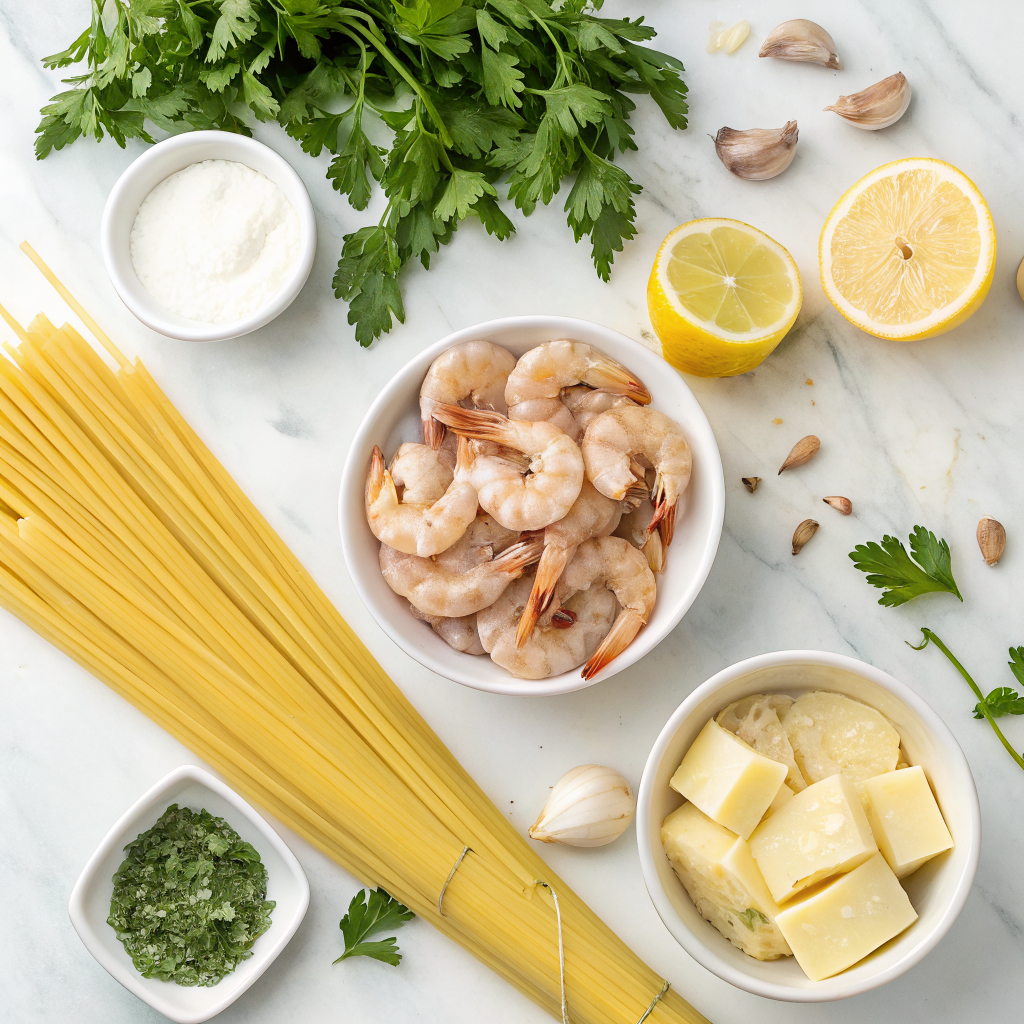
Essential Ingredient List
- 1.5 pounds large shrimp, peeled and deveined
- 1 pound linguine pasta
- 6 tablespoons unsalted butter, divided
- 3 tablespoons extra virgin olive oil
- 8 cloves garlic, minced
- 1/2 cup dry white wine
- 1/4 cup fresh lemon juice (about 2 lemons)
- 1 teaspoon lemon zest
- 1/4 teaspoon red pepper flakes
- 1/3 cup fresh Italian parsley, chopped
- Salt and freshly ground black pepper to taste
- Freshly grated Parmesan cheese for serving (optional)
Step-by-Step Instructions for Perfect Shrimp Scampi
Creating the perfect Shrimp Scampi recipe requires attention to timing and technique. Begin by bringing a large pot of salted water to a boil for the pasta. The water should taste like the sea—generously salted to properly season the pasta as it cooks. While the water heats, pat the shrimp completely dry with paper towels and season them with salt and black pepper on both sides.
Once the water boils, add the linguine and cook it for one minute less than the package directions indicate. You want it to be just shy of al dente since it will finish cooking in the sauce. Before draining, reserve at least one cup of the starchy pasta cooking water—this liquid gold will help emulsify your sauce.
While the pasta cooks, heat a large skillet over medium heat and add 2 tablespoons of butter and the olive oil. Once the butter melts and the foam subsides, add the shrimp in a single layer, working in batches if necessary to avoid overcrowding. Cook for 1-2 minutes per side until they turn pink and develop a slight golden color but are not fully cooked through.
Creating the Sauce
Remove the shrimp to a plate and add the minced garlic and red pepper flakes to the same pan. Sauté for about 30-45 seconds until fragrant but not browned—garlic burns quickly and becomes bitter. Pour in the white wine and use a wooden spoon to scrape up any flavorful brown bits stuck to the bottom of the pan, a technique called deglazing.
Let the wine simmer for 2-3 minutes to reduce by about half and cook off the raw alcohol taste. Add the lemon juice, lemon zest, and the remaining 4 tablespoons of butter, swirling the pan to help the butter melt and emulsify into the sauce. Season with salt and pepper to taste, keeping in mind that the pasta water and Parmesan will add additional saltiness.
Add the partially cooked linguine directly to the skillet along with 1/4 cup of the reserved pasta water. Toss everything together using tongs, adding more pasta water as needed to create a glossy, cohesive sauce that coats the pasta. Return the shrimp to the pan along with the chopped parsley and toss for another minute until the shrimp are just cooked through and everything is well combined.
Final Plating
Immediately remove the pan from heat to prevent overcooking the shrimp. Taste and adjust seasoning with more salt, pepper, lemon juice, or red pepper flakes if desired. Serve the Shrimp Scampi recipe immediately in warmed shallow bowls or on plates, making sure each portion gets plenty of shrimp and sauce. Garnish with additional fresh parsley and offer grated Parmesan cheese on the side for those who want it.
Nutritional Benefits of Shrimp Scampi
While this Shrimp Scampi recipe is undeniably indulgent, it also provides substantial nutritional benefits. Shrimp are an excellent source of lean protein, with a 3-ounce serving providing about 20 grams of protein while containing less than 100 calories. According to Healthline, shrimp are rich in selenium, vitamin B12, phosphorus, and the antioxidant astaxanthin, which gives them their pink color when cooked.
Garlic, a star ingredient in any Shrimp Scampi recipe, has been studied for its potential cardiovascular benefits and immune-supporting properties. The olive oil provides heart-healthy monounsaturated fats that may help reduce inflammation. Even the white wine contributes antioxidants, though most of the alcohol content evaporates during cooking.
One serving of this recipe typically contains approximately 450-550 calories, depending on portion size and how much sauce you use. The dish provides a good balance of protein, carbohydrates from the pasta, and fats from the butter and oil. Research from Medical News Today suggests that shellfish like shrimp can be part of a healthy, balanced diet when prepared with heart-healthy cooking methods.
Macronutrient Breakdown (Per Serving)
- Calories: 480-550
- Protein: 32-36 grams
- Carbohydrates: 45-50 grams
- Fat: 18-22 grams
- Fiber: 2-3 grams
- Sodium: 450-600 mg (varies based on added salt)
Creative Variations to Try
Once you’ve mastered the classic Shrimp Scampi recipe, experimenting with variations can keep this dish exciting. For a spicy kick, double or triple the red pepper flakes and add a pinch of cayenne pepper. If you love cream sauces, stir in 1/4 cup of heavy cream after adding the wine for a luxurious scampi alfredo hybrid that’s absolutely decadent.
For a lighter version, you can reduce the butter to 3 tablespoons and increase the olive oil, or substitute half the pasta with zucchini noodles or spaghetti squash. Adding vegetables like halved cherry tomatoes, asparagus spears, or baby spinach in the last few minutes of cooking boosts nutrition and adds color. Fresh herbs beyond parsley—such as basil, oregano, or fresh thyme—can introduce new flavor dimensions.
Consider a seafood medley version by adding scallops, calamari rings, or chunks of white fish along with the shrimp. For a Mediterranean twist, include Kalamata olives, capers, and sun-dried tomatoes. Some cooks prefer angel hair pasta or even risotto as the base instead of linguine, each offering a different textural experience while maintaining the essential flavors of this beloved dish.
Perfect Serving Suggestions and Pairings
This Shrimp Scampi recipe shines as the centerpiece of an Italian-inspired meal. Serve it alongside a crisp green salad dressed with a simple vinaigrette to balance the richness of the dish. Garlic bread is a classic accompaniment that’s perfect for soaking up every last drop of that incredible sauce. For a complete meal, try pairing it with our homemade Caesar salad recipe for a restaurant-quality dinner at home.
Roasted or grilled vegetables make excellent side dishes that add color and nutrition to your plate. Consider roasted broccoli, sautéed green beans with almonds, or grilled asparagus with lemon. A simple caprese salad with fresh mozzarella, ripe tomatoes, and basil also complements the Italian flavors beautifully. The acidity from the tomatoes helps cut through the butter sauce.
Wine pairing is straightforward: serve the same white wine you used for cooking. A chilled Pinot Grigio, Sauvignon Blanc, or Vermentino works wonderfully, as their crisp acidity balances the rich, garlicky sauce. If you prefer red wine, choose a light-bodied option like Pinot Noir. For non-alcoholic options, sparkling water with lemon or a crisp iced tea with herbs complements the meal nicely.
Common Mistakes to Avoid
Even experienced cooks can stumble when preparing this Shrimp Scampi recipe. The most common mistake is overcooking the shrimp, which makes them rubbery and tough. Remember that shrimp cook incredibly quickly—they’re done when they turn pink and opaque, which takes only 2-3 minutes total. They’ll continue cooking slightly from residual heat even after being removed from the pan.
Another frequent error is burning the garlic. Garlic should be sautéed gently over medium or medium-low heat until fragrant and just beginning to turn golden. If it darkens too much or browns, it becomes bitter and can ruin the entire dish. Add the garlic after reducing heat slightly and watch it carefully, removing the pan from heat if it’s cooking too quickly.
Using too little pasta water or skipping it entirely prevents the sauce from properly emulsifying and coating the pasta. The starchy pasta water acts as a binding agent that brings all the components together into a cohesive dish. Similarly, draining the pasta too thoroughly can leave it dry—it should be slightly wet when added to the sauce. Finally, crowding the pan when cooking shrimp causes them to steam rather than sear, preventing that desirable golden exterior.
Pro Tip: Always have all your ingredients prepped and ready before you start cooking. This Shrimp Scampi recipe comes together quickly, and you won’t have time to mince garlic or measure ingredients once you begin. Professional chefs call this “mise en place,” and it’s the secret to stress-free cooking.
Storage and Reheating Instructions
While this Shrimp Scampi recipe is best enjoyed fresh, you can store leftovers in an airtight container in the refrigerator for up to 2 days. The texture of the shrimp will change slightly upon reheating, becoming a bit firmer, but the flavors remain delicious. Store the pasta and shrimp together in their sauce to prevent the pasta from drying out.
To reheat, use a skillet over low to medium-low heat with a splash of chicken or vegetable broth, white wine, or even water to help revive the sauce. Stir gently and frequently, heating just until warmed through—avoid high heat, which will further toughen the shrimp. Alternatively, microwave in 30-second intervals, stirring between each interval, until heated through but not piping hot.
For best results, consider storing the components separately if you know you’ll have leftovers. Keep the sauce separate from the pasta and shrimp, then gently reheat each component and combine them just before serving. You can also use leftover shrimp scampi in creative ways: toss it with fresh greens for a pasta salad, use it as a pizza topping, or stuff it into a sub roll for a shrimp scampi sandwich.
Expert Tips for Restaurant-Quality Results
