
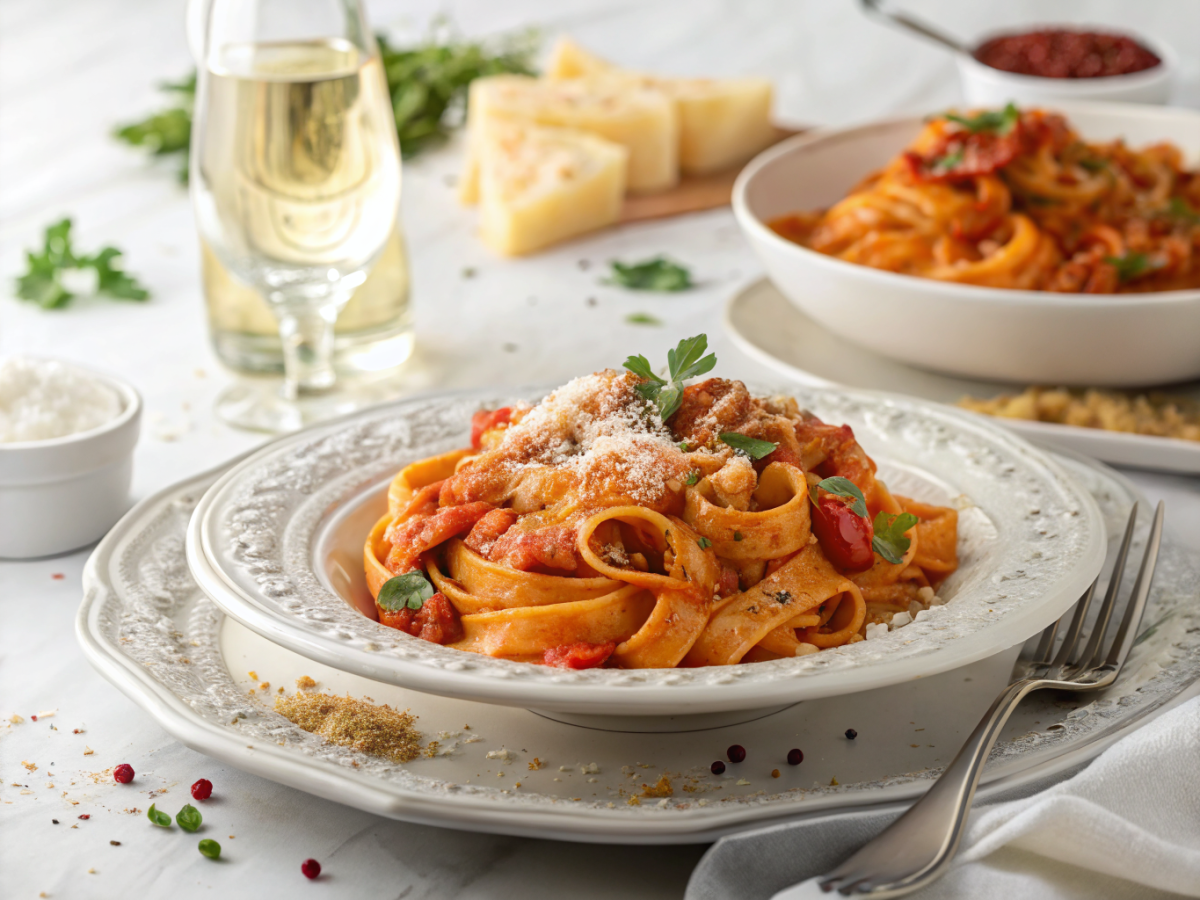
Amazing Spicy Vodka Pasta for Busy Nights
Ingredients
Method
- Bring a large pot of salted water to a boil. Cook pasta according to package directions until al dente. Reserve 1 cup of pasta water before draining.
- While pasta cooks, heat olive oil in a large skillet over medium heat. Add minced garlic and red pepper flakes, cooking for 1-2 minutes until fragrant but not browned.
- Stir in tomato paste and cook for 2-3 minutes, stirring frequently, until it darkens slightly and becomes caramelized.
- Pour in vodka and let it simmer for 3-4 minutes to cook off the alcohol, stirring occasionally. The mixture should reduce slightly.
- Add tomato sauce and heavy cream to the skillet. Stir well to combine and bring to a gentle simmer. Cook for 5 minutes until the sauce thickens slightly. Season with salt.
- Add the drained pasta to the sauce along with parmesan cheese. Toss everything together, adding reserved pasta water a little at a time until you reach desired consistency.
- Divide pasta among serving bowls. Garnish with additional parmesan cheese and fresh basil. Serve immediately while hot.
Nutrition
Notes
Tried this recipe?
Let us know how it was!Spicy Vodka Pasta: Amazing Recipe in 25 Minutes
The beauty of this spicy vodka pasta lies in its simplicity and bold flavors that come together effortlessly. The vodka doesn’t just add a trendy twist—it actually helps release flavor compounds in tomatoes that are alcohol-soluble, creating a more complex and satisfying sauce. This recipe has taken social media by storm, with countless home cooks recreating the viral sensation in their own kitchens.
What makes this dish truly special is the perfect balance between heat, creaminess, and acidity. The combination of crushed red pepper flakes, heavy cream, and tomato paste creates a luxurious sauce that clings beautifully to every strand of pasta. You’ll find yourself making this recipe on repeat once you experience how quickly it comes together.
This pasta works wonderfully as part of your weekly dinner recipes rotation, offering both comfort and sophistication. The ingredient list is surprisingly short, yet the results taste like you’ve spent hours in the kitchen. Best of all, you probably already have most of these pantry staples on hand.
Why You’ll Love This Spicy Vodka Pasta
This recipe eliminates the intimidation factor often associated with vodka sauce while delivering professional results every single time. The sauce comes together in one pan, meaning less cleanup and more time enjoying your meal. Unlike complicated Italian recipes that require precise timing and multiple pots, this streamlined version keeps things simple without sacrificing flavor.
The versatility of this dish makes it perfect for various occasions, from casual weeknight dinners to date nights at home. You can easily adjust the spice level to suit your preferences, making it family-friendly or dangerously hot. The creamy texture satisfies comfort food cravings while the vodka adds a sophisticated element that elevates the entire dish.
Budget-conscious cooks will appreciate how affordable this recipe is compared to ordering pasta at a restaurant. Most ingredients are pantry staples, and the vodka requirement is minimal—you don’t need an expensive bottle. The recipe also scales beautifully, so you can make extra for meal prep or feed a crowd without stress.
Time-strapped individuals will love that this entire meal comes together faster than most takeout deliveries. From start to finish, you’re looking at about 25 minutes of active cooking time. The sauce develops rich, complex flavors quickly thanks to the vodka’s ability to extract and intensify the tomato essence.
Core Ingredients for Spicy Vodka Pasta
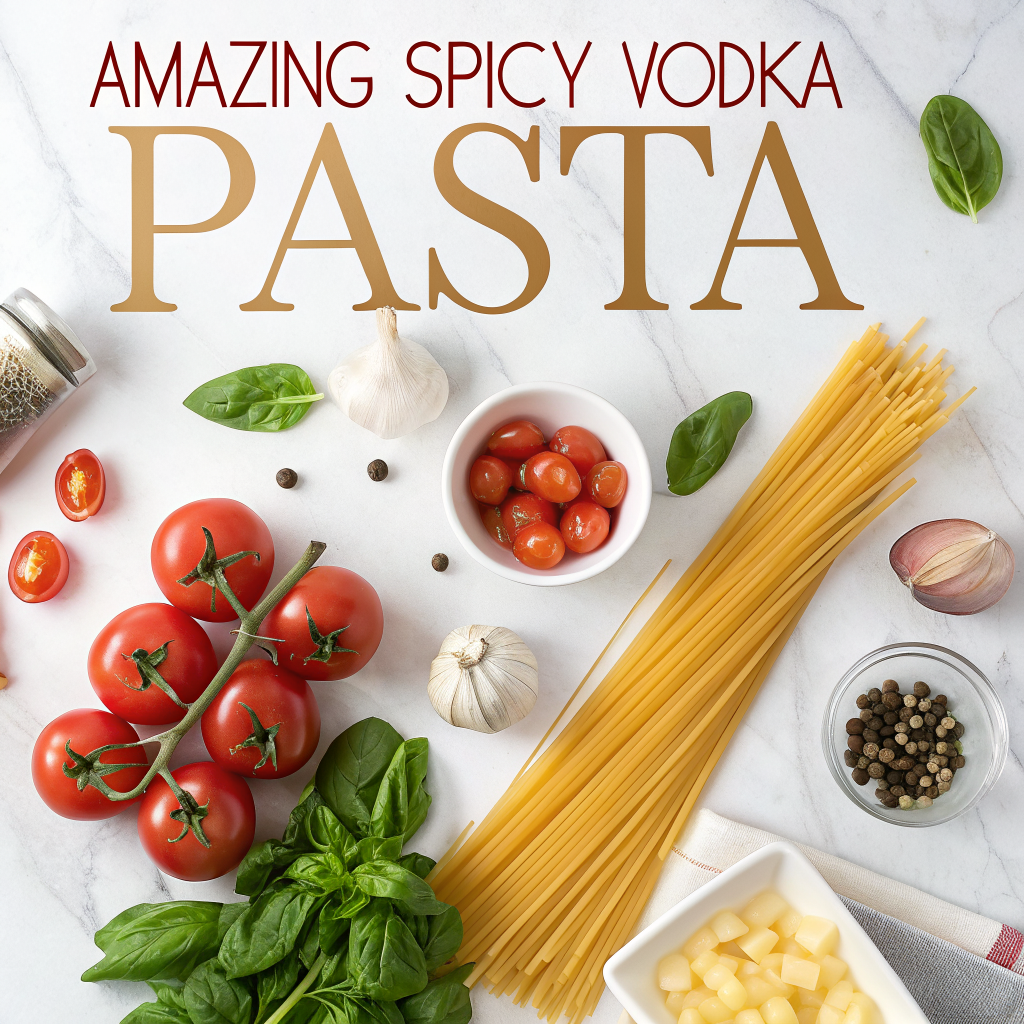
The foundation of this recipe starts with your choice of pasta—rigatoni, penne, or shells work exceptionally well because their shapes catch and hold the sauce. You’ll need about one pound of dried pasta for four generous servings. Short, tubular pasta varieties are ideal because they provide the perfect surface area for the creamy sauce to cling to.
For the sauce base, high-quality tomato paste is essential—you’ll need approximately three tablespoons. The tomato paste provides concentrated tomato flavor without adding excess liquid that would thin the sauce. Choose a brand without added sugars or preservatives for the cleanest, most authentic taste.
The vodka component requires about one-third cup of plain vodka—no need for premium brands here since it’s used for cooking. The alcohol cooks off during the process, leaving behind only the enhanced flavors it extracts from the tomatoes. This ingredient is what transforms a simple tomato cream sauce into something truly special.
Heavy cream brings the luxurious, velvety texture that makes this pasta so addictive—you’ll need roughly three-quarters of a cup. The fat content in heavy cream prevents the sauce from separating and creates that signature smooth consistency. Don’t substitute with milk or half-and-half, as they won’t provide the same richness or stability.
Crushed red pepper flakes deliver the signature heat, with one to two teaspoons depending on your spice tolerance. Fresh garlic (four to five cloves, minced) adds aromatic depth that complements the tomato base perfectly. Quality olive oil, butter, salt, and freshly grated Parmesan cheese round out the ingredient list.
Fresh basil makes an excellent garnish that adds a pop of color and herbaceous freshness to the finished dish. You might also want to have extra Parmesan on hand for serving. These simple ingredients combine to create something far greater than the sum of their parts.
How to Make Spicy Vodka Pasta: Step-by-Step
Begin by bringing a large pot of heavily salted water to a rolling boil for your pasta. The water should taste like the sea—this is your only opportunity to season the pasta itself. Add your pasta and cook according to package directions until al dente, usually about 8-10 minutes, then reserve one cup of pasta water before draining.
While the pasta cooks, heat two tablespoons of olive oil and one tablespoon of butter in a large, deep skillet over medium heat. Once the butter melts and begins to foam, add your minced garlic and crushed red pepper flakes. Sauté for about 30-45 seconds until fragrant but not browned—burnt garlic will make the sauce bitter.
Add the tomato paste to the pan and cook it down for 2-3 minutes, stirring constantly to prevent sticking. This step caramelizes the tomato paste, deepening its flavor and removing any raw, metallic taste. The paste should darken slightly and become more vibrant in color.
Carefully pour in the vodka—it may splatter, so stand back slightly and reduce the heat if needed. Let the vodka simmer for 3-4 minutes, allowing the alcohol to cook off and the liquid to reduce by about half. You’ll notice the harsh alcohol smell dissipates and is replaced by a mellow, complex aroma.
Reduce the heat to medium-low and stir in the heavy cream, mixing until the sauce becomes uniformly pink and creamy. Let this simmer gently for another 3-4 minutes to thicken slightly and allow the flavors to meld. The sauce should coat the back of a spoon when it’s ready.
Add the drained pasta directly to the sauce along with a splash of reserved pasta water. Toss everything together vigorously, adding more pasta water as needed to achieve your desired consistency. The starchy pasta water helps the sauce adhere to the pasta and creates a silky, cohesive dish.
Remove from heat and stir in a generous handful of freshly grated Parmesan cheese, allowing it to melt into the sauce. Season with salt to taste—remember that Parmesan is salty, so taste before adding more. Finish with torn fresh basil leaves and an extra drizzle of good olive oil if desired.
Nutrition & Health Benefits
One serving of this pasta provides approximately 550-650 calories, depending on portion size and exact ingredient measurements. The dish offers a balanced macronutrient profile with carbohydrates from the pasta, fats from the cream and cheese, and moderate protein. While indulgent, it can absolutely fit into a balanced diet when enjoyed in appropriate portions.
Tomatoes, even in paste form, deliver lycopene—a powerful antioxidant linked to heart health and cancer prevention. The fat content from the cream actually helps your body absorb this fat-soluble nutrient more effectively. Lycopene becomes even more bioavailable when tomatoes are cooked, making this sauce nutritionally beneficial beyond just taste.
Garlic contributes immune-boosting compounds and has been associated with cardiovascular benefits in numerous studies. The allicin in garlic has antimicrobial properties and may help reduce blood pressure. While the amounts in a single serving are modest, regular consumption of garlic-rich dishes contributes to overall health.
For those interested in exploring more nutritious meal options, check out these protein-rich alternatives that complement pasta dishes. Calcium from the Parmesan cheese supports bone health, providing about 15-20% of your daily needs per serving. The cheese also adds protein and vitamin B12, essential for nerve function and red blood cell formation.
The capsaicin in red pepper flakes may boost metabolism and has anti-inflammatory properties that benefit overall health. Some research suggests that spicy foods can increase satiety, potentially helping with portion control. The compound also triggers endorphin release, which might explain why spicy food can be so satisfying.
To make this dish lighter, you could use whole wheat or chickpea pasta for added fiber and protein. Half-and-half can replace some of the heavy cream to reduce calories, though the texture won’t be quite as luxurious. Adding vegetables like spinach, peas, or roasted cherry tomatoes boosts the nutritional profile without compromising flavor.
Variations & Substitutions
For a protein boost, consider adding grilled chicken, shrimp, or Italian sausage to transform this into a complete one-dish meal. Chicken pairs beautifully with the creamy sauce and can be seasoned with Italian herbs before cooking. Shrimp cooks quickly and adds a seafood element that complements the tomato base wonderfully.
Vegetarians can enhance the dish with roasted vegetables like zucchini, bell peppers, or mushrooms for added texture and nutrients. Sun-dried tomatoes bring concentrated tomato flavor and a chewy texture that contrasts nicely with the pasta. Artichoke hearts offer a sophisticated touch that elevates the dish for special occasions.
For those avoiding alcohol, you can omit the vodka entirely, though you’ll lose some of the depth it provides. A splash of white wine vinegar or lemon juice can add the acidic brightness that vodka contributes. The dish will still be delicious, just slightly different in flavor complexity.
Dairy-free versions can substitute coconut cream or cashew cream for the heavy cream with surprisingly good results. Nutritional yeast replaces Parmesan for a cheesy flavor without dairy, though the texture will differ. These modifications work well for those with lactose intolerance or following vegan diets.
Gluten-free pasta works perfectly in this recipe—just follow the package directions for cooking times, which may vary. Brown rice pasta, chickpea pasta, or lentil pasta all hold up well to the creamy sauce. Some gluten-free varieties cook faster, so watch them carefully to avoid overcooking.
For a lighter version, try using half the cream and bulking up the sauce with reserved pasta water and additional Parmesan. This creates a thinner but still flavorful sauce that reduces the calorie content significantly. You might also appreciate browsing through quick easy meals for more weeknight inspiration.
Serving Suggestions
This pasta shines as the star of the meal but pairs wonderfully with a simple arugula salad dressed with lemon and olive oil. The peppery greens and bright citrus cut through the richness of the cream sauce perfectly. A light salad also adds freshness and crunch that contrasts beautifully with the soft pasta.
Garlic bread or focaccia makes an excellent accompaniment for soaking up every last bit of sauce from your bowl. You can prepare garlic bread while the pasta cooks, making efficient use of your time. The crispy, buttery bread provides textural contrast that makes the meal more satisfying.
For a complete Italian-inspired meal, start with a light antipasto platter featuring olives, roasted peppers, and fresh mozzarella. This creates a restaurant-quality dining experience at home without much additional effort. Consider serving crispy appetizers alongside for added variety.
Wine pairing options include a crisp Pinot Grigio or Sauvignon Blanc that won’t compete with the dish’s bold flavors. If you prefer red wine, choose a light-bodied option like Chianti that won’t overpower the delicate cream sauce. Sparkling water with lemon also makes a refreshing, palate-cleansing beverage choice.
For family-style serving, transfer the finished pasta to a large, warmed serving bowl and garnish generously with basil and Parmesan. This presentation encourages sharing and creates a convivial atmosphere at the dinner table. Keep extra cheese, red pepper flakes, and olive oil on the table for guests to customize their portions.
Leftovers can be repurposed into a baked pasta casserole by transferring to a baking dish, topping with mozzarella, and broiling until bubbly. This transforms day-two pasta into something that feels completely new and exciting. The sauce thickens as it sits, making it perfect for baking applications.
Common Mistakes to Avoid
One of the most frequent errors is overcooking the pasta, which results in mushy noodles that don’t hold the sauce well. Always cook pasta one to two minutes less than package directions suggest, as it will continue cooking when tossed with the hot sauce. The pasta should have a slight bite in the center—this is what al dente means.
Another mistake is using insufficient salt in the pasta water, leading to bland noodles regardless of how flavorful your sauce is. The water should be as salty as the ocean—this seems extreme but makes a tremendous difference. Remember, this is your only opportunity to season the pasta from the inside out.
Burning the garlic is a critical error that ruins the entire dish with bitter, acrid flavors that permeate the sauce. Keep the heat at medium and watch the garlic carefully, removing the pan from heat if it starts browning too quickly. Garlic should be fragrant and barely golden, never brown or crispy.
Adding the cream to a pan that’s too hot can cause it to break or curdle, creating an unappetizing, grainy texture. Always reduce the heat to medium-low before incorporating cream, and stir constantly as you add it. Patience during this step ensures a smooth, luxurious sauce every time.
Skipping the pasta water is a mistake that results in a sauce that doesn’t properly coat the noodles. The starchy water acts as an emulsifier, helping fat and water-based ingredients blend seamlessly. It also adjusts consistency without diluting flavor the way plain water would.
Using pre-grated Parmesan instead of freshly grated cheese affects both flavor and texture negatively. Pre-grated varieties contain anti-caking agents that prevent smooth melting and can make the sauce grainy. Invest in a wedge of real Parmigiano-Reggiano and grate it yourself for dramatically better results.
Storage & Meal Prep Tips
Store leftover pasta in an airtight container in the refrigerator for up to three days for best quality and food safety. The sauce will thicken considerably as it chills, which is completely normal and easily fixed during reheating. Make sure the pasta cools to room temperature before sealing and refrigerating to prevent condensation and sogginess.
When reheating, add a splash of milk, cream, or pasta water to restore the sauce’s creamy consistency. Reheat gently over medium-low heat on the stovetop, stirring frequently to prevent scorching. Microwave reheating works in a pinch—use 50% power and stir every 30 seconds for even heating.
For meal prep purposes, you can prepare the sauce up to two days in advance and store it separately from the pasta. Cook fresh pasta when ready to serve and toss with the reheated sauce for the best texture. This method prevents the pasta from absorbing too much sauce and becoming mushy during storage.
Freezing the complete dish isn’t recommended as cream-based sauces can separate and become grainy when thawed. However, you can freeze the sauce alone for up to two months in a freezer-safe container. Thaw overnight in the refrigerator and reheat gently, whisking to restore smoothness before tossing with freshly cooked pasta.
If you’re planning to make this for meal prep, consider slightly undercooking the pasta initially since it will soften further during storage and reheating. This ensures your reheated pasta maintains some texture rather than becoming mushy. Portion individual servings in meal prep containers for convenient grab-and-go lunches.
To keep fresh basil vibrant for garnishing throughout the week, store stems in a glass of water on the counter like a bouquet. Cover loosely with a plastic bag to maintain humidity while allowing some air circulation. This method keeps basil fresh for up to a week, much longer than refrigerator storage.
Final Thoughts on Spicy Vodka Pasta
This Spicy Vodka Pasta recipe proves that impressive, restaurant-quality meals don’t require professional training or hours of preparation. The combination of simple ingredients, straightforward techniques, and bold flavors makes this dish a reliable go-to for any occasion. Once you master this recipe, you’ll find yourself turning to it again and again when you need something special without the stress.
The viral nature of this dish speaks to its universal appeal—it satisfies comfort food cravings while feeling sophisticated and current. Whether you’re cooking for picky eaters, adventurous foodies, or somewhere in between, this pasta delivers satisfaction. The customizable spice level means everyone can enjoy it according to their preferences.
As you become more comfortable with the basic recipe, don’t hesitate to experiment with the variations and additions suggested throughout this guide. Cooking should be creative and fun, and this forgiving recipe provides an excellent foundation for personalization. Each time you make it, you’ll discover new nuances and develop your own perfect version.
The beauty of mastering a recipe like this extends beyond just one meal—it builds your confidence in the kitchen and expands your cooking repertoire. You’ll understand how sauces come together, how to balance flavors, and how to adjust consistency on the fly. These skills transfer to countless other recipes, making you a more intuitive and capable cook overall.
Frequently Asked Questions
Can I make Spicy Vodka Pasta without alcohol?
Yes, you can absolutely make this recipe without vodka, though the flavor profile will be slightly different. The vodka helps extract flavor compounds from tomatoes that aren’t water-soluble, creating a more complex sauce. To compensate, add a splash of white wine vinegar or lemon juice for brightness, and consider simmering the tomato paste a bit longer to develop deeper flavors. The dish will still be delicious and creamy without the alcohol component.
What’s the best pasta shape for vodka sauce?
Short, tubular pasta shapes like rigatoni, penne, or mezze rigatoni work best for Spicy Vodka Pasta because they catch and hold the sauce beautifully. The ridges and hollow centers trap the creamy sauce, ensuring every bite is flavorful. Shells and cavatappi are also excellent choices that provide similar sauce-catching abilities. Avoid long, thin pastas like spaghetti or angel hair, as the thick sauce won’t coat them as effectively.
How can I adjust the spice level in this recipe?
The spice level in this dish is easily customizable to suit your preferences. Start with just half a teaspoon of crushed red pepper flakes for a mild version, or increase to two teaspoons for serious heat. You can also add fresh jalapeños or a dash of cayenne pepper for a different type of spiciness. Remember that you can always add more heat at the table with additional red pepper flakes, but you can’t take it away once it’s in the sauce.
Why does my vodka sauce taste too acidic?
If your sauce tastes overly acidic, it usually means the tomato paste needs more caramelization time or the sauce needs better balance. Cook the tomato paste for a full 3-4 minutes before adding vodka to develop sweetness and reduce acidity. Adding a pinch of sugar can help balance the flavors, or increase the amount of cream slightly. For more recipe troubleshooting and complementary dishes, explore appetizer options that pair well with pasta. Proper seasoning with salt also helps balance acidity by rounding out all the flavors in the dish.
