
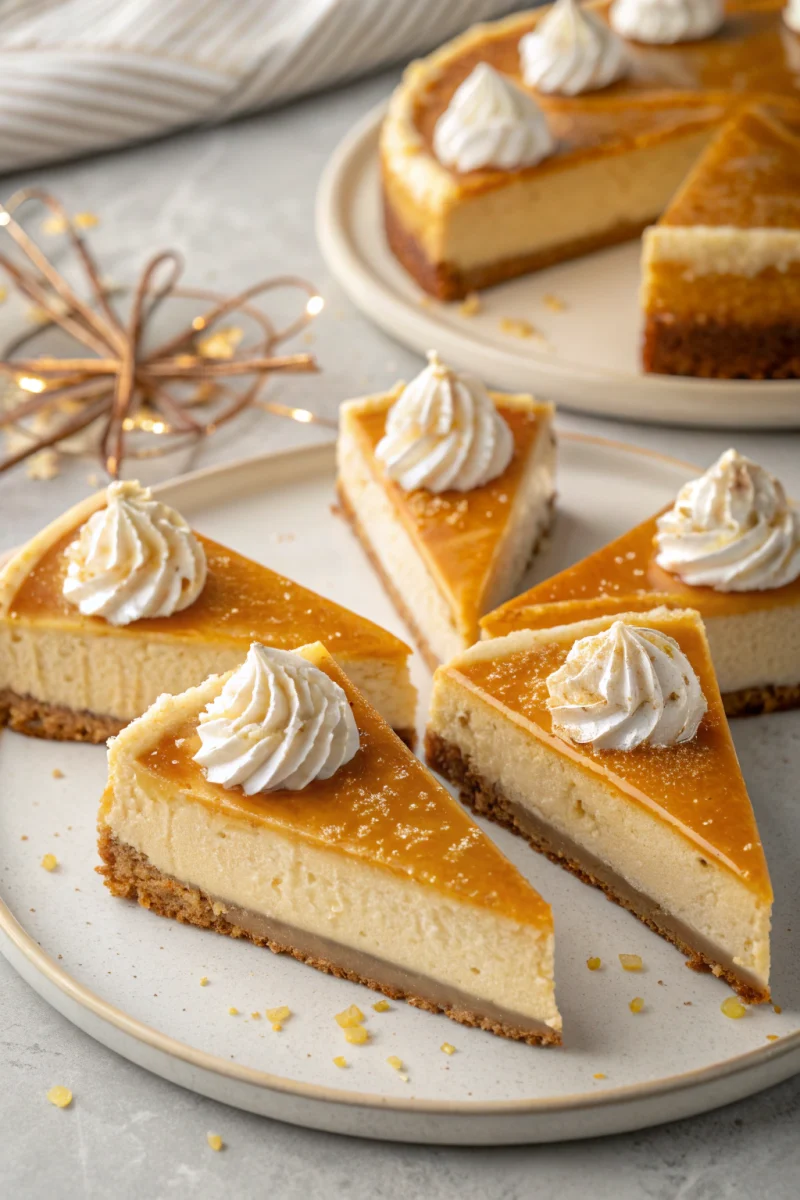
Eggnog Cheesecake – The Ultimate Holiday Dessert for Festive Gatherings
Eggnog Cheesecake combines rich flavor, festive spices, and creamy texture in one decadent bite. This guide reveals how to make the perfect holiday dessert — comforting, elegant, and deeply satisfying, crafted with chef-level technique and family-friendly ease.
Thank you for reading this post, don't forget to subscribe!Why Eggnog Cheesecake Matters During the Holidays
During the festive season, people crave celebratory treats and heartwarming traditions. Eggnog Cheesecake offers both, blending rich dairy with aromatic spices and a perfectly balanced sweetness. It’s a dessert that captivates and delights, becoming the centerpiece of any holiday table.
Core Ingredients for the Perfect Eggnog Cheesecake
Crafting an exquisite Eggnog Cheesecake begins with selecting the right ingredients. Each component plays a crucial role in achieving that signature creamy texture and festive flavor. Here’s what you’ll need for your masterpiece:
- For the Crust:
- 1 ½ cups graham cracker crumbs (about 10–12 full sheets)
- ¼ cup granulated sugar
- ½ teaspoon ground cinnamon
- 6 tablespoons unsalted butter, melted
- For the Eggnog Cheesecake Filling:
- 3 (8-ounce) packages cream cheese, softened to room temperature
- 1 cup granulated sugar
- ¼ cup all-purpose flour
- 1 teaspoon vanilla extract
- ½ teaspoon nutmeg, freshly grated for best flavor
- ¼ teaspoon ground cinnamon
- Pinch of ground cloves (optional, but enhances holiday spice)
- 3 large eggs, at room temperature
- ½ cup premium quality eggnog
- 2 tablespoons rum or brandy (optional, for an adult twist)
- For the Eggnog Whipped Cream Topping (Optional):
- 1 cup heavy cream, very cold
- 2 tablespoons powdered sugar
- ½ teaspoon vanilla extract
- 2 tablespoons eggnog
- Extra nutmeg for garnish
Step-by-Step Method for Your Eggnog Cheesecake
Creating an Eggnog Cheesecake is a delightful culinary journey. Follow these precise steps for a flawless, delicious result every time. Remember, patience is key, especially when baking cheesecakes.
Step 1 — Prepare the Crust for Eggnog Cheesecake
Preheat your oven to 350°F (175°C). In a medium bowl, combine the graham cracker crumbs, granulated sugar, and ground cinnamon. Pour in the melted butter and mix until all crumbs are moistened. Press the mixture evenly into the bottom of a 9-inch springform pan. You can use the bottom of a glass to help create a firm, even layer. Bake for 8–10 minutes, just until lightly golden. Remove from oven and let cool slightly while you prepare the filling. Reduce oven temperature to 325°F (160°C).

Step 2 — Craft the Silky Eggnog Cheesecake Filling
In a large mixing bowl or the bowl of a stand mixer fitted with the paddle attachment, beat the softened cream cheese on medium speed until smooth and creamy, with no lumps. This is critical for a silky Eggnog Cheesecake texture. Gradually add the granulated sugar, beating until well combined and fluffy, about 2-3 minutes. Scrape down the sides of the bowl as needed to ensure everything is incorporated.
Slowly beat in the all-purpose flour. The flour helps prevent cracking. Add the vanilla extract, freshly grated nutmeg, ground cinnamon, and optional cloves. Mix until just combined. Next, beat in the eggs one at a time, mixing only until just incorporated after each addition. Overmixing the eggs can introduce too much air, leading to cracks in the final Eggnog Cheesecake. Finally, gently fold in the eggnog and rum/brandy (if using) until the mixture is uniform and smooth.

Step 3 — Bake the Eggnog Cheesecake to Perfection
Pour the Eggnog Cheesecake filling over the cooled crust in the springform pan. To prevent cracks and ensure even baking, you can use a water bath (bain-marie). Wrap the bottom and sides of your springform pan tightly with several layers of heavy-duty aluminum foil to prevent water from seeping in. Place the springform pan into a larger roasting pan. Carefully pour hot water into the roasting pan until it comes halfway up the sides of the springform pan.
Bake for 60–75 minutes, or until the edges are set, but the center still jiggles slightly when gently shaken. The internal temperature of the Eggnog Cheesecake should reach 150°F (65°C). Turn off the oven and prop the door open slightly (about 2-3 inches) with a wooden spoon. Let the Eggnog Cheesecake cool slowly in the oven for about an hour. This gradual cooling prevents sudden temperature changes that can cause cracking.

Step 4 — Chill and Garnish Your Eggnog Cheesecake
Remove the Eggnog Cheesecake from the oven and the water bath. Carefully unwrap the foil. Let it cool completely on a wire rack at room temperature for at least 2-3 hours. Once completely cool, cover the Eggnog Cheesecake with plastic wrap and refrigerate for at least 6 hours, or preferably overnight. Chilling is essential for the cheesecake to fully set and achieve its firm, creamy texture.
Just before serving, prepare the optional eggnog whipped cream topping. In a very cold bowl with cold beaters, whip the heavy cream, powdered sugar, vanilla extract, and eggnog on high speed until stiff peaks form. Spread or pipe the whipped cream over the chilled Eggnog Cheesecake. Garnish with a sprinkle of fresh nutmeg. Carefully run a thin knife around the edge of the pan before releasing the springform sides.
Eggnog Cheesecake Nutrition Facts (per serving, approximate)
These values are estimates and can vary based on specific ingredients and portion sizes. A typical slice of Eggnog Cheesecake (1/12 of a 9-inch cake) offers a substantial, rich dessert experience.
Calories: 450-550 | Protein: 7g-10g | Carbs: 45g-60g | Fat: 30g-40g | Fiber: 0.5g-1g | Sodium: 250mg-350mg | Sugar: 40g-50g
While an indulgence, Eggnog Cheesecake provides a source of calcium and a delicious way to enjoy holiday flavors.
Eggnog Cheesecake Health Benefits
While often enjoyed as a celebratory treat lacking significant everyday health benefits compared to, say, a vegetable salad, Eggnog Cheesecake can still offer certain advantages, particularly in moderation and when made with quality ingredients.
- Source of Calcium: Dairy products like cream cheese, eggs, and eggnog provide essential calcium, critical for bone health and other bodily functions.
- Energy Boost: The sugars and fats in Eggnog Cheesecake offer a quick source of energy, perfect for festive gatherings that might involve prolonged socialization or activity.
- Mood Enhancement: The psychological comfort derived from indulging in a beloved holiday dessert can significantly boost mood and well-being. Food enjoyment is a genuine contributor to mental health.
- Supports Traditional Gatherings: Preparing and sharing special desserts like Eggnog Cheesecake strengthens social bonds and contributes to cherished family traditions, which are important aspects of holistic health.
- Moderate Protein: Eggs and cream cheese contribute a modest amount of protein, which is essential for muscle repair and overall bodily functions.
As with all desserts, enjoying Eggnog Cheesecake in moderation is key to integrating it into a balanced diet. Focus on enjoying the rich flavors and the celebratory aspect it brings.
Healthy Variations for Eggnog Cheesecake
While Eggnog Cheesecake is inherently a rich dessert, you can make minor adjustments to slightly modify its nutritional profile or cater to dietary preferences:
- Reduced Sugar: Experiment with reducing the granulated sugar by ¼ to ⅓ cup in the filling. The eggnog itself provides sweetness. You can also use a sugar substitute designed for baking, but be aware it may alter texture.
- Lightened Cream Cheese: Opt for reduced-fat cream cheese to cut down on calories and fat. Ensure it’s still full-fat enough to provide the necessary structure for the Eggnog Cheesecake.
- Whole Wheat Crust: Substitute some of the graham cracker crumbs with finely ground whole-wheat flour or oats to add a touch more fiber to your Eggnog Cheesecake crust.
- Fresh Fruit Topping: Instead of heavy whipped cream, top your Eggnog Cheesecake with fresh berries or a light fruit compote. This adds natural sweetness and antioxidants without excessive added fat or sugar.
- Spiced Variations: Enhance the spices in the Eggnog Cheesecake filling (more nutmeg, cinnamon, a touch of ginger) to allow for a more intense flavor with potentially less sugar.
- Gluten-Free Crust: Use gluten-free graham cracker crumbs or almond flour-based crust for a gluten-sensitive version of Eggnog Cheesecake.
Serving Suggestions for Eggnog Cheesecake
Eggnog Cheesecake is a showstopper on its own, but thoughtful pairings can elevate the experience even further:
- Serve chilled slices garnished with a dollop of freshly whipped cream and a dusting of nutmeg.
- Alongside a warm cup of coffee, tea, or a festive mulled wine.
- Offer a side of fresh berries (raspberries, cranberries, or sliced strawberries) to cut through the richness of the Eggnog Cheesecake.
- For a more elaborate presentation, drizzle with a homemade caramel sauce or a light rum glaze.
- Pair with a complementary dessert like Honey Oat Energy Bites for those wanting a lighter option, or a rich chocolate lava cake for ultimate indulgence.
- Consider serving smaller portions of the rich Eggnog Cheesecake, especially after a heavy holiday meal.
Common Mistakes to Avoid When Making Eggnog Cheesecake
Mastering Eggnog Cheesecake involves sidestepping a few common pitfalls that can ruin its texture or appearance:
- Overmixing the Batter: This is perhaps the most crucial mistake. Overmixing, especially after adding the eggs, incorporates too much air into the Eggnog Cheesecake batter. This air puffs up in the oven, then collapses during cooling, leading to unsightly cracks. Beat cream cheese until smooth, but mix eggs in gently and only until just combined.
- Not Using Room Temperature Ingredients: Cold cream cheese and eggs will not combine smoothly, leaving lumps in your Eggnog Cheesecake. Always ensure all dairy and eggs are at room temperature for a truly silky texture.
- Skipping the Water Bath: A water bath (bain-marie) provides a moist baking environment and ensures slow, even cooking. This is a secret weapon against cracks and helps achieve that signature creamy, custardy texture in your Eggnog Cheesecake.
- Opening the Oven Door Too Soon: Sudden temperature changes cause cheesecakes to crack and fall. Resist the urge to peek during the first 45-50 minutes of baking.
- Not Cooling Slowly: Another common cause of cracking. After baking, turn off the oven and let the Eggnog Cheesecake cool inside with the door ajar for at least an hour. Then, cool on a wire rack before chilling.
- Under-Chilling: A cheesecake needs ample time to set. Don’t rush this step! Refrigerate your Eggnog Cheesecake for at least 6 hours, ideally overnight, for the best firmness and flavor development.
- Not Greasing the Pan or Properly Wrapping with Foil: Failing to grease sides can cause the cheesecake to stick and tear. Poorly wrapped foil for the water bath can lead to a soggy crust.
- Using Low-Quality Eggnog: The flavor of your Eggnog Cheesecake relies heavily on the quality of the eggnog. Invest in a good, rich eggnog for the best results.
Best Ingredients for Eggnog Cheesecake
The secret to an unforgettable Eggnog Cheesecake lies in the quality of its components. Here’s a deeper dive into selecting the best ingredients:
- Cream Cheese: Always use full-fat, block cream cheese, not the spreadable tubs. Brands like Philadelphia are consistently reliable. Soften it completely at room temperature, ideally for at least 2 hours, to ensure a lump-free, creamy batter.
- Eggnog: Choose a premium brand of eggnog if buying pre-made, or better yet, use homemade eggnog for unparalleled flavor. The richness and spice profile of the eggnog will directly impact the final taste of your Eggnog Cheesecake.
- Eggs: Large, fresh, room-temperature eggs are essential. They emulsify better with the cream cheese, contributing to the smooth texture of the Eggnog Cheesecake.
- Vanilla Extract: Use pure vanilla extract, not imitation, for a truer, richer vanilla note that complements the eggnog spices beautifully.
- Spices: Freshly grated nutmeg makes a world of difference compared to pre-ground. Its aroma and potency are far superior. Ground cinnamon and a tiny pinch of ground cloves (if using) should also be fresh and fragrant.
- Butter: Good quality unsalted butter for the crust provides a clean, rich foundation for your Eggnog Cheesecake.
- Graham Crackers: Fresh, crisp graham crackers are best for the crust. Gingersnaps can also provide an excellent, spicier alternative.
- Optional Liqueur: If using rum or brandy, select a mid-range quality that you would enjoy drinking – its flavor will be noticeable in the Eggnog Cheesecake.
Advanced Eggnog Cheesecake Tips
For those looking to take their Eggnog Cheesecake to the next level, consider these pro tips:
- Infuse Your Own Eggnog: For an extra layer of flavor, consider making your own eggnog from scratch or infusing store-bought eggnog with extra spices (cinnamon sticks, star anise) or a bit of dark rum a day in advance.
- Flavor layering in the Crust: Beyond standard graham crackers, experiment with crushed gingersnaps for a spicier base, or shortbread cookies for a buttery, less sweet foundation. A tiny pinch of cardamom in the crust can also be delightful.
- Prevent Cracks with a Hot Knife: To slice your Eggnog Cheesecake cleanly without tearing, dip a sharp knife in hot water, wipe it dry, and then make each cut. Repeat for every slice. This gives a beautiful, pristine edge.
- Decorate with Edible Gold Dust: For a truly festive and elegant presentation, lightly dust the top of your chilled Eggnog Cheesecake or whipped cream topping with edible gold dust using a small, soft brush.
- Individual Eggnog Cheesecakes: For portion control and ease of serving, bake the recipe in smaller ramekins or a muffin tin lined with paper liners (adjust baking time accordingly). This makes adorable mini Eggnog Cheesecakes.
- Creative Toppings: Beyond whipped cream and nutmeg, consider candied pecans, a cranberry compote, a white chocolate ganache drizzle, or even a spiced praline topping for your Eggnog Cheesecake.
Troubleshooting Common Eggnog Cheesecake Issues
Even experienced bakers encounter challenges. Here’s how to address common issues with your Eggnog Cheesecake:
- Cracked Surface:
- Cause: Overmixing, high oven temperature, too rapid cooling, or opening the oven door too early.
- Solution: Ensure ingredients are at room temp, use a water bath, don’t overmix, cool slowly in the oven. For an already cracked cheesecake, a generous layer of whipped cream or fruit topping can easily conceal it.
- Soggy Crust:
- Cause: Water seepage from the water bath, or using too much butter in the crust.
- Solution: Double-wrap your springform pan tightly with heavy-duty foil. Ensure your crust is baked off properly and cooled before adding the filling. Reduce butter slightly if it’s too oily.
- Lumpy Filling:
- Cause: Cream cheese not softened sufficiently, or not beaten enough before adding other ingredients.
- Solution: Always use room temperature cream cheese. Beat it on its own until perfectly smooth before adding sugar and other ingredients. Scrape the bowl often.
- Cheesecake is Too Soft/Does Not Set:
- Cause: Underbaked, or not chilled long enough.
- Solution: The center should still have a slight jiggle, not a liquid wobble. Ensure internal temperature reaches 150°F (65°C). Most importantly, ensure it chills for a full 6-8 hours, or overnight, for the Eggnog Cheesecake to properly firm up.
- Edges Overcooked/Browned:
- Cause: Oven too hot, or not using a water bath.
- Solution: A water bath helps regulate temperature. Ensure accurate oven temperature. You can also loosely tent the edges with foil if they start browning too much.
Storage Tips for Eggnog Cheesecake
Proper storage ensures your Eggnog Cheesecake remains delicious and safe to eat throughout the holiday season.
- Refrigeration: Once completely cooled, cover the Eggnog Cheesecake tightly with plastic wrap or transfer slices to an airtight container. It will keep beautifully in the refrigerator for up to 4-5 days. Remove from the fridge about 30 minutes before serving to allow the flavors and texture to mellow slightly.
- Freezing Whole: For longer storage, you can freeze an entire Eggnog Cheesecake (without the whipped cream topping). Once completely chilled and firm, wrap the cheesecake (still in the springform pan, or on its base if removed) tightly in several layers of plastic wrap, then a layer of aluminum foil. Freeze for up to 1-2 months.
- Freezing Slices: For convenience, you can freeze individual slices. Place slices on a baking sheet and freeze until firm, then wrap each slice individually in plastic wrap and foil. Store in an airtight container in the freezer. This allows you to thaw just what you need.
- Thawing: To thaw a frozen Eggnog Cheesecake (whole or slices), transfer it to the refrigerator and allow it to thaw slowly overnight or for at least 8-12 hours. Do not thaw at room temperature. Once thawed, you can add fresh whipped cream and nutmeg.
- Avoiding Condensation: When moving from cold to warmer temperatures, condensation can form. Ensure the cheesecake is well-wrapped when thawing to prevent water droplets from making the crust soggy.
Conclusion: The Irresistible Charm of Eggnog Cheesecake
Eggnog Cheesecake proves that a festive dessert can be both rich and comforting. Whether for holiday meal prep or an elaborate celebratory dinner, this comprehensive guide ensures perfect results every time — delivering warmth, joy, and indulgence in every creamy spoonful. With its blend of traditional holiday flavors and a consistently smooth, decadent texture, the Eggnog Cheesecake stands as a testament to the magic of holiday baking. It’s more than just a dessert; it’s an experience, a memory in the making, and a perfect embodiment of festive cheer. So go ahead, don your apron, and create an Eggnog Cheesecake that will be talked about long after the last piece is savored. You’re not just baking; you’re crafting a beloved holiday tradition.
Eggnog Cheesecake: FAQs
- Can I use a different type of crust for Eggnog Cheesecake? Yes! While graham cracker is classic, gingersnap or even shortbread cookies make excellent alternatives, offering a slightly different spice or buttery note.
- How can I prevent my Eggnog Cheesecake from cracking? The best methods include using a water bath during baking, ensuring all dairy and eggs are at room temperature, not overmixing the batter (especially after adding eggs), and cooling the cheesecake slowly in the oven after baking.
- What if I don’t have a springform pan for my Eggnog Cheesecake? While a springform pan is ideal for easy removal, you can use a regular 9-inch round cake pan. Line it with parchment paper, leaving an overhang on two sides to create “slings” for lifting the cheesecake out once cooled.
- Can I make Eggnog Cheesecake ahead of time? Absolutely! Eggnog Cheesecake benefits greatly from chilling overnight, allowing the flavors to meld and the texture to fully set. You can prepare it 1-2 days in advance, making it perfect for holiday entertaining.
- What is the best way to get clean slices of Eggnog Cheesecake? For pristine slices, use a thin, sharp knife that has been dipped in hot water and wiped dry before each cut. This prevents the cheesecake from sticking to the blade and creates clean edges.
- Is Eggnog Cheesecake suitable for freezing? Yes, Eggnog Cheesecake freezes exceptionally well. Wrap it tightly in plastic wrap and then foil, and it can be frozen for up to 1-2 months. Thaw slowly in the refrigerator for the best results.
Healthline — Dessert Health Benefits,
Harvard Nutrition Source,
Medical News Today — Dairy Nutrition

passionate about high-protein, easy meal-prep recipes for busy lifestyles.