
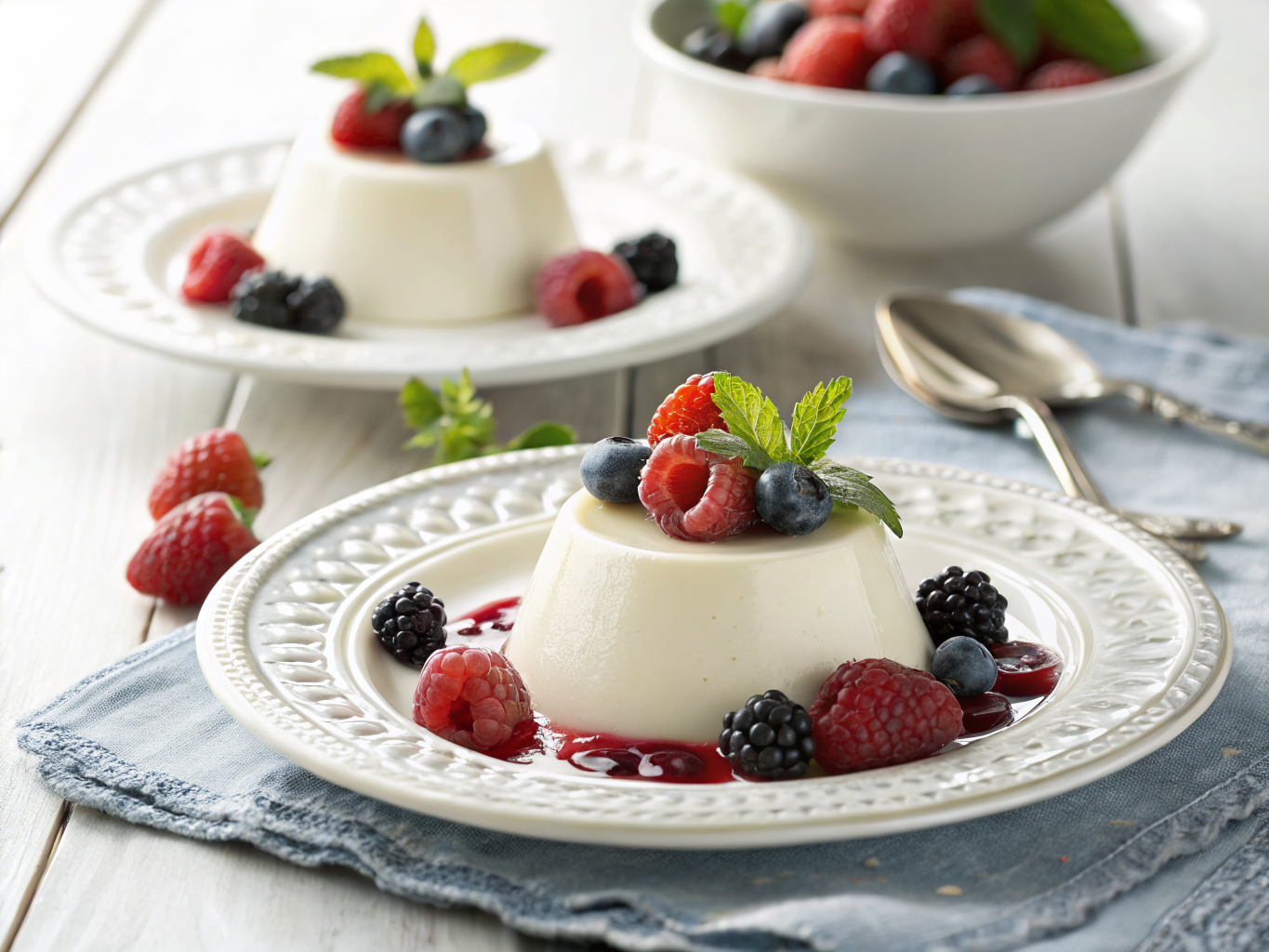
Greek Yogurt Panna Cotta
Ingredients
Method
- Pour cold water into a small bowl and sprinkle gelatin over the top. Let it sit for 5 minutes to bloom and soften.
- In a small saucepan, combine milk, honey, vanilla extract, and salt. Heat over medium heat until warm and steaming, but not boiling, stirring occasionally.
- Remove the saucepan from heat and add the bloomed gelatin. Whisk until the gelatin is completely dissolved and the mixture is smooth.
- In a medium bowl, whisk the Greek yogurt until smooth. Slowly pour the warm milk mixture into the yogurt while whisking constantly to prevent lumps.
- Strain the mixture through a fine-mesh sieve into a measuring cup with a spout. Divide evenly among 4 ramekins or serving glasses.
- Cover each ramekin with plastic wrap and refrigerate for at least 4 hours or overnight until fully set.
- Serve chilled, topped with fresh berries. If unmolding, briefly dip the bottom of each ramekin in warm water and invert onto a plate.
Nutrition
Notes
Tried this recipe?
Let us know how it was!Imagine a dessert so silky and elegant that it melts on your tongue, yet nutritious enough to enjoy guilt-free. Greek Yogurt Panna Cotta is the answer to your dessert dreams, combining the classic Italian elegance of traditional panna cotta with the protein-packed goodness of Greek yogurt. This stunning dessert features a velvety-smooth texture topped with vibrant berry coulis that creates a perfect balance of tangy and sweet flavors.
Thank you for reading this post, don't forget to subscribe!Whether you’re hosting an intimate dinner party or simply treating yourself to something special, this Greek Yogurt Panna Cotta recipe delivers restaurant-quality results in your own kitchen. The best part is that it requires minimal hands-on time and can be prepared well in advance. This healthier twist on the Italian classic maintains all the sophistication while adding beneficial probiotics and reducing unnecessary calories.
Unlike traditional panna cotta that relies heavily on cream, this version balances rich flavor with nutritional benefits. The Greek yogurt brings a subtle tang that beautifully complements the sweetness, while the gelatin creates that signature wobble that makes panna cotta so visually appealing. Ready to discover why this dessert deserves a permanent spot in your recipe collection?
Why This Greek Yogurt Panna Cotta Recipe Stands Out
This Greek Yogurt Panna Cotta recipe revolutionizes the traditional dessert by incorporating protein-rich Greek yogurt, which transforms an indulgent treat into a more balanced option. Traditional panna cotta typically contains over 400 calories per serving, but this version cuts that significantly while maintaining incredible flavor. The Greek yogurt provides a creamy base that’s naturally thick, requiring less gelatin than conventional recipes.
According to Healthline’s comprehensive guide on Greek yogurt, this protein powerhouse contains approximately twice the protein of regular yogurt. This makes our dessert not just a sweet ending to your meal, but also a source of sustained energy. The probiotics naturally present in Greek yogurt support digestive health, adding functional benefits to your indulgence.
The versatility of this recipe makes it perfect for any occasion, from casual weeknight dinners to elegant celebrations. You can customize the sweetness level, experiment with different fruit toppings, and even create dairy-free versions. The make-ahead nature means you’ll have more time to enjoy your guests rather than stressing in the kitchen.
Health Benefits Without Compromise
Each serving of Greek Yogurt Panna Cotta delivers approximately 12-15 grams of protein, making it substantially more nutritious than traditional desserts. The calcium content supports bone health, while the probiotics promote gut wellness. Research from Harvard School of Public Health confirms that fermented dairy products like Greek yogurt contribute to overall health and may help with weight management.
The reduced sugar content compared to most desserts means you can satisfy your sweet tooth without the blood sugar spike. By using natural sweeteners like honey or maple syrup, you’ll gain additional antioxidants and minerals. The berry coulis topping provides vitamin C, fiber, and powerful antioxidants called anthocyanins.
Core Ingredients That Make the Magic Happen
The foundation of exceptional Greek Yogurt Panna Cotta lies in selecting premium ingredients that work harmoniously together. High-quality Greek yogurt serves as the star, providing thickness, tang, and nutritional benefits. Look for full-fat or 2% Greek yogurt for the creamiest texture, though non-fat versions work if you prefer a lighter option.
Unflavored gelatin creates the signature set without making the dessert too firm or rubbery. Heavy cream adds richness and balances the tanginess of the yogurt, though you can reduce the amount for a lighter version. Natural sweeteners like honey or pure maple syrup complement the flavors better than refined sugar.
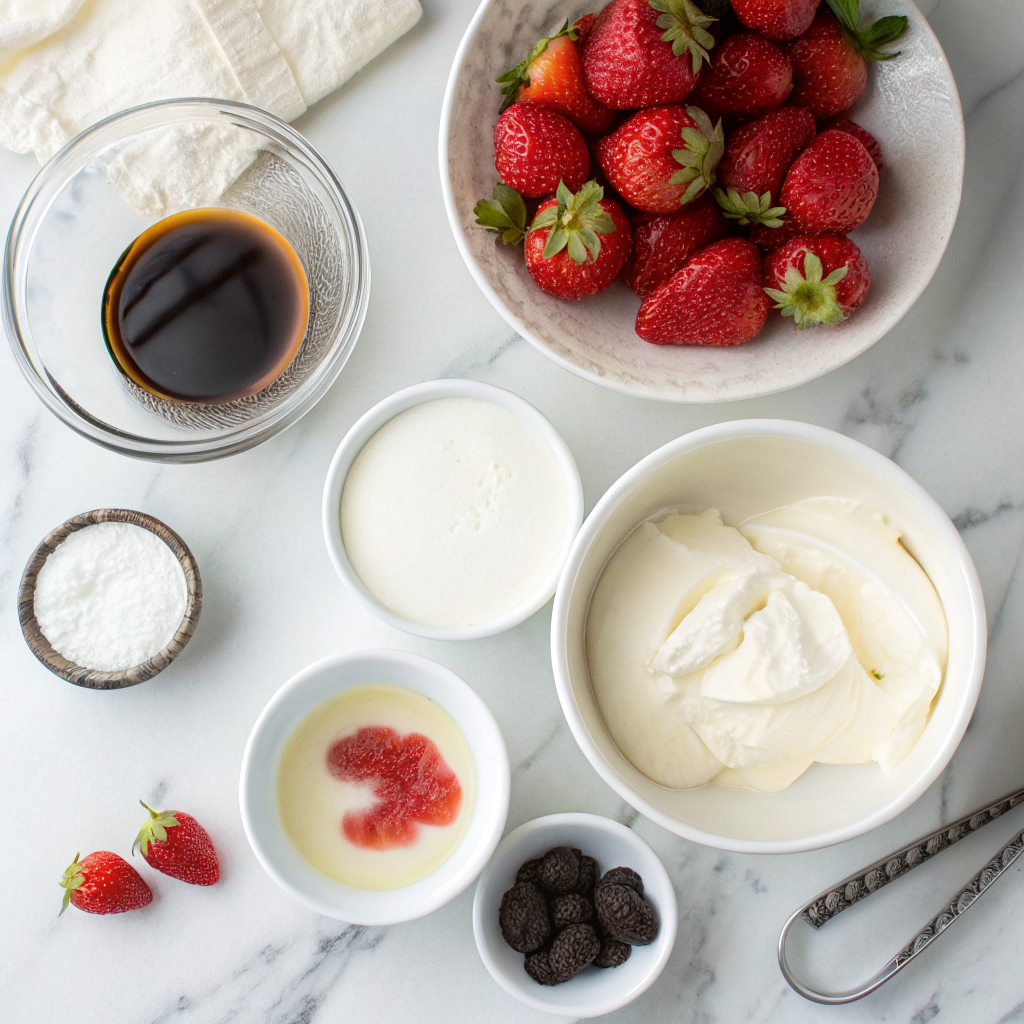
Vanilla extract elevates the overall flavor profile with its warm, aromatic notes. Fresh or frozen berries for the coulis provide natural sweetness and beautiful color. A pinch of salt enhances all the flavors and prevents the dessert from tasting flat or one-dimensional.
Ingredient Shopping Guide
When selecting Greek yogurt, choose brands with simple ingredient lists containing just milk and live active cultures. Avoid products with added thickeners, artificial sweeteners, or unnecessary stabilizers. The quality of your yogurt directly impacts the final texture and flavor of your panna cotta.
For gelatin, unflavored powdered gelatin works best and is available in most grocery stores. Each packet typically contains about 2.5 teaspoons, which is equivalent to one tablespoon. If you prefer plant-based options, agar-agar powder can substitute, though the texture will be slightly different and you’ll need to adjust the quantity.
Fresh berries deliver the brightest flavor for the coulis, but frozen berries work beautifully and are often more economical. Strawberries, raspberries, blueberries, or blackberries all create stunning toppings. According to Medical News Today, berries rank among the most antioxidant-rich foods available.
Step-by-Step Instructions for Perfect Greek Yogurt Panna Cotta
Creating flawless Greek Yogurt Panna Cotta requires attention to temperature and timing, but the process itself is straightforward. Begin by blooming your gelatin in cold water for about five minutes, which allows it to absorb liquid and activate properly. This step ensures smooth incorporation without lumps in your final dessert.
While the gelatin blooms, gently warm the heavy cream with your sweetener of choice in a small saucepan over medium-low heat. Stir occasionally until the sweetener dissolves completely and the mixture is warm but not boiling. Remove from heat and add the bloomed gelatin, stirring until it dissolves completely into the warm cream.
In a large mixing bowl, whisk the Greek yogurt until smooth and creamy, breaking up any lumps. Gradually pour the warm cream mixture into the yogurt while whisking constantly to prevent the yogurt from curdling. Add vanilla extract and a pinch of salt, then whisk until everything is perfectly combined.
The Pouring and Setting Process
Divide the mixture evenly among your chosen serving vessels—ramekins, small glasses, or decorative molds all work beautifully. Leave about half an inch of space at the top if you plan to unmold them, or fill closer to the rim if serving directly in the containers. Gently tap each container on the counter to release any air bubbles.
Cover each container with plastic wrap, ensuring the wrap doesn’t touch the surface of the panna cotta to avoid marring the smooth top. Refrigerate for at least four hours, though overnight is ideal for the firmest set. The cold temperature allows the gelatin to fully activate and create that perfect, silky texture.
Resist the temptation to check them too early, as disturbing the panna cotta during the setting process can affect the texture. The desserts are ready when they wobble gently when shaken but hold their shape. A properly set Greek Yogurt Panna Cotta should release cleanly from the edges of the mold when ready to unmold.
Creating the Perfect Berry Coulis
The berry coulis adds visual drama and flavor contrast to your Greek Yogurt Panna Cotta. Combine two cups of fresh or frozen berries with two tablespoons of sweetener and one tablespoon of lemon juice in a small saucepan. Heat over medium heat until the berries break down and release their juices, about five to seven minutes.
For a smooth coulis, strain the mixture through a fine-mesh sieve to remove seeds and pulp, pressing down with a spoon to extract maximum juice. If you prefer a more rustic texture with seeds, simply mash the cooked berries with a fork. Allow the coulis to cool completely before spooning it over your chilled panna cotta.
The coulis can be made up to three days in advance and stored in an airtight container in the refrigerator. This make-ahead component simplifies serving when entertaining. The vibrant color of the berry coulis creates an Instagram-worthy presentation that impresses guests every time.
Nutritional Benefits That Impress
Each serving of Greek Yogurt Panna Cotta provides a remarkable nutritional profile compared to traditional desserts. A typical serving contains approximately 150-200 calories, depending on the sweetener amount and cream-to-yogurt ratio. The high protein content keeps you satisfied longer than sugar-laden alternatives.
The calcium in Greek yogurt supports bone density and dental health, with each serving providing about 15-20% of your daily calcium needs. B vitamins present in dairy products support energy metabolism and nervous system function. The probiotics contribute to gut health, potentially improving digestion and immune function.
By choosing natural sweeteners like honey or maple syrup, you add trace minerals and antioxidants absent in refined sugar. The berry coulis contributes vitamin C, fiber, and powerful plant compounds that fight inflammation. This dessert proves that healthy eating doesn’t require sacrificing flavor or satisfaction.
Comparing to Traditional Desserts
Standard panna cotta made entirely with heavy cream contains significantly more saturated fat and fewer nutrients. Traditional versions often exceed 400 calories per serving with minimal protein. Greek Yogurt Panna Cotta cuts calories by roughly 50% while doubling the protein content.
Compared to cheesecake, another creamy dessert favorite, this recipe contains less sugar and more beneficial probiotics. The lighter texture makes it perfect for ending a meal without feeling overly full. For those watching their sugar intake, this dessert allows easy customization of sweetness levels.
Creative Variations to Explore
The versatility of Greek Yogurt Panna Cotta makes it an ideal canvas for creative flavor experiments. Try infusing the cream with lavender, cardamom, or earl grey tea for sophisticated flavor profiles. Citrus zest—lemon, orange, or lime—adds brightness and complexity without extra calories.
For chocolate lovers, whisk cocoa powder into the yogurt mixture or fold in melted dark chocolate. Coffee enthusiasts can add espresso powder or cold brew concentrate for a tiramisu-inspired version. Each variation maintains the signature creamy texture while delivering entirely different taste experiences.
Seasonal fruit variations keep this dessert exciting year-round. Spring brings strawberries and rhubarb, summer offers peaches and apricots, fall features apple compote or pumpkin swirl, and winter showcases pomegranate or citrus. You might also enjoy exploring other healthy dessert options on our healthy desserts collection.
Dairy-Free and Vegan Adaptations
Create a dairy-free version using coconut yogurt or cashew-based Greek-style yogurt alternatives. Replace heavy cream with full-fat coconut milk for richness. Use agar-agar powder instead of gelatin to make the recipe completely plant-based.
The texture differs slightly from dairy versions but remains impressively creamy and satisfying. Agar-agar sets more firmly than gelatin, so reduce the amount slightly—typically use about half to two-thirds the quantity. The setting process is faster with agar-agar, requiring only two to three hours of refrigeration.
Serving Suggestions for Maximum Impact
Presentation elevates Greek Yogurt Panna Cotta from simple dessert to show-stopping finale. Serve in clear glass vessels to showcase the layers of creamy panna cotta and jewel-toned coulis. Garnish with fresh berries, mint leaves, or edible flowers for restaurant-quality plating.
For unmolded presentations, run a thin knife around the edge of each ramekin, then dip the bottom in warm water for five seconds. Invert onto a chilled plate, giving a gentle shake to release. The panna cotta should slide out smoothly, maintaining its elegant shape.
Consider serving alongside crispy almond biscotti or delicate shortbread cookies for textural contrast. A small drizzle of honey or a dusting of powdered sugar adds final polish. For special occasions, serve with champagne or dessert wine for an elegant pairing.
Portion Control and Presentation Sizes
Standard serving sizes range from four to six ounces, providing satisfying portions without excess. Smaller two-ounce portions work beautifully for tasting menus or when serving multiple desserts. Larger eight-ounce servings suit this dessert as the main event.
Mini panna cottas in shot glasses make perfect party appetizers or buffet additions. The individual portions allow guests to easily grab one without needing utensils or plates. This format also simplifies prep since you can make larger batches efficiently.
Common Mistakes to Avoid
The most frequent error when making Greek Yogurt Panna Cotta is adding the cream mixture to the yogurt when it’s too hot. Excessive heat can curdle the yogurt, creating an unpleasant grainy texture. Always allow the cream to cool slightly after removing from heat, aiming for warm rather than hot.
Using too much gelatin creates a rubbery, bouncy texture rather than the desired silky smoothness. The panna cotta should gently wobble and melt in your mouth, not feel like jello. Follow the recipe measurements precisely, as gelatin ratios significantly impact the final texture.
Insufficient chilling time prevents proper setting, resulting in runny desserts that won’t hold their shape. While four hours is the minimum, overnight chilling produces the best results. Patience during this step ensures your desserts look as good as they taste.
Troubleshooting Texture Issues
If your panna cotta refuses to set after adequate chilling time, you likely didn’t fully dissolve the gelatin or used expired gelatin with reduced potency. Gelatin loses effectiveness over time, so check expiration dates. If your mixture seems too liquid after two hours, you can gently reheat everything, add more gelatin, and start over.
Grainy texture usually results from not whisking the yogurt smooth before adding other ingredients or from temperature shock. Always bring yogurt to room temperature before beginning, and ensure all ingredients are well-combined. Straining the mixture through a fine-mesh sieve before pouring eliminates any remaining lumps.
Separation or weeping indicates either too much gelatin or temperature fluctuations during setting. Keep refrigerator temperature consistent and avoid opening the door frequently while your panna cottas set. Proper ratios and stable temperatures prevent this issue entirely.
Storage Guidelines for Maximum Freshness
Properly stored Greek Yogurt Panna Cotta maintains optimal quality for up to five days in the refrigerator. Keep them covered with plastic wrap or in airtight containers to prevent absorbing refrigerator odors. The desserts actually improve slightly after the first day as flavors meld together.
Store the berry coulis separately from the panna cotta until ready to serve to maintain the cleanest presentation. The coulis keeps for up to one week refrigerated in an airtight container. Bring it to room temperature or warm slightly before drizzling for the best consistency and flavor.

specializes in comfort food made healthy, from pancakes to protein bowls.