
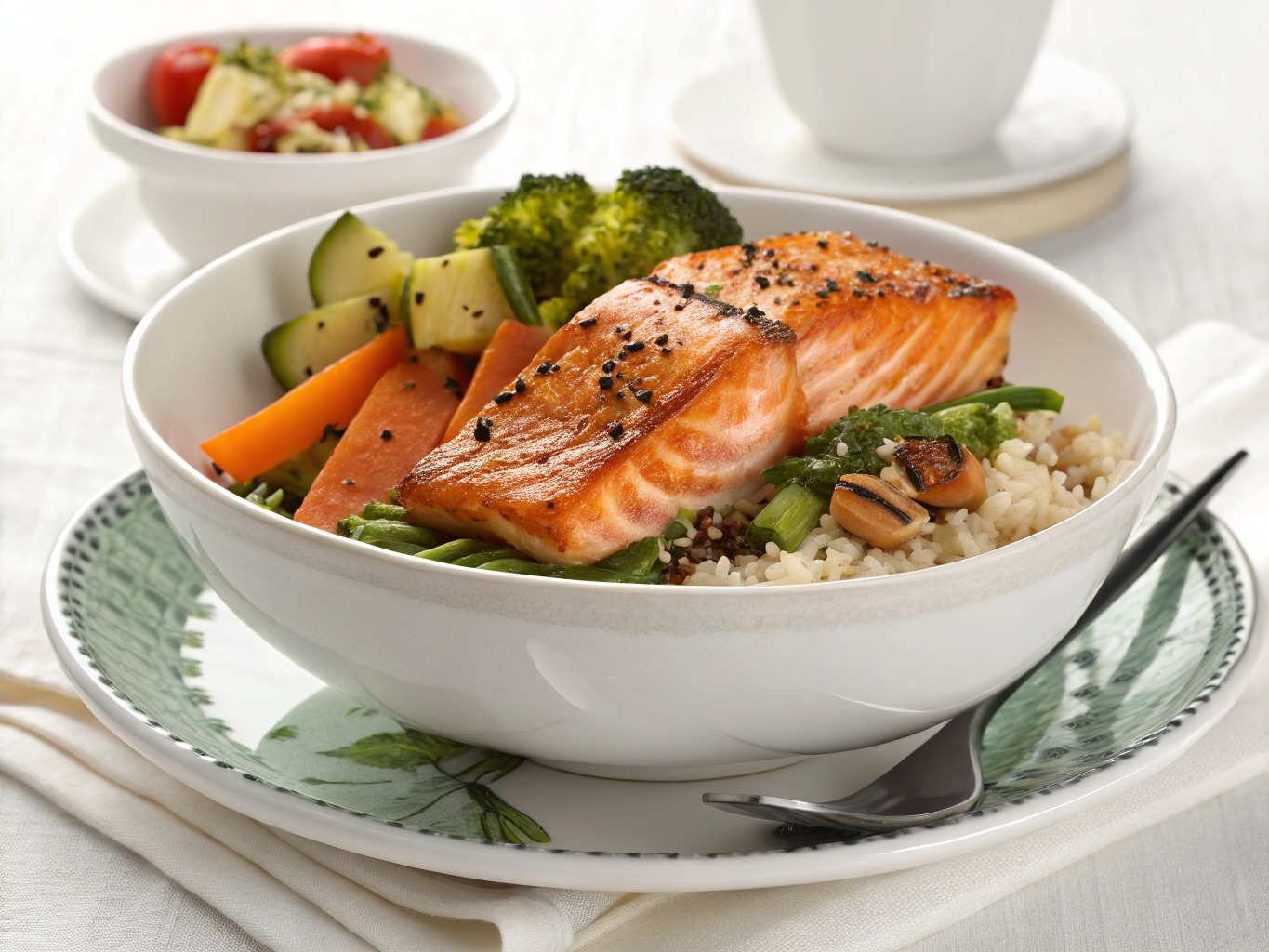
Salmon Teriyaki Bowl
Ingredients
Method
- In a small bowl, whisk together soy sauce, honey, rice vinegar, minced garlic, and grated ginger until well combined.
- Pat salmon fillets dry with paper towels and season lightly with salt and pepper.
- Heat a large skillet over medium-high heat with 1 tablespoon oil. Place salmon fillets in the pan and cook for 4 minutes per side until golden and cooked through.
- Pour the teriyaki sauce over the salmon in the pan. Let it bubble and reduce for 1-2 minutes, spooning sauce over the fillets to coat them evenly.
- While salmon cooks, steam broccoli florets for 3-4 minutes until tender-crisp. Warm edamame according to package directions.
- Divide cooked rice among 4 bowls. Top each with a salmon fillet, steamed broccoli, and edamame.
- Drizzle remaining teriyaki sauce from the pan over the bowls. Sprinkle with sesame seeds and sliced green onions. Serve immediately.
Nutrition
Notes
Tried this recipe?
Let us know how it was!The Salmon Teriyaki Bowl represents the perfect fusion of Japanese culinary tradition and modern nutritional wisdom, delivering a restaurant-quality meal that’s surprisingly simple to create at home. This protein-packed dish features tender, flaky salmon glazed with a sweet and savory teriyaki sauce, served over fluffy steamed rice and complemented by vibrant edamame and nutty sesame seeds. Whether you’re seeking a quick weeknight dinner, meal prep solution, or impressive dish for guests, this bowl checks every box for flavor, nutrition, and visual appeal.
Thank you for reading this post, don't forget to subscribe!In today’s fast-paced world, finding meals that balance convenience with health benefits can feel overwhelming. The Salmon Teriyaki Bowl solves this dilemma by providing approximately 40 grams of protein per serving while delivering heart-healthy omega-3 fatty acids, essential vitamins, and satisfying complex carbohydrates. This combination of macronutrients keeps you fuller longer and supports muscle recovery, making it ideal for active lifestyles and fitness enthusiasts.
Why This Salmon Teriyaki Bowl Recipe Stands Above the Rest
Creating an exceptional Salmon Teriyaki Bowl requires more than simply combining ingredients—it demands an understanding of flavor balance, cooking techniques, and ingredient quality. This recipe has been refined through countless iterations to achieve the perfect harmony between the rich, fatty salmon and the sweet-salty teriyaki glaze. The result is a bowl that rivals any high-end Japanese restaurant while remaining accessible to home cooks of all skill levels.
The secret to this recipe’s success lies in its authenticity combined with practical adaptations for the modern kitchen. Traditional teriyaki sauce requires careful attention to achieve the right consistency and flavor depth, but this streamlined version maintains that authenticity while cutting preparation time significantly. According to Healthline’s research on salmon nutrition, this fish provides exceptional health benefits that make it worthy of regular inclusion in your diet.
What truly distinguishes this Salmon Teriyaki Bowl is its versatility and adaptability to different dietary preferences and restrictions. You can easily modify the recipe to accommodate gluten-free, low-carb, or dairy-free requirements without sacrificing flavor or satisfaction. The foundational components remain consistent while allowing for creative personalization based on seasonal availability and individual taste preferences.
Core Ingredients That Make This Bowl Extraordinary
The foundation of any outstanding Salmon Teriyaki Bowl begins with selecting premium ingredients that work synergistically to create complex flavors and optimal nutrition. Fresh, wild-caught salmon provides the best flavor and highest omega-3 content, though high-quality farm-raised salmon serves as an excellent alternative. Look for fillets with bright color, firm texture, and no fishy odor—these indicators signal freshness and proper handling.
For the teriyaki sauce, the essential components include soy sauce, mirin, sake, and sugar, which combine to create that signature glossy, caramelized coating. Using authentic Japanese ingredients elevates the sauce considerably, though readily available grocery store versions work perfectly well for weeknight cooking. The balance between salty, sweet, and umami flavors defines great teriyaki, and slight adjustments to these ratios allow you to customize the sauce to your preferences.
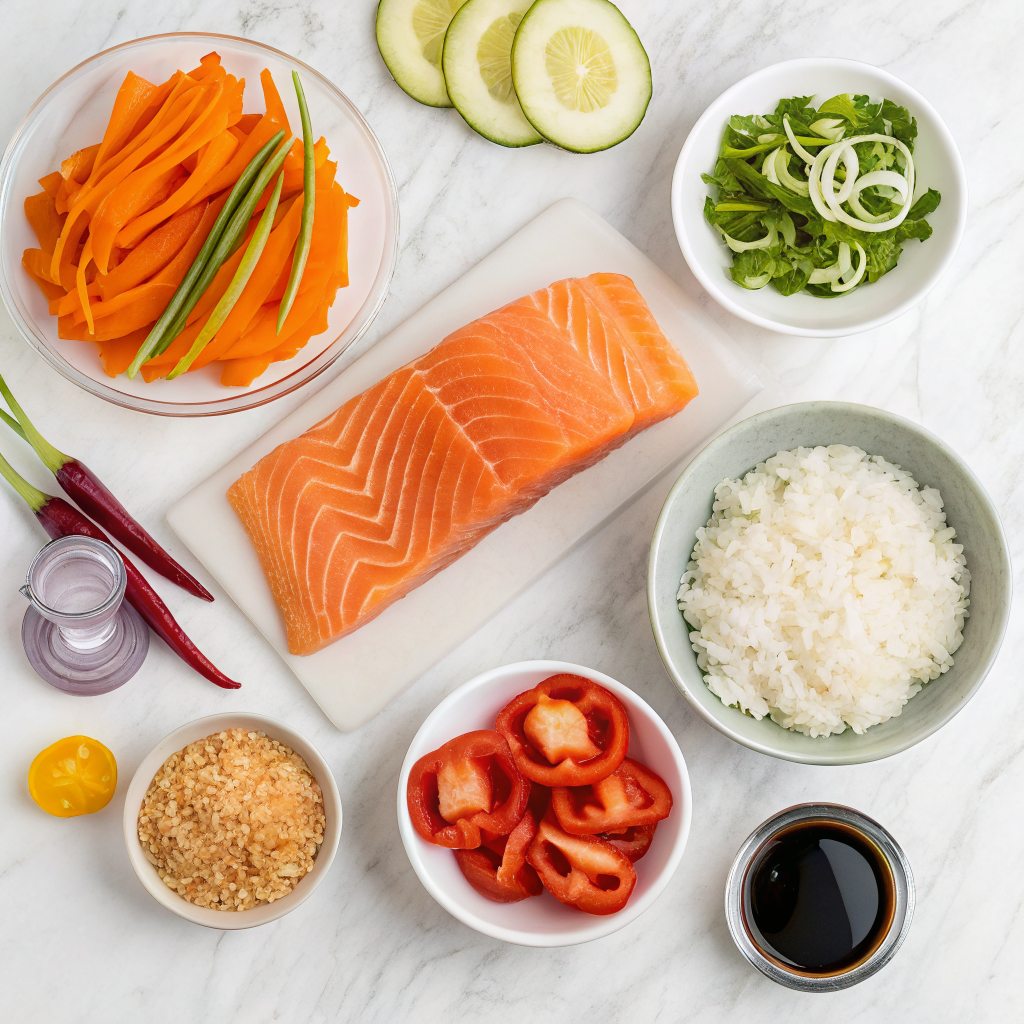
Beyond the salmon and sauce, the supporting ingredients contribute essential texture, color, and nutritional value to complete the bowl. Short-grain or medium-grain white rice provides the traditional base, offering a slightly sticky texture that pairs beautifully with the glazed salmon. Edamame adds vibrant green color, plant-based protein, and a pleasant pop of texture that contrasts with the tender fish and soft rice.
Essential Ingredient List
- Fresh salmon fillets (6-8 ounces per serving, skin-on or skinless)
- Soy sauce (3 tablespoons for sauce, plus extra for serving)
- Mirin or sweet rice wine (2 tablespoons)
- Sake or dry white wine (1 tablespoon)
- Brown sugar or honey (2 tablespoons)
- Fresh ginger, grated (1 teaspoon)
- Garlic cloves, minced (2 cloves)
- White or brown rice (1 cup uncooked)
- Frozen or fresh edamame (1 cup, shelled)
- Sesame seeds (white, black, or mixed)
- Green onions, sliced (2-3 stalks)
- Optional: nori sheets, pickled ginger, avocado slices
Step-by-Step Instructions for Perfect Salmon Teriyaki Bowl
Mastering the Salmon Teriyaki Bowl requires attention to timing and technique, but the actual process remains straightforward and forgiving. Beginning with proper preparation ensures smooth execution and allows you to enjoy the cooking process rather than feeling rushed or stressed. Start by removing the salmon from refrigeration about 15 minutes before cooking to bring it closer to room temperature, which promotes even cooking and prevents the exterior from overcooking while the center remains undercooked.
Preparing the Teriyaki Sauce
The teriyaki sauce should be your first priority, as it needs time to reduce and thicken while developing deeper, more concentrated flavors. In a small saucepan over medium heat, combine soy sauce, mirin, sake, brown sugar, grated ginger, and minced garlic. Whisk these ingredients together until the sugar completely dissolves and the mixture begins to bubble gently around the edges.
Allow the sauce to simmer for 8-10 minutes, stirring occasionally to prevent burning on the bottom of the pan. The sauce should reduce by approximately one-third and become noticeably thicker, coating the back of a spoon with a glossy sheen. Remove from heat and set aside—the sauce will continue to thicken slightly as it cools, reaching that perfect consistency for glazing the salmon.
Cooking the Rice Foundation
While the sauce simmers, start your rice using your preferred method—rice cooker, instant pot, or traditional stovetop preparation all yield excellent results. For the stovetop method, rinse the rice thoroughly under cold water until the water runs clear, removing excess starch that can make the rice gummy. Combine the rinsed rice with water in a 1:1.5 ratio for white rice or 1:2 for brown rice, bringing to a boil before reducing to the lowest heat setting.
Cover the pot tightly and allow the rice to steam undisturbed for 15-18 minutes for white rice or 40-45 minutes for brown rice. Resist the temptation to lift the lid during cooking, as this releases essential steam and disrupts the cooking process. Once the timer sounds, remove from heat and let the rice rest, still covered, for an additional 10 minutes to complete the steaming process and develop the ideal texture.
Perfectly Searing the Salmon
Pat the salmon fillets completely dry with paper towels, as surface moisture prevents proper searing and that desirable golden crust. Season both sides lightly with salt and pepper, being conservative with salt since the teriyaki sauce adds significant sodium. Heat a large skillet or cast-iron pan over medium-high heat, adding a tablespoon of neutral oil with a high smoke point like avocado or grapeseed oil.
Place the salmon in the hot pan skin-side up if using skin-on fillets, and avoid moving the fish once it makes contact with the pan. Allow the salmon to sear undisturbed for 4-5 minutes, developing a beautiful golden-brown crust that adds flavor and textural contrast. Flip the salmon carefully using a wide spatula, cooking the second side for an additional 3-4 minutes depending on thickness and desired doneness.
During the final minute of cooking, brush the salmon generously with the prepared teriyaki sauce, allowing it to caramelize slightly and create that signature glossy appearance. For thicker fillets, you may need to reduce the heat and add an extra minute or two to ensure the center reaches your preferred doneness. The salmon should flake easily with a fork while maintaining a slightly translucent center for medium doneness, or cook fully through if you prefer well-done fish.
Preparing the Edamame and Final Assembly
While the salmon cooks, prepare the edamame by boiling in salted water for 3-4 minutes if using frozen, or 5-6 minutes for fresh. Drain thoroughly and toss with a pinch of salt and optional sesame oil for added flavor. Toast the sesame seeds in a dry pan over medium heat for 2-3 minutes, shaking frequently until they become fragrant and slightly golden—this step dramatically enhances their nutty flavor.
To assemble your Salmon Teriyaki Bowl, start with a generous base of steamed rice in a wide, shallow bowl. Position the glazed salmon prominently on one side of the rice, arranging the edamame alongside in an appealing pattern. Drizzle additional teriyaki sauce over the rice and salmon, then garnish with toasted sesame seeds, sliced green onions, and any optional toppings like nori strips or avocado. For added visual appeal, consider exploring other Asian-inspired bowl recipes that complement this dish beautifully.
Nutritional Benefits and Macro Breakdown
The Salmon Teriyaki Bowl excels as a nutritionally complete meal, providing balanced macronutrients and essential micronutrients that support overall health and wellness. Each serving delivers approximately 550-650 calories depending on portion sizes and specific ingredients used, with roughly 40-45 grams of high-quality protein from the salmon and edamame. This protein content supports muscle maintenance, satiety, and metabolic function throughout the day.
According to Harvard School of Public Health research, fatty fish like salmon provides omega-3 fatty acids EPA and DHA, which support heart health, brain function, and reduced inflammation. The carbohydrates from rice provide sustained energy without causing dramatic blood sugar spikes, especially when using brown rice or cauliflower rice alternatives. The edamame contributes additional plant-based protein, fiber, and important minerals like iron and calcium.
The typical macronutrient distribution breaks down to approximately 25% protein, 45% carbohydrates, and 30% healthy fats, creating an ideal balance for most dietary approaches. The healthy fats from salmon provide satiety and support nutrient absorption, particularly for fat-soluble vitamins A, D, E, and K. This bowl also delivers significant amounts of B vitamins, selenium, potassium, and antioxidants that support immune function and cellular health.
Nutrition Tip: To increase the protein content even further, consider adding a soft-boiled egg or doubling the edamame portion. For lower carbohydrate versions, substitute cauliflower rice or increase the vegetable portions while reducing the rice quantity.
Creative Variations to Keep Your Bowl Exciting
One of the greatest advantages of the Salmon Teriyaki Bowl lies in its adaptability to different preferences, dietary needs, and ingredient availability. These variations maintain the core concept while introducing new flavors, textures, and nutritional profiles that prevent meal fatigue. Experimenting with different components allows you to create multiple distinct dishes from a single foundational recipe, maximizing your cooking efficiency and culinary repertoire.
Protein Alternatives
While salmon remains the star of this dish, other proteins work beautifully with teriyaki glaze and Asian-inspired bowl components. Firm tofu makes an excellent plant-based substitution, especially when pressed thoroughly and pan-fried until crispy before glazing. Chicken thighs provide a more economical option with rich flavor that stands up well to the sweet-savory sauce, though they require slightly longer cooking times to reach safe internal temperatures.
For seafood lovers, teriyaki-glazed tuna steaks or shrimp offer delicious alternatives with different textural experiences and flavor profiles. Even lean proteins like chicken breast or pork tenderloin adapt well to this preparation method, though they benefit from brief marination in the sauce before cooking to enhance moisture retention. These protein swaps allow you to enjoy the Salmon Teriyaki Bowl concept multiple times per week without repetition.
Base and Grain Options
The traditional rice base can be modified extensively to accommodate different dietary approaches or simply add variety to your meals. Brown rice increases fiber content and provides a nuttier flavor with chewier texture that some prefer over white rice. Quinoa offers complete protein and a distinct taste that complements the teriyaki flavors while boosting the overall nutritional density.
For low-carb or keto dieters, cauliflower rice provides a vegetable-forward base that significantly reduces calories and carbohydrates while adding extra servings of vegetables. Soba noodles create a Japanese-style noodle bowl variation with earthy buckwheat flavor, while rice noodles offer a gluten-free alternative with mild taste. You might also enjoy other grain bowl variations that use similar components in different combinations.
Vegetable Additions and Substitutions
Beyond edamame, numerous vegetables enhance the Salmon Teriyaki Bowl with additional colors, textures, and nutrients. Steamed or roasted broccoli adds cruciferous vegetables with cancer-fighting compounds and substantial fiber. Shredded purple cabbage introduces vibrant color and satisfying crunch along with beneficial anthocyanins and vitamin C.
Julienned carrots, sliced cucumber, pickled vegetables, and baby spinach all make excellent additions that customize the bowl to your preferences. Roasted sweet potato cubes add natural sweetness and beta-carotene, while mushrooms contribute umami depth and meaty texture. The key lies in balancing colors, textures, and flavors to create a visually appealing and sensorially satisfying meal experience.
Perfect Serving Suggestions and Pairings
While the Salmon Teriyaki Bowl functions beautifully as a complete meal requiring no accompaniments, certain additions and pairings elevate the dining experience to restaurant quality. Consider serving the bowl with a simple side of miso soup to add warmth and additional probiotics from fermented soy. The soup’s savory, slightly salty flavor complements the sweet teriyaki glaze while providing contrast in temperature and texture.
A crisp cucumber salad dressed with rice vinegar, sugar, and salt offers refreshing palate-cleansing bites between forkfuls of rich salmon and rice. The acidity and coolness balance the richness of the fish and cut through the sweetness of the teriyaki sauce. Seaweed salad provides another authentic Japanese side dish option with unique texture and concentrated mineral content from the sea vegetables.
For beverages, green tea serves as the traditional pairing with its subtle astringency and antioxidant properties that aid digestion. Light, crisp beer styles like Japanese lagers or wheat beers complement the flavors without overwhelming the dish. For wine enthusiasts, off-dry Riesling or Gewürztraminer provides aromatic complexity and slight sweetness that harmonizes with the teriyaki glaze, while light Pinot Noir offers a red wine option with sufficient acidity and moderate tannins.
Common Mistakes to Avoid for Perfect Results

Food lover & recipe creator sharing simple, protein-rich recipes for busy lives.