
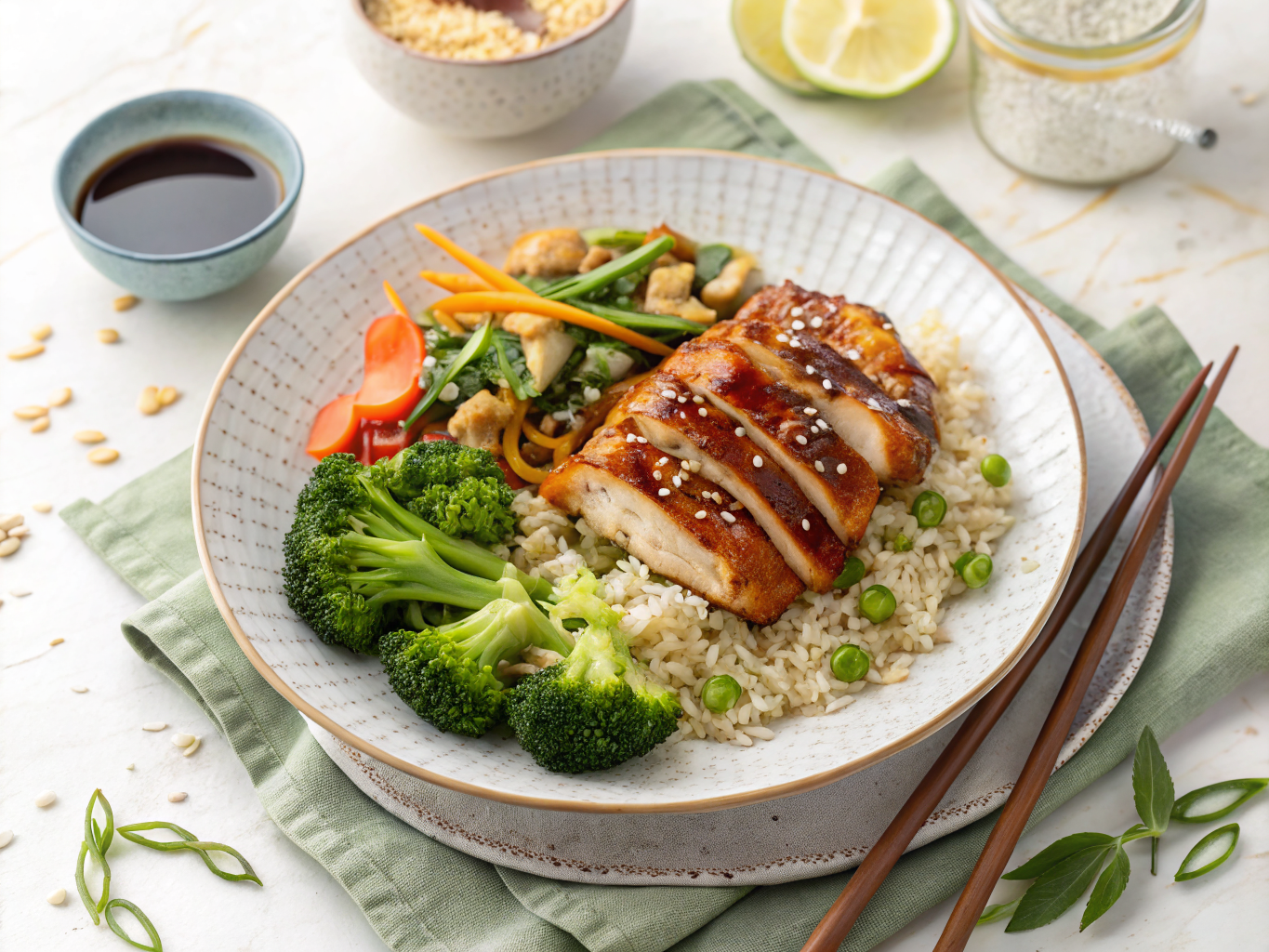
Teriyaki Chicken Meal Prep
Ingredients
Method
- In a small bowl, whisk together soy sauce, honey, rice vinegar, garlic, ginger, and cornstarch until smooth. Set aside.
- Heat sesame oil in a large skillet over medium-high heat. Add chicken pieces and cook for 6-8 minutes, stirring occasionally, until golden brown and cooked through.
- Pour the teriyaki sauce over the cooked chicken and stir well. Cook for 3-4 minutes until the sauce thickens and coats the chicken evenly.
- While chicken is cooking, steam broccoli florets for 4-5 minutes until tender-crisp. Cook rice according to package directions if not already prepared.
- Divide rice evenly among 5 meal prep containers (about 1 cup each). Add equal portions of teriyaki chicken and steamed broccoli to each container.
- Sprinkle each container with sesame seeds and sliced green onions. Allow to cool completely before sealing lids.
- Store sealed containers in the refrigerator for up to 5 days. Reheat in microwave for 2-3 minutes before eating.
Nutrition
Notes
Tried this recipe?
Let us know how it was!Finding time to cook healthy, delicious meals during a hectic week can feel overwhelming, but this Teriyaki Chicken Meal Prep recipe solves that problem with minimal effort and maximum flavor. This complete meal prep solution combines tender, glazed chicken with fluffy rice and crisp-tender broccoli in perfectly portioned containers that stay fresh for days. Whether you’re a meal prep beginner or a batch cooking veteran, this sweet and savory teriyaki recipe will become your Sunday routine essential.
Thank you for reading this post, don't forget to subscribe!Why This Teriyaki Chicken Meal Prep Recipe Works for Busy Lifestyles
The beauty of this Teriyaki Chicken Meal Prep lies in its simplicity and versatility. Unlike complicated recipes that require constant attention, this method uses straightforward techniques that anyone can master, regardless of cooking experience. The combination of protein-packed chicken, energy-sustaining rice, and nutrient-dense broccoli creates a balanced meal that supports fitness goals, weight management, and overall wellness.
Meal prepping saves an average of 8-12 hours per week compared to cooking individual meals daily. This recipe specifically addresses the common challenge of boring, repetitive meal prep by incorporating a homemade teriyaki sauce that tastes restaurant-quality without the excessive sodium and additives found in store-bought versions. The sauce caramelizes beautifully on the chicken, creating layers of umami flavor that actually improve as the meals sit in your refrigerator.
High-protein meals like this teriyaki chicken preparation help maintain muscle mass, increase satiety, and stabilize blood sugar levels throughout the day. Each serving delivers approximately 35-40 grams of protein, making it ideal for athletes, fitness enthusiasts, or anyone looking to increase their protein intake without spending hours in the kitchen. According to Healthline’s protein guidelines, this amount represents a substantial portion of most adults’ daily protein needs.
Core Ingredients That Make This Recipe Exceptional
The success of any Teriyaki Chicken Meal Prep depends on choosing quality ingredients that complement each other. For the chicken, opt for boneless, skinless chicken thighs or breasts depending on your preference—thighs offer more flavor and stay moist during reheating, while breasts provide a leaner option. You’ll need approximately 2 pounds of chicken to create 4-5 generous servings.
The teriyaki sauce requires soy sauce or tamari for a gluten-free option, honey or brown sugar for sweetness, rice vinegar for tang, fresh ginger for warmth, and minced garlic for depth. These pantry staples combine to create a sauce that rivals any restaurant version. A tablespoon of cornstarch mixed with water creates the signature glossy thickness that coats each piece of chicken perfectly.
For the accompaniments, jasmine or brown rice provides the foundation, while fresh broccoli florets add color, texture, and essential nutrients. Brown rice offers more fiber and nutrients, though jasmine rice provides a fluffier, more traditional texture. Optional sesame seeds and sliced green onions add visual appeal and subtle flavor enhancements that elevate the presentation.
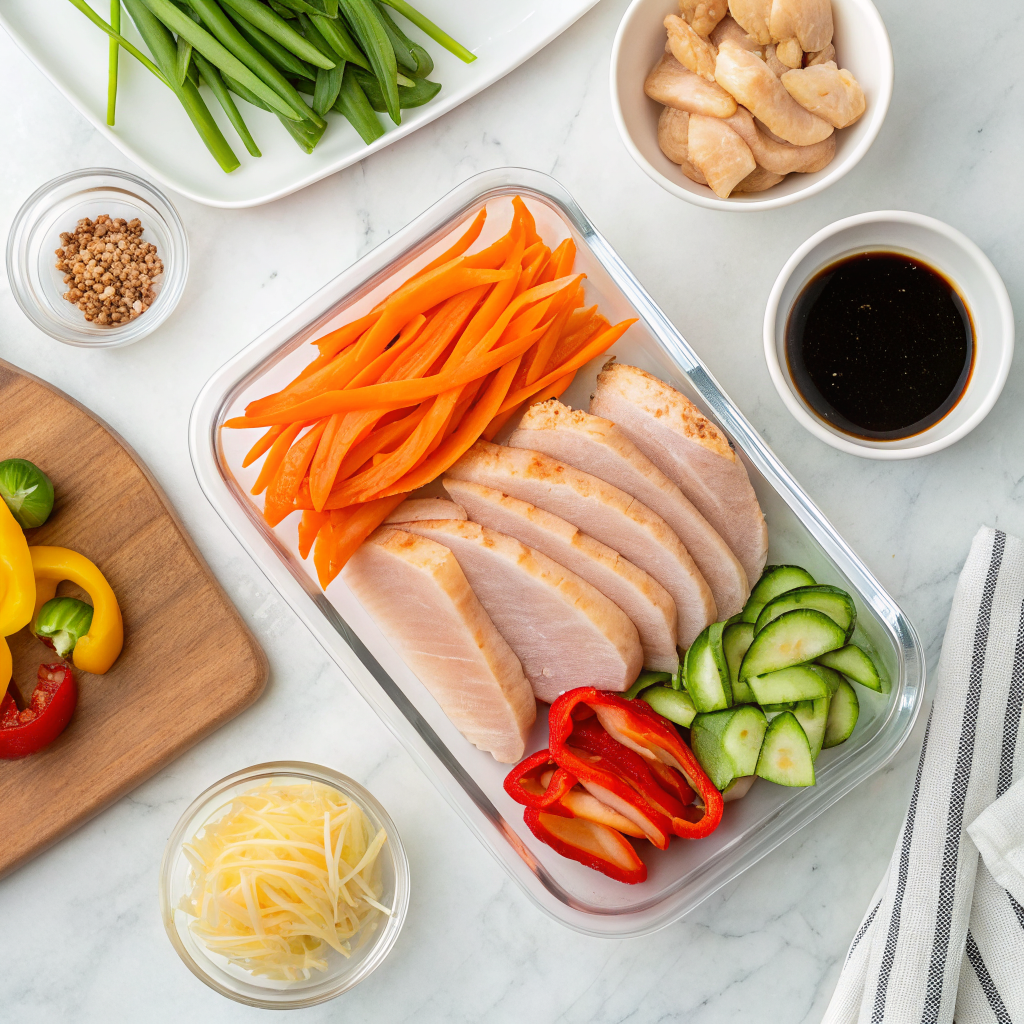
Shopping List for Four Complete Meals
- 2 pounds boneless chicken (thighs or breasts)
- 1/2 cup low-sodium soy sauce
- 1/4 cup honey or brown sugar
- 2 tablespoons rice vinegar
- 2 teaspoons fresh grated ginger
- 3 cloves garlic, minced
- 1 tablespoon cornstarch
- 2 cups uncooked rice (jasmine or brown)
- 4 cups fresh broccoli florets
- 2 tablespoons sesame oil
- Sesame seeds and green onions for garnish
Step-by-Step Instructions for Perfect Teriyaki Chicken Meal Prep
Begin by preparing all your ingredients, a technique known as mise en place that professional chefs swear by for efficiency. Cut your chicken into uniform bite-sized pieces, approximately 1-inch cubes, which ensures even cooking and makes the meals easier to eat later. Rinse and drain your rice, then set it aside while you prepare the sauce and vegetables.
Creating the Signature Teriyaki Sauce
Combine the soy sauce, honey, rice vinegar, grated ginger, and minced garlic in a medium bowl, whisking until the honey fully dissolves. This base sauce can be made up to three days in advance and stored in the refrigerator, actually improving in flavor as the ingredients marry. Reserve about one-third of the sauce in a separate container before cooking—this uncooked portion will serve as a finishing glaze that adds bright, fresh flavor.
In a small bowl, mix the cornstarch with two tablespoons of cold water to create a slurry. This mixture will thicken the sauce during cooking, transforming it from a thin liquid into a glossy coating that clings to the chicken. Add the slurry to the remaining two-thirds of your sauce and stir well to prevent lumps from forming.
Cooking the Chicken to Perfection
Heat a large skillet or wok over medium-high heat and add one tablespoon of sesame oil. Once the oil shimmers, add half of the chicken pieces in a single layer, ensuring they don’t overcrowd the pan. Overcrowding causes steaming instead of browning, which prevents the desirable caramelization that makes this dish so flavorful.
Cook the chicken for 3-4 minutes without moving it, allowing a golden crust to develop on the bottom. Flip each piece and cook for another 3-4 minutes until the chicken reaches an internal temperature of 165°F. Remove the cooked chicken to a plate and repeat with the remaining chicken, adding more oil if necessary.
Return all the chicken to the pan and pour in the sauce mixture with the cornstarch slurry. Stir continuously for 2-3 minutes as the sauce thickens and coats every piece of chicken with a glossy finish. The sugar in the honey will caramelize slightly, creating complex flavor notes that deepen the overall taste profile.
Preparing the Rice and Broccoli
While the chicken cooks, prepare your rice according to package directions—this timing ensures everything finishes simultaneously for efficient assembly. For jasmine rice, use a 1:1.5 ratio of rice to water, while brown rice requires a 1:2 ratio and longer cooking time. Season the cooking water with a pinch of salt to enhance the rice’s natural flavor.
Steam the broccoli florets until they’re bright green and crisp-tender, approximately 4-5 minutes. Avoid overcooking the broccoli since it will soften slightly during storage and reheating. Immediately transfer the cooked broccoli to a bowl of ice water to stop the cooking process and preserve its vibrant color—this technique, called blanching, keeps vegetables looking fresh throughout the week.
Assembly and Portioning
Arrange four or five meal prep containers on your counter and divide the rice evenly among them, creating a base layer. Top each portion of rice with equal amounts of teriyaki chicken, drizzling any remaining sauce from the pan over the meat. Add the broccoli to each container, keeping it slightly separate from the rice to maintain its texture.
Drizzle a small amount of the reserved fresh sauce over each meal and garnish with sesame seeds and sliced green onions. Allow the containers to cool to room temperature before sealing and refrigerating—placing hot food directly in the refrigerator can create condensation that makes the meals soggy. This proper meal prep technique ensures optimal texture and freshness throughout the week.
Nutritional Benefits of This High-Protein Meal
Each serving of this Teriyaki Chicken Meal Prep delivers approximately 450-500 calories, with a macronutrient breakdown of 35-40g protein, 55-60g carbohydrates, and 8-12g fat. This balanced ratio supports muscle maintenance, provides sustained energy, and keeps you satisfied for hours after eating. The moderate calorie count makes it suitable for various dietary goals, from weight loss to maintenance to muscle building.
Chicken serves as an excellent source of lean protein, providing all essential amino acids your body needs for cellular repair and function. According to Harvard’s School of Public Health, high-quality protein sources like chicken support immune function, hormone production, and tissue repair. The selenium in chicken also acts as a powerful antioxidant that protects cells from damage.
Broccoli contributes significant amounts of vitamin C, vitamin K, folate, and fiber while remaining low in calories. This cruciferous vegetable contains sulforaphane, a compound that research suggests may have anti-inflammatory and cancer-fighting properties. The fiber content aids digestion and promotes feelings of fullness that help prevent overeating throughout the day.
Brown rice, if chosen over white, adds additional B vitamins, magnesium, and fiber to the meal. These nutrients support energy metabolism, bone health, and cardiovascular function. The complex carbohydrates in rice provide steady energy release rather than the blood sugar spikes associated with refined carbohydrates, making this meal particularly beneficial for sustained mental and physical performance.
Creative Variations to Keep Your Meal Prep Interesting
One of the biggest challenges with meal prep is avoiding flavor fatigue, but this Teriyaki Chicken Meal Prep base recipe adapts easily to numerous variations. Substitute the chicken with firm tofu, salmon, or shrimp for different protein options that work equally well with teriyaki flavoring. Tofu should be pressed and cubed before cooking, while seafood requires shorter cooking times to prevent toughness.
Vegetable Substitutions and Additions
Replace or supplement the broccoli with snap peas, bell peppers, carrots, or mushrooms depending on seasonal availability and personal preferences. Sliced bell peppers add sweetness and crunch, while mushrooms contribute an earthy, umami quality that complements the teriyaki sauce. Mix and match vegetables to create different combinations throughout the month, preventing boredom while maximizing nutrient diversity.
Consider adding pineapple chunks for a Hawaiian-inspired twist that introduces natural sweetness and tropical flair. The bromelain enzyme in pineapple also aids protein digestion, making it a functional addition beyond mere flavor. For a spicy kick, incorporate red pepper flakes or sriracha into the sauce, adjusting the heat level to your tolerance.
Grain Alternatives
Swap the rice for quinoa, cauliflower rice, or rice noodles to modify the nutritional profile and texture. Quinoa provides complete protein and a nutty flavor that pairs beautifully with teriyaki sauce, while cauliflower rice dramatically reduces carbohydrate content for those following low-carb or ketogenic diets. Rice noodles create a more Asian-inspired presentation and soften nicely when reheated with the sauce.
This versatile approach to grain selection means you can prepare the same basic recipe multiple times per month while creating distinctly different eating experiences. Rotating your grains also ensures you’re getting a wider spectrum of nutrients rather than relying on a single source repeatedly.
Serving Suggestions to Enhance Your Meals
While these meal prep containers are designed to be complete, standalone meals, several additions can elevate the experience when you have a few extra minutes. Top with a soft-boiled egg for additional protein and richness—the runny yolk creates a luxurious sauce when mixed with the teriyaki glaze. Prepare a batch of soft-boiled eggs during your initial meal prep session and store them separately for easy addition throughout the week.
A sprinkle of furikake, a Japanese seasoning blend containing seaweed, sesame seeds, and dried fish, adds umami depth and textural interest. Pickled ginger or quick-pickled cucumber ribbons provide acidic contrast that cuts through the richness of the sauce and refreshes your palate. These simple additions require minimal preparation but significantly impact the overall eating experience.
For those with higher calorie needs, serve the teriyaki chicken over a larger portion of rice or add a side of edamame for extra protein and healthy fats. Alternatively, wrap the ingredients in a large flour tortilla or stuff them into a pita pocket for a portable lunch option that’s easier to eat on the go. The versatility of this preparation method means it adapts to various eating situations and preferences.
Common Mistakes to Avoid for Meal Prep Success
The most frequent error in preparing Teriyaki Chicken Meal Prep is using high heat throughout the entire cooking process, which causes the sugar in the sauce to burn before the chicken fully cooks. Start with medium-high heat for browning, then reduce to medium-low when adding the sauce, allowing it to thicken gradually without scorching. Burnt teriyaki sauce tastes bitter and ruins an otherwise perfect meal.
Another common mistake involves cooking the broccoli until it’s completely soft, thinking it will maintain that texture. Vegetables continue softening during storage and reheating, so aim for crisp-tender when initially cooking—they should still have some resistance when pierced with a fork. According to Medical News Today’s vegetable cooking guide, overcooking destroys heat-sensitive nutrients and degrades texture significantly.
Using containers that aren’t properly sealed or are made from low-quality materials leads to dried-out meals and cross-contamination of flavors. Invest in glass or high-quality BPA-free plastic containers with secure, airtight lids that prevent moisture loss and keep foods fresh longer. Separate compartment containers work best for this recipe, keeping the components distinct until you’re ready to mix them while eating.
Failing to let the meals cool before refrigerating creates excess condensation that makes everything soggy and unappetizing. This moisture also creates an environment where bacteria can multiply more rapidly, reducing the safe storage time. Allow containers to sit open at room temperature for 20-30 minutes after assembly, then seal and refrigerate once they’ve cooled to near room temperature.
Storage Guidelines and Reheating Instructions
Properly stored Teriyaki Chicken Meal Prep remains safe and delicious for 4-5 days in the refrigerator at 40°F or below. Label each container with the preparation date to track freshness and ensure you consume the oldest meals first. For longer storage, these meals freeze excellently for up to three months—just omit the broccoli from frozen portions and add fresh vegetables when reheating for better texture.
When freezing, allow meals to cool completely before placing them in the freezer to prevent ice crystal formation that damages food structure. Thaw frozen meals in the refrigerator overnight rather than at room temperature, which allows bacteria to multiply in the danger zone between 40°F and 140°F. This planning requires foresight but ensures food safety and optimal texture.
Reheating for Best Results

Food lover & recipe creator sharing simple, protein-rich recipes for busy lives.