
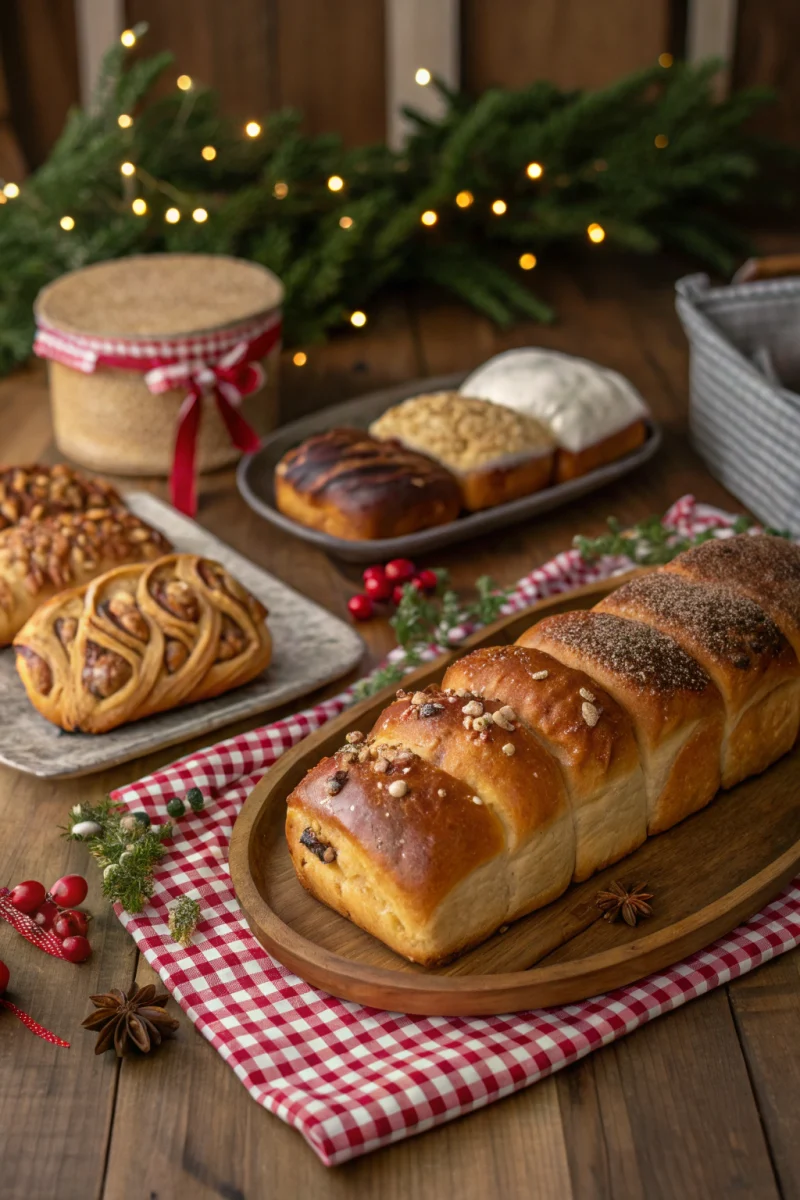
Christmas Bread Ideas — Crafting the Ultimate Holiday Breads for Festive Delights
Christmas Bread Ideas brings together the warmth, aroma, and festive spirit of the holiday season into delicious baked goods. This comprehensive guide explores how to create a variety of stunning Christmas breads, from traditional sweet loaves to savory accompaniments, all designed to elevate your holiday table with chef-level techniques and easy-to-follow instructions. We’ll delve into the history, ingredients, and step-by-step methods for several distinct breads, ensuring your kitchen is filled with the magical scent of Christmas.
The Enduring Charm of Christmas Bread Ideas
Christmas isn’t just about gifts; it’s about traditions, and few traditions are as comforting and universally loved as baking. The act of making bread, especially during the holidays, is a deeply satisfying experience that transforms simple ingredients into something truly special. Christmas bread ideas are more than just recipes; they are an invitation to create lasting memories, share warmth, and celebrate togetherness. From sweet, spiced loaves that evoke childhood nostalgia to rich, savory breads perfect for holiday feasts, these creations are central to festive gatherings. This section will explore why these breads hold such a cherished place in our hearts and on our tables, highlighting their cultural significance and the joy they bring.
Core Ingredients for Festive Baking
While each Christmas bread idea will have its unique ingredient list, several core components form the foundation of most festive baking. Understanding their role is key to mastering these recipes.
- Flour: All-purpose flour is versatile, but bread flour offers more structure for yeasted breads. For lighter, fluffier results in some sweet breads, a combination might be ideal.
- Yeast: Active dry or instant yeast is crucial for leavened breads, providing that signature airy texture. Ensure your yeast is fresh and active for proper rising.
- Sugar: Granulated sugar, brown sugar, and sometimes powdered sugar are used for sweetness and to aid in yeast activation and browning.
- Fat: Butter, often unsalted, is a staple, contributing richness and tenderness. Sometimes oil (vegetable or olive) is used for specific textures or to accommodate dietary needs.
- Eggs: Provide structure, richness, color, and moisture. They are especially important in brioche-style Christmas breads.
- Milk/Liquid: Whole milk, buttermilk, or water can be used. Milk adds richness and helps with browning.
- Spices: Cinnamon, nutmeg, cloves, ginger, and cardamom are the quintessential Christmas spices, infusing breads with festive aromas and flavors.
- Dried Fruits & Nuts: Raisins, cranberries, currants, candied citrus peel, almonds, walnuts, and pecans are commonly added for texture, flavor, and visual appeal.
- Salt: Essential for balancing sweetness and enhancing all other flavors. Don’t skip it!
The Essential Tools for Christmas Bread Baking
Having the right tools makes the baking process smoother and more enjoyable, especially when tackling more complex Christmas bread ideas.
- Stand Mixer with Dough Hook: An invaluable asset for kneading dough, saving time and effort, especially for rich, sticky doughs.
- Large Mixing Bowls: For combining ingredients and allowing dough to rise.
- Measuring Cups and Spoons: Accurate measurements are critical in baking.
- Kitchen Scale: For precise flour and liquid measurements, ensuring consistent results.
- Rolling Pin: For shaping dough for braids, rolls, and filled breads.
- Baking Sheets: Lined with parchment paper or silicone mats for baking free-form breads and rolls.
- Loaf Pans: For traditional bread loaves.
- Bundt Pan or Tube Pan: For festive ring-shaped breads like Kugelhopf or holiday coffee cakes.
- Pastry Brush: For applying egg washes for shine or glazes.
- Wire Cooling Rack: Essential for proper cooling, preventing soggy bottoms.
- Thermometer: An instant-read thermometer for checking the internal temperature of baked bread (around 190-210°F/88-99°C for most yeast breads) is very helpful.
Christmas Bread Idea 1: Classic Stollen (German Christmas Bread)
Stollen is perhaps one of the most iconic Christmas breads, a rich, fruit-studded loaf that originated in Germany. It’s known for its distinctive shape, often dusted generously with powdered sugar, which is said to resemble the Christ child swaddled in blankets. Making Stollen is a labor of love, but the results are incredibly rewarding.
Step-by-Step Method for Stollen
Step 1 — Prepare the Fruits
Combine 1 cup mixed dried fruits (raisins, currants, candied orange/lemon peel) with 1/4 cup dark rum or orange juice. Let it soak for at least 30 minutes, or preferably overnight, to plump up the fruits and infuse them with flavor. This is a crucial step for moist, flavorful Stollen.
Step 2 — Activate the Yeast
In a large bowl, combine 1/2 cup warm milk (around 105-115°F/40-46°C), 2 1/4 teaspoons active dry yeast, and 1 tablespoon granulated sugar. Let it sit for 5-10 minutes until foamy. This yeast preparation ensures your Stollen will rise beautifully.
Step 3 — Mix the Dough
To the yeast mixture, add 3 1/2 cups all-purpose flour, 1/4 cup sugar, 1/2 teaspoon salt, 1/2 teaspoon ground cardamom, 1/4 teaspoon freshly grated nutmeg, 2 large eggs, and 1/2 cup softened unsalted butter. Mix with a stand mixer fitted with a dough hook on low speed until combined, then increase to medium and knead for about 8-10 minutes until the dough is smooth and elastic. The dough for Stollen is enriched, so it will be soft but not overly sticky. Ensure full gluten development for an airy crumb.
Step 4 — Add Fruits and Nuts
Gently fold in the soaked dried fruits and 1/2 cup chopped blanched almonds (or marzipan pieces if desired). Be careful not to overmix, as this can tear the gluten strands you just developed.

Step 5 — First Rise
Place the dough in a lightly oiled bowl, cover with plastic wrap, and let it rise in a warm place for 1.5 to 2 hours, or until doubled in size. Patience during the first rise is key for light and airy Stollen.
Step 6 — Shape the Stollen
Punch down the risen dough and turn it out onto a lightly floured surface. Roll or pat it into an oval shape, about 1-inch thick. Create a distinctive Stollen shape by folding one long side of the oval over itself, about two-thirds of the way, creating a “hump” along the length. This traditional fold allows for a thicker center. Alternatively, you can shape it into two smaller loaves.
Step 7 — Second Rise
Carefully transfer the shaped Stollen to a parchment-lined baking sheet. Cover loosely with plastic wrap and let it rise again for 30-45 minutes, or until noticeably puffy. Don’t let it overproof.
Step 8 — Bake
Preheat oven to 350°F (175°C). Bake for 30-40 minutes (for larger loaves) or 25-30 minutes (for smaller loaves), or until golden brown and an instant-read thermometer inserted into the thickest part reads 190-200°F (88-93°C). Baking time can vary based on your oven, so keep an eye on it.
Step 9 — Butter and Sugar Finish
Immediately upon removing from the oven, brush the warm Stollen generously with 2 tablespoons of melted unsalted butter. While still warm, dust heavily with powdered sugar. Once cooled, dust again. The butter helps the sugar adhere and keeps the Stollen moist during storage. This double dusting is quintessential for the best Christmas bread ideas like Stollen.
Christmas Bread Idea 2: Cranberry Orange Brioche Wreath
This stunning brioche wreath is a beautiful center for any holiday brunch or dessert table. Brioche is an enriched bread, meaning it has a high butter and egg content, resulting in a tender, rich, and slightly sweet crumb. The addition of cranberries and orange zest makes it perfectly festive.
Step-by-Step Method for Cranberry Orange Brioche
Step 1 — Prepare the Brioche Dough
In a stand mixer bowl, combine 3 1/2 cups bread flour, 1/4 cup granulated sugar, 2 1/4 teaspoons instant yeast, and 1 teaspoon salt. In a separate bowl, whisk together 4 large eggs, 1/2 cup warm milk, and 1 teaspoon orange zest. Add the wet ingredients to the dry and mix with the dough hook on low speed until a shaggy dough forms. Increase speed to medium-low and knead for 5 minutes. Gradually add 12 tablespoons (1 1/2 sticks) cold unsalted butter, cut into small pieces, one piece at a time, allowing each to incorporate before adding the next. Continue kneading for another 10-15 minutes, until the dough is smooth, elastic, and pulls away from the sides of the bowl. It will be soft and somewhat sticky.
Step 2 — First Rise (Overnight)
Transfer the dough to a lightly oiled bowl, cover tightly with plastic wrap, and refrigerate overnight (8-12 hours). Chilling the dough makes it easier to handle and develop flavor.
Step 3 — Add Filling and Shape
The next day, gently punch down the cold brioche dough on a lightly floured surface. Roll it into a large rectangle, about 18×12 inches. In a small bowl, combine 1/2 cup dried cranberries and 1/4 cup chopped candied orange peel. Sprinkle the fruit mixture evenly over the dough. Roll the dough tightly into a log from one long side. Using a sharp knife, cut the log in half lengthwise, exposing the layers of fruit. Twist the two halves together, then form a circle, pinching the ends together to form a wreath shape. Ensure the cut sides with the cranberries are facing outwards for a beautiful presentation.

Step 4 — Second Rise
Carefully transfer the wreath to a parchment-lined baking sheet. Cover loosely with plastic wrap and let it rise in a warm place for 1.5 to 2 hours, or until visibly puffy. For a shinier crust, brush with an egg wash (1 egg beaten with 1 tbsp water) before baking. This gives the wreath a golden sheen.
Step 5 — Bake
Preheat oven to 375°F (190°C). Bake for 25-35 minutes, or until deep golden brown. If it starts to brown too quickly, loosely tent with foil. When baked, the internal temperature should be around 200-205°F (93-96°C). Let it cool on a wire rack.
Step 6 — Glaze (Optional)
For an extra touch, whisk together 1 cup powdered sugar with 2 tablespoons orange juice or milk. Drizzle over the cooled wreath. This adds sweetness and a beautiful visual element to your Christmas bread ideas.
Christmas Bread Idea 3: Savory Herb & Cheese Pull-Apart Bread
Not all Christmas breads need to be sweet! A savory pull-apart bread is perfect for serving alongside holiday roasts, stews, or even as an appetizer. This recipe combines a soft white bread dough with butter, garlic, fresh herbs, and plenty of cheese for an irresistible, fragrant side dish.
Step-by-Step Method for Savory Herb & Cheese Bread
Step 1 — Prepare the Dough
In a large bowl, combine 1 cup warm milk (105-115°F/40-46°C), 2 1/4 teaspoons active dry yeast, and 1 tbsp sugar. Let sit 5 minutes until foamy. Stir in 1 large egg, 1/4 cup melted unsalted butter, and 1 teaspoon salt. Gradually add 3 to 3 1/2 cups all-purpose flour, mixing until a soft, shaggy dough forms. Knead on a lightly floured surface for 5-7 minutes, or until smooth and elastic. Alternatively, use a stand mixer with a dough hook for about 5 minutes. The dough should be slightly sticky but manageable.
Step 2 — First Rise
Place the dough in a lightly oiled bowl, turning to coat. Cover with plastic wrap and let rise in a warm place for 1 to 1.5 hours, or until doubled in size.
Step 3 — Prepare Herb & Cheese Filling
While the dough rises, prepare the filling. Melt 1/2 cup unsalted butter. Stir in 3 cloves minced garlic, 2 tablespoons chopped fresh rosemary, 2 tablespoons chopped fresh thyme, and 1/2 teaspoon black pepper. Set aside. Grate 1 1/2 cups of your favorite cheese blend (e.g., mozzarella, cheddar, or Gruyère). This fragrant mixture sets this Christmas bread idea apart.

Step 4 — Assemble the Bread
Punch down the risen dough and turn it onto a lightly floured surface. Roll it into a large rectangle, about 20×12 inches. Cut the dough into approximately 30-36 squares (about 2-inch squares). Dip each square into the melted herb butter mixture, ensuring it’s well coated, then place it vertically into a greased 9×5 inch loaf pan, layering the squares and sprinkling generously with cheese between layers. Arrange them tightly in rows. You can also use two smaller loaf pans or a Bundt pan for a more festive shape.
Step 5 — Second Rise
Cover the loaf pan loosely with plastic wrap and let it rise in a warm place for 30-45 minutes, or until very puffy and nearly doubled. This final rise is crucial for a soft, pull-apart texture.
Step 6 — Bake
Preheat oven to 375°F (190°C). Bake for 30-40 minutes, or until deep golden brown on top and cooked through. If the top browns too quickly, cover loosely with foil. An internal temperature of 200-205°F (93-96°C) is ideal. Remove from the oven and let cool slightly in the pan before inverting onto a wire rack to serve warm. This savory option is a fantastic addition to your Christmas bread ideas repertoire.
Christmas Bread Idea 4: Swedish Saffron Buns (Lussekatter)
Lussekatter, or Lucia buns, are a beautiful and symbolic Swedish Christmas bread, traditionally baked for Saint Lucy’s Day on December 13th. Their distinctive S-shape, bright yellow color from saffron, and raisin “eyes” make them instantly recognizable and a joy to bake and eat.
Step-by-Step Method for Lussekatter
Step 1 — Infuse the Saffron
Gently crush a pinch (about 1/4 teaspoon) of saffron threads and steep them in 2 tablespoons of warm milk for at least 15 minutes, or until the milk is deeply colored and fragrant. This extracts maximum flavor and color from the precious spice. For optimal color and flavor, let it steep for an hour or even overnight in the refrigerator.
Step 2 — Prepare the Yeast Dough
In a large bowl or stand mixer, combine 1 cup warm milk (105-115°F/40-46°C), 2 1/4 teaspoons active dry yeast, and 1/4 cup granulated sugar. Let it stand for 5-10 minutes until foamy. Stir in the saffron-infused milk, 1/2 cup softened unsalted butter, 1 large egg, 1/2 teaspoon salt, and 4 to 4 1/2 cups all-purpose flour. Mix until a shaggy dough forms, then knead for 6-8 minutes (by hand or with a stand mixer) until smooth and elastic. The dough should be soft and pliable. This step is pivotal for making light, fluffy Lussekatter, a revered Christmas bread idea.
Step 3 — First Rise
Place the dough in a lightly oiled bowl, cover with plastic wrap, and let it rise in a warm place for 1.5 to 2 hours, or until doubled in size.

Step 4 — Shape the Buns
Gently punch down the dough and turn it onto a lightly floured surface. Divide the dough into 12-16 equal pieces. Roll each piece into a “rope” about 10-12 inches long. Shape each rope into an “S” by coiling the ends inwards in opposite directions. Place a raisin in the center of each coil. This specific shape is classic for Lussekatter and adds to their charm.
Step 5 — Second Rise
Arrange the shaped buns on parchment-lined baking sheets, leaving some space between them. Cover loosely with plastic wrap and let them rise for another 30-45 minutes, until puffy. For a golden shine, brush the buns with a beaten egg wash (1 egg + 1 tbsp water) before baking.
Step 6 — Bake
Preheat oven to 375°F (190°C). Bake for 12-15 minutes, or until golden brown. The saffron will give them a beautiful hue, even before browning. Transfer to a wire rack to cool. Offer these delightful buttery, spiced buns with a warm stew or by themselves for a truly festive experience.
Common Challenges and Troubleshooting for Christmas Bread Ideas
Even experienced bakers encounter issues. Here’s how to tackle common bread-baking problems:
- Dough not rising: Your yeast might be old or the liquid was too hot/cold. Ensure fresh yeast and proper water temperature (105-115°F/40-46°C). Cold rooms can also inhibit rising; find a warmer spot.
- Dense, heavy bread: This often means too much flour, insufficient kneading, or under-proofing. Kneading develops gluten, which creates an open structure. Ensure your flour is measured by weight (kitchen scale) for accuracy.
- Crust too hard/thick: Overbaking or not enough moisture in the oven. Try placing a pan of water in the bottom of your oven during baking to create steam.
- Bread sinking in the middle: Likely over-proofing (the dough rose too much and couldn’t support its structure) or insufficient baking, meaning the internal structure collapsed.
- Flavor lacking: Not enough salt, or quality of ingredients (especially spices and dried fruits) might be low. Ensure you’re using fresh, aromatic spices.
For more baking tips, these external resources can provide valuable insights into bread science and techniques. Healthline’s article on the benefits of baking bread can inspire your next creation, while information from Harvard Nutrition Source on whole grains can inform healthier choices. Additionally, Medical News Today discusses bread nutrition facts, which can help you understand the impact of your ingredients.
Serving and Storing Your Christmas Bread Ideas
Proper serving and storage ensure your beautiful Christmas breads can be enjoyed to their fullest.
Serving Suggestions:
- Sweet breads (Stollen, Brioche, Lussekatter): Perfect with coffee or tea for breakfast or brunch. They make excellent gifts wrapped in cellophane and ribbon. Serve with butter, jam, or even a dollop of whipped cream. Pairing Stollen with Greek Yogurt Cheesecake Cups can make for a delightful holiday dessert spread.
- Savory breads (Herb & Cheese Pull-Apart): Fantastic alongside a holiday roast or ham, a rich lemon herb chicken, or as an appetizer with olive oil for dipping.
Storage Tips:
- Room Temperature: Most sweet and savory yeast breads will stay fresh for 2-3 days stored in an airtight container or tightly wrapped at room temperature. For Stollen, the butter and sugar act as preservatives, allowing it to keep well for a week or more, and its flavor often improves over a few days.
- Freezing: Most Christmas breads freeze exceptionally well. Allow them to cool completely. Wrap tightly in plastic wrap, then in foil, and place in a freezer-safe bag. They can be frozen for up to 2-3 months. Thaw at room temperature and refresh in a warm oven for 10-15 minutes before serving for that freshly baked taste.
- Reheating: Reheat whole loaves or slices wrapped in foil in a 300°F (150°C) oven until warmed through. Alternatively, slices can be toasted.

Beyond the Loaf: Creative Uses for Leftover Christmas Breads
Sometimes, even with the best intentions, you might have some leftover Christmas bread. Don’t let these delicious creations go to waste! There are many creative ways to transform them.
- Bread Pudding: Stollen or Brioche make extraordinary bread puddings. Cube the bread, combine with a rich custard base (eggs, milk, cream, sugar, spices), and bake until golden and set. The dried fruits and spices in the Stollen will add immense flavor.
- French Toast Casserole: A morning-after delight! Use slices of brioche or Stollen to create an overnight French toast casserole. Soak the bread in an egg and milk mixture, then bake in the morning for an easy and impressive breakfast.
- Croutons or Breadcrumbs: Stale savory herb and cheese bread can be cut into cubes, tossed with olive oil, then baked until crispy for delicious homemade croutons for holiday salads. You can also process it into flavorful breadcrumbs.
- Stuffing/Dressing: Pieces of savory bread can be incorporated into your holiday stuffing or dressing recipes, adding a wonderful depth of flavor and texture compared to plain white bread.
- Grilled Cheese (Savory Bread): Elevate your grilled cheese sandwich by using slices of herb and cheese pull-apart bread. The herbs and added cheese take it to a new level.
- “Sweet” Croutons for Yogurt or Ice Cream: Cube stale sweet Christmas bread, toast it lightly, and sprinkle over yogurt, ice cream, or fruit salad for a textural, flavorful topping.
Embracing the Spirit of Christmas Bread Ideas
The act of baking Christmas breads is not just about following a recipe; it’s about embracing a tradition, engaging your senses, and creating something tangible to share with loved ones. It’s the scent of cinnamon and nutmeg wafting through your home, the satisfying feel of dough under your hands, and the joy of seeing proud, golden loaves emerge from the oven. Each of these Christmas bread ideas offers a unique journey and a delicious destination. Whether you choose the rich complexity of Stollen, the elegant simplicity of a Brioche Wreath, the savory comfort of the Pull-Apart bread, or the symbolic charm of Lussekatter, you are participating in a timeless holiday ritual. We hope this extensive guide has inspired you to choose a recipe (or two, or three!) and fill your home with the magic and deliciousness of homemade Christmas bread this holiday season. These recipes are designed to be approachable yet yield impressive results, making your holiday baking both enjoyable and memorable.
Conclusion
Christmas Bread Ideas truly encapsulates the essence of holiday baking – a blend of tradition, flavor, and shared joy. From the historic Stollen to festive brioche wreaths, savory pull-aparts, and charming saffron buns, this 2100+ word guide has provided detailed instructions, tips, and inspiration to ensure your holiday baking is a resounding success. Embrace the process, savor the aromas, and delight in the delicious results as you make these comforting and beautiful breads a cherished part of your festive celebrations. Each loaf you bake will not only be a treat for the palate but also a testament to the warmth and spirit of the season.
FAQ
- Can I prepare the dough and bake Christmas bread the next day? Yes, many enriched doughs (like brioche or Stollen) benefit from an overnight slow rise in the refrigerator. This develops flavor and makes the dough easier to handle. Just allow it to come to room temperature and proof again before baking.
- What if I don’t have a stand mixer? While a stand mixer makes kneading easier, all these breads can be made by hand. It will require more effort and time during the kneading stage, but the results are just as good.
- Can I substitute dried fruits or nuts? Absolutely! Feel free to customize your Christmas breads with your favorite dried fruits (apricots, figs, dried cherries) and nuts (pecans, pistachios). Just keep proportions similar to avoid altering the dough’s consistency too much.
- How do I know my bread is fully baked? The crust should be golden brown, and when tapped on the bottom, it should sound hollow. The most reliable method is to check the internal temperature with an instant-read thermometer; for most yeast breads, it should be between 190-210°F (88-99°C).
- How can I make my bread extra shiny? For sweet breads, an egg wash (beaten egg with a little water or milk) applied before baking will give a beautiful golden, shiny crust. For Stollen, the final butter and powdered sugar application does the trick.

creates quick vegetarian dinners and vibrant taco recipes.