
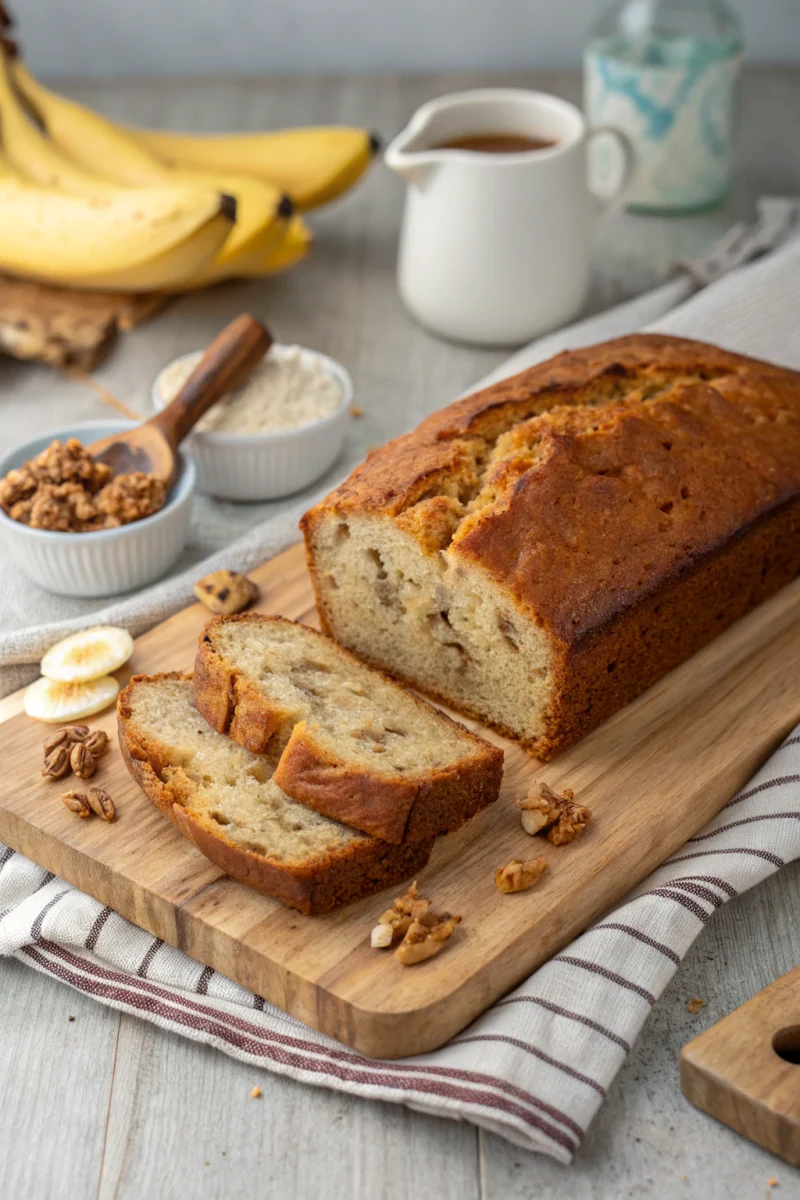
Banana Bread — The Ultimate Comfort Bake for Cozy Mornings
Banana Bread combines warmth, sweetness, and satisfying texture in every slice, making it the perfect start to a cozy morning or a delightful afternoon treat. This guide reveals how to make the perfect quick bread — comforting, wholesome, and deeply flavorful, crafted with chef-level technique and family-friendly ease.
Thank you for reading this post, don't forget to subscribe!Why Banana Bread Matters Year-Round
There’s something universally appealing about a freshly baked loaf of banana bread. Its inviting aroma alone can transform any kitchen into a haven of comfort. Beyond its sensory charm, banana bread serves as a fantastic way to utilize overripe bananas, preventing food waste while delivering a delicious and often nutritious baked item. It’s a versatile treat that can be enjoyed for breakfast, as a snack, or even a light dessert. During colder months, a warm slice provides a comforting embrace, while in warmer weather, it pairs beautifully with a cup of coffee or tea on the porch. Moreover, banana bread, when made with wholesome ingredients, can contribute valuable nutrients, offering a good source of energy, fiber, and essential minerals like potassium from the bananas themselves. It’s a staple in many households for its ease of preparation and its capacity to bring people together over a shared love for simple, homemade goodness.
Core Ingredients for Classic Banana Bread
Crafting the perfect loaf of banana bread starts with a precise selection of ingredients. Each component plays a crucial role in achieving that ideal balance of sweetness, moisture, and texture. Here’s what you’ll need for a standard 9×5 inch loaf:
- Ripe Bananas: 3 large, very ripe bananas (about 1 ½ cups mashed). These are the star of the show, providing natural sweetness and moisture. Their ripeness ensures a more intense banana flavor and makes them easier to mash into a smooth consistency. Unripe bananas will result in a less flavorful and drier loaf.
- All-Purpose Flour: 1 ½ cups. The foundation of the bread’s structure. While all-purpose flour is standard, you can experiment with whole wheat pastry flour for a slightly healthier, denser texture, or a blend of both.
- Granulated Sugar: ¾ cup. Provides sweetness and helps with browning. You can adjust the amount based on the ripeness of your bananas and your personal preference for sweetness. Brown sugar can also be used for a deeper, more molasses-like flavor.
- Unsalted Butter: ½ cup (1 stick), melted. Adds richness, moisture, and contributes to the tender crumb. Make sure it’s melted and slightly cooled before incorporating.
- Egg: 1 large, at room temperature. Acts as a binder, helping to hold the bread together and adding moisture. Room temperature eggs emulsify better with other ingredients.
- Baking Soda: 1 teaspoon. A leavening agent that reacts with the acid in the bananas to help the bread rise and achieve a light, airy texture.
- Salt: ½ teaspoon. Enhances all the other flavors and balances the sweetness. Don’t skip it!
- Vanilla Extract: 1 teaspoon. Adds a warm, aromatic depth that complements the banana flavor beautifully. Pure vanilla extract is always recommended over imitation for superior taste.
- Optional Add-ins: ½ cup chopped walnuts or pecans, ½ cup chocolate chips, or ½ teaspoon ground cinnamon. These can elevate your banana bread to another level, adding texture and additional layers of flavor.
Gathering these ingredients beforehand ensures a smooth and enjoyable baking process, leading to a perfectly balanced and delicious loaf every time.
Step-by-Step Method for Baking Perfect Banana Bread
Baking banana bread is a satisfying process that rewards patience and attention to detail. Follow these steps for a consistently delicious outcome.
Step 1 — Prepare your ingredients and oven
Begin by preheating your oven to 350°F (175°C). Lightly grease and flour a 9×5 inch loaf pan, or line it with parchment paper, leaving an overhang on the longer sides to easily lift the loaf out once baked. This preparation ensures your banana bread doesn’t stick and comes out cleanly. Next, mash your very ripe bananas in a medium bowl until mostly smooth, with a few small lumps remaining for texture, if desired. Set aside. In a separate small bowl, whisk together the flour, baking soda, and salt. This dry mix ensures even distribution of the leavening agents and seasoning throughout the batter, preventing pockets of unmixed ingredients.
Step 2 — Combine wet ingredients
In a large mixing bowl, combine the melted and slightly cooled unsalted butter with the granulated sugar. Whisk or beat them together until light and creamy, usually about 1-2 minutes. This creaming process incorporates air, which contributes to a lighter texture in the final bread. Beat in the egg until well combined, making sure it’s fully incorporated. Finally, stir in the vanilla extract, ensuring that all the liquid components are thoroughly mixed before moving on. The order of mixing is important here to create a stable emulsion that will support the structure of your banana bread.
Step 3 — Combine wet and dry ingredients
Gently fold the mashed bananas into the wet ingredient mixture. Be careful not to overmix at this stage; just combine until the banana is evenly distributed. Then, gradually add the dry ingredient mixture to the wet ingredients, mixing just until combined. Overmixing the flour activates gluten too much, which can lead to a tough and chewy banana bread. A few lumps of flour are perfectly acceptable and will disappear during baking. If you’re using optional add-ins like nuts or chocolate chips, fold them in now. This ensures they are evenly distributed without overworking the batter.
Step 4 — Bake and cool
Pour the batter evenly into your prepared loaf pan. You can sprinkle a little extra sugar or a few banana slices on top for a nice finish, but this is optional. Place the loaf pan in the preheated oven and bake for 50-65 minutes, or until a wooden skewer or toothpick inserted into the center of the loaf comes out clean. Baking time can vary depending on your oven and the moisture content of your bananas, so keep an eye on it. If the top starts to brown too quickly, you can loosely tent it with aluminum foil. Once baked, remove the banana bread from the oven and let it cool in the pan on a wire rack for about 10-15 minutes. This cooling period allows the bread to set and prevents it from crumbling when you remove it. After 10-15 minutes, carefully lift the banana bread out of the pan using the parchment paper overhang or invert it onto the wire rack to cool completely. Slicing warm banana bread is tempting, but allowing it to cool fully improves its texture and makes for cleaner slices. Enjoy your perfectly baked banana bread!
Nutrition Facts (per serving — estimated for 1/12th of a loaf)
Please note that these values are estimates and can vary based on specific ingredients, portion size, and add-ins. For a 1/12th slice of a standard loaf (without optional add-ins):
- Calories: Approximately 280-320 kcal
- Protein: 4-5g
- Carbohydrates: 45-55g (Sugars: 25-35g from bananas and added sugar)
- Fat: 10-15g (Saturated Fat: 6-9g)
- Fiber: 2-3g
- Sodium: 200-250mg
- Potassium: 150-200mg (primarily from bananas)
These figures highlight that while banana bread is a delicious treat, it is relatively calorie-dense due to the sugar and butter content. The natural sugars from ripe bananas contribute significantly, along with added sugars. The fat primarily comes from butter, while protein and fiber are present in moderate amounts. For more detailed nutritional information, especially concerning specific dietary needs, reliable sources like Harvard T.H. Chan School of Public Health provide excellent resources for understanding food composition.
Healthy Variations of Banana Bread
While classic banana bread is delicious, there are many ways to adapt the recipe to be even healthier without sacrificing flavor or moistness. These variations are especially useful if you are looking to reduce sugar, increase fiber, or add more beneficial ingredients.
- Reduced Sugar Options: The natural sweetness of very ripe bananas means you can often cut down on added sugar. Try reducing the granulated sugar by ¼ to ½ cup. For a completely unrefined sugar option, consider using pure maple syrup or honey but reduce other liquids slightly to maintain batter consistency, as liquid sweeteners contribute more moisture. You can also incorporate unsweetened applesauce (replace up to half the butter with an equal amount of applesauce) to naturally sweeten and add moisture while reducing fat.
- Whole Grains for More Fiber: Instead of all-purpose flour, use whole wheat flour or a combination of whole wheat and all-purpose flour. Whole wheat pastry flour is a great option as it has a finer grind and produces a less dense result than regular whole wheat flour. For an even greater fiber boost, consider adding 1/4 cup of rolled oats or ground flaxseed to the dry ingredients. These additions not only increase fiber but also add valuable nutrients and a slightly nutty flavor.
- Boost Protein and Healthy Fats: Incorporate protein-rich ingredients by stirring in ½ cup of Greek yogurt (plain, full-fat or low-fat) with the wet ingredients. This also adds moisture. For healthy fats, swap out some of the butter for coconut oil or a neutral-flavored olive oil. Also, adding nuts like walnuts, pecans, or almonds not only provides a satisfying crunch but also good fats and protein. Ground flax seeds or chia seeds mixed into the batter are another excellent way to add omega-3s and fiber.
- Add Vegetables or Fruits: Don’t limit yourself to just bananas! Finely grated carrots or zucchini (squeeze out excess moisture) can be folded into the batter for an extra dose of vegetables and moisture. Fresh or frozen berries (blueberries, raspberries) can also be added for antioxidants and a burst of fruity flavor, though remember frozen berries might add more moisture.
- Spice It Up: Enhance flavor without adding calories by incorporating warming spices such as cinnamon, nutmeg, allspice, or cardamom. These spices naturally complement the banana flavor and can create a more complex taste profile, reducing the perceived need for more sugar.
When making healthy adjustments, remember that changes to flour type, sugar, or fat content can alter the texture and moisture of the bread. It’s often best to make one or two changes at a time and see how they work. Always aim for very ripe bananas, as their natural sweetness and moisture are key to a delicious, healthier banana bread. For more insights on the nutritional benefits of adapting recipes, check out reputable sources like Healthline’s insights on healthy eating.
Serving Suggestions for Banana Bread
Banana bread is incredibly versatile and can be enjoyed in many ways. Here are some serving suggestions to elevate your experience:
- Classic & Simple: A warm slice of banana bread, perhaps lightly toasted, is perfect on its own with a cup of coffee or tea. The simplicity allows the inherent flavors of the bread to shine through.
- Breakfast Delight: Transform it into a more substantial breakfast by adding a spread. A smear of cream cheese, almond butter, or a dollop of Greek yogurt makes it more satisfying. For an extra touch, drizzle with a little honey or maple syrup.
- Dessert Upgrade: Serve a slice warm with a scoop of vanilla bean ice cream or a dollop of freshly whipped cream. A sprinkle of cinnamon or a drizzle of caramel sauce can turn it into an elegant dessert.
- Fruity Freshness: Pair your banana bread with fresh berries like strawberries, blueberries, or raspberries. The tartness of the fruit provides a delightful contrast to the sweet bread.
- Savory Touch: While less common, some enjoy a thin slice of banana bread with a mild cheese, like goat cheese or a spread of ricotta, for a sweet and savory experience.
- With a Side: Banana bread pairs wonderfully with a refreshing fruit salad if you’re serving it for brunch.
- Homemade Jams & Spreads: Offer a selection of homemade jams or fruit curds alongside your banana bread. A homemade berry jam or even a lemon curd can add a burst of flavor.
Whether you’re enjoying it solo or sharing with others, banana bread is a delightful treat for any time of day. Consider serving it alongside a homemade Garlic Herb Flatbread for a savory contrast in a meal setting, or concluding with Honey Oat Energy Bites for a complete sweet treat experience. The key is in personalizing your serving to match your mood and the occasion.
Common Banana Bread Mistakes to Avoid
Even though banana bread seems straightforward, there are several common pitfalls that can prevent your loaf from reaching its full potential. Avoiding these mistakes will ensure a consistently moist, flavorful, and perfectly textured banana bread every time.
- Using Under-ripe Bananas: This is perhaps the most frequent mistake. Under-ripe bananas are less sweet, lack the intense banana flavor, and don’t contribute enough moisture. The starch hasn’t fully converted to sugar, resulting in a drier, less flavorful bread. Always wait for bananas to be heavily spotted brown or even almost black. The softer they are, the better the flavor and moisture they’ll impart to your banana bread.
- Overmixing the Batter: Once you add the flour to the wet ingredients, mix *just* until the dry ingredients are incorporated. Overmixing develops the gluten in the flour too much, leading to a tough, chewy, and dense banana bread. A few lumps of flour are perfectly fine—they will bake out. Gentle folding is key here.
- Incorrect Oven Temperature: An oven that is too hot can cause the outside of the banana bread to brown and set too quickly, while the inside remains raw and undercooked. Conversely, an oven that is too cool can lead to a dense, fallen loaf. Always preheat your oven properly and consider using an oven thermometer to ensure accuracy. If the top is browning too fast, loosely tent with foil.
- Over-baking Your Loaf: Baking for too long will dry out your banana bread, making it crumbly and less enjoyable. Check for doneness at the lower end of the suggested baking time by inserting a wooden skewer or toothpick into the center. If it comes out clean or with a few moist crumbs attached, it’s done. A few moist crumbs are actually ideal for a truly moist loaf.
- Not Greasing the Pan Properly: A beautiful banana bread can be ruined if it sticks to the pan. Ensure your loaf pan is thoroughly greased and floured, or lined with parchment paper, especially in the corners and edges. This prevents sticking and allows for easy removal once cooled.
- Slicing Too Soon: It’s tempting to cut into a warm loaf straight from the oven, but banana bread needs time to cool in the pan and then on a wire rack. This cooling period allows the internal structure to set, preventing it from crumbling and making it easier to slice cleanly. Slicing too soon can result in a gummy texture.
- Ignoring Ingredient Temperature: Using cold eggs and butter can affect the texture of your banana bread. Room temperature ingredients emulsify better, creating a smoother, more uniform batter and a tender crumb. Plan ahead and take your eggs and butter out 30 minutes to an hour before baking.
- Adding Too Many Mix-ins: While nuts, chocolate chips, or dried fruit can enhance banana bread, adding too much can weigh down the batter, affecting its rise and texture. Stick to the recommended amounts, usually around ½ to ¾ cup total for a standard loaf.
By being mindful of these common errors, you can significantly improve your banana bread baking results, ensuring a delightful and perfectly baked treat every time. Mastering these small details is what elevates home baking to professional quality.
Storage Tips for Keeping Banana Bread Fresh
Once you’ve baked a delicious loaf of banana bread, you’ll want to ensure it stays fresh and moist for as long as possible. Proper storage is key to extending its shelf life and preserving its delightful texture and flavor.
Room Temperature Storage (2-4 days)
For immediate consumption within a few days, storing banana bread at room temperature is ideal. Make sure the loaf has cooled completely on a wire rack before storing it. This prevents condensation from forming, which can make the bread soggy and encourage mold growth.
- Airtight Container: Wrap the entire loaf or individual slices tightly in plastic wrap, then place it in an airtight container. This double layer of protection helps retain moisture.
- Aluminum Foil: Alternatively, you can wrap the banana bread securely in aluminum foil. This also helps seal in freshness.
- Location: Store it in a cool, dry place away from direct sunlight. A pantry or countertop is usually fine. Avoid storing it in the refrigerator for short periods, as the cold can dry it out quickly and alter its texture, making it dense.
When stored correctly at room temperature, freshly baked banana bread will remain moist and delicious for about 2 to 4 days.
Refrigeration (Up to 1 week)
If you need to extend the freshness beyond a few days or if your kitchen is particularly warm and humid, refrigeration is an option, though it can slightly alter the texture.
- Wrap Tightly: Again, ensure the banana bread is completely cool, then wrap it very tightly in plastic wrap or aluminum foil. You can also place the wrapped bread into an airtight container or a large resealable bag. This is crucial to protect it from drying out in the cold, dry refrigerator air.
- Lifespan: Stored this way, banana bread can last for about 1 week in the refrigerator.
- Reheating: To enjoy it warm, gently reheat individual slices in a microwave for 15-30 seconds or in a toaster oven for a few minutes until warmed through and slightly crisp on the edges.
Freezing (Up to 3 months)
Freezing is an excellent option for long-term storage, allowing you to enjoy homemade banana bread for months.
- Cool Completely: This step is non-negotiable for freezing. Freezing warm bread will lead to ice crystals and freezer burn.
- Slice or Whole Loaf: You can freeze the entire loaf or individual slices. Freezing slices is convenient for thawing only what you need.
- Wrap Properly: For a whole loaf, wrap it first in plastic wrap, then in a layer of aluminum foil, ensuring no air pockets. For individual slices, wrap each slice in plastic wrap, and then either place them all in a large freezer bag or wrap the bundle again in foil.
- Air-Tight Container: For extra protection against freezer burn, place the foil-wrapped loaf or slices into an airtight freezer-safe container or bag.
- Lifespan: Properly frozen banana bread can last for up to 3 months. For optimal flavor and texture, try to consume it within 1-2 months.
- Thawing: To thaw, simply take the banana bread (whole or slices) from the freezer and let it sit at room temperature for several hours or overnight. You can also gently reheat thawed slices in a microwave or toaster oven.
By following these storage tips, your homemade Banana Bread will remain a delightful treat, ready to be enjoyed whenever a craving strikes, maintaining its moist, flavorful profile. For further reading on food safety and storage, resources like Medical News Today offer comprehensive guides on keeping various foods fresh.
Conclusion
Banana Bread proves that humble ingredients can transform into a truly extraordinary comfort bake. From the initial mash of overripe bananas to the satisfying aroma filling your kitchen, every step in crafting this classic quick bread is a rewarding experience. This comprehensive guide has walked you through not just the essential ingredients and precise steps, but also how to adapt the recipe for healthier variations, avoid common pitfalls, and store your delicious creation to maximize freshness. Whether enjoyed warm from the oven for a cozy breakfast, as a satisfying snack, or even a simple dessert, a perfectly baked loaf of banana bread offers a unique blend of sweetness, moisture, and heartwarming flavor. It’s a timeless treat that brings comfort and joy in every slice, making it a beloved staple in homes around the world. Mastering the art of banana bread is not just about following a recipe; it’s about creating a moment of pure, unadulterated pleasure that can be shared or savored in quiet solitude, a warmth in every bite.
FAQ
- Can I use frozen bananas? Yes! Just thaw them completely and drain any excess liquid before mashing. They may be a bit more watery but will work perfectly and intensify the banana flavor.
- How can I make it extra moist? Ensure you use very ripe (spotted) bananas, don’t overmix the batter, and avoid over-baking. Adding a couple of tablespoons of sour cream or Greek yogurt to the wet ingredients can also boost moisture.
- What’s the best pan size for banana bread? A standard 9×5 inch loaf pan is ideal. Using a different size might require adjusting baking times.
- How long does it last? At room temperature, it lasts 2-4 days. Refrigerated, up to 1 week. Frozen, up to 3 months.
- Can I make this recipe into muffins? Absolutely! Reduce the baking time to approximately 20-25 minutes at the same temperature. Fill muffin liners about two-thirds full.
- My banana bread sank in the middle, what happened? This is often caused by overmixing the batter, too much leavening, an oven that isn’t hot enough, or opening the oven door too early during baking.
- Why did my banana bread turn out dry? Most likely, it was over-baked. Check for doneness at the lower end of the baking time with a toothpick. Using under-ripe bananas can also contribute to dryness.
- Can I use oil instead of butter? Yes, you can substitute a neutral oil like vegetable oil, canola oil, or melted coconut oil for butter, using the same amount. This will result in a slightly denser crumb.
- Do I need to sift the flour? Sifting isn’t strictly necessary for banana bread, but it does help to create a lighter, more tender crumb by aerating the flour and removing any lumps. If you don’t sift, whisking the dry ingredients thoroughly is a good alternative.
- Can I add spices like cinnamon or nutmeg? Yes, adding ½ to 1 teaspoon of ground cinnamon or ¼ teaspoon of nutmeg (or both) greatly enhances the flavor of banana bread.
- Why does my banana bread burn on top before it’s cooked through? This usually means your oven is too hot or the top is too close to the heating element. Try tenting the loaf loosely with aluminum foil for the last half of the baking time, and if possible, move the oven rack to a lower position.
- What other fruit can I add? While it’s called banana bread, you can certainly add other fruits. Blueberries, raspberries, diced apples, or even shredded zucchini can be folded in. Just be mindful that fruits with high water content might need a slightly longer baking time.
- Is it better to use salted or unsalted butter? Unsalted butter is generally preferred in baking as it gives you more control over the salt content of the recipe. If you only have salted butter, omit the added salt in the recipe or reduce it by ¼ teaspoon.
Healthline — Banana Bread Health Benefits,
Harvard Nutrition Source for Banana Bread,
Medical News Today — Banana Bread Nutrition

creates quick vegetarian dinners and vibrant taco recipes.