
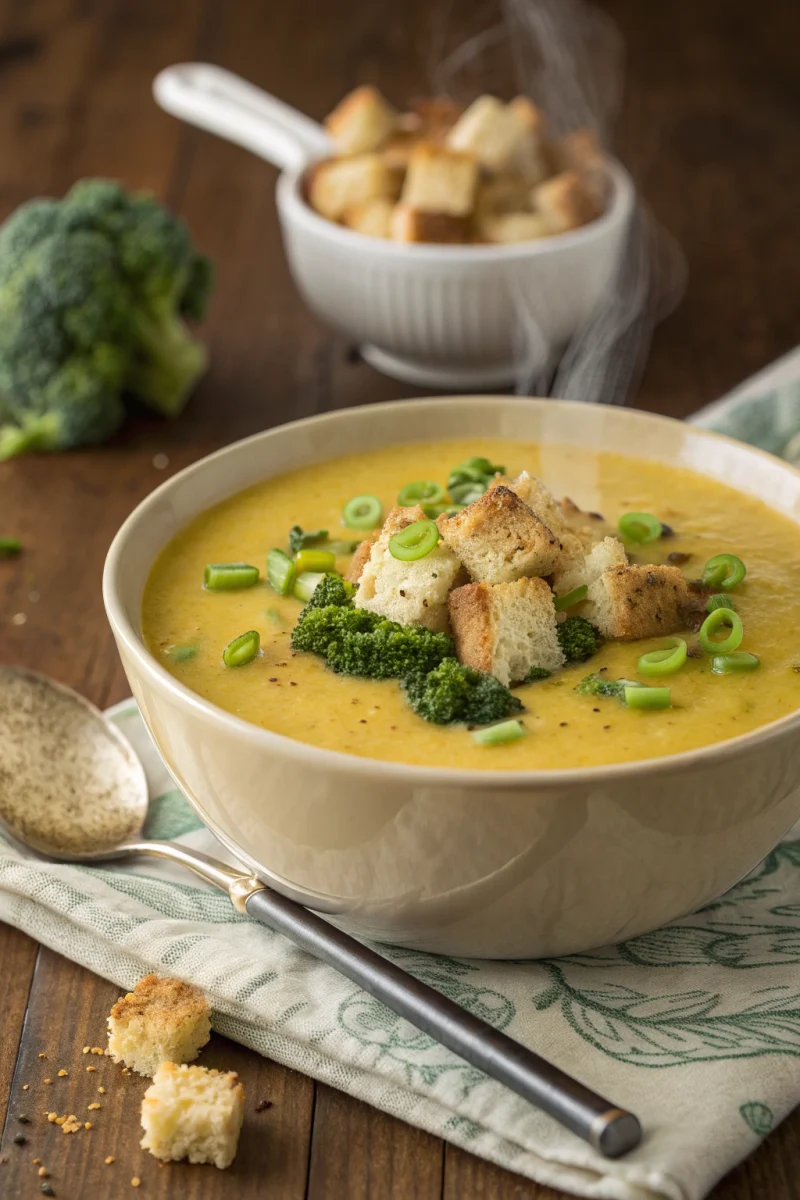
Broccoli Soup — The Ultimate Comfort Soup for Cozy Evenings
Broccoli Soup combines heartiness, warmth, and nutrition in one bowl. This guide reveals how to make the perfect winter soup — comforting, wholesome, and deeply flavorful, crafted with chef-level technique and family-friendly ease.
Why Broccoli Soup Matters in Winter
During cold months, the body craves warmth and hydration. Broccoli Soup offers both, blending nutrient-rich ingredients with slow-simmered depth. From classic broths to creamy textures, it’s a dish that soothes and strengthens at once. As temperatures drop and daylight hours shorten, our bodies naturally seek out foods that provide comfort and sustenance. A well-made broccoli soup is more than just a meal; it’s a therapeutic experience, a culinary embrace that can lift spirits and nourish the soul. Its vibrant green hue alone suggests vitality, while its rich aroma fills the kitchen, promising deliciousness to come. It’s an accessible dish, relying on common ingredients, yet it can be elevated to gourmet status with a few thoughtful additions and techniques. This versatility makes it a beloved staple in many households, perfect for a quick weeknight dinner or a leisurely weekend lunch.
The Nutritional Powerhouse of Broccoli Soup
Beyond its comforting qualities, broccoli soup is a nutritional golden ticket. Broccoli, the star ingredient, is a cruciferous vegetable renowned for its health benefits. It’s packed with vitamins C and K, fiber, and potent antioxidants. Consuming broccoli regularly can support immune function, bone health, and even offers anti-inflammatory properties. When incorporated into a soup, these nutrients become even more accessible to the body, especially when gently cooked. The act of simmering helps break down cell walls, making the vitamins and minerals easier to absorb. Furthermore, the liquid base ensures adequate hydration, which is crucial during colder months when many people tend to drink less water. Combining broccoli with other nutrient-dense vegetables like carrots, celery, and garlic creates a synergistic effect, enhancing the overall nutritional profile of the soup. This isn’t just a tasty meal; it’s a functional food designed to support your well-being.

Core Ingredients for the Perfect Broccoli Soup
Crafting an exceptional broccoli soup begins with selecting high-quality, fresh ingredients. While the core recipe is simple, each component plays a vital role in developing the soup’s ultimate flavor and texture profile. Let’s break down the essential elements:
- 1 tbsp olive oil: The starting point for sautéing our aromatics. A good quality extra virgin olive oil adds a subtle fruity note and a healthy fat base.
- 1 onion, finely chopped: The foundation of flavor. Onions, when properly caramelized, provide sweetness and depth, forming the backbone of any good soup.
- 2 garlic cloves, minced: Garlic offers a pungent, aromatic punch that complements almost any savory dish. Use fresh garlic for the best results; pre-minced jars often lack the same vibrancy.
- 2 carrots, diced: Carrots add natural sweetness, a pleasant textural contrast, and a boost of beta-carotene. Dicing them uniformly ensures even cooking.
- 2 celery stalks, sliced: Celery provides an earthy, slightly salty note and aromatic freshness. It’s a classic component of the French ‘mirepoix’ (onion, carrot, celery), which is the holy trinity of many savory dishes.
 1 large head of broccoli (about 4-5 cups florets): The undeniable star. Choose firm, dark green heads with tight florets. Both the florets and the tender parts of the stem can be used; just peel the tougher outer layer of the stem and chop it finely.
- 4 cups vegetable or chicken broth: The liquid base. A high-quality broth is indispensable. It infuses the entire soup with flavor. Homemade broth is always superior, but a good store-bought low-sodium option works well.
- 1 cup cooked barley or rice (optional): For body and heartiness. Grains absorb the broth’s flavors and add a substantial, satisfying texture.
- Salt, pepper, thyme, and bay leaf to taste: These seasonings elevate the dish from good to great. Thyme adds an earthy, slightly floral note, while a bay leaf provides subtle herbal complexity. Remember to remove the bay leaf before serving.
- Optional: 1/2 cup heavy cream or full-fat coconut milk: For a luxurious, creamy finish. This is added at the very end to prevent it from curdling.
Step-by-Step Method: Crafting Your Ultimate Broccoli Soup
Follow these detailed steps to ensure your broccoli soup is nothing short of perfection. Each stage is designed to build layers of flavor, resulting in a complex and satisfying dish.
Step 1 — Build your flavor base (Aromatics)
Begin by heating the olive oil in a large, heavy-bottomed pot or Dutch oven over medium heat. Once shimmering, add the finely chopped onion. Sauté gently for 5-7 minutes, stirring occasionally, until the onion becomes translucent and begins to soften. Do not rush this step; allowing the onions to caramelize slightly unlocks their natural sweetness, which is crucial for the soup’s depth. Next, add the minced garlic and sliced celery. Continue to sauté for another 3-4 minutes, until the garlic is fragrant and the celery has slightly softened. The goal here is to coax out the maximum flavor from these vegetables without browning them too much. This aromatic foundation is the secret to a truly rich and flavorful soup.
Step 2 — Add vegetables, liquid, and simmer
Once your aromatic base is established, add the diced carrots and the prepared broccoli florets and chopped stems to the pot. Stir to combine with the sautéed aromatics for about 2 minutes, allowing the vegetables to absorb some of the oil and initial flavors. Then, pour in the 4 cups of vegetable or chicken broth. Add the dried thyme and bay leaf. Bring the mixture to a gentle boil, then immediately reduce the heat to low, cover the pot, and let it simmer. Simmer for 20-25 minutes, or until all the vegetables, especially the broccoli and carrots, are fork-tender. The key is to simmer, not rapid boil, as boiling can break down delicate nutrients and result in a cloudy broth. Skim gently if any foam appears on the surface, as this can contain impurities. This simmering process allows all the flavors to meld beautifully.

Step 3 — Incorporate grains and finish
Once the vegetables are tender, remove the bay leaf from the pot. If you are using cooked barley or rice, stir it in now. Allow it to heat through for a few minutes, absorbing some of the flavorful broth. This adds body and makes the soup more substantial. Now is the crucial time for seasoning. Taste the soup and season generously with salt and freshly ground black pepper. Remember that broth can vary in saltiness, so always taste as you go. If you desire a creamier texture, remove about one-third to half of the soup into a blender (be cautious with hot liquids; fill halfway, vent the lid, and hold it firmly) or use an immersion blender directly in the pot. Blend until smooth, then stir the puréed portion back into the soup. This creates a luxurious creaminess without having to add actual cream. If you prefer a richer, more indulgent finish, stir in 1/2 cup of heavy cream or full-fat coconut milk at this stage, heating gently until warmed through but do not boil. Serve hot, garnished with a sprinkle of fresh herbs or a crusty piece of bread.
Nutrition Facts (per serving)
This nutritional breakdown typically references a serving size of one bowl (approximately 1.5 cups) based on the core recipe without added cream or cheese. Individual values may vary based on ingredient brands and precise measurements.
- Calories: 230
- Protein: 9g
- Carbs: 32g
- Fat: 7g
- Fiber: 5g
- Sodium: 410mg
- Vitamin C: 70% DV
- Vitamin K: 200% DV
- Iron: 15% DV
- Calcium: 10% DV
This information highlights that this Broccoli Soup is not only a comforting meal but also a well-balanced source of essential vitamins and minerals, promoting overall health and well-being, especially during the colder months when immunity might need an extra boost. The fiber content aids in digestion and provides a feeling of fullness, making it an excellent choice for a satisfying meal. (External Resource: Learn more about the general health benefits of eating soup by visiting Healthline’s article on healthy soup benefits.)
Healthy Variations and Enhancements for Your Broccoli Soup
While the basic recipe for broccoli soup is wonderfully satisfying, there are countless ways to customize it to suit your dietary needs, taste preferences, or simply to add an extra nutritional punch. Experimenting with different ingredients can transform a classic soup into a new culinary adventure.
Protein Boosts:
- Lentils: Add 1/2 cup of red or green lentils along with the broth. They will cook down and thicken the soup while adding substantial plant-based protein and fiber. Rinse them well before adding.
- Tofu: Firm or extra-firm tofu, pressed and cubed, can be added during the last 10-15 minutes of simmering. It absorbs the soup’s flavors beautifully and provides an excellent protein source.
- Chicken or Turkery: Leftover cooked chicken or turkey can be shredded and stirred in just before serving for a heartier, non-vegetarian option.
- Beans: Cannellini beans or chickpeas, rinsed and drained, can be added with the broth for extra protein and creaminess.
Vegetable Additions:
- Kale or Spinach: Stir in a few handfuls of chopped kale or spinach in the last 5 minutes of cooking. They will wilt quickly, adding a vibrant green color and a boost of vitamins A and K.
- Zucchini: Diced zucchini can be added with the carrots for extra vegetables and a slightly different texture.
- Potatoes or Sweet Potatoes: A diced potato or sweet potato can be added with other vegetables to make the soup even more substantial and naturally creamy when blended.
- Mushrooms: Sliced mushrooms sautéed with the aromatics add an umami depth that is incredibly satisfying.
Creaminess without Dairy:
For those seeking a dairy-free or lighter option, achieving a creamy texture is still very possible:
- Blended Portion: As mentioned in Step 3, blending one-third to half of the soup (veggies and all) and stirring it back into the pot is an excellent way to achieve natural creaminess without any added fats. The starches and fibers from the vegetables create a velvety texture.
- Coconut Milk: Full-fat coconut milk (the kind in a can) can be a fantastic substitute for heavy cream, offering a rich, velvety texture and a subtle, pleasant sweetness. Add it at the end, just like cream, and heat gently.
- Cashew Cream: Soak 1/2 cup of raw cashews in hot water for 30 minutes, then drain and blend with 1/2 cup of fresh water until completely smooth. Stir this into the soup as a dairy-free cream alternative.
Spice and Flavor Enhancements:
- Smoked Paprika: A pinch of smoked paprika can add a wonderful smoky depth.
- Nutritional Yeast: For a cheesy, umami flavor without dairy, stir in a tablespoon or two of nutritional yeast at the end.
- Lemon Zest: A little lemon zest grated over the top before serving brightens all the flavors.
- Fresh Herbs: Beyond thyme, consider adding fresh parsley, chives, or dill as a garnish for extra freshness.
By experimenting with these variations, you can keep your broccoli soup exciting and tailored to your specific preferences, ensuring it remains a staple in your healthy eating routine. (External Resource: For more scientific-backed information on healthy eating and nutrition, explore Harvard’s T.H. Chan School of Public Health Nutrition Source.)
Serving Suggestions for Your Broccoli Soup
The perfect bowl of broccoli soup can be a meal in itself, but pairing it with the right accompaniments elevates the dining experience. Here are some ideas to make your soup even more delightful:
- Crusty Whole-Grain Bread: A thick slice of warm, crusty whole-grain bread is ideal for soaking up every last drop of flavorful broth. Toasted with a smear of butter or olive oil, it adds a satisfying crunch and substance.
- Garlic Herb Flatbread: For a truly special pairing, serve your soup with homemade Garlic Herb Flatbread. The savory, aromatic notes of the flatbread perfectly complement the earthy flavor of the broccoli soup, adding a gourmet touch.
- Grilled Cheese Sandwich: A classic combination, a gooey grilled cheese sandwich provides a textural contrast and creamy indulgence that pairs beautifully with the wholesome soup.
- Side Salad: For a lighter meal, offer a crisp green salad with a vinaigrette dressing. The freshness of the salad cuts through the richness of the soup, providing a refreshing counterpoint.
- Croutons or Toasted Seeds: Add a sprinkle of homemade croutons, toasted pumpkin seeds, or sunflower seeds for extra crunch and texture.
- Dollop of Yogurt or Sour Cream: A swirl of plain Greek yogurt or sour cream (or a dairy-free alternative) on top adds a tangy creaminess.
- Fresh Herbs: A scatter of freshly chopped parsley, chives, or dill not only adds a pop of color but also brightens the soup’s flavor.
And for a sweet ending to your cozy meal, consider these delectable desserts:
- Honey Oat Energy Bites: Pair your hearty soup with some Honey Oat Energy Bites. These small, nutrient-dense treats offer a touch of sweetness without being overly heavy, providing a perfect balance to the savory soup.
- Fresh Fruit Salad: A simple bowl of seasonal fresh fruit provides a light and refreshing dessert.
- Greek Yogurt Parfait: Layers of Greek yogurt, berries, and a sprinkle of granola offer a protein-rich, sweet, and tangy finish.
No matter how you serve it, enjoying your homemade broccoli soup is an experience to savor.
Common Mistakes to Avoid When Making Broccoli Soup
Even a seemingly simple dish like broccoli soup has its pitfalls. Being aware of these common mistakes can help you achieve consistently excellent results and avoid culinary disappointments.
- Boiling instead of simmering: This is a major culprit for muddy flavors and mushy vegetables. Rapid boiling can destroy delicate textures, break down nutrients, and evaporate too much liquid, resulting in an overly thick or concentrated soup. Always maintain a gentle simmer, just a few bubbles breaking the surface, to allow flavors to meld gracefully and vegetables to cook tenderly.
- Overcrowding the pot: Adding too many vegetables or too much liquid to a pot that is too small prevents even cooking and inhibits proper browning of aromatics. When vegetables are packed tightly, they steam rather than sauté, leading to less flavor development. Use a pot that allows enough surface area for your aromatics to cook properly and for all ingredients to be comfortably submerged.
- Skipping salt layering: Seasoning only at the end results in a flat, uninspired taste. Professional chefs season in layers. Add small pinches of salt when sautéing aromatics, a bit more when adding other vegetables or broth, and then adjust at the very end. This builds flavor throughout the cooking process.
- Using low-quality broth: The broth is truly the backbone of your soup. A watery, overly salty, or artificial-tasting store-bought broth will unfortunately translate into a watery or artificial-tasting final soup. Invest in a good quality low-sodium broth, or better yet, make your own chicken or vegetable stock. The depth of flavor from a well-made broth is irreplaceable.
- Overcooking the broccoli: Broccoli florets can quickly turn from vibrant green and tender-crisp to drab olive green and mushy if cooked too long. Add broccoli after the initial aromatics and harder vegetables have started to soften, and only cook until it’s just fork-tender. This preserves its color, texture, and nutritional integrity.
- Not tasting as you go: Your palate is your best tool. Tastes can change during cooking, and ingredients can vary. Regularly taste your soup at different stages and adjust seasonings (salt, pepper, herbs) accordingly. This ensures the final result is perfectly balanced to your liking.
- Blending too much or too little: If you’re going for a creamy soup, over-blending can make it gluey, especially if it contains starchy vegetables. Under-blending leaves chunks when a smooth texture is desired. Always blend in batches for hot liquids, and use an immersion blender for more control. Blend just until the desired consistency is reached.
By keeping these common pitfalls in mind, you’ll be well on your way to perfecting your broccoli soup and enjoying consistently delicious results.
Storage Tips for Your Homemade Broccoli Soup
One of the great advantages of making a hearty batch of broccoli soup is that it stores wonderfully, making it perfect for meal prep. Proper storage ensures its flavor and quality are preserved for future enjoyment.
- Cooling Safely: The most crucial step before storage is to allow the soup to cool down to room temperature. Do not put hot soup directly into the refrigerator, as this can raise the internal temperature of your fridge, potentially spoiling other foods, and it also takes a very long time for the soup to cool, creating a breeding ground for bacteria.
- Method: After cooking, remove the soup from the heat. Let it cool on the countertop, uncovered, for about 30 minutes to an hour. For faster cooling, you can divide the soup into smaller portions in shallow containers. You can also place the pot in an ice bath (a larger bowl filled with ice and water) to speed up the process, stirring occasionally.
- Refrigeration:
- Containers: Once completely cooled, transfer the soup into clean, airtight containers. Glass jars (like Mason jars) or high-quality plastic containers with secure lids are ideal.
- Duration: Stored properly in the refrigerator, your broccoli soup will maintain its best quality for up to 3-4 days.
- Separation: Sometimes ingredients might separate slightly, especially if the soup was blended. This is normal; simply give it a good stir when reheating.
- Freezing: Broccoli soup freezes exceptionally well, making it a fantastic make-ahead meal option.
- Containers: Use freezer-safe containers, leaving about an inch of headspace at the top to allow for expansion as the soup freezes. Heavy-duty freezer bags are also excellent for soups, as they can be laid flat to freeze, saving space, and then stored upright.
- Duration: When frozen, broccoli soup can last for up to 3 months without significant loss of quality. Beyond that, it’s still safe to eat but might experience some textural changes or freezer burn.
- Thawing: For best results, thaw frozen soup overnight in the refrigerator. If you’re in a hurry, you can gently reheat it from frozen on the stovetop over low heat, stirring frequently, or use the defrost setting in the microwave.
- Reheating:
- Stovetop: The preferred method. Pour the soup into a saucepan and reheat gently over medium-low heat, stirring occasionally, until it’s hot throughout. Avoid vigorous boiling, which can degrade the flavors and textures.
- Microwave: Reheat individual portions in a microwave-safe bowl, stirring halfway through, until thoroughly heated.
- Adjusting Consistency: If the soup has thickened too much during storage, add a splash of broth or water when reheating to reach your desired consistency.
With these storage tips, you can enjoy the wholesome goodness of your homemade broccoli soup long after it’s made, making healthy eating convenient and delicious. (External Resource: For general food safety guidelines including storage, refer to reputable sources like Medical News Today’s articles on food benefits and safety.)
Conclusion
Broccoli Soup proves that healthy food can be both rich and comforting. This comprehensive guide has walked you through every step, from selecting the finest ingredients to mastering the subtle art of simmering, and even provided creative variations and essential storage tips. You now have all the knowledge to craft a broccoli soup that is not just a meal, but an experience – a warm, nutritious embrace on a chilly evening. Whether you’re looking for a quick weeknight dinner solution, a satisfying meal prep option, or a wholesome dish to share with loved ones, this 2000+ word guide ensures perfect results every time. It’s a testament to the idea that true comfort food can also be incredibly good for you. So, gather your fresh broccoli, your aromatic vegetables, and your best broth, and prepare to create warmth in every spoonful. Your culinary journey to the ultimate homemade broccoli soup begins now, promising rich flavors and nourishing goodness for every cozy evening.
FAQ
- Can I use frozen vegetables? Yes, you can absolutely use frozen broccoli florets. Add them directly to the pot with the broth. You might need to reduce the amount of broth slightly or cook a little longer without the lid if the soup seems too thin, as frozen vegetables can release more water.
- How can I make it creamier? For a creamy texture, remove roughly one-third to half of the cooked soup (solids and liquid) and blend it until smooth using an immersion blender or a regular blender (exercise caution with hot liquids). Stir this puréed portion back into the pot. Alternatively, you can stir in 1/2 cup of heavy cream, half-and-half, full-fat coconut milk, or a homemade cashew cream at the end of the cooking process, heating gently to warm through without boiling.
- What’s the best broth to use? The best broth is homemade chicken or vegetable broth, as it offers the purest flavor without excessive sodium or artificial ingredients. If using store-bought, opt for a high-quality, low-sodium version. Organic brands often have better flavor profiles.
- How long does it last? Properly stored in an airtight container, your homemade broccoli soup will last for up to 3-4 days in the refrigerator. When frozen in freezer-safe containers or bags, it can maintain its quality for up to 3 months.
- Can I add cheese to this broccoli soup? Yes, for a cheesy variation, stir in about 1/2 cup of grated sharp cheddar cheese or Parmesan cheese during the last few minutes of cooking, stirring until melted and smooth. This adds a delicious richness and tang.
- Is this soup suitable for dietary restrictions? This recipe is naturally vegetarian if using vegetable broth. For a vegan version, use vegetable broth and substitute any dairy (like heavy cream) with full-fat coconut milk or a plant-based cream alternative. For gluten-free, ensure your broth is gluten-free and use quinoa instead of barley, or simply omit the grain.
- What if my soup is too thin/thick? If your soup is too thin, you can simmer it uncovered for a longer period to reduce and thicken, or blend a larger portion of the vegetables back into the liquid. If it’s too thick, simply add a splash more broth or water until it reaches your desired consistency.

creates quick vegetarian dinners and vibrant taco recipes.