
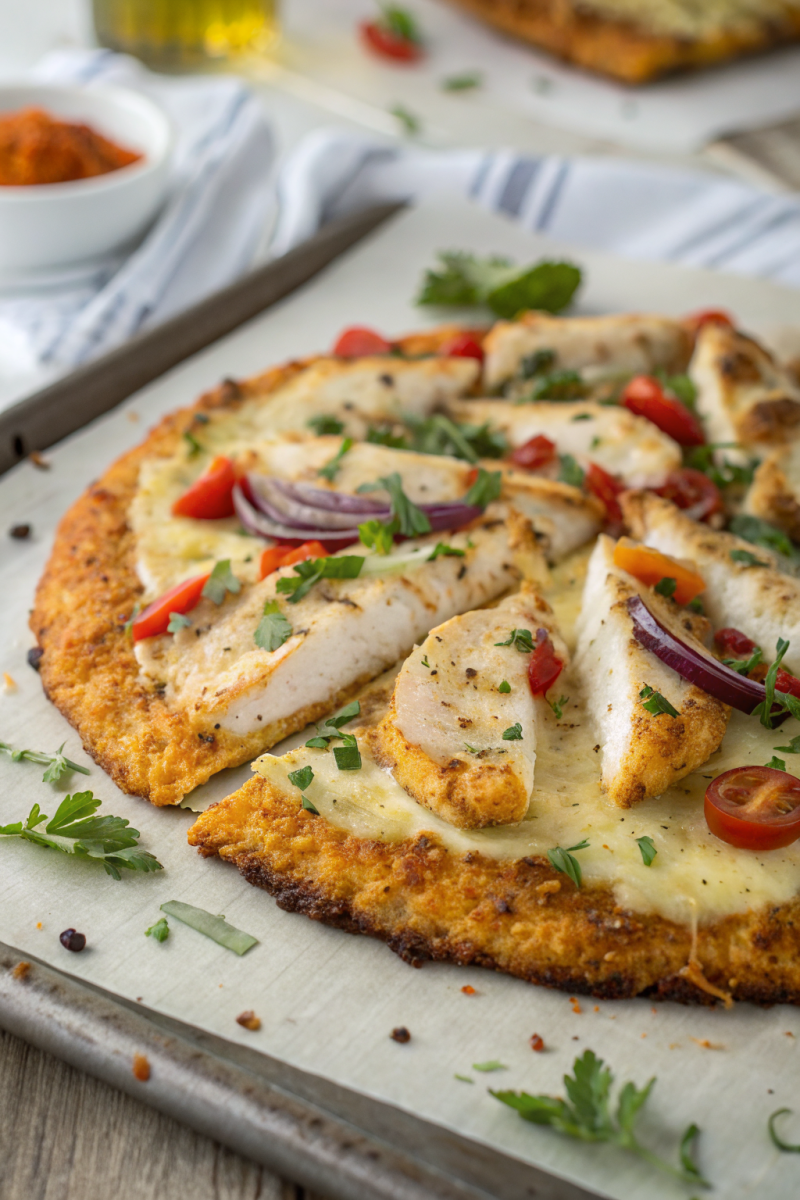
Introduction
Chicken crust pizza is not just a culinary trend; it’s a revolutionary approach to pizza that offers significant health benefits. For those adhering to a Keto or Gluten-Free diet, this alternative crust provides a low-carb option that doesn’t compromise on flavor or texture. The use of ground chicken creates a uniquely satisfying base that crisps beautifully when baked, resembling traditional pizza crust while ensuring a higher protein content. This guide will delve into the intricacies of creating chicken crust pizza, equipping you with the knowledge to create a healthy, delicious meal.
To learn more about innovative cooking techniques, visit Home Cook Legacy.
Deep Ingredient Analysis
Understanding each ingredient’s role in chicken crust pizza is crucial for achieving the perfect texture and flavor. Below, we will analyze the key components that come together to create this dish.
Ground Chicken
At the heart of the chicken crust pizza is ground chicken. The choice of ground chicken is essential, as its moisture content plays a critical role in achieving the right dough-like consistency. Ground chicken typically contains about 70-80% moisture, which can lead to a soft crust if not managed properly. This moisture must be balanced through cooking techniques, such as pre-baking, to prevent a soggy base.
Mozzarella Cheese
Mozzarella cheese is a quintessential ingredient in pizza, providing both flavor and a chewy texture. Its high moisture content, however, can be tricky; thus, using part-skim mozzarella is often recommended. This variety has less moisture than whole-milk mozzarella and allows for a more stable crust. The melted cheese also acts as a binder, helping to hold the chicken mixture together during baking.
Parmesan Cheese
Parmesan cheese adds depth of flavor and a subtle nuttiness to the crust. It has a lower moisture content compared to mozzarella, which aids in firming up the crust. The aged characteristics of Parmesan contribute to a more complex flavor profile, enhancing the overall taste without adding excessive moisture.
Almond Flour
Almond flour is an excellent gluten-free alternative that contributes to the crust’s structure. Its low carbohydrate content makes it suitable for keto diets, and it adds a subtle nutty flavor. Almond flour also helps absorb some of the excess moisture from the chicken, preventing the crust from becoming gummy.
Eggs
Eggs serve as a binding agent, ensuring that all ingredients meld together seamlessly. They also provide richness and moisture. The proteins in eggs coagulate during baking, which helps the crust hold its shape and adds to the overall texture.
Seasonings
Seasonings such as garlic powder, onion powder, salt, and pepper are crucial for flavor enhancement. They elevate the overall taste of the crust, making it a delightful base for various toppings. The right balance of spices can significantly impact the final dish’s flavor profile.
Herbs
Fresh or dried herbs, like oregano and basil, contribute aromatic qualities, evoking the classic pizza flavor. Incorporating herbs into the crust not only enhances flavor but also adds visual appeal.
Optional Add-ins
While the base recipe is already delicious, optional add-ins such as finely chopped vegetables (like bell peppers or spinach) can add nutritional value and flavor complexity. However, care must be taken with moisture levels since adding too many vegetables can lead to a soggy crust.
The “Gear” Guide
To successfully create chicken crust pizza, having the right equipment is paramount. Below is a detailed list of essential tools and their roles in the cooking process.
Parchment Paper
Parchment paper is essential for preventing the crust from sticking to baking sheets. It also aids in achieving a crispy bottom as it allows for moisture to escape while baking.
Baking Sheets
Use a sturdy baking sheet to support the weight of the chicken mixture. A rimmed baking sheet can help contain any drips, ensuring your oven remains clean.
Mixing Bowls
Use a large mixing bowl to combine all ingredients thoroughly. A medium bowl is also useful for cracking and beating eggs before incorporating them into the mixture.
Measuring Cups and Spoons
Accurate measurements are crucial for replicating the recipe. Ensure you have both measuring cups and spoons for dry and liquid ingredients.
Food Processor
A food processor can greatly speed up the grinding process for chicken if you choose to use whole chicken breasts. It can also help finely chop vegetables if you opt to add them.
Spatula or Spoon
A sturdy spatula or spoon is necessary for mixing the ingredients and spreading the chicken mixture evenly on the baking sheet.
Oven Thermometer
Oven temperatures can vary, so using an oven thermometer ensures that your baking temperature is accurate, which is critical for achieving the desired crust texture.
Cooling Rack
A cooling rack is useful for allowing the crust to cool slightly after baking, preventing it from becoming soggy due to trapped steam.
Surgical Step-by-Step Instructions
Creating the perfect chicken crust pizza requires precision and attention to detail. Follow these step-by-step instructions meticulously for optimal results.
1. Preheat the Oven
Start by preheating your oven to 400°F (200°C). This temperature is ideal for cooking the chicken and achieving a crispy crust.
2. Prepare the Chicken
If using whole chicken breasts, chop them into smaller pieces and process them in a food processor until finely ground. The mixture should resemble a thick paste without large chunks, ensuring even cooking.
3. Mix Ingredients
In a large mixing bowl, combine the ground chicken with part-skim mozzarella, Parmesan cheese, almond flour, and eggs. Add garlic powder, onion powder, salt, pepper, and any herbs you desire. The mixture should be well combined, with no dry patches of flour remaining.
4. Assess Moisture Content
Before transferring the mixture to the baking sheet, assess the moisture content. If it appears too wet, add a tablespoon of almond flour until it reaches a manageable consistency.
5. Prepare the Baking Sheet
Line a baking sheet with parchment paper. This step is crucial for preventing sticking and promoting crispiness. The parchment paper should cover the entire surface, with excess hanging off the edges.
6. Spread the Mixture
Using a spatula, scoop the chicken mixture onto the prepared baking sheet. Press the mixture down firmly, spreading it out evenly to form a uniform layer. Aim for a thickness of about 1/4 inch. This thickness ensures even cooking and crisping.
7. Bake the Crust
Place the baking sheet in the preheated oven. Bake for approximately 20-25 minutes, or until the edges are golden brown and the top is firm to the touch. You should start to smell a savory aroma as it cooks.
8. Check for Doneness
Visually inspect the crust. It should look golden and slightly puffed. To check, gently press the center with a spatula; it should feel firm. If it still feels soft, return it to the oven for an additional 5 minutes.
9. Remove and Cool
Once baked, remove the crust from the oven and allow it to cool on the baking sheet for about 5 minutes. Then, carefully transfer it to a cooling rack to prevent steam buildup underneath.
10. Add Toppings
Once cooled, top your chicken crust with your desired sauce, cheese, and toppings. Ensure not to overload it, as the crust may become soggy.
11. Final Bake
Return the topped pizza to the oven and bake for an additional 10-15 minutes, or until the cheese is melted and bubbly. The aroma will be enticing, signaling that it’s nearly ready.
12. Slice and Serve
Once out of the oven, allow the pizza to cool for a couple of minutes before slicing. This resting period helps maintain the structure of the crust. Serve hot and enjoy!
Flavor Variations & Topping Science
Chicken crust pizza is incredibly versatile, allowing for a myriad of flavor profiles. Below are five distinct variations that showcase how different toppings and sauces can transform your pizza experience.
1. Buffalo Chicken Crust Pizza
For a spicy kick, toss the chicken crust with buffalo sauce before adding mozzarella and blue cheese. Top with diced celery and drizzle with ranch dressing after baking for a classic buffalo experience.
2. BBQ Chicken Crust Pizza
Spread a layer of BBQ sauce over the baked crust, then top with shredded grilled chicken, red onions, and cheddar cheese. Finish with cilantro for a fresh touch after baking.
3. Mediterranean Chicken Crust Pizza
Spread a thin layer of hummus instead of tomato sauce. Top with crumbled feta, Kalamata olives, diced tomatoes, and spinach. This variation is light and packed with flavors typical of Mediterranean cuisine.
4. Margherita Chicken Crust Pizza
For a classic approach, use a light layer of tomato sauce, fresh mozzarella slices, and basil leaves. Drizzle with olive oil before serving for added richness.
5. Veggie Lover’s Chicken Crust Pizza
Incorporate finely chopped vegetables such as bell peppers, mushrooms, and spinach into the chicken mixture before baking. Top with a light marinara sauce and a mix of cheeses for a hearty, veggie-packed option.
Storage, Reheating & Meal Prep Guide
To maintain the integrity of your chicken crust pizza, proper storage and reheating techniques are essential. Follow these guidelines to enjoy your creation even on the second day.
Storage
Store any leftover chicken crust pizza in an airtight container in the refrigerator. This will help retain moisture while preventing it from becoming soggy. If you have spare crusts, wrap them tightly in plastic wrap, then place them in a freezer bag for long-term storage.
Reheating
To reheat, preheat your oven to 350°F (175°C). Place the pizza on a baking sheet lined with parchment paper. Bake for approximately 10-15 minutes or until heated through. This method helps restore the crust’s crispiness. Avoid the microwave, as it can make the crust rubbery.
Meal Prep
For meal prepping, consider making the chicken crust ahead of time. Bake the crust without toppings, cool it completely, and store it in the refrigerator. When ready to eat, simply add your desired toppings and bake until warm. This approach allows you to have a quick, healthy pizza option ready at a moment’s notice.
In conclusion, chicken crust pizza is a fantastic way to enjoy a healthier pizza experience without compromising flavor or texture. By understanding the ingredients, utilizing the right equipment, and following precise steps, you can create a delicious, nutritious meal that fits your dietary needs.
For more innovative recipes and cooking techniques, check out Home Cook Legacy.
Recommended Resources
For more culinary inspiration, visit AllRecipes.
You might also like: 3-Ingredient Cottage Cheese Pizza Crust Recipe

creates quick vegetarian dinners and vibrant taco recipes.