
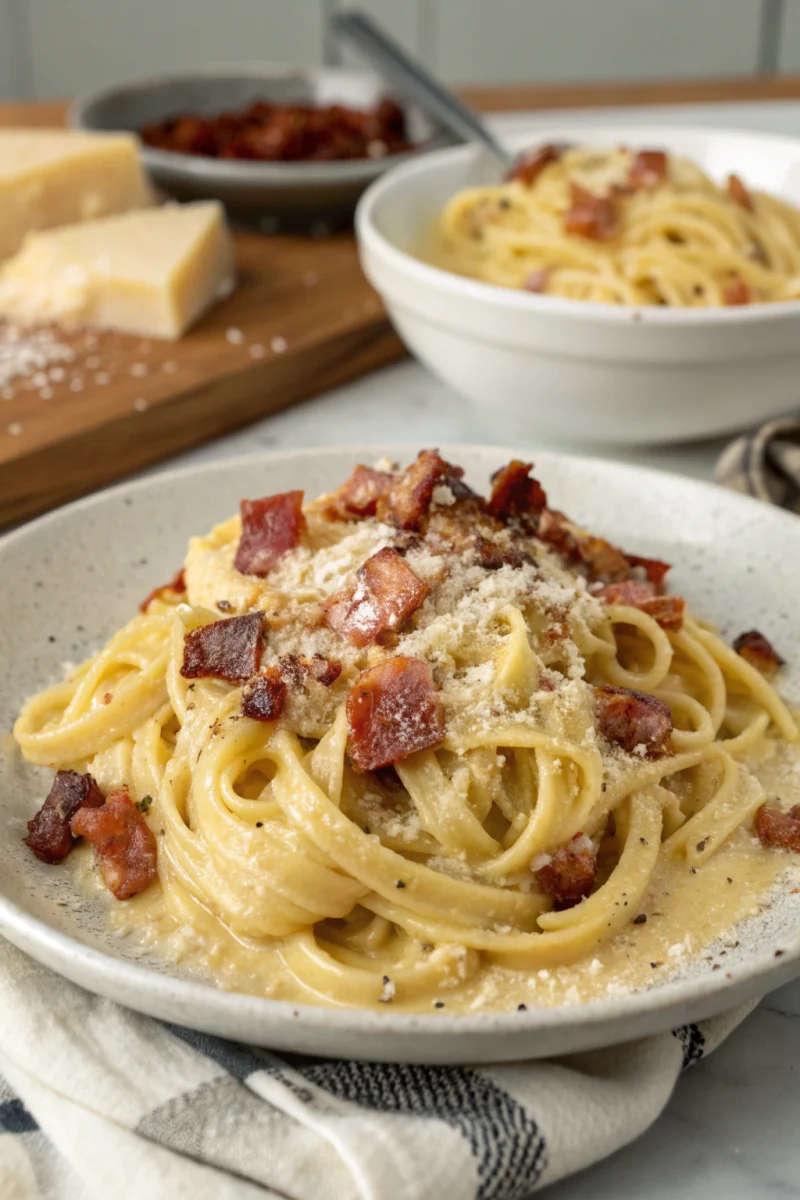
Carbonara Pasta — A Rich, Creamy, and Satisfying Italian Delight for Any Occasion
Carbonara Pasta is more than just a dish; it’s a culinary experience steeped in Roman tradition, renowned for its simple yet profoundly satisfying flavor profile. This guide delves into the authentic art of crafting Carbonara Pasta, sharing professional techniques and family secrets to achieve a dish that is both comforting and exquisitely rich, transforming basic ingredients into a masterpiece of Italian cuisine.
Thank you for reading this post, don't forget to subscribe!The Enduring Appeal of Carbonara Pasta
Carbonara Pasta holds a special place in the hearts of food lovers worldwide. Its allure lies in its deceptive simplicity and the magical transformation of a few humble ingredients—eggs, hard cheese, cured pork, and black pepper—into a silky, creamy sauce that clings perfectly to al dente pasta. Unlike many cream-based sauces, authentic carbonara relies entirely on the emulsification of egg yolks, rendered pork fat, and starchy pasta water, creating a lightness that belies its rich flavor. This foundational technique is what elevates Carbonara Pasta from a mere meal to an art form, making it a beloved choice for everything from quick weeknight dinners to impressive celebratory feasts. Understanding the origins and the authentic methodology behind Carbonara Pasta is crucial for anyone looking to master this iconic dish, avoiding common pitfalls and embracing the true spirit of Roman cooking.
Deconstructing the Quintessential Carbonara Pasta Ingredients
The beauty of Carbonara Pasta lies in its reliance on a few, meticulously chosen ingredients. Each component plays a vital role in creating the dish’s distinct texture and flavor. Compromising on quality here means compromising on the final result.
The Pasta Base: Not Just Any Noodle
While various pasta shapes can be used, traditional Carbonara Pasta almost exclusively uses long pasta shapes. Spaghetti is the most common choice, but bucatini (a thicker, hollow spaghetti), rigatoni, or fettuccine are also excellent options. The key is to select a pasta that can hold the sauce well and offers a satisfying chew. Opt for high-quality durum wheat pasta, as its texture and ability to absorb sauce are superior. The cooking of the pasta is paramount: it should be cooked al dente, meaning “to the tooth,” retaining a slight bite. This texture is not only pleasing but also vital for the sauce to properly adhere without becoming soggy. Perfectly cooked pasta is the foundation of a great Carbonara Pasta.
The Pork Component: Guanciale is King, Pancetta a Close Second
Authentic Carbonara Pasta calls for guanciale, cured pork jowl. Guanciale has a richer, deeper flavor than bacon and renders fat beautifully, creating the perfect base for the sauce. Its texture, once crisped, adds a delightful bite. If guanciale is unavailable, unsmoked pancetta (cured pork belly) is the best substitute. Bacon, while often used as a stand-in, typically has a smokier flavor that can overpower the delicate balance of Carbonara Pasta. Avoid smoked bacon if possible, or choose a very lightly smoked variety. The rendering of the pork fat is a critical step, as this flavorful fat is incorporated directly into the sauce, contributing richness and a distinct savory depth.
The Egg Element: Yolks for Richness, A Touch of Whole Egg for Emulsification
The creamy consistency of Carbonara Pasta is achieved primarily through egg yolks. For a typical serving of two, expect to use 2-3 egg yolks and sometimes one whole egg. The yolks provide a deep, unctuous richness and a beautiful golden hue, while a small amount of whole egg can help create a slightly lighter, more emulsified sauce. The trick is to prevent the eggs from scrambling, which is why temperature control and continuous stirring are essential. The residual heat from the freshly cooked pasta and the warmth of the pasta water gently cook the eggs into a luscious sauce, rather than scrambling them. Eggs are a versatile ingredient in many dishes.
The Cheese: Pecorino Romano, Unwavering
There is no substitute for Pecorino Romano in authentic Carbonara Pasta. Made from sheep’s milk, this hard, salty, and pungent cheese provides a sharp, distinctive flavor that is absolutely integral to the dish. While Parmigiano-Reggiano can be used in other pasta dishes, its milder, nuttier profile is not suitable for Carbonara Pasta. Grate the Pecorino Romano fresh, just before adding it to the sauce, to ensure maximum flavor and optimal melting. The natural saltiness of Pecorino Romano often means you’ll need less additional salt in your dish, so taste as you go.
Black Pepper: Freshly Ground and Plentiful
Freshly cracked black pepper is not just a seasoning in Carbonara Pasta; it’s a co-star. The pungent, aromatic notes of black pepper cut through the richness of the eggs and pork, adding a crucial layer of flavor. Use a pepper mill to grind whole peppercorns just before adding them to the dish for the most vibrant taste and aroma. Don’t be shy with the pepper – a generous amount is traditional.
Pasta Water: The Secret Weapon
The starchy water left over from cooking the pasta is a frequently overlooked but absolutely essential ingredient. This cloudy liquid is rich in starches that help to emulsify the egg and cheese mixture, creating a smooth, glossy sauce that perfectly coats the pasta. Always reserve at least a cup of pasta water before draining your pasta. It’s the key to adjusting the sauce’s consistency to luscious perfection and prevents it from becoming too thick or dry. This is a common technique also used in dishes like chicken and vegetable stew for thickening.
Step-by-Step Mastery: Crafting the Perfect Carbonara Pasta
Making Carbonara Pasta isn’t difficult, but it requires precision and timing. Follow these steps carefully to achieve a restaurant-quality dish at home.
Step 1 — Prepare Your Mise en Place
Before you even boil water, ensure all your ingredients are prepped and within reach. This dish comes together quickly, so you won’t have time to chop or grate once the cooking starts.
- Cut the guanciale (or pancetta) into small, even cubes or lardons.
- Grate a generous amount of Pecorino Romano cheese; you’ll need about 1 cup, plus more for serving.
- In a medium bowl, whisk together the egg yolks and whole egg (if using). Add most of the grated Pecorino Romano to this bowl, reserving a small amount for garnish. Season generously with freshly cracked black pepper. Do NOT add salt to the egg mixture yet, as the guanciale and Pecorino Romano are already salty.
- Ensure you have your spaghetti ready.
Step 2 — Render the Guanciale
Place the cubed guanciale in a cold skillet (preferably non-stick or cast iron) over medium-low heat. This allows the fat to render slowly and evenly, resulting in crispy pork bits and plenty of flavorful fat. Cook until the guanciale is golden brown and crispy, not burnt. This will take about 10-15 minutes. Once crispy, remove the guanciale with a slotted spoon and set aside on a paper towel-lined plate to drain, leaving all the rendered fat in the skillet. This fat is gold!

Step 3 — Cook the Pasta
While the guanciale is rendering, bring a large pot of heavily salted water to a rolling boil. Add your spaghetti and cook according to package directions until al dente. This is crucial for the texture of your Carbonara Pasta. Before draining, *reserve at least 1-2 cups of the starchy pasta water*. Do not skip this step! The pasta water is essential for creating the creamy sauce.
Step 4 — Emulsify the Sauce (The Crucial Step for Carbonara Pasta)
This is where the magic happens. Immediately after draining the pasta (do not rinse it!), add the hot spaghetti directly into the skillet containing the rendered guanciale fat. Turn off the heat under the skillet or, even better, remove the skillet from the burner entirely. The residual heat is sufficient.

Quickly pour the egg and cheese mixture over the pasta. Work fast and stir vigorously with tongs, tossing constantly. Add a splash of the reserved hot pasta water, a tablespoon at a time, continuing to toss and stir. The heat from the pasta and the gradual addition of pasta water will gently cook the eggs, melt the cheese, and create a smooth, creamy, emulsified sauce that coats every strand of Carbonara Pasta. You are looking for a glossy, thick sauce – not scrambled eggs. If the sauce seems too thick, add a little more pasta water. If it seems too thin, you can add a tiny bit more grated Pecorino Romano.
Step 5 — Add Crispy Guanciale and Serve
Once the sauce is perfectly creamy and coats the pasta, add most of the crispy guanciale back into the skillet, tossing to combine.
Serve immediately in warm bowls. Garnish each serving of Carbonara Pasta with extra freshly grated Pecorino Romano, a sprinkle of the remaining crispy guanciale, and a final generous grind of fresh black pepper. Do not let Carbonara Pasta sit for long, as the sauce can stiffen. Freshness is key!
Nutrition Facts (per serving — approximated for a traditional recipe)
Calories: 550-700 | Protein: 25-35g | Carbs: 50-60g | Fat: 30-45g | Fiber: 2-3g | Sodium: 700-1000mg
Note: These values can vary significantly based on portion size, specific ingredients (e.g., amount of guanciale, type of pasta), and preparation. This delicious dish provides a significant energy boost, perfect for colder months or after a long day.
Creative and Healthy Variations of Carbonara Pasta
While strict traditionalists might frown, there are delicious and healthier ways to enjoy the spirit of Carbonara Pasta while catering to different dietary needs or preferences. These variations often involve substituting or adding ingredients to boost nutrition or reduce richness without entirely losing the essence of the dish.
- Vegetable-Loaded Carbonara Pasta: While not traditional, adding stir-fried or roasted vegetables can introduce fiber and vitamins. Asparagus, peas, mushrooms, or spinach can be lightly cooked and tossed in at the very end with the pasta and sauce. This adds color, texture, and nutritional value.
- Lighter Pork Options: If guanciale and pancetta are too rich, consider using smoked salmon or turkey bacon, though the flavor profile will significantly change. For a leaner option, some might try very finely diced prosciutto, crisped up, but it won’t render as much fat.
- Dairy-Free Carbonara Pasta (without cheese): This is a challenging adaptation. Nutritional yeast can provide a cheesy flavor for those avoiding dairy. For creaminess, a small amount of plant-based cream (like cashew cream) could be experimented with, but it deviates significantly from the authentic emulsification method.
- Gluten-Free Carbonara Pasta: Simply swap out traditional wheat pasta for a high-quality gluten-free pasta. Ensure it’s cooked perfectly al dente, and be mindful that gluten-free pasta often releases more starch, which can aid in sauce thickening.
- Protein Boost: For those looking to increase protein beyond the pork and eggs, cooked, shredded chicken breast or white beans can be gently folded into the finished Carbonara Pasta, though this moves it further from traditional.
- Herb Infusion: A sprinkle of fresh parsley or chives at the end can add a fresh, herbaceous note that brightens the rich Carbonara Pasta.
The beauty of cooking is experimentation, but it’s always good to understand the traditional baseline before venturing into variations. The authentic Carbonara Pasta stands on its own as a perfectly balanced dish. For those seeking different flavors, these healthy variations offer delicious alternatives while still providing a satisfying meal.
Serving Carbonara Pasta: A Complete Roman Meal Experience
Carbonara Pasta is a hearty dish on its own, embodying both richness and flavor. However, pairing it with complementary sides can elevate the meal, balancing its richness and adding fresh dimensions.
- Simple Green Salad: A crisp green salad with a light vinaigrette is the classic accompaniment. The acidity of the dressing cuts through the richness of the Carbonara Pasta beautifully, cleansing the palate. Think arugula, mixed greens, or even a simple romaine salad.
- Crusty Bread: A warm, crusty loaf of Italian bread is perfect for soaking up any leftover sauce on the plate. Consider a sourdough or a rustic country bread. You could even serve it with a side of Garlic Herb Flatbread for an added touch.
- Roasted Asparagus or Broccoli: Lightly roasted or steamed vegetables offer a fresh, slightly bitter contrast that works well with the creamy pasta. Season them simply with olive oil, salt, and pepper.
- Wine Pairing: For a true Italian experience, pair your Carbonara Pasta with a light-bodied, acidic white wine like a Frascati or a crisp Sauvignon Blanc. If you prefer red, a light, fruity Sangiovese or Pinot Noir can also complement the dish without overpowering it.
For dessert, keep it light and refreshing after a rich main course. Fruit tarts, a simple fruit salad, or even Honey Oat Energy Bites could provide a sweet, less heavy finish.
Common Pitfalls and How to Avoid Them When Making Carbonara Pasta
Making Carbonara Pasta successfully hinges on avoiding a few common errors that can turn a luscious sauce into a clumpy mess or a dry pasta dish. Understanding these pitfalls will greatly improve your chances of success.
- Scrambled Eggs: This is the most common and feared mistake. It happens when the egg mixture is exposed to too much direct heat, causing the eggs to cook unevenly and solidify.Avoid by: Removing the skillet from direct heat before adding the egg mixture. The residual heat from the pasta and the warm pasta water should be sufficient to gently cook the eggs into a creamy sauce. Keep tossing and stirring continuously.
- Dry Carbonara Pasta: If your sauce is too thick or doesn’t properly coat the pasta, it will be dry and unappealing.Avoid by: Generously using the reserved starchy pasta water. Add it gradually, a tablespoon at a time, while tossing the pasta and egg mixture. The starch in the water helps emulsify the sauce and gives it a glossy, creamy texture. Don’t be afraid to add more if needed.
- Soggy Pasta: Overcooked pasta loses its texture and can’t properly hold the sauce.Avoid by: Cooking your pasta strictly to al dente. Start checking for doneness a couple of minutes before the package suggests. The pasta will finish cooking slightly in the hot pan with the sauce.
- Too Salty: Guanciale and Pecorino Romano are both very salty ingredients. Adding too much extra salt can make the dish inedible.Avoid by: Not adding salt to the egg mixture initially. Taste the rendered guanciale and the sauce mixture before adding any extra salt. Often, the salt from the pork and cheese is enough. Season the pasta water well, but be cautious with other salt additions.
- Wrong Pork or Cheese: Using smoked bacon or Parmigiano-Reggiano can significantly alter the authentic flavor profile of Carbonara Pasta.Avoid by: Sticking to guanciale or unsmoked pancetta, and always using Pecorino Romano for that characteristic sharp, salty bite.
- Allowing It to Sit: Carbonara Pasta is a dish that waits for no one. The sauce thickens and can seize up if left to sit too long.Avoid by: Serving immediately after tossing the pasta with the sauce. Ensure everyone is seated and ready to eat as soon as the Carbonara Pasta is finished.
By being mindful of these common mistakes, you can consistently achieve a perfect, creamy, and wonderfully flavorful Carbonara Pasta every time.
Storage and Reheating Advice for Carbonara Pasta
True authentic Carbonara Pasta is best enjoyed immediately. The magic of its creamy sauce lies in the delicate emulsification of eggs, cheese, and pasta water, which can break down upon cooling and reheating. However, if you find yourself with leftovers, or if you’re planning to make a larger batch, there are ways to manage it, though be prepared for a change in texture.
Immediate Consumption is Best
The goal with Carbonara Pasta is to eat it right away. The sauce, made from fresh eggs, will continue to cook and thicken as it cools. The beautiful, glossy coating will become much denser and less fluid once it’s cold.
Storage Tips for Leftovers
If you absolutely must store leftovers:
- Cool Quickly: Allow the Carbonara Pasta to cool down to room temperature as quickly as possible (within 1 hour) to minimize bacterial growth.
- Airtight Container: Transfer the cooled pasta to an airtight container.
- Refrigeration: Store in the refrigerator for no more than 1-2 days. Because of the raw egg in the sauce, it’s best to consume it very quickly.
Note: The texture will inevitably change. The sauce will become very thick and might appear curdled, as the fat and water separate upon cooling. The eggs will continue to cook until firm.
Reheating Carbonara Pasta
Reheating Carbonara Pasta successfully is challenging, but not impossible. The key is to add moisture and heat it gently.
- Stovetop is Best: Avoid the microwave if possible, as it tends to dry out the pasta and can make the sauce rubbery or even scramble the eggs further.
- Gentle Heat: Place the leftovers in a non-stick pan over very low heat.
- Add Moisture: This is crucial. Add a splash of water, chicken broth, or even a little milk (for richness) to the pan, along with the pasta. About 1-2 tablespoons per serving should suffice to start.
- Stir Constantly: As the pasta warms, stir constantly with tongs, breaking up any clumps and incorporating the added liquid. You’re trying to re-emulsify the sauce as much as possible.
- Low and Slow: Continue to heat gently, stirring, until the pasta is warmed through and the sauce (though thicker than fresh) coats the pasta again. Do not let it boil vigorously.
- Optional Additions: You can try adding a tiny bit more freshly grated Pecorino Romano or a swirl of olive oil at the very end to help with creaminess and flavor, but fresh eggs are not recommended for reheating.
While reheated Carbonara Pasta will never quite replicate the delicate, creamy perfection of a freshly made dish, these tips can help make leftovers more palatable. For the ultimate Carbonara Pasta experience, plan to make and enjoy it fresh.
Conclusion
Carbonara Pasta stands as a testament to the power of simple, high-quality ingredients transformed by a skillful technique. This guide has journeyed through the origins, essential components, and step-by-step methodology for creating an authentic Carbonara Pasta, ensuring that each bite delivers rich flavor and satisfying creaminess. From selecting the perfect guanciale and Pecorino Romano to mastering the delicate emulsion of egg yolks and starchy pasta water, every detail contributes to a culinary masterpiece. By understanding and avoiding common pitfalls, and embracing the traditional approach, home cooks can consistently achieve a dish that rivals those found in the finest Roman trattorias. Whether it’s for a quick, comforting meal or a special occasion, the rich, savory, and deeply satisfying flavors of Carbonara Pasta promise to delight, proving that healthy food can also be profoundly comforting and exquisitely delicious.
FAQ
- Can I use frozen vegetables? While not traditional for Carbonara Pasta, if adding vegetables to a variation, fresh is always preferred for flavor and texture. Frozen vegetables can be used, but ensure they are thoroughly drained to prevent watering down the sauce.
- How can I make it creamier? The creaminess of Carbonara Pasta comes from the emulsion of egg yolks, cheese, rendered fat, and pasta water. To ensure maximum creaminess, use fresh egg yolks, high-quality Pecorino Romano, and vigorously toss the pasta with the sauce off the heat, adding pasta water gradually until a glossy consistency is achieved. Avoid adding actual cream, as this is not part of an authentic Carbonara Pasta.
- What’s the best type of pasta for Carbonara? Spaghetti is the most classic choice for Carbonara Pasta due to its ability to hold the sauce well. Other good options include bucatini (thick, hollow spaghetti), rigatoni, or fettuccine. Choose a high-quality durum wheat pasta that cooks al dente.
- How long do I need to cook the guanciale? Cook the guanciale over medium-low heat for about 10-15 minutes, or until it is golden brown and crispy, and has rendered most of its fat. The key is slow rendering to extract maximum flavor and achieve crispness without burning.
- Can I prepare any part of Carbonara Pasta ahead of time? Only the chopping of guanciale and grating of cheese can be done slightly ahead. The egg mixture should be prepared just before mixing with the pasta, and the pasta must be cooked and sauced immediately before serving to ensure the best texture and flavor for your Carbonara Pasta. It is not a make-ahead dish.
Healthline — Benefits of Eggs,
Harvard Nutrition Source — Healthy Eating Guidelines,
Medical News Today — Understanding Carbohydrates

creates quick vegetarian dinners and vibrant taco recipes.