
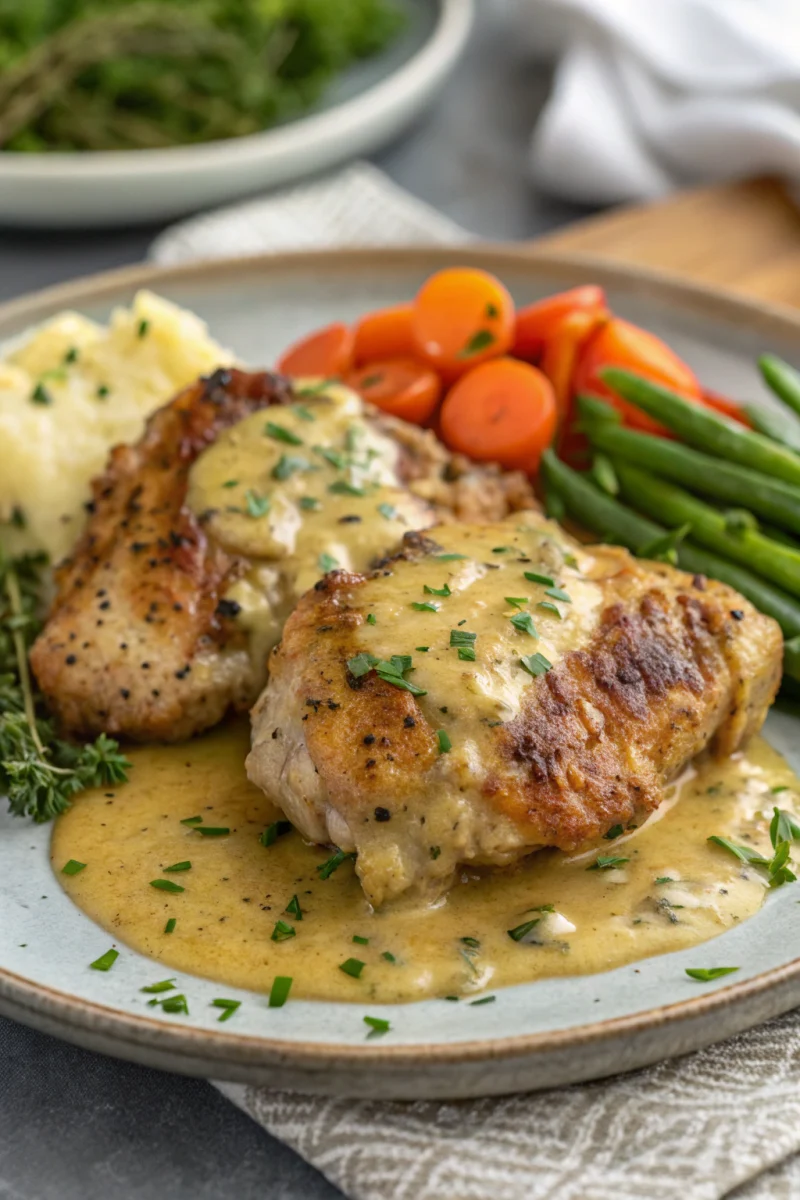
Dijon Chicken Thighs — A Creamy, Herbaceous Skillet Dinner for Cozy Nights
Dijon Chicken Thighs combines heartiness, warmth, and nutrition in one dish. This guide reveals how to make the perfect winter meal — comforting, wholesome, and deeply flavorful, crafted with chef-level technique and family-friendly ease.
Thank you for reading this post, don't forget to subscribe!Why Dijon Chicken Thighs Matters in Winter
During cold months, the body craves warmth and satisfying flavors. Dijon Chicken Thighs offers both, blending tender chicken with a rich, creamy sauce and nutrient-rich ingredients. It’s a dish that soothes and strengthens, making it an ideal choice for chilly evenings. The robust flavor of Dijon mustard, paired with aromatic herbs and succulent chicken thighs, creates a culinary experience that feels both indulgent and homey. This dish is not just about sustenance; it’s about creating a moment of comfort and enjoyment around the dinner table, providing a delicious escape from the brisk outside air. The combination of protein, healthy fats, and optional vegetables makes it a balanced and fulfilling meal that combats the winter doldrums.
Core Ingredients
Creating truly outstanding Dijon Chicken Thighs starts with selecting high-quality ingredients. Each component plays a vital role in building the dish’s complex flavor profile:
- 4 bone-in, skin-on chicken thighs (about 2-2.5 lbs total): Thighs are preferred for their rich flavor and moist texture, which holds up wonderfully in the creamy sauce. Bone-in adds more flavor, and skin-on, when rendered and crisped, provides a delightful textural contrast.
- 1 tbsp olive oil: Essential for browning the chicken and sautéing aromatics, providing a foundational layer of flavor.
- 1 small onion, finely chopped: Adds a sweet and pungent aromatic base to the sauce, mellowing out as it cooks.
- 2 cloves garlic, minced: Garlic is non-negotiable for its pungent, savory notes that elevate almost any savory dish.
- 1/2 cup dry white wine (such as Chardonnay or Pinot Grigio): Deglazes the pan, lifting all those flavorful browned bits, and adds a sophisticated depth and acidity to the sauce. You can substitute with chicken broth if you prefer to avoid alcohol.
- 1 cup chicken broth, low sodium: Forms the liquid base of the sauce, providing moisture and savory notes without overpowering the other flavors.
- 1/4 cup whole grain Dijon mustard: The star of the show! Whole grain Dijon provides a tangy, slightly spicy, and textural element that defines this dish. Its acidity also helps cut through the richness of the cream.
- 1/2 cup heavy cream: Adds luxurious body and richness to the sauce, making it incredibly comforting and velvety.
- 1 tbsp fresh thyme leaves, chopped: Thyme pairs exquisitely with chicken and mustard, offering an earthy, slightly floral aroma.
- 1 tbsp fresh parsley, chopped (for garnish): Brightens the dish with a fresh, herbaceous finish and a pop of color.
- Salt and freshly ground black pepper to taste: Essential for seasoning at every stage to bring out the best in all ingredients.
- Optional: 1 cup cremini mushrooms, sliced: Adds an extra layer of umami and earthiness, complementing the creamy sauce beautifully.
Sourcing quality ingredients can make a significant difference. Opt for fresh chicken and produce, and a good quality Dijon mustard. This attention to detail will ensure your Dijon Chicken Thighs are truly exceptional.
Step-by-Step Method for Perfect Dijon Chicken Thighs
Achieving restaurant-quality Dijon Chicken Thighs at home is surprisingly straightforward with these detailed steps:
Step 1 — Prepare and Sear the Chicken Thighs
Begin by patting the chicken thighs thoroughly dry with paper towels. This crucial step ensures a crispy skin. Season both sides generously with salt and freshly ground black pepper. Heat the olive oil in a large oven-safe skillet (cast iron or stainless steel works best) over medium-high heat until shimmering. Place the chicken thighs skin-side down in the hot skillet. Sear for 8-10 minutes, undisturbed, until the skin is deeply golden brown and crispy and much of the fat has rendered. Flip the chicken thighs and sear for another 2-3 minutes on the flesh side to get some color. Remove the chicken from the skillet and set aside on a plate, leaving the rendered fat and flavorful browned bits in the pan.
Step 2 — Build the Flavorful Dijon Sauce Base
Reduce the heat to medium. Add the chopped onion to the same skillet. Sauté for 3-5 minutes, scraping up the browned bits from the bottom of the pan with a wooden spoon, until the onion softens and becomes translucent. If using, add the sliced mushrooms and cook for another 5-7 minutes until they release their moisture and brown. Stir in the minced garlic and cook for just 1 minute more until fragrant, being careful not to burn it. Pour in the white wine (or extra chicken broth) to deglaze the pan. Bring it to a simmer and cook, stirring occasionally, until the liquid has reduced by about half, which should take 2-3 minutes. This concentrates the wine’s flavor and lifts all the delicious fond from the bottom of the pan.
Step 3 — Create the Creamy Dijon Sauce
Stir in the chicken broth and Dijon mustard. Whisk well to combine, ensuring the mustard is fully incorporated into the liquid. Bring the sauce to a gentle simmer. Reduce the heat to low and slowly pour in the heavy cream, stirring constantly until the sauce is smooth and combined. Add the fresh thyme leaves. Taste the sauce and adjust seasoning with salt and pepper as needed. Remember, the mustard adds a good amount of seasoning, so taste before adding too much salt.
Step 4 — Finish Cooking the Dijon Chicken Thighs
Return the seared chicken thighs to the skillet, nesting them gently into the creamy Dijon sauce, skin-side up. Ensure the skin remains above the sauce to maintain its crispiness. Transfer the skillet to a preheated oven at 375°F (190°C). Bake for 15-20 minutes, or until the chicken thighs are cooked through and reach an internal temperature of 175°F (79°C) when a meat thermometer is inserted into the thickest part of the thigh, avoiding the bone. The sauce will also thicken slightly during this time.
Step 5 — Rest and Serve
Once cooked, carefully remove the skillet from the oven. Let the Dijon Chicken Thighs rest in the pan for 5-10 minutes before serving. This allows the juices to redistribute, ensuring tender and moist chicken. Garnish generously with fresh chopped parsley. Serve immediately with your favorite sides.
Following these steps carefully will result in incredibly tender chicken thighs bathed in a rich, tangy, and unbelievably satisfying Dijon cream sauce. It’s a recipe that’s sure to impress yet is simple enough for a weeknight meal.
Nutrition Facts (per serving — estimated for 1 thigh with sauce)
Calories: 550 | Protein: 38g | Carbs: 8g | Fat: 40g | Fiber: 1g | Sodium: 680mg
These values can vary based on exact portion sizes, brands of ingredients, and whether skin is consumed. The numbers reflect a generous serving of Dijon Chicken Thighs with its rich sauce, offering a substantial amount of protein and healthy fats, which are crucial for energy and satiety, especially during colder months. The carbohydrate content is naturally low, making this a suitable dish for various dietary preferences, including low-carb eating plans.
The fat content primarily comes from the chicken thighs and heavy cream, providing essential fatty acids and contributing to the dish’s comforting richness. While sodium might seem moderate, it’s adjustable based on your broth choice and how much salt you add during cooking. This dish is also a good source of B vitamins from the chicken and various micronutrients from the onions and garlic.
For more detailed nutritional information or to tailor it to specific dietary needs, online nutritional calculators can be very helpful by inputting your exact ingredients and quantities. Remember that enjoying delicious food, like these Dijon Chicken Thighs, is also a part of a healthy lifestyle when balanced with other nutrient-dense meals.
Healthy Variations for Dijon Chicken Thighs
While the classic Dijon Chicken Thighs recipe is already quite balanced, there are several ways to adapt it to fit specific dietary preferences or to boost its nutritional profile further:
- Lower Fat Version: For a lighter take, you can use boneless, skinless chicken thighs and trim any visible fat. Instead of heavy cream, use half-and-half or a light unsweetened evaporated milk, or even a blend of chicken broth thickened with a cornstarch slurry (1 tbsp cornstarch mixed with 2 tbsp cold water) for a creamy texture without the added fat from heavy cream.
- Add More Vegetables: This dish is incredibly versatile for incorporating more greens. Sauté spinach, kale, or Swiss chard with the onions and garlic, or stir them into the sauce in the last few minutes of cooking until wilted. Steamed green beans or asparagus can also be served alongside or briefly simmered in the sauce to absorb its flavors. Bell peppers, zucchini, or cherry tomatoes could also be added for color and nutrients.
- Gluten-Free: The core recipe for Dijon Chicken Thighs is naturally gluten-free. Ensure your chicken broth and Dijon mustard are certified gluten-free, as some brands may contain hidden gluten.
- Dairy-Free: Substitute heavy cream with full-fat coconut cream for a dairy-free sauce. Be aware that this will impart a subtle coconut flavor, which can be surprisingly delightful with the Dijon and thyme. Alternatively, a cashew cream (soaked and blended cashews with water) can provide a neutral creamy base.
- Extra Protein/Fiber: While chicken thighs are already protein-rich, you can enhance the fiber content by serving the dish over a bed of quinoa, brown rice, or a hearty lentil salad instead of traditional mashed potatoes.
- Spicy Kick: For those who enjoy a bit of heat, a pinch of red pepper flakes added with the garlic or a dash of hot sauce stirred into the finished sauce can provide a pleasant warmth without overpowering the Dijon flavor.
These variations prove that Dijon Chicken Thighs can be a flexible and adaptable meal, allowing you to tailor it to your health goals and taste preferences without sacrificing flavor or comfort.
Serving Suggestions for Dijon Chicken Thighs
The rich and flavorful Dijon Chicken Thighs pairs wonderfully with a variety of sides that complement its creamy sauce and tender chicken. Here are some excellent suggestions to complete your meal:
- Creamy Mashed Potatoes or Cauliflower Mash: The ultimate classic pairing. Mashed potatoes soak up the luscious Dijon cream sauce beautifully. For a lower-carb alternative, Creamy Garlic Mashed Cauliflower makes an equally delicious and satisfying base.
- Roasted Asparagus or Broccolini: Simple roasted vegetables provide a nice textural contrast and a fresh, slightly bitter counterpoint to the rich sauce. Toss with a little olive oil, salt, and pepper, then roast until tender-crisp.
- Green Salad with Vinaigrette: A light, crisp green salad dressed with a tangy vinaigrette offers a refreshing palate cleanser. The acidity of the dressing can help cut through the richness of the Dijon Chicken Thighs.
- Crusty Bread: A warm, crusty baguette or peasant bread is perfect for soaking up every last drop of that incredible Dijon sauce. Garlic bread or Garlic Herb Flatbread would be an even more indulgent choice.
- Wild Rice Pilaf or Quinoa: For a heartier and more nutrient-dense option, a flavorful wild rice pilaf or fluffy quinoa can serve as an excellent base, absorbing the sauce while adding complex carbohydrates and fiber.
- Sautéed Green Beans with Almonds: A simple side dish that adds color, crunch, and a subtle nutty flavor that complements the chicken and sauce.
- Roasted Root Vegetables: Carrots, parsnips, or sweet potatoes roasted until caramelized provide sweetness and earthy notes that balance the tangy Dijon.
For dessert, after such a savory and rich main course, something light and fresh would be ideal, perhaps a fruit salad or Honey Oat Energy Bites. Whatever you choose, these Dijon Chicken Thighs are sure to be the star of your dinner table.
Common Mistakes to Avoid When Making Dijon Chicken Thighs
Even simple recipes like Dijon Chicken Thighs can go awry if certain common pitfalls aren’t avoided. Keeping these tips in mind will ensure a perfect dish every time:
- Not Patting Chicken Dry: This is a cardinal sin in searing! If your chicken thighs are wet, they will steam instead of sear, resulting in flabby skin and a lackluster browning. Always pat them thoroughly dry before seasoning and searing for that irresistible crispy skin.
- Overcrowding the Skillet: Placing too many chicken thighs in the skillet at once will lower the pan’s temperature and release too much moisture, again leading to steaming instead of searing. Cook in batches if necessary to ensure ample space for proper browning.
- Undercooking Aromatics: The onion and garlic form the foundational flavor of your sauce. Rushing this step by not allowing the onions to soften and lightly caramelize, or burning the garlic, will compromise the overall depth of the sauce. Cook over medium heat until fragrant and tender, not browned or crispy for onion, and just a minute for garlic.
- Skipping the Deglazing Step: Those browned bits (fond) stuck to the bottom of the pan after searing the chicken and sautéing aromatics are packed with flavor. Deglazing with wine or broth releases these riches into your sauce, creating a much deeper and more complex taste profile for your Dijon Chicken Thighs.
- Boiling the Cream Sauce: Once the heavy cream is added, maintain a gentle simmer. Boiling the sauce vigorously can cause the cream to separate or curdle, resulting in a grainy texture. A low, gentle simmer is all that’s needed to thicken and marry the flavors.
- Adding Cream Too Early: Adding cream while other acidic ingredients (like wine or mustard) are still boiling or at a rapid simmer can also lead to curdling. Ensure the heat is reduced and the other liquids are at a gentle simmer before incorporating the cream.
- Not Seasoning in Layers: Relying on one final seasoning at the end won’t yield the same depth of flavor. Season the chicken before searing, season the aromatics as they cook, and taste and adjust the sauce before and after adding cream. This builds a rich flavor profile throughout the dish.
- Overcooking the Chicken: While chicken thighs are more forgiving than breasts, overcooking can still lead to dry, tough meat. Use a meat thermometer to ensure the chicken reaches 175°F (79°C) but no more. The resting period will also help maintain moisture.
- Not Resting the Chicken: Immediately slicing into hot chicken will cause the juices to run out, leading to drier meat. Allowing the chicken thighs to rest for 5-10 minutes off the heat allows the juices to redistribute, resulting in a more tender and flavorful bite.
By avoiding these common mistakes, you’ll be well on your way to mastering the art of making perfect Dijon Chicken Thighs every time, ensuring a dish that is not only delicious but also flawlessly executed.
Storage and Reheating Tips for Dijon Chicken Thighs
One of the many great things about Dijon Chicken Thighs is that it often tastes even better the next day as the flavors have more time to meld. Proper storage and reheating are key to enjoying your leftovers safely and deliciously.
Storage:
- Cool Down Quickly: After serving, allow any leftover Dijon Chicken Thighs to cool completely at room temperature for no more than 1-2 hours. Do not leave it out for extended periods to prevent bacterial growth.
- Airtight Containers: Transfer the chicken thighs and sauce into airtight containers. This prevents air exposure, which can dry out the chicken and alter the sauce’s texture and flavor.
- Refrigeration: Store in the refrigerator for up to 3-4 days. The sauce might thicken considerably upon chilling due to the cream content.
- Freezing (with caution): While you can freeze Dijon Chicken Thighs, dishes with rich cream sauces can sometimes separate or become grainy after thawing. If you plan to freeze, blend the sauce smooth before adding the cream, then add the cream only upon reheating. Alternatively, simply freeze the chicken thighs and add fresh cream to the sauce upon reheating. If freezing the finished dish, store in freezer-safe containers for up to 2-3 months. Thaw overnight in the refrigerator before reheating.
Reheating:
- Stovetop (Recommended): This is the best method for preserving texture and flavor. Place the leftover Dijon Chicken Thighs and sauce in a skillet over medium-low heat. Add a splash of chicken broth or a little extra cream to loosen the sauce as it heats up, stirring gently. Heat until the chicken is warmed through and the sauce is bubbling softly. Avoid high heat, which can cause the sauce to separate.
- Oven: Preheat your oven to 300°F (150°C). Place the chicken thighs and sauce in an oven-safe dish, cover loosely with foil to prevent drying, and heat for 15-25 minutes, or until warmed through. The foil helps to steam the chicken gently and keep it moist.
- Microwave (Least Recommended): While the quickest option, reheating Dijon Chicken Thighs in the microwave can sometimes lead to uneven heating and a less desirable sauce texture. Heat in short bursts (1-2 minutes), stirring the sauce and flipping the chicken in between, until hot.
When reheating, always ensure the chicken reaches an internal temperature of 165°F (74°C) for food safety. By following these storage and reheating tips, you can enjoy your delicious Dijon Chicken Thighs for days to come, making meal prep a breeze and reducing food waste.
Conclusion
Dijon Chicken Thighs proves that healthy food can be both rich and comforting. This comprehensive guide has walked you through every step, from selecting the finest ingredients to mastering the art of searing and sauce-making, ensuring a perfect result every time. We’ve explored the “why” behind its winter appeal, delved into the specifics of each core ingredient, and provided a detailed step-by-step method to help you achieve tender, succulent chicken bathed in a velvety, tangy Dijon cream sauce. By understanding the nutrition facts, experimenting with healthy variations, and pairing it with thoughtful serving suggestions, you can truly make this dish your own.
Moreover, arming yourself with knowledge about common mistakes to avoid and best practices for storage and reheating means that not only will your initial cooking experience be a success, but you’ll also be able to enjoy the delicious leftovers without compromise. This dish is more than just a recipe; it’s an invitation to create warmth, flavor, and nourishment in your kitchen, providing a delightful culinary escape on any cold evening. Whether for meal prep, a family dinner, or a cozy night in, these Dijon Chicken Thighs offer warmth and satisfaction in every spoonful, solidifying its place as a cherished winter classic. We encourage you to try this recipe and discover the profound satisfaction of a homemade meal that balances health with indulgence, bringing joy to your table throughout the colder months.
FAQ
- Can I use frozen chicken thighs? Yes, ensure they are fully thawed and patted very dry before seasoning and searing.
- How can I make the sauce thicker? If the sauce is too thin, after removing the chicken, you can simmer it gently for a few extra minutes until it reduces to your desired consistency. Alternatively, mix 1 teaspoon of cornstarch with 1 tablespoon of cold water, then whisk this slurry into the simmering sauce and cook for another minute until thickened.
- What’s the best type of Dijon mustard to use? A good quality whole grain Dijon mustard is recommended for its texture and balanced flavor. Smooth Dijon can also be used, but whole grain adds a nice visual and textural element.
- Can I prepare any parts of this dish in advance? You can chop the onion and mince the garlic a day ahead. You can also prepare the sauce up to the point of adding the cream and then store it separately. Add the cream and finish cooking the chicken just before serving. However, for the best results, searing the chicken fresh is highly recommended.
- How long do Dijon Chicken Thighs last? Properly stored in an airtight container in the refrigerator, they’ll last for up to 3-4 days.
- Healthline — Benefits of Chicken Thighs: Chicken thighs are an excellent source of protein, essential for muscle building and repair, and also provide vitamins and minerals like iron and zinc.
- Harvard T.H. Chan School of Public Health — Dijon Mustard Nutrition: Dijon mustard, while calorie-dense in its creamy forms, offers powerful flavor with minimal calories and can potentially act as an antioxidant.
- Medical News Today — Health Benefits of Garlic: Garlic is widely recognized for its potential health benefits, including immune-boosting and anti-inflammatory properties, adding both flavor and wellness to your meal.

creates quick vegetarian dinners and vibrant taco recipes.