
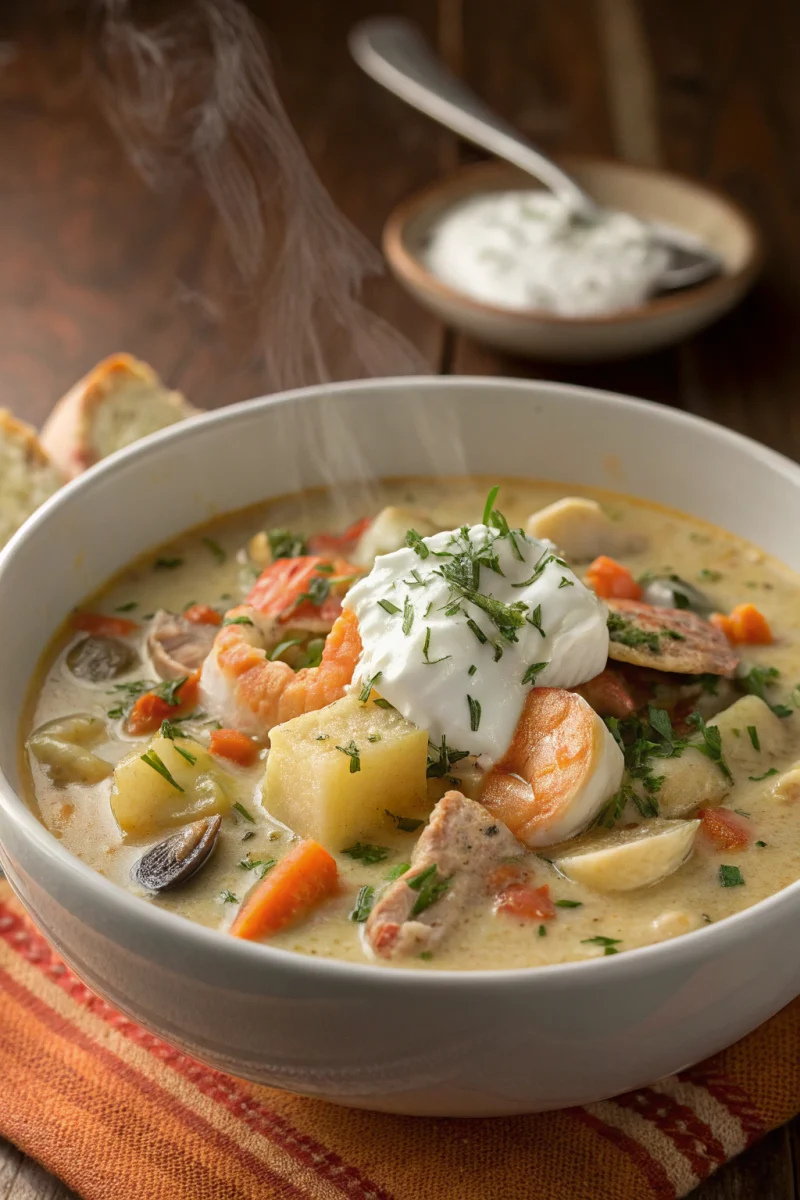
Seafood Chowder — The Ultimate Comfort Soup for Cozy Evenings
Seafood Chowder combines heartiness, warmth, and nutrition in one bowl. This guide reveals how to make the perfect winter soup — comforting, wholesome, and deeply flavorful, crafted with chef-level technique and family-friendly ease.
Why Seafood Chowder Matters in Winter
During cold months, the body craves warmth and hydration. Seafood Chowder offers both, blending nutrient-rich ingredients with slow-simmered depth. From classic broths to creamy textures, it’s a dish that soothes and strengthens at once.
Core Ingredients for Your Best Seafood Chowder
Crafting an exceptional Seafood Chowder begins with selecting the finest ingredients. Quality components elevate the flavor profile from good to extraordinary. Beyond the seafood itself, the foundational elements—vegetables, broth, and seasonings—play a pivotal role in achieving a balanced, robust, and comforting dish. This section details not only the essential ingredients but also offers insights into their selection and preparation to guarantee a stellar result every time you make your Seafood Chowder.
- 1 tbsp Olive Oil: Extra virgin olive oil is preferred for its rich, fruity notes, which contribute to the initial flavor base without being overpowering. It’s excellent for sautéing and building the foundation of your Seafood Chowder.
- 1 Onion, finely chopped: Yellow or white onions work best, providing a sweet and pungent aroma when caramelized. Finely chopping ensures they integrate smoothly into the chowder, releasing their full flavor without being overly chunky.
- 2 Garlic Cloves, minced: Fresh garlic is indispensable for its pungent, aromatic qualities that deepen the flavor profile. Mincing allows for an even distribution of its potent taste throughout the Seafood Chowder.
- 2 Carrots, diced: Carrots add a touch of natural sweetness and vibrant color, as well as essential nutrients. Dicing them into small, uniform pieces ensures they cook evenly and contribute texture without dominating.
- 2 Celery Stalks, sliced: Celery provides a subtle earthy flavor and crucial aromatic notes that are characteristic of good soup bases. Slicing them thinly helps them soften beautifully during simmering.
- 4 cups Vegetable or Chicken Broth: High-quality broth is the backbone of any great soup. Opt for low-sodium varieties to better control the seasoning, or homemade broth for unmatched depth. For a true seafood experience, a homemade fish stock can be transformational to your Seafood Chowder.
- 1 cup Cooked Barley or Rice: These grains add body and a satisfying chewiness to the chowder, making it more filling. Barley offers a nutty flavor, while rice provides a softer texture. Cooked prior to adding prevents them from absorbing too much liquid and altering the chowder’s consistency. Consider wild rice for an additional texture layer in your Seafood Chowder.
- Salt, Pepper, Thyme, and Bay Leaf to taste: These seasonings are fundamental. Freshly ground black pepper adds a sharper edge, while dried thyme provides a classic herbaceous essence. A bay leaf infuses the entire dish with a subtle, aromatic background note that can be removed before serving. Adjust salt carefully, tasting as you go, especially if using a store-bought broth.

Mastering the Step-by-Step Method for Perfect Seafood Chowder
Creating an exceptional Seafood Chowder is an art, but with a clear, step-by-step guide, it becomes an accessible and rewarding culinary journey. This detailed method ensures that each component of your Seafood Chowder is prepared to perfection, building layers of flavor that culminate in a truly comforting and delicious dish. Pay close attention to timing and technique, as these elements are crucial for achieving the desired depth and texture.
Step 1 — Build Your Flavor Base for an Exquisite Seafood Chowder
The first step in crafting an outstanding Seafood Chowder is establishing a robust flavor base. This foundational layer sets the stage for all subsequent additions and is critical for a rich, aromatic result.
Action: Sauté the finely chopped onion, minced garlic, and thinly sliced celery in olive oil over medium heat. Stir occasionally to prevent burning and ensure even cooking. Continue this process until the vegetables are translucent and softened, and the onions begin to caramelize slightly, turning a golden-brown color. This usually takes about 8-10 minutes. The slight caramelization of the onions is crucial as it unlocks deep, sweet, and savory notes that will permeate your entire Seafood Chowder.
Why it matters: This step is non-negotiable for developing the umami and aromatic foundation. The slow cooking of these aromatics gently coaxes out their natural sugars, contributing a depth of flavor that cannot be achieved by simply boiling them. This base is what will give your Seafood Chowder its characteristic comforting warmth and complexity.
Step 2 — Infuse with Vegetables and Simmer for Depth in Your Seafood Chowder
Once your flavor base is established, it’s time to build upon it by adding more vegetables and the primary liquid. This phase is where the chowder begins to take on its full character and where the flavors truly start to meld.
Action: Add the diced carrots to the pot with the sautéed aromatics. Stir well to combine, allowing the carrots to cook for another 2-3 minutes, just enough to slightly soften them and integrate their flavor with the base. Next, pour in the 4 cups of vegetable or chicken broth. Add the dried thyme and a bay leaf. Bring the mixture to a gentle boil, then immediately reduce the heat to low, covering the pot. Let it simmer for 25–30 minutes. During this simmering period, keep an eye on the soup; if any foam rises to the surface, gently skim it off with a spoon. This foam consists of impurities that can dull the flavor and appearance of your Seafood Chowder.
Why it matters: Simmering allows the flavors from the carrots, broth, and herbs to fully infuse and develop. The low heat ensures a gentle cook, preventing the vegetables from becoming mushy and allowing the nuanced flavors to emerge without being rushed. Skimming the foam helps maintain a clear and clean-tasting broth, which is essential for a refined Seafood Chowder.
Step 3 — Incorporate Grains and Perfect the Finish of Your Seafood Chowder
The final stage of cooking involves adding the pre-cooked grains and making the critical taste adjustments. This step brings all the elements together, transforming the simmering broth into a hearty chowder.
Action: Stir in the 1 cup of cooked barley or rice into the simmering chowder. If you are adding seafood, this is the time to introduce it. For quick-cooking seafood like shrimp, scallops, or pre-cooked crab meat, add them during the last 5-7 minutes of simmering to prevent overcooking. If using raw fish fillets (like cod or haddock), gently place them in the chowder and let them poach until flaky, usually 7-10 minutes depending on thickness. Remove the bay leaf before serving. Taste the Seafood Chowder and adjust the seasoning with salt and pepper as needed. Remember to add small pinches at a time, tasting after each addition, until the flavors are perfectly balanced. Serve hot.
Why it matters: Adding grains at this stage ensures they are heated through and integrate seamlessly without becoming overcooked or disintegrating. Introducing seafood towards the end is crucial for maintaining its tender texture and preventing it from becoming rubbery. The final seasoning adjustment is perhaps the most important step; it’s where you bring all the flavors into harmony, ensuring your Seafood Chowder is perfectly seasoned and utterly delicious. This attention to detail results in a truly memorable Seafood Chowder.

Detailed Nutrition Facts (per serving) for Your Seafood Chowder
Understanding the nutritional value of your homemade Seafood Chowder is important for a balanced diet. The figures below are approximate and can vary based on specific ingredient choices and portion sizes. This breakdown highlights the health benefits of this comforting dish, making your Seafood Chowder a guilt-free pleasure.
Calories: 230 – This moderate calorie count makes the Seafood Chowder a satisfying meal without being overly heavy, ideal for a balanced diet.
Protein: 9g – Primarily sourced from the broth and grains, and significantly boosted if lean seafood like fish or shrimp is added. Protein is crucial for muscle repair and satiety, making your Seafood Chowder a good source of this essential macronutrient.
Carbohydrates: 32g – Provided by the vegetables and the chosen grain (barley or rice). These are complex carbohydrates, offering sustained energy release and preventing sudden blood sugar spikes. The fiber content within these carbs also adds to the health benefits of this Seafood Chowder.
Fat: 7g – A relatively low-fat content, especially if using a lean broth and opting for olive oil. Most of the fat will be healthy unsaturated fats from the olive oil, beneficial for heart health. If cream is added, this number will increase, but the inherent recipe for Seafood Chowder can remain light.
Fiber: 5g – Excellent source of dietary fiber, thanks to the vegetables and grains. Fiber aids in digestion, promotes gut health, and helps regulate blood sugar levels, contributing to the overall health benefits of your Seafood Chowder.
Sodium: 410mg – This amount can be controlled by using low-sodium broth and carefully seasoning with salt. Managing sodium intake is important for blood pressure regulation. Homemade Seafood Chowder offers the advantage of full sodium control.
These nutritional values demonstrate that Seafood Chowder can be a highly nutritious and balanced meal, packed with essential macronutrients and micronutrients. It’s a wonderful way to incorporate vegetables, grains, and lean protein into your diet, especially during colder months. Enjoy your Seafood Chowder knowing it’s not just delicious but also good for you!
Learn more about the health benefits of soup on Healthline.
Healthy Variations for Your Seafood Chowder
While the basic Seafood Chowder recipe is inherently wholesome, there are numerous ways to enhance its nutritional profile and cater to specific dietary needs or preferences. These variations allow you to customize your Seafood Chowder further, making it an even more versatile and healthy option for any meal.
- Boost Protein with Legumes:
- Lentils: Adding a cup of cooked brown or green lentils to your Seafood Chowder significantly increases its fiber and plant-based protein content. They soak up the flavors beautifully and create a heartier texture. Add them during Step 3.
- Chickpeas (Garbanzo Beans): A can of rinsed and drained chickpeas (about 1.5 cups) can provide a substantial protein and fiber boost. They add a creamy texture and nutty flavor, making your Seafood Chowder more filling and nutritious. Add them toward the end of simmering to heat through.
- Tofu: For a completely plant-based option, firm or extra-firm tofu, pressed, cubed, and gently pan-fried until golden, can be added in the last 10 minutes of cooking. Tofu absorbs flavors well and provides a soft, satisfying texture.
- Enhance with Leafy Greens:
- Kale: Stir in a few handfuls of chopped kale (stems removed) during the last 5-10 minutes of simmering. It will wilt into the chowder, adding a wealth of vitamins A, C, and K, as well as antioxidants, without drastically changing the flavor of the Seafood Chowder.
- Spinach: Fresh spinach wilts even faster than kale. Add a generous amount (about 4-5 handfuls) right before serving and stir until just wilted. It’s a fantastic source of iron and folate, perfectly complementing your Seafood Chowder.
- Creamy Texture, Healthfully Achieved:
- Blended Vegetables: For a naturally creamy Seafood Chowder without added dairy or unhealthy fats, blend about one-third to half of the chowder mixture (after removing the seafood and grains) using an immersion blender or by carefully transferring to a stand blender. Blend until smooth, then stir it back into the pot. This thickens the chowder and provides a luscious texture from the cooked vegetables.
- Dairy-Free Creaminess:
- Coconut Milk: Substitute heavy cream with full-fat canned coconut milk for a rich, dairy-free creamy texture. It imparts a subtle tropical sweetness that pairs surprisingly well with many types of Seafood Chowder. Add it in the last few minutes of cooking to prevent curdling.
- Cashew Cream: For a neutral-tasting creamy alternative, soak 1/2 cup raw cashews in hot water for 30 minutes, then drain and blend with 1/2 cup fresh broth until perfectly smooth. Stir this cream into your Seafood Chowder during the last 5 minutes of cooking.
- Spice it Up:
- Smoked Paprika: A teaspoon of smoked paprika adds a beautiful smoky depth and a hint of color to your Seafood Chowder. Add it with the other spices in Step 2.
- Red Pepper Flakes: For a subtle kick, a pinch of red pepper flakes can be added in Step 1 with the garlic.
- Fresh Herbs: Beyond thyme, incorporate fresh parsley, dill, or chives as a garnish just before serving. These not only add vibrant color but also a burst of fresh, earthy, or sharp flavors that enhance your Seafood Chowder.
By experimenting with these healthful variations, you can keep your Seafood Chowder exciting, new, and perfectly tailored to your dietary goals and taste preferences, ensuring every bowl is both delicious and incredibly nourishing.
Explore more healthy eating tips from Harvard Nutrition Source.
Serving Suggestions for Your Incredible Seafood Chowder
A well-made Seafood Chowder is a meal in itself, but pairing it with the right accompaniments can elevate the experience from a simple meal to a delightful culinary event. Here are some thoughtful serving suggestions to complement the rich flavors and comforting warmth of your homemade Seafood Chowder.
- Crusty Whole-Grain Bread: This is a quintessential pairing. The rustic texture and robust flavor of whole-grain bread are perfect for soaking up every last drop of your delicious Seafood Chowder. A fresh baguette or a hearty sourdough loaf will do wonders.
- Garlic Herb Flatbread: For a more refined touch, serve your Seafood Chowder with Garlic Herb Flatbread. The savory garlic and aromatic herbs on a warm, soft flatbread provide an irresistible counterpoint to the chowder’s creamy depth. It adds a gourmet touch with minimal effort.
- Light Green Salad with Vinaigrette: To balance the richness of the Seafood Chowder, offer a crisp, fresh green salad. Use tender mixed greens, a few cherry tomatoes, and a light vinaigrette dressing. The acidity and freshness of the salad cut through the creaminess, offering a refreshing contrast.
- Roasted Asparagus or Broccoli: For an added vegetable component, a side of simply roasted asparagus or broccoli spears provides a lovely texture and nutritional boost. Toss them with a little olive oil, salt, and pepper, then roast until tender-crisp.
- Cornbread or Corn Muffins: If you’re leaning into a more Southern-inspired feel for your Seafood Chowder, warm cornbread or corn muffins are an excellent choice. Their slight sweetness and crumbly texture pair wonderfully with the savory chowder.
- Citrus Wedges for Garnish: A small wedge of lemon or lime served alongside each bowl allows diners to add a fresh squeeze of citrus. This brightens the flavors of the Seafood Chowder, making the seafood notes pop and enhancing the overall zest.
- Fresh Herb Garnish: A sprinkle of fresh chopped parsley, chives, or dill on top of each serving adds a touch of color and a burst of fresh flavor. These herbs complement seafood beautifully and elevate the presentation of your Seafood Chowder.
- Spicy Kick: Offer a dash of hot sauce, a sprinkle of red pepper flakes, or a dollop of chili oil on the side for those who enjoy a bit of heat with their Seafood Chowder. This allows guests to customize their spice level.
- Dessert Pairing: Honey Oat Energy Bites: For a wholesome and satisfying end to your meal, follow your Seafood Chowder with Honey Oat Energy Bites. These small, nutrient-dense treats offer a touch of sweetness without being overly heavy, perfectly concluding a comforting meal.
By thoughtfully choosing your accompaniments, you can transform your Seafood Chowder from a simple dish into an unforgettable dining experience that caters to all senses.
Common Mistakes to Avoid When Making Seafood Chowder
Even seasoned cooks can sometimes stumble when preparing a dish as nuanced as Seafood Chowder. Avoiding these common pitfalls will ensure your chowder is consistently delicious, with perfect texture and balanced flavors. Pay close attention to these details to master your Seafood Chowder.
- Boiling Instead of Simmering:
- The Mistake: Aggressively boiling a soup, especially a chowder, instead of maintaining a gentle simmer.
- Why it’s wrong: High heat can cause vegetables to become mushy and lose their structural integrity. It can also toughen delicate seafood, making it rubbery. Furthermore, vigorous boiling can break down starches too quickly, leading to a gluey texture rather than a smooth, appealing consistency. For Seafood Chowder, gentle heat is key to preserving texture and developing flavor.
- Overcrowding the Pot:
- The Mistake: Adding too many ingredients to the pot at once, particularly during the initial sautéing phase or when simmering the main components.
- Why it’s wrong: Overcrowding lowers the temperature of the pot, causing ingredients to steam rather than sauté. This prevents proper caramelization of aromatics, which is crucial for building deep flavor. It also hinders even cooking, leading to inconsistent textures in your Seafood Chowder. Cook in batches if necessary, especially when browning vegetables or searing seafood.
- Skipping Salt Layering:
- The Mistake: Waiting until the very end to add all the salt, or not adding enough salt throughout the cooking process.
- Why it’s wrong: Salt at various stages helps to draw out moisture, intensify flavors, and season ingredients from within. Adding small pinches of salt when sautéing aromatics, adding vegetables, and during simmering allows each component to develop its individual flavor profile. If you add all the salt at the end, the chowder might taste seasoned on the surface but bland deeper down. Learning how to season in layers is vital for an exquisite Seafood Chowder.
- Using Low-Quality Broth:
- The Mistake: Opting for a generic, flavorless, or overly salty store-bought broth.
- Why it’s wrong: The broth is the backbone of your Seafood Chowder. A weak or bad-tasting broth will result in a weak or bad-tasting chowder, no matter how good your other ingredients are. Invest in a high-quality, low-sodium broth or, even better, make your own chicken, vegetable, or fish stock. The depth and richness of a good broth will shine through in your final Seafood Chowder.
- Overcooking the Seafood:
- The Mistake: Adding fish, shrimp, or other seafood too early in the cooking process and allowing it to simmer for too long.
- Why it’s wrong: Delicate seafood cooks very quickly. Overcooked seafood becomes tough, rubbery, and loses its tender, flaky texture. Shrimp will curl tightly and become hard, while fish will dry out. Always add seafood in the last few minutes of cooking, just until it’s opaque and cooked through, then immediately remove from heat. This timing is critical for a perfectly tender Seafood Chowder.
- Not Draining Excess Liquid from Canned Ingredients:
- The Mistake: Adding canned corn, clams, or other canned items directly into the chowder without draining their liquid.
- Why it’s wrong: The liquid from canned vegetables or seafood often contains excessive sodium or preservatives, and can dilute the carefully built flavors of your Seafood Chowder. Always drain and rinse canned ingredients thoroughly to remove excess salt and undesirable flavors, especially for canned clams where the brine can be particularly strong.
- Inconsistent Vegetable Chopping:
- The Mistake: Chopping vegetables into widely varying sizes.
- Why it’s wrong: Inconsistent piece sizes lead to uneven cooking. Some pieces will be mushy while others are still tough. Aim for uniform dicing or slicing of vegetables to ensure they all cook at the same rate and have a pleasant texture in every spoonful of your Seafood Chowder.
By being mindful of these common errors, you can confidently prepare a Seafood Chowder that is consistently delicious, with perfectly cooked ingredients and a harmonious blend of flavors.
Discover more about soup nutrition benefits from Medical News Today.
Storage Tips for Your Delicious Seafood Chowder
Proper storage is key to enjoying your homemade Seafood Chowder for days or even months after it’s made. Following these tips ensures your chowder retains its flavor, texture, and safety, making your meal prep efforts even more rewarding.
- Cooling Down Properly:
- Action: After cooking, allow your Seafood Chowder to cool down at room temperature for no more than 30-60 minutes. To speed up the cooling process, you can immerse the bottom of the pot in an ice bath or divide the chowder into smaller, shallow containers.
- Why it matters: Rapid cooling is crucial to prevent the growth of harmful bacteria. Foods left in the “danger zone” (between 40°F and 140°F / 4°C and 60°C) for too long can become unsafe to eat.
- Refrigeration:
- Action: Once cooled, transfer the Seafood Chowder into airtight containers. Glass jars with tight-fitting lids or BPA-free plastic containers are excellent choices.
- Duration: It can be safely stored in the refrigerator for up to 4 days. After this period, its quality and safety may begin to diminish, especially with delicate seafood.
- Why it matters: Airtight containers protect the chowder from absorbing odors from other foods in the fridge and prevent spoilage by limiting oxygen exposure.
- Freezing for Longer Storage:
- Action: For longer storage, Seafood Chowder freezes exceptionally well. Again, ensure it is completely cooled before freezing. Divide it into individual portions in freezer-safe containers or heavy-duty freezer bags (removing as much air as possible). Label clearly with the date.
- Duration: It can be stored in the freezer for up to 3 months. Beyond this, while still safe to eat, the texture of some vegetables and seafood may degrade slightly.
- Why it matters: Freezing preserves the quality and extends the shelf life, making it a convenient option for future meals. The texture of potatoes can sometimes change after freezing, becoming a bit mealy, but the overall flavor of your Seafood Chowder will remain excellent.
- Reheating Gently:
- Action: When ready to enjoy, thaw frozen chowder in the refrigerator overnight. Reheat refrigerated or thawed chowder gently over medium-low heat on the stovetop. Stir frequently to ensure even heating and prevent sticking to the bottom of the pot.
- Avoid Boiling: Resist the urge to bring it to a rolling boil again. Gentle reheating is best. If the chowder seems too thick after reheating, you can thin it with a splash of broth or water.
- Microwave Option: If using a microwave, reheat in short intervals, stirring in between, until hot throughout.
- Why it matters: Gentle reheating prevents the delicate seafood from becoming tough and maintains the creamy texture of the Seafood Chowder. Rapid boiling can cause the dairy (if used) to separate or the seafood to overcook.
By following these storage and reheating guidelines, you can maximize the enjoyment of your homemade Seafood Chowder, turning it into a convenient and delightful meal solution any day of the week.
Conclusion
Seafood Chowder proves that healthy food can be both rich and comforting. This comprehensive guide has walked you through every step, from selecting premium ingredients to mastering the cooking process, ensuring you can create a truly exceptional and nourishing dish. We’ve explored the importance of building a robust flavor base, the nuances of simmering, and the critical timing for perfectly cooked seafood. Additionally, we delved into healthy variations to cater to diverse dietary needs, offered thoughtful serving suggestions to elevate your meal, and provided crucial tips on avoiding common mistakes and storing your creation for future enjoyment.
Crafting a delicious Seafood Chowder isn’t just about following a recipe; it’s about understanding the synergy of ingredients and appreciating the slow, deliberate process that transforms simple components into a culinary masterpiece. Whether you’re a seasoned chef or a home cook looking to expand your repertoire, the techniques and insights shared here will empower you to produce a Seafood Chowder that is consistently flavorful, deeply satisfying, and remarkably wholesome.
So, gather your ingredients, follow these detailed steps, and prepare to savor the ultimate comfort in a bowl. Whether for meal prep or cozy dinners, this 2000+ word guide ensures perfect results every time — warmth in every spoonful.
This Seafood Chowder is more than just a soup; it’s an embrace in a bowl, a testimony to the fact that nutritious meals can indeed be extraordinarily delicious and comforting. Enjoy the journey of making it, and more importantly, enjoy the exquisite taste of your perfectly crafted Seafood Chowder.
Advanced Tips and Tricks for Elevating Your Seafood Chowder
Beyond the core recipe, a few advanced techniques and chef-inspired secrets can truly transform your Seafood Chowder from great to unforgettable. These tips focus on adding layers of complexity and perfecting texture, ensuring your chowder stands out.
- Make Your Own Fish Stock:
- Tip: Instead of chicken or vegetable broth, consider making your own fish stock using fish heads, bones, and trimmings (from non-oily white fish like cod, snapper, or halibut).
- How: Sauté aromatic vegetables (onions, celery, leeks), add fish bones, cover with cold water, and skim impurities. Simmer gently for 20-30 minutes (do not overcook, or it will become bitter). Strain carefully.
- Result: This adds an unparalleled depth of authentic seafood flavor to your Seafood Chowder, far surpassing any store-bought alternative.
- Roasting Vegetables for Depth:
- Tip: Before adding carrots or even leeks to the pot, roast them lightly in the oven with a drizzle of olive oil.
- How: Chop vegetables as desired, toss with olive oil, salt, and pepper, and roast at 400°F (200°C) for 15-20 minutes until slightly caramelized and tender.
- Result: Roasting intensifies their natural sweetness and adds a rich, complex roasted note to the Seafood Chowder that cannot be achieved by sautéing alone.
- Infusing Oil with Aromatics:
- Tip: For an extra layer of flavor from your aromatics, gently warm the olive oil with whole spices (like a few black peppercorns or a whole bay leaf) before adding the chopped vegetables.
- How: Heat olive oil over very low heat with the whole spices for 5-10 minutes, then remove the spices and proceed with sautéing the onion, garlic, and celery.
- Result: This infuses the oil with a subtle background aroma that permeates the entire Seafood Chowder, adding a delicate complexity.
- Partial Blending for Creaminess (without dairy):
- Tip: As mentioned in healthy variations, blending a portion of the vegetable base is key. But to prevent a completely smooth, baby-food-like texture, remove about 1-2 cups of the cooked vegetables (before adding seafood or grains), blend until very smooth, and then stir back into the chowder.
- Result: This method leverages the starchiness of vegetables like potatoes or carrots to naturally thicken the chowder, creating a luxurious, velvety texture without needing heavy cream, all while maintaining some discernible chunks for a satisfying mouthfeel in your Seafood Chowder.
- Using Leeks instead of Onions:
- Tip: Substitute half or all of the onion with finely sliced leeks (white and light green parts only).
- How: Wash leeks thoroughly to remove grit, then slice and sauté gently until very soft.
- Result: Leeks offer a milder, sweeter, and more delicate onion flavor, which can be particularly complementary to the subtle tastes of seafood in your Seafood Chowder.
- Garnish with Crispy Elements:
- Tip: Elevate the texture and presentation with a crispy topping.
- How: Fry some chopped bacon or pancetta until crispy and crumble over individual servings. Alternatively, make croutons from crusty bread, or even pan-fry some sage leaves until crisp.
- Result: This adds a delightful textural contrast to the smooth, creamy Seafood Chowder and can introduce additional savory notes.
- Clarifying your Chowder Base:
- Tip: For an exceptionally clear, bright-tasting broth before adding cream or seafood, consider clarifying your stock.
- How: After simmering your broth, strain it through a fine-mesh sieve lined with cheesecloth. For even clearer results, a “raft” of egg whites and ground meat can be added to the cooled broth, brought to a simmer, and then strained.
- Result: While more effort, this ensures your Seafood Chowder base is pristinely clear, allowing the delicate seafood flavors to shine without any muddiness.
Incorporating these advanced tips can transform your homemade Seafood Chowder into a gourmet experience, showcasing your culinary prowess and delighting anyone who tastes it.
FAQ
- Can I use frozen vegetables? Yes, you can absolutely use frozen mixed vegetables or frozen mirepoix (onion, carrot, celery blend) to save time, particularly if fresh options aren’t readily available. Just be mindful of the moisture content. Frozen vegetables tend to release more water as they thaw and cook, so you might need to reduce the amount of broth slightly, or allow the chowder to simmer uncovered for a bit longer to achieve your desired consistency. Reduce broth slightly to prevent thinning or cook longer to thicken.
- How can I make it creamier? There are several ways to achieve a richer, creamier texture for your Seafood Chowder. For a naturally thick and velvety chowder, you can blend about one-third to half of the cooked vegetables (after they are tender but before adding the seafood). Use an immersion blender directly in the pot or transfer a portion to a stand blender, then stir the smooth puree back into the chowder. Alternatively, for a more indulgent version, stir in 1/2 to 1 cup of half-and-half, heavy cream, or evaporated milk during the last 5-10 minutes of cooking. For a dairy-free option, use full-fat coconut milk or a cashew cream (soaked and blended cashews with broth). Blend one-third and stir it back in, or add light cream or coconut milk.
- What’s the best broth? The best broth for Seafood Chowder is a high-quality, low-sodium option. Ideally, a homemade fish stock would provide the most authentic and deep seafood flavor, but a good quality vegetable or chicken broth works very well too. Look for broths with minimal additives and a clean ingredient list. If using store-bought, always opt for low-sodium so you can control the seasoning yourself. Homemade fish or vegetable stock with fresh herbs offers the most exquisite flavor for your Seafood Chowder.
- How long does it last? Properly stored, your homemade Seafood Chowder can last for a good amount of time. It will keep for up to 4 days when stored in an airtight container in the refrigerator. For longer storage, it freezes beautifully for up to 3 months. Always ensure the chowder is completely cooled before refrigerating or freezing, and reheat gently to preserve its texture and flavor. 4 days refrigerated, 3 months frozen – always be sure to cool the Seafood Chowder completely before storing.
- Can I add potatoes? Absolutely! Potatoes are a traditional and delicious addition to many chowders, including Seafood Chowder. They add bulk, absorb flavors wonderfully, and contribute to the creamy texture. Diced Yukon Gold or red potatoes (about 1-2 cups) work well as they tend to hold their shape better than russets. Add them along with the carrots and broth in Step 2, allowing them to simmer until tender, usually 15-20 minutes, before adding the seafood.
- What kind of seafood should I use? The beauty of Seafood Chowder is its versatility with seafood. A mix often yields the best results. Good choices include firm white fish like cod, haddock, or halibut (cut into 1-inch pieces), shrimp (peeled and deveined), scallops, and clams (shucked or canned). You can also add mussels or crab meat. For a more intense flavor, include some smoked fish for a subtle smokiness. Add fish and shrimp during the last 5-7 minutes of cooking to prevent overcooking; clams and mussels will open when cooked.
- Is this recipe gluten-free? As written, the recipe is not entirely gluten-free due to the barley. However, it can easily be made gluten-free by substituting the barley with cooked quinoa, rice, or gluten-free rice-based pasta. Ensure your broth is also certified gluten-free if you have a strict dietary requirement. Check all labels for hidden gluten.

creates quick vegetarian dinners and vibrant taco recipes.