
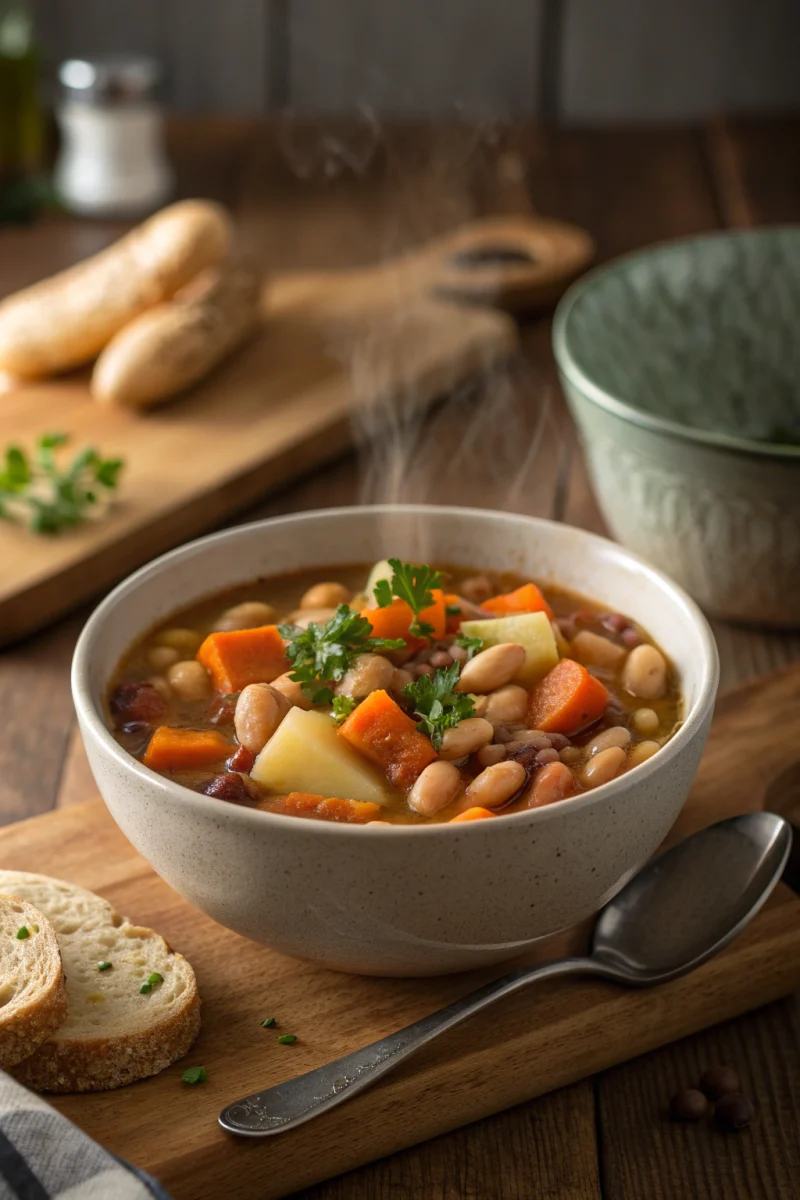
Bean Soup — The Ultimate Comfort Soup for Cozy Evenings
Bean Soup combines heartiness, warmth, and nutrition in one bowl. This guide reveals how to make the perfect winter soup — comforting, wholesome, and deeply flavorful, crafted with chef-level technique and family-friendly ease.
Thank you for reading this post, don't forget to subscribe!Why Bean Soup Matters in Winter
During cold months, the body craves warmth and hydration. Bean Soup offers both, blending nutrient-rich ingredients with slow-simmered depth. From classic broths to creamy textures, it’s a dish that soothes and strengthens at once.
Core Ingredients for a Hearty Bean Soup
Crafting an exceptional Bean Soup begins with selecting high-quality, fresh ingredients. Here’s a detailed breakdown of what you’ll need, along with tips for choosing the best of each:
- 1 tbsp olive oil: Choose extra virgin olive oil for its rich flavor and health benefits. It’s the perfect fat to start building your soup’s foundational flavors.
- 1 onion, finely chopped: Yellow or white onions work best. They caramelize beautifully, adding sweetness and depth. Finely chopping ensures they meld seamlessly into the soup.
- 2 garlic cloves, minced: Freshly minced garlic is non-negotiable for its pungent aroma and flavor. Avoid pre-minced garlic, which often lacks the same vibrancy.
- 2 carrots, diced: Carrots add natural sweetness and a lovely orange hue to the soup. Dice them uniformly for even cooking.
- 2 celery stalks, sliced: Celery provides a subtle savory note and essential aromatic complexity. Slice it thinly or dice, depending on your preferred texture.
- 4 cups vegetable or chicken broth: Opt for low-sodium broth to control the overall saltiness of your soup. Homemade broth is always superior, but a good quality store-bought brand works well. This forms the liquid base of your savory Bean Soup.
- 1 cup mixed dried beans, soaked overnight or 2 cans (15 oz each) cooked beans: A blend of beans (e.g., cannellini, kidney, black beans) adds diverse textures and flavors. If using dried beans, soak them for at least 8 hours or overnight to reduce cooking time and improve digestibility. Rinse canned beans thoroughly.
- 1 cup cooked barley or small pasta (e.g., ditalini, elbow macaroni): Barley adds a chewy, substantial texture and fiber. For a quicker cook, small pasta shapes are excellent.
- 1 (14.5 oz) can diced tomatoes: Adds a touch of acidity and sweetness, brightening the overall flavor profile. Look for fire-roasted diced tomatoes for an extra layer of smoky flavor.
- Seasonings: Salt, freshly ground black pepper to taste: Seasoning throughout the cooking process is key.
- 1 tsp dried thyme: Thyme is a classic herb that pairs wonderfully with beans and vegetables, offering an earthy, slightly floral note.
- 1 bay leaf: A single bay leaf contributes a subtle, savory depth. Remember to remove it before serving.
- Optional: 1/2 cup fresh parsley, chopped: For garnish and a burst of freshness at the end.
- Optional: 1/4 cup Parmesan cheese, grated: For serving, adding a salty, umami finish.
Step-by-Step Method for the Perfect Bean Soup
Follow these detailed steps to create a nourishing and flavorful Bean Soup that will impress even the most discerning palates. Precision in each step ensures maximum flavor development.
Step 1 — Build your ultimate flavor base (Soffritto)
Heat 1 tablespoon of olive oil in a large, heavy-bottomed pot or Dutch oven over medium heat. Add the finely chopped onion, diced carrots, and sliced celery. Sauté gently, stirring occasionally, for 8-10 minutes, or until the vegetables have softened and the onion is translucent and slightly golden. This foundational step, known as creating a “soffritto,” is crucial. It slowly coaxes out the natural sugars and aromas from the vegetables, establishing a complex and sweet-savory base for your Bean Soup. Avoid rushing this stage, as it significantly impacts the final flavor profile.
Once the base vegetables are softened, add the minced garlic. Cook for another 1-2 minutes, stirring constantly, until fragrant. Be careful not to burn the garlic, as it can turn bitter. This aromatic trio forms the backbone of nearly all great soups and stews.
Step 2 — Incorporate beans, tomatoes, broth, and initial seasonings
At this point, if you are using dried beans that have been pre-soaked, drain and rinse them thoroughly, then add them to the pot. If using canned beans, rinse and drain them and add them now. Stir in the can of diced tomatoes (undrained). Pour in the 4 cups of vegetable or chicken broth. Add the dried thyme and the bay leaf. Season with a generous pinch of salt and a few grinds of black pepper.
Bring the mixture to a gentle boil, then immediately reduce the heat to low, cover the pot, and let it simmer. If using pre-cooked beans, simmer for at least 20-25 minutes to allow the flavors to meld. If using dried, soaked beans, you will need to simmer for 1 to 1.5 hours, or until the beans are tender. Check on the liquid levels periodically and add more broth or water if the soup becomes too thick. Skim off any foam that rises to the surface during the initial simmering.
Step 3 — Add grains or pasta and finish cooking
Once your beans are tender (if starting from dried) and the flavors have deepened, stir in the 1 cup of cooked barley or small pasta. If you’re using barley, ensure it’s pre-cooked according to package directions before adding, as it takes a while to cook. If using pasta, add uncooked pasta directly to the simmering soup. Cook for an additional 10-15 minutes, or until the barley or pasta is tender, stirring occasionally to prevent sticking. The starch from the barley or pasta will also help to slightly thicken the soup.
Taste the Bean Soup and adjust the seasoning as needed. This is the crucial moment to fine-tune the salt and pepper. Remember that the flavors can concentrate as the soup cools slightly, so aim for a perfectly balanced taste now. Remove the bay leaf before serving. Garnish with fresh chopped parsley and a sprinkle of grated Parmesan cheese, if desired. Serve hot with a crusty piece of bread.
Nutrition Facts (per serving)
Here’s an estimated nutritional breakdown for a typical serving of this hearty Bean Soup, assuming approximately 6 servings from the recipe. Please note, these are approximate values and can vary based on specific ingredients and portion sizes.
- Calories: 230
- Protein: 9g
- Carbohydrates: 32g (including about 5g fiber)
- Fat: 7g (mostly from olive oil, with healthy monounsaturated fats)
- Fiber: 5g
- Sodium: 410mg (assuming low-sodium broth and careful salting. Can be significantly reduced by using homemade broth and omitting added salt)
- Potassium: 350mg
- Iron: 2mg
- Vitamin A: 15% Daily Value
- Vitamin C: 10% Daily Value
This data highlights that Bean Soup is not only comforting but also a powerhouse of nutrition, providing essential macronutrients and micronutrients that contribute to overall health. It’s an excellent source of plant-based protein and dietary fiber, crucial for digestive health and satiety.
Healthy Variations and Enhancements for Your Bean Soup
The versatility of Bean Soup allows for numerous healthy variations to suit different dietary needs and preferences. Here are several ways to enhance its nutritional value and flavor profile:
Boosting Protein Content
- Add More Beans: Incorporate additional varieties of beans, such as black beans, pinto beans, or chickpeas, to significantly increase fiber and plant-based protein.
- Lentils: Red or green lentils cook relatively quickly and blend seamlessly into the soup, adding a creamy texture and a substantial protein boost.
- Lean Meats: For non-vegetarian options, lean proteins like shredded chicken, turkey sausage, or small cubes of lean beef can be added. If adding meat, brown it first to develop flavor before adding to the soup. Add cooked meat towards the end of simmering, or raw meat at the beginning.
- Tofu or Tempeh: Cubed firm tofu or tempeh can be pan-fried until golden and added to the soup during the last 15 minutes of cooking for a robust vegan protein source.
Enhancing Vegetable Intake
- Leafy Greens: Stir in large handfuls of chopped kale, spinach, chard, or collard greens during the last 5-10 minutes of cooking. They will wilt beautifully into the soup, adding a wealth of vitamins, minerals, and antioxidants.
- Root Vegetables: Include diced sweet potatoes, parsnips, or turnips for additional earthiness, fiber, and complex carbohydrates.
- Bell Peppers: Sauté diced bell peppers (any color) with the onion and celery at the beginning for extra vitamin C and a sweet, peppery flavor.
- Zucchini or Yellow Squash: Adds lightness and extra hydration. Add diced zucchini or squash during the last 15 minutes of simmering.
According to Healthline, soups packed with vegetables are an excellent way to increase your daily nutrient intake and support overall well-being. This is especially true for bean-based soups, which are naturally rich in fiber and plant compounds.
Making it Creamier or Thicker
- Partial Blending: For a creamy texture without adding dairy, scoop out about one-third of the cooked soup, blend it using an immersion blender or a standing blender (be careful with hot liquids!), and then stir it back into the pot. This creates a luxurious mouthfeel while retaining some whole components.
- Potato or Sweet Potato: Add a diced potato or sweet potato to the soup at the beginning of simmering. As it cooks and breaks down, it will naturally thicken the broth.
- Dairy-Free Creaminess: Stir in a splash of unsweetened plant-based milk (like almond or oat milk) or a dollop of full-fat coconut milk (for a subtle tropical note) during the last few minutes for a dairy-free creamy finish.
Flavor Boosters
- Smoked Paprika: A teaspoon or two of smoked paprika can add a wonderful smoky depth, especially if you’re aiming for a “bacon-like” flavor without meat.
- Fresh Herbs: Beyond parsley, experiment with fresh rosemary, sage, or oregano for different aromatic profiles. Add them towards the end of cooking to preserve their vibrant flavor.
- Acid: A squeeze of fresh lemon juice or a dash of apple cider vinegar at the very end can brighten the entire soup and make the flavors pop.
- Spice: For a kick, add a pinch of red pepper flakes or a diced jalapeño along with the garlic.
These variations ensure that your Bean Soup can be endlessly customized, always remaining a nutritious and delicious option for any meal.
Serving Suggestions for Your Hearty Bean Soup
A bowl of warm Bean Soup is a meal in itself, but pairing it with the right accompaniments can elevate the dining experience. Here are some suggestions for creating a complete and satisfying meal:
- Crusty Whole-Grain Bread: This is a classic pairing for a reason. The bread is perfect for soaking up every last drop of the flavorful broth. Look for artisanal whole-grain loaves for added texture and nutrition. A slice of bread toasted and rubbed with garlic makes an excellent companion.
- Garlic Herb Flatbread: For a more gourmet touch, serve your Bean Soup with homemade or store-bought Garlic Herb Flatbread. The savory, aromatic flatbread complements the rustic flavors of the soup beautifully. Imagine dipping a warm, herby piece of flatbread into the rich broth – pure comfort!
- Green Side Salad: A light, crisp green salad with a vinaigrette dressing provides a refreshing contrast to the hearty soup. It adds crunch and freshness, making the meal feel balanced.
- Cheese Toasties or Grilled Cheese: For an ultimate comfort food combination, a grilled cheese sandwich or cheese toastie is unbeatable. The melted cheese and toasted bread offer a delightful textural and flavor counterpoint.
- Cornbread: Especially if your Bean Soup has a touch of southern or rustic flavor, cornbread is an excellent companion. Its slightly sweet and crumbly texture offers a wonderful contrast.
- Toppings Bar: Set up a small “topping bar” for your soup! Offer bowls of fresh parsley or cilantro, a dollop of sour cream or Greek yogurt, grated Parmesan cheese, a drizzle of high-quality olive oil, a sprinkle of red pepper flakes, or even some homemade croutons. These additions allow each diner to customize their bowl.
And for a sweet ending to your nourishing meal, consider serving Honey Oat Energy Bites. These small, nutrient-dense treats provide a subtle sweetness without being overly heavy, making them a perfect light dessert after a wholesome bowl of Bean Soup. They offer a delightful contrast in texture and a natural energy boost.
Common Mistakes to Avoid When Making Bean Soup
Even though Bean Soup seems straightforward, there are common pitfalls that can prevent it from reaching its full potential. Being aware of these can significantly improve your results:
- Boiling Instead of Simmering: A rapid boil can break down the beans and vegetables too quickly, leading to a mushy texture and potentially clouding the broth. It can also cause delicate ingredients, like herbs, to lose their fresh flavor. Always maintain a gentle simmer, where only small bubbles occasionally break the surface. This allows flavors to meld slowly and gently extract nutrients.
- Overcrowding the Pot: When sautéing your aromatic base (onions, carrots, celery), ensure there’s enough space in the pot. If the pot is too full, the vegetables will steam rather than sauté and brown. This prevents the development of those crucial caramelized flavors that form the foundation of a delicious soup. Cook in batches if necessary, or use a wider pot.
- Skipping Salt Layering: Don’t wait until the very end to salt your soup. Add small pinches of salt at various stages: when sautéing vegetables, when adding broth, and again at the end. This process, known as “salt layering,” seasons the soup from within, allowing flavors to deepen and harmonize. Salting only at the end results in a flat taste, even if the soup is technically salty.
- Using Low-Quality Broth: The broth is the liquid backbone of your soup. A watery, flavorless broth will result in a watery, flavorless soup. Invest in a good quality, low-sodium store-bought broth, or even better, make your own. Homemade broth offers unparalleled depth and allows you to control the ingredients and sodium content. If you have any homemade chicken or vegetable stock from a previous cooking session, this is where it truly shines in your Bean Soup.
- Not Soaking Dried Beans (or not cooking them enough): If you’re using dried beans, forgetting to soak them will significantly increase cooking time and can lead to a less tender texture. Even after soaking, ensure your beans are fully tender before adding other quick-cooking ingredients like small pasta. Undercooked beans can be tough and difficult to digest.
- Overcooking Grains or Pasta: If you’re adding barley or pasta, be mindful of their cooking times. Add them at the appropriate stage so they cook through but don’t become mushy. Overcooked pasta turns Gummy and can absorb too much broth, making your soup overly thick.
- Not Tasting and Adjusting: The final and perhaps most important step. Every ingredient, every batch of broth, and even the cooking time can subtly alter the flavor. Always taste your soup before serving and adjust seasonings – salt, pepper, a touch of acid (lemon juice or vinegar), or more herbs – until it tastes just right.
By avoiding these common mistakes, you’ll be well on your way to creating a consistently delicious and perfectly textured Bean Soup every time. Understanding these nuances is a hallmark of truly developed culinary skill, transforming an ordinary dish into an extraordinary one. The Medical News Today highlights the nutritional powerhouse that a properly prepared soup can be, emphasizing the importance of quality ingredients and careful cooking techniques.
Storage Tips for Maximum Freshness
Proper storage ensures your delicious Bean Soup remains safe and flavorful for extended enjoyment. Here’s how to store it effectively:
Cooling Down:
Let the soup cool down to room temperature for about 30 minutes before storing. This prevents it from raising the temperature of your refrigerator too much, which can compromise the safety of other foods. However, don’t leave it out for more than two hours to prevent bacterial growth. You can speed up cooling by dividing it into shallower containers.
Refrigeration:
- Containers: Transfer the cooled soup into airtight containers. Glass jars or food-grade plastic containers with tight-fitting lids are ideal.
- Duration: Stored properly in the refrigerator, your Bean Soup will last for up to 4 days.
- Separation (Optional): If your soup contains pasta or grains, they can sometimes absorb excessive liquid and become mushy over time. For best texture, you can store the soup base separately from the cooked pasta/grains and add them fresh when reheating, or simply accept the softer texture.
Freezing:
- Containers: For longer storage, freeze the soup. Use freezer-safe containers, heavy-duty freezer bags (lay flat for easy stacking), or even individual portions in muffin tins (once frozen, pop them out and store in a freezer bag). Leave about an inch of headspace if using rigid containers, as liquids expand when frozen.
- Duration: Bean Soup can be stored in the freezer for up to 3 months. Beyond this, quality might degrade, but it will still be safe to eat.
- Thawing: Thaw frozen soup overnight in the refrigerator. For quicker thawing, you can immerse a sealed container or bag of soup in a bowl of cold water, changing the water every 30 minutes until thawed. Avoid thawing on the countertop.
Reheating:
Reheat soup gently over medium heat on the stovetop, stirring occasionally, until it’s hot all the way through. Avoid rapid boiling, especially if the soup contains delicate vegetables or pasta, as this can affect texture and flavor. If the soup has thickened too much in storage, add a splash of water or broth while reheating to achieve your desired consistency. Always bring the soup to a rolling boil for at least one minute to ensure it’s safely reheated, especially if it was previously frozen. Harvard T.H. Chan School of Public Health’s Nutrition Source often emphasizes safe food handling as a crucial aspect of overall nutrition, including proper storage and reheating to prevent foodborne illnesses.
Conclusion
Bean Soup proves that healthy food can be both rich and comforting. This comprehensive guide has walked you through every detail, from selecting the finest ingredients and building a robust flavor base to understanding nutritional value and mastering storage techniques. We’ve explored healthy variations, addressed common mistakes, and provided serving suggestions to elevate your soup experience. Whether you’re preparing it for weekly meal prep or a cozy dinner on a chilly evening, the depth of flavor and nutritional benefits of a well-made Bean Soup are unparalleled. With the insights provided here, you’re well-equipped to create a perfect bowl every time—a warm, hearty, and wholesome masterpiece that truly offers warmth in every spoonful. Embrace the art of soup making, and let this guide be your trusted companion for creating delicious, nourishing meals that gather families around the table.
FAQ
- Can I use frozen vegetables? Yes, you can absolutely use frozen vegetables in your Bean Soup. They are a convenient and often equally nutritious option. Just be aware that frozen vegetables tend to release more water as they cook, so you might need to adjust the amount of broth slightly to prevent your soup from becoming too thin. Add them directly to the pot without thawing when you’d normally add fresh vegetables in Step 2.
- How can I make it creamier? There are several ways to achieve a creamier texture for your Bean Soup. The easiest method is to blend about one-third of the cooked soup using an immersion blender directly in the pot, or by carefully transferring a portion to a regular blender and then stirring it back in. This uses the beans and vegetables to naturally thicken the soup without adding dairy. Alternatively, for a richer taste, you can stir in a splash of heavy cream, half-and-half, or full-fat coconut milk during the last few minutes of cooking.
- What’s the best broth to use for Bean Soup? The best broth significantly impacts the soup’s flavor. Homemade vegetable or chicken stock is always superior for its rich, nuanced flavor and control over sodium. If using store-bought, opt for a high-quality, low-sodium variety. Look for brands that list real vegetables and herbs high on their ingredient list. Avoid broths with excessive additives or artificial flavors, as they can detract from the natural goodness of your Bean Soup.
- How long does Bean Soup last? When stored properly in an airtight container in the refrigerator, your delicious Bean Soup will last for up to 4 days. For longer storage, it freezes exceptionally well. You can freeze it in freezer-safe containers for up to 3 months. Remember to thaw it safely in the refrigerator overnight before reheating.
- Can I add meat to this Bean Soup recipe? Absolutely! This recipe provides a fantastic base for adding various meats. For poultry, you can add diced cooked chicken or turkey during the last 15-20 minutes of simmering to warm through. If using raw meat like ground sausage, ground beef, or diced bacon, cook and brown it in the pot before adding the onions and other vegetables, then proceed with the recipe. This adds a delicious savory depth and makes the soup even heartier.
- Is Bean Soup good for meal prep? Yes, Bean Soup is an excellent choice for meal prepping! It tends to taste even better the next day as the flavors have more time to meld and deepen. It reheats beautifully on the stovetop or in the microwave, providing a quick, nutritious, and satisfying meal on busy weekdays. Portioned into individual containers, it’s perfect for grab-and-go lunches.
- What kind of beans should I use? The recipe calls for mixed dried beans or canned cooked beans, offering flexibility. A mixture of cannellini (white kidney beans), kidney beans, and black beans provides a great textural and flavor variety. However, feel free to use your favorite type! Great Northern beans, pinto beans, or even a can of chickpeas can be wonderful additions. If using dried beans, remember to soak them overnight to reduce cooking time and improve digestibility.

creates quick vegetarian dinners and vibrant taco recipes.