Ultimate 6 Beef Stew Recipes (Hearty & Cozy)
Beef Stew Recipes — The Ultimate Comfort Soup for Cozy Evenings
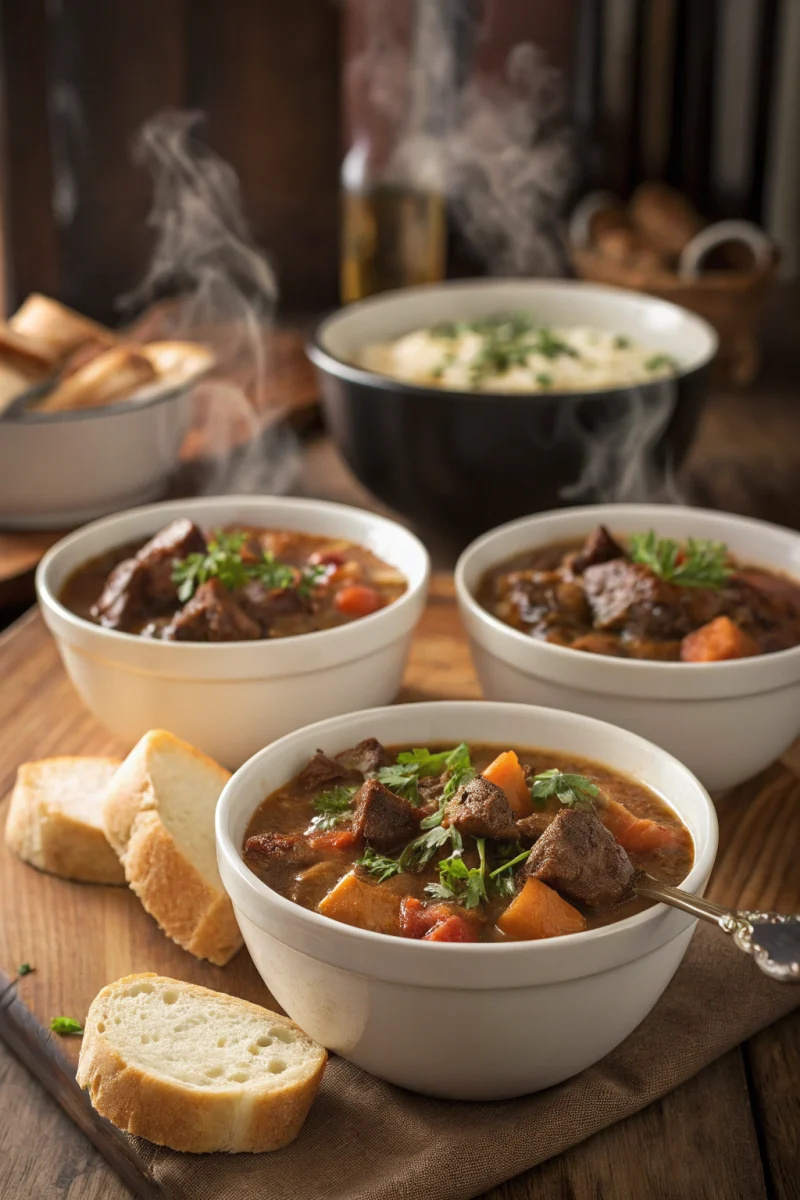
Beef Stew Recipes combines heartiness, warmth, and nutrition in one bowl. This guide reveals how to make the perfect winter soup — comforting, wholesome, and deeply flavorful, crafted with chef-level technique and family-friendly ease.
Why Beef Stew Recipes Matters in Winter
During cold months, the body craves warmth and hydration. Beef Stew Recipes offers both, blending nutrient-rich ingredients with slow-simmered depth. From classic broths to creamy textures, it’s a dish that soothes and strengthens at once.
Core Ingredients for Hearty Beef Stew Recipes
Crafting exceptional Beef Stew Recipes begins with selecting high-quality ingredients. The foundation of a rich, satisfying stew relies on robust flavors and textures.
- Beef Chuck Roast (2-3 lbs): The ideal cut for stewing. Its marbling and connective tissue break down beautifully during slow cooking, resulting in tender, flavorful meat. Cut into 1.5-inch cubes for even cooking.
- Olive Oil (2 tbsp): Used for browning the beef and sautéing aromatics, adding a layer of subtle flavor.
- Yellow Onions (2 medium), chopped: Essential for sweetness and aromatic depth. They caramelize during sautéing, contributing significantly to the stew’s flavor profile.
- Garlic (4-6 cloves), minced: Pungent and aromatic, garlic is a cornerstone of savory dishes, building complexity.
- Carrots (3-4 medium), peeled and roughly chopped: Adds natural sweetness, earthy notes, and vibrant color. They hold their shape well in a slow-cooked stew.
- Celery Stalks (2-3), chopped: Provides a subtle savory flavor and aromatic base.
- Potatoes (3-4 medium, e.g., Yukon Gold or red potatoes), peeled and cubed: Adds starchiness, thickening the stew slightly and providing a hearty element. Yukon Golds hold their shape well.
- Beef Broth (4-6 cups, low sodium): The primary liquid that forms the stew’s broth. Low sodium allows you to control the seasoning precisely.
- Tomato Paste (2 tbsp): Adds umami, richness, and slight acidity, deepening the overall flavor.
- Red Wine (1 cup, dry, e.g., Cabernet Sauvignon or Merlot – optional but recommended): Deglazes the pan, adding layers of complex flavor and tenderness to the beef. Alcohol cooks off, leaving only flavor.
- Bay Leaves (2-3): Imparts a subtle, almost floral, herbal note that enhances savory dishes.
- Fresh Thyme Sprigs (4-5): Earthy and aromatic, thyme is a classic pairing with beef.
- Worcestershire Sauce (1 tbsp): Adds a tangy, savory, and umami punch, enhancing the beef’s natural flavors.
- Salt and Black Pepper (to taste): Essential for seasoning. Season in layers, tasting as you go.
- All-Purpose Flour (1/4 cup – optional): Used to dredge the beef before browning, creating a crust and helping to thicken the stew.
- Fresh Parsley, chopped (for garnish): Adds freshness and a pop of color to the finished dish.
Step-by-Step Method for Perfect Beef Stew Recipes
Mastering these Beef Stew Recipes steps ensures a delicious and tender result every time. Attention to detail at each stage builds incredible flavor.
Step 1 — Prepare and Sear the Beef for Robust Beef Stew Recipes
Pat the beef cubes dry with paper towels. This is crucial for achieving a good sear. Season generously with salt and black pepper. If using flour, toss the beef cubes lightly with 1/4 cup all-purpose flour until evenly coated. Heat 1 tablespoon of olive oil in a large Dutch oven or heavy-bottomed pot over medium-high heat until shimmering. Working in batches to avoid overcrowding, add the beef cubes and sear them on all sides until deeply browned. This caramelization creates a rich, complex flavor that is the backbone of any great beef stew. Remove the seared beef from the pot and set aside.

Step 2 — Build Your Flavor Base: Aromatics for Essential Beef Stew Recipes
Reduce the heat to medium. Add the remaining 1 tablespoon of olive oil to the same pot, if needed. Add the chopped onions, carrots, and celery. Sauté, stirring occasionally, until the vegetables begin to soften and the onions turn translucent, about 8-10 minutes. This slow sauté brings out their natural sweetness. Add the minced garlic and tomato paste, stirring constantly for another 1-2 minutes until fragrant and the tomato paste has darkened slightly. This step caramelizes the tomato paste, intensifying its flavor and adding a deep umami note, crucial for the best chicken and vegetable stew or Beef Stew Recipes.
Step 3 — Deglaze and Simmer for Tender Beef Stew Recipes
Pour in the red wine (if using). Scrape the bottom of the pot with a wooden spoon to dislodge any browned bits (fond). This “deglazing” incorporates all the flavorful caramelized bits into the liquid, adding immense depth. Let the wine simmer for 2-3 minutes, allowing some of the alcohol to evaporate. Return the seared beef to the pot. Add the beef broth, bay leaves, fresh thyme sprigs, and Worcestershire sauce. Stir everything together. Bring the liquid to a gentle simmer, then reduce the heat to low, cover the pot, and let it cook for at least 1.5 to 2 hours. The key here is a gentle simmer—not a rolling boil—to ensure the beef becomes incredibly tender.

Step 4 — Add Potatoes and Finish Your Beef Stew Recipes
After the beef has cooked for 1.5-2 hours and is becoming tender, add the cubed potatoes to the pot. Stir gently to combine. Continue to simmer, covered, for another 30-45 minutes, or until the potatoes are fork-tender and the beef is melt-in-your-mouth soft. If the stew seems too thin, you can uncover it for the last 15-20 minutes of cooking to allow some liquid to evaporate, or mash a few of the cooked potatoes against the side of the pot to naturally thicken the broth. Remove the bay leaves and thyme sprigs. Taste and adjust seasoning with additional salt and pepper as needed. Garnish with fresh chopped parsley before serving your perfect Beef Stew Recipes.

Nutrition Facts (per serving) for a Classic Beef Stew
These values are approximate and can vary based on specific ingredient choices and portion sizes. This calculation assumes a six-serving yield from the core ingredients listed above, with flour and wine included, promoting a balanced approach to healthy soup benefits.
- Calories: Approximately 450-550 kcal
- Protein: 35-45g (primarily from beef)
- Carbohydrates: 30-40g (from vegetables and potential flour/wine)
- Fat: 20-30g (including healthy fats from olive oil and natural fats from beef)
- Fiber: 5-7g (from varied vegetables)
- Sodium: 500-700mg (can be controlled by using low-sodium broth and seasoning to taste)
- Vitamins & Minerals: Excellent source of Iron, Zinc, B Vitamins (B6, B12), Vitamin A, and Vitamin C.
Beef is a powerhouse of essential nutrients, contributing significantly to iron and B12 intake, which are vital for energy and blood health. Vegetables add a spectrum of vitamins, minerals, and antioxidants, making Beef Stew Recipes a truly wholesome meal. For deeper insights into nutritious eating, explore resources like the Harvard Nutrition Source, which offers comprehensive guidance on balanced diets.
Healthy Variations and Enhancements for Beef Stew Recipes
Customizing your Beef Stew Recipes can make it even more nutritious or adapt it to various dietary preferences. These variations don’t just add flavor but also boost the health profile of your meal, aligning with Medical News Today’s insights on soup benefits.
Vegetable Boost
To significantly increase fiber and micronutrient content, consider adding more vegetables. Towards the end of the cooking process (the last 30 minutes), incorporate greens like kale or spinach, which will wilt beautifully into the stew. For additional texture and nutrients, try adding diced bell peppers, zucchini, or green beans during the last hour of simmering. Root vegetables like parsnips or rutabagas can also be added along with the potatoes for a deeper earthy flavor.
Protein Power-Up (Plant-Based Additions)
While beef is the primary protein, you can boost the stew with plant-based proteins. Canned chickpeas or lentils (rinsed and drained) can be stirred in during the last 20 minutes of cooking. This not only adds more protein but also increases fiber and changes the texture subtly, making your Beef Stew Recipes even more satisfying. For those seeking less meat, you could reduce the beef by half and compensate with these plant proteins.
Lower-Carb Options
If you’re aiming for a lower-carb version of Beef Stew Recipes, substitute traditional potatoes with daikon radish or celeriac (celery root). Both offer a similar texture to potatoes when cooked but with significantly fewer carbohydrates. Cauliflower florets can also be added during the last 20-30 minutes of cooking as a potato alternative.
Thickening Without Flour (Gluten-Free)
For a gluten-free stew, skip dredging the beef in flour. To achieve a thicker consistency, you have a few options:
- Puree some vegetables: Once the stew is cooked, remove about 1-2 cups of the cooked vegetables (especially potatoes and carrots), blend them until smooth, and stir the puree back into the stew.
- Cornstarch slurry: Mix 1-2 tablespoons of cornstarch with an equal amount of cold water to form a slurry. Stir this into the simmering stew during the last 15 minutes of cooking and allow it to thicken.
- Arrowroot powder: Similar to cornstarch, but often preferred for its clear finish. Use a slurry as above.
Spice and Herb Adjustments for Dynamic Beef Stew Recipes
Experiment with different spice profiles. For a smoky flavor, add a pinch of smoked paprika. A touch of dried rosemary pairs wonderfully with beef. For a slight kick, a pinch of red pepper flakes can be added. Fresh marjoram or a bay leaf steeped for longer can also deepen the herbal notes, customizing your Beef Stew Recipes to your preference.
Creamy Textures
For a richer, slightly creamy Beef Stew Recipes, a small amount of heavy cream, half-and-half, or full-fat coconut milk (for dairy-free) can be stirred in just before serving. Do not boil vigorously after adding cream to prevent curdling. Alternatively, as mentioned in the thickening section, blending a portion of the cooked vegetables creates a natural creaminess without added dairy.
Serving Suggestions to Complement Beef Stew Recipes
A well-made Beef Stew Recipes is a meal in itself, but a few thoughtful accompaniments can elevate the dining experience, adding texture, contrasting flavors, or additional nutrients.
- Crusty Bread or Rolls: Absolutely essential for soaking up every last drop of that rich, flavorful broth. A rustic sourdough, French baguette, or warm whole-grain rolls are perfect choices. For an extra touch, serve with a side of Garlic Herb Flatbread, which offers a delightful savory crunch.
- Green Salad: A simple, crisp green salad with a light vinaigrette provides a refreshing contrast to the hearty stew. The acidity and freshness cut through the richness, balancing the meal beautifully.
- Warm Grains: While potatoes are often in the stew, serving your Beef Stew Recipes over a bed of fluffy rice (brown or white), quinoa, or even couscous can add another layer of texture and absorb the delicious gravy.
- Mashed Potatoes (on the side): For those who love potatoes in all forms, a scoop of creamy mashed potatoes on the side offers a comforting alternative or addition to the stew’s cubed potatoes.
- Cornbread: A slightly sweet cornbread muffin or slice offers a wonderful textural and flavor counterpoint to the savory stew.
- Simple Dessert: To round out the meal without overwhelming, consider a light, healthful dessert like fresh fruit or Honey Oat Energy Bites. These provide a sweet finish that feels indulgent but is packed with goodness.
Common Mistakes to Avoid When Making Beef Stew Recipes
Even seasoned cooks can fall prey to these common pitfalls. Avoiding them will ensure your Beef Stew Recipes turns out perfectly tender and flavorful every time.
- Not Browning the Beef Properly: This is arguably the most critical step for flavor. If you don’t achieve a deep brown crust on your beef, you miss out on the rich, complex flavors developed through the Maillard reaction. Don’t overcrowd the pan; work in batches and be patient until each piece is well-seared.
- Boiling Instead of Simmering: A rolling boil will toughen the meat and break down the vegetables into mush. Beef Stew Recipes demand a gentle, low simmer, which slowly breaks down the connective tissues in the beef, making it incredibly tender. “Low and slow” is the mantra for tender beef.
- Under-Seasoning or Not Layering Salt: Don’t just add salt at the end. Season the beef before searing, season the vegetables as they sauté, and then taste and adjust the overall seasoning before serving. Salt brings out the natural flavors of the ingredients.
- Overcrowding the Pot: Whether it’s searing the beef or sautéing the aromatics, overcrowding cools the pan, steams the ingredients instead of browning them, and prevents even cooking. Use a large enough pot or work in batches.
- Using Low-Quality Broth: The broth is the liquid backbone of your Beef Stew Recipes. A watery or flavorless broth will result in a bland stew. Opt for a good quality, low-sodium beef broth, or better yet, make your own. Low sodium allows you to control the salt content.
- Adding Vegetables Too Early: Delicate or quick-cooking vegetables like peas, corn, or leafy greens should be added towards the end of the cooking process to prevent them from becoming mushy and to retain their bright color and nutrients.
- Not Allowing Enough Cooking Time: Beef stew is not a quick meal. The beef needs ample time (often 2-3 hours) to become fork-tender. Rushing this process will result in tough, chewy meat.
- Forgetting to Deglaze: After searing the beef and sautéing the aromatics, flavorful browned bits (fond) often stick to the bottom of the pot. Deglazing with wine or broth scrapes up these bits, incorporating all that concentrated flavor into your stew.
- Lifting the Lid Too Often: Each time you lift the lid during the simmering stage, heat escapes, and the cooking temperature drops, extending the overall cooking time and potentially affecting the tenderness of the beef.
Storage Tips for Beef Stew Recipes
Beef Stew Recipes often taste even better the next day as the flavors have more time to meld and deepen. Proper storage ensures both safety and deliciousness.
- Cooling Quickly: After cooking, allow the stew to cool down for about 30-60 minutes at room temperature. However, do not leave it out for more than 2 hours. To speed up cooling, you can divide the stew into smaller containers.
- Refrigeration: Transfer the cooled beef stew into airtight containers. Refrigerate promptly. It will keep safely in the refrigerator for up to 3-4 days. Ensure the containers are sealed tightly to prevent odor transfer and keep the stew fresh.
- Freezing: Beef Stew Recipes freezes exceptionally well. For longer storage, transfer the cooled stew into freezer-safe airtight containers or heavy-duty freezer bags. If using bags, lay them flat for easy stacking and faster thawing. Label with the date. Frozen beef stew can be stored for up to 3 months. Past this, it’s still safe to eat, but the quality (texture, flavor) might start to diminish.
- Thawing: For best results, thaw frozen stew overnight in the refrigerator. If you’re in a hurry, you can gently reheat it from frozen on the stovetop over low heat, stirring frequently, or use the defrost setting on your microwave.
- Reheating: Gently reheat Beef Stew Recipes on the stovetop over medium-low heat, stirring occasionally, until it’s heated through. Avoid boiling vigorously, as this can break down the vegetables further and make the beef tougher. If the stew has thickened too much in the fridge, add a splash of broth or water during reheating to achieve your desired consistency. When reheating in the microwave, cover the dish to prevent splatters and ensure even heating.
- Food Safety Note: Always ensure the stew reaches an internal temperature of 165°F (74°C) when reheating. Never reheat stew multiple times; only reheat the portion you intend to eat.
Conclusion: The Enduring Appeal of Beef Stew Recipes
Beef Stew Recipes is more than just a meal; it’s a culinary hug, a symbol of comfort and nourishment that transcends seasons but truly shines during colder months. From the rich aroma that fills your home to the tender, fall-apart beef and wholesome vegetables, every spoonful tells a story of care and flavorful depth. This guide has demystified the process, equipping you with chef-level techniques to achieve a perfect stew—one that is both intensely flavorful and wonderfully healthy.
By understanding the importance of proper browning, strategic layering of ingredients, and patient simmering, you can avoid common pitfalls and consistently create a dish that pleases every palate. Whether you experiment with healthy variations, explore different spice profiles like in a lemon herb chicken and rice dish, or simply stick to the classic preparation, Beef Stew Recipes offers endless possibilities for customization and enjoyment. It’s a testament to how simple, quality ingredients, treated with respect, can transform into an extraordinary and satisfying experience. Embrace the warmth, savor the flavors, and make this timeless classic a cherished part of your home cooking legacy—a dish that truly offers warmth in every spoonful.
FAQ — Your Top Questions About Beef Stew Recipes Answered
- Can I use frozen vegetables in Beef Stew Recipes?
Yes, you absolutely can! Frozen mixed vegetables like peas, carrots, corn, and green beans are a convenient option. Add them during the last 20-30 minutes of cooking, as they cook much faster than fresh, especially if you’re not also cooking fresh carrots and potatoes from scratch. If you’re using only frozen vegetables without fresh ones, you might need to slightly reduce the amount of broth, as frozen vegetables can release more water as they thaw and cook, potentially thinning your stew. Always ensure they are thoroughly cooked and tender before serving. - How can I make my Beef Stew Recipes creamier?
There are several ways to achieve a creamier consistency without adding a lot of heavy cream:- Blend a portion: Once the stew is cooked, carefully remove about 1-2 cups of the cooked vegetables (especially potatoes and carrots) and a little broth. Blend them until smooth using an immersion blender or a regular blender (be cautious with hot liquids). Stir this creamy puree back into the stew. This naturally thickens and enriches the stew.
- Add a dairy boost: For a richer flavor, stir in 1/4 to 1/2 cup of heavy cream, half-and-half, or even Greek yogurt (for a tangy note) during the last few minutes of cooking. Be careful not to boil the stew vigorously after adding dairy to prevent curdling.
- Mashed potatoes: Mash a portion of the cooked potatoes directly in the pot against the side with a spoon or fork. This releases their starch and naturally thickens the broth, similar to how potato flakes are used in some recipes.
- Roux or Slurry: If you prefer to thicken the entire stew, you can whisk together 2 tablespoons of cornstarch or arrowroot powder with 2 tablespoons of cold water to create a slurry. Stir this into the simmering stew during the last 15 minutes of cooking and allow it to come to a gentle boil to activate the thickening. Alternatively, for a richer method, cook 2 tablespoons of butter with 2 tablespoons of flour in a separate pan for a couple of minutes to make a roux, then stir some hot stew liquid into the roux before adding the mixture back to the main pot.
- What’s the best broth to use for Beef Stew Recipes?
The quality of your broth significantly impacts the flavor of your Beef Stew Recipes.- Homemade Beef Broth: This is unequivocally the best option if you have the time. It offers the deepest, most authentic flavor and allows you complete control over ingredients and sodium.
- High-Quality Store-Bought Beef Broth or Stock: Look for brands that list real beef bones or meat as primary ingredients and have a robust, savory flavor. Opt for ‘low sodium’ or ‘unsalted’ versions so you can control the salt content yourself. Avoid broths with excessive additives or artificial flavors.
- Bone Broth: Beef bone broth is an excellent choice, providing a rich, gelatinous texture and additional nutritional benefits. Many good quality brands are available.
Avoid using bouillon cubes or highly concentrated liquid bases as your sole broth source, as they often contain very high sodium levels and artificial flavors that can dominate the delicate balance of your stew. If you must use them, dilute them more than recommended and taste frequently.
- How long does Beef Stew Recipes last in storage?
When stored properly:- Refrigerated: Beef Stew Recipes will last safely in an airtight container in the refrigerator for 3 to 4 days. The flavors often deepen and improve on the second day.
- Frozen: Beef Stew Recipes freezes exceptionally well. In an airtight, freezer-safe container or freezer bag, it can maintain its quality for up to 3 months. Beyond that, it’s still safe to eat, but the texture of some vegetables (like potatoes) might become slightly mushier, and the overall flavor might diminish slightly. Always label your containers with the date for easy tracking.
Remember to cool the stew quickly before refrigerating or freezing, and always reheat thoroughly until steaming hot to ensure food safety.
Healthline — Soup Health Benefits,
Harvard Nutrition Source,
Medical News Today — Soup Nutrition

creates quick vegetarian dinners and vibrant taco recipes.