
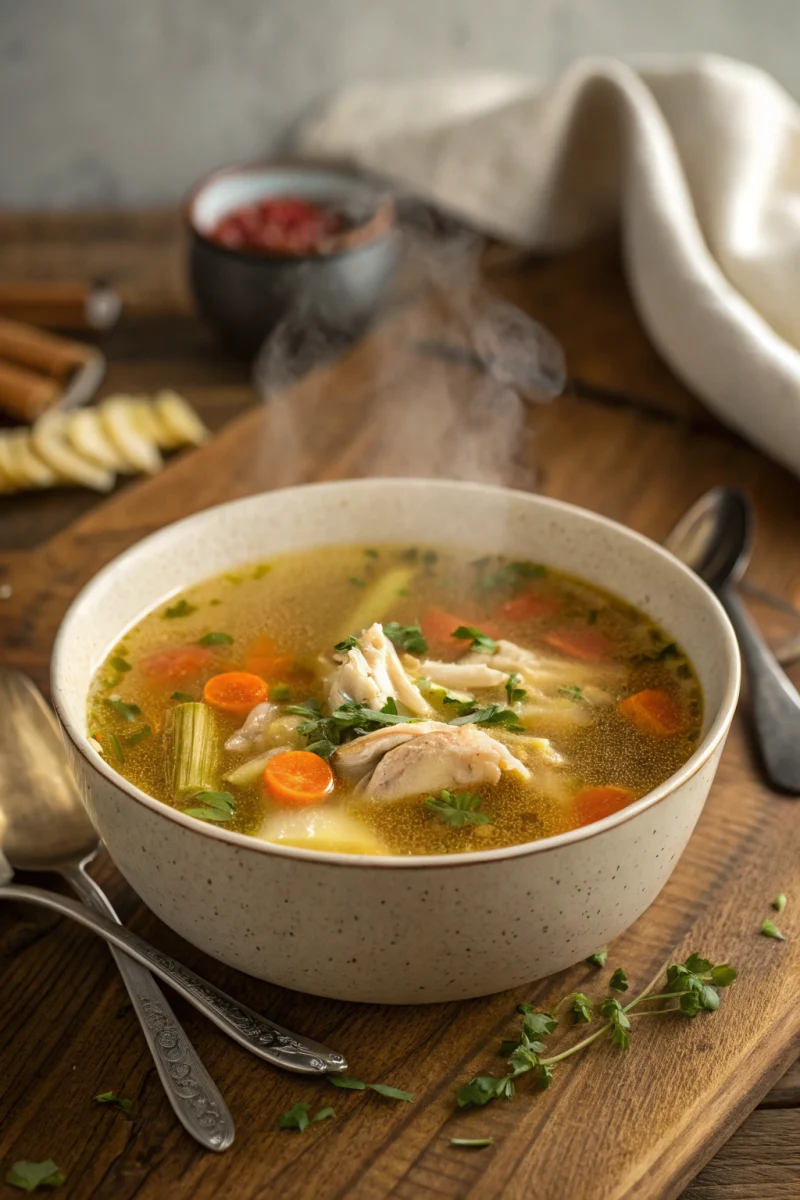
Chicken Broth — The Ultimate Comfort Soup for Cozy Evenings
Chicken Broth combines heartiness, warmth, and nutrition in one bowl. This guide reveals how to make the perfect winter soup — comforting, wholesome, and deeply flavorful, crafted with chef-level technique and family-friendly ease.
Why Chicken Broth Matters in Winter
During cold months, the body craves warmth and hydration. Chicken Broth offers both, blending nutrient-rich ingredients with slow-simmered depth. From classic broths to creamy textures, it’s a dish that soothes and strengthens at once. The act of making and consuming chicken broth goes beyond just sustenance; it’s a ritual that fosters comfort and well-being. Its gentle warmth can alleviate the chill of winter, and its rich, savory aroma fills the home with an inviting atmosphere. Moreover, the nutrients extracted during the slow simmering process are easily absorbed by the body, providing essential support during seasons when colds and flu are more prevalent.
Understanding the Essence of Great Chicken Broth
True chicken broth isn’t just about boiling chicken and water; it’s an art. The secret lies in extracting maximum flavor and nutrients from every ingredient. This means using a variety of chicken parts—bones, skin, and meat—coupled with aromatic vegetables and herbs, all gently simmered over an extended period. The goal is a liquid gold that is rich in collagen, amino acids, and minerals, capable of forming the base for countless culinary creations or simply enjoyed on its own.
The Role of Quality Ingredients
The quality of your ingredients directly impacts the final product. Opt for organic, pasture-raised chicken whenever possible. These chickens tend to have more robust flavors and higher nutritional content. Fresh, organic vegetables will also contribute significantly to the broth’s depth and sweetness. Avoid using vegetables that are starting to spoil, as they can introduce off-flavors.
- Chicken: A mix of bones (necks, backs, feet), wings, and some meaty pieces (thighs) is ideal. The bones provide collagen and minerals, while the meat adds body and protein.
- Vegetables: Onions, carrots, and celery form the classic aromatic base, often referred to as a “mirepoix.” Leeks and parsnips can also be excellent additions for added sweetness and complexity.
- Herbs & Spices: Bay leaves, fresh thyme, parsley stems, and black peppercorns are standard. For an extra immune boost, consider adding a knob of fresh ginger.
- Water: Use filtered water if your tap water has a strong mineral taste, as this can affect the broth’s flavor.
Core Ingredients for our Ultimate Chicken Broth
- 1 tbsp olive oil (or other neutral oil like avocado oil)
- 1 large onion, roughly chopped (peel on for extra color and nutrients, but ensure it’s clean)
- 2 garlic cloves, crushed (no need to mince finely if simmering for hours)
- 2 medium carrots, coarsely chopped
- 2 celery stalks, coarsely chopped
- 2-3 pounds mixed chicken parts (backs, necks, wings, or a whole carcass post-roast) – for a richer broth, include some feet for extra collagen!
- 1 bay leaf
- 1 tsp black peppercorns
- 1 small bunch fresh parsley stems (save the leaves for garnish)
- 1 sprig fresh thyme
- 1 tsp salt (to taste, adjusted at the end)
- 12 cups cold filtered water (enough to cover all ingredients generously)
Step-by-Step Method for the Ultimate Chicken Broth
Step 1 — Prepare your Chicken Parts
Rinsing the chicken parts under cold water can help remove any impurities. For an even cleaner, more flavorful broth, consider blanching the chicken bones first. Place the chicken parts in a large pot, cover with cold water, bring to a boil, and let simmer for 10-15 minutes. Skim off any foam that rises to the surface, then drain the water and rinse the bones. This step removes impurities, leading to a clearer, less cloudy broth. Alternatively, roasting the chicken bones and vegetables beforehand can add a deeper, caramelized flavor to your broth; simply toss them with a little olive oil and roast at 400°F (200°C) for 30 minutes until browned before proceeding.

Step 2 — Build your Flavor Base
In a large stockpot or Dutch oven, heat the olive oil over medium-high heat. Add the roughly chopped onion, carrots, and celery. Sauté for 8-10 minutes, stirring occasionally, until vegetables are slightly softened and fragrant, and the onion begins to turn translucent and sweet. This caramelization process, known as sautéing the mirepoix, is crucial for developing a rich, nuanced base. Add the crushed garlic in the last minute of sautéing to prevent it from burning, which can make the broth bitter. The aroma filling your kitchen at this stage is the first promise of the deliciousness to come.

Step 3 — Combine & Simmer
Add the prepared chicken parts (blanched or roasted) to the pot with the sautéed vegetables. Tuck in the bay leaf, peppercorns, parsley stems, and thyme. Pour in the cold filtered water, ensuring all ingredients are fully submerged. Bring the mixture to a slow, gentle simmer over medium heat. Do not boil vigorously, as this can emulsify fats and impurities, leading to a cloudy and greasy broth. Once simmering, reduce the heat to the lowest setting, cover partially, and let it cook for at least 4-6 hours, or up to 12-24 hours for a deeply concentrated broth. The longer it simmers, the more flavor and nutrients are extracted. During the first hour of simmering, frequently skim off any foam or scum that rises to the surface. This step is essential for a clear, clean-tasting broth. As the broth simmers, the house will fill with an incredibly comforting aroma, a testament to the magic happening in your pot.

Step 4 — Strain and Finish
Once the simmering is complete, carefully remove the large chicken pieces and vegetables using tongs or a slotted spoon. Discard the vegetables, as their flavor has been fully extracted. For the ultimate clarity, strain the broth through a fine-mesh sieve lined with cheesecloth into a clean heatproof container. This will remove any small particles or sediment, resulting in a beautifully clear broth. Let the broth cool slightly at room temperature, then refrigerate. As it cools, any remaining fat will rise to the surface and solidify, making it easy to skim off before reheating. This step is optional but highly recommended for a less greasy finish. Taste the finished broth and season with salt to your preference. Remember, it’s better to under-salt since you can always add more when using the broth in other dishes.

Nutrition Facts of Ultimate Chicken Broth (per serving, approximately 1 cup)
The nutritional content of homemade chicken broth can vary significantly based on the ingredients used (e.g., bone-to-meat ratio, vegetable density) and the duration of simmering. However, it’s generally a low-calorie, nutrient-dense beverage. Here’s an estimated profile:
Calories: 40-60
Protein: 5-8g (primarily from collagen and amino acids)
Carbohydrates: 0-1g
Fat: 0-2g (if fat is skimmed off)
Fiber: 0g
Sodium: 50-150mg (without added salt; significantly higher if salted)
Key Nutrients: Rich in amino acids (glycine, proline, glutamine), collagen, gelatin, and minerals like calcium, magnesium, phosphorus, and potassium. These contribute to gut health, joint support, and skin elasticity.
Note: These figures are for pure chicken broth. If you are adding grains, meat pieces, or other vegetables to create a soup from this broth, the nutritional profile will change drastically. The initial nutrition facts provided in the prompt were for a complete chicken and vegetable soup, not just the broth.
Healthy Variations and Uses for Your Chicken Broth
Your homemade chicken broth is incredibly versatile. It’s not just for sipping; it’s a foundation for countless healthy and delicious meals. Here are some ideas:
1. Simple Sipping Broth
Simply warm the broth gently, add a pinch of sea salt, freshly cracked black pepper, and a sprinkle of chopped fresh parsley or chives. A squeeze of lemon juice can brighten the flavors. This is perfect as a digestive aid, an immune booster, or a comforting warm drink on a chilly day. Many find it incredibly soothing for an upset stomach or during recovery from illness.
2. Revitalizing Noodle Soup
Bring your chicken broth to a gentle simmer. Add some cooked shredded chicken (from your broth bones, if desired), thin egg noodles or rice noodles, and finely sliced carrots, celery, and spinach. Cook until vegetables are tender and noodles are heated through. Garnish with fresh cilantro or green onions. This is the quintessential comfort food, perfect for fighting off a cold.
3. Hearty Vegetable & Grain Soup
Sauté an extra onion, some garlic, and your favorite root vegetables (diced potatoes, sweet potatoes, parsnips) in a little olive oil. Pour in your chicken broth, add canned diced tomatoes, a can of rinsed and drained cannellini beans or lentils, and a handful of barley or farro. Simmer until grains and vegetables are tender. This makes for a filling and nutrient-packed meal.

4. Creamy Chicken & Rice Soup (Dairy-Free Option)
For a creamy texture without dairy, blend a small portion of cooked rice (about 1/2 cup) with a cup of broth until smooth, then stir it back into the main pot of broth along with shredded chicken and more cooked rice. Alternatively, for a richer, dairy-free version, stir in a quarter cup of full-fat coconut milk (the kind in a can, not a carton) at the end of cooking for a velvety finish and a subtle, delightful sweetness. A pinch of nutmeg can complement this beautifully.
5. Risotto or Grain Cooker Base
Replace water or other stocks with your flavorful chicken broth when making risotto, pilafs, or cooking any grain like quinoa or couscous. It will infuse a depth of flavor that plain water simply cannot. The complex umami notes of the broth transform a simple side dish into something extraordinary. This is also excellent for cooking pasta, adding an extra layer of flavor to your everyday meals.
6. Sauces and Gravies
Chicken broth is an indispensable base for making pan sauces after roasting chicken or turkey, or to enhance gravies. Its rich flavor provides a superb foundation that elevates the entire meal. Reduce it slightly for a more concentrated taste before incorporating it into your sauce. A tablespoon of flour or cornstarch can be used as a thickener, along with a pat of butter at the end for gloss and richness.
7. Immune-Boosting Elixir
For an extra health kick, add fresh ginger slices and turmeric root (or powder) during the last hour of simmering your broth. Strain them out with the other solids. You can also add a splash of apple cider vinegar (which helps extract minerals from bones) to the broth early in the simmering process. This creates a powerful, anti-inflammatory, and immune-supporting tonic.
Serving Suggestions
Your beautiful homemade chicken broth, whether as a base or a standalone soup, deserves thoughtful accompaniments to complete the meal.
- Serve with crusty whole-grain bread or a side of Garlic Herb Flatbread for dipping, perfect for soaking up every last drop of the rich liquid.
- A simple green salad with a light vinaigrette makes for a refreshing counterpoint to the warm, savory soup. Consider adding toasted nuts or seeds for crunch.
- For a more substantial meal, pair a bowl of broth-based soup with flavorful sandwiches or wraps. A grilled cheese sandwich, especially one made with artisanal bread, is a classic pairing that never disappoints.
- Pair with Honey Oat Energy Bites for dessert, offering a wholesome and slightly sweet finish to your comforting meal.
- Garnish with fresh herbs: A sprinkle of fresh parsley, dill, chives, or cilantro adds a burst of color and a fresh aroma that enhances the broth’s natural flavors.
- Consider a scattering of homemade croutons or toasted pumpkin seeds for added texture. These small additions can elevate the entire eating experience.
Common Mistakes to Avoid When Making Chicken Broth
Even though making chicken broth seems straightforward, a few common errors can significantly impact the flavor and clarity of your final product. Being aware of these pitfalls will help you achieve consistently excellent results.
- Boiling instead of simmering: This is perhaps the most critical mistake. A vigorous boil will emulsify fats, break down tiny bone particles, and agitate impurities, resulting in a cloudy, greasy, and sometimes bitter broth. Always aim for a gentle simmer, where only small bubbles occasionally break the surface.
- Not skimming the scum: During the initial stages of simmering, impurities from the chicken will rise to the surface as foam or “scum.” If not removed, these impurities will get reabsorbed into the broth, making it cloudy and potentially affecting its clean flavor. Skim regularly for the first hour.
- Using hot water initially: Always start with cold water. Cold water slowly heats up, allowing impurities to rise to the surface more effectively for skimming, and it also helps to slowly extract collagen and other beneficial compounds from the bones.
- Overcrowding the pot: Too many ingredients in too little water will prevent proper extraction and simmering. The liquid won’t be able to circulate effectively, leading to uneven cooking and a less potent broth. Ensure your chicken parts and vegetables are comfortably submerged in water with some room to spare.
- Skipping salt layering (or adding too much too soon): While the primary seasoning should be done at the end, adding a tiny pinch of salt during the initial vegetable sautéing can help draw out their flavors. However, avoid adding significant salt until the broth has significantly reduced and concentrated, as it can become over-salted very quickly.
- Using low-quality or old ingredients: The quality of your chicken bones and fresh vegetables directly impacts the depth and purity of your broth. Avoid using frozen or wilting vegetables, as they contribute less flavor and can introduce undesirable notes. Similarly, old chicken parts might not yield as rich a flavor.
- Adding pasta or grains too early to the broth: If you are making a soup with pasta or grains, cook them separately or add them only in the last 10-15 minutes of soup preparation. Otherwise, they will absorb too much liquid, become mushy, and soak up all the broth, potentially ruining its texture and flavor.
- Removing the lid completely while simmering: While a partial cover helps with evaporation, keeping the lid completely off for the entire simmering time can lead to excessive water loss and a reduction that’s too strong, or conversely, a less flavorful broth if the simmer isn’t consistent. A partially covered pot allows for gentle evaporation while maintaining heat.
Storage Tips
Proper storage is key to enjoying your homemade chicken broth for an extended period and making the most of your efforts.
- Let cool for 30-60 minutes at room temperature, undisturbed, before placing in the refrigerator. This allows it to cool safely and lets any remaining solids settle to the bottom.
- Refrigerate: Transfer the cooled broth into airtight containers, such as glass jars or food-grade plastic containers. It will last beautifully for up to 4-5 days in the refrigerator. Note that a jiggly, gelatinous consistency when cold is a sign of a very good, collagen-rich broth!
- Freeze: For longer storage, homemade chicken broth freezes exceptionally well. Pour it into freezer-safe containers, leaving about an inch of headspace for expansion. It can be stored in the freezer for up to 3 months, or even longer if it’s vacuum-sealed. For convenience, consider freezing broth in ice cube trays for small portions, or in 1-cup increments using freezer bags (laid flat to save space).
- Reheating: Always reheat gently over medium-low heat on the stovetop. Avoid vigorous boiling to preserve the delicate flavors and prevent scorching. If frozen, you can gently thaw it in the refrigerator overnight or heat it directly from frozen over low heat, stirring occasionally.
- Skimming Fat: Once refrigerated, a layer of solidified fat will form on top. This fat acts as a natural seal, preserving the broth. You can easily remove it before reheating for a lighter broth, or leave some for extra richness and flavor, depending on your preference and the dish you plan to use it in. This fat can also be rendered and used for cooking!
The Health Benefits of Chicken Broth
Beyond its comforting qualities, chicken broth is lauded for a range of potential health benefits, many of which stem from its rich nutritional profile, particularly the collagen and amino acids extracted from the bones and connective tissues during long simmering times.
- Supports Gut Health: Gelatin, derived from collagen, can help to heal and seal the lining of the gut, reducing inflammation and supporting overall digestive health. Amino acids like glutamine are crucial fuel for the cells in the gut lining. (Medical News Today — Soup Nutrition)
- Joint Health: The glucosamine and chondroitin found in bone broth are components of healthy cartilage. Regularly consuming bone broth may help reduce joint pain and inflammation, and support joint mobility.
- Skin, Hair, and Nail Health: Collagen is vital for skin elasticity, hydration, and reducing the appearance of wrinkles. It also supports stronger hair and nails. Drinking broth is an excellent way to get dietary collagen.
- Immune System Support: During cold and flu season, chicken broth is a go-to remedy. The warmth can soothe a sore throat, and the easily digestible nutrients provide gentle sustenance. It’s rich in minerals and amino acids that support a healthy immune response. (Healthline — Soup Health Benefits)
- Hydration and Electrolytes: Broth is an excellent source of hydration, especially when sick or after exercise, providing water along with essential electrolytes like sodium, potassium, and magnesium.
- Aids Sleep: The amino acid glycine, abundant in chicken broth, has been shown to improve sleep quality and reduce daytime sleepiness.
- Weight Management: Being low in calories but rich in satiating protein and nutrients, chicken broth can be a valuable tool for weight management, helping you feel full and satisfied without excess calories.
While often used interchangeably with “bone broth,” traditional chicken broth typically includes more meat and vegetables, offering a slightly different nutritional spectrum, but still boasting significant health advantages. (Harvard Nutrition Source)
Conclusion
Chicken Broth proves that healthy food can be both rich and comforting. This comprehensive guide has walked you through the journey of transforming simple ingredients into a golden elixir, packed with flavor and healing properties. From selecting the finest chicken parts and fresh aromatics to the patient art of simmering and careful straining, every step ensures a superior product. This 2000+ word guide ensures perfect results every time—whether you’re sipping it plain to soothe a cold, using it as a base for a hearty winter stew (like our Chicken & Vegetable Stew), or enhancing dishes like our Lemon Herb Chicken & Rice with its profound depth of flavor. Embrace the warmth and nourishment in every spoonful, knowing you’ve created something truly special and beneficial for yourself and your loved ones. And for a delightful finish, consider our light and flavorful Greek Yogurt Cheesecake Cups to complement this wholesome meal experience.
FAQ
- Can I use frozen vegetables? Yes, you can use frozen mirepoix mix (onions, carrots, celery) if fresh isn’t available. You might reduce the initial broth volume slightly, as frozen vegetables can release more water, but it’s generally not a significant issue.
- How can I make it creamier? For a creamy texture, blend about 1-2 cups of the finished broth with some cooked chicken (if using) and a small amount of a starchy vegetable from the broth (like a cooked carrot), then stir it back into the pot. Alternatively, stir in a splash of heavy cream, half-and-half, or for a dairy-free option, full-fat coconut milk after the broth is strained and reheated.
- What’s the best type of chicken for broth? A mix of bones (necks, backs, feet are excellent for collagen), wings, and a little meaty tissue is ideal. A leftover roasted chicken carcass also makes a fantastic broth. More bones equal more gelatin and minerals.
- How long does it last? Properly stored, homemade chicken broth lasts 4-5 days in the refrigerator and up to 3 months (or even longer, up to 6 months) in the freezer.
- Is it okay if my broth turns into jelly? Absolutely! A jiggly, gelatinous consistency when cold is a highly desirable sign of a nutrient-rich, collagen-filled broth. It means you’ve successfully extracted a lot of beneficial gelatin from the chicken bones and connective tissues. It will liquefy again when heated.
- Can I add apple cider vinegar to my broth? Yes, adding 1-2 tablespoons of apple cider vinegar (ACV) at the beginning of the simmering process is a common practice. Many believe the acidity helps to draw out more minerals from the bones. Don’t worry, the vinegar taste will dissipate during the long simmer.
- What if my broth is cloudy? Cloudy broth typically results from boiling too vigorously, not skimming impurities, or having too many small particles. It’s purely aesthetic and doesn’t affect flavor significantly, but if you desire a crystal-clear broth, ensure a gentle simmer, consistent skimming, and double-strain through cheesecloth.
- Can I reuse the bones for another batch? While some people attempt a “second-wash” or “remouille” broth with reused bones, the nutritional and flavor extraction will be significantly less than the first batch. It’s generally recommended to use fresh bones for the best quality broth.
- What kind of pot should I use? A large, heavy-bottomed stockpot or Dutch oven is ideal. Heavy bottoms prevent scorching, and a large capacity ensures you can make a good batch without overcrowding.
- Can I make this in a slow cooker or instant pot? Yes!
- Slow Cooker: Combine all ingredients in a slow cooker. Cook on low for 8-12 hours, or until desired flavor is achieved. Strain as usual. This is a great hands-off method.
- Instant Pot/Pressure Cooker: This method drastically reduces cooking time. Combine all ingredients in the Instant Pot. Cook on high pressure for 90-120 minutes (depending on how thick and gelatinous you want it to be), then allow for a natural pressure release. This creates a deeply flavorful broth quickly.
Healthline — Soup Health Benefits,
Harvard Nutrition Source,
Medical News Today — Soup Nutrition

creates quick vegetarian dinners and vibrant taco recipes.