
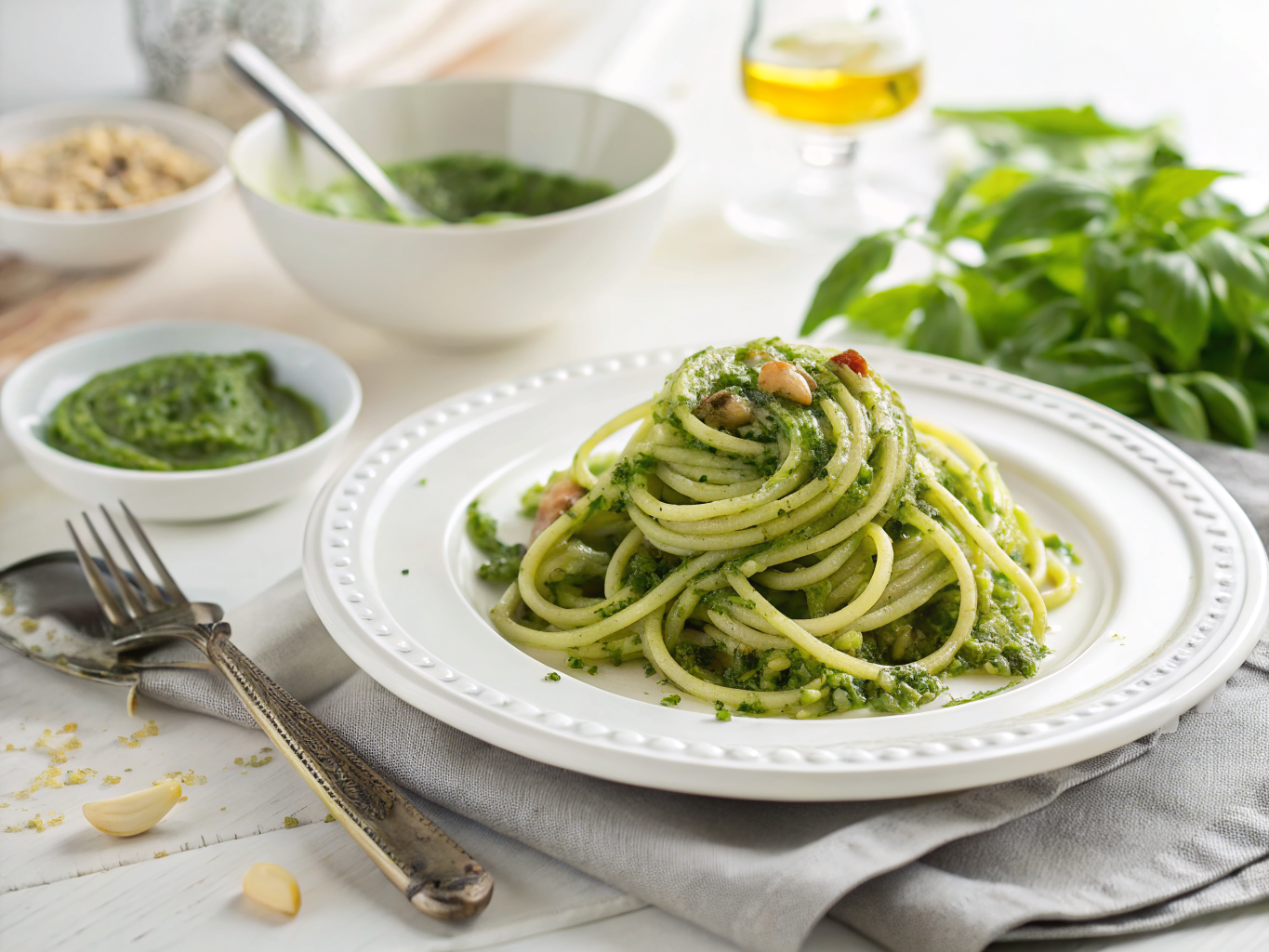
Zucchini Noodles with Pesto
Ingredients
Method
- In a food processor, combine basil leaves, pine nuts, garlic, and Parmesan cheese. Pulse until finely chopped.
- With the processor running, slowly drizzle in the olive oil until the pesto reaches a smooth consistency. Add lemon juice, salt, and pepper. Pulse to combine.
- Spiralize the zucchini into noodles using a spiralizer or julienne peeler. Pat dry with paper towels to remove excess moisture.
- Heat a large skillet over medium heat. Add the zucchini noodles and sauté for 2-3 minutes until just tender but still slightly crisp.
- Remove skillet from heat. Add the pesto to the zucchini noodles and toss gently until evenly coated.
- If using, fold in the halved cherry tomatoes for added freshness and color.
- Serve immediately, garnished with extra Parmesan cheese and fresh basil leaves if desired.
Nutrition
Notes
Tried this recipe?
Let us know how it was!Looking for a healthy, delicious meal that comes together in less than 20 minutes? This Zucchini Noodles with Pesto recipe is your answer to quick weeknight cooking without sacrificing flavor or nutrition. Fresh spiralized zucchini noodles are tossed with vibrant homemade basil pesto and sweet cherry tomatoes for a light yet satisfying dish that will become your new favorite go-to meal.
Thank you for reading this post, don't forget to subscribe!Whether you’re following a low-carb lifestyle, trying to incorporate more vegetables into your diet, or simply craving something fresh and flavorful, this recipe delivers on all fronts. The combination of tender zucchini noodles with aromatic pesto creates a perfect harmony that even pasta lovers will adore. Plus, with minimal prep work and cooking time, you’ll have a restaurant-quality meal on your table faster than ordering takeout.
Why This Zucchini Noodles with Pesto Recipe Works Every Time
The magic of this dish lies in its simplicity and the quality of its few ingredients. Unlike traditional pasta dishes that can feel heavy, Zucchini Noodles with Pesto offers a light, refreshing alternative that won’t leave you feeling sluggish. The natural moisture in zucchini pairs beautifully with the rich, oily texture of pesto, creating a coating that clings to every strand without being overwhelming.
This recipe is incredibly forgiving for home cooks of all skill levels. You don’t need professional knife skills or complicated cooking techniques to achieve excellent results. The spiralizing process is straightforward, and the assembly takes just minutes, making it perfect for busy weeknights when you want something nutritious but don’t have hours to spend in the kitchen.
Another reason this recipe stands out is its nutritional profile. Zucchini is naturally low in calories but high in important vitamins and minerals, while the basil pesto provides healthy fats and antioxidants. According to Healthline, zucchini is an excellent source of vitamins A and C, as well as manganese and potassium. This combination creates a meal that nourishes your body while satisfying your taste buds.
Core Ingredients You’ll Need
The beauty of Zucchini Noodles with Pesto lies in its short ingredient list. You’ll need 4 medium-sized zucchinis, which should be firm and free of blemishes for the best texture. Fresh, high-quality zucchini makes all the difference in the final dish, as older vegetables can become mushy when spiralized.
For the pesto, you’ll need 2 cups of fresh basil leaves, which provide the signature aromatic flavor. Additionally, gather 1/3 cup of pine nuts (or walnuts as a budget-friendly alternative), 1/2 cup of extra virgin olive oil, 3 cloves of garlic, 1/2 cup of freshly grated Parmesan cheese, and salt and pepper to taste. Using fresh ingredients rather than store-bought pesto elevates the entire dish.
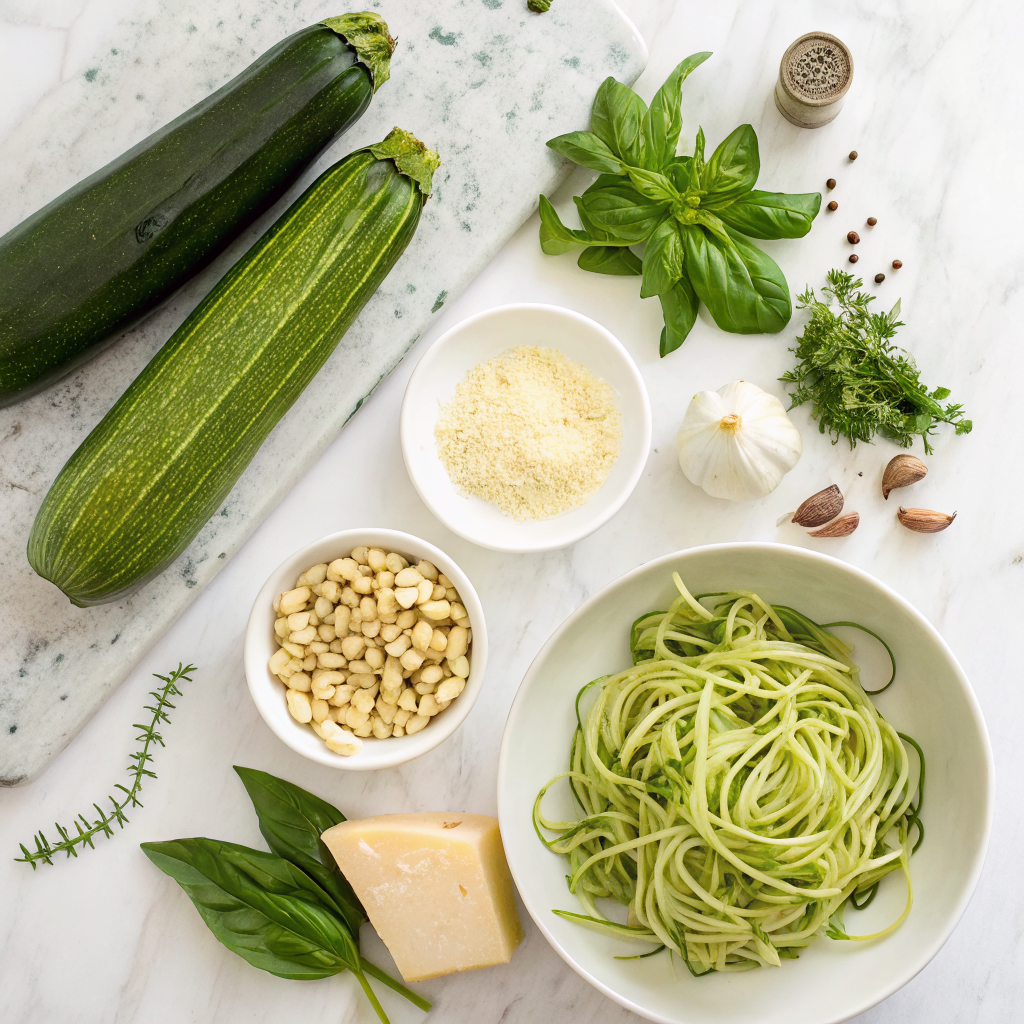
Round out the dish with 1 cup of halved cherry tomatoes for bursts of sweetness and acidity. Optional additions include red pepper flakes for heat, extra Parmesan for garnish, and fresh lemon juice to brighten the flavors. These simple ingredients come together to create something truly special that tastes like you spent hours preparing it.
Choosing the Right Zucchini
Selecting the proper zucchini is crucial for perfect noodles. Look for medium-sized zucchinis that are about 6-8 inches long and 1.5-2 inches in diameter. Smaller zucchinis tend to have better texture and fewer seeds, which means your noodles will be firmer and less watery.
Avoid oversized zucchinis, as they often contain more water and larger seeds that can make your dish soggy. The skin should be bright green, smooth, and firm to the touch. Any soft spots or wrinkles indicate the vegetable is past its prime and won’t spiralize well.
Pesto Ingredient Quality Matters
The quality of your basil can make or break your pesto. Choose bright green leaves without any dark spots or wilting. Fresh basil from a farmers market or your own garden will provide the most vibrant flavor, though store-bought basil works perfectly fine when properly selected.
When it comes to Parmesan cheese, invest in a good quality wedge and grate it yourself rather than using pre-grated cheese. Freshly grated Parmesan melts better and has a richer, more complex flavor that enhances the entire dish. The extra effort takes only minutes but significantly impacts the final result.
Step-by-Step Instructions for Perfect Zucchini Noodles with Pesto
Begin by preparing your zucchini noodles, also known as “zoodles.” Wash the zucchinis thoroughly and trim off both ends. Using a spiralizer, create long noodle-like strands by applying steady pressure as you turn the vegetable. If you don’t have a spiralizer, a julienne peeler or mandoline with a julienne blade works as an excellent alternative.
Once spiralized, place the zucchini noodles in a colander and lightly salt them. Let them sit for 10-15 minutes to draw out excess moisture. This crucial step prevents your finished dish from becoming watery and diluting the pesto flavor. After the resting period, gently press the noodles with paper towels to remove the released liquid.
While the zucchini noodles are draining, prepare your homemade pesto. In a food processor, combine the basil leaves, pine nuts, and garlic cloves. Pulse several times until the ingredients are roughly chopped. With the processor running, slowly drizzle in the olive oil until the mixture becomes smooth and creamy, scraping down the sides as needed.
Making the Perfect Pesto
Add the grated Parmesan cheese to the food processor and pulse a few more times until fully incorporated. Season with salt and freshly ground black pepper to taste. The pesto should have a smooth, spreadable consistency that’s not too thick or too thin. If it seems too thick, add a tablespoon or two of additional olive oil.
Taste your pesto and adjust the seasonings as needed. Some prefer more garlic for a bolder flavor, while others like extra Parmesan for richness. This is your chance to customize the sauce to your preferences before combining it with the zucchini noodles.
Cooking the Zoodles
Heat a large skillet over medium heat and add 1 tablespoon of olive oil. Once the oil is shimmering, add the patted-dry zucchini noodles to the pan. Sauté for 2-3 minutes, tossing frequently with tongs, until the noodles are just tender but still have a slight bite. Be careful not to overcook them, as they can quickly become mushy.
Remove the skillet from heat and immediately add your prepared pesto to the warm zucchini noodles. Toss everything together until the noodles are evenly coated with the fragrant sauce. The residual heat will help the pesto adhere to the noodles without cooking it, which preserves the fresh basil flavor and bright green color.
Add the halved cherry tomatoes and give everything a final gentle toss. The tomatoes will warm slightly from the heat of the noodles and pesto, releasing some of their juices to create additional sauce. Serve immediately for the best texture and temperature contrast.
Nutritional Benefits of This Healthy Meal
Zucchini Noodles with Pesto is not only delicious but also incredibly nutritious. One serving contains approximately 200-250 calories, making it a light yet satisfying meal option. The dish is naturally low in carbohydrates compared to traditional pasta, with about 10-12 grams of net carbs per serving versus 40+ grams in regular pasta dishes.
The zucchini provides an excellent source of dietary fiber, which supports digestive health and helps you feel fuller longer. Research from Harvard School of Public Health highlights that vegetables like zucchini contain important phytonutrients that may help reduce inflammation. Additionally, zucchini is rich in antioxidants including lutein and zeaxanthin, which support eye health.
The pesto component adds healthy monounsaturated fats from olive oil and pine nuts, which are beneficial for heart health. These healthy fats also help your body absorb the fat-soluble vitamins present in the zucchini. The Parmesan cheese provides protein and calcium, while the basil offers vitamin K and other beneficial plant compounds.
Macronutrient Breakdown
Each serving of this recipe typically contains 8-10 grams of protein, primarily from the Parmesan cheese and nuts in the pesto. The healthy fat content ranges from 18-22 grams per serving, mostly from the olive oil and pine nuts. These fats are essential for nutrient absorption and provide lasting energy without spiking blood sugar levels.
The dish is naturally gluten-free and can easily be made dairy-free by substituting nutritional yeast or a dairy-free cheese alternative for the Parmesan. This versatility makes it suitable for various dietary preferences and restrictions. For those following a keto or low-carb diet, this recipe fits perfectly within daily macronutrient goals.
Creative Variations to Try
One of the best aspects of Zucchini Noodles with Pesto is its adaptability. Try adding grilled chicken breast sliced into strips for additional protein and to make it more filling. The mild flavor of chicken complements the pesto beautifully without overwhelming the delicate zucchini noodles.
For a seafood twist, top your zoodles with sautéed shrimp or pan-seared scallops. The sweetness of seafood pairs wonderfully with the herbal notes in the pesto. Cook the protein separately and add it to the finished dish, or sauté it in the same pan before cooking the zucchini noodles to infuse the oil with additional flavor.
Vegetarians can boost the protein content by adding white beans, chickpeas, or cubed firm tofu. These additions make the meal more substantial while maintaining its plant-based nature. You can find more protein-packed vegetarian options on our vegetarian recipes page.
Different Pesto Variations
While traditional basil pesto is classic, don’t be afraid to experiment with other herbs and greens. Arugula pesto adds a peppery kick that works beautifully with zucchini noodles. Spinach and kale can be mixed with basil for added nutrition and a milder flavor profile that appeals to those who find traditional pesto too strong.
Sun-dried tomato pesto offers a sweeter, more intense flavor that transforms the entire dish. Simply blend sun-dried tomatoes with basil, garlic, and the other pesto ingredients for a beautiful red sauce. This variation adds depth and richness that makes the meal feel even more special.
Seasonal Additions
Customize your Zucchini Noodles with Pesto based on what’s in season. In summer, add fresh corn kernels and diced bell peppers for sweetness and crunch. Autumn calls for roasted butternut squash cubes and toasted pumpkin seeds. Winter variations might include sautéed mushrooms and caramelized onions for earthier flavors.
Spring is perfect for adding asparagus tips, fresh peas, and baby spinach to create a garden-fresh medley. These seasonal variations keep the recipe exciting and allow you to take advantage of produce at its peak flavor and nutritional value. Each variation brings new textures and tastes while maintaining the core appeal of the dish.
Serving Suggestions and Pairings
Zucchini Noodles with Pesto works beautifully as a light main course or as a side dish alongside grilled proteins. Serve it with grilled salmon for an omega-3 rich meal that’s both elegant and healthy. The fatty fish complements the fresh vegetables without making the plate feel heavy.
For a complete Mediterranean-inspired meal, pair your zoodles with a simple Caprese salad and crusty whole-grain bread. The combination creates a balanced plate with various textures and flavors that work in harmony. A chilled glass of white wine, such as Pinot Grigio or Sauvignon Blanc, enhances the herbal notes in the pesto.
This dish also makes an excellent contribution to potlucks and summer gatherings. It can be served at room temperature, which makes it practical for outdoor events. The vibrant colors make it visually appealing on a buffet table, and the fresh flavors appeal to a wide range of palates.
Garnishing for Presentation
Elevate the presentation of your Zucchini Noodles with Pesto with thoughtful garnishes. A sprinkle of extra pine nuts adds crunch and visual appeal. Fresh basil leaves torn and scattered over the top reinforce the pesto’s herbal aromatics while adding a professional touch.
Shaved Parmesan curls created with a vegetable peeler look elegant and add extra richness. A light drizzle of high-quality extra virgin olive oil just before serving adds shine and enhances the flavors. For a pop of color and additional flavor, add a squeeze of fresh lemon juice and a few lemon zest curls.
Common Mistakes to Avoid
The most frequent error when making Zucchini Noodles with Pesto is overcooking the zoodles. They need only 2-3 minutes of cooking time to become tender while maintaining their structure. Cooking them too long results in mushy, watery noodles that won’t hold the pesto properly and create an unappetizing texture.
Another common mistake is skipping the salting and draining step. Zucchini contains significant water content that will be released during cooking, diluting your pesto and making the dish watery. Taking the extra 10-15 minutes to properly drain the zucchini noodles ensures a perfectly textured final dish.
Using pre-made pesto from a jar can save time, but it often results in a less vibrant flavor profile. Many store-bought pestos contain preservatives and lower-quality ingredients that don’t provide the same fresh taste as homemade. If you must use jarred pesto, choose a high-quality brand and consider boosting it with fresh basil and extra Parmesan.
Spiralizer Tips
When using a spiralizer, applying inconsistent pressure creates uneven noodles that cook at different rates. Maintain steady, even pressure throughout the spiralizing process for uniform noodles. If your spiralizer produces very long strands, use kitchen scissors to cut them into more manageable lengths before cooking.
Trying to spiralize zucchini that’s too soft or overripe leads to poor results. The noodles will break apart and won’t hold their shape during cooking. Always select firm, fresh zucchini for the best spiralizing experience and final texture.
Storage and Meal Prep Tips

creates quick vegetarian dinners and vibrant taco recipes.