
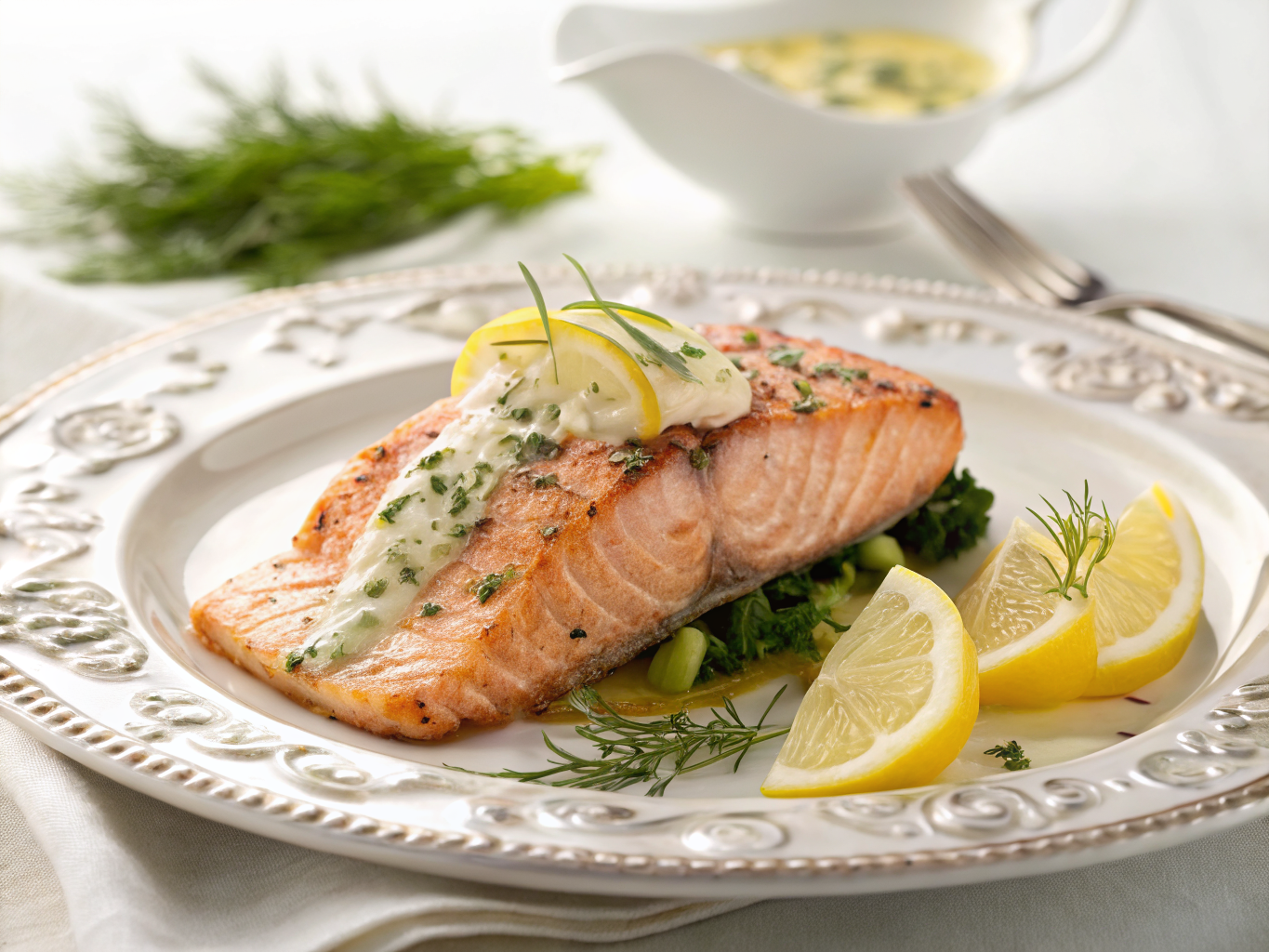
Baked Salmon with Lemon Butter
Ingredients
Method
- Preheat your oven to 400°F (200°C). Lightly grease a baking dish with olive oil or line with parchment paper.
- In a small bowl, combine melted butter, lemon juice, lemon zest, and minced garlic. Whisk together until well combined.
- Place salmon fillets in the prepared baking dish, skin-side down if applicable. Season both sides with salt and pepper.
- Pour the lemon butter mixture evenly over the salmon fillets, making sure each piece is well coated.
- Bake in the preheated oven for 10-12 minutes, or until the salmon flakes easily with a fork and reaches an internal temperature of 145°F.
- Remove from oven and immediately sprinkle with fresh chopped parsley. Drizzle any remaining pan juices over the salmon before serving.
Nutrition
Notes
Tried this recipe?
Let us know how it was!If you’re searching for a restaurant-quality meal that comes together in less than 30 minutes, this Baked Salmon with Lemon Butter recipe is your answer. This elegant dish combines tender, flaky salmon fillets with a rich garlic lemon butter sauce that elevates the natural flavors of the fish without overwhelming them. Whether you’re cooking for a special occasion or simply want to add more omega-3s to your weekly rotation, this foolproof recipe delivers impressive results every single time.
Thank you for reading this post, don't forget to subscribe!The beauty of Baked Salmon with Lemon Butter lies in its simplicity and versatility. With just a handful of quality ingredients and minimal preparation, you can create a nutritious meal that looks and tastes like it came from a high-end restaurant. The combination of buttery richness, bright citrus notes, and aromatic garlic creates a flavor profile that appeals to both seafood enthusiasts and those who are new to cooking fish.
This recipe has become a staple in kitchens around the world because it addresses the most common challenges home cooks face when preparing seafood. The baking method ensures even cooking without the risk of overcooking, while the lemon butter sauce keeps the salmon moist and flavorful throughout the cooking process. Best of all, cleanup is minimal, making this an ideal choice for busy weeknights when you want something special without spending hours in the kitchen.
Why This Baked Salmon with Lemon Butter Recipe Works So Well
The magic behind this Baked Salmon with Lemon Butter recipe lies in the careful balance of cooking temperature, timing, and ingredient quality. Baking salmon at the optimal temperature of 400°F allows the fish to cook through gently while developing a slightly caramelized exterior. This method preserves the delicate texture of the salmon while allowing the flavors of the lemon butter sauce to penetrate every bite.
Unlike pan-searing or grilling, baking provides consistent, all-around heat that eliminates hot spots and reduces the risk of unevenly cooked fish. The enclosed oven environment also helps retain moisture, which is crucial when working with lean proteins like salmon. By coating the fillets with butter and lemon juice before baking, you create a protective layer that bastes the fish continuously as it cooks.
The garlic lemon butter component serves multiple purposes in this recipe. First, it adds richness and depth of flavor that complements the natural taste of salmon without masking it. Second, the butter helps conduct heat evenly across the surface of the fish, promoting uniform cooking. Third, the acidity from fresh lemon juice helps break down proteins slightly, resulting in a more tender texture while brightening the overall flavor profile.
According to Harvard School of Public Health, salmon is one of the best sources of omega-3 fatty acids, which support heart health and brain function. This recipe maximizes nutritional benefits by using a cooking method that preserves these delicate fatty acids better than high-heat methods like frying or broiling.
Core Ingredients That Make the Perfect Dish
The success of this Baked Salmon with Lemon Butter hinges on selecting high-quality ingredients, starting with the salmon itself. Fresh, wild-caught salmon typically offers superior flavor and texture compared to farm-raised varieties, though sustainably farmed salmon can be an excellent choice as well. Look for fillets that are firm to the touch, have a vibrant color, and smell fresh like the ocean rather than fishy.
Essential Ingredients
- Salmon fillets: Four 6-ounce portions, skin-on or skinless based on preference
- Unsalted butter: 4 tablespoons, melted for optimal flavor control
- Fresh lemon juice: 3 tablespoons plus lemon slices for garnish
- Garlic cloves: 4 cloves, minced finely for even distribution
- Fresh parsley: 2 tablespoons, chopped for color and freshness
- Sea salt: 1 teaspoon or to taste
- Black pepper: ½ teaspoon, freshly ground
- Paprika: ½ teaspoon for subtle warmth and color
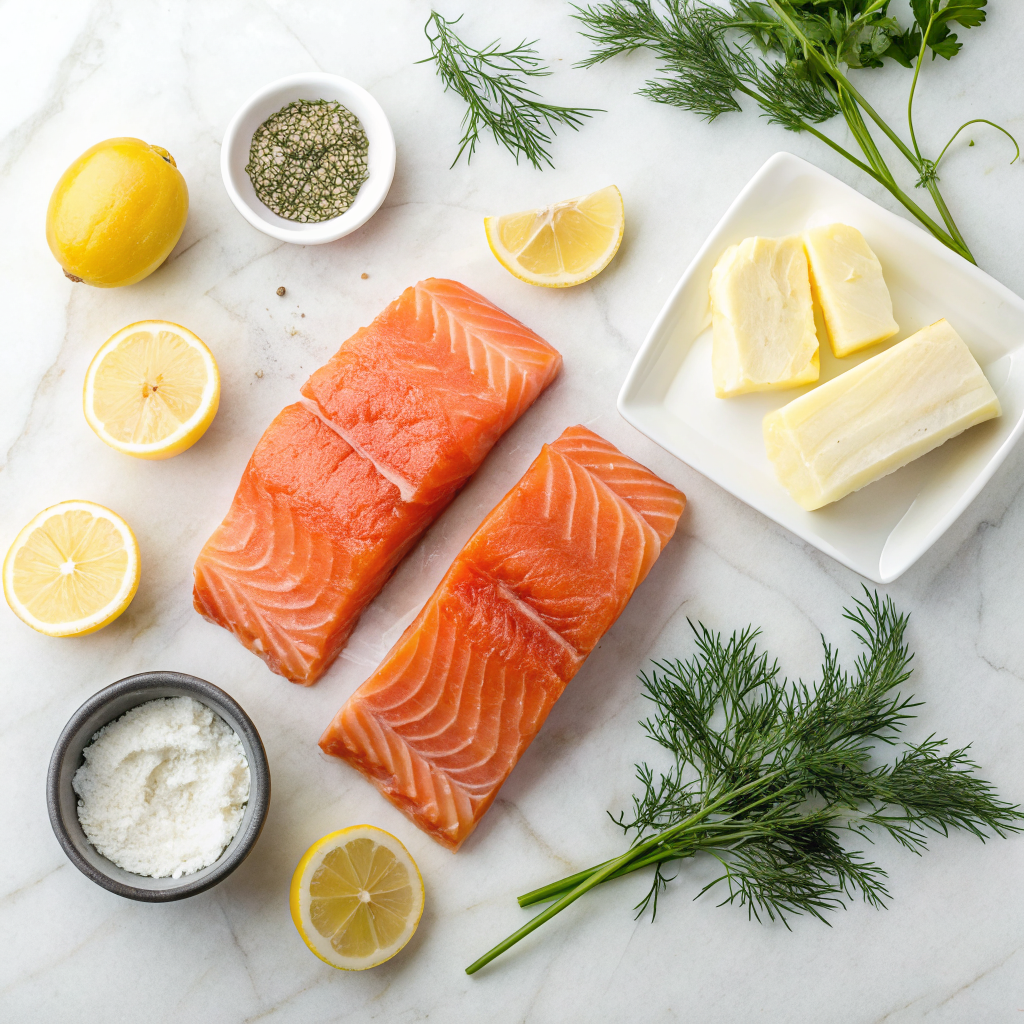
The butter should always be unsalted so you can control the sodium content of your dish. Salted butter varies by brand, and using it can result in an overly salty final product. Melting the butter before mixing it with lemon juice and garlic ensures even distribution and allows the flavors to meld together before coating the salmon.
Fresh lemon juice is non-negotiable in this recipe. Bottled lemon juice simply cannot replicate the bright, vibrant flavor of freshly squeezed lemons. The natural oils in lemon zest, which are released when you juice fresh lemons, add aromatic complexity that bottled versions lack. Plan to use approximately one and a half large lemons to yield the required three tablespoons of juice.
When it comes to garlic, fresh cloves that you mince yourself provide the most robust flavor. Pre-minced garlic from a jar contains preservatives that can impart an off-flavor, and the texture is often mushy rather than crisp. Take the extra minute to peel and mince fresh garlic cloves, and your Baked Salmon with Lemon Butter will taste noticeably better for the effort.
Step-by-Step Instructions for Perfect Results
Creating restaurant-quality Baked Salmon with Lemon Butter at home requires attention to detail and proper technique. Follow these steps carefully to ensure your salmon turns out perfectly cooked with a beautiful golden exterior and moist, flaky interior. The entire process takes approximately 25 minutes from start to finish, making it ideal for weeknight dinners.
Preparation Phase
Begin by preheating your oven to 400°F, positioning the rack in the center position for optimal heat circulation. While the oven heats, remove the salmon fillets from the refrigerator and let them sit at room temperature for about 10 minutes. This step is crucial because cold salmon placed directly in a hot oven will cook unevenly, with the exterior overcooking before the center reaches the proper temperature.
Line a large baking sheet with parchment paper or aluminum foil for easy cleanup, then lightly spray or brush it with olive oil to prevent sticking. Pat the salmon fillets completely dry with paper towels, removing any excess moisture. This drying step is essential because moisture on the surface of the fish will prevent proper caramelization and can result in steaming rather than baking.
In a small bowl, combine the melted butter, fresh lemon juice, minced garlic, chopped parsley, salt, pepper, and paprika. Whisk these ingredients together thoroughly until they form a cohesive sauce. The butter may want to separate from the lemon juice, so whisk vigorously to create an emulsion that will cling to the salmon better.
Assembly and Baking
Place the dried salmon fillets on the prepared baking sheet, leaving at least two inches of space between each piece to ensure proper air circulation. Using a pastry brush or spoon, generously coat the top and sides of each fillet with the lemon butter mixture, reserving about two tablespoons for basting halfway through cooking. If you’re using skin-on salmon, place the fillets skin-side down on the baking sheet.
Arrange thin lemon slices on top of each fillet for both visual appeal and an extra burst of citrus flavor during baking. The heat will slightly caramelize the lemon slices, intensifying their flavor and creating an attractive presentation. Some people prefer to place lemon slices under the fish as well, which can impart additional flavor while slightly elevating the fillets off the baking sheet.
Transfer the baking sheet to the preheated oven and bake for 12-15 minutes, depending on the thickness of your fillets. A general rule of thumb is to cook salmon for about 4-6 minutes per half-inch of thickness. Halfway through the cooking time, quickly open the oven and brush the remaining lemon butter sauce over the salmon to keep it moist and enhance the flavor.
Determining Doneness
The salmon is perfectly cooked when it reaches an internal temperature of 145°F at the thickest part, as measured with an instant-read thermometer. At this temperature, the fish will be opaque throughout with a slightly translucent center that will continue cooking from residual heat after you remove it from the oven. The flesh should flake easily when gently pressed with a fork but still maintain its structure rather than falling apart.
Visual cues can also help you determine doneness if you don’t have a thermometer. Properly cooked salmon will have a slightly darker, more opaque appearance throughout, and the flesh will have separated into distinct flakes. When you insert a knife or fork into the thickest part and gently twist, the salmon should separate easily along its natural muscle lines.
Avoid overcooking, which is the most common mistake when preparing salmon. Overcooked salmon becomes dry, chalky, and loses its delicate texture and flavor. Remember that the fish will continue to cook for a minute or two after you remove it from the oven due to carryover cooking, so it’s better to err slightly on the side of undercooking than overcooking.
Nutritional Benefits of This Healthy Dinner
Baked Salmon with Lemon Butter is not only delicious but also incredibly nutritious, making it an excellent choice for health-conscious individuals and families. Each serving provides approximately 350-400 calories, depending on the size of your fillet and the amount of butter used. This calorie count makes it a satisfying yet reasonable option for most dietary plans.
Salmon is renowned for its high protein content, with a typical 6-ounce serving providing approximately 34 grams of complete protein. This protein contains all nine essential amino acids your body needs for muscle repair, immune function, and overall cellular health. For those following higher-protein diets or trying to maintain muscle mass, this recipe offers an excellent nutritional profile.
The omega-3 fatty acids found in salmon, particularly EPA and DHA, are perhaps its most celebrated nutritional component. According to Healthline, these essential fats support cardiovascular health, reduce inflammation throughout the body, and contribute to brain health and cognitive function. A single serving of salmon can provide more than 100% of your daily recommended intake of omega-3s.
This Baked Salmon with Lemon Butter recipe is also rich in vitamins and minerals. Salmon is an excellent source of vitamin B12, which supports nerve function and red blood cell formation. It also provides significant amounts of vitamin D, selenium, and potassium. The addition of lemon juice increases the vitamin C content while the garlic adds antioxidants and compounds that may support immune function.
Research published by Medical News Today suggests that regular consumption of omega-3-rich fish like salmon may reduce the risk of heart disease, support mental health, and even contribute to healthy aging. The American Heart Association recommends eating fatty fish like salmon at least twice per week to reap these cardiovascular benefits.
Nutritional Note: While butter adds richness and flavor to this dish, you can reduce the amount used or substitute olive oil if you’re looking to lower saturated fat content. The recipe will still be delicious with these modifications while offering a slightly different nutritional profile.
Creative Variations to Keep Things Interesting
One of the best features of this Baked Salmon with Lemon Butter recipe is its versatility and adaptability to different flavor preferences and dietary needs. Once you master the basic technique, you can experiment with various modifications that transform the dish while maintaining its essential appeal. These variations ensure you’ll never get bored with this healthy weeknight staple.
Herb and Spice Variations
For a Mediterranean twist on your Baked Salmon with Lemon Butter, add fresh dill, oregano, and a pinch of red pepper flakes to the butter mixture. This combination pairs beautifully with salmon and evokes the flavors of Greek and Italian coastal cuisine. You could also incorporate fresh thyme and rosemary for a more earthy, aromatic profile that works particularly well during cooler months.
An Asian-inspired variation can be created by adding freshly grated ginger, a splash of soy sauce or tamari, and a drizzle of sesame oil to the lemon butter. Top the finished salmon with sliced scallions and sesame seeds for an extra layer of flavor and texture. This version pairs exceptionally well with steamed rice and stir-fried vegetables.
For those who enjoy heat, try a spicy version by incorporating cayenne pepper, red chili flakes, or even a touch of sriracha into the butter mixture. The natural richness of the salmon and butter helps balance the heat, creating a complex flavor profile. You might also enjoy exploring spicy salmon recipes for more inspiration on incorporating heat into your seafood dishes.
Glaze and Topping Options
Transform your Baked Salmon with Lemon Butter by adding a honey-Dijon glaze. Simply mix two tablespoons of honey with one tablespoon of Dijon mustard and brush it over the salmon during the last five minutes of baking. The glaze caramelizes slightly, creating a beautiful golden finish with a perfect balance of sweet and tangy flavors.
A crust topping adds both texture and visual appeal to the dish. Create a simple breadcrumb crust by mixing panko breadcrumbs with grated Parmesan cheese, melted butter, and herbs. Press this mixture onto the salmon after coating it with the lemon butter, then bake as directed. The result is a crispy, golden exterior that contrasts beautifully with the tender fish beneath.
For a more elegant presentation, try a pistachio or almond crust. Finely chop your chosen nuts and mix them with breadcrumbs, lemon zest, and fresh herbs. This variation not only adds a delightful crunch but also introduces additional healthy fats and nutrients to an already nutritious meal.
Dietary Modifications
For those following a dairy-free or Paleo diet, replace the butter with ghee or extra virgin olive oil. While the flavor profile will be slightly different, both alternatives work beautifully with the lemon and garlic. Olive oil, in particular, adds its own layer of richness and provides additional heart-healthy monounsaturated fats.
A low-carb or keto-friendly version is easily achieved by simply maintaining the recipe as written, as it’s naturally very low in carbohydrates. Pair your salmon with cauliflower rice or zucchini noodles instead of traditional starches to keep the entire meal within your macronutrient goals.
For additional seafood inspiration that works well with various dietary approaches, consider exploring quick seafood dinners that can be adapted to your specific nutritional needs.
Perfect Serving Suggestions and Pairings

creates quick vegetarian dinners and vibrant taco recipes.