
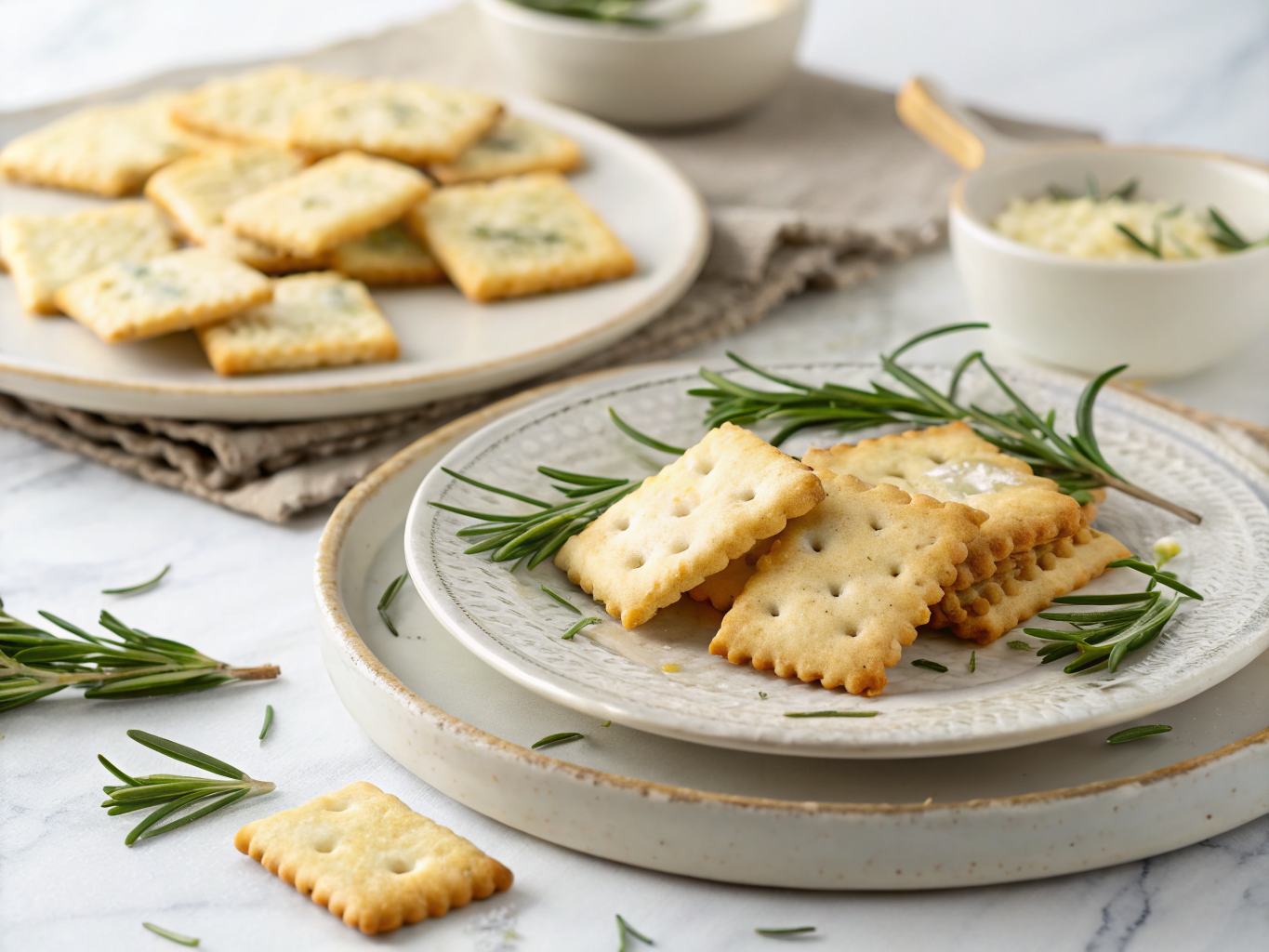
Rosemary Parmesan Crackers
Ingredients
Method
- Preheat oven to 450°F (230°C) and line a large baking sheet with parchment paper.
- In a medium bowl, whisk together flour, Parmesan cheese, chopped rosemary, salt, and black pepper until well combined.
- Add olive oil and cold water to the dry ingredients. Stir with a fork until a dough forms, then knead briefly in the bowl until smooth.
- Place dough on the prepared baking sheet. Cover with another piece of parchment paper and roll out very thin, about 1/8 inch thick, covering most of the baking sheet.
- Remove top parchment paper. Use a pizza cutter or knife to score the dough into squares or rectangles. Sprinkle with coarse sea salt and press gently to adhere.
- Bake for 12-15 minutes until golden brown and crispy around the edges. Watch carefully to prevent burning.
- Remove from oven and let cool completely on the baking sheet. Break apart along scored lines and serve.
Nutrition
Notes
Tried this recipe?
Let us know how it was!There’s something truly special about biting into a crispy, homemade cracker that’s been lovingly crafted in your own kitchen. These Rosemary Parmesan Crackers combine the earthy fragrance of fresh rosemary with the sharp, nutty flavor of aged Parmesan cheese to create an absolutely irresistible snack. Whether you’re hosting an elegant wine and cheese party or simply looking for a sophisticated alternative to store-bought crackers, this recipe will become your go-to favorite.
Thank you for reading this post, don't forget to subscribe!The beauty of homemade crackers lies in their simplicity and the ability to control every ingredient that goes into them. Unlike commercial varieties that often contain preservatives, artificial flavors, and excessive sodium, these Rosemary Parmesan Crackers are made with wholesome ingredients you can pronounce. The combination of butter, flour, cheese, and herbs creates a delicate yet sturdy cracker that’s perfect for pairing with soft cheeses, dips, or enjoying on their own as a light snack.
Making crackers from scratch might sound intimidating, but this recipe breaks down the process into easy, manageable steps that even beginner bakers can master. The dough comes together quickly, requires minimal equipment, and the rolling and cutting process can actually be quite therapeutic. Once you’ve tasted the difference between homemade and store-bought crackers, you’ll never want to go back to the packaged versions again.
Why This Rosemary Parmesan Crackers Recipe Works Perfectly Every Time
This recipe has been tested and refined to ensure consistent, restaurant-quality results with every batch. The secret lies in the perfect ratio of fat to flour, which creates that ideal crispy texture without being too brittle or too tough. The butter provides richness and helps create those beautiful golden-brown edges, while the Parmesan adds both flavor and helps bind the dough together naturally.
The inclusion of fresh rosemary isn’t just about flavor—it also adds a beautiful visual element with those distinctive green flecks throughout each cracker. Fresh herbs contain natural oils that infuse the dough during mixing and intensify during baking, creating layers of aromatic complexity. According to Healthline’s research on rosemary, this herb also contains beneficial antioxidants and anti-inflammatory compounds that add nutritional value to your crackers.
The technique of rolling the dough thin and baking at a moderate temperature ensures even cooking throughout. Unlike some cracker recipes that result in burnt edges and soft centers, this method produces uniformly crisp crackers that snap perfectly when broken. The dough’s consistency is forgiving enough to handle without tearing, yet delicate enough to achieve that paper-thin quality that makes gourmet crackers so appealing.
Core Ingredients You’ll Need for Perfect Rosemary Parmesan Crackers
The foundation of exceptional Rosemary Parmesan Crackers starts with selecting high-quality ingredients. For the flour, all-purpose works beautifully, providing just enough structure without making the crackers tough. You’ll need approximately two cups of flour, which creates the base that holds everything together while maintaining that delicate, crispy texture we’re aiming for.
When it comes to the Parmesan cheese, quality truly matters. Freshly grated Parmigiano-Reggiano offers superior flavor compared to pre-grated varieties, which often contain anti-caking agents that can affect texture. You’ll want about one cup of finely grated Parmesan, packed to ensure you’re getting enough of that sharp, nutty flavor in every bite. The cheese not only contributes flavor but also adds protein and helps create those irresistible crispy edges.
Fresh rosemary is non-negotiable for this recipe. Dried rosemary can work in a pinch, but fresh sprigs provide a vibrant, piney aroma that elevates these crackers from good to extraordinary. You’ll need about two tablespoons of finely chopped fresh rosemary leaves. Be sure to remove the leaves from the woody stems and mince them finely so they distribute evenly throughout the dough.
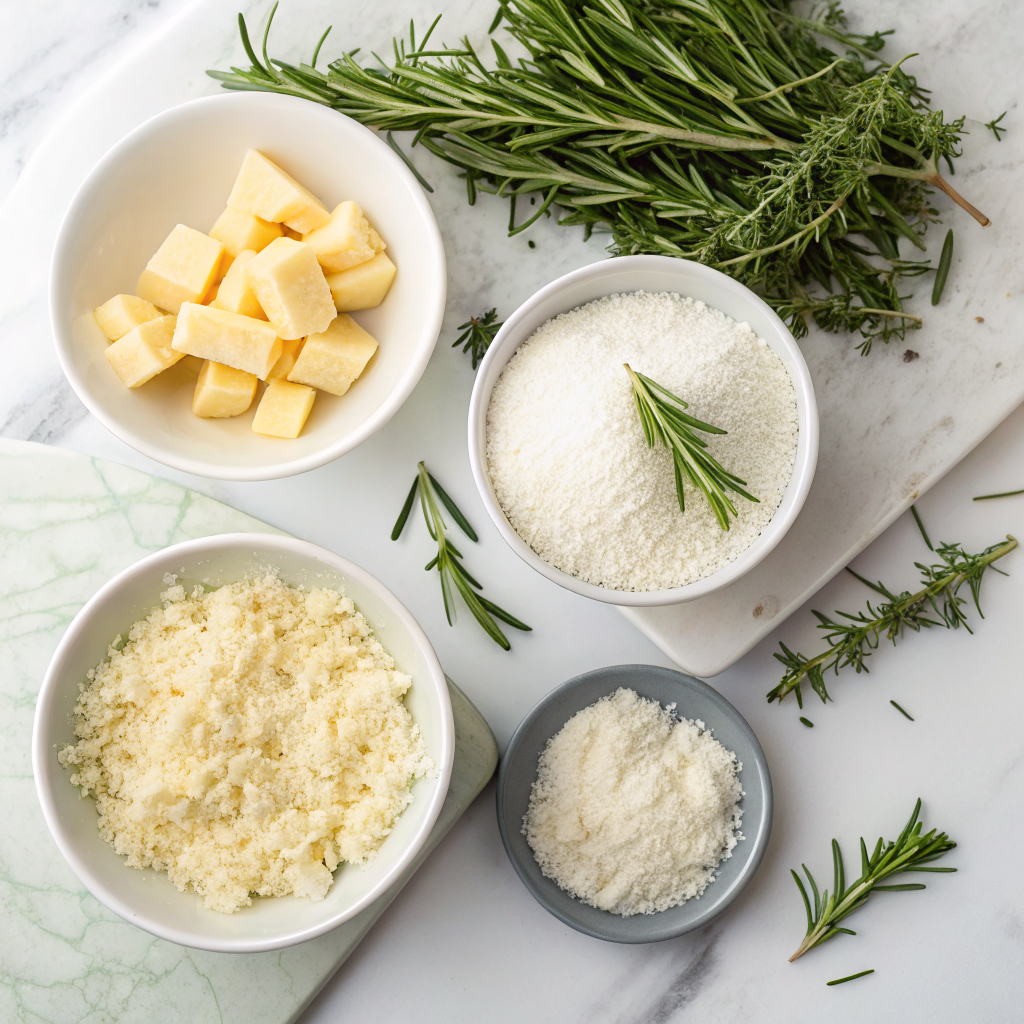
Butter serves as the fat component, and it’s crucial for both flavor and texture. You’ll need half a cup of cold, unsalted butter, cut into small cubes. The cold butter creates pockets in the dough as it melts during baking, contributing to that flaky, layered texture. Unsalted butter allows you to control the salt level precisely, which is important since Parmesan cheese already contains significant sodium.
Cold water helps bring the dough together without overworking it. You’ll need approximately one-quarter to one-third cup of ice-cold water, added gradually until the dough just comes together. The cold temperature keeps the butter from melting prematurely, which is essential for achieving the right texture. Additional ingredients include salt and black pepper for seasoning, with the option to add garlic powder for extra depth of flavor.
Step-by-Step Instructions for Making Rosemary Parmesan Crackers
Begin by preheating your oven to 375°F (190°C) and lining two baking sheets with parchment paper. The parchment prevents sticking and ensures easy cleanup, while also promoting even browning on the bottom of your crackers. Having your workspace prepared before you start makes the entire process smoother and more enjoyable.
In a large mixing bowl or food processor, combine the flour, grated Parmesan cheese, chopped rosemary, salt, and pepper. Pulse a few times or whisk together to distribute the ingredients evenly. This dry mixture forms the flavor base for your crackers, and ensuring even distribution means every bite will have that perfect balance of herbs and cheese.
Add the cold, cubed butter to the flour mixture. Using a pastry cutter, two knives, or the pulse function on your food processor, work the butter into the dry ingredients until the mixture resembles coarse crumbs with pea-sized pieces of butter remaining. This process should take about one to two minutes. The key is not to overwork the mixture—those small butter pieces will create flakiness in the final product.
Gradually add the ice-cold water, one tablespoon at a time, mixing gently after each addition. The dough is ready when it just begins to come together and you can squeeze a handful and it holds its shape. You may not need all the water, or you might need slightly more depending on humidity and flour type. The dough should feel slightly shaggy but not wet or sticky.
Turn the dough out onto a lightly floured surface and gently knead it two or three times just to bring it together into a cohesive ball. Divide the dough in half and shape each portion into a flat disk. Wrap one disk in plastic wrap and refrigerate it while you work with the first batch. This resting period allows the gluten to relax and makes rolling easier.
On a lightly floured surface or between two sheets of parchment paper, roll out the first disk of dough to about 1/8-inch thickness. The thinner you roll it, the crispier your crackers will be, but be careful not to roll so thin that the dough tears. Aim for an even thickness throughout to ensure uniform baking.
Using a sharp knife, pizza cutter, or pastry wheel, cut the dough into your desired shapes. Traditional squares or rectangles work beautifully, but you can also use cookie cutters for fun shapes. Transfer the cut crackers to your prepared baking sheet, leaving about half an inch between each cracker. If desired, use a fork to dock the crackers with a few holes, which helps prevent excessive puffing during baking.
For an extra touch of elegance, brush the tops of the crackers lightly with an egg wash (one beaten egg mixed with a tablespoon of water) and sprinkle with additional Parmesan cheese or coarse sea salt. This creates a beautiful golden finish and adds an extra layer of flavor. You can also add a few more rosemary leaves on top for visual appeal.
Bake the crackers for 12-15 minutes, or until they’re golden brown around the edges and crisp throughout. Keep a close eye on them during the last few minutes of baking, as they can go from perfectly golden to burnt quite quickly. The crackers will continue to crisp up as they cool, so don’t worry if they seem slightly soft when you first remove them from the oven.
Allow the crackers to cool completely on the baking sheet for about 5 minutes, then transfer them to a wire cooling rack. While the first batch cools, repeat the rolling, cutting, and baking process with the second disk of dough. Once completely cooled, your Rosemary Parmesan Crackers are ready to serve or store.
Nutritional Benefits and Considerations
Understanding the nutritional profile of your Rosemary Parmesan Crackers helps you enjoy them as part of a balanced diet. Each serving of approximately 6-8 crackers contains roughly 150-180 calories, depending on thickness and size. The combination of flour and butter provides energy, while the Parmesan cheese contributes valuable protein and calcium.
Parmesan cheese is an excellent source of calcium, with each serving providing about 15-20% of your daily calcium needs. According to Harvard School of Public Health, calcium is essential for bone health, muscle function, and nerve transmission. The cheese also provides high-quality protein, with approximately 4-5 grams per serving of crackers.
The butter in this recipe provides fat-soluble vitamins A, D, E, and K, which are essential for various bodily functions. While butter does contain saturated fat, moderate consumption as part of a varied diet can fit into healthy eating patterns. The key is portion control and balance with other nutrient-dense foods throughout your day.
Rosemary brings more than just flavor to these crackers. This herb contains compounds like rosmarinic acid and carnosic acid, which have antioxidant and anti-inflammatory properties. Research published on Medical News Today suggests that rosemary may support brain health, improve digestion, and provide antimicrobial benefits.
For those watching sodium intake, these homemade crackers allow you to control the salt content. Each serving contains approximately 150-200mg of sodium, which is significantly lower than many commercial crackers. You can further reduce sodium by using less salt in the dough or choosing a lower-sodium Parmesan cheese option.
Creative Variations to Try
Once you’ve mastered the basic Rosemary Parmesan Crackers recipe, experimenting with variations keeps things interesting. Try substituting half the all-purpose flour with whole wheat flour for a nuttier flavor and added fiber. This creates a heartier cracker that pairs beautifully with robust cheeses and charcuterie. The whole wheat version has a slightly different texture but maintains that satisfying crunch.
For a spicy kick, add a quarter teaspoon of cayenne pepper or red pepper flakes to the dry ingredients. This creates a subtle heat that complements the rosemary and cheese without overwhelming the palate. The spicy version pairs exceptionally well with creamy cheeses like brie or goat cheese, which help balance the heat.
Consider creating an herb blend variation by combining rosemary with other fresh herbs. Thyme, oregano, or basil all work wonderfully in this recipe. A Mediterranean blend using equal parts rosemary, thyme, and oregano creates crackers that transport you to the Italian countryside. Fresh herbs provide the best flavor, but you can use dried herbs in smaller quantities if necessary.
For a different cheese profile, try mixing the Parmesan with aged cheddar, Gruyère, or Asiago. Each cheese brings its own unique flavor characteristics—cheddar adds sharpness, Gruyère contributes nuttiness, and Asiago provides a slightly sweeter note. Experiment with different combinations to find your favorite blend.
Add texture and visual interest by incorporating seeds into your cracker dough. Sesame seeds, poppy seeds, or everything bagel seasoning can be mixed into the dough or sprinkled on top before baking. These additions not only look appealing but also add nutritional benefits like healthy fats and minerals.
Serving Suggestions and Pairing Ideas
These Rosemary Parmesan Crackers shine as part of an elegant cheese board. Pair them with soft, creamy cheeses like brie, camembert, or fresh goat cheese, which contrast beautifully with the crackers’ crisp texture. Add some aged cheddar, manchego, or blue cheese for variety, creating a range of flavors and textures that will impress your guests.
For a complete appetizer spread, serve your crackers alongside cured meats like prosciutto, salami, or soppressata. The salty, savory flavors of charcuterie complement the herby, cheesy crackers perfectly. Add some fresh and dried fruits—grapes, figs, apricots, or apple slices—to provide sweetness and acidity that balances the rich flavors.
These crackers also work wonderfully with dips and spreads. Try them with homemade hummus, roasted red pepper spread, or artichoke dip. The sturdy texture of these crackers means they won’t break when scooping up thicker dips, making them practical as well as delicious.
For a lighter option, serve Rosemary Parmesan Crackers with fresh vegetables and a yogurt-based dip. The crackers add substance to a crudité platter while maintaining a relatively light profile. They’re also delicious crumbled over soups or salads, adding a crunchy, flavorful topping that elevates simple dishes.
Don’t overlook these crackers as a standalone snack. Pack them in lunchboxes, enjoy them with afternoon tea, or keep a tin on hand for when you need a quick, satisfying bite. Their sophisticated flavor makes them feel special even when eaten on their own, and they’re far more interesting than plain crackers or chips.
Common Mistakes to Avoid
One of the most common mistakes when making homemade crackers is overworking the dough. When you handle the dough too much, you develop the gluten in the flour, which creates a tough, chewy texture instead of the crisp, delicate snap you want. Mix and knead the dough only until it just comes together, then stop. The dough should look slightly rough and shaggy rather than smooth and uniform.
Rolling the dough unevenly leads to inconsistent baking results. Thicker areas will remain soft while thinner sections might burn. Use rolling pin guides or rubber bands around the ends of your rolling pin to maintain consistent thickness. Take your time with this step, and regularly rotate and flip the dough to ensure even rolling.
Using warm or room-temperature butter is another pitfall that affects texture. Cold butter creates those desirable flaky layers and prevents the dough from becoming greasy or tough. If your kitchen is warm, consider chilling your mixing bowl and even the flour before starting. Some bakers even freeze the butter cubes for 10 minutes before incorporating them into the flour.
Skipping the docking step (pricking holes in the crackers with a fork) can result in crackers that puff up unevenly during baking, creating air pockets and inconsistent texture. Those small holes allow steam to escape during baking, ensuring flat, evenly crisp crackers. Dock each cracker with 3-4 fork pricks before baking.
