
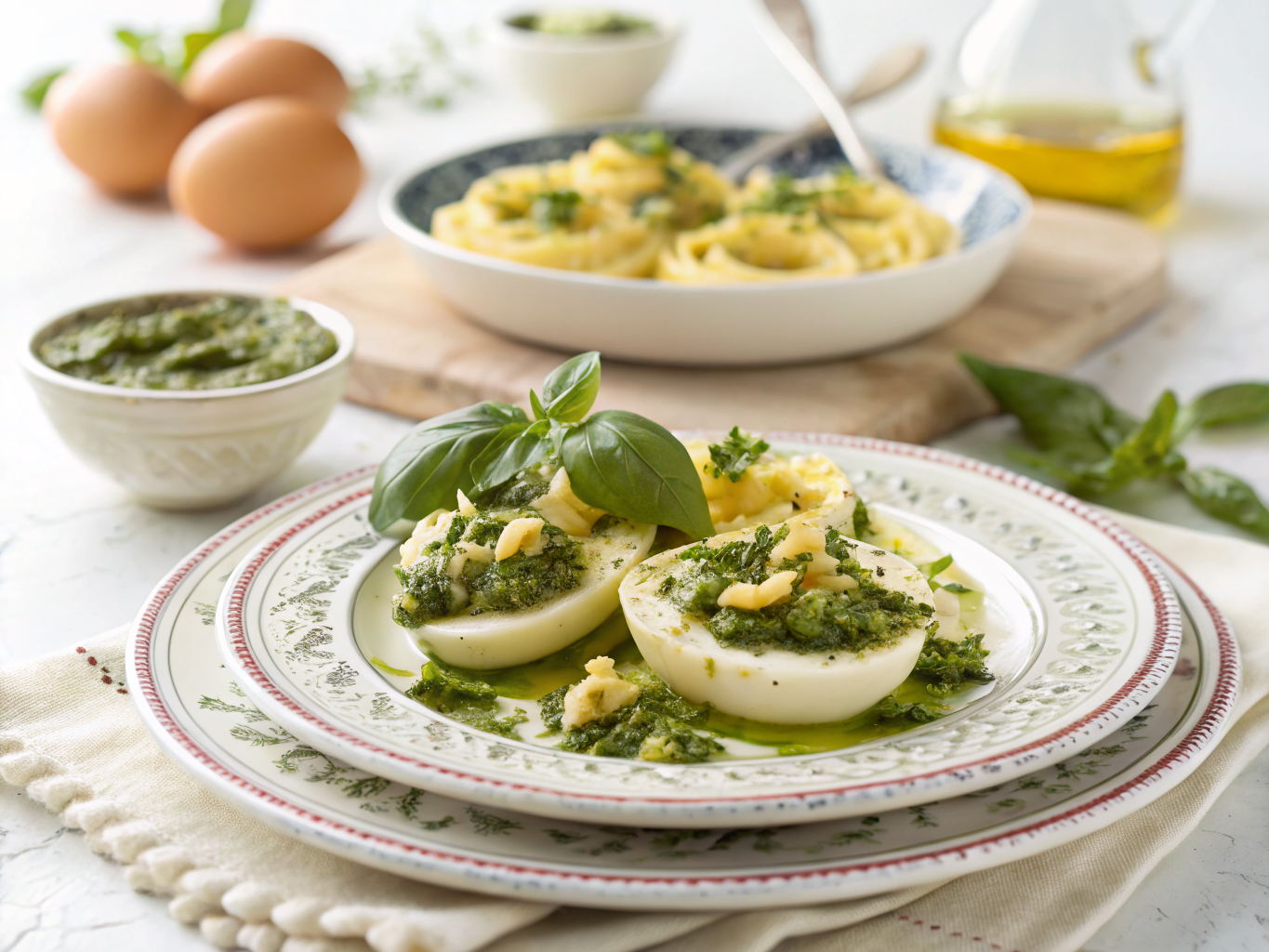
Authentic Pesto Eggs Recipe
Ingredients
Method
- Heat olive oil in a large non-stick skillet over medium heat until shimmering but not smoking.
- Add the basil pesto to the skillet and spread it evenly across the bottom, allowing it to warm for about 30 seconds.
- Carefully crack the eggs directly into the pesto, spacing them evenly in the pan. Season with salt and pepper.
- Cover the skillet with a lid and cook for 4-6 minutes, depending on desired doneness. For runny yolks, cook for 4 minutes; for set yolks, cook for 6 minutes.
- Remove the lid and sprinkle freshly grated parmesan cheese over the eggs during the last minute of cooking.
- Remove from heat and garnish with fresh basil leaves. Serve immediately with toasted crusty bread for dipping.
Nutrition
Notes
Tried this recipe?
Let us know how it was!nn7 Incredible Reasons Why Pesto Eggs Will Transform Your Morning Routine
Imagine waking up to a breakfast that combines the rich, aromatic flavors of Italian basil pesto with perfectly cooked eggs, creating a meal that’s both gourmet and surprisingly simple. Pesto eggs have taken the culinary world by storm, offering a delicious twist on traditional breakfast fare that’s packed with protein, healthy fats, and vibrant Mediterranean flavors. This innovative recipe transforms ordinary eggs into an extraordinary dining experience that will have you looking forward to breakfast every single day.
The beauty of this dish lies in its versatility and simplicity, making it perfect for busy weekday mornings or leisurely weekend brunches. Whether you’re a seasoned home cook or just beginning your culinary journey, mastering pesto eggs will add an impressive yet effortless recipe to your breakfast repertoire. The combination of creamy eggs and herbaceous pesto creates a symphony of flavors that satisfies both your taste buds and nutritional needs.
This comprehensive guide will walk you through everything you need to know about creating the perfect pesto eggs, from selecting the finest ingredients to mastering various cooking techniques. You’ll discover professional tips, common pitfalls to avoid, and creative variations that will keep this recipe exciting meal after meal. Get ready to elevate your breakfast game with this restaurant-quality dish that you can prepare in your own kitchen.
Why This Pesto Eggs Recipe Stands Out From The Rest
Traditional breakfast recipes often fall into monotonous patterns, but this pesto eggs recipe breaks free from the ordinary with its bold Mediterranean flavors and nutrient-dense profile. Unlike heavily processed breakfast options, this dish celebrates whole food ingredients that nourish your body while delighting your palate. The combination of fresh basil pesto and protein-rich eggs provides sustained energy throughout your morning without the sugar crash associated with typical breakfast foods.
What makes this recipe particularly special is its adaptability to various dietary preferences and cooking styles. Whether you prefer your eggs sunny-side up, scrambled, or poached, the pesto element seamlessly integrates into any preparation method. The vibrant green color of the pesto creates an Instagram-worthy presentation that makes even a simple weekday breakfast feel like a special occasion.
According to nutrition experts at Harvard School of Public Health, eggs are an excellent source of high-quality protein and essential nutrients including vitamin D, B vitamins, and selenium. When paired with the antioxidant-rich basil and heart-healthy olive oil found in pesto, you create a powerhouse breakfast that supports overall wellness. This recipe also fits perfectly into various eating patterns, including low-carb, keto, and Mediterranean diets.
Core Ingredients For Perfect Pesto Eggs
The foundation of exceptional pesto eggs begins with selecting premium ingredients that work harmoniously together. Fresh, high-quality eggs are essential—look for organic, free-range options when possible for superior flavor and nutritional content. The eggs should have bright orange yolks and firm whites, indicating freshness and quality that will significantly impact your final dish.
For the pesto component, you can choose between homemade or store-bought varieties, though homemade pesto offers unmatched freshness and customization options. Traditional basil pesto combines fresh basil leaves, pine nuts, Parmesan cheese, garlic, and extra virgin olive oil. If making your own, ensure your basil is vibrant green and aromatic, your pine nuts are fresh and not rancid, and your Parmesan is authentically aged for the best flavor profile.
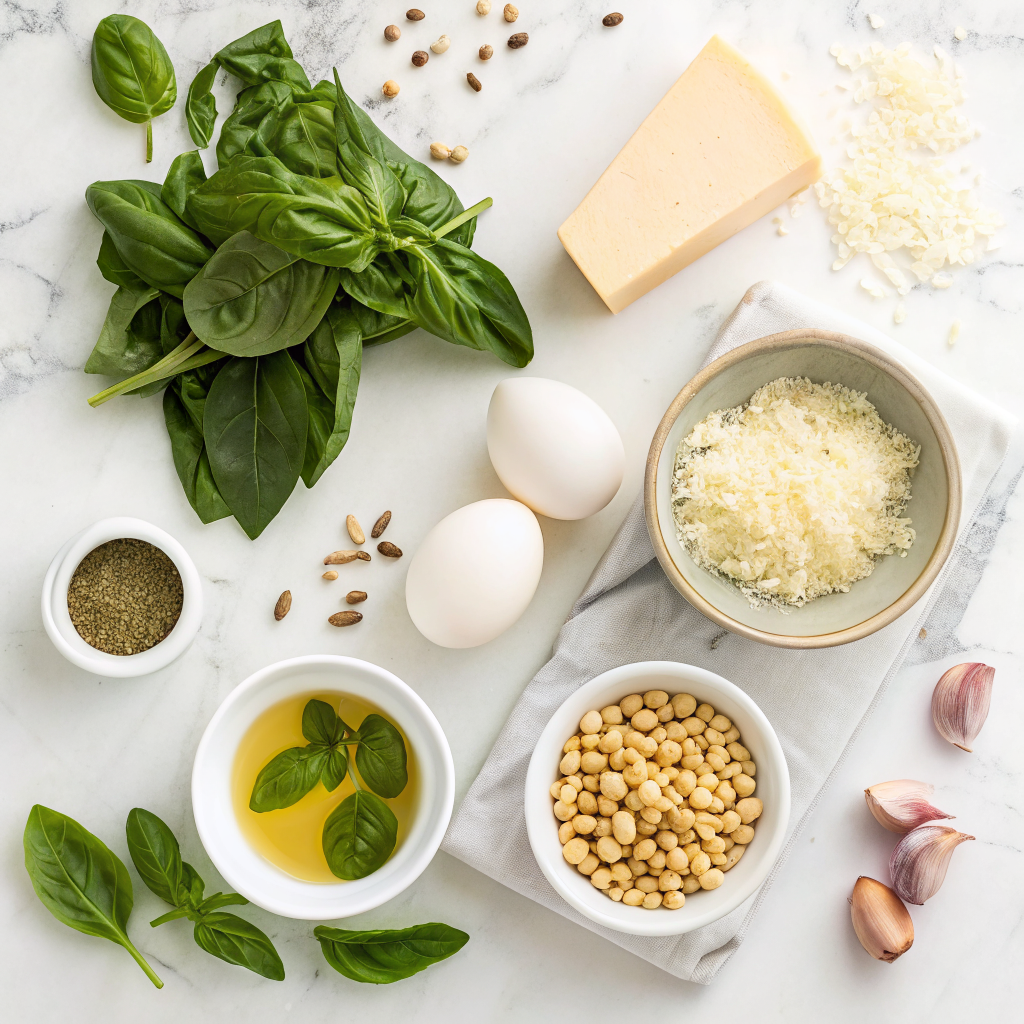
Additional ingredients that enhance this recipe include good quality butter or olive oil for cooking, salt and freshly ground black pepper for seasoning, and optional toppings like cherry tomatoes or fresh mozzarella. The quality of your cooking fat matters significantly—use grass-fed butter or extra virgin olive oil to complement the Mediterranean flavors. Consider adding a squeeze of fresh lemon juice to brighten the flavors and balance the richness of the eggs and pesto.
Essential Ingredients List
- 4 large fresh eggs (organic, free-range preferred)
- 3-4 tablespoons basil pesto (homemade or high-quality store-bought)
- 1 tablespoon butter or extra virgin olive oil
- Salt and freshly ground black pepper to taste
- Optional: cherry tomatoes, fresh basil leaves for garnish
- Optional: grated Parmesan cheese for serving
- Optional: crusty bread or avocado toast for serving
Step-By-Step Instructions For Making Pesto Eggs
Creating perfect pesto eggs requires attention to timing and temperature to achieve that ideal balance of creamy yolks and tender whites infused with pesto flavor. Start by gathering all your ingredients and equipment before you begin cooking, as the process moves quickly once you start. Having everything prepared and within reach ensures smooth execution and prevents overcooking your eggs.
Begin by heating your skillet over medium-low heat and adding your chosen cooking fat—either butter or olive oil. Allow the fat to heat gently but not smoke, as excessive heat will cause the eggs to cook too quickly and become rubbery. The key to silky, restaurant-quality eggs is patience and moderate heat that allows for even cooking without browning the bottoms.
The Classic Pan-Fried Method
Add your pesto to the preheated pan, spreading it evenly across the cooking surface to create a flavorful base for your eggs. Allow the pesto to warm for about 30 seconds until it becomes fragrant and slightly loosens from the heat. This step infuses the cooking oil with basil and garlic flavors that will permeate the eggs as they cook.
Carefully crack your eggs directly into the pan over the pesto, spacing them evenly to ensure they cook uniformly. Season immediately with a pinch of salt and freshly ground black pepper, keeping in mind that the pesto already contains salt from the cheese. Cover the pan with a lid to trap steam, which will gently cook the tops of the eggs while the bottoms set in the flavorful pesto.
Cook for 3-5 minutes depending on your preference for yolk doneness—three minutes yields runny yolks perfect for dipping toast, while five minutes produces more set but still creamy yolks. Check the whites to ensure they’re fully opaque and cooked through, as undercooked egg whites have an unpleasant texture. Once cooked to your liking, carefully slide the eggs onto serving plates using a wide spatula to keep them intact.
The Scrambled Pesto Eggs Variation
For a different take on pesto eggs, try the scrambled method which fully incorporates the pesto throughout the eggs for maximum flavor distribution. Whisk your eggs in a bowl with a tablespoon of pesto until well combined and slightly frothy. This pre-mixing technique ensures every bite contains that delicious pesto flavor rather than having it concentrated in certain areas.
Heat butter in your pan over medium-low heat until melted and foamy but not browned. Pour in your pesto-egg mixture and let it sit undisturbed for 20-30 seconds until the edges begin to set. Using a silicone spatula, gently push the cooked eggs from the edges toward the center, tilting the pan to allow uncooked egg to flow to the edges.
Continue this gentle folding motion, cooking slowly until the eggs reach your desired consistency—they should still be slightly wet when you remove them from heat as they’ll continue cooking from residual heat. Immediately transfer to plates and garnish with an extra dollop of pesto, fresh basil, and grated Parmesan. This method creates luxuriously creamy scrambled eggs with pesto swirled throughout every bite.
Nutritional Benefits Of Pesto Eggs
Understanding the nutritional profile of pesto eggs helps you appreciate how this delicious breakfast supports your health and wellness goals. Each serving delivers approximately 300-350 calories depending on preparation method and portion size, making it a satisfying yet reasonable breakfast option. The high protein content from eggs—about 6-7 grams per egg—promotes satiety and helps maintain stable blood sugar levels throughout the morning.
According to Healthline, eggs are among the most nutritious foods on the planet, containing vitamins A, B5, B12, D, E, K, and minerals like folate, phosphorus, and selenium. The pesto adds additional nutritional benefits through its basil content, which provides vitamin K, iron, calcium, and powerful antioxidants. The olive oil in pesto contributes heart-healthy monounsaturated fats that support cardiovascular health and reduce inflammation.
This breakfast also provides essential amino acids necessary for muscle maintenance and repair, making it excellent for active individuals or anyone looking to support lean muscle mass. The combination of protein and healthy fats creates a metabolically favorable meal that can support weight management goals by reducing mid-morning cravings. For those following specific dietary patterns, this recipe naturally fits into low-carb, keto, Mediterranean, and gluten-free lifestyles without modification.
Approximate Nutritional Information Per Serving
- Calories: 320-350
- Protein: 14-16 grams
- Fat: 28-30 grams (primarily healthy monounsaturated and polyunsaturated)
- Carbohydrates: 2-3 grams
- Fiber: 0-1 gram
- Vitamins: High in A, D, E, B12, and K
- Minerals: Excellent source of selenium, phosphorus, and iron
Creative Variations To Keep Pesto Eggs Exciting
Once you’ve mastered the basic pesto eggs recipe, exploring variations keeps this breakfast exciting and prevents flavor fatigue. Consider using different types of pesto to completely transform the dish—sun-dried tomato pesto adds a sweet, concentrated tomato flavor, while arugula pesto brings a peppery kick. Spinach and kale pesto offer milder flavors with additional nutritional benefits, perfect for those who find traditional basil pesto too intense.
Add protein variety by incorporating crispy bacon, prosciutto, or smoked salmon alongside your pesto eggs for a more substantial meal. These additions complement the Italian flavors while providing additional protein and savory elements. For a vegetarian boost, try adding sautéed mushrooms, roasted red peppers, or grilled zucchini to create a more complex, veggie-forward breakfast.
Experiment with different cheese toppings beyond Parmesan—crumbled feta adds tangy creaminess, fresh mozzarella provides mild richness, and aged pecorino offers sharp, salty notes. You can also create a breakfast bowl by serving your pesto eggs over quinoa, brown rice, or cauliflower rice for added fiber and volume. These variations allow you to customize the recipe to your taste preferences and dietary needs while maintaining the core concept that makes this dish so appealing.
Perfect Serving Suggestions For Pesto Eggs
Presentation and accompaniments elevate pesto eggs from a simple breakfast to a memorable dining experience. Serve your eggs on warm plates to keep them at the ideal temperature, and consider the visual appeal by choosing plates that contrast with the vibrant green pesto. A simple garnish of fresh basil leaves, a drizzle of high-quality olive oil, and a sprinkle of flaky sea salt adds restaurant-quality finishing touches.
Crusty sourdough toast is the classic accompaniment for pesto eggs, perfect for soaking up runny yolks and any extra pesto sauce. For a healthier option, try serving with avocado toast, whole grain English muffins, or seed crackers. Fresh vegetables like sliced tomatoes, cucumber ribbons, or a simple arugula salad dressed with lemon and olive oil provide refreshing contrast to the rich eggs.
For a complete brunch spread, pair your pesto eggs with complementary dishes from our breakfast recipes collection such as roasted potatoes, fruit salad, or yogurt parfaits. Consider beverage pairings like freshly squeezed orange juice, green smoothies, or a perfectly brewed cappuccino to round out your meal. These thoughtful combinations create a balanced breakfast that satisfies multiple taste and texture preferences.
Common Mistakes To Avoid When Making Pesto Eggs
Even simple recipes can go wrong without proper technique, and understanding common pitfalls helps ensure consistent success with pesto eggs. The most frequent mistake is cooking over excessively high heat, which causes eggs to become rubbery and develop brown, crispy edges while leaving the yolks undercooked. Remember that gentle, patient cooking produces the silkiest, most tender eggs with perfectly runny or just-set yolks.
Another common error is adding pesto too early or in excessive amounts, which can cause it to burn and turn bitter rather than gently warm and release its aromatics. Use moderate amounts of pesto—about one tablespoon per egg—and add it to the pan just before the eggs so it warms without burning. Too much pesto overwhelms the delicate egg flavor and can make the dish overly salty from the cheese content.
Overcrowding the pan is another mistake that prevents proper cooking and makes it difficult to remove eggs intact. Use a pan large enough to accommodate your eggs with space between them, or cook in batches if necessary. Finally, seasoning mistakes—either over-salting due to the pesto’s inherent saltiness or under-seasoning from fear of overdoing it—can diminish the dish’s flavor potential, so taste and adjust carefully.
Storage And Meal Prep Tips For Pesto Eggs
While pesto eggs are best enjoyed immediately after cooking, understanding proper storage techniques allows you to incorporate them into meal prep routines. Cooked eggs can be refrigerated in an airtight container for up to 3 days, though the texture will be firmer upon reheating than freshly cooked eggs. To reheat, use gentle heat in a covered pan with a splash of water to create steam, or microwave in 15-second intervals to prevent overcooking.
For meal prep efficiency, consider preparing components separately—make a batch of homemade pesto that keeps for a week in the refrigerator or up to three months in the freezer. Store pesto in small portions using ice cube trays or small containers for easy portioning. Pre-crack eggs into individual containers or muffin tins covered with plastic wrap for grab-and-go convenience during busy mornings.
Hard-boiled eggs can be prepared in advance and served cold or at room temperature with pesto as a protein-packed breakfast or snack. This method works particularly well for meal prep since hard-boiled eggs last up to one week in the refrigerator. Simply slice your hard-boiled eggs and serve with a generous dollop of pesto for a no-cook breakfast option that still delivers all the delicious flavors of the traditional preparation.
Expert Resources And Further Learning

creates quick vegetarian dinners and vibrant taco recipes.