
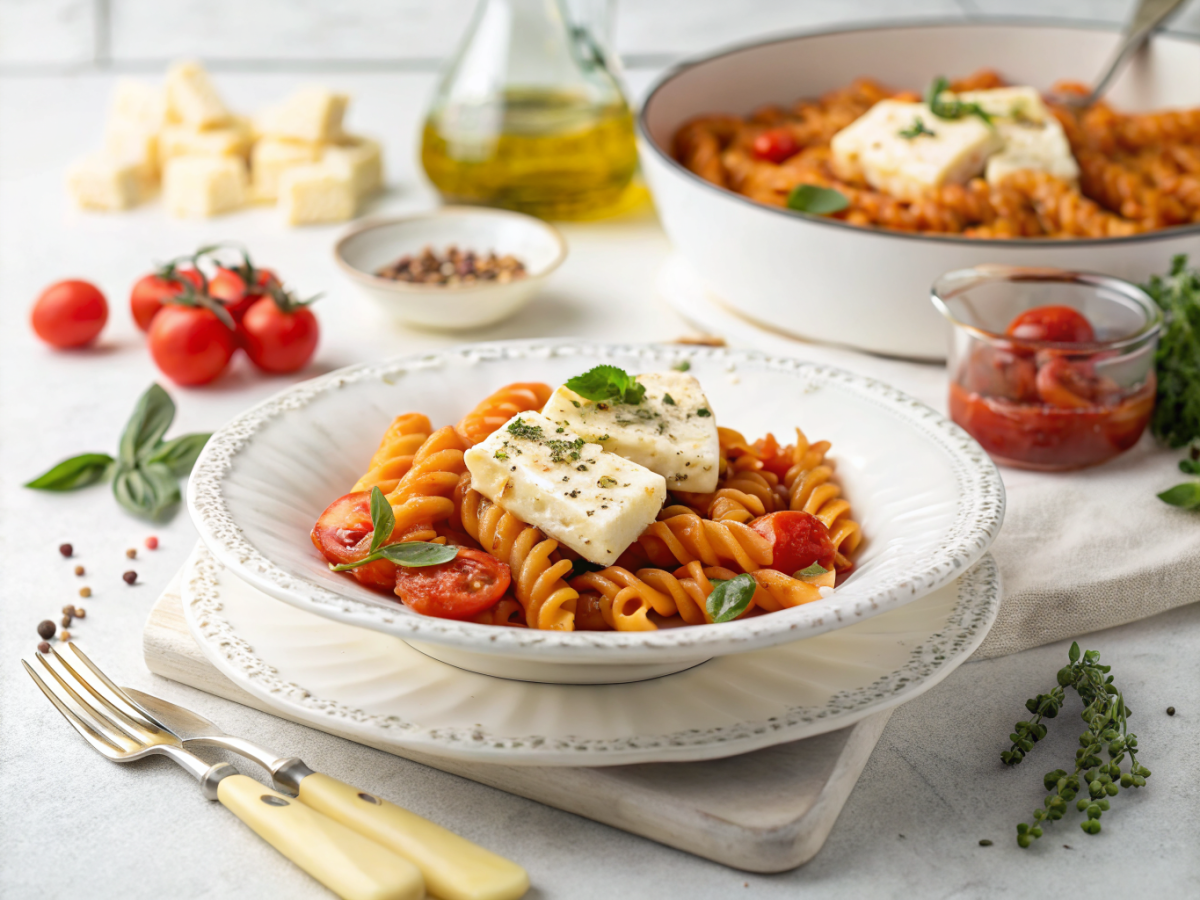
Best Baked Feta Pasta You'll Ever Have
Ingredients
Method
- Preheat your oven to 400 degrees Fahrenheit. Place the block of feta cheese in the center of a 9x13 inch baking dish.
- Arrange the cherry tomatoes around the feta cheese. Drizzle the olive oil over everything, then sprinkle with minced garlic, red pepper flakes, salt, and black pepper.
- Place the baking dish in the preheated oven and bake for 30-35 minutes, until the tomatoes have burst and the feta is soft and golden on top.
- While the feta and tomatoes are baking, cook the pasta according to package directions until al dente. Reserve 1 cup of pasta water before draining.
- Remove the baking dish from the oven and immediately use a fork to mash the feta cheese and tomatoes together, creating a creamy sauce.
- Add the cooked pasta to the baking dish and toss everything together until well combined. Add reserved pasta water a little at a time if needed to reach desired consistency.
- Stir in the fresh chopped basil and adjust seasoning with additional salt and pepper if needed. Serve immediately while hot.
Nutrition
Notes
Tried this recipe?
Let us know how it was!\n\nThis Baked Feta Pasta has taken the culinary world by storm, transforming simple ingredients into a creamy, flavorful masterpiece that’s ready in under 30 minutes. The viral sensation combines roasted cherry tomatoes with a whole block of feta cheese, creating a luscious sauce that coats every strand of pasta perfectly. Whether you’re cooking for a busy weeknight or entertaining guests, this recipe delivers restaurant-quality results with minimal effort.
Baked Feta Pasta: 5 Easy Tips for Perfect Results
Achieving the perfect baked feta pasta requires attention to a few key details that elevate this dish from good to extraordinary. The quality of your feta cheese makes an enormous difference—opt for a block of Greek or Bulgarian feta packed in brine rather than pre-crumbled varieties. The moisture content and creaminess of block feta creates that signature silky sauce when baked.
Temperature control is crucial for this recipe’s success. Baking at 400°F allows the tomatoes to burst and caramelize while the feta softens without burning. If your oven runs hot, reduce the temperature by 25 degrees to prevent the cheese from browning too quickly.
Don’t skimp on the olive oil—it’s not just for cooking but becomes part of the sauce itself. Use a high-quality extra virgin olive oil that you’d enjoy tasting on its own. The oil helps the tomatoes release their juices and carries the flavors throughout the dish.
Timing your pasta is essential for the best texture. Cook it until just al dente, as it will continue softening when mixed with the hot sauce. Reserve at least one cup of pasta water before draining—this starchy liquid is your secret weapon for adjusting the sauce consistency.
Fresh herbs added at the end brighten the entire dish. While basil is traditional, don’t hesitate to experiment with fresh oregano, thyme, or even mint for a unique twist. The heat from the pasta and sauce will release the herbs’ aromatic oils without cooking them.
Why You’ll Love This Baked Feta Pasta
The genius of this recipe lies in its simplicity—you’re essentially letting the oven do all the work while you attend to other tasks. Unlike traditional pasta sauces that require constant stirring and monitoring, this hands-off approach delivers consistent results every time. The combination of sweet roasted tomatoes and tangy feta creates a perfectly balanced flavor profile that appeals to both adults and children.
This dish is incredibly versatile and adapts beautifully to whatever ingredients you have on hand. Running low on cherry tomatoes? Grape tomatoes work just as well. No fresh basil? Dried herbs or even spinach make excellent substitutes. The forgiving nature of this recipe makes it perfect for home cooks of all skill levels.
From a nutritional standpoint, you’re getting a well-rounded meal with protein from the feta, lycopene from the tomatoes, and complex carbohydrates from the pasta. The Mediterranean-inspired ingredients align with heart-healthy eating patterns recommended by nutritionists worldwide. Plus, the visual appeal of this dish makes it Instagram-worthy without any special plating skills.
The recipe scales effortlessly whether you’re cooking for one or feeding a crowd. Double the ingredients for meal prep, and you’ll have delicious lunches ready for the entire week. The flavors actually improve after a day in the refrigerator as the pasta absorbs more of the sauce, making leftovers something to look forward to.
Budget-conscious cooks will appreciate that this gourmet-tasting meal comes together with affordable pantry staples. A block of feta, a pint of cherry tomatoes, and a box of pasta cost less than most takeout meals while providing multiple servings. It’s proof that exceptional food doesn’t require expensive ingredients or complicated techniques.
Core Ingredients for Baked Feta Pasta
The star of this dish is undoubtedly the feta cheese—you’ll need an 8-ounce block of high-quality feta packed in brine. Avoid pre-crumbled feta, as it contains anti-caking agents that prevent it from melting into that signature creamy sauce. Greek or Bulgarian feta offers the best flavor and texture, with a tangy richness that permeates every bite.
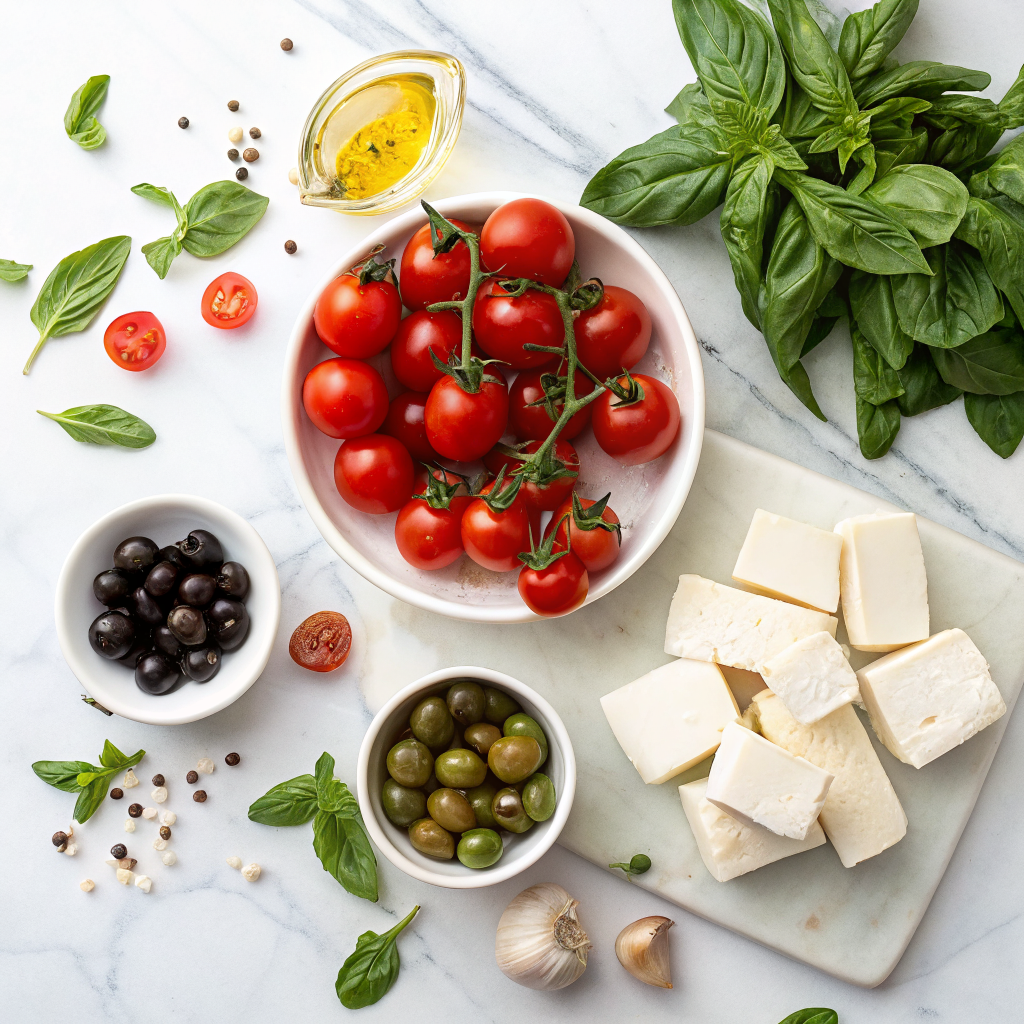
Cherry tomatoes bring sweetness and acidity to balance the rich cheese. You’ll need about two pints (or four cups) of cherry or grape tomatoes. Look for tomatoes that are firm, brightly colored, and fragrant at the stem end. During peak summer season, heirloom cherry tomatoes add beautiful color variations and complex flavors.
Pasta choice matters more than you might think. Short pasta shapes like penne, rigatoni, or fusilli work best because their ridges and hollows catch the sauce beautifully. Plan on using 12 ounces of dried pasta for four servings. Whole wheat or legume-based pastas work wonderfully if you’re looking to boost the nutritional content.
Extra virgin olive oil is essential—you’ll need about one-third cup for roasting. This isn’t the place to use your most expensive bottle, but choose an oil with a fruity, pleasant flavor. The oil becomes infused with garlic and herbs during baking, creating a flavorful base for your sauce.
Fresh garlic adds aromatic depth that garlic powder simply cannot replicate. Use 4-5 cloves, peeled and left whole or smashed lightly. They’ll soften and sweeten during roasting, distributing their flavor throughout the dish without overwhelming the other ingredients.
Fresh basil provides the final flourish—a handful of leaves torn or roughly chopped adds brightness and a peppery note. Add half during the final mixing and reserve some for garnishing. If you’re exploring more quick and easy meal ideas, fresh herbs always elevate simple recipes.
Seasonings are minimal but important: red pepper flakes add gentle heat, while salt and black pepper enhance all the other flavors. Start conservatively with salt since feta is naturally salty, then adjust after mixing everything together.
How to Make Baked Feta Pasta: Step-by-Step
Begin by preheating your oven to 400°F and positioning a rack in the center. Select a baking dish that’s approximately 9×13 inches or similar—you want enough space for the tomatoes to spread out in a single layer. Glass or ceramic dishes work beautifully and can go straight from oven to table.
Place your block of feta in the center of the baking dish, keeping it in one piece. Arrange the cherry tomatoes around the feta, creating a colorful border. Scatter the garlic cloves among the tomatoes, distributing them evenly so every bite has a hint of garlic flavor.
Drizzle the olive oil generously over everything, making sure both the feta and tomatoes are well-coated. The oil should pool slightly at the bottom of the dish—this will become the base of your sauce. Sprinkle with red pepper flakes, black pepper, and a light touch of salt, remembering that feta will add saltiness.
Transfer the dish to your preheated oven and bake for 30-35 minutes. You’re looking for the tomatoes to burst and blister, their skins splitting and juices pooling. The feta should be golden on top and softened throughout, almost melting into the surrounding liquid.
While the feta and tomatoes bake, bring a large pot of salted water to a boil. The water should taste like the sea—this is your only opportunity to season the pasta itself. When the baking dish has about 10 minutes left, add your pasta to the boiling water.
Cook the pasta according to package directions but aim for al dente—it should still have a slight bite in the center. Before draining, scoop out at least one cup of the starchy pasta cooking water and set it aside. This liquid gold will help create a silky sauce that clings to every piece of pasta.
Remove the baking dish from the oven and let it rest for 2-3 minutes. Using the back of a spoon or a fork, gently mash the feta and tomatoes together, stirring to combine them into a creamy sauce. The feta should break down easily, mixing with the tomato juices and olive oil.
Add the drained pasta directly to the baking dish and toss everything together vigorously. If the sauce seems too thick, add pasta water a few tablespoons at a time until you reach your desired consistency. The sauce should coat the pasta glossily without pooling at the bottom of the dish.
Tear in most of your fresh basil leaves and toss again. Taste and adjust seasonings—this is the moment to add more salt, pepper, or red pepper flakes if needed. The flavors should be bright, tangy, and well-balanced with a creamy texture that makes each bite irresistible.
Nutrition & Health Benefits
This Mediterranean-inspired dish offers impressive nutritional benefits beyond its delicious taste. Feta cheese provides high-quality protein and calcium while being lower in calories and fat compared to many other cheeses. A typical serving contains about 15 grams of protein, supporting muscle maintenance and satiety that keeps you feeling full longer.
Cherry tomatoes are nutritional powerhouses packed with lycopene, a potent antioxidant linked to heart health and reduced cancer risk. Cooking tomatoes actually increases lycopene bioavailability, making this baked preparation even more beneficial than eating them raw. They’re also excellent sources of vitamins C and K, potassium, and folate.
The olive oil in this recipe contributes heart-healthy monounsaturated fats that support cardiovascular health and reduce inflammation. Extra virgin olive oil contains polyphenols and oleocanthal, compounds with anti-inflammatory properties similar to ibuprofen. Using olive oil as your primary cooking fat aligns with the Mediterranean diet, consistently ranked among the world’s healthiest eating patterns.
Garlic offers immune-boosting properties and may help lower blood pressure and cholesterol levels. The allicin compound in garlic has antimicrobial and antioxidant effects that support overall health. Roasting garlic mellows its intensity while preserving many of these beneficial compounds.
Choosing whole grain pasta increases the fiber content significantly, promoting digestive health and providing sustained energy. Whole wheat pasta contains more B vitamins, iron, and magnesium than refined versions. For those seeking additional protein, legume-based pastas made from chickpeas or lentils can double the protein content while remaining gluten-free.
A standard serving of this dish provides approximately 450-500 calories, making it a satisfying main course that fits into most eating plans. The balance of carbohydrates, protein, and healthy fats creates a complete meal that stabilizes blood sugar and prevents energy crashes. For those interested in nutritious dinner recipes, this dish exemplifies how simple ingredients create nourishing meals.
Variations & Substitutions
Transform this base recipe into countless variations by adding vegetables to boost nutrition and flavor. Sliced bell peppers, zucchini rounds, or asparagus pieces roast beautifully alongside the tomatoes. Add heartier vegetables like broccoli florets or cubed eggplant during the last 15 minutes of baking to prevent overcooking.
Protein additions make this dish even more substantial for hungry diners. Toss in cooked chicken breast, crispy bacon, or Italian sausage when mixing the pasta with the sauce. Shrimp works wonderfully—add raw shrimp to the baking dish during the final 8-10 minutes of cooking for perfectly tender results.
Cheese variations offer different flavor profiles while maintaining the creamy texture. Goat cheese creates a tangier, slightly earthier sauce, while a combination of feta and cream cheese produces extra richness. Halloumi cheese, with its high melting point, creates interesting textural contrast with some pieces staying firm while others soften.
Herb substitutions allow you to customize the flavor to your preferences or what’s available. Fresh oregano and thyme create a more savory, earthy profile, while mint adds unexpected brightness. Parsley contributes freshness without competing with other flavors, and arugula stirred in at the end adds peppery bite and vibrant color.
For a spicier version, increase the red pepper flakes or add sliced fresh jalapeños to the baking dish. Sun-dried tomatoes mixed with the cherry tomatoes intensify the tomato flavor and add chewy texture. Kalamata olives or capers stirred in at the end provide briny pops of flavor that complement the feta beautifully.
Dietary modifications are straightforward with this flexible recipe. Use gluten-free pasta made from rice, corn, or quinoa for celiac-friendly versions. Dairy-free alternatives include using cashew-based feta substitutes or nutritional yeast for a cheesy flavor without actual cheese. Reduce the oil quantity if you’re watching fat intake, though you’ll need at least a few tablespoons for the sauce to come together properly.
Serving Suggestions
This pasta shines as a complete one-dish meal but pairs beautifully with simple sides that complement without competing. A crisp green salad dressed with lemon vinaigrette cuts through the richness and adds refreshing contrast. Keep the salad simple with mixed greens, cucumber, and red onion to let the pasta remain the star.
Garlic bread is a classic accompaniment that’s perfect for soaking up any extra sauce. Toast thick slices of crusty bread rubbed with garlic and brushed with olive oil until golden and crispy. For a lighter option, serve with whole grain crackers or pita chips for textural variety.
Wine pairings enhance the Mediterranean flavors beautifully. A crisp white wine like Sauvignon Blanc or Pinot Grigio complements the tangy feta and bright tomatoes. If you prefer red wine, choose a light-bodied option like Pinot Noir that won’t overpower the delicate flavors. For non-alcoholic options, sparkling water with lemon or iced herbal tea works wonderfully.
Presentation matters even for casual meals. Serve the pasta in shallow bowls or on wide plates to showcase the colorful ingredients. Garnish each serving with extra fresh basil, a drizzle of high-quality olive oil, and a sprinkle of freshly cracked black pepper. A small dish of grated Parmesan on the side lets diners customize their portions.
For entertaining, this dish works brilliantly as part of a Mediterranean spread. Serve alongside roasted vegetables, hummus with vegetables, and a Greek salad for a complete feast. The pasta can be made ahead and reheated, making it ideal for potlucks or dinner parties where you want to minimize last-minute cooking.
Portion control is easy with this visually appealing dish. A standard serving is about 1.5 to 2 cups, which provides satisfying volume without being overly heavy. If you’re looking for more homemade bread and baked goods to round out your meal, fresh focaccia or ciabatta make excellent companions.
Common Mistakes to Avoid
Using pre-crumbled feta is the most common error that prevents achieving the signature creamy sauce. Pre-crumbled varieties contain cellulose or potato starch to prevent clumping, which also prevents proper melting. Always purchase a block of feta packed in brine and drain it just before using for the best results.
Overcrowding the baking dish prevents proper caramelization and can result in steamed rather than roasted tomatoes. The tomatoes need space around them for air circulation and even cooking. If you’re doubling the recipe, use two separate baking dishes rather than cramming everything into one large pan.
Skipping the pasta water is a missed opportunity for perfect sauce consistency. The starchy water acts as an emulsifier, helping the oil and cheese combine into a cohesive sauce. Without it, you might end up with a greasy, separated mixture rather than a creamy coating.
Overbaking the dish leads to dried-out tomatoes and overly browned cheese that tastes bitter. Watch carefully during the final 10 minutes of cooking. The tomatoes should be blistered and bursting but not shriveled, and the feta should be golden only on top while remaining creamy throughout.
Adding the pasta while it’s too hot can cause the feta to become stringy rather than creamy. Let the baked dish rest for 2-3 minutes after removing from the oven before adding pasta. This brief cooling period allows the cheese to reach the ideal temperature for mixing into a smooth sauce.
Underseasoning is surprisingly common because cooks assume the feta provides enough salt. While feta is salty, the large volume of pasta and tomatoes dilutes that saltiness. Always taste and adjust seasonings after mixing everything together, adding salt gradually until the flavors pop.
Forgetting to save fresh herbs for garnishing means missing out on that final burst of brightness. The herbs you stir into the hot pasta will wilt and darken, so reserve some fresh leaves for sprinkling on top. This small detail makes a significant difference in both appearance and flavor.
Storage & Meal Prep Tips
Proper storage extends the life of your leftovers while maintaining quality. Transfer cooled pasta to airtight containers and refrigerate within two hours of cooking. The dish will keep for 3-4 days in the refrigerator, and the flavors often deepen and improve after a day as the pasta absorbs more sauce.
Reheating requires a gentle approach to prevent the pasta from drying out. Add a splash of water, broth, or olive oil before reheating in the microwave in 1-minute intervals, stirring between each. Alternatively, reheat on the stovetop over medium-low heat, adding liquid as needed to restore the sauce’s creamy consistency.
Freezing is possible though the texture changes slightly upon thawing. Freeze in portion-sized containers for up to 2 months, leaving some headspace for expansion. Thaw overnight in the refrigerator before reheating. The feta may become slightly grainy after freezing, but the overall flavor remains delicious.
Meal prep strategies make this dish even more convenient for busy weeks. Prep the baking dish the night before by arranging the feta, tomatoes, and garlic, then cover and refrigerate. When ready to cook, simply drizzle with oil, season, and bake. The cold dish may need an extra 5 minutes in the oven.
Separating components for meal prep offers maximum flexibility. Roast the feta and tomatoes, then store separately from uncooked pasta. When ready to eat, cook fresh pasta and combine with reheated sauce. This method ensures the pasta doesn’t become mushy from sitting in sauce.
Batch cooking multiplies your efficiency without much extra effort. Double or triple the recipe and portion into individual containers for grab-and-go lunches. Label containers with dates and reheating instructions for anyone in your household who might be preparing their own meals.
Preventing pasta from absorbing all the sauce during storage is simple. Store any extra sauce separately and add it when reheating, or intentionally undercook the pasta by 1-2 minutes if you know you’ll have leftovers. The pasta will continue softening in the sauce as it sits.
Final Thoughts on Baked Feta Pasta
This viral sensation has earned its popularity through a perfect combination of simplicity, flavor, and visual appeal. The Baked Feta Pasta represents everything home cooking should be—approachable for beginners yet satisfying for experienced cooks, budget-friendly without sacrificing quality, and flexible enough to accommodate various dietary needs and preferences. It’s a testament to how a few quality ingredients, properly prepared, can create something truly special.
The beauty of this recipe extends beyond the plate to the experience of making it. There’s something deeply satisfying about pulling a bubbling dish from the oven and watching simple ingredients transform into a cohesive, restaurant-worthy meal. The minimal cleanup—essentially one baking dish and one pot—makes it practical for weeknight cooking when time and energy are limited.
As you make this recipe repeatedly, you’ll develop your own preferences and variations. Perhaps you’ll discover that you love extra garlic, or that adding spinach makes it feel more complete. These personal touches transform a viral recipe into your own signature dish, something you’re proud to serve to family and friends.
The enduring appeal of Baked Feta Pasta lies in its ability to deliver consistent results that bring people together around the table. In our fast-paced world, recipes that simplify without compromising quality are invaluable. This dish proves that you don’t need hours in the kitchen or professional training to create food that nourishes both body and soul.
Frequently Asked Questions
Can I use a different type of cheese instead of feta?
While feta is traditional for Baked Feta Pasta, you can experiment with goat cheese for a tangier flavor or a combination of cream cheese and Parmesan for extra richness. The key is choosing a cheese that will soften and become creamy when baked rather than one that becomes stringy. Avoid mozzarella or cheddar, as they won’t create the same luscious sauce texture that makes this dish special.
How do I prevent my pasta from becoming mushy?
Cook your pasta just until al dente, which means it should still have a slight firmness when you bite into it. The pasta will continue to soften slightly when mixed with the hot sauce from the Baked Feta Pasta. If you’re meal prepping, consider undercooking the pasta by 1-2 minutes since it will absorb more sauce during storage and reheating.
What’s the best way to make this recipe vegan?
Create a vegan version by substituting the feta with cashew-based vegan feta or a block of seasoned, firm tofu. Some brands make excellent dairy-free feta alternatives that melt beautifully. You can also use nutritional yeast mixed with mashed white beans for a creamy, cheesy flavor. The rest of the recipe remains the same, ensuring you still get that delicious roasted tomato flavor.
Can I make this recipe ahead for a dinner party?
Absolutely! Prepare the baking dish with feta, tomatoes, and garlic up to 24 hours in advance, cover tightly, and refrigerate. When your guests arrive, simply add the olive oil and seasonings, then bake as directed—the cold dish may need an extra 5 minutes. Cook the pasta fresh just before serving for the best texture, then combine everything for a impressive dish that required minimal last-minute effort.
For more culinary inspiration, visit AllRecipes.

creates quick vegetarian dinners and vibrant taco recipes.