
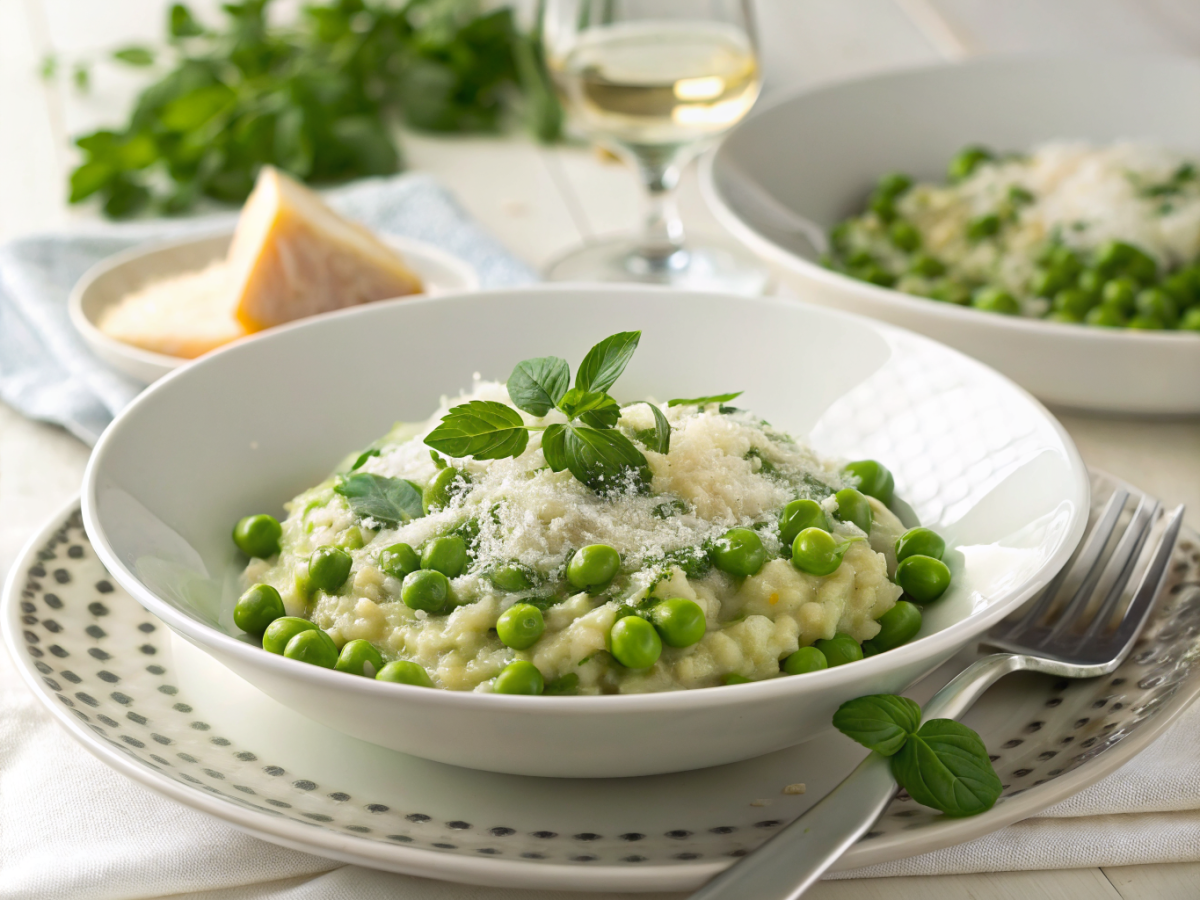
Spring Pea Risotto With Parmesan (The One Everyone Will Beg You to Make Again)
This spring pea risotto parmesan recipe is a HomeCookLegacy favorite — simple to make and absolutely delicious.
This isn’t just risotto—it’s spring in a bowl. Creamy Arborio rice, sweet peas, and salty Parmesan come together in a dish so good, you’ll want to make it every week. And guess what? It’s way easier than you think.
- 1.5 cups Arborio rice (don’t even think about substituting—this is non-negotiable!)
- 4 cups chicken or vegetable broth (keep it warm on the stove)
- 2 cups fresh or frozen peas (I use frozen when fresh aren’t in season—they’re just as good!)
- 1 cup freshly grated Parmesan cheese (plus extra for serving, because why not?)
- 1 medium yellow onion, finely diced (pro tip: cry now so you don’t cry later)
- 3 tablespoons butter, divided (because butter makes everything better)
- 2 tablespoons olive oil
- 1/2 cup dry white wine (the kind you’d actually drink—no cooking wine here!)
- 2 cloves garlic, minced (or more if you’re a garlic lover like me)
- 1/4 cup fresh mint or basil, chopped (optional, but oh-so-pretty)
- Salt and black pepper, to taste
- First things first: warm your broth in a saucepan over low heat. You want it hot but not boiling—think cozy bathwater, not volcanic. Keep it on the stove while you cook; you’ll be ladling it in bit by bit, and cold broth is a risotto killer.
- Grab your biggest, heaviest pan (I use my trusty Dutch oven) and melt 2 tablespoons of butter with the olive oil over medium heat. Add the diced onion and let it soften for 4-5 minutes, stirring occasionally. You’re not looking for color here—just sweet, translucent perfection. Toss in the garlic and cook for another minute until your kitchen smells like heaven.
- Now, the rice. Add the Arborio to the pan and stir like you mean it for 2-3 minutes. You want every grain coated in that buttery, garlicky goodness. The edges should start to look a little translucent—this is your sign it’s ready for the wine. Pour it in and stir until the liquid’s almost gone. (Fun fact: the alcohol cooks off, but the flavor stays. Cheers to that!)
- Here’s where the magic happens. Start adding the warm broth one ladle at a time, stirring often. Wait until each addition is mostly absorbed before adding the next. This part takes about 18-20 minutes, and yes, it’s worth every stir. Pro tip: set a podcast or playlist to keep you company—you’ll be here a while, but trust me, it’s meditative once you get into the rhythm.
- When the rice is almost done (tender but still with a tiny bite), stir in the peas. Fresh peas need about 3-4 minutes to soften; frozen ones just 2-3. You want them bright green and sweet—no mushy peas allowed!
- Take the pan off the heat and stir in the last tablespoon of butter and the Parmesan. This is where the risotto goes from good to *wow*. Stir like you’re trying to impress someone (because you are). The texture should be creamy, almost like a thick porridge. Taste and season with salt and pepper—remember, Parmesan is salty, so go easy at first.
- Serve immediately in warm bowls. Garnish with extra Parmesan and fresh herbs if you’re feeling fancy. The risotto should flow slightly when you spoon it—this isn’t glue, people! Leftovers? They’ll thicken up, but a splash of warm broth and a quick stir brings them back to life.
**A few things I’ve learned the hard way:**
- Freshly grate your Parmesan. Pre-grated cheese is coated in anti-caking agents, which means it won’t melt smoothly. I keep a block in the fridge just for this reason—it’s worth the extra minute.
- Don’t drown the rice. You’re not making soup here. Add broth slowly and let it absorb. If you run out before the rice is tender, just use hot water—it’s not ideal, but it works in a pinch.
- Want extra spring flavor? Blanch half the peas, blend them into a puree, and stir it into the finished risotto. It’s like a secret green hug for your dish.
- Stirring isn’t optional. You don’t have to hover over the pot, but every 30 seconds or so, give it a good stir. This releases the starch from the rice, which is what makes risotto creamy. My grandmother used to say, “If you’re not stirring, you’re not caring.”
For more culinary inspiration, visit AllRecipes.
You might also like: Spring Pea Risotto With Lemon And Mint Recipe

HomeCook Legacy Kitchen is the editorial name of homecooklegacy.com. Recipes on this site are drafted with the help of AI tools and published by the HomeCook Legacy team. Please check ingredients, cooking times and food-safety guidance for your own situation.