Easy Air Fryer Salmon Recipe
Ingredients
Method
- Preheat your air fryer to 400 degrees Fahrenheit for 3-5 minutes.
- Pat the salmon fillets dry with paper towels. Brush both sides of each fillet with olive oil.
- In a small bowl, mix together garlic powder, paprika, salt, and black pepper. Sprinkle the seasoning mixture evenly over both sides of the salmon fillets.
- Place the salmon fillets in the air fryer basket in a single layer, skin-side down if using skin-on salmon. Make sure they are not overlapping.
- Air fry at 400 degrees Fahrenheit for 8-10 minutes, depending on thickness. The salmon is done when it flakes easily with a fork and reaches an internal temperature of 145 degrees Fahrenheit.
- Remove the salmon from the air fryer and let it rest for 2 minutes. Drizzle with fresh lemon juice and garnish with chopped parsley before serving.
Nutrition
Notes
Tried this recipe?
Let us know how it was!Air Fryer Salmon: 5 Easy Tips in 15 Minutes
Cooking salmon in an air fryer is a game-changer for home cooks seeking convenience without sacrificing flavor. The circulating hot air creates an even cook that rivals traditional oven-baking methods. This technique eliminates the need for constant monitoring and reduces cooking time significantly.
The beauty of this cooking method lies in its simplicity and consistency. You don’t need culinary expertise to achieve professional results every single time. The air fryer maintains optimal temperature throughout the cooking process, ensuring your salmon comes out perfect.
Five essential tips will elevate your salmon from good to extraordinary. First, always pat your salmon dry before seasoning to ensure proper browning. Second, avoid overcrowding the basket to allow proper air circulation around each piece.
Third, use a meat thermometer to check for an internal temperature of 145°F for perfectly cooked fish. Fourth, let the salmon rest for 2-3 minutes after cooking to allow juices to redistribute. Fifth, experiment with different seasonings to discover your favorite flavor combinations.
Why You’ll Love This Air Fryer Salmon
This recipe delivers consistent results without the hassle of traditional cooking methods. The air fryer eliminates the risk of overcooking that often plagues pan-seared or baked salmon. You’ll achieve a delicate balance of crispy skin and moist, tender flesh every time.
Time efficiency is another major advantage of this cooking approach. From preparation to plating, you’ll have dinner ready in under 20 minutes total. This makes it perfect for those hectic evenings when you need something nutritious quickly.
The minimal cleanup required is a bonus that busy cooks truly appreciate. Unlike pan-frying, there’s no oil splatter to scrub from your stovetop. The air fryer basket typically requires just a quick wash with warm soapy water.
Health-conscious eaters will love that this method requires very little added fat. The salmon’s natural oils provide enough moisture, so you only need a light coating of oil. This keeps the calorie count low while maintaining incredible flavor and texture.
Versatility is another compelling reason to master this technique for your weekly meal rotation. The same basic method works beautifully with various seasonings, from Asian-inspired to Mediterranean flavors. You can easily customize each batch to suit different taste preferences or dietary requirements.
Core Ingredients for Air Fryer Salmon
The ingredient list for this recipe is refreshingly simple and straightforward. Quality matters more than quantity when working with fish this delicate. Fresh or properly frozen salmon fillets form the foundation of this dish.

For the salmon fillets, choose skin-on pieces that are about 6 ounces each and roughly 1-inch thick. This size ensures even cooking and prevents the fish from drying out. Wild-caught salmon typically offers richer flavor, but farm-raised works perfectly fine for this recipe.
Olive oil or avocado oil serves as the base for helping seasonings adhere to the fish. You’ll only need about one tablespoon for two fillets. The oil also promotes that desirable golden-brown exterior we’re aiming for.
Salt and freshly ground black pepper are non-negotiable for bringing out the salmon’s natural flavors. Use kosher salt or sea salt for better control over seasoning. Freshly cracked pepper adds a subtle heat that complements the fish beautifully.
Garlic powder provides savory depth without the risk of burning that fresh garlic presents. About half a teaspoon per fillet is sufficient. Paprika adds a gentle smokiness and contributes to the appealing color of the finished dish.
Optional additions include lemon slices, fresh dill, or your favorite herb blend. These aromatics enhance the overall experience without overwhelming the delicate fish flavor. Fresh lemon juice squeezed over the cooked salmon adds brightness that cuts through the richness.
If you’re looking for more high-protein recipes to complement your healthy eating goals, salmon fits perfectly into that category. The omega-3 fatty acids and complete protein profile make it nutritionally superior. This fish provides essential nutrients that support heart health and brain function.
How to Make Air Fryer Salmon: Step-by-Step
Begin by removing your salmon from the refrigerator about 15 minutes before cooking. Allowing it to come closer to room temperature ensures more even cooking throughout. Pat each fillet completely dry using paper towels to remove excess moisture.
Preheat your air fryer to 400°F for approximately 3-5 minutes before adding the salmon. This preheating step is crucial for achieving that desirable crispy exterior. Most air fryer models have a preheat function that makes this process automatic.
While the air fryer preheats, prepare your seasoning mixture in a small bowl. Combine the salt, black pepper, garlic powder, and paprika thoroughly. This ensures even distribution of flavors across the entire fillet surface.
Brush each salmon fillet lightly with olive oil on both sides using a pastry brush. The oil helps the seasoning stick and promotes browning during cooking. Be generous but not excessive—you want a light coating, not a pool of oil.
Sprinkle the seasoning mixture evenly over both sides of each fillet, pressing gently to help it adhere. Pay special attention to the top surface, which will be most visible when serving. Don’t forget to season the sides of thicker pieces.
Place the salmon fillets in the air fryer basket skin-side down, leaving space between each piece. Overcrowding restricts airflow and results in uneven cooking. If you’re cooking multiple fillets, work in batches rather than cramming them together.
Cook the salmon at 400°F for 7-9 minutes, depending on thickness and desired doneness. For a 1-inch thick fillet, 8 minutes typically yields a medium doneness with a slightly translucent center. Add an extra minute or two if you prefer your salmon fully cooked through.
Check the internal temperature using an instant-read thermometer inserted into the thickest part of the fillet. The FDA recommends 145°F for safely cooked fish. The salmon will continue cooking slightly after removal due to residual heat.
Remove the salmon carefully using a spatula, supporting it from underneath to keep it intact. Transfer to a serving plate and let it rest for 2-3 minutes before serving. This resting period allows the juices to redistribute throughout the fish.
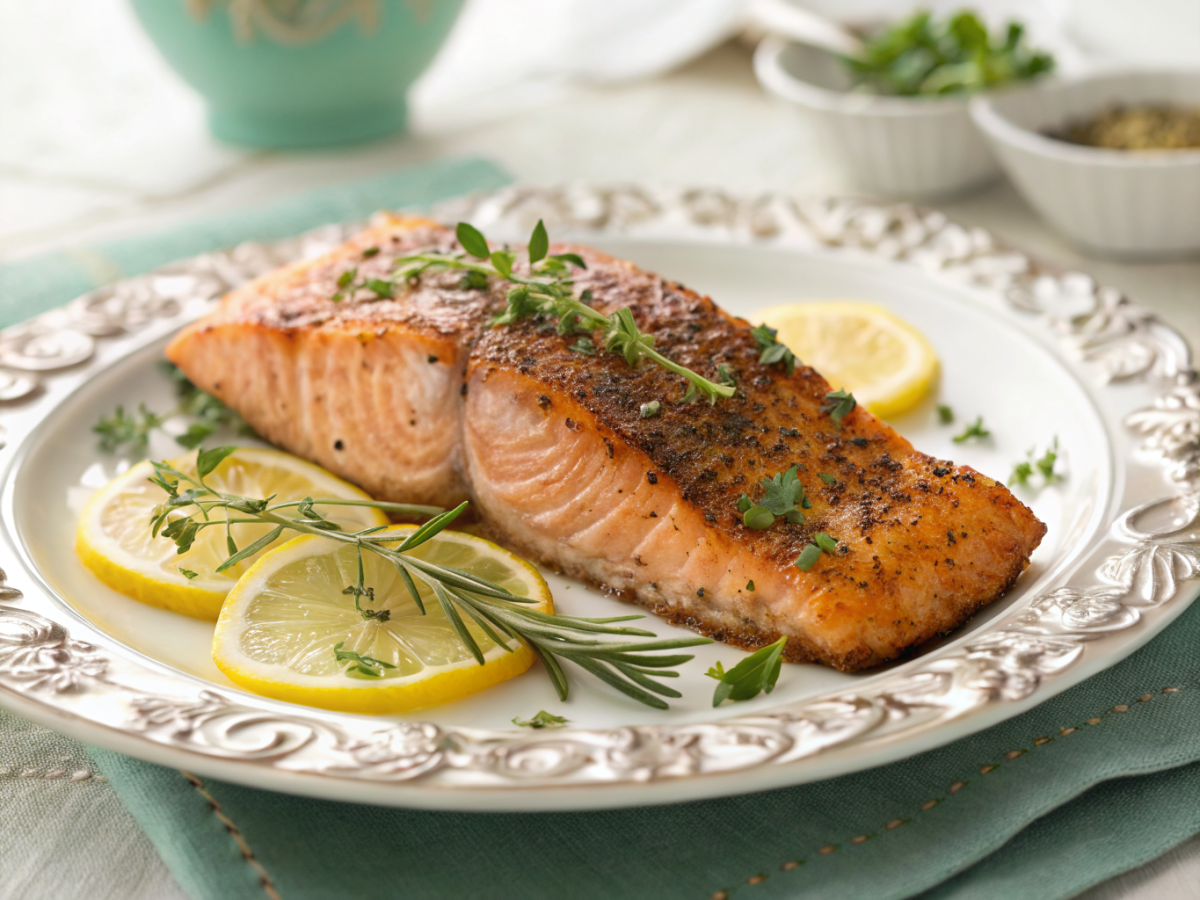
Garnish with fresh lemon wedges, chopped herbs, or a drizzle of your favorite sauce. The simple preparation allows the salmon’s natural flavor to shine through. Serve immediately while the exterior is still crispy and the interior is warm and tender.
This recipe pairs wonderfully with other quick easy meals for a complete dinner spread. Consider serving alongside roasted vegetables or a fresh green salad. The versatility of salmon makes it suitable for casual weeknight dinners or more formal occasions.
Nutrition & Health Benefits
Salmon ranks among the most nutritious proteins available, packed with essential omega-3 fatty acids. These healthy fats support cardiovascular health and reduce inflammation throughout the body. A single 6-ounce serving provides approximately 350 calories with 39 grams of high-quality protein.
The omega-3 content in salmon, particularly EPA and DHA, offers numerous health advantages. These fatty acids support brain function, improve mood, and may reduce the risk of chronic diseases. Regular salmon consumption has been linked to improved heart health and reduced triglyceride levels.
Salmon is an excellent source of B vitamins, particularly B12, niacin, and B6. These vitamins play crucial roles in energy production and nervous system function. The selenium content supports thyroid function and acts as a powerful antioxidant in the body.
Vitamin D is another notable nutrient found abundantly in salmon, especially wild-caught varieties. Many people struggle to get adequate vitamin D through diet alone. A single serving can provide a significant portion of your daily vitamin D requirements.
The protein in salmon contains all nine essential amino acids, making it a complete protein source. This supports muscle maintenance, repair, and growth throughout the body. The high protein content also promotes satiety, helping you feel full and satisfied longer.
Cooking salmon in an air fryer preserves these nutrients while minimizing added fats and calories. Traditional frying methods can add unnecessary calories through absorption of cooking oils. The air fryer method keeps the dish light while maintaining all the nutritional benefits.
Astaxanthin, the compound that gives salmon its pink color, acts as a potent antioxidant. This carotenoid has been studied for its anti-inflammatory properties and potential skin health benefits. Wild salmon typically contains higher levels of this beneficial compound than farm-raised varieties.
Variations & Substitutions
The basic air fryer method adapts beautifully to countless flavor profiles and dietary preferences. Asian-inspired variations might include a glaze of soy sauce, ginger, and honey. Mediterranean versions could feature lemon, oregano, and a drizzle of quality olive oil.
For a spicy kick, try a Cajun or blackened seasoning blend instead of the basic spices. These bold flavors stand up well to salmon’s rich taste without overwhelming it. A sriracha-honey glaze applied during the last two minutes creates a sweet-heat combination.
Herb-crusted salmon offers an elegant presentation perfect for entertaining guests. Mix fresh chopped parsley, dill, and chives with breadcrumbs or crushed nuts. Press this mixture onto the top of the fillet before air frying for a crunchy topping.
Teriyaki salmon brings Japanese flavors to your dinner table with minimal effort. Brush the fillets with teriyaki sauce halfway through cooking, then again just before serving. Garnish with sesame seeds and sliced green onions for authentic presentation.
If you’re following a low-sodium diet, reduce or eliminate the added salt. The salmon’s natural flavor is delicious enough to stand on its own with just herbs and lemon. Nutritional yeast can add a savory umami quality without contributing sodium.
For those avoiding certain seasonings, customize the spice blend to your preferences. Smoked paprika, cumin, or Italian seasoning all work wonderfully with salmon. Experiment with different combinations to discover your personal favorite flavor profile.
Skin-off fillets work perfectly fine if you prefer not to eat the crispy skin. The cooking time remains the same, though you may want to flip the fillet halfway through. Some people find skinless salmon slightly more delicate to handle when removing from the basket.
Other fatty fish like arctic char, steelhead trout, or even thick tuna steaks adapt well to this cooking method. Adjust cooking times based on thickness rather than fish type. The general rule of 8 minutes per inch of thickness applies across most fish varieties.
Serving Suggestions
Pair your perfectly cooked salmon with complementary side dishes that balance the meal nutritionally. Roasted vegetables like asparagus, Brussels sprouts, or broccoli provide fiber and additional nutrients. Their caramelized edges from roasting complement the salmon’s crispy exterior beautifully.
A fresh green salad with a light vinaigrette offers a refreshing contrast to the rich fish. Mixed greens, cucumber, cherry tomatoes, and red onion create a colorful, crunchy accompaniment. The acidity in the dressing helps cut through the salmon’s natural oils.
Grain-based sides like quinoa, brown rice, or farro add substance and make the meal more filling. These complex carbohydrates provide sustained energy and additional protein. Prepare them with herbs and a squeeze of lemon to tie the flavors together.
Creamy mashed potatoes or cauliflower mash create a comforting base for the salmon to rest upon. The smooth texture contrasts nicely with the fish’s flaky consistency. Add garlic and herbs to the mash for extra flavor dimension.
For a lighter option, serve the salmon over a bed of zucchini noodles or spaghetti squash. These vegetable-based alternatives keep the meal low-carb while adding volume and nutrition. Toss them with a little olive oil and garlic before plating.
Sauce options abound for those who enjoy additional flavor layers with their fish. Classic choices include dill sauce, lemon butter, or a simple aioli. Tzatziki, pesto, or chimichurri offer bolder flavor profiles for adventurous eaters.
Consider this salmon as part of your dinner recipes rotation for balanced, satisfying meals. The protein-rich fish combined with vegetable sides creates a nutritionally complete plate. This combination supports various dietary goals from weight management to muscle building.
For meal prep purposes, the salmon works wonderfully in grain bowls or salads throughout the week. Flake the cooled fish over mixed greens with your favorite toppings. This transforms leftovers into an entirely different meal experience.
Common Mistakes to Avoid
One of the most frequent errors is starting with wet salmon fillets. Excess moisture prevents proper browning and creates steam instead of the desired crispy exterior. Always thoroughly pat your fish dry with paper towels before seasoning and cooking.
Overcrowding the air fryer basket is another common pitfall that compromises results. When fillets touch or overlap, air cannot circulate properly around them. This leads to uneven cooking with some areas overdone while others remain undercooked.
Using temperatures that are too high or too low affects both texture and doneness. Temperatures above 400°F can cause the exterior to burn before the interior cooks through. Temperatures below 375°F may result in dry fish without the desirable crispy surface.
Failing to preheat the air fryer is a mistake that impacts cooking time and texture. Starting with a cold appliance means the salmon sits at lower temperatures longer than necessary. This extended exposure can dry out the fish before it properly browns.
Overcooking salmon is perhaps the most devastating error, turning tender fish into a dry, chalky disappointment. Remember that salmon continues cooking after removal from the air fryer due to residual heat. Aim for slightly underdone rather than risking overcooked fish.
Neglecting to check the internal temperature leaves doneness to guesswork and visual cues alone. An instant-read thermometer removes all uncertainty and ensures food safety. Insert it into the thickest part of the fillet for the most accurate reading.
Using the wrong type of oil or too much oil can affect both flavor and texture. High smoke-point oils like avocado or light olive oil work best for air frying. Heavy application of oil can cause smoking and may make the fish greasy rather than crispy.
Skipping the resting period after cooking means losing valuable juices when you cut into the fish. Just 2-3 minutes allows the proteins to relax and retain more moisture. This small patience pays off with noticeably more tender, juicy results.
Storage & Meal Prep Tips
Properly stored cooked salmon remains safe and delicious for 3-4 days in the refrigerator. Allow the fish to cool completely before transferring it to an airtight container. Storing while still warm creates condensation that can make the fish soggy and promote bacterial growth.
For optimal texture retention, place a paper towel in the container to absorb excess moisture. This simple trick helps maintain the salmon’s texture during storage. Replace the paper towel if it becomes saturated when you access the leftovers.
Raw seasoned salmon can be prepared ahead and refrigerated for up to 24 hours before cooking. This makes weeknight dinners even more convenient when time is limited. Simply remove from the refrigerator, let sit for 10 minutes, then cook as directed.
Freezing cooked salmon is possible but affects texture more than refrigeration does. Wrap individual portions tightly in plastic wrap, then place in a freezer-safe bag. Properly frozen cooked salmon maintains quality for up to 3 months in the freezer.
When reheating refrigerated salmon, use the air fryer at 350°F for 3-4 minutes. This method helps restore some of the original crispiness better than microwaving. Alternatively, enjoy cold salmon flaked over salads or in wraps for a different experience.
For meal prep purposes, cook multiple fillets at once and portion them for the week ahead. Pair each portion with different sides and sauces to create variety throughout the week. This strategy prevents meal prep boredom while maximizing cooking efficiency.
Raw salmon freezes exceptionally well when properly wrapped and stored at 0°F or below. Vacuum-sealing provides the best protection against freezer burn for long-term storage. Frozen raw salmon maintains quality for 2-3 months when stored correctly.
Thaw frozen raw salmon in the refrigerator overnight rather than at room temperature. This slow thawing method preserves texture and ensures food safety. Never refreeze previously frozen raw salmon after it has been thawed completely.
Final Thoughts on Air Fryer Salmon
Mastering this Air Fryer Salmon recipe opens up a world of quick, healthy, and delicious meal possibilities. The technique is forgiving enough for beginners yet delivers results that impress even experienced cooks. With minimal ingredients and equipment, you can create restaurant-quality fish at home.
The versatility of this cooking method means you’ll never tire of salmon in your meal rotation. Experiment with different seasonings, sauces, and side dishes to keep things interesting. Each variation teaches you more about flavor combinations and your personal preferences.
Investing time in perfecting this recipe pays dividends in your overall cooking confidence and repertoire. The skills you develop transfer beautifully to other proteins and air fryer applications. Soon you’ll be adapting the technique to chicken, vegetables, and other favorite ingredients.
From a health perspective, incorporating salmon regularly into your diet supports numerous wellness goals. The combination of high-quality protein, omega-3 fatty acids, and essential vitamins makes it nutritionally exceptional. The air fryer preparation method keeps it light without sacrificing flavor or satisfaction.
Don’t be discouraged if your first attempt isn’t absolutely perfect—cooking is a learning process. Pay attention to how your specific air fryer model performs and adjust accordingly. Each time you make Air Fryer Salmon, you’ll gain insights that improve your results.
The convenience factor cannot be overstated for busy individuals and families seeking nutritious meals. Having a reliable 15-minute dinner option reduces reliance on takeout and processed foods. This recipe deserves a permanent spot in your regular cooking rotation.
Frequently Asked Questions
How long does it take to cook salmon in an air fryer?
Cooking Air Fryer Salmon typically takes 7-9 minutes at 400°F for fillets that are about 1-inch thick. Thicker pieces may require an additional 1-2 minutes, while thinner fillets might be done in 6-7 minutes. Always check the internal temperature reaches 145°F for properly cooked fish that’s safe to eat.
Do I need to flip salmon in the air fryer?
No, you don’t need to flip salmon when cooking it in the air fryer, which is one of the method’s great conveniences. The circulating hot air cooks the fish evenly from all sides without turning. Place the fillet skin-side down and leave it undisturbed for the entire cooking time to maintain its shape and texture.
Should I use fresh or frozen salmon for air frying?
Fresh salmon produces the best results for Air Fryer Salmon, offering superior texture and flavor compared to frozen. However, properly thawed frozen salmon works perfectly fine and is often more budget-friendly and accessible. If using frozen, thaw it completely in the refrigerator overnight and pat it very dry before seasoning and cooking.
What temperature should I set my air fryer for salmon?
The ideal temperature for cooking Air Fryer Salmon is 400°F, which creates a nicely browned exterior while keeping the interior moist. Some prefer 390°F for a slightly gentler cook, especially with thinner fillets. Avoid going above 400°F as higher temperatures can cause the outside to burn before the inside cooks through properly.

focuses on smoothies, detox drinks, and mindful eating.