
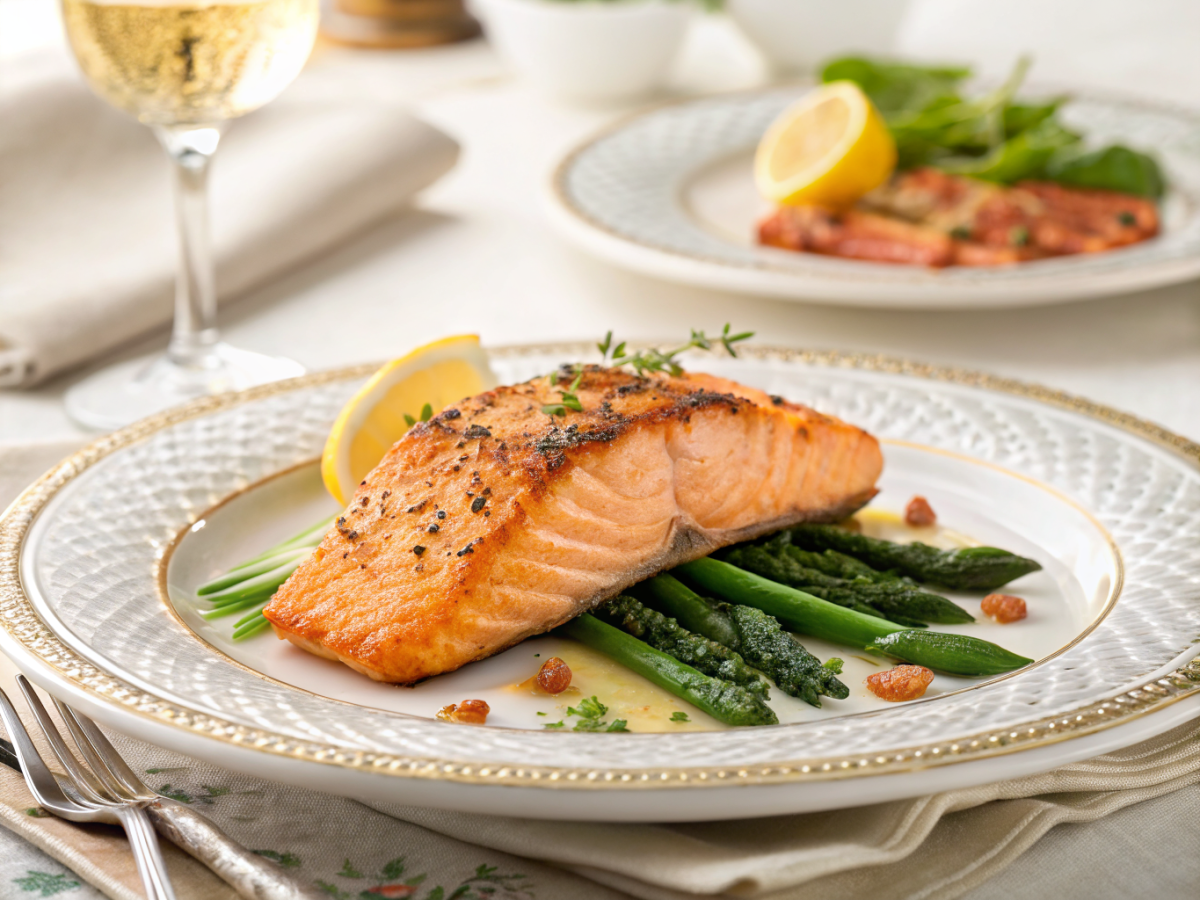
Air Fryer Salmon Fillet You'll Want On Repeat
Ingredients
Method
- Pat the salmon fillets dry with paper towels. This helps achieve a better sear and prevents excess moisture in the air fryer.
- Brush both sides of each salmon fillet with olive oil. In a small bowl, combine garlic powder, paprika, salt, black pepper, and dried dill. Sprinkle the seasoning mixture evenly over both sides of the salmon.
- Preheat your air fryer to 400 degrees Fahrenheit for 3 minutes. This ensures even cooking from the start.
- Place the salmon fillets in the air fryer basket in a single layer, skin-side down if using skin-on fillets. Make sure they are not touching or overlapping for best air circulation.
- Cook the salmon at 400 degrees Fahrenheit for 8-10 minutes, depending on thickness. The salmon is done when it reaches an internal temperature of 145 degrees Fahrenheit and flakes easily with a fork.
- Remove the salmon from the air fryer and immediately drizzle with fresh lemon juice. Let rest for 2 minutes before serving.
- Transfer the salmon fillets to serving plates and garnish with lemon wedges. Serve immediately while hot and enjoy.
Nutrition
Notes
Tried this recipe?
Let us know how it was!Air Fryer Salmon Fillet: 5 Easy Tips for Perfect Results
Mastering the art of cooking salmon in your air fryer doesn’t require professional chef skills or fancy equipment. The circulating hot air technology creates an evenly cooked fillet with crispy edges and a tender, moist center every single time. Whether you’re cooking for a weeknight dinner or meal prepping for the week ahead, this method consistently delivers excellence.
The beauty of air fryer salmon lies in its simplicity and speed. You’ll have a protein-packed meal ready in under 15 minutes from start to finish. The high heat sears the outside while keeping the inside perfectly flaky, mimicking the results you’d get from a high-end restaurant kitchen.
Temperature control is absolutely critical when cooking salmon. Too high and you’ll end up with dry, overcooked fish; too low and you miss that desirable caramelization. The sweet spot sits at 400°F, which allows the natural oils in the salmon to render beautifully while developing a golden crust.
Why You’ll Love This Air Fryer Salmon Fillet
This recipe eliminates the guesswork and anxiety that often comes with cooking fish at home. The air fryer provides consistent, predictable results that take the stress out of dinner preparation. You’ll never have to worry about undercooked or rubbery salmon again when you follow this straightforward method.
Cleanup becomes a breeze compared to traditional cooking methods. No splattering oil on your stovetop, no fishy smell lingering in your kitchen for hours, and no scrubbing stuck-on residue from baking sheets. Simply remove the basket, wash it quickly, and you’re done in minutes.
The versatility of this preparation method means you can customize flavors endlessly. From simple salt and pepper to elaborate spice rubs and glazes, the air fryer accommodates every seasoning profile you can imagine. The consistent cooking environment ensures your chosen flavors shine through perfectly every time.
Health-conscious eaters appreciate that this method requires minimal added fats. The salmon’s natural oils provide enough moisture and richness without needing butter or heavy sauces. You’re getting pure, nutritious protein with omega-3 fatty acids in their most beneficial form.
Time-strapped home cooks will celebrate the speed of this technique. From refrigerator to table in 15 minutes makes this an ideal solution for busy weeknights. You can have a complete, nutritious dinner ready faster than ordering takeout, and it tastes infinitely better.
Core Ingredients for Air Fryer Salmon Fillet
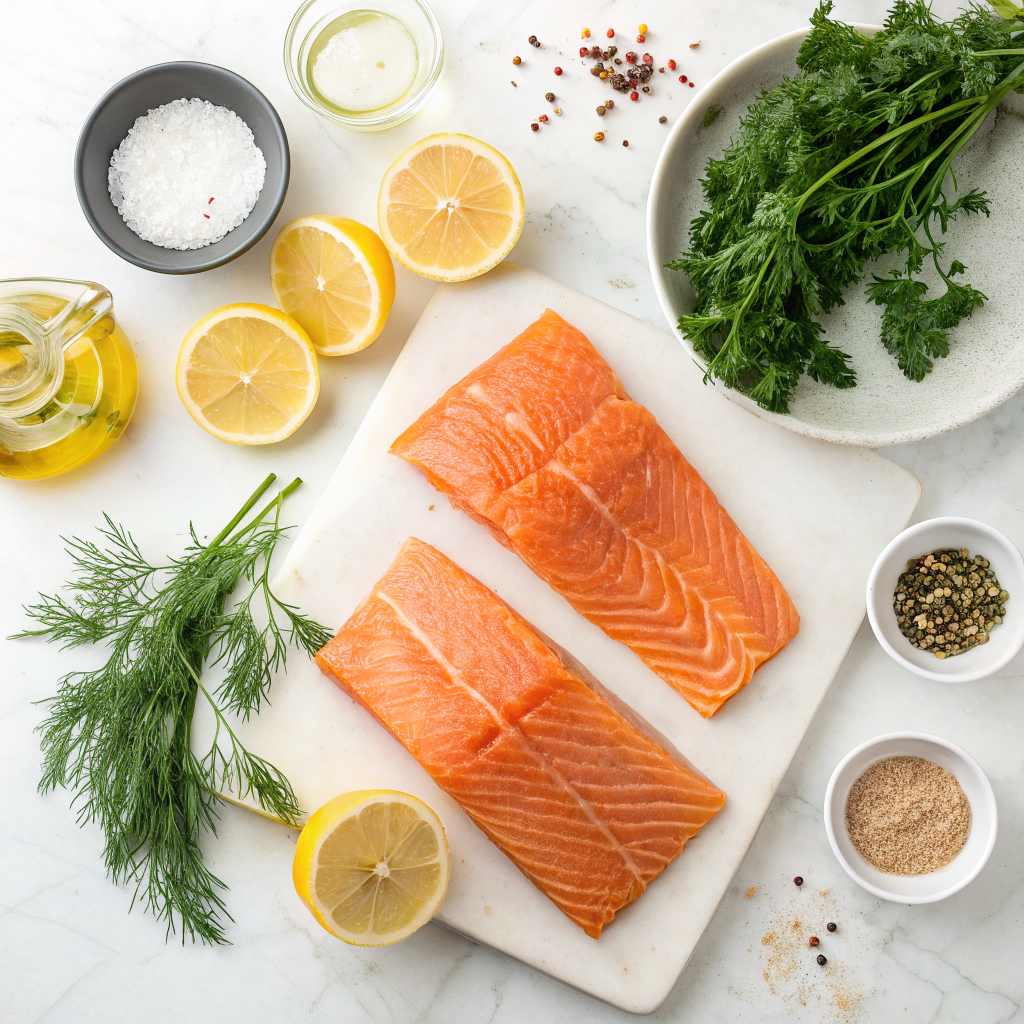
The star ingredient is, naturally, fresh salmon fillets weighing between 4 to 6 ounces each. Look for fillets with vibrant color, firm flesh, and a fresh ocean smell rather than anything fishy or ammonia-like. Wild-caught salmon offers superior flavor and nutritional benefits, though farm-raised varieties work perfectly well in this recipe.
Extra virgin olive oil serves as your primary fat, helping seasonings adhere while promoting browning. You’ll need just one tablespoon for two fillets, making this an exceptionally lean preparation. The oil also prevents sticking and adds a subtle fruity note that complements the salmon’s natural richness.
Kosher salt and freshly ground black pepper form your essential seasoning base. These simple ingredients enhance rather than mask the salmon’s delicate flavor. Use about half a teaspoon of salt and a quarter teaspoon of pepper per fillet as your starting point.
Garlic powder adds aromatic depth without the risk of burning that fresh garlic presents in high-heat cooking. A quarter teaspoon per fillet provides noticeable flavor without overwhelming the fish. This pantry staple dissolves into the oil, creating a flavorful coating across the entire surface.
Fresh lemon wedges are technically optional but highly recommended for serving. The bright acidity cuts through the salmon’s richness and elevates every bite. Squeeze them over the cooked fillet just before eating for maximum impact and freshness.
Paprika contributes both color and a subtle sweetness that pairs beautifully with salmon. Whether you choose sweet, smoked, or hot paprika depends on your flavor preferences. Just an eighth of a teaspoon adds visual appeal and complexity to the finished dish.
How to Make Air Fryer Salmon Fillet: Step-by-Step
Begin by removing your salmon fillets from the refrigerator about 15 minutes before cooking. Allowing them to come closer to room temperature ensures more even cooking throughout. Pat them completely dry with paper towels, as excess moisture prevents proper browning and can create steam instead of the desired sear.
Preheat your air fryer to 400°F for approximately 3 to 5 minutes. This preheating step is crucial for achieving that restaurant-quality crust on the exterior. A properly preheated air fryer creates immediate contact heat that begins the cooking process correctly from the first second.
While the air fryer heats, prepare your seasoning mixture in a small bowl. Combine the salt, black pepper, garlic powder, and paprika thoroughly so the flavors distribute evenly. This takes just seconds but ensures every bite of your salmon tastes consistently delicious.
Brush both sides of each salmon fillet lightly with olive oil using a pastry brush or your fingers. Don’t oversaturate the fish; a thin, even coating is all you need. The oil acts as a vehicle for the seasonings and promotes that coveted golden-brown exterior.
Sprinkle your seasoning mixture generously over both sides of the fillets, pressing gently to help it adhere. Pay special attention to the top surface, which will be most visible when serving. Any seasoning that falls off can be reapplied by pressing it into the oiled surface.
Place the seasoned fillets skin-side down in the air fryer basket, leaving space between them for air circulation. Overcrowding prevents proper cooking and steaming occurs instead of crisping. If cooking multiple fillets, work in batches rather than cramming them together.
Cook for 7 to 9 minutes depending on thickness, without flipping halfway through. A one-inch thick fillet typically needs 8 minutes for medium doneness. The salmon is done when it flakes easily with a fork and reaches an internal temperature of 145°F in the thickest part.
Remove the cooked fillets carefully using a spatula, as they’ll be delicate and hot. Let them rest for 2 minutes before serving to allow juices to redistribute throughout the flesh. This brief resting period makes a noticeable difference in moisture and texture.
For those who enjoy exploring different air fryer recipes, this salmon preparation serves as an excellent introduction to cooking proteins in this versatile appliance. The same principles apply to other fish varieties and even chicken breasts.
Nutrition & Health Benefits
Salmon stands as one of nature’s most nutritionally complete foods, packed with high-quality protein and omega-3 fatty acids. A single 4-ounce serving provides approximately 25 grams of protein, making it an excellent choice for muscle maintenance and satiety. These essential fats support heart health, brain function, and reduce inflammation throughout the body.
The omega-3 content in salmon, particularly EPA and DHA, cannot be overstated in importance. These fatty acids have been linked to reduced risk of cardiovascular disease, improved cognitive function, and better mood regulation. Regular salmon consumption may help lower triglycerides and blood pressure while increasing beneficial HDL cholesterol.
Salmon delivers an impressive array of B vitamins, including B12, niacin, and B6. These nutrients play crucial roles in energy metabolism, nervous system function, and red blood cell formation. A single serving provides more than 100% of your daily B12 requirement, which is especially important for those following predominantly plant-based diets.
The selenium content in salmon supports thyroid function and acts as a powerful antioxidant. One serving contains nearly 60% of your daily selenium needs. This trace mineral works synergistically with vitamin E to protect cells from oxidative damage and supports immune system health.
Air frying as a cooking method preserves these nutrients better than many alternatives. The shorter cooking time and lower fat requirements mean you’re getting maximum nutritional benefit. Unlike deep frying, which adds unnecessary calories, or overcooking methods that degrade delicate omega-3s, air frying hits the sweet spot.
For those tracking macronutrients, a 4-ounce air-fried salmon fillet contains approximately 200 calories, 25 grams of protein, 10 grams of healthy fats, and zero carbohydrates. This makes it perfect for virtually any eating plan, from keto to Mediterranean to simple calorie-conscious diets. The high protein content keeps you satisfied for hours after eating.
Understanding the broader context of high-protein recipes helps you build balanced meals throughout your week. Salmon fits perfectly into a rotation of lean proteins that support your health goals.
Variations & Substitutions
Asian-inspired variations work beautifully with air fryer salmon. Try a glaze made from soy sauce, honey, ginger, and sesame oil applied during the last 2 minutes of cooking. The sugars caramelize quickly in the high heat, creating a sticky, flavorful coating that rivals your favorite restaurant’s version.
Mediterranean flavors complement salmon’s richness perfectly. Combine dried oregano, thyme, minced garlic, and lemon zest with your olive oil before brushing. Top the cooked fillet with crumbled feta cheese and chopped Kalamata olives for an impressive presentation that tastes as good as it looks.
Spicy Cajun seasoning brings bold flavor to mild salmon. Use a store-bought blend or make your own with paprika, cayenne, garlic powder, onion powder, thyme, and oregano. The dry heat of the air fryer intensifies these spices without burning them, creating a flavorful crust.
For those avoiding fish entirely, this same technique works wonderfully with other proteins. Chicken breasts, pork chops, and even firm tofu respond well to the same time and temperature. Adjust cooking times based on thickness, always checking internal temperatures for food safety.
Maple-mustard glaze offers a sweet-tangy alternative that’s incredibly simple. Whisk together two tablespoons of Dijon mustard with one tablespoon of pure maple syrup. Brush this mixture on during the last 3 minutes of cooking for a glossy, flavorful finish that caramelizes beautifully.
Herb-crusted variations add visual appeal and fresh flavor. Press chopped fresh dill, parsley, and chives into the oiled salmon before cooking. The herbs crisp up slightly while maintaining their bright color and aromatic qualities, creating a dish worthy of special occasions.
If salmon isn’t available or budget-friendly, try this method with other fatty fish. Arctic char, steelhead trout, or even thick cod fillets work well with identical cooking times. The key is choosing fish with enough natural oils to stay moist during the high-heat cooking process.
Serving Suggestions
Pair your perfectly cooked salmon with roasted vegetables for a complete, balanced meal. Asparagus, Brussels sprouts, or broccoli can actually cook in the air fryer alongside your salmon if you start them a few minutes earlier. This one-appliance approach minimizes cleanup while maximizing efficiency.
Grain bowls showcase air fryer salmon beautifully and offer endless customization options. Start with quinoa, brown rice, or farro as your base, then add the salmon alongside roasted sweet potatoes, leafy greens, and a drizzle of tahini or yogurt sauce. These bowls are perfect for meal prep and stay fresh for days.
Classic steakhouse sides elevate salmon to special-occasion status. Serve alongside garlic mashed potatoes, creamed spinach, and a simple arugula salad with lemon vinaigrette. The richness of the sides complements the salmon without overwhelming its delicate flavor.
Light summer meals call for pairing salmon with fresh salads and fruit. A spinach salad with strawberries, goat cheese, and candied pecans provides textural contrast and refreshing flavors. The salmon can be served warm on top or chilled for a different experience.
Taco night gets a healthy upgrade when you flake air fryer salmon into warm tortillas. Add shredded cabbage, avocado slices, cilantro, and a squeeze of lime for quick fish tacos. This preparation is especially popular with kids who might otherwise resist eating fish.
Breakfast or brunch benefits from leftover salmon in surprising ways. Flake it into scrambled eggs, top a bagel with cream cheese and salmon, or add it to a vegetable frittata. The protein-rich start to your day keeps energy levels stable for hours.
For those seeking more dinner recipes that come together quickly, salmon offers incredible versatility that adapts to any cuisine or dietary preference you’re exploring.
Common Mistakes to Avoid
Overcooking ranks as the most frequent error when preparing salmon in any method. The carryover cooking that occurs after removal from heat means you should pull salmon when it’s slightly underdone. It will reach perfect doneness during the resting period, maintaining moisture and tenderness.
Starting with cold salmon straight from the refrigerator leads to uneven cooking. The exterior overcooks before the center reaches a safe temperature. Always allow at least 15 minutes for the fish to lose its chill before cooking for the best results.
Skipping the preheating step undermines your chances of achieving that desirable crust. A cold air fryer means the salmon sits in gradually increasing heat, essentially steaming before it can brown. Those few minutes of preheating make a dramatic difference in the final texture.
Using too much oil creates unnecessary calories and can cause smoking in your air fryer. Salmon contains natural oils that render during cooking, so you truly only need a light coating. Excess oil also prevents seasonings from adhering properly and can make the exterior greasy rather than crispy.
Flipping the fillet halfway through cooking is unnecessary and risky. The skin protects the delicate flesh from direct heat, and flipping can cause the fillet to break apart. Trust the air circulation to cook evenly without intervention.
Overcrowding the air fryer basket prevents proper air circulation and leads to steaming. Each fillet needs space around it for the hot air to flow freely. Cook in batches if necessary rather than compromising the quality of your meal.
Neglecting to pat the salmon dry before seasoning creates a barrier between the fish and your flavorings. Moisture prevents browning and causes seasonings to slide off rather than form a flavorful crust. Those extra seconds with paper towels pay dividends in the final result.
Using frozen salmon without proper thawing leads to inconsistent results and potential food safety issues. Always thaw salmon completely in the refrigerator overnight. Quick-thaw methods in water baths can work in a pinch, but never cook salmon from frozen in the air fryer.
Storage & Meal Prep Tips
Properly stored cooked salmon remains safe and delicious for up to three days in the refrigerator. Allow it to cool completely before transferring to an airtight container to prevent condensation. Place a paper towel in the container to absorb excess moisture that could make the fish soggy.
Freezing cooked salmon extends its life to approximately three months, though texture quality diminishes slightly. Wrap individual portions tightly in plastic wrap, then place in freezer bags with air removed. Label with the date and thaw overnight in the refrigerator when ready to use.
Meal prep enthusiasts can cook multiple fillets at once for easy weekday lunches. Pair each portion with different sides and sauces to prevent flavor fatigue throughout the week. The salmon reheats beautifully in the microwave for 30 to 45 seconds or can be enjoyed cold in salads.
Raw salmon should be cooked within two days of purchase for optimal freshness and safety. Store it in the coldest part of your refrigerator, typically the back of the bottom shelf. Keep it in its original packaging or wrap tightly in plastic wrap to prevent odors from spreading.
If you’ve purchased fresh salmon but can’t cook it immediately, freezing raw is preferable to letting it sit. Wrap individual fillets tightly, removing as much air as possible to prevent freezer burn. Properly frozen raw salmon maintains quality for up to three months.
Leftover salmon transforms into entirely new meals with a little creativity. Flake it into pasta dishes, add it to fried rice, or make salmon cakes with breadcrumbs and eggs. These preparations breathe new life into leftovers and prevent waste.
When reheating, use low power in the microwave or gentle heat in the oven to prevent drying out. Add a tablespoon of water or broth to the container to create steam that keeps the fish moist. Avoid reheating more than once, as repeated temperature changes degrade quality and safety.
Marinating salmon before air frying works well for meal prep. Prepare fillets in their marinade up to 24 hours ahead, then simply remove, pat dry, and cook when ready. This advance preparation infuses deeper flavor while saving time on busy evenings.
Final Thoughts on Air Fryer Salmon Fillet
This Air Fryer Salmon Fillet recipe proves that healthy, delicious cooking doesn’t require complicated techniques or extensive time commitments. The simplicity of the method makes it accessible for beginners while the consistent results satisfy even experienced home cooks. Once you’ve mastered this basic preparation, you’ll find yourself returning to it repeatedly throughout the week.
The investment in an air fryer pays dividends when you discover how effortlessly it handles proteins like salmon. Beyond just convenience, the health benefits of eating more omega-3-rich fish cannot be overstated. Making salmon a regular part of your meal rotation supports long-term wellness in measurable ways.
Experimentation with different seasonings and serving styles keeps this recipe fresh and exciting. You’ll never feel like you’re eating the same meal twice when you vary the accompaniments and flavor profiles. This versatility makes Air Fryer Salmon Fillet a true cornerstone recipe in any home cook’s repertoire.
The confidence you’ll gain from consistently perfect results encourages broader culinary exploration. Success with salmon often leads to trying other fish varieties, different proteins, and more adventurous cooking techniques. Every perfectly cooked fillet builds your skills and expands your comfort zone in the kitchen.
Frequently Asked Questions
How long should I cook salmon in the air fryer?
Cook your Air Fryer Salmon Fillet for 7 to 9 minutes at 400°F depending on thickness. A standard one-inch thick fillet needs approximately 8 minutes for perfect medium doneness. Always check that the internal temperature reaches 145°F in the thickest part for food safety.
Do I need to flip salmon in the air fryer?
No, flipping is unnecessary when making Air Fryer Salmon Fillet and can actually cause the delicate fish to break apart. The circulating hot air cooks the salmon evenly from all sides without any intervention. Simply place it skin-side down and let the air fryer work its magic.
Should I remove the skin before air frying salmon?
Leaving the skin on during cooking is recommended as it protects the delicate flesh from direct heat. The skin creates a barrier that helps retain moisture while the top develops a beautiful crust. You can easily remove it after cooking if you prefer not to eat it, or enjoy the crispy texture it develops.
Can I cook frozen salmon in the air fryer?
While possible, cooking frozen salmon in the air fryer isn’t ideal for achieving the best results. Thaw your salmon completely in the refrigerator overnight for even cooking and proper seasoning adhesion. Frozen fillets release excess moisture during cooking, preventing the desirable crispy exterior that makes air fryer salmon so appealing.
For more culinary inspiration, visit AllRecipes.

focuses on smoothies, detox drinks, and mindful eating.