
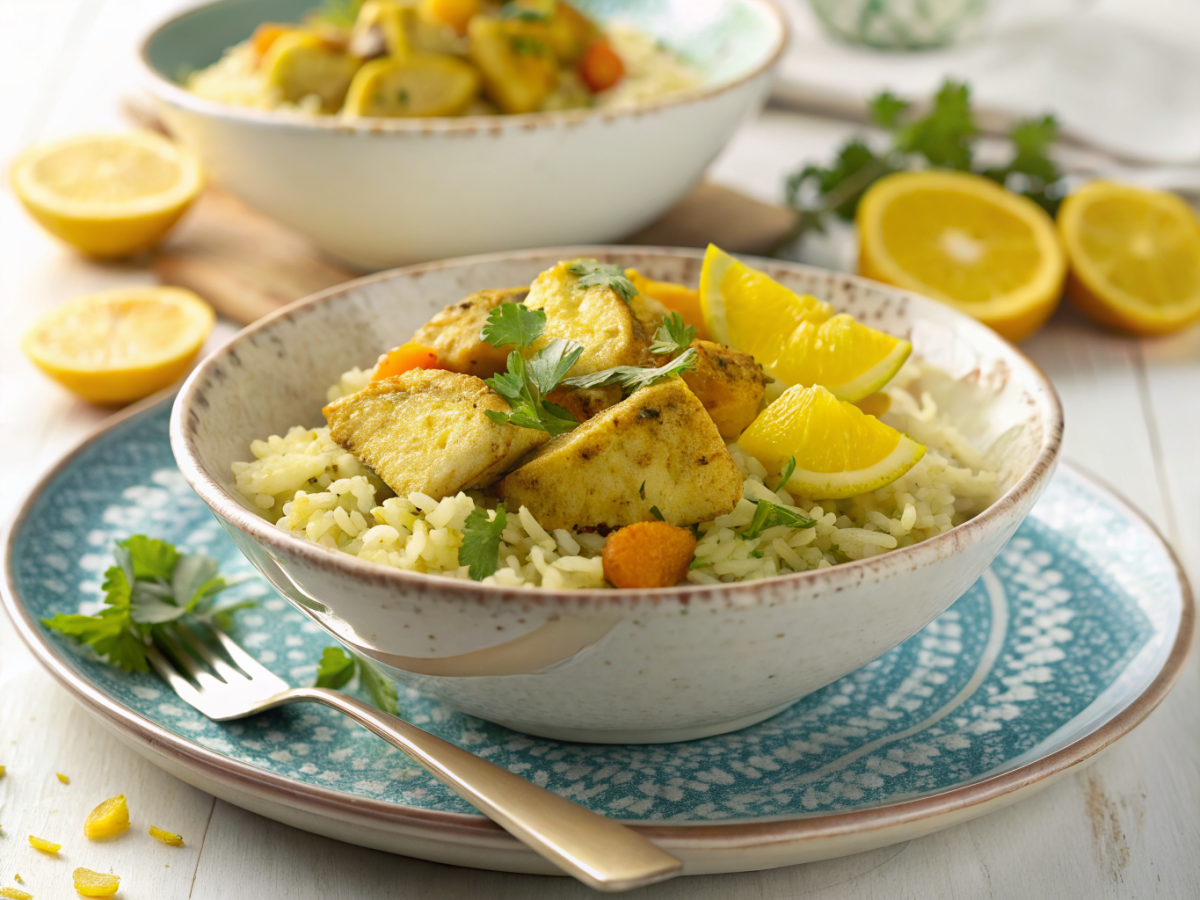
Anti Inflammatory Bowl With Turmeric Chicken And Rice
Ingredients
Method
- Rinse the basmati rice under cold water until water runs clear. In a medium pot, combine rice with 3 cups of water and a pinch of salt. Bring to a boil, reduce heat to low, cover, and simmer for 15-18 minutes until tender and water is absorbed. Remove from heat and let stand covered for 5 minutes.
- In a large bowl, combine chicken pieces with turmeric, cumin, grated ginger, minced garlic, half the salt, and black pepper. Mix well to coat the chicken evenly with the spices.
- Heat olive oil in a large skillet over medium-high heat. Add the seasoned chicken and cook for 6-8 minutes, stirring occasionally, until chicken is golden brown and cooked through with an internal temperature of 165 degrees Fahrenheit.
- In the same skillet, add the sliced red bell pepper and cook for 3-4 minutes until slightly softened. Add cherry tomatoes and cook for another 2 minutes. Add fresh spinach and cook until just wilted, about 1-2 minutes.
- Return the cooked chicken to the skillet with the vegetables. Add fresh lemon juice and remaining salt. Toss everything together and cook for 1 minute to allow flavors to meld.
- Fluff the cooked rice with a fork. Divide rice among four bowls. Top each bowl with the turmeric chicken and vegetable mixture. Drizzle with any remaining pan juices.
- Serve immediately while hot. Optionally garnish with fresh cilantro, a squeeze of lemon, or a dollop of Greek yogurt for extra creaminess.
Nutrition
Notes
Tried this recipe?
Let us know how it was!Anti Inflammatory Bowl With Turmeric Chicken And Rice: 5 Easy Tips for Perfect Results
Creating the perfect anti-inflammatory bowl starts with understanding how each ingredient works together. The golden turmeric coating on the chicken provides curcumin, a powerful compound known for reducing inflammation throughout the body. When paired with fiber-rich rice and colorful vegetables, you get a complete meal that tastes as good as it makes you feel.
The secret to making this dish exceptional lies in proper marination time and cooking techniques. Allowing the turmeric and spices to penetrate the chicken for at least 30 minutes creates depth of flavor that quick cooking simply cannot achieve. The rice should be fluffy yet slightly sticky, providing the perfect base for absorbing the aromatic juices from the chicken.
Temperature control matters significantly when cooking turmeric-marinated chicken. Too high heat burns the delicate spices, creating bitterness instead of the warm, earthy notes you want. Medium heat allows the chicken to develop a beautiful golden crust while staying juicy inside, making every bite satisfying and inflammation-fighting.
Why You’ll Love This Anti Inflammatory Bowl With Turmeric Chicken And Rice
This bowl brings together convenience and health benefits without sacrificing taste. Unlike complicated wellness recipes that require obscure ingredients, this dish uses accessible items you likely already have in your pantry. The vibrant colors make it Instagram-worthy, while the nutritional profile makes it genuinely beneficial for your body.
Meal prep enthusiasts will appreciate how well these components store and reheat throughout the week. The flavors actually deepen after a day in the refrigerator, making leftovers even more delicious than the original meal. You can batch-cook the chicken and rice separately, then assemble fresh bowls in minutes when hunger strikes.
The versatility of this recipe means you’ll never get bored with it. Swap vegetables based on what’s in season, adjust spice levels to your preference, or add different toppings for variety. This flexibility makes it perfect for families with different taste preferences or dietary restrictions.
Budget-conscious cooks will love how affordable this nutritious meal is to prepare. Turmeric costs pennies per serving, chicken thighs are economical, and rice stretches your dollar further. You’re getting restaurant-quality nutrition and flavor at a fraction of the cost of eating out or buying prepared wellness bowls.
Core Ingredients for Anti Inflammatory Bowl With Turmeric Chicken And Rice
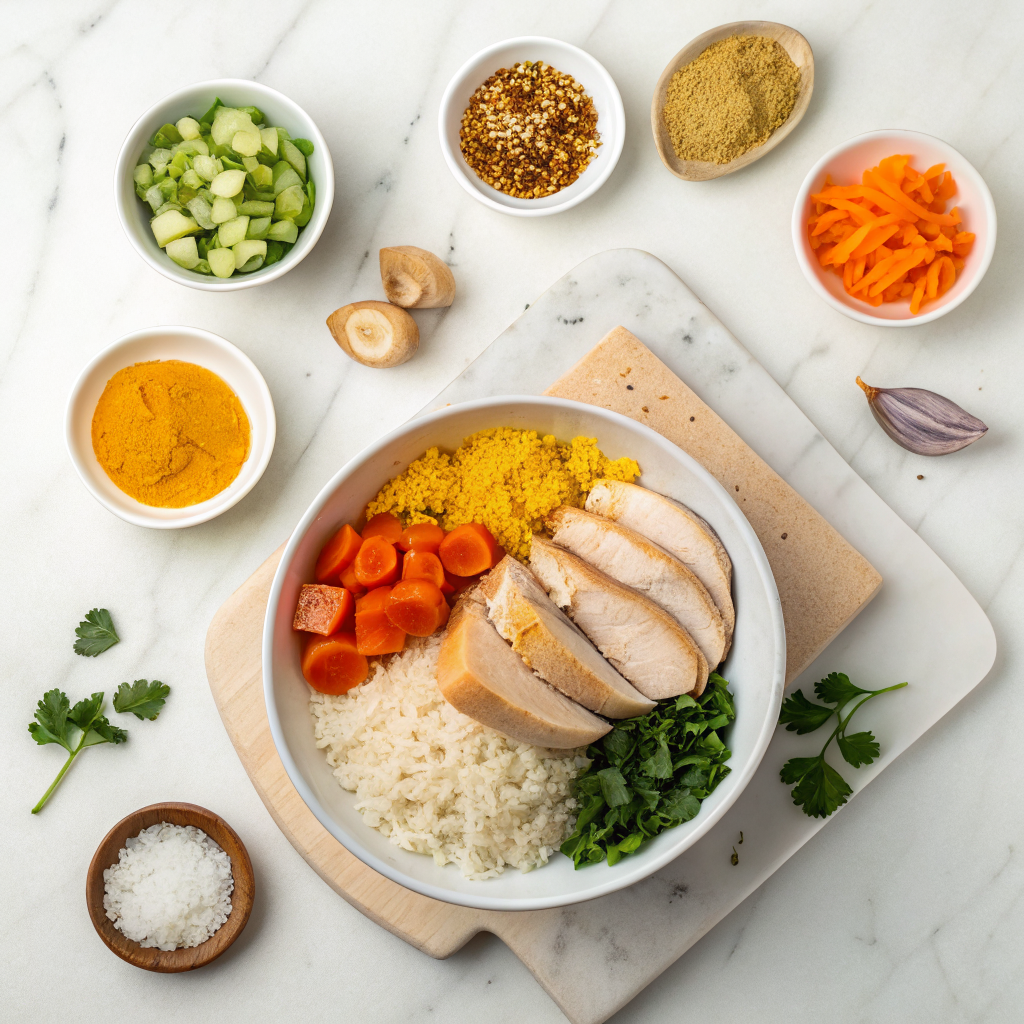
The foundation of this bowl starts with high-quality chicken, preferably organic boneless thighs for maximum tenderness and flavor. Chicken breasts work too, but thighs remain juicier and more forgiving during cooking. You’ll need about 1.5 pounds to serve four people generously.
Turmeric powder forms the star of your marinade, requiring 2 tablespoons for vibrant color and anti-inflammatory benefits. Fresh turmeric root can substitute if available, using about 3 tablespoons grated. Research on turmeric’s anti-inflammatory properties shows that combining it with black pepper increases curcumin absorption by up to 2000%.
For the rice component, choose brown rice, jasmine rice, or cauliflower rice for a lower-carb option. Two cups of uncooked rice yields enough for four hearty servings. The rice absorbs the flavorful juices and provides satisfying bulk to the bowl.
Supporting ingredients include fresh ginger (1 tablespoon minced), garlic (4 cloves minced), and coconut oil (2 tablespoons) for cooking. The ginger adds another layer of anti-inflammatory compounds while providing a bright, zesty flavor. Garlic contributes immune-boosting properties and aromatic depth.
Vegetables bring color, crunch, and additional nutrients to your bowl. Consider baby spinach, shredded purple cabbage, sliced cucumbers, cherry tomatoes, and shredded carrots. These raw or lightly cooked vegetables provide fiber, vitamins, and phytonutrients that complement the turmeric chicken perfectly.
Finishing touches include fresh lime juice, cilantro, sesame seeds, and a drizzle of tahini or yogurt-based sauce. These toppings add brightness, healthy fats, and protein while making the presentation more appealing. Don’t skip the lime juice—it enhances all the other flavors beautifully.
How to Make Anti Inflammatory Bowl With Turmeric Chicken And Rice: Step-by-Step
Begin by preparing your marinade in a medium bowl, combining turmeric powder, minced ginger, minced garlic, salt, black pepper, and coconut oil. Whisk these ingredients together until they form a thick, golden paste. The black pepper is essential—it contains piperine, which dramatically increases your body’s ability to absorb curcumin from the turmeric.
Cut your chicken into bite-sized pieces, approximately 1-inch cubes for even cooking. Add the chicken to the marinade bowl and mix thoroughly, ensuring every piece is coated with the golden mixture. Cover and refrigerate for at least 30 minutes, though 2-4 hours yields even better flavor penetration.
While the chicken marinates, prepare your rice according to package directions. For enhanced anti-inflammatory benefits, cook the rice in bone broth instead of water. Add a bay leaf and pinch of salt to the cooking liquid for extra flavor depth.
Heat a large skillet over medium heat and add a tablespoon of coconut oil. Once shimmering but not smoking, add the marinated chicken pieces in a single layer, working in batches if necessary. Avoid overcrowding the pan, which causes steaming instead of the desired golden sear.
Cook the chicken for 4-5 minutes on the first side without moving it, allowing a golden crust to develop. Flip each piece and cook for another 4-5 minutes until the internal temperature reaches 165°F. The turmeric creates a beautiful golden-brown exterior that’s both visually appealing and delicious.
While the chicken cooks, prepare your vegetable components by washing, chopping, and arranging them in separate containers. This assembly-line approach makes building your bowls quick and efficient. Keep raw vegetables crisp by storing them in cold water until ready to use.
To assemble your bowls, start with a generous scoop of rice as the base. Arrange the cooked turmeric chicken on one side, then add your chosen vegetables in colorful sections around the bowl. This restaurant-style plating makes the meal feel special and ensures you get a variety of flavors in each bite.
Finish each bowl with fresh toppings like chopped cilantro, a squeeze of lime juice, sesame seeds, and your choice of sauce. A simple tahini dressing made with tahini, lemon juice, garlic, and water works beautifully. Alternatively, mix Greek yogurt with cucumber and dill for a cooling contrast to the warm spices.
Nutrition & Health Benefits
This bowl delivers an impressive nutritional profile with approximately 450-500 calories per serving, depending on your specific ingredients and portions. The combination provides balanced macronutrients: roughly 35 grams of protein, 50 grams of complex carbohydrates, and 15 grams of healthy fats. This balance keeps you satisfied for hours while supporting stable blood sugar levels.
Turmeric’s active compound, curcumin, has been extensively studied for its anti-inflammatory effects throughout the body. It works by blocking inflammatory molecules and reducing oxidative stress at the cellular level. Regular consumption may help with conditions ranging from arthritis to heart disease, though it’s not a replacement for medical treatment.
The chicken provides complete protein with all essential amino acids your body needs for tissue repair and immune function. Choosing organic, free-range chicken when possible reduces exposure to antibiotics and hormones. The protein content helps maintain muscle mass and keeps you feeling full longer than carbohydrate-heavy meals.
Brown rice contributes valuable fiber, B vitamins, and minerals like manganese and selenium. Understanding inflammation and dietary approaches shows that whole grains like brown rice help reduce inflammatory markers in the blood. The fiber also supports digestive health and feeds beneficial gut bacteria.
The variety of vegetables adds antioxidants, vitamins A and C, and additional fiber to support overall wellness. Purple cabbage contains anthocyanins, powerful antioxidants that complement turmeric’s effects. Leafy greens provide folate and iron, while tomatoes offer lycopene, another inflammation-fighting compound.
Ginger and garlic contribute their own anti-inflammatory and immune-supporting properties to the dish. Ginger contains gingerol, which has been shown to reduce muscle pain and soreness. Garlic’s sulfur compounds support cardiovascular health and may help lower blood pressure naturally.
Variations & Substitutions
For a plant-based version, substitute the chicken with firm tofu, tempeh, or chickpeas marinated in the same turmeric mixture. Press tofu for 20 minutes before marinating to remove excess moisture and improve texture. Chickpeas create a budget-friendly option that absorbs the golden marinade beautifully while providing plant-based protein and fiber.
Grain alternatives allow you to customize the bowl to your dietary needs and preferences. Quinoa adds complete protein and cooks faster than brown rice, making it perfect for weeknight meals. Cauliflower rice keeps the bowl low-carb and paleo-friendly while adding extra vegetables to your plate.
Spice adjustments let you control the heat level and flavor profile. Add cayenne pepper or red pepper flakes for more heat, or include ground cumin and coriander for Middle Eastern flair. Curry powder can replace some of the turmeric for a more complex spice blend with multiple anti-inflammatory compounds.
Different protein options work wonderfully with the turmeric marinade. Salmon or shrimp provide omega-3 fatty acids, which have their own powerful anti-inflammatory effects. Turkey or lean beef can substitute for chicken if that’s what you have available or prefer.
Sauce variations change the entire character of the bowl while maintaining its health benefits. Try a ginger-miso dressing for umami depth, or a spicy peanut sauce for Thai-inspired flavors. A simple olive oil and lemon dressing keeps things light and allows the turmeric chicken to shine.
Seasonal vegetable swaps keep the recipe interesting year-round. Summer bowls might feature grilled zucchini, corn, and bell peppers, while winter versions could include roasted Brussels sprouts, sweet potato, and kale. This adaptability means you’ll never get bored with this healthy meal template.
Serving Suggestions
This bowl shines as a complete one-dish meal that requires no sides, perfect for busy weeknights when you want nutrition without complexity. The combination of protein, grains, and vegetables provides everything your body needs in one beautiful presentation. Serve it in wide, shallow bowls to showcase all the colorful components.
For entertaining, set up a build-your-own-bowl station with the components in separate dishes. Guests can customize their bowls according to their preferences and dietary needs, making it inclusive for various eating styles. This interactive approach works beautifully for casual dinner parties or family gatherings.
Pair the bowl with a light soup or salad if you’re serving it for a special occasion. A simple miso soup or cucumber salad with rice vinegar dressing complements the flavors without overwhelming the palate. Keep sides light since the bowl itself is quite substantial and satisfying.
Beverage pairings should be refreshing and not too sweet to balance the savory, earthy flavors. Green tea, both hot and iced, contains its own anti-inflammatory compounds that complement the turmeric. Sparkling water with fresh mint and lime provides a palate-cleansing option that enhances the meal experience.
For a complete dinner recipe collection, consider this bowl as your protein-packed centerpiece. The presentation matters—arrange components thoughtfully rather than just dumping everything together. Restaurant-quality plating makes healthy eating feel special and encourages you to stick with nutritious choices.
Common Mistakes to Avoid
The most frequent error is using insufficient turmeric or skipping the black pepper entirely. Without adequate turmeric, you miss the anti-inflammatory benefits and the characteristic golden color. Black pepper isn’t just for flavor—it’s essential for maximizing curcumin absorption, so never omit it from the marinade.
Overcooking the chicken creates dry, tough meat that ruins the entire bowl experience. Use a meat thermometer to ensure you reach exactly 165°F internal temperature, then remove from heat immediately. Carryover cooking will bring it up a few more degrees while the chicken rests.
Skipping the marination time is a shortcut that significantly compromises flavor. While 30 minutes is the minimum, the chicken won’t develop the deep, complex taste that longer marination provides. Plan ahead and marinate the night before for even better results with minimal extra effort.
Using too-high heat burns the turmeric before the chicken cooks through, creating bitter flavors instead of warm, earthy notes. Medium heat allows proper browning and cooking without scorching the delicate spices. Patience during cooking pays off with perfectly golden, tender chicken.
Neglecting to prep all components before assembly leads to wilted greens and lukewarm chicken. Have everything ready simultaneously so you can build bowls while the chicken is still hot. This timing ensures the best texture contrast between warm protein, room-temperature grains, and crisp vegetables.
Using low-quality turmeric powder that’s been sitting in your cabinet for years won’t deliver the vibrant color or health benefits you want. Fresh, high-quality turmeric makes a noticeable difference in both appearance and effectiveness. Replace your turmeric annually for best results.
Storage & Meal Prep Tips
This bowl is ideal for meal prep since all components store well separately for 4-5 days in the refrigerator. Cook the chicken and rice in larger batches on Sunday, then assemble fresh bowls throughout the week. Store each component in separate airtight containers to maintain optimal texture and freshness.
The turmeric chicken actually improves in flavor after a day in the refrigerator as the spices continue to develop. Reheat it gently in a skillet with a splash of water or broth to prevent drying out. Alternatively, enjoy it cold or at room temperature for a different but equally delicious experience.
Rice stores best when cooled completely before refrigerating to prevent excess moisture buildup. Spread it on a baking sheet to cool quickly, then transfer to containers. Reheat with a damp paper towel over the top in the microwave to restore moisture and fluffiness.
Keep raw vegetables separate from cooked components to maintain their crisp texture throughout the week. Prep vegetables by washing and chopping them, then store in containers lined with paper towels to absorb excess moisture. This method keeps greens fresh and crunchy for days.
For longer storage, freeze the cooked turmeric chicken in portion-sized containers for up to 3 months. Thaw overnight in the refrigerator before reheating. The rice also freezes well—portion it into individual servings before freezing for easy grab-and-go meals.
Sauces and dressings should be stored separately and added just before eating to prevent sogginess. Make a large batch of your favorite dressing and keep it in a jar in the refrigerator for quick assembly. Most dressings stay fresh for a week or longer when properly stored.
When you’re ready to enjoy your prepped bowls, assemble them fresh rather than pre-building complete bowls. This approach ensures each component maintains its ideal texture and temperature. It takes just a minute to build a bowl from prepped ingredients, making healthy eating incredibly convenient.
Final Thoughts on Anti Inflammatory Bowl With Turmeric Chicken And Rice
This Anti Inflammatory Bowl With Turmeric Chicken And Rice proves that eating for wellness doesn’t mean sacrificing flavor or satisfaction. The golden turmeric chicken becomes the star of a colorful, nutrient-dense meal that fights inflammation while delighting your taste buds. Every component works together to create a balanced dish that nourishes your body and pleases your palate.
The beauty of this recipe lies in its flexibility and accessibility for cooks of all skill levels. Whether you’re new to anti-inflammatory eating or a seasoned wellness enthusiast, this bowl delivers consistent results with minimal effort. The straightforward techniques and common ingredients remove barriers to healthy eating that often discourage people from trying new recipes.
Beyond the immediate satisfaction of a delicious meal, this bowl represents a sustainable approach to long-term health. Unlike restrictive diets that feel like punishment, this recipe celebrates food as medicine while honoring the pleasure of eating. When healthy food tastes this good, maintaining nutritious habits becomes effortless rather than a constant struggle.
Make this bowl part of your regular rotation and notice how it makes you feel over time. Many people report reduced joint pain, better digestion, and improved energy levels when they consistently include anti-inflammatory meals in their diet. Combined with other high protein recipes, you’ll build a foundation for optimal wellness through delicious, nourishing food.
Frequently Asked Questions
Can I make this Anti Inflammatory Bowl With Turmeric Chicken And Rice ahead of time?
Yes, this bowl is perfect for meal prep and actually tastes better the next day as flavors meld together. Cook the chicken and rice separately, store them in airtight containers in the refrigerator for up to 5 days, and assemble fresh bowls when ready to eat. Keep vegetables separate until serving to maintain their crisp texture and vibrant appearance.
What makes this bowl anti-inflammatory?
The Anti Inflammatory Bowl With Turmeric Chicken And Rice contains multiple inflammation-fighting ingredients, primarily turmeric with its active compound curcumin. Ginger, garlic, and colorful vegetables add additional anti-inflammatory compounds. Anti-inflammatory foods research shows that combining these ingredients creates synergistic effects that help reduce inflammation throughout the body more effectively than any single ingredient alone.
Can I use chicken breast instead of thighs?
Absolutely, though chicken breasts require more careful cooking to prevent dryness. Reduce cooking time by 1-2 minutes per side and use a meat thermometer to avoid overcooking. The turmeric marinade helps keep breast meat moist, but thighs remain more forgiving and flavorful due to their higher fat content.
How do I increase the anti-inflammatory benefits of this bowl?
Maximize the benefits by always including black pepper with turmeric to increase curcumin absorption by up to 2000%. Add healthy fats like avocado or extra olive oil, since curcumin is fat-soluble. Include a variety of colorful vegetables for diverse antioxidants, and consider adding omega-3-rich toppings like walnuts or hemp seeds for additional inflammation-fighting compounds that complement the turmeric.
