
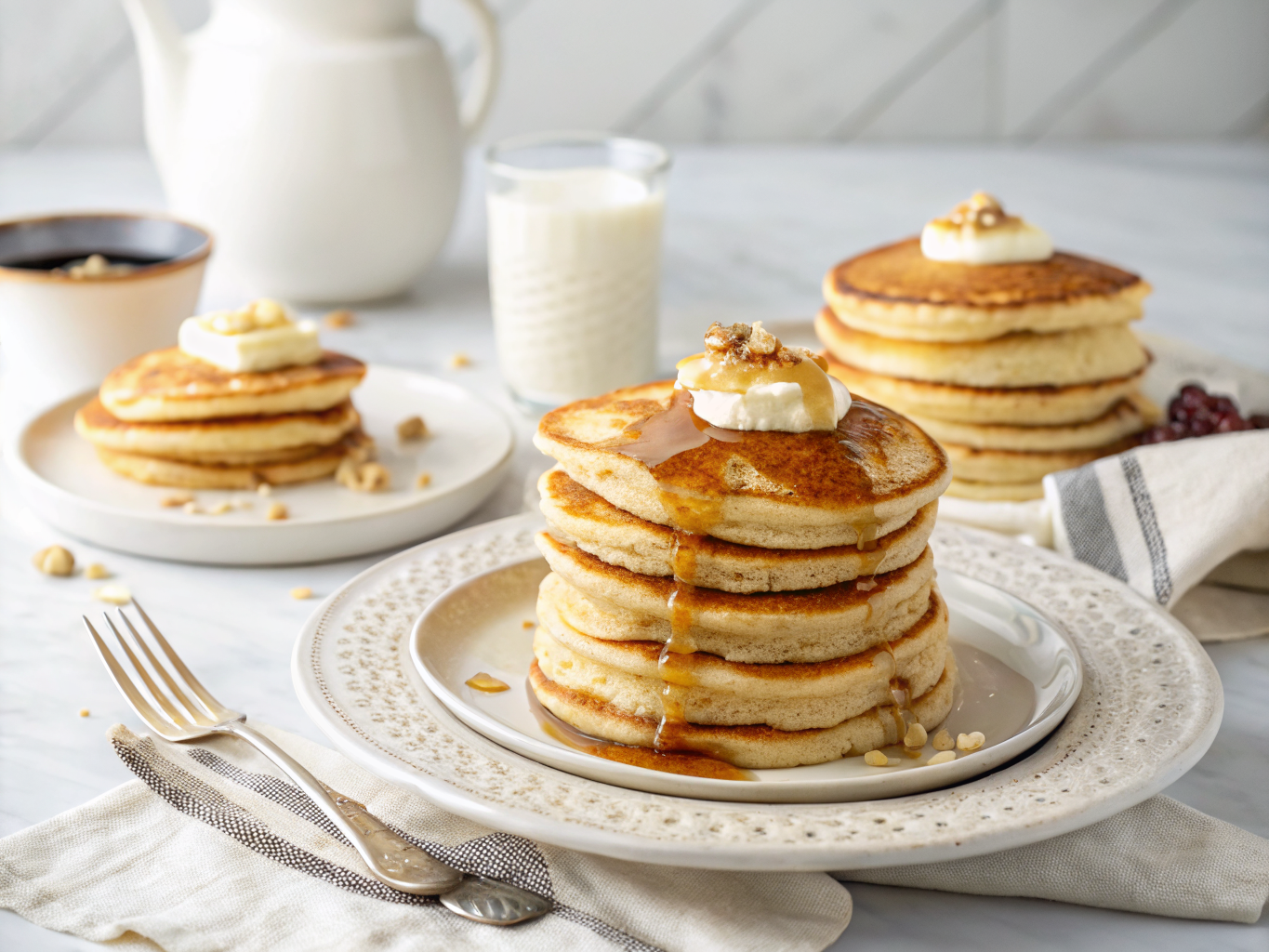
Fluffy Buttermilk Pancakes
Ingredients
Method
- In a large bowl, whisk together the flour, sugar, baking powder, baking soda, and salt until well combined.
- In a separate bowl, whisk together the buttermilk, eggs, melted butter, and vanilla extract until smooth.
- Pour the wet ingredients into the dry ingredients and gently fold together with a spatula until just combined. The batter should be slightly lumpy; do not overmix.
- Let the batter rest for 5 minutes while you heat the griddle. This allows the baking powder to activate for extra fluffy pancakes.
- Heat a griddle or large skillet over medium heat and lightly grease with butter or cooking spray.
- Pour 1/4 cup of batter onto the griddle for each pancake. Cook until bubbles form on the surface and the edges look set, about 2-3 minutes. Flip and cook until golden brown on the other side, another 1-2 minutes.
- Transfer cooked pancakes to a plate and keep warm. Repeat with remaining batter. Serve immediately with butter and maple syrup.
Nutrition
Notes
Tried this recipe?
Let us know how it was!There’s something magical about waking up to the aroma of freshly made pancakes sizzling on a hot griddle. The fluffiest stack of buttermilk pancakes can transform an ordinary morning into a memorable breakfast experience, and the secret is in the batter. When you master the technique of creating perfectly airy, golden-brown pancakes that rise beautifully and melt in your mouth, you’ll never want to go back to boxed mixes again.
Thank you for reading this post, don't forget to subscribe!These Fluffy Buttermilk Pancakes are the ultimate comfort food that brings families together around the breakfast table. With their tender crumb, subtle tang from buttermilk, and cloud-like texture, they represent everything a pancake should be. Whether you’re cooking for a weekend brunch or treating yourself to a special weekday breakfast, this foolproof recipe will deliver restaurant-quality results every single time.
The key to achieving maximum fluffiness lies in understanding the science behind the ingredients and mastering a few simple techniques. From the leavening agents that create those coveted air pockets to the gentle mixing method that preserves them, every step in this recipe has been carefully designed to produce the lightest, most tender pancakes possible. Let’s dive into what makes these pancakes truly exceptional and how you can recreate this breakfast masterpiece in your own kitchen.
Why This Fluffy Buttermilk Pancakes Recipe Works
This recipe stands out from countless other pancake recipes because it combines traditional ingredients with precise ratios that have been tested and perfected over time. The buttermilk serves a dual purpose: it adds a pleasant tangy flavor while also reacting with baking soda to create carbon dioxide bubbles that lift the batter. This chemical reaction is crucial for achieving the signature fluffy texture that makes these pancakes so irresistible.
Unlike denser pancake recipes that can turn out flat or rubbery, this version uses both baking powder and baking soda for maximum leavening power. The double leavening system ensures that your pancakes rise beautifully and maintain their height even after being stacked on a plate. According to research from Harvard T.H. Chan School of Public Health, understanding ingredient interactions is essential for successful baking outcomes.
The mixing technique is equally important as the ingredients themselves. By keeping the batter slightly lumpy and resisting the urge to overmix, you preserve the gluten structure that gives pancakes their tender texture. Overmixing develops too much gluten, resulting in tough, chewy pancakes instead of light and fluffy ones. This recipe’s gentle folding method ensures you’ll achieve bakery-quality results without any special equipment or advanced culinary skills.
Core Ingredients for Perfect Fluffy Buttermilk Pancakes
The foundation of exceptional Fluffy Buttermilk Pancakes begins with selecting high-quality ingredients that work together harmoniously. All-purpose flour provides the structure, while buttermilk adds moisture, flavor, and acidity that activates the leavening agents. Fresh eggs contribute richness, protein, and help bind everything together while adding to the overall fluffiness when properly incorporated into the batter.
Baking powder and baking soda are the dynamic duo responsible for creating those beautiful air pockets throughout your pancakes. The baking powder provides an initial rise when mixed with liquid, while the baking soda reacts with the acidic buttermilk to create additional lift during cooking. Sugar adds just a touch of sweetness without making the pancakes dessert-like, and salt enhances all the other flavors while balancing the sweetness.
Butter serves as the fat component, contributing to both flavor and texture while helping to create a tender crumb. Using melted butter that’s slightly cooled prevents it from cooking the eggs when mixed into the batter. You can explore similar techniques in other recipes like our classic banana bread which also relies on proper ingredient temperatures for optimal results.
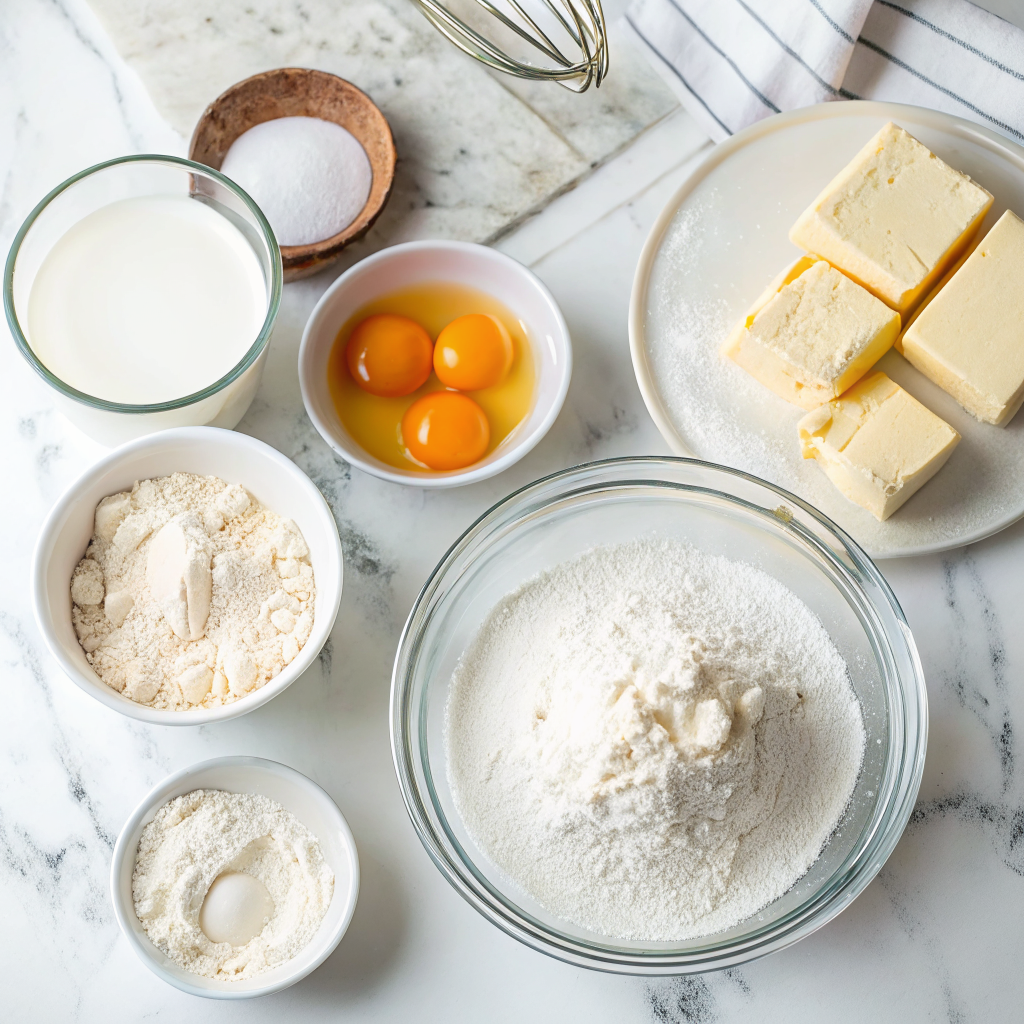
Essential Ingredients List
- 2 cups all-purpose flour, spooned and leveled
- 3 tablespoons granulated sugar
- 2 teaspoons baking powder
- 1 teaspoon baking soda
- 1/2 teaspoon salt
- 2 cups buttermilk, at room temperature
- 2 large eggs, at room temperature
- 1/4 cup unsalted butter, melted and slightly cooled
- 1 teaspoon pure vanilla extract
- Additional butter or oil for cooking
Step-by-Step Instructions for Making Fluffy Buttermilk Pancakes
Creating the perfect batch of Fluffy Buttermilk Pancakes requires following a methodical approach that ensures consistent results. Start by gathering all your ingredients and allowing the cold items to reach room temperature, which typically takes about 30 minutes. Room temperature ingredients combine more easily and create a smoother, more uniform batter that cooks evenly on the griddle.
Preparing the Dry Ingredients
In a large mixing bowl, whisk together the flour, sugar, baking powder, baking soda, and salt until thoroughly combined. This step is crucial because it ensures that the leavening agents are evenly distributed throughout the flour, which results in uniform rising across all your pancakes. Sifting isn’t necessary if you whisk vigorously for about 30 seconds, breaking up any clumps that might be present in the flour or baking powder.
Create a well in the center of the dry ingredients, which will make it easier to incorporate the wet ingredients without overmixing. This classic technique borrowed from traditional baking methods helps maintain the proper texture in your final product. Make sure your baking powder and baking soda are fresh, as expired leavening agents lose their potency and won’t provide adequate lift.
Combining the Wet Ingredients
In a separate medium bowl, whisk together the buttermilk, eggs, melted butter, and vanilla extract until well combined and slightly frothy. The whisking action incorporates some air into the mixture, which contributes to the overall fluffiness of your pancakes. Make sure the melted butter has cooled to lukewarm before adding it to prevent the eggs from scrambling when everything is combined.
Pour the wet ingredients into the well you created in the dry ingredients, then gently fold them together using a rubber spatula or wooden spoon. Use broad, sweeping motions from the bottom of the bowl upward, rotating the bowl as you go. Stop mixing when you can no longer see large streaks of flour, even if the batter appears lumpy – those lumps are actually a good sign and will disappear during cooking.
Resting the Batter
Allow the batter to rest for 5-10 minutes at room temperature before cooking. During this resting period, the flour absorbs the liquid ingredients, the gluten relaxes, and the leavening agents begin their work. You’ll notice the batter thickening slightly and small bubbles appearing on the surface, which indicates that the chemical reactions are activating properly.
Resist the temptation to stir the batter after it has rested, as this can deflate those precious air bubbles you’ve worked to create. If the batter seems too thick after resting, you can add a tablespoon or two of buttermilk to achieve your desired consistency. The ideal pancake batter should pour easily but still maintain some body, similar to thick cream.
Cooking the Pancakes
Heat a griddle or large non-stick skillet over medium heat, then add a small amount of butter or brush with oil. The cooking surface is ready when a few drops of water sprinkled on it sizzle and evaporate within a few seconds. Too hot, and your pancakes will burn on the outside while remaining raw inside; too cool, and they’ll turn out dense and pale.
Using a 1/4 cup measuring cup or ladle, pour the batter onto the griddle, spacing pancakes about 2 inches apart to allow for spreading. Watch for bubbles to form across the entire surface of each pancake and for the edges to appear set and slightly dry, which typically takes 2-3 minutes. When the bubbles begin to pop and leave small holes, and the edges look matte rather than wet, it’s time to flip.
Flip each pancake gently but confidently using a wide spatula, then cook for an additional 1-2 minutes until the second side is golden brown. The second side always cooks faster than the first, so watch carefully to avoid burning. Only flip once – repeatedly flipping pancakes compresses their structure and results in a denser texture instead of the fluffy consistency you’re aiming for.
Nutritional Benefits and Considerations
While Fluffy Buttermilk Pancakes are certainly an indulgent breakfast treat, they also provide several important nutrients when enjoyed as part of a balanced diet. Each serving contains protein from the eggs and buttermilk, which helps keep you satisfied throughout the morning. The flour provides carbohydrates for energy, while the dairy ingredients contribute calcium essential for bone health.
One serving of these pancakes (approximately 2 medium pancakes) contains roughly 350-400 calories, depending on the exact size and any toppings added. According to Healthline’s nutritional research, grain-based breakfast foods can be part of a healthy diet when portions are controlled and they’re paired with protein-rich accompaniments. The buttermilk in this recipe provides probiotics that support digestive health and contributes to the overall nutritional profile.
To make these pancakes more nutrient-dense, consider substituting half of the all-purpose flour with whole wheat flour for added fiber and minerals. You can also reduce the sugar slightly without significantly impacting the texture or taste. Topping your pancakes with fresh fruit instead of syrup alone adds vitamins, antioxidants, and natural sweetness while helping balance the meal’s overall nutritional composition.
Approximate Nutrition Per Serving
- Calories: 380
- Total Fat: 12g
- Saturated Fat: 7g
- Cholesterol: 95mg
- Sodium: 520mg
- Total Carbohydrates: 56g
- Dietary Fiber: 1g
- Sugars: 12g
- Protein: 11g
Creative Variations to Try
Once you’ve mastered the basic Fluffy Buttermilk Pancakes recipe, the possibilities for customization are virtually endless. Mix-ins and flavor additions can transform these classic pancakes into exciting new breakfast creations that keep your morning routine interesting. The key is adding mix-ins gently after the batter has rested to avoid deflating the air bubbles you’ve carefully created.
Blueberry Buttermilk Pancakes
Fold 1 cup of fresh or frozen blueberries into the rested batter just before cooking, being careful not to overmix. If using frozen berries, don’t thaw them first as this prevents the batter from turning blue and maintains better texture. The burst of juicy blueberries in every bite adds antioxidants and natural sweetness that pairs beautifully with the tangy buttermilk base.
Chocolate Chip Delight
Stir 3/4 cup of mini chocolate chips into the batter for a dessert-like breakfast treat that kids and adults alike will adore. You can also sprinkle the chocolate chips directly onto each pancake immediately after pouring the batter onto the griddle. This method gives you better control over the distribution and prevents the chips from sinking to the bottom of the bowl.
Whole Grain Harvest Pancakes
Replace one cup of all-purpose flour with whole wheat flour and add 1/4 cup of ground flaxseed for a heartier, more nutritious version. Add a tablespoon of honey and a teaspoon of cinnamon to complement the nuttier flavor of the whole grains. This variation provides more fiber and essential fatty acids while maintaining the fluffy texture that makes these pancakes special.
Banana Nut Pancakes
Mash one ripe banana and fold it into the batter along with 1/2 cup of chopped walnuts or pecans. The banana adds natural sweetness and moisture while the nuts provide healthy fats and a satisfying crunch. This combination works wonderfully with our buttermilk biscuits technique of incorporating fruit into batter-based recipes.
Serving Suggestions and Toppings
The beauty of Fluffy Buttermilk Pancakes lies not only in their perfect texture but also in their versatility as a canvas for countless toppings and accompaniments. Traditional maple syrup is always a winner, but warming it slightly before serving allows it to soak into the pancakes more effectively. Choose real maple syrup over artificial varieties for superior flavor and a more natural sweetness that doesn’t overpower the buttermilk tang.
Fresh fruit toppings add color, nutrition, and natural sweetness that balances the richness of the pancakes. Strawberries, sliced bananas, raspberries, or mixed berries all work beautifully and can be served fresh or lightly warmed with a touch of sugar. A dollop of whipped cream or a pat of butter melting on top adds indulgent richness, while a light dusting of powdered sugar creates an elegant presentation.
For a more sophisticated brunch presentation, consider serving these pancakes with lemon curd, berry compote, or honey butter. Greek yogurt provides a protein boost and tangy contrast that pairs exceptionally well with sweeter toppings. Crispy bacon or breakfast sausage on the side offers a savory counterpoint that creates a more balanced meal and satisfies both sweet and savory cravings.
Classic Topping Combinations
- Butter and warm maple syrup with a side of crispy bacon
- Fresh strawberries and whipped cream dusted with powdered sugar
- Sliced bananas, chopped walnuts, and honey drizzle
- Mixed berry compote with vanilla yogurt
- Peanut butter, sliced bananas, and chocolate chips
- Lemon curd and fresh raspberries
- Apple cinnamon compote with a dollop of sour cream
- Nutella and sliced strawberries
Common Mistakes to Avoid
Even experienced home cooks can encounter problems when making pancakes if they’re not aware of the most common pitfalls. Overmixing the batter is the number one mistake that leads to tough, rubbery pancakes instead of light and fluffy ones. When you mix the batter too vigorously or for too long, you develop excess gluten strands that create a dense, chewy texture rather than the tender crumb you’re seeking.
