
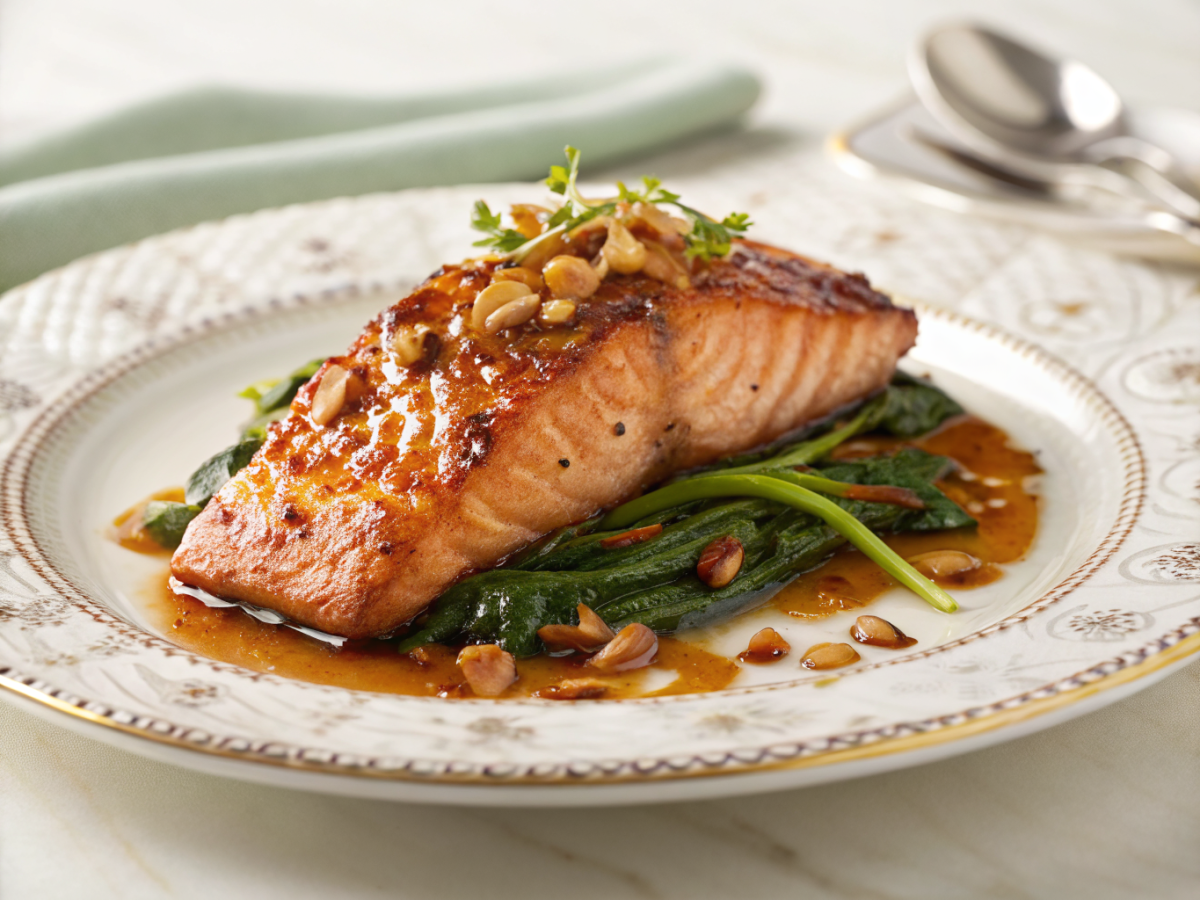
Amazing Honey Garlic Salmon for Busy Nights
Ingredients
Method
- Pat the salmon fillets dry with paper towels and season lightly with black pepper. Set aside at room temperature while you prepare the sauce.
- In a small bowl, whisk together the honey, soy sauce, minced garlic, and lemon juice until well combined. Set aside.
- Heat butter in a large skillet over medium-high heat. Once melted and hot, add the salmon fillets skin-side up. Cook for 4-5 minutes until golden brown on the bottom.
- Carefully flip the salmon fillets over. Pour the honey garlic sauce over and around the salmon in the pan.
- Reduce heat to medium and cook for 5-6 minutes, spooning the sauce over the salmon frequently, until the salmon is cooked through and the sauce has thickened into a glaze.
- The salmon is done when it flakes easily with a fork and reaches an internal temperature of 145 degrees Fahrenheit. The glaze should be thick and sticky.
- Transfer salmon to serving plates, drizzle with remaining glaze from the pan, and garnish with sliced green onions and sesame seeds. Serve immediately with rice or vegetables.
Notes
nnThis Honey Garlic Salmon recipe is the perfect solution for busy weeknights when you need something quick, delicious, and impressive. With a beautiful caramelized glaze and tender, flaky fish, this dish comes together in less than 30 minutes. Whether you’re cooking for your family or entertaining guests, this recipe delivers restaurant-quality results every single time.
Honey Garlic Salmon: 5 Easy Tips for Perfect Results
Achieving the perfect balance of sweet and savory flavors in this dish requires attention to a few key details. The honey creates a beautiful caramelization while the garlic adds depth and aromatic complexity. These five tips will ensure your salmon turns out perfectly glazed and incredibly flavorful every time you make it.
First, always use fresh salmon fillets with the skin on for better moisture retention during cooking. Pat the fish completely dry with paper towels before seasoning to help the glaze adhere properly. Room temperature salmon cooks more evenly than cold fish straight from the refrigerator.
Second, don’t skip the step of reducing your sauce to the right consistency. The glaze should coat the back of a spoon and have a syrupy texture. This concentrated flavor will cling to the salmon beautifully and create that signature glossy finish.
Third, watch your cooking temperature carefully to avoid overcooking the delicate fish. Salmon is done when it reaches an internal temperature of 145°F and flakes easily with a fork. The residual heat will continue cooking the fish even after you remove it from the heat.
Fourth, use fresh garlic rather than pre-minced varieties for the best flavor impact. Fresh garlic provides a more vibrant, aromatic quality that dried or jarred alternatives simply cannot match. Mince it finely so it distributes evenly throughout the glaze.
Fifth, let the salmon rest for 2-3 minutes after cooking before serving. This allows the juices to redistribute throughout the fish, ensuring every bite is moist and tender. Drizzle any remaining glaze over the top just before serving for maximum flavor impact.
Why You’ll Love This Honey Garlic Salmon
This recipe has become a viral sensation on social media for good reason—it combines simplicity with spectacular flavor. The sweet honey balances perfectly with savory garlic and soy sauce, creating a complex taste profile that appeals to even picky eaters. You’ll find yourself making this dish on repeat once you discover how easy it is.
The cooking time is incredibly short, making this an ideal choice for those hectic evenings when you’re short on time. From start to finish, you can have this elegant meal on the table in just 25 minutes. This efficiency doesn’t compromise quality—the results taste like you spent hours in the kitchen.
This dish is also remarkably versatile and adapts well to different dietary preferences and needs. You can easily adjust the sweetness level, add heat with red pepper flakes, or substitute ingredients based on what you have available. The basic technique remains foolproof regardless of minor modifications.
The nutritional profile makes this recipe a smart choice for health-conscious home cooks. Salmon provides high-quality protein, omega-3 fatty acids, and essential vitamins while remaining relatively low in calories. When paired with vegetables and whole grains, it creates a well-balanced, nutritious meal.
Cleanup is minimal since this recipe uses just one pan for cooking. Less time scrubbing dishes means more time enjoying your meal with family and friends. The straightforward preparation also makes it accessible for beginner cooks who want impressive results without complicated techniques.
Core Ingredients for Honey Garlic Salmon
The ingredient list for this recipe is refreshingly short and includes items you likely already have in your pantry. Quality matters here, so choose the freshest salmon available and pure honey for the best flavor. Each component plays a specific role in creating the signature taste and texture of this beloved dish.
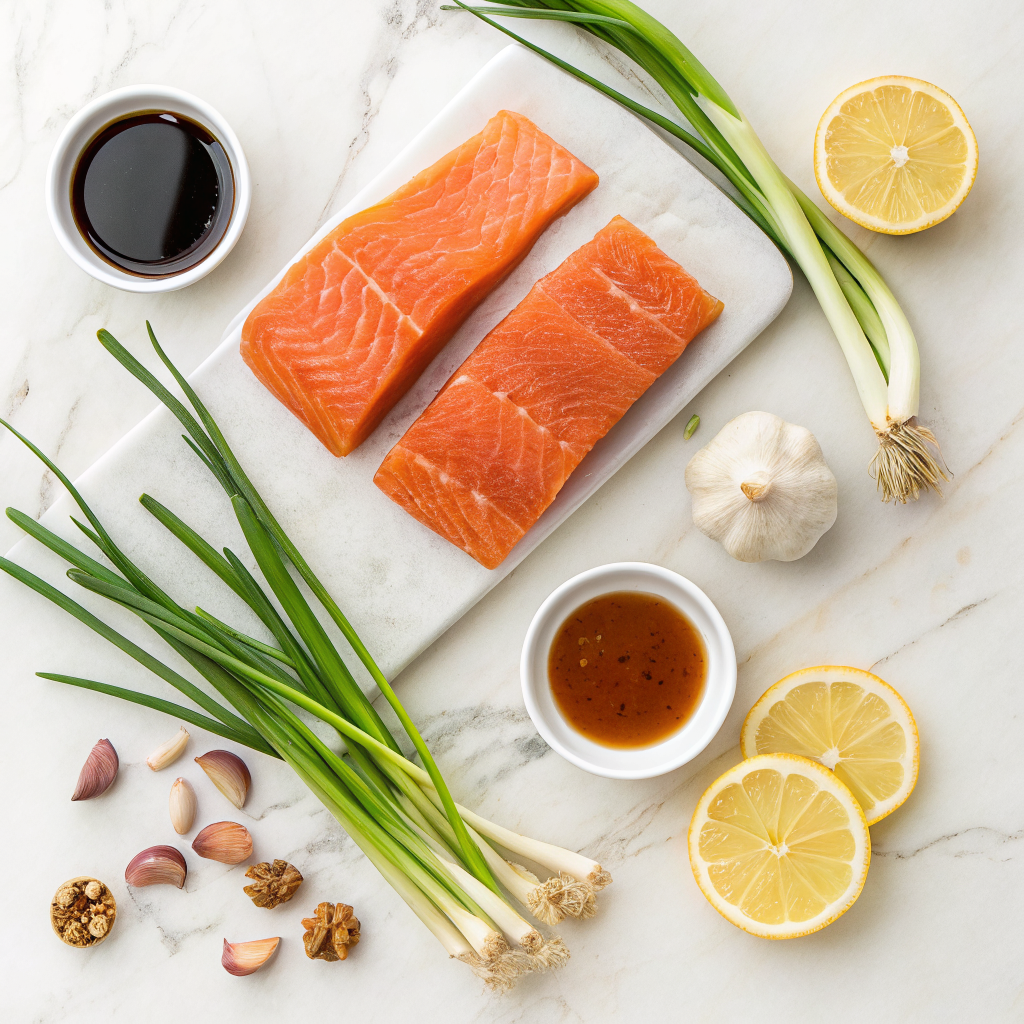
Salmon fillets: Choose fresh, skin-on fillets that are about 6 ounces each for even cooking. Look for bright, firm flesh with no fishy odor. Wild-caught salmon offers superior flavor, though farm-raised works well too.
Honey: Pure, raw honey provides the best flavor and natural sweetness to the glaze. The type of honey you choose will subtly affect the final taste—clover honey is mild while buckwheat honey is more robust. Avoid artificial honey-flavored syrups as they lack the complex flavor notes of real honey.
Garlic: Fresh garlic cloves minced finely create the aromatic base of the sauce. You’ll need about 4-5 large cloves for optimal garlic flavor without overwhelming the delicate fish. The garlic mellows as it cooks, becoming sweet and fragrant.
Soy sauce: This adds essential umami depth and saltiness to balance the honey’s sweetness. Low-sodium soy sauce gives you better control over the final salt level. You can substitute tamari for a gluten-free version without sacrificing flavor.
Butter: A small amount of butter adds richness and helps create a silky, restaurant-quality sauce. It also aids in browning the salmon and adds a luxurious mouthfeel. Unsalted butter is preferable so you can control the seasoning.
Lemon juice: Fresh lemon juice brightens the entire dish and cuts through the richness of the glaze. It adds a subtle acidity that enhances the salmon’s natural flavor. Always use fresh-squeezed rather than bottled for the best results.
Optional additions: Red pepper flakes add a pleasant heat, while fresh ginger provides an Asian-inspired twist. Sesame seeds and chopped green onions make excellent garnishes. Fresh herbs like parsley or cilantro add color and freshness to the finished plate.
How to Make Honey Garlic Salmon: Step-by-Step
The cooking process for this recipe is straightforward and forgiving, making it perfect for cooks of all skill levels. Following these detailed steps will ensure your salmon turns out perfectly glazed with a beautiful caramelized exterior. Take your time with the preparation, and the cooking itself will go quickly and smoothly.
Preparation Phase
Begin by removing your salmon fillets from the refrigerator about 15 minutes before cooking to bring them to room temperature. Pat them completely dry with paper towels, as excess moisture will prevent proper browning. Season both sides lightly with salt and black pepper, being careful not to over-salt since the soy sauce will add saltiness.
In a small bowl, whisk together the honey, soy sauce, and lemon juice until well combined. Mince your garlic cloves very finely so they’ll distribute evenly throughout the sauce. Have all your ingredients measured and ready before you start cooking, as the process moves quickly once you begin.
If you’re looking for more quick and easy meal ideas, this preparation method exemplifies how simple techniques can yield impressive results. The key is having everything organized before you turn on the heat. This approach reduces stress and helps you focus on proper cooking technique.
Cooking the Salmon
Heat a large skillet over medium-high heat and add the butter, swirling to coat the pan evenly. Once the butter is melted and just beginning to foam, carefully place the salmon fillets skin-side up in the pan. Cook without moving them for 4-5 minutes until a golden crust forms on the bottom.
Carefully flip the salmon fillets using a thin spatula, taking care not to break the delicate fish. Add the minced garlic to the pan around the salmon and cook for about 30 seconds until fragrant. Pour the honey-soy mixture over the salmon, tilting the pan to distribute the sauce evenly.
Reduce the heat to medium and let the sauce bubble and reduce for 3-4 minutes. Spoon the thickening glaze over the salmon repeatedly to build up layers of flavor. The sauce should reduce by about half and become syrupy, coating the salmon with a beautiful glossy finish.
Final Steps
Check the internal temperature of the salmon with an instant-read thermometer—it should reach 145°F at the thickest part. The fish should be opaque and flake easily when tested with a fork. Remember that carryover cooking will continue after you remove it from the heat.
Transfer the salmon to serving plates and spoon the remaining glaze from the pan over each fillet. Let the fish rest for 2-3 minutes before serving to allow the juices to redistribute. Garnish with sesame seeds, sliced green onions, or fresh herbs if desired.
This recipe pairs beautifully with other dishes from our collection of dinner recipes that emphasize both flavor and convenience. The versatility of salmon makes it an excellent protein choice for various meal planning strategies. Consider doubling the recipe for meal prep purposes throughout the week.
Nutrition & Health Benefits
Salmon ranks among the most nutritious proteins you can include in your diet, offering an impressive array of health benefits. A single 6-ounce serving provides approximately 350 calories, 34 grams of protein, and 20 grams of healthy fats. The omega-3 fatty acids found in salmon support heart health, brain function, and reduce inflammation throughout the body.
The high protein content in salmon helps with muscle maintenance, satiety, and metabolic function. Protein takes longer to digest than carbohydrates, helping you feel full and satisfied for hours after eating. This makes salmon an excellent choice for those managing their weight or following high-protein recipes for fitness goals.
Salmon is rich in B vitamins, particularly B12, which is essential for energy production and nervous system health. It also provides significant amounts of vitamin D, a nutrient that many people lack, especially during winter months. The selenium in salmon acts as a powerful antioxidant that protects cells from damage.
While honey does add natural sugars to this recipe, it also provides antioxidants and has a lower glycemic index than refined sugar. Garlic offers cardiovascular benefits and immune system support through its sulfur-containing compounds. For more information on balanced nutrition in home cooking, explore various recipe approaches that incorporate wholesome ingredients.
The overall nutritional profile of this dish makes it suitable for various dietary approaches including Mediterranean, paleo, and low-carb diets. When paired with non-starchy vegetables and a small portion of whole grains, it creates a balanced meal. The healthy fats from salmon also help your body absorb fat-soluble vitamins from accompanying vegetables.
Nutrition per serving (approximate): Calories: 350, Protein: 34g, Fat: 20g, Carbohydrates: 12g, Fiber: 0g, Sugar: 11g, Sodium: 650mg. These values will vary based on exact portion sizes and specific ingredients used.
Variations & Substitutions
This versatile recipe adapts beautifully to different flavor preferences and dietary requirements without losing its essential character. The basic technique remains the same even when you swap ingredients or adjust seasonings. Experimentation with variations keeps the recipe interesting and allows you to customize it for your family’s tastes.
Sweetener Alternatives
If you prefer to avoid honey, maple syrup makes an excellent substitute with a slightly different flavor profile. Brown sugar or coconut sugar can also work, though you’ll need to dissolve them in a small amount of warm water first. Agave nectar provides a similar consistency to honey but with a more neutral taste.
For those monitoring sugar intake, you can reduce the honey by half and add a small amount of orange juice for sweetness and acidity. Sugar-free honey alternatives exist but may not caramelize in the same way. The key is maintaining the balance between sweet and savory elements in the glaze.
Protein Substitutions
While salmon is ideal for this recipe, other fish varieties work well with the honey garlic glaze. Arctic char, steelhead trout, or rainbow trout have similar textures and cooking times. Even firm white fish like halibut or cod can be prepared this way, though they require slightly gentler handling.
Chicken breast or thighs also pair beautifully with this glaze using the same flavor ratios. Adjust cooking times accordingly since chicken requires longer to reach safe internal temperatures. Shrimp make a quick alternative that cooks in just 2-3 minutes per side with the same delicious results.
Flavor Variations
Add Asian-inspired complexity by incorporating fresh grated ginger along with the garlic. A splash of rice vinegar or mirin enhances the umami qualities of the sauce. Sesame oil added at the end provides a nutty, aromatic finish that complements the salmon beautifully.
For a spicy version, add sriracha, gochujang, or red pepper flakes to the honey mixture. Mediterranean flavors work well too—try adding dried oregano and finishing with fresh dill. Citrus variations using orange or lime juice instead of lemon create interesting flavor profiles worth exploring.
Herb additions like fresh thyme, rosemary, or basil can transform the dish entirely. Each herb brings its own character while still allowing the honey and garlic to shine through. Don’t be afraid to experiment with combinations that appeal to your personal taste preferences.
Serving Suggestions
Presenting this beautiful glazed salmon alongside complementary side dishes elevates it from a simple weeknight meal to something truly special. The rich, sweet-savory profile pairs well with both light, fresh sides and more substantial accompaniments. Consider the overall balance of flavors, textures, and colors when planning your complete meal.
Vegetable Pairings
Steamed or roasted asparagus makes a classic pairing that adds elegant height to the plate. Roasted Brussels sprouts with a slight char provide textural contrast and earthy flavors that complement the sweet glaze. Sautéed green beans with garlic echo the garlic notes in the salmon while adding a fresh, crisp element.
A fresh garden salad with a light vinaigrette cuts through the richness of the glazed fish. Asian-inspired slaws with cabbage, carrots, and a sesame dressing enhance the flavor profile beautifully. Grilled or roasted zucchini and bell peppers add color and nutrition without competing with the main dish.
Starch Options
Fluffy white or brown rice is a traditional choice that soaks up the extra glaze wonderfully. Cauliflower rice offers a low-carb alternative that’s equally delicious and absorbs the sauce well. Quinoa provides protein and a nutty flavor that complements the salmon’s richness.
Roasted baby potatoes or sweet potato wedges add heartiness to the meal. Garlic mashed potatoes create a comforting, indulgent side that pairs beautifully with the glazed fish. For a lighter option, try zucchini noodles or shirataki noodles tossed in a bit of sesame oil.
Complete Meal Ideas
Create a rice bowl by serving the salmon over jasmine rice with steamed broccoli and edamame. Top with sesame seeds and sliced green onions for a restaurant-style presentation. This approach makes for easy meal prep and convenient packed lunches throughout the week.
For an elegant dinner party presentation, serve the salmon alongside risotto and roasted cherry tomatoes. The creamy risotto provides a luxurious base while the tomatoes add bright acidity. Garnish with fresh herbs and a lemon wedge for a sophisticated finishing touch.
A Mediterranean-inspired plate might include the salmon with couscous, roasted vegetables, and a cucumber-tomato salad. This combination offers diverse textures and flavors while maintaining nutritional balance. The light, fresh elements prevent the meal from feeling too heavy despite the rich glaze.
Common Mistakes to Avoid
Even with a straightforward recipe like this, certain pitfalls can prevent you from achieving perfect results. Understanding these common errors helps you avoid them and ensures success every time you cook. Most mistakes are easily preventable with proper technique and attention to detail.
Overcooking the Salmon
The most frequent mistake is cooking the salmon past the point of perfection, resulting in dry, tough fish. Salmon continues cooking from residual heat even after you remove it from the pan. Pull it from the heat when it’s just barely done, and it will finish cooking to perfection as it rests.
Using an instant-read thermometer eliminates guesswork and ensures perfectly cooked fish every time. The internal temperature should reach 145°F at the thickest part, but many chefs prefer removing it at 140°F. The fish should still be slightly translucent in the very center when you take it off the heat.
Sauce Consistency Issues
Adding the honey mixture too early can cause it to burn before the salmon finishes cooking. Wait until the fish is nearly done before introducing the glaze to the pan. This timing allows the sauce to reduce and thicken without scorching or becoming bitter.
Not reducing the sauce enough leaves it thin and watery, preventing it from properly coating the salmon. Let it bubble and reduce until it becomes syrupy and coats the back of a spoon. This concentration intensifies the flavors and creates that signature glossy appearance.
Conversely, reducing the sauce too much can make it overly thick and sticky, almost candy-like in texture. If this happens, add a splash of water or broth to thin it back to the proper consistency. Monitor the sauce carefully during the reduction process to catch it at the perfect moment.
Pan Temperature Problems
Starting with a pan that’s not hot enough prevents proper browning and can cause the salmon to stick. Preheat your skillet adequately before adding the butter and fish for best results. The pan should be hot enough that the butter sizzles immediately but doesn’t burn.
Conversely, too high heat can burn the garlic and honey before the salmon cooks through. Medium-high heat for the initial searing, then reduced to medium for the glazing phase, provides optimal results. Adjust your heat as needed based on how your particular stove performs.
Handling Errors
Moving the salmon too much during cooking disrupts the formation of that beautiful golden crust. Let it sit undisturbed for the full cooking time on each side before flipping. Patience during this step rewards you with restaurant-quality presentation and texture.
Using a spatula that’s too thick or flipping too aggressively can break the delicate fish apart. Slide a thin, flexible spatula under the salmon gently, supporting it fully before turning. If it resists, let it cook a bit longer—properly seared fish releases naturally from the pan.
Storage & Meal Prep Tips
Proper storage techniques extend the life of your leftovers and maintain quality for future meals. This recipe works wonderfully for meal prep, allowing you to enjoy delicious, healthy lunches throughout the week. Following food safety guidelines ensures your salmon remains safe to eat while retaining its best flavor and texture.
Refrigerator Storage
Store leftover cooked salmon in an airtight container in the refrigerator for up to 3 days. Let it cool to room temperature before sealing and refrigerating to prevent condensation buildup. Place a paper towel in the container to absorb excess moisture and maintain better texture.
Keep the extra glaze in a separate small container so you can reheat and drizzle it over the salmon when serving. The sauce will thicken considerably when cold but liquefies again when gently warmed. This separation prevents the salmon from becoming soggy during storage.
For meal prep purposes, portion the cooked salmon into individual containers along with your chosen sides. This approach makes grabbing lunch quick and convenient throughout your busy week. The flavors actually develop and meld beautifully overnight, making day-two salmon arguably even better.
Freezing Guidelines
While fresh salmon freezes well raw, cooked glazed salmon can be frozen for up to 2 months with acceptable results. Wrap individual portions tightly in plastic wrap, then place in freezer-safe bags with air removed. Label with the date and contents for easy identification later.
The texture changes slightly after freezing and thawing, becoming a bit softer than freshly cooked salmon. For best results, use frozen cooked salmon in salads, pasta dishes, or salmon cakes rather than serving as a main fillet. Thaw overnight in the refrigerator rather than at room temperature for food safety.
The honey garlic glaze can be made ahead and frozen separately in ice cube trays for convenient portions. Pop out a cube or two whenever you’re cooking fresh salmon for an instant flavor boost. This technique saves time on busy nights while ensuring you always have delicious sauce on hand.
Reheating Methods
The gentlest reheating method is in a 275°F oven, covered with foil, for about 15 minutes. This low-and-slow approach prevents further drying of the fish while bringing it to serving temperature. Add a splash of water or extra glaze before covering to create steam and maintain moisture.
Microwave reheating works in a pinch but requires careful attention to prevent overcooking. Use 50% power in 30-second intervals, checking frequently to avoid drying out the fish. Cover the container with a damp paper towel to create a steamy environment that preserves moisture.
For a crispy exterior, reheat the salmon in a skillet over medium-low heat with a small amount of butter. This method refreshes the glaze and restores some of the original texture. It takes just 3-4 minutes and yields results closer to freshly cooked salmon than other reheating methods.
Final Thoughts on Honey Garlic Salmon

HomeCook Legacy Kitchen is the editorial name of homecooklegacy.com. Recipes on this site are drafted with the help of AI tools and published by the HomeCook Legacy team. Please check ingredients, cooking times and food-safety guidance for your own situation.