
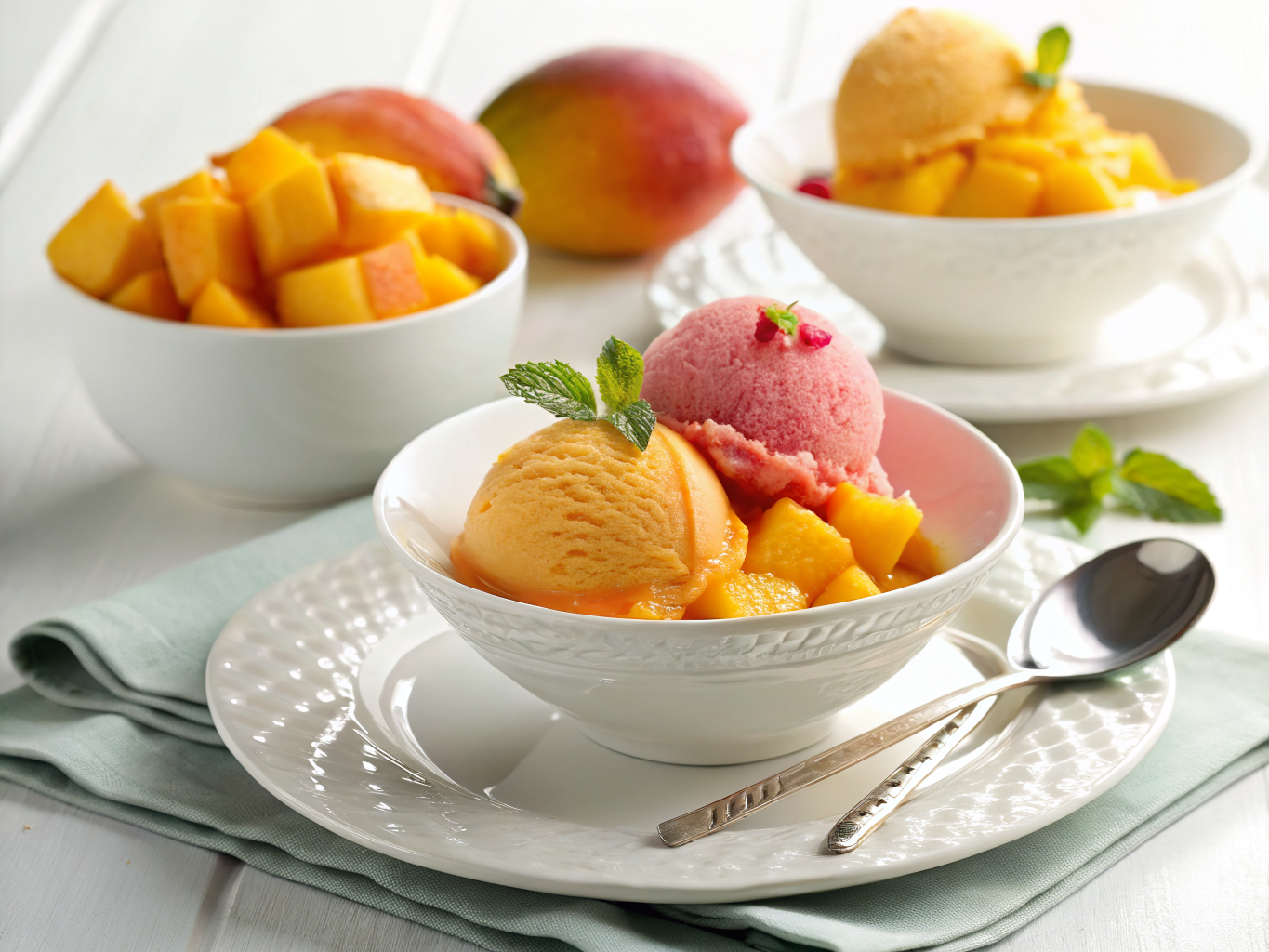
Mango Sorbet
Ingredients
Method
- If using fresh mangoes, peel, dice, and freeze them for at least 4 hours or overnight until completely frozen solid.
- Add frozen mango chunks, honey, lime juice, and water to a high-powered blender or food processor. Blend on high speed until smooth and creamy.
- If the mixture is too thick to blend, add water 1 tablespoon at a time until it reaches a smooth, scoopable consistency. Scrape down the sides as needed.
- Taste the sorbet and add more honey for sweetness or lime juice for tartness if desired. Blend again briefly to incorporate.
- For soft-serve texture, serve immediately. For firmer sorbet, transfer to a freezer-safe container and freeze for 2-4 hours.
- Let the sorbet sit at room temperature for 5-10 minutes before scooping if frozen solid. Serve in chilled bowls and enjoy immediately.
Nutrition
Notes
Tried this recipe?
Let us know how it was!Imagine spooning into a frozen dessert so bright and tropical that it instantly transports you to a sun-drenched beach. This Mango Sorbet recipe delivers exactly that experience with just three simple ingredients: ripe mangoes, a touch of sweetener, and fresh lime juice. Unlike store-bought versions loaded with artificial flavors and stabilizers, this homemade sorbet celebrates the natural sweetness of mangoes while remaining completely dairy-free and vegan-friendly.
Thank you for reading this post, don't forget to subscribe!Creating restaurant-quality sorbet at home might sound intimidating, but this recipe proves otherwise. The technique requires no special equipment beyond a blender and freezer, making it accessible to anyone craving a refreshing frozen treat. Whether you’re looking for a healthy dessert alternative or simply want to preserve the bounty of mango season, this recipe delivers spectacular results every single time.
The beauty of this Mango Sorbet recipe lies in its versatility and simplicity. You can adjust the sweetness to your preference, experiment with different mango varieties, or add complementary flavors like ginger or coconut. The result is always a smooth, intensely fruity frozen dessert that satisfies sweet cravings without guilt.
Why This Mango Sorbet Recipe Stands Out
Most commercial sorbets contain unnecessary additives, corn syrup, and artificial colors that mask the true flavor of fruit. This homemade version takes a different approach by highlighting the natural characteristics of perfectly ripe mangoes. The focus remains on pure, clean ingredients that you can pronounce and trust, making it an ideal choice for health-conscious dessert lovers.
The texture of homemade sorbet surpasses anything you’ll find in the frozen aisle. By controlling the freezing process and ingredient ratios, you achieve a silky-smooth consistency that melts on your tongue. The intense mango flavor bursts through without being overwhelmingly sweet, creating a balanced dessert that refreshes rather than overwhelms.
This recipe also offers exceptional nutritional benefits compared to traditional ice cream or frozen desserts. Mangoes are packed with vitamin C, vitamin A, and antioxidants that support immune function and overall health. According to Healthline’s nutrition guide, mangoes contain over 20 different vitamins and minerals, making them a genuinely nutritious dessert choice.
Core Ingredients for Perfect Mango Sorbet
The foundation of any exceptional Mango Sorbet recipe starts with ingredient selection. Fresh, ripe mangoes make all the difference between an average sorbet and an extraordinary one. Look for mangoes that yield slightly to pressure and emit a sweet, fragrant aroma near the stem end, indicating peak ripeness and maximum flavor.
Fresh Mangoes
You’ll need approximately four to five medium-sized ripe mangoes for this recipe, which yields about four cups of mango flesh. Popular varieties like Ataulfo, Kent, or Tommy Atkins all work beautifully, though Ataulfo mangoes tend to be sweeter and less fibrous. The key is ensuring the fruit is completely ripe, as underripe mangoes will produce a tart, less flavorful sorbet.
Frozen mango chunks can substitute for fresh fruit when mangoes are out of season or unavailable. This actually works to your advantage since the fruit is already chilled, reducing the initial freezing time. Just ensure you’re using plain frozen mango without any added sugars or syrups that could alter the final taste.
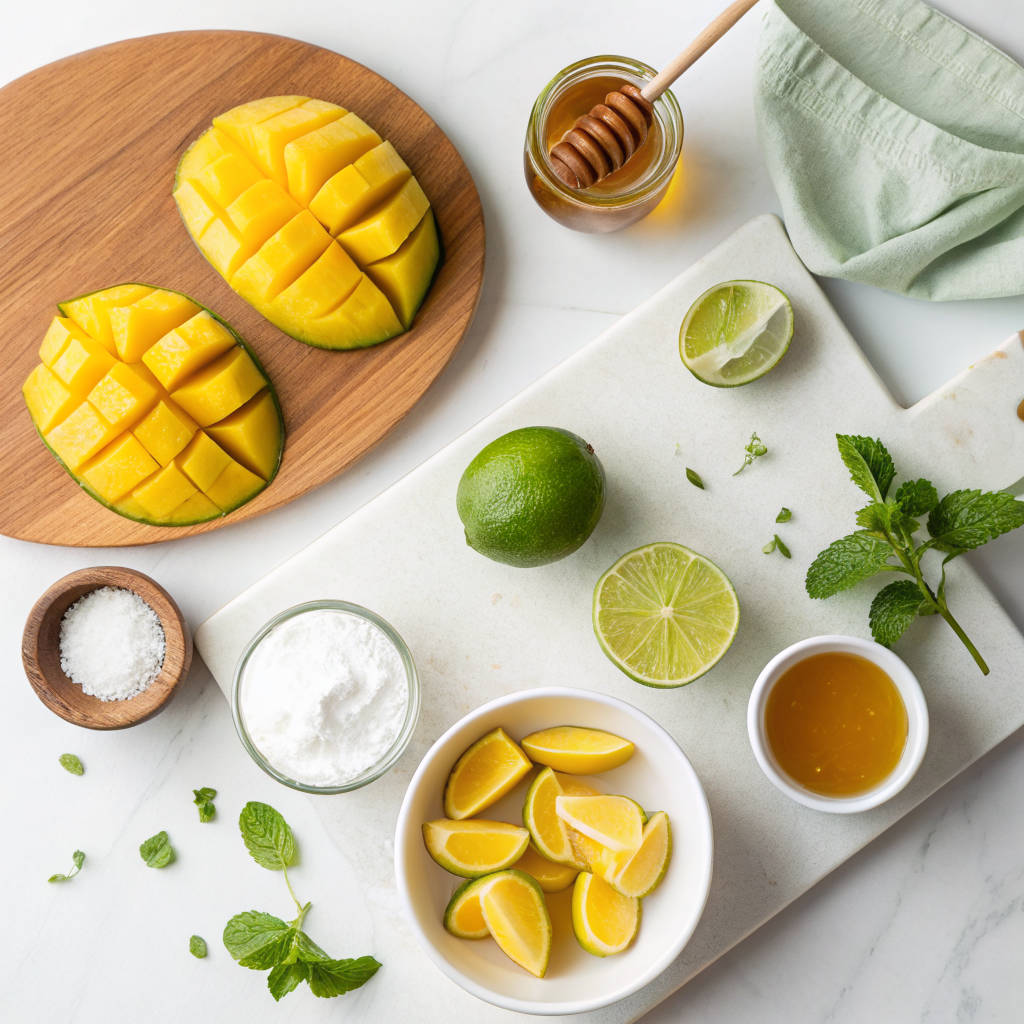
Sweetener Options
While ripe mangoes are naturally sweet, a small amount of sweetener enhances the sorbet’s texture and prevents it from freezing rock-solid. Honey, agave nectar, or simple syrup all work wonderfully, with each contributing subtle flavor nuances. Start with a quarter cup and adjust based on the sweetness of your mangoes and personal preference.
For a refined sugar-free option, consider using pure maple syrup or date syrup. These natural sweeteners provide complexity beyond simple sweetness while maintaining the recipe’s healthy profile. The sweetener also lowers the freezing point slightly, contributing to that perfectly scoopable texture even when fully frozen.
Citrus Balance
Fresh lime juice is the secret ingredient that elevates this Mango Sorbet recipe from good to exceptional. The acidity brightens the mango flavor, preventing the sorbet from tasting flat or one-dimensional. Just two to three tablespoons of lime juice creates the perfect sweet-tart balance that makes each spoonful addictive.
Lemon juice can substitute for lime if needed, though lime’s unique flavor profile complements tropical mango more naturally. The citrus also helps preserve the vibrant orange color of the sorbet, preventing oxidation that can cause browning. This small addition makes a significant impact on the overall flavor complexity of the finished dessert.
Step-by-Step Instructions for Making Mango Sorbet
Creating this Mango Sorbet recipe involves a straightforward process that anyone can master. The most important factor is patience during the freezing stage, as proper freezing ensures the ideal texture. Follow these detailed steps for foolproof results every time you make this tropical treat.
Preparing the Mango
Begin by washing the mangoes thoroughly under cool running water. Stand each mango on its narrow end and slice down along both sides of the flat pit, creating two large “cheeks.” Score the flesh of each cheek in a crosshatch pattern without cutting through the skin, then invert to pop out the cubes.
Cut away any remaining fruit clinging to the pit and remove the peel from all pieces. You should have approximately four cups of mango chunks when finished. If using frozen mango, allow it to thaw slightly for about 10 minutes to make blending easier.
Blending the Base
Add the mango chunks, sweetener, and lime juice to a high-powered blender or food processor. Blend on high speed for 60 to 90 seconds until the mixture becomes completely smooth with no visible chunks. The consistency should resemble a thick smoothie or puree.
Taste the mixture at this stage and adjust the sweetness or acidity if needed. Remember that freezing dulls flavors slightly, so the base should taste slightly sweeter and more intense than you want the final product. If the mixture is too thick to blend smoothly, add a tablespoon or two of water to help it move.
Initial Freezing
Pour the blended mango mixture into a shallow, freezer-safe container with a lid. A 9×9-inch baking dish or similar container works perfectly, as the shallow depth allows for faster, more even freezing. Smooth the top with a spatula and cover tightly with plastic wrap or a lid.
Place the container in the freezer for approximately 45 minutes. The mixture should begin to freeze around the edges but remain somewhat liquid in the center. This partial freezing is crucial for developing the proper sorbet texture through the churning process.
Churning Process
After the initial freeze, remove the container and use a fork to scrape and stir the frozen edges into the center. This breaks up ice crystals and incorporates air into the mixture, creating a lighter texture. Return the container to the freezer and repeat this process every 30 minutes for the next two to three hours.
With each stirring, you’ll notice the mixture becoming thicker and more sorbet-like. Continue this process until the entire mixture reaches a fluffy, scoopable consistency similar to soft-serve ice cream. This manual churning method mimics what an ice cream maker does but requires no special equipment.
Final Freeze
Once the sorbet reaches the desired consistency, smooth the top one final time and freeze for at least two hours or until completely firm. At this point, the Mango Sorbet recipe is complete and ready to serve. For longer storage, transfer the sorbet to an airtight container to prevent freezer burn and preserve optimal texture.
Before serving, let the sorbet sit at room temperature for about five minutes to soften slightly. This makes scooping easier and allows the flavors to open up fully. The brief tempering period transforms the texture from icy-hard to perfectly scoopable.
Nutritional Benefits of Mango Sorbet
This Mango Sorbet recipe offers impressive nutritional value compared to traditional frozen desserts. A typical serving contains no cholesterol, minimal fat, and significantly fewer calories than ice cream while delivering essential vitamins and minerals. The natural fruit base means you’re getting genuine nutrition along with your sweet treat.
Mangoes are exceptionally rich in vitamin C, with one cup providing over 60% of the daily recommended intake. This powerful antioxidant supports immune function, collagen production, and iron absorption. Research from Harvard School of Public Health highlights mangoes as an excellent source of beneficial plant compounds that may reduce disease risk.
The beta-carotene content in mangoes converts to vitamin A in the body, supporting eye health, skin integrity, and immune system function. Each serving of this sorbet delivers these benefits without the saturated fat and added sugars found in conventional ice cream. For anyone seeking healthier dessert options, this recipe checks all the boxes.
The dietary fiber in mangoes also supports digestive health and helps regulate blood sugar levels. While the fiber content is slightly reduced through blending, it still contributes to the overall nutritional profile. According to Medical News Today, the antioxidants in mangoes may help protect against certain chronic diseases.
Nutrition per serving: Approximately 120 calories, 0g fat, 31g carbohydrates, 2g fiber, 26g natural sugars, 1g protein. These values vary based on mango ripeness and sweetener choice.
Creative Variations to Try
Once you’ve mastered the basic Mango Sorbet recipe, endless variations await your experimentation. These creative twists maintain the simple, healthy foundation while introducing new flavor dimensions. Each variation transforms the dessert into something unique while preserving the refreshing qualities that make sorbet so appealing.
Mango-Coconut Sorbet
Replace half the liquid in the recipe with full-fat coconut milk for a creamier, tropical twist. The coconut adds richness without dairy while complementing the mango beautifully. This variation creates a texture closer to ice cream while remaining completely vegan and equally refreshing.
Spiced Mango Sorbet
Add a quarter teaspoon of ground ginger or cardamom to the base mixture before blending. These warming spices create complexity and depth that balances the fruit’s sweetness. A tiny pinch of cayenne pepper can add an unexpected kick that sophisticated palates will appreciate.
Mango-Passion Fruit Sorbet
Blend in the pulp of two to three fresh passion fruits for a more complex tropical flavor profile. The passion fruit’s tartness and aromatic seeds create textural interest and visual appeal. This combination is particularly popular in Latin American and Caribbean cuisine.
Mango-Mint Sorbet
Infuse fresh mint leaves into the mixture by steeping them in slightly warmed mango puree for 15 minutes before freezing. Strain out the leaves before proceeding with the recipe. The mint adds a cooling quality that makes this variation exceptionally refreshing on hot summer days.
Champagne Mango Sorbet
For an adult version, replace one cup of mango with champagne or prosecco. The alcohol lowers the freezing point, creating an even smoother texture while adding sophisticated flavor notes. This elegant variation is perfect for dinner parties or special occasions.
Serving Suggestions and Presentation Ideas
The vibrant color and tropical flavor of this Mango Sorbet recipe make it a stunning dessert that deserves beautiful presentation. Simple plating techniques can transform this humble frozen treat into a restaurant-worthy finale. Consider these serving ideas to maximize visual appeal and flavor impact.
Serve scoops of sorbet in chilled coconut shell halves for a dramatic tropical presentation. Garnish with fresh mint sprigs, toasted coconut flakes, or thin lime wheels. The natural vessel adds authenticity and creates an Instagram-worthy dessert that guests will remember.
Layer sorbet with fresh fruit and granola in clear glasses to create parfaits that work equally well for dessert or breakfast. The contrast of temperatures and textures creates an engaging eating experience. This presentation method also allows you to incorporate other healthy ingredients like nutritious breakfast elements for a balanced treat.
Use the sorbet as a palate cleanser between courses in a multi-course meal. Small scoops served in espresso cups or shot glasses refresh the palate and prepare diners for the next dish. This traditional use of sorbet adds sophistication to dinner parties and special occasions.
Create colorful sorbet sandwiches by pressing a scoop between two thin, crispy cookies. Coconut macaroons or almond tuiles complement the mango flavor beautifully while adding textural contrast. Roll the edges in chopped pistachios or toasted coconut for extra visual appeal and crunch.
Float a scoop in sparkling water or champagne for an elegant frozen cocktail. The sorbet gradually melts into the bubbles, creating a refreshing beverage that’s both drink and dessert. Add fresh berries or edible flowers for a stunning presentation that impresses guests.
Common Mistakes to Avoid
Even with this simple Mango Sorbet recipe, certain pitfalls can compromise the final result. Understanding these common errors helps you avoid frustration and ensures success every time. Most mistakes relate to ingredient quality, freezing technique, or timing issues that are easily prevented.
Using Underripe Mangoes
The most frequent mistake is using mangoes that haven’t reached peak ripeness. Underripe fruit produces sorbet that’s tart, pale, and lacking in flavor intensity. Always wait until mangoes yield slightly to pressure and smell fragrant before using them in this recipe.
Over-Sweetening the Base
Adding too much sweetener creates overly sweet sorbet that masks the natural mango flavor. Start conservatively with sweetener additions, remembering you can always add more but cannot remove excess. Taste the mixture before freezing and aim for a flavor slightly sweeter than your target, accounting for dulling during freezing.
Skipping the Churning Process
Failing to stir the mixture during freezing results in large ice crystals and a grainy texture. The periodic churning breaks up crystals and incorporates air, creating smoothness. Set reminders to stir every 30 minutes during the freezing process for optimal results.
Freezing Too Deeply
Storing sorbet in the very back of a chest freezer where temperatures are extremely cold creates rock-hard sorbet that’s impossible to scoop. Keep sorbet in the main freezer compartment where temperatures are more moderate. Allow it to temper at room temperature for five minutes before serving.
Not Using Enough Acid
Omitting or reducing the lime juice results in flat-tasting sorbet that lacks dimension. The acid brightens flavors and provides balance essential to a well-rounded dessert. Don’t skip this crucial ingredient even if you think the mangoes are sweet enough.

specializes in comfort food made healthy, from pancakes to protein bowls.