
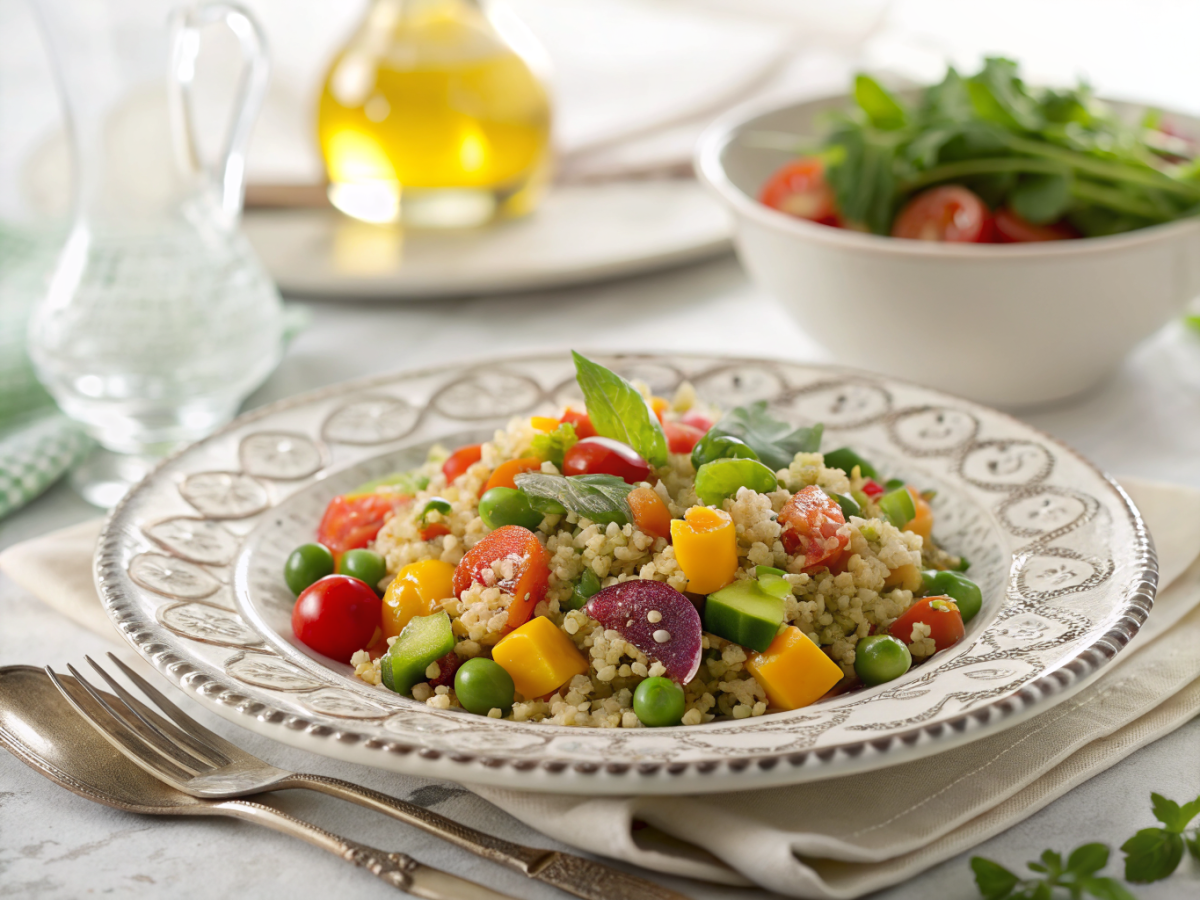
High Protein Quinoa Salad Vegetarian For Easy Meal Prep
Ingredients
Method
- Rinse quinoa under cold water. In a medium saucepan, combine quinoa and vegetable broth. Bring to a boil, then reduce heat to low, cover, and simmer for 15 minutes until liquid is absorbed. Remove from heat and let stand covered for 5 minutes, then fluff with a fork.
- Spread cooked quinoa on a large plate or baking sheet to cool to room temperature, about 10 minutes. This prevents the salad from becoming soggy.
- While quinoa cools, dice the cucumber, halve the cherry tomatoes, finely chop the red onion, and chop the fresh parsley. Drain and rinse the chickpeas thoroughly.
- In a small bowl, whisk together olive oil, lemon juice, salt, and black pepper until well combined.
- In a large mixing bowl, combine the cooled quinoa, chickpeas, cherry tomatoes, cucumber, red onion, and parsley. Toss gently to mix.
- Pour the dressing over the quinoa mixture and toss thoroughly to coat all ingredients evenly. Add the crumbled feta cheese and gently fold in.
- Serve immediately or divide into meal prep containers. Refrigerate for up to 5 days. The salad can be enjoyed cold or at room temperature.
Nutrition
Notes
Tried this recipe?
Let us know how it was!High Protein Quinoa Salad Vegetarian: 5 Easy Tips for Perfect Results
Creating the perfect high-protein quinoa salad starts with understanding a few key techniques that elevate this dish from ordinary to extraordinary. The first tip is to rinse your quinoa thoroughly before cooking to remove the natural coating called saponin, which can make the grains taste bitter. This simple step takes just a minute but makes a significant difference in the final flavor profile.
The second tip involves cooking your quinoa in vegetable broth instead of plain water to infuse extra flavor into every grain. Use a 2:1 liquid-to-quinoa ratio and bring it to a boil before reducing to a simmer. Once all the liquid is absorbed, remove from heat and let it sit covered for five minutes, then fluff with a fork for perfectly separated grains.
Third, always cool your quinoa completely before adding other ingredients to prevent wilting your fresh vegetables and greens. Spread the cooked quinoa on a baking sheet to speed up the cooling process. This technique ensures your salad maintains its crisp texture and vibrant appearance, especially important for meal prep purposes.
The fourth tip focuses on protein diversity—combine multiple plant-based protein sources like chickpeas, edamame, hemp seeds, and pumpkin seeds to create a complete amino acid profile. This combination not only boosts the protein content significantly but also adds varied textures and flavors. Each ingredient brings its own nutritional benefits, creating a truly balanced meal.
Finally, dress your salad just before serving if you’re meal prepping, or store the dressing separately in small containers. This prevents the salad from becoming soggy and maintains the fresh, crisp quality of the vegetables. If you prefer a marinated salad, add just enough dressing to lightly coat the ingredients, reserving extra for serving time.
Why You’ll Love This High Protein Quinoa Salad Vegetarian
This recipe stands out because it delivers an impressive 18-22 grams of protein per serving without any meat or dairy products. The combination of quinoa, legumes, and seeds creates a complete protein that satisfies hunger for hours. Unlike many vegetarian dishes that leave you feeling hungry shortly after eating, this salad provides lasting energy and satiation.
The versatility of this dish makes it ideal for various eating occasions throughout your week. Enjoy it as a standalone lunch, serve it as a side dish at dinner parties, or pack it for picnics and potlucks. The flavors actually improve after a day in the refrigerator as the ingredients marinate together, making it even more convenient for advance preparation.
Meal preppers will appreciate how well this salad stores and travels. The sturdy ingredients hold up beautifully in the refrigerator for four to five days without losing their texture or flavor. Simply portion it into individual containers for grab-and-go lunches that require zero morning preparation, saving you valuable time during busy workweeks.
The colorful presentation makes this salad visually appealing and Instagram-worthy, featuring vibrant reds, greens, yellows, and purples from various vegetables. Eating a rainbow of colors ensures you’re getting a wide spectrum of vitamins, minerals, and antioxidants. This nutritional diversity supports overall health, immune function, and sustained energy levels throughout your day.
Budget-conscious cooks will love that this recipe uses affordable, accessible ingredients available at any grocery store. Quinoa, canned beans, and seasonal vegetables keep costs low while delivering premium nutrition. Making large batches becomes even more economical, with the per-serving cost dropping significantly compared to restaurant salads or prepared meals.
Core Ingredients for High Protein Quinoa Salad Vegetarian
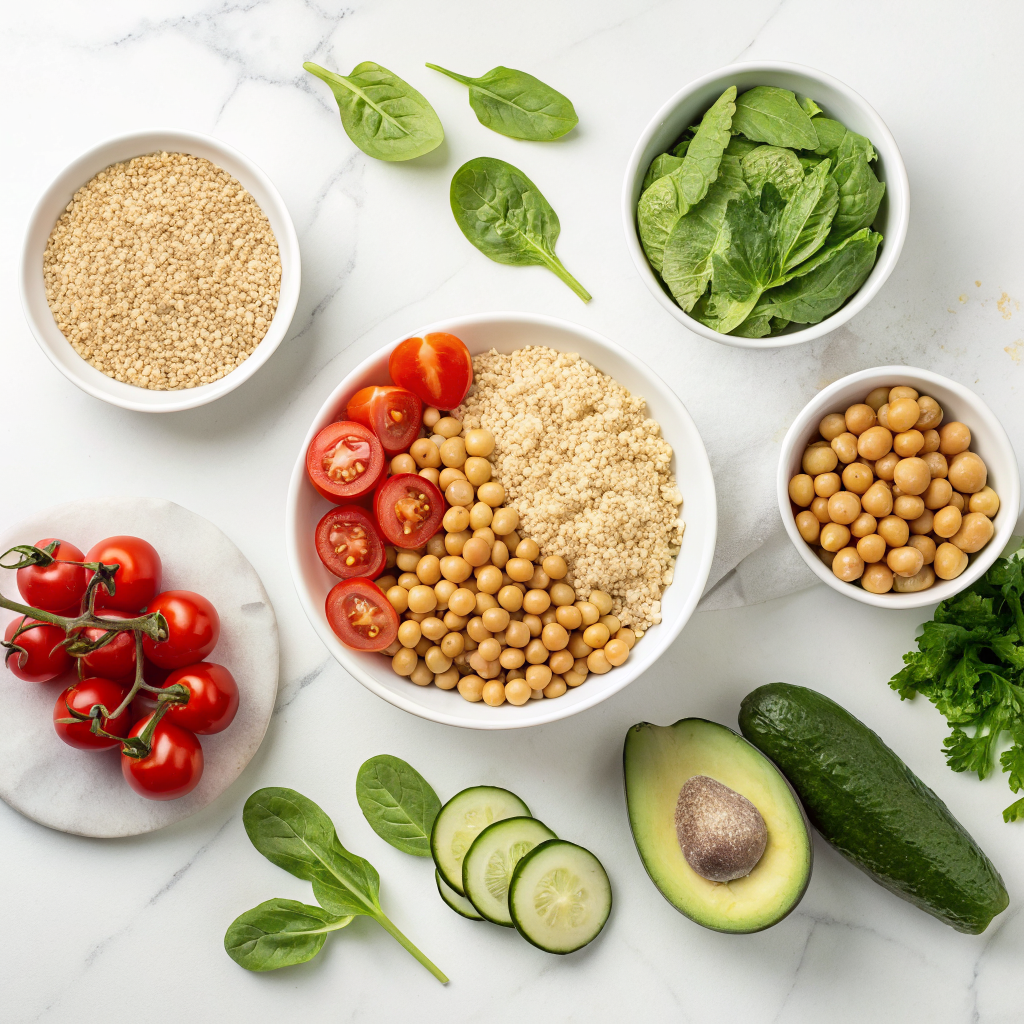
The foundation of this salad begins with quinoa, an ancient grain that’s technically a seed and contains all nine essential amino acids. Use white, red, or tricolor quinoa depending on your preference—white quinoa cooks up fluffy and mild, while red quinoa offers a slightly nuttier flavor and firmer texture. For this recipe, you’ll need 1 cup of dry quinoa, which yields approximately 3 cups cooked.
Chickpeas form the second major protein component, contributing both protein and fiber to keep you satisfied. One 15-ounce can of chickpeas, drained and rinsed, adds about 12 grams of protein to the entire recipe. For extra flavor and texture, you can roast the chickpeas with spices before adding them to the salad, creating a delightful crunch.
Edamame brings additional protein while adding a beautiful green color and slightly sweet flavor to the mix. Use 1 cup of shelled edamame, either fresh or frozen—if using frozen, simply thaw them under warm water. Edamame contains approximately 17 grams of protein per cup, making it one of the most protein-dense plant foods available.
Fresh vegetables add crunch, color, and vital nutrients to balance the hearty grains and legumes. Include 1 cup of cherry tomatoes halved, 1 large cucumber diced, 1 red bell pepper chopped, and ½ red onion finely diced. These vegetables provide vitamins C and A, along with hydration and fiber that support digestive health.
Seeds and nuts contribute healthy fats, additional protein, and satisfying crunch to every bite. Add ¼ cup of pumpkin seeds (pepitas), 2 tablespoons of hemp seeds, and 2 tablespoons of sunflower seeds. These ingredients also provide important minerals like zinc, magnesium, and selenium that support immune function and energy production.
Fresh herbs elevate the flavor profile with brightness and aromatic complexity that dried herbs simply cannot match. Use ½ cup of fresh parsley chopped, ¼ cup of fresh mint chopped, and 2 tablespoons of fresh dill. The combination creates a Mediterranean-inspired flavor that complements the nutty quinoa and creamy beans perfectly.
The dressing ties everything together with a tangy, slightly sweet flavor that enhances rather than overwhelms the ingredients. Whisk together ¼ cup of extra virgin olive oil, 3 tablespoons of fresh lemon juice, 1 tablespoon of apple cider vinegar, 1 tablespoon of Dijon mustard, 2 cloves of minced garlic, 1 teaspoon of maple syrup, and salt and pepper to taste. This heart-healthy dressing adds minimal calories while maximizing flavor.
How to Make High Protein Quinoa Salad Vegetarian: Step-by-Step
Begin by thoroughly rinsing 1 cup of quinoa in a fine-mesh strainer under cold running water for about 30 seconds. This removes the bitter saponin coating and ensures your quinoa tastes clean and mild. Shake off excess water and transfer the quinoa to a medium saucepan with 2 cups of vegetable broth or water.
Bring the quinoa and liquid to a boil over high heat, then immediately reduce the heat to low and cover with a tight-fitting lid. Simmer for 15 minutes without lifting the lid, as this allows steam to properly cook the grains. After 15 minutes, remove from heat and let it sit covered for an additional 5 minutes to finish steaming.
While the quinoa cooks, prepare all your vegetables by washing and chopping them into uniform, bite-sized pieces. Consistency in cutting ensures even distribution of flavors and makes the salad easier to eat. Place all chopped vegetables in a large mixing bowl—you’ll need a bowl that holds at least 4 quarts to accommodate all the ingredients comfortably.
Drain and rinse your chickpeas thoroughly under cold water to remove excess sodium and the slightly metallic taste from the canning liquid. If using frozen edamame, place them in a colander and run warm water over them until completely thawed. Pat both the chickpeas and edamame dry with paper towels to prevent excess moisture from diluting your dressing.
Once the quinoa has finished its resting period, fluff it with a fork and spread it on a large baking sheet or plate to cool quickly. This prevents the residual heat from wilting your fresh vegetables and herbs. You can speed up the cooling process by placing the baking sheet in the refrigerator for 10-15 minutes or by gently stirring the quinoa occasionally.
Prepare your dressing by combining all dressing ingredients in a small bowl or mason jar with a tight-fitting lid. Whisk vigorously or shake the jar until the ingredients emulsify into a smooth, cohesive dressing. Taste and adjust seasonings as needed—you might want more lemon juice for brightness or a pinch more salt to enhance all the flavors.
Add the cooled quinoa to your large bowl of chopped vegetables, then add the chickpeas, edamame, and all the seeds. Roughly chop your fresh herbs and add them to the bowl as well. The herbs should be added just before mixing to preserve their vibrant color and fresh flavor.
Pour about three-quarters of the dressing over the salad and toss gently but thoroughly using large spoons or clean hands. Make sure every ingredient gets coated with dressing, but avoid over-mixing which can break down the vegetables. Taste a spoonful and add more dressing if desired, remembering that you can always add more but cannot remove excess.
Let the salad rest for at least 15 minutes at room temperature before serving to allow the flavors to meld together. This resting period also allows the quinoa to absorb some of the dressing, enhancing its flavor. For meal prep, transfer portions to individual airtight containers and refrigerate immediately for optimal freshness.
Nutrition & Health Benefits
Each generous serving of this salad provides approximately 18-22 grams of complete protein, making it comparable to many meat-based dishes. The combination of quinoa, chickpeas, edamame, and seeds creates a complete amino acid profile that supports muscle maintenance, tissue repair, and immune function. This makes it an excellent choice for vegetarians, vegans, and anyone looking to incorporate more plant-based meals into their diet.
The fiber content in this recipe is exceptional, with each serving delivering around 12-15 grams of dietary fiber. This supports digestive health, helps regulate blood sugar levels, and promotes feelings of fullness that last for hours. Adequate fiber intake is associated with reduced risk of heart disease, type 2 diabetes, and certain types of cancer according to nutrition research from Harvard.
This salad is naturally rich in iron from the quinoa, chickpeas, and pumpkin seeds—nutrients that are especially important for vegetarians who don’t consume heme iron from meat. The vitamin C from tomatoes, bell peppers, and lemon juice enhances iron absorption significantly. Pairing these ingredients strategically maximizes the nutritional benefits you receive from every serving.
The healthy fats from olive oil, seeds, and edamame provide omega-3 and omega-6 fatty acids that support brain health, reduce inflammation, and promote heart health. These fats also help your body absorb fat-soluble vitamins A, D, E, and K from the vegetables. Unlike saturated fats from animal products, plant-based fats support healthy cholesterol levels and cardiovascular function.
Antioxidants abound in this colorful salad, with each vegetable contributing unique phytonutrients that protect cells from oxidative damage. The red bell peppers provide beta-carotene, tomatoes offer lycopene, and fresh herbs contain polyphenols. This diverse array of antioxidants supports healthy aging, skin health, and may reduce the risk of chronic diseases.
For those watching their sodium intake, this recipe remains naturally low in salt while delivering maximum flavor through fresh herbs, lemon juice, and aromatic garlic. You control exactly how much salt goes into the dish, unlike restaurant meals or packaged foods. This makes it suitable for those managing blood pressure or following heart-healthy eating patterns.
Variations & Substitutions
Transform this salad into a Mediterranean version by adding Kalamata olives, sun-dried tomatoes, artichoke hearts, and crumbled feta cheese for non-vegan variations. Replace the standard dressing with a lemon-oregano vinaigrette featuring extra virgin olive oil, fresh oregano, and a touch of red wine vinegar. This variation pairs beautifully with grilled vegetables and works wonderfully as a side dish for summer barbecues.
Create a Mexican-inspired version by swapping edamame for black beans and adding corn, diced avocado, jalapeños, and cilantro instead of the Mediterranean herbs. Use a lime-cumin dressing with a dash of chili powder for authentic southwestern flavor. Top with crushed tortilla chips just before serving for added crunch and serve alongside your favorite dinner recipes for a complete meal.
For a Thai-inspired twist, incorporate shredded purple cabbage, shredded carrots, snap peas, and chopped peanuts or cashews. Replace the lemon dressing with a peanut-lime dressing featuring natural peanut butter, lime juice, rice vinegar, sesame oil, ginger, and a touch of maple syrup. Add fresh basil and mint for authentic Thai flavors that transport your taste buds.
Those with gluten sensitivities can rest assured that quinoa is naturally gluten-free, making this recipe suitable without modifications. However, always check that your vegetable broth and any packaged ingredients are certified gluten-free if you have celiac disease. Quinoa provides an excellent alternative to wheat-based grain salads while offering superior protein content.
Substitute quinoa entirely with other whole grains like farro, bulgur wheat, or brown rice if you prefer different textures or flavors. Each grain brings its own nutritional profile and cooking time, so adjust accordingly. Farro offers a chewy texture and nutty flavor, while brown rice provides familiar comfort and slightly more fiber than white varieties.
For nut-free versions, simply omit any nuts and increase the quantity of seeds instead, or add more chickpeas and edamame for extra protein. Pumpkin seeds, sunflower seeds, and hemp seeds are all nut-free options that provide similar nutritional benefits. This makes the salad safe for school lunches and gatherings where nut allergies may be a concern.
Boost the protein content even further by adding baked tofu cubes, tempeh crumbles, or additional legumes like white beans or lentils. Marinate tofu in the salad dressing for 30 minutes before baking for maximum flavor absorption. These additions can bring the protein content up to 25-30 grams per serving, making it suitable for athletes or those with higher protein needs.
Serving Suggestions
Serve this salad as a complete meal on its own, perhaps with a slice of whole grain bread or pita for scooping. The substantial protein and fiber content makes it satisfying enough to stand alone without additional sides. For a heartier presentation, serve it in a large bowl over a bed of fresh arugula or spinach for extra greens and nutrients.
Pack individual portions in mason jars for visually appealing, portable lunches that layer beautifully. Place the dressing at the bottom, followed by sturdy vegetables like cucumbers and tomatoes, then the quinoa mixture, and top with delicate herbs and seeds. When ready to eat, simply shake the jar to distribute the dressing throughout, creating an Instagram-worthy meal that tastes as good as it looks.
This salad makes an excellent side dish for grilled proteins at summer cookouts and family gatherings. It pairs wonderfully with grilled chicken, fish, or additional vegetarian options like portobello mushrooms. The cool, refreshing nature of the salad provides a perfect contrast to hot, smoky grilled foods.
For a complete vegetarian feast, serve this salad alongside other high protein recipes like lentil soup, roasted chickpeas, or black bean burgers. This creates a protein-rich spread that satisfies diverse palates and dietary preferences. The variety ensures everyone finds something they enjoy while meeting their nutritional needs.
Stuff the salad into whole wheat pitas or wraps with additional hummus and fresh greens for a portable sandwich option. This works particularly well for lunch boxes, picnics, or road trips where you need convenient, mess-free eating options. Add a spread of tahini or Greek yogurt sauce for extra creaminess and flavor.
Top the salad with a fried or poached egg for non-vegan eaters who want additional protein and richness. The runny yolk creates a luxurious sauce that coats the quinoa and vegetables beautifully. This transforms the salad from a side dish into a satisfying brunch option that impresses guests.
Common Mistakes to Avoid
One of the most frequent mistakes is not rinsing quinoa before cooking, which leaves a bitter, soapy taste from the natural saponin coating. Always rinse quinoa thoroughly in a fine-mesh strainer under cold water until the water runs clear. This simple step takes less than a minute but dramatically improves the final flavor of your salad.
Adding dressing to warm quinoa causes vegetables to wilt and creates a soggy, unappetizing texture that nobody enjoys. Always cool your quinoa completely before assembling the salad, either by spreading it on a baking sheet or refrigerating it briefly. Patience during this step ensures your salad maintains its fresh, crisp appeal for days.
Overcooking quinoa results in mushy grains that turn your salad into an unpleasant, porridge-like consistency. Follow the proper 2:1 liquid-to-quinoa ratio and resist the temptation to lift the lid while cooking. Once the liquid is absorbed, remove from heat immediately and let it steam off the heat for five minutes for perfectly fluffy results.
Using too much dressing drowns the ingredients and makes the salad heavy and overly oily rather than light and refreshing. Start with less dressing than you think you need—you can always add more, but you cannot remove excess. The dressing should lightly coat ingredients, not pool at the bottom of the bowl.
Chopping vegetables into inconsistent sizes creates an unbalanced eating experience where some bites are all quinoa and others are huge chunks of vegetables. Take time to dice all vegetables into uniform, bite-sized pieces of approximately ½-inch. This ensures every forkful contains a perfect mix of all ingredients and flavors.
Skipping the resting period after mixing prevents flavors from melding together properly, resulting in a bland, one-dimensional taste. Allow the dressed salad to sit for at least 15 minutes before serving so the quinoa can absorb the dressing and the flavors can marry. This patience is rewarded with a more cohesive, flavorful final dish.
Using low-quality olive oil in the dressing compromises the overall flavor since the oil is a primary ingredient. Invest in a good extra virgin olive oil with a fresh, fruity flavor that enhances rather than detracts from the salad. The quality of your oil makes a noticeable difference in the final taste and nutritional value.
Storage & Meal Prep Tips
Store this salad in airtight containers in the refrigerator for up to five days, making it perfect for Sunday meal prep that lasts through the workweek. Glass containers with tight-fitting lids work best as they don’t absorb odors or stains and allow you to see the beautiful layers. Portion into individual serving sizes for grab-and-go convenience that saves time on busy mornings.
For optimal freshness, store the dressing separately in small containers or mason jars and add it just before eating. This prevents the salad from becoming soggy and maintains the crisp texture of the vegetables throughout the week. Small 2-ounce containers or reusable silicone pouches work perfectly for individual dressing portions.
If you prefer to dress the entire batch at once, add only enough dressing to lightly coat the ingredients, reserving extra for serving time. The salad will absorb some dressing as it sits, so slightly under-dressing initially prevents it from becoming too wet. You can always add more dressing when serving, but you cannot remove excess moisture.
Avoid freezing this salad as the vegetables and quinoa do not maintain their texture well after thawing. The high water content in cucumbers and tomatoes causes them to become mushy and unappetizing when frozen. Instead, prepare fresh batches every five days or consider freezing only the cooked quinoa separately for future use.
To extend freshness, place a paper towel in the container on top of the salad to absorb excess moisture that naturally occurs. Replace the paper towel daily to maintain optimal texture and prevent sogginess. This simple trick keeps your salad crisp and fresh for the entire storage period.
Prepare components separately and assemble individual servings throughout the week for maximum freshness and customization. Cook a large batch of quinoa, prep all vegetables, and store them in separate containers. This approach allows family members to customize their portions according to their preferences while maintaining ingredient freshness.
Add delicate ingredients like avocado, fresh herbs, or crunchy toppings just before serving to maintain their optimal texture and appearance. These ingredients don’t hold up well during storage and are best added fresh. Keep a small container of garnishes ready in the refrigerator for quick assembly when you’re ready to eat.
Label containers with preparation dates to track freshness and ensure food safety, especially if you’re preparing multiple recipes simultaneously. Use masking tape and a permanent marker, or invest in reusable labels designed for meal prep containers. This organization system prevents confusion and helps you consume meals at their peak quality.
Final Thoughts on High Protein Quinoa Salad Vegetarian
This High Protein Quinoa Salad Vegetarian represents the perfect intersection of nutrition, convenience, and delicious flavor that modern home cooks crave. The recipe delivers restaurant-quality results with simple techniques and accessible ingredients found at any grocery store. Whether you’re new to vegetarian cooking or a seasoned plant-based eater, this salad will quickly become a staple in your meal rotation.
The versatility of this recipe allows endless customization to suit your taste preferences, dietary needs, and what’s available in your kitchen. Don’t be afraid to experiment with different vegetables, herbs, and dressings to create your signature version. The basic formula of quinoa plus legumes plus vegetables plus flavorful dressing works with countless variations.
Meal preppers will appreciate how this recipe streamlines weekly food preparation while ensuring nutritious, satisfying meals are always ready. The time investment of one cooking session provides multiple days of effortless, healthy eating. This efficiency reduces stress, saves money, and supports your health goals without requiring daily cooking.
The impressive protein content makes this salad suitable for athletes, busy professionals, students, and anyone seeking sustained energy throughout their day. Unlike simple carbohydrate-based meals that cause energy crashes, the balanced macronutrients in this High Protein Quinoa Salad Vegetarian provide steady fuel for both body and mind. You’ll notice improved focus, sustained energy, and reduced cravings when this salad becomes part of your regular routine.

Food lover & recipe creator sharing simple, protein-rich recipes for busy lives.