
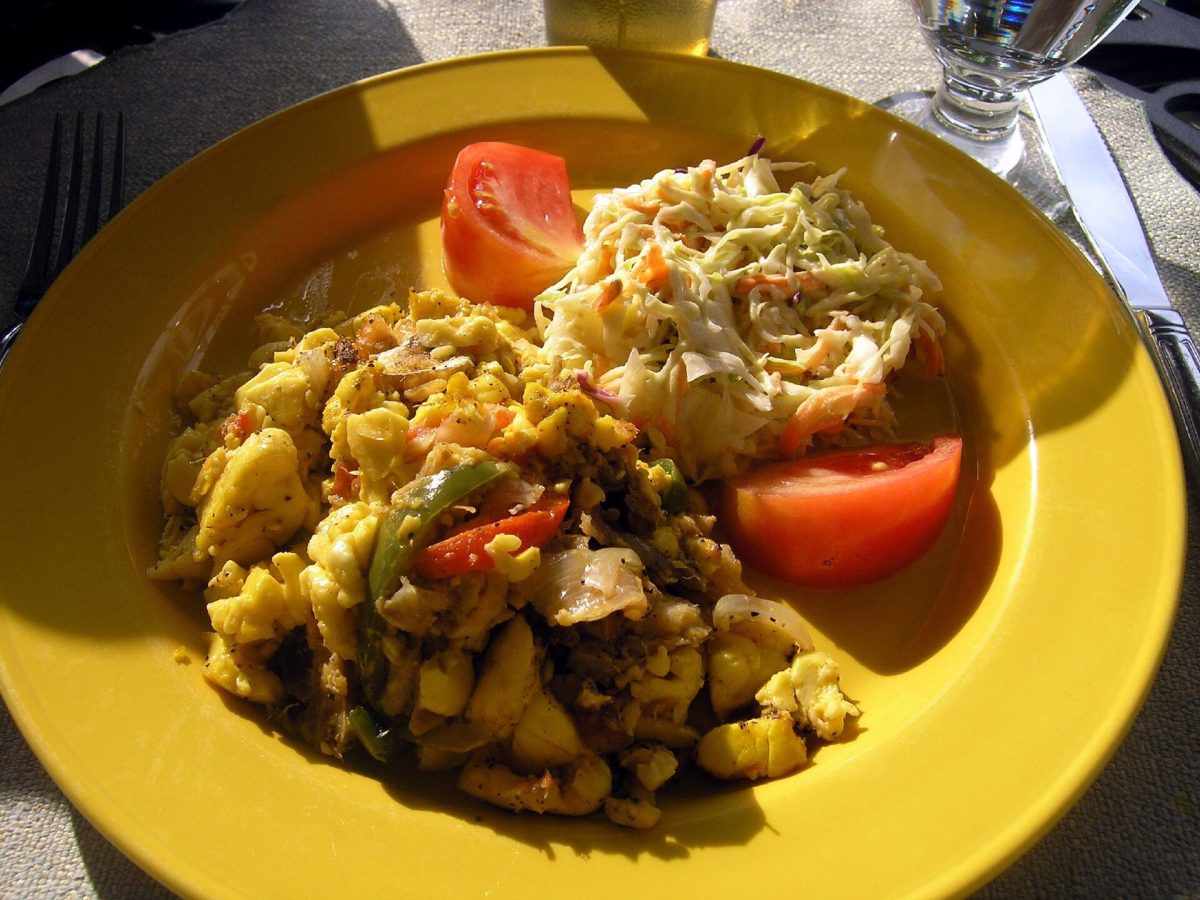
If you have never had Ackee and Saltfish for breakfast, you are missing out on what might be the most underrated morning meal on the planet. It is Jamaica’s national dish — and no, it is not “scrambled eggs with fish.” Ackee is a fruit, and when cooked properly, it looks and feels like soft golden curds that melt in your mouth alongside savory, garlicky salted cod.
This recipe comes from a Jamaican friend who grew up eating it every Sunday morning. Her grandmother would soak the saltfish overnight, boil it in the early hours, and fold the ackee in at the very last second — “gentle, gentle,” she would say, like it was a prayer. This is my faithful recreation of that recipe.
The History of Ackee and Saltfish
Ackee was brought to Jamaica from West Africa in the late 1700s on slave ships — one of the few good things to come out of an otherwise horrific system. The fruit thrived in Jamaica’s tropical climate. Enslaved Africans paired it with salted cod (imported from Canadian fisheries as cheap rations), and over generations, the combination evolved from survival food into the island’s most beloved national dish. Today it is served in homes, hotels, and roadside restaurants across Jamaica, usually with fried dumplings, boiled green banana, and a cup of strong bush tea.
What Makes This Dish Special
Two ingredients carry this recipe: ackee and salted cod. Ackee, when ripe, has a buttery, almost nutty flavor and a texture somewhere between scrambled eggs and soft tofu. It is delicate — overcook it or stir too aggressively and it turns to mush. Salted cod brings deep, savory umami that balances the mild sweetness of the ackee. Together with sautéed scallions, scotch bonnet, and tomato, it is breakfast perfection.
Important Note About Ackee Safety
Unripe ackee contains hypoglycin A, which is toxic. Never eat raw or unopened ackee. Canned ackee (what most people outside Jamaica use) is perfectly safe — it is harvested at the right stage and processed properly. If you ever get fresh ackee, only use pods that have opened naturally on the tree, and always remove the black seeds inside.
Ingredients
Method
- Soak the salted cod in cold water overnight (or at least 2 hours). Change the water 2-3 times. Boil for 15 minutes, drain, and let cool. Shred into bite-size flakes with your fingers, removing any bones and skin.
- If using canned ackee, drain gently and rinse with cold water. Do not stir aggressively — ackee is delicate and will turn to mush. Set aside.
- Heat oil in a large skillet over medium heat. Add the whole scotch bonnet pepper (keep it intact). Add onion, scallions, and garlic. Cook until soft and fragrant, about 3 minutes.
- Add tomatoes and bell peppers. Cook another 3-4 minutes until they begin to break down and create a sauce.
- Add the shredded saltfish to the pan. Toss with the vegetables. Add thyme, black pepper, allspice, and paprika. Stir gently for 2-3 minutes so the flavors meld together.
- This is the delicate part: gently fold in the ackee with a spatula. Treat it like folding whipped cream into a cake. Do NOT stir aggressively. Cook 2-3 minutes maximum. The ackee should hold its shape and look like golden yellow chunks.
- Add butter if using. Remove the whole scotch bonnet pepper (or serve it on the side). Season to taste — you likely will not need extra salt. Serve hot with fried dumplings, boiled green banana, and a cold Ting.
Notes
How to Serve Ackee and Saltfish
Traditional Jamaican breakfast means ackee and saltfish with fried dumplings (also called “festivals” when slightly sweet), boiled green banana, and sometimes fried plantains on the side. A strong cup of bush tea (cerasee or peppermint) or blue mountain coffee completes the morning. If you want something equally comforting but different, try our Jamaican Jerk Chicken for Sunday dinner — another island classic.
Make It Your Own
Some families add a splash of coconut milk to the ackee for extra richness. Others throw in a few slices of crispy bacon for crunch. My friend’s grandmother always kept the scotch bonnet whole so the kids could eat it without tears — just the aroma, not the burn. If you like it fiery, poke a small hole in the pepper or chop half of it into the base.
Frequently Asked Questions
What does ackee taste like?
Ackee has a mild, buttery flavor with a texture similar to soft scrambled eggs. It is not sweet, but it has a subtle nuttiness that pairs perfectly with the salty, savory cod. On its own, ackee is quite bland — it absorbs the flavors of whatever it is cooked with, which is why the sautéed onion, garlic, and scotch bonnet base is so important.
Is ackee safe to eat?
Canned ackee is 100% safe — it is harvested and processed at the correct stage of ripeness. Fresh ackee is only safe when the pods have opened naturally on the tree. Unripe, unopened ackee pods contain toxins and should never be eaten. When in doubt, stick to canned.
Can I make Ackee and Saltfish ahead of time?
The saltfish can be prepped a day ahead — soak, boil, shred, and refrigerate. However, ackee does not reheat well. It turns mushy and loses its texture. Best to cook the final dish fresh and eat it immediately. Leftover saltfish can be used in sandwiches or salads the next day.
