
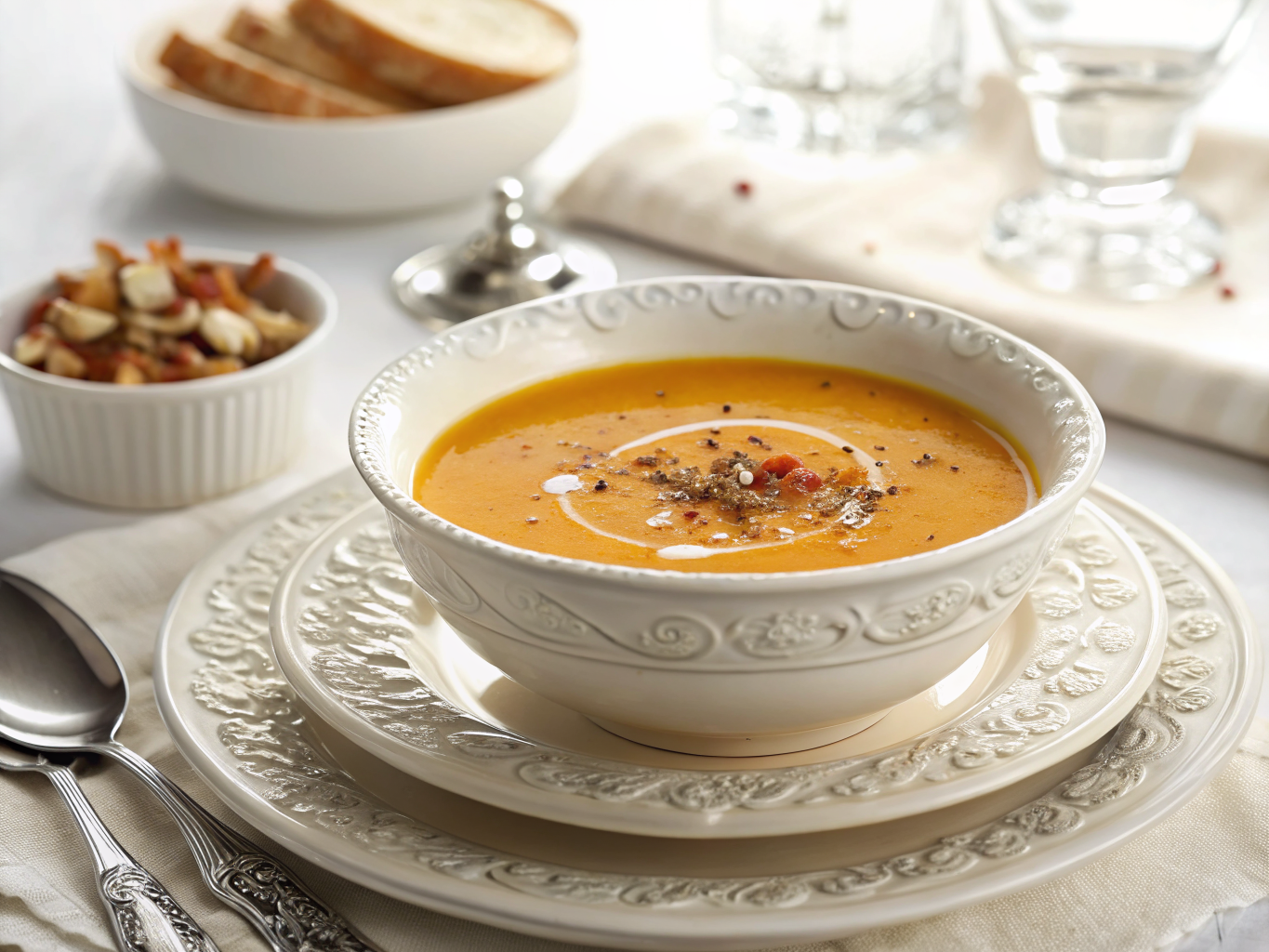
Butternut Squash Soup
Ingredients
Method
- Preheat oven to 400°F (200°C). Toss cubed butternut squash with 1 tablespoon of olive oil, salt, and pepper. Spread on a baking sheet and roast for 25-30 minutes, or until tender and lightly caramelized.
- While the squash roasts, heat the remaining 1 tablespoon of olive oil in a large pot or Dutch oven over medium heat. Add the chopped onion and cook until softened, about 5-7 minutes. Add minced garlic and grated ginger, cooking for another minute until fragrant.
- Stir in the curry powder and nutmeg, cooking for 30 seconds. Add the roasted butternut squash and vegetable broth to the pot. Bring to a simmer, then reduce heat and cook for 10-15 minutes to allow flavors to meld.
- Carefully transfer the soup to a blender (or use an immersion blender) and blend until completely smooth and creamy. If using a regular blender, work in batches and do not overfill. Return the soup to the pot.
- Stir in the full-fat coconut milk. Heat through gently, but do not boil. Taste and adjust seasoning with salt and pepper as needed. Serve hot, garnished with fresh herbs if desired.
Nutrition
Notes
Tried this recipe?
Let us know how it was!nn10 Amazing Reasons Why Butternut Squash Soup Will Be Your New Favorite Dinner
There’s a quintessential warmth that permeates the cooler months, a desire for comforting aromas wafting from the kitchen, and a yearning for dishes that nourish both body and soul. Few culinary creations embody this sentiment quite like Butternut Squash Soup. It’s a dish that transcends mere sustenance, offering a creamy, earthy sweetness that speaks of cozy evenings and culinary contentment.
This vibrant, velvety soup is more than just a delicious meal; it’s a celebration of seasonal produce, a testament to simple ingredients transformed into something extraordinary. Whether you’re a seasoned chef or a kitchen novice, mastering the art of Butternut Squash Soup is a rewarding endeavor that promises delectable results every time. Get ready to dive into the rich world of this autumnal delight, understanding its versatility, health benefits, and countless ways to elevate its flavor profile.
Unveiling the Magic: What Makes Butternut Squash Soup So Irresistible?
The inherent appeal of Butternut Squash Soup lies in its harmonious blend of flavors and textures. The squash itself provides a naturally sweet and nutty base, which, when roasted or simmered, develops an incredible depth. This sweetness is beautifully balanced by savory elements like onions, garlic, and often, aromatic herbs such as sage or thyme.
Beyond its taste, the soup’s creamy consistency is incredibly comforting. Whether achieved through the natural breakdown of the squash or with the addition of a touch of dairy or coconut milk, a silky-smooth texture is a hallmark of a truly great butternut squash soup. It coats the palate with a gentle warmth, making it the perfect antidote to a chilly evening or a soothing balm for a busy day.
Furthermore, its vibrant orange hue is instantly appealing, promising a bowlful of sunshine on even the dullest day. This natural color comes from beta-carotene, a powerful antioxidant, hinting at the nutritional riches hidden within each spoonful. It’s a dish that pleases all the senses, from its inviting aroma to its satisfying finish.
The Humble Hero: A Deeper Look at Butternut Squash
Before we delve into the cooking process, let’s appreciate our star ingredient: the butternut squash. This winter squash variety is a nutritional powerhouse, packed with vitamins, minerals, and fiber. Its distinctive hourglass shape and pale yellow skin give way to a bright orange flesh that’s sweet and slightly nutty when cooked.
Butternut squash is exceptionally versatile. It can be roasted, steamed, boiled, or even sautéed, making it a fantastic addition to a wide array of dishes beyond just soup. Its natural sweetness means it pairs well with both savory and slightly sweet accompaniments, offering endless culinary possibilities. Learning to work with butternut squash opens up a world of seasonal cooking.
When selecting a butternut squash, look for one that is firm, heavy for its size, and free from soft spots or blemishes. A dull, matte skin is often a sign of ripeness and good flavor. Store it in a cool, dry place, and it can last for several weeks, making it an excellent pantry staple for winter meals.
Core Ingredients: The Foundation of Flavor
Crafting a truly exceptional Butternut Squash Soup starts with a few key ingredients. While variations abound, a common thread runs through most successful recipes. These foundational components create the perfect canvas for flavor development and ensuring a rich, satisfying soup.
The beauty of this soup lies in its simplicity, relying on fresh, high-quality ingredients to shine. Don’t be afraid to invest a little extra in good quality produce, as it will make a noticeable difference in the final taste. Each component plays a crucial role in building the soup’s overall character, contributing to its depth and balance. Discover more Dinner Recipes here.
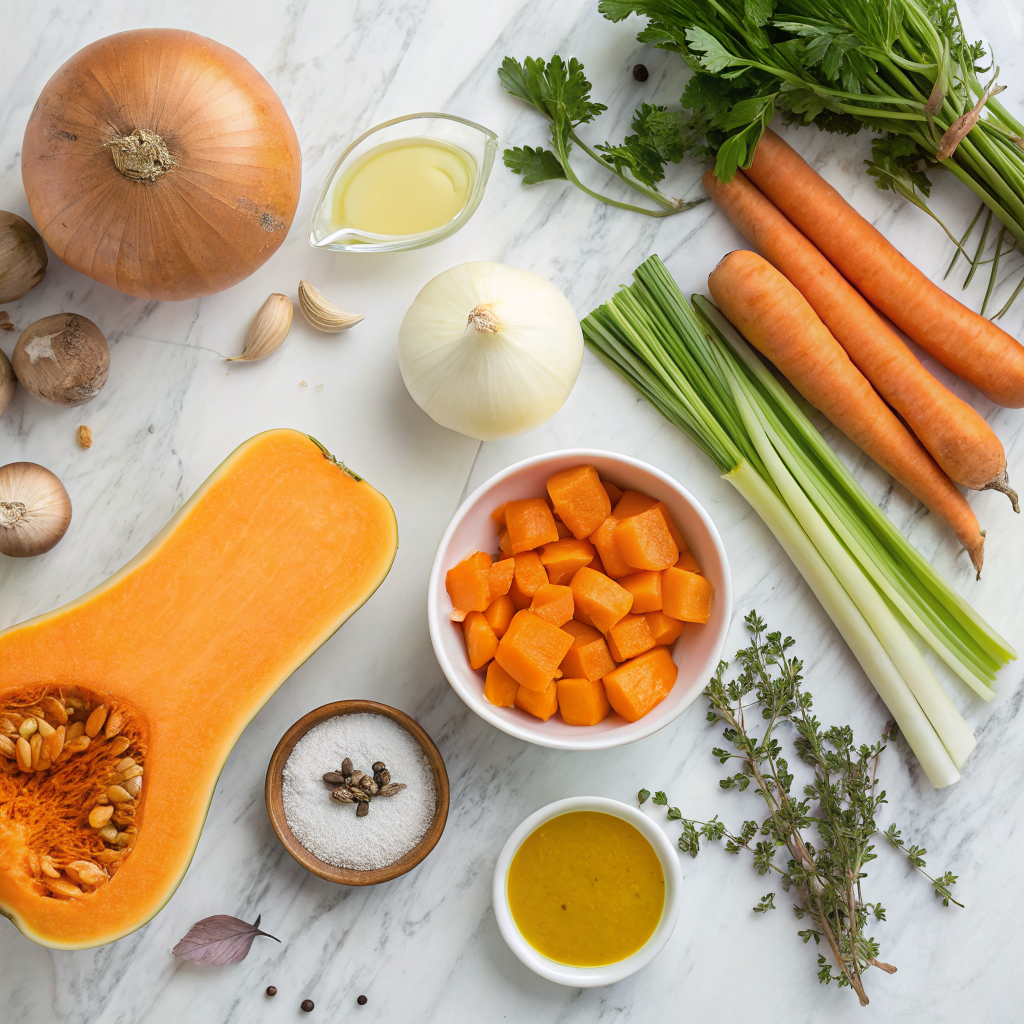
- Butternut Squash: The undisputed star, providing sweetness, body, and that signature vibrant color.
- Onion & Garlic: Aromatic foundational elements that build a savory base and deepen the overall flavor profile.
- Vegetable Broth: The liquid base, adding moisture and additional layers of umami goodness. Homemade broth offers superior flavor.
- Olive Oil or Butter: For sautéing and roasting, contributing richness and helping to develop browning flavors.
- Salt & Black Pepper: Essential seasonings that enhance all other flavors and bring them into balance. Don’t underestimate their power.
- Optional Cream/Coconut Milk: For an extra layer of decadence and silky texture, whether dairy or dairy-free.
- Optional Spices/Herbs: Sage, thyme, nutmeg, or a pinch of cayenne can elevate the soup to new heights.
The Art of Execution: Step-by-Step for Soup Perfection
Creating Butternut Squash Soup isn’t overly complicated, but a few key steps ensure the best results. Following these steps carefully will yield a soup that is smooth, flavorful, and incredibly satisfying. Precision in preparation often translates to excellence in the final dish.
Whether you choose to roast your squash or cook it directly in the pot, the objective is to soften it beautifully and coax out its natural sugars. This foundational preparation is crucial for developing the rich, sweet notes that make this soup so beloved. Don’t rush these initial stages; they are where the magic truly begins.
- Prepare the Squash: Carefully peel the butternut squash, halve it lengthwise, scoop out the seeds and stringy bits, and then chop it into 1-inch cubes. If roasting, toss with a little olive oil, salt, and pepper, then roast at 400°F (200°C) for 25-30 minutes until tender and slightly caramelized. Roasting deepens the flavor significantly.
- Sauté Aromatics: In a large stockpot or Dutch oven, heat a tablespoon of olive oil or butter over medium heat. Add chopped onion and cook until softened and translucent, about 5-7 minutes. Add minced garlic and cook for another minute until fragrant, being careful not to burn it.
- Combine & Simmer: Add the roasted (or raw) butternut squash cubes to the pot with the cooked aromatics. Pour in the vegetable broth, ensuring the squash is mostly submerged. Bring the mixture to a simmer, then reduce heat, cover, and cook for 15-20 minutes, or until the squash is very tender. If using raw squash, this might take a bit longer.
- Blend to Perfection: Carefully transfer the soup mixture to a blender (working in batches if necessary) or use an immersion blender directly in the pot. Blend until completely smooth and creamy. Be cautious when blending hot liquids, as steam can build up. If using a traditional blender, remove the center cap and cover with a kitchen towel to vent.
- Season & Finish: Return the blended soup to the pot. Stir in cream or coconut milk if desired, adjusting to your preferred consistency and richness. Season generously with salt, black pepper, and any optional spices like nutmeg or sage. Simmer for a few more minutes to allow flavors to meld. Taste and adjust seasonings as needed.
- Serve Hot: Ladle into bowls and garnish with desired toppings. Serve immediately and enjoy the comforting warmth.
Elevate Your Experience: Clever Twists and Toppings
While a classic Butternut Squash Soup is divine on its own, there are countless ways to customize and enhance its flavor and presentation. These additions can transform a simple soup into a gourmet experience, adding layers of texture, spice, or richness. Don’t be afraid to get creative and experiment with different combinations.
Consider the season, your personal preferences, and what you have on hand when choosing your toppings and flavor enhancements. A little extra effort here can yield truly spectacular results, making each bowl unique and memorable. From savory to sweet, the possibilities are endless for making this soup truly your own. For more cooking adventures, visit Home Cook Legacy.
Flavor Enhancements:
- Ginger: A knob of fresh ginger, grated and sautéed with the onions, adds a wonderful warmth and zing.
- Apple: A peeled, cored, and chopped apple (like Honeycrisp or Granny Smith) cooked with the squash enhances the natural sweetness and adds a subtle tartness.
- Curry Powder/Cumin: For an exotic twist, add a teaspoon of curry powder or ground cumin with the garlic.
- Maple Syrup/Brown Sugar: A touch of maple syrup or brown sugar can highlight the squash’s sweetness. Add it during the blending stage.
- Roasted Red Pepper: Roasting a red bell pepper with the squash adds a smoky depth and complements the sweetness beautifully.
Dynamic Toppings:
- Toasted Pepitas (Pumpkin Seeds): Offer a lovely crunch and nutty flavor. Toast them lightly in a dry pan until fragrant.
- Crispy Sage Leaves: Fry fresh sage leaves in a little butter until crispy for an aromatic and elegant garnish.
- Croutons: Homemade garlic croutons add texture and absorb the soup’s flavors.
- Swirl of Crème Fraîche or Greek Yogurt: A dollop adds a tangy contrast and visual appeal.
- Chopped Chives or Scallions: For a fresh, oniony bite and vibrant green color.
- Bacon Bits: Crispy bacon adds a smoky, salty counterpoint that is universally loved.
- Drizzle of Chili Oil: For those who enjoy a little heat, a finishing drizzle of chili oil is fantastic.
Butternut Squash Soup: A Nutritional Powerhouse
Beyond its delicious taste and comforting qualities, Butternut Squash Soup is a remarkably healthy choice. It’s packed with essential nutrients that contribute to overall well-being. Understanding its nutritional benefits makes enjoying this soup even more satisfying, knowing you’re nourishing your body with every spoonful.
This vibrant vegetable is low in calories and rich in fiber, making it an excellent choice for digestive health and satiety. Integrating butternut squash into your diet is a simple and tasty way to boost your intake of crucial vitamins and minerals. Learn more about the health benefits of butternut squash on Healthline.
- Rich in Vitamins: An excellent source of Vitamin A (in the form of beta-carotene), crucial for vision, immune function, and skin health. It also provides a good amount of Vitamin C, an antioxidant that supports immunity.
- Loaded with Minerals: Contains potassium, important for blood pressure regulation, and manganese, involved in bone health and metabolism.
- High in Fiber: Dietary fiber aids in digestion, helps regulate blood sugar levels, and contributes to a feeling of fullness, which can support weight management.
- Antioxidant Properties: The beta-carotene and Vitamin C in butternut squash act as powerful antioxidants, protecting the body’s cells from damage by free radicals.
- Low in Calories: Despite its rich flavor and creamy texture, butternut squash is relatively low in calories, especially when prepared without excessive cream or butter.
Pairing Perfection: What to Serve with Your Soup
Butternut Squash Soup can stand alone as a light meal, but it also pairs wonderfully with various accompaniments to create a more substantial and balanced dinner. Thoughtful pairings can elevate the entire dining experience, complementing the soup’s flavors and adding textural contrast. Consider both simplicity and sophistication when choosing what to serve alongside this autumnal favorite.
From crusty bread to hearty salads, the right accompaniment can turn your soup into a complete and satisfying meal. The goal is to provide balance, whether through a refreshing side or something that adds a contrasting richness. Don’t overlook the presentation; a beautifully plated side dish can enhance the enjoyment of your soup.
- Crusty Bread or Dinner Rolls: Perfect for soaking up every last drop of that creamy goodness. A warm slice of artisanal bread is a classic pairing.
- Grilled Cheese Sandwich: The ultimate comfort food duo. A simple sharp cheddar grilled cheese works wonders.
- Side Salad: A light, crisp green salad with a vinaigrette dressing offers a refreshing contrast to the richness of the soup. Think mixed greens, toasted nuts, and a light citrus dressing.
- Roasted Vegetables: A medley of roasted seasonal vegetables like Brussels sprouts, carrots, or parsnips adds another layer of earthy flavor and texture.
- Quinoa or Grain Salad: For a heartier side, a quinoa salad with fresh herbs and vegetables complements the soup beautifully, adding protein and fiber. Or explore our dessert recipes for a sweet finish.
- Pan-Seared Scallops or Shrimp: For a more elegant meal, a few perfectly seared scallops or shrimp can be a luxurious and surprisingly compatible addition.
Storage and Reheating: Enjoying Your Soup Later
One of the many joys of Butternut Squash Soup is how well it stores and reheats, making it an ideal candidate for meal prep. Having a batch ready in the fridge or freezer means a comforting, healthy meal is always just moments away. Proper storage ensures both safety and flavor retention.
Whether you’ve made a large batch or simply have leftovers, knowing how to store and reheat your soup effectively is key to enjoying it repeatedly. This convenience factor makes Butternut Squash Soup a favorite among busy individuals and families alike. A little planning can go a long way in making healthy eating accessible. For safe food storage guidelines, consult sources like Medical News Today.
- Refrigeration: Allow the soup to cool completely before transferring it to an airtight container. It will keep well in the refrigerator for 3-4 days. Separation may occur, which is normal.
- Freezing: Butternut Squash Soup freezes beautifully. Pour cooled soup into freezer-safe containers or heavy-duty freezer bags, leaving some headspace for expansion. It can be stored in the freezer for up to 3 months. Thaw in the refrigerator overnight before reheating.
- Reheating on Stovetop: Gently reheat the soup in a saucepan over medium-low heat, stirring occasionally, until heated through. If the soup is too thick after refrigerating, add a splash of broth or water to achieve your desired consistency.
- Reheating in Microwave: Reheat individual portions in a microwave-safe bowl, stirring every minute or so, until hot.
- Note on Cream/Dairy: If you plan to freeze the soup, it’s often best to add any cream or dairy components after thawing and reheating, just before serving. This prevents the dairy from separating or becoming grainy during the freezing process.
Common Questions Answered: Your Butternut Squash Soup FAQs
Making Butternut Squash Soup is generally straightforward, but like any recipe, questions can arise. We’ve compiled some of the most frequently asked questions to help you troubleshoot, customize, and perfect your soup every time. These insights can help demystify the process and boost your culinary confidence.
From selecting the best squash to achieving the smoothest texture, these answers cover common concerns and offer practical tips. Learning from these FAQs can prevent common pitfalls and ensure your soup is a resounding success. Feel free to come back to this section whenever you encounter a culinary conundrum related to your butternut squash endeavors. For comprehensive nutritional information, check out Harvard T.H. Chan School of Public Health.
Q: Do I have to peel the butternut squash?
A: Yes, it is generally recommended to peel butternut squash for soup. While the skin is technically edible after cooking, it can be tough and fibrous, detracting from the soup’s desired smooth texture. Peeling ensures a truly velvety consistency. If roasting, you can roast with skin on and scoop out the flesh afterward, but peeling raw squash is often easier.
Q: Can I make this soup without an immersion blender or a regular blender?
A: While a blender (immersion or traditional) is ideal for achieving a smooth consistency, you can use alternative methods if you don’t have one. A food mill is an excellent option for pureeing the cooked squash, yielding a smooth result. Alternatively, you can mash the cooked squash thoroughly with a potato masher, but it will result in a chunkier, less velvety soup. For this recipe’s intended texture, a blender is highly recommended.
Q: My soup is too thick/too thin. How can I fix it?
A: If your soup is too thick, simply add more vegetable broth (or water) a little at a time, stirring well after each addition, until you reach your desired consistency. If it’s too thin, you have a few options: you can gently simmer it uncovered to allow some liquid to evaporate, thicken it with a cornstarch slurry (mix 1-2 tablespoons cornstarch with equal parts cold water, then whisk into simmering soup), or add some cooked rice or a crumbled baked potato to absorb excess liquid and re-blend.
Q: What if I don’t have fresh ginger or sage? Can I use dried?
A: Yes, you can use dried ginger or sage, but use them sparingly as their flavor is more concentrated. For dried ginger, use about 1/2 teaspoon for every tablespoon of fresh grated ginger. For dried sage, use about 1/2 teaspoon for every tablespoon of fresh chopped sage. Add dried herbs and spices earlier in the cooking process to allow their flavors to bloom.
Q: Is this soup naturally gluten-free and vegan?
A: This soup is naturally gluten-free since none of the core ingredients contain gluten. To make it vegan, ensure you use vegetable broth (not chicken or beef), olive oil instead of butter, and opt for coconut milk or another plant-based cream (like cashew cream) instead of dairy cream. Always double-check ingredient labels for accidental non-vegan additives, especially in pre-made broths.
Q: Can I prepare parts of the soup ahead of time?
A: Absolutely! Butternut squash soup is fantastic for meal prep. You can roast and cube the squash up to 2-3 days in advance and store it in an airtight container in the refrigerator. You can also chop your onions and garlic ahead of time. Once cooked, the entire soup can be stored as described in the “Storage and Reheating” section, making it a perfect make-ahead meal.
Q: Why does my butternut squash sometimes taste bitter?
A: Bitterness in butternut squash is rare but can occur due to environmental factors, cross-pollination, or a genetic trait called cucurbitacin, which is concentrated mostly in the skin. Ensure you are getting fresh, ripe squash. Roasting can help mellow out any slight bitterness. If a squash tastes intensely bitter, it’s best to discard it as high levels of cucurbitacin can cause digestive upset.
Q: What’s the best way to safely cut a butternut squash?
A: Cutting a butternut squash can be tricky due to its firm flesh. Here’s a safe method: first, cut off the top and bottom ends to create stable bases. Stand the squash upright on one of the cut ends, then carefully slice downwards through the middle to halve it. Use a sturdy spoon to scoop out the seeds. For peeling, a sharp vegetable peeler or a small, sharp paring knife works well. You can also microwave the whole squash for 1-2 minutes to slightly soften the skin, making it easier to cut and peel.
Q: Can I add protein directly to the soup?
A: Yes, adding protein can make the soup even more substantial. Cooked shredded chicken, turkey, or even white beans can be stirred in during the final simmering stage. For a vegetarian option, roasted chickpeas or small lentil pasta can also be excellent additions, providing both protein and texture.
