
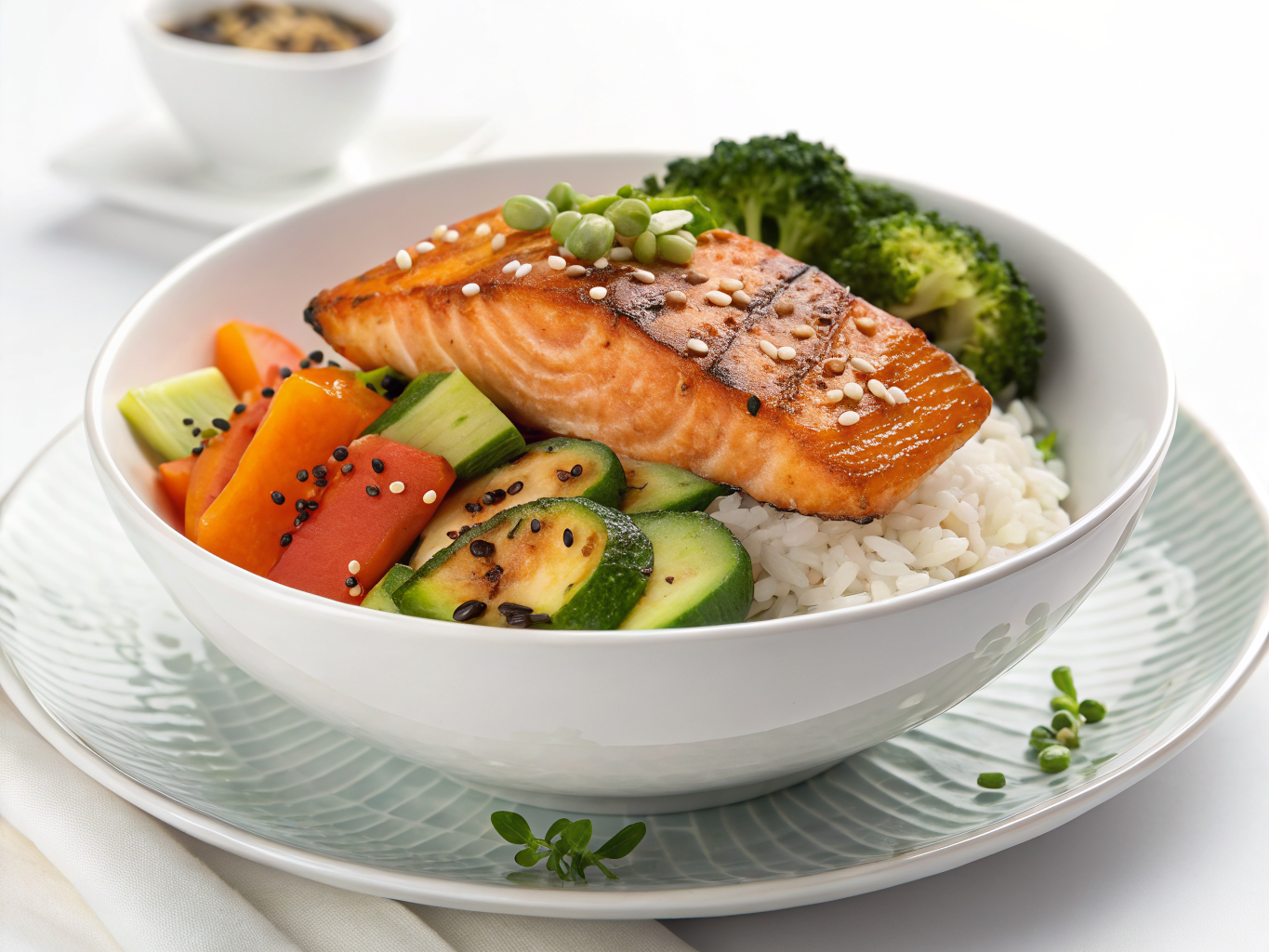
Salmon Teriyaki Bowl
Ingredients
Method
- Pat salmon fillets dry with a paper towel. In a shallow dish, whisk together teriyaki sauce, sesame oil, garlic powder, and black pepper. Add salmon and marinate for 5-10 minutes while you prepare other ingredients.
- Preheat a large non-stick skillet or cast-iron pan over medium-high heat. Add salmon, skin-side down if applicable, and cook for 4-6 minutes per side, or until cooked through and flaky. You can also broil the salmon for 7-10 minutes.
- While the salmon cooks, steam the broccoli florets until tender-crisp, about 3-5 minutes. You can also microwave them for convenience.
- Divide the cooked brown rice (or quinoa) among four serving bowls. Top each with a portion of cooked salmon, steamed broccoli, and shredded carrots.
- Drizzle any remaining teriyaki sauce from the pan over the salmon and vegetables. Garnish with sesame seeds and chopped green onions before serving immediately.
Nutrition
Notes
Tried this recipe?
Let us know how it was!\n\nUnleash 5 Game-Changing Secrets for the Ultimate Salmon Teriyaki Bowl
Welcome, culinary adventurers, to a journey of flavor, health, and pure deliciousness! Today, we’re diving headfirst into the glorious world of the Salmon Teriyaki Bowl – a dish that perfectly marries savory, sweet, and umami in every mouthwatering bite. More than just a meal, it’s a vibrant, protein-packed powerhouse designed to fuel your body and delight your palate. Get ready to transform your dinner routine with this irresistible recipe.
Navigating the realm of high-protein recipes can sometimes feel daunting, but fear not! The Salmon Teriyaki Bowl stands as a beacon of simplicity and profound satisfaction. It’s an ideal choice for busy weeknights, meal prepping, or even impressing guests with minimal fuss. We’ll explore not just how to cook this masterpiece, but also the underlying culinary science and nutritional benefits that make it an unparalleled choice for health-conscious foodies.
The beauty of a well-crafted Teriyaki Salmon Bowl lies in its versatility and nutritional density. Featuring omega-3 rich salmon, nutrient-packed vegetables, and wholesome grains, it’s a complete meal that supports overall well-being. This recipe is designed to be approachable for home cooks of all skill levels, ensuring that everyone can achieve restaurant-quality results in their own kitchen. Let’s embark on this delicious adventure together!
Why the Salmon Teriyaki Bowl Reigns Supreme for High Protein Meals
In the quest for satisfying and nutritious meals, salmon consistently emerges as a culinary champion, and when paired with the iconic teriyaki sauce, it’s an unstoppable force. This dish isn’t just a fleeting trend; it’s a staple for good reason. It delivers a substantial protein punch, essential for muscle repair, satiety, and sustained energy throughout your day.
Beyond its protein content, salmon is a treasure trove of essential nutrients. It’s renowned for its high levels of omega-3 fatty acids, particularly EPA and DHA, which are crucial for heart health, brain function, and reducing inflammation. Unlike many other protein sources, salmon offers a unique blend of health benefits that truly elevate any meal it graces.
The teriyaki glaze, while seemingly indulgent, can be crafted to be a healthy complement, adding complexity without excessive sugar or sodium. When homemade, you control the ingredients, ensuring a balance of sweet, savory, and umami that tantalizes the taste buds. This careful balance makes the Salmon Teriyaki Bowl a guilt-free indulgence that your body will thank you for.
Core Ingredients: The Building Blocks of Flavor and Nutrition
Creating an exceptional Salmon Teriyaki Bowl starts with selecting high-quality ingredients. Each component plays a vital role in both flavor and nutritional value. Understanding these building blocks will empower you to customize and elevate your dish to new heights.
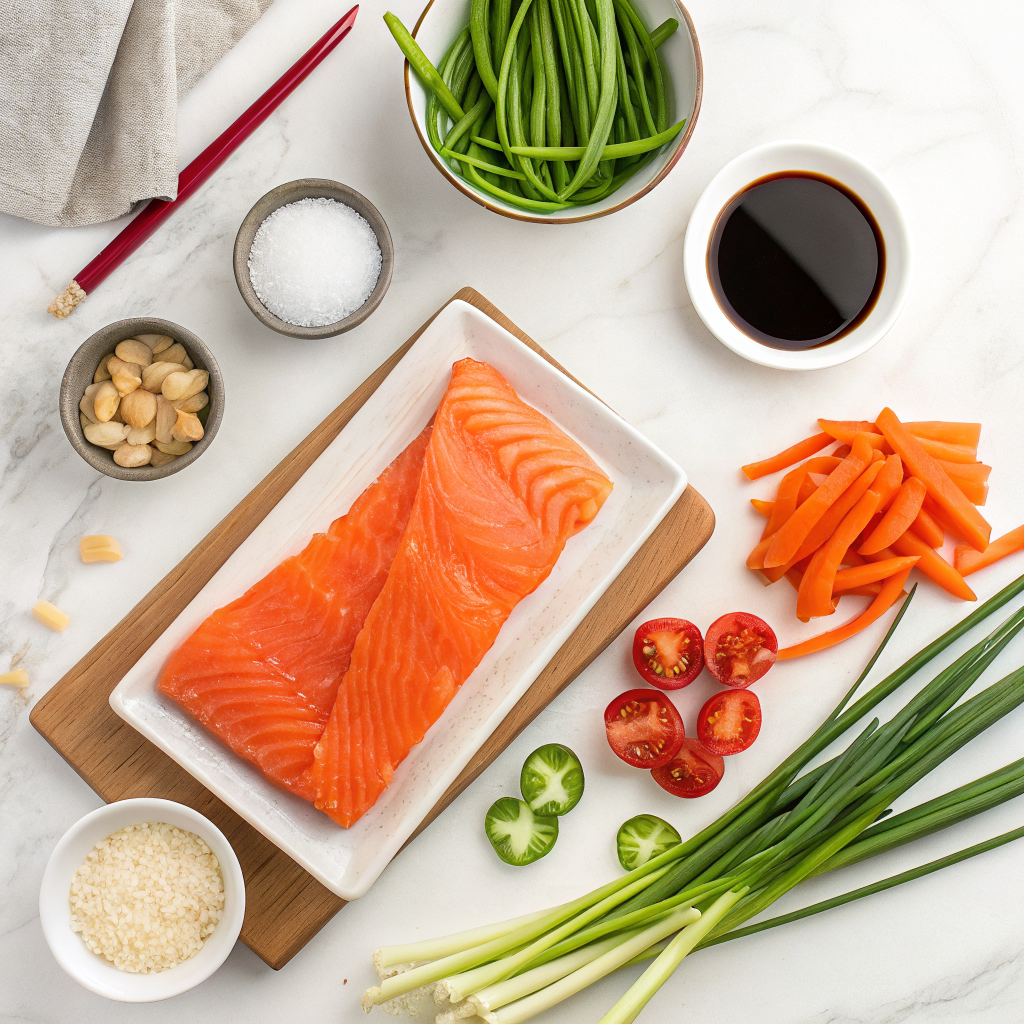
Atlantic Salmon Fillets: The Star of the Show
- Quality Matters: Opt for fresh, wild-caught or sustainably farmed salmon whenever possible. Look for bright, moist flesh without any strong fishy odor.
- Portioning: Approximately 4-6 ounces per person is a good target. Thicker fillets will cook more evenly and retain moisture better.
- Nutrient Powerhouse: Rich in complete protein, omega-3 fatty acids (DHA and EPA), Vitamin D, Vitamin B12, and selenium. These nutrients support heart health, bone health, cognitive function, and immune response. For more on the benefits of omega-3s, see this article on Healthline.
Homemade Teriyaki Sauce: The Flavor Enhancer
- Soy Sauce: Low-sodium is preferred to control salt intake. Tamari is an excellent gluten-free alternative.
- Mirin: Japanese sweet rice wine, crucial for authentic teriyaki flavor and a glossy finish.
- Sake: Adds depth and complexity, though it can be omitted or replaced with a dry sherry if necessary.
- Brown Sugar or Honey: Provides sweetness and helps achieve that beautiful caramelization. You can adjust the amount to your preference.
- Fresh Ginger & Garlic: Aromatic essentials that infuse the sauce with pungent, warm notes.
- Cornstarch Slurry: A small amount mixed with cold water helps thicken the sauce to a perfect consistency, ensuring it clings beautifully to the salmon.
Wholesome Grains: The Foundation
- Brown Rice: A classic choice, offering complex carbohydrates, fiber, and a nutty flavor. It creates a satisfying base for your bowl.
- Quinoa: A complete protein in itself, quinoa adds a unique texture and even more protein.
- Cauliflower Rice: For a low-carb alternative, cauliflower rice is an excellent choice, providing volume and nutrients without the added starches.
Vibrant Vegetables: Color, Crunch & Nutrients
- Broccoli Florets: Steamed or roasted, broccoli adds a fantastic crunch and is packed with Vitamin C and K.
- Edamame: A complete plant protein, edamame offers a slightly sweet, buttery flavor and satisfying texture.
- Carrot Ribbons or Shredded Carrots: Add sweetness, color, and a boost of Vitamin A.
- Bell Peppers: Sliced bell peppers (any color) introduce a fresh, crisp element and are high in antioxidants.
- Spinach or Kale: Wilted greens can be added directly to the hot rice for an extra nutrient boost.
Garnishes and Toppings: The Finishing Touch
- Toasted Sesame Seeds: Adds nutty flavor and visual appeal.
- Chopped Green Onions (Scallions): Provides a fresh, mild oniony bite.
- Sriracha or Chili Flakes: For those who love a little heat.
- Avocado Slices: Creamy, healthy fats that complement the richness of the salmon.
Step-by-Step Culinary Journey: Crafting Your Masterpiece
Creating a truly magnificent Salmon Teriyaki Bowl is a straightforward process when broken down into manageable steps. Precision and timing are key to ensuring each component is cooked to perfection. Follow these instructions and you’ll be enjoying a gourmet meal in no time.
Step 1: Prepare Your Rice or Grain
Start by cooking your chosen grain. Rinse brown rice thoroughly until the water runs clear. Cook according to package directions, typically 2 parts water to 1 part rice, simmering until all water is absorbed and rice is tender. If using quinoa, follow similar instructions. For cauliflower rice, simply sauté until tender-crisp. Perfect rice is the foundation of a great bowl.
Step 2: Whisk Up the Homemade Teriyaki Sauce
In a small saucepan, combine soy sauce, mirin, sake (if using), brown sugar or honey, grated ginger, and minced garlic. Whisk well to combine. Bring the mixture to a gentle simmer over medium heat, stirring until the sugar dissolves. In a separate small bowl, whisk cornstarch with 2 tablespoons of cold water to create a slurry. Gradually whisk the slurry into the simmering sauce. Continue whisking constantly for 1-2 minutes until the sauce thickens to your desired consistency. Remove from heat and set aside. This sauce can be made ahead of time and stored in the refrigerator for up to a week.
Step 3: Prepare and Cook the Salmon
Pat the salmon fillets dry with paper towels; this helps achieve a crispier skin (if leaving it on). Season both sides generously with salt and black pepper. Heat a tablespoon of olive oil or avocado oil in a large non-stick skillet over medium-high heat. Once the oil is shimmering, carefully place the salmon fillets skin-side down (if applicable). Cook for 4-6 minutes on the skin side until crispy and golden brown. Flip the salmon and cook for another 3-5 minutes, or until it reaches your desired doneness. The internal temperature should reach 145°F (63°C) for food safety. Remove salmon from the skillet and set aside on a plate.
Step 4: Sauté or Steam Your Vegetables
While the salmon rests, cook your vegetables. You can use the same skillet you cooked the salmon in for extra flavor. Add a touch more oil if needed. Sauté broccoli florets, bell peppers, and carrots for 5-7 minutes until tender-crisp. If using edamame, you can quickly steam them or add them directly to the skillet for the last 2-3 minutes. If you prefer steamed vegetables, use a steamer basket over boiling water. Aim for vibrant, slightly crunchy textures. For detailed nutritional insights on vegetables, Harvard Health offers a good resource here.
Step 5: Glaze the Salmon
Return the cooked salmon fillets to the skillet (or a clean pan if you prefer). Pour half of the prepared teriyaki sauce over the salmon. Let it gently simmer for 1-2 minutes, spooning the sauce over the fillets, allowing it to coat and slightly caramelize. Be careful not to burn the sauce, as it can thicken quickly. This final glaze adds a beautiful sheen and intensified flavor.
Step 6: Assemble Your Salmon Teriyaki Bowl
Now comes the fun part – assembly! Divide the cooked rice or grain among serving bowls. Arrange the glistening teriyaki salmon fillet on one side of the bowl. Artfully arrange the sautéed or steamed vegetables around the salmon. Drizzle the remaining teriyaki sauce generously over everything. Finish with a sprinkle of toasted sesame seeds, chopped green onions, and any other desired garnishes like avocado slices or a dash of sriracha. Serve immediately and savor every bite!
Pro Tips and Variations for the Savvy Home Cook
Elevating your Salmon Teriyaki Bowl from good to extraordinary is all about incorporating clever techniques and experimenting with variations. These tips will help you perfect your dish and tailor it to your preferences.
Marinade for Maximum Flavor
While glazing the salmon at the end is effective, marinating the salmon fillets in a portion of the teriyaki sauce (reserving some for glazing) for 20-30 minutes before cooking can infuse even deeper flavor. Be careful not to marinate for too long (e.g., overnight), as the acid in some soy sauces can start to “cook” the fish.
Crispy Salmon Skin Secret
If you’re a fan of crispy salmon skin, ensure your pan is hot enough and the skin is patted very dry before placing it down. Press down gently on the fillet with a spatula for the first minute of cooking to ensure maximum skin contact with the pan. Cook skin-side down for most of the cooking time.
Vegetable Medley Options
Don’t limit yourself to the suggested vegetables! Asparagus, snap peas, mushrooms, zucchini, and even roasted sweet potato cubes make excellent additions. Feel free to use seasonal vegetables to keep your bowls fresh and exciting. A diverse range of vegetables ensures a wider spectrum of vitamins and minerals.
Heat Level Customization
For a spicier kick, add a pinch of red pepper flakes to your teriyaki sauce as it simmers, or drizzle with sriracha or chili garlic sauce before serving. A touch of grated fresh ginger in the sauce also adds a lovely warmth.
Make It Your Own: Protein Alternatives
While salmon is the star, this teriyaki recipe is incredibly versatile. It works wonderfully with chicken breast or thighs, tofu, or even shrimp. Adjust cooking times accordingly. For more high-protein recipe ideas, check out Home Cook Legacy’s High Protein Recipes section.
Meal Prep Marvel
The Salmon Teriyaki Bowl is fantastic for meal prepping! Cook your rice, salmon, and vegetables separately. Store in airtight containers. When ready to eat, reheat your components and then assemble, drizzling with freshly warmed teriyaki sauce. This keeps textures optimal. Salmon is best consumed within 2-3 days of cooking when meal prepping.
The Health and Nutritional Benefits of Your Salmon Teriyaki Bowl
Beyond its incredible taste, the Salmon Teriyaki Bowl is a nutritional powerhouse. Each ingredient contributes significantly to a balanced and healthy diet, making it an excellent choice for anyone looking to eat well. Understanding these benefits can make your meal even more satisfying.
Omega-3 Fatty Acids: Heart and Brain Health
Salmon is one of the best dietary sources of EPA and DHA, two types of omega-3 fatty acids. These healthy fats are crucial for reducing inflammation, supporting cardiovascular health by lowering triglyceride levels, and promoting optimal brain function, including memory and mood. Regular intake of omega-3s is linked to a reduced risk of chronic diseases. For detailed studies on omega-3 benefits, see this resource on Medical News Today.
High-Quality Protein for Satiety and Muscle Growth
One serving of salmon provides a substantial amount of complete protein, containing all nine essential amino acids your body needs. This protein is vital for muscle repair and growth, hormone production, and maintaining a healthy metabolism. The high protein content also contributes to feelings of fullness, helping to manage appetite and support weight management goals.
Fiber-Rich Grains and Vegetables: Digestive Health
Brown rice and the array of vibrant vegetables in your bowl are excellent sources of dietary fiber. Fiber promotes healthy digestion, prevents constipation, and helps regulate blood sugar levels. It also contributes to gut health by feeding beneficial gut bacteria, which has far-reaching positive effects on overall well-being and immunity.
Vitamins and Minerals Galore
The diverse ingredients in this bowl offer a wide spectrum of essential vitamins and minerals. Salmon itself is rich in Vitamin D, B12, and selenium. The vegetables provide a wealth of Vitamin C (broccoli, bell peppers), Vitamin A (carrots), Vitamin K (broccoli, spinach), and various B vitamins, iron, and potassium. This nutrient density makes every bite a step towards optimal health.
Antioxidant Power
Many of the ingredients, particularly the fresh ginger, garlic, and colorful vegetables, are packed with antioxidants. These compounds help protect your cells from damage caused by free radicals, potentially reducing the risk of chronic diseases and supporting overall cellular health. A vibrant bowl is often a sign of a nutrient-dense and antioxidant-rich meal.
Customizing Your Salmon Teriyaki Bowl for Dietary Needs
One of the greatest strengths of the Salmon Teriyaki Bowl is its adaptability. With a few simple modifications, you can easily tailor this recipe to fit various dietary preferences and restrictions without sacrificing flavor.
Gluten-Free Adaptation
To make this bowl entirely gluten-free, simply ensure your soy sauce is replaced with Tamari (a gluten-free soy sauce alternative). Also, double-check that your mirin is gluten-free, as some brands may contain wheat. All other ingredients are naturally gluten-free. For more gluten-free culinary ideas, visit Home Cook Legacy’s Gluten Free Recipes.
Low-Carb or Keto-Friendly
Transform your bowl into a low-carb or keto-friendly meal by swapping brown rice for cauliflower rice. Ensure your teriyaki sauce is made with a sugar substitute (like erythritol or monk fruit sweetener) instead of brown sugar or honey. Increase the amount of healthy fats by adding extra avocado slices or a drizzle of sesame oil. Focus on non-starchy vegetables like broccoli, bell peppers, and leafy greens.
Reduced Sodium
For a reduced sodium version, always opt for low-sodium soy sauce. You can also further reduce sodium by using less soy sauce and increasing other flavorful components like fresh ginger, garlic, and a touch of rice vinegar for tang. Seasoning with herbs and spices instead of relying solely on salt is also beneficial.
Vegetarian/Vegan Options
While the focus is on salmon, the teriyaki sauce and vegetable components can absolutely be used with plant-based proteins. Replace salmon with pan-fried extra-firm tofu, tempeh, or even thick-cut portobello mushrooms for a delicious vegetarian or vegan teriyaki bowl. Ensure your mirin and sake are vegan-friendly, as some brands might use non-vegan fining agents.
Common Questions About Salmon Teriyaki Bowls
Q: Can I use frozen salmon fillets?
A: Yes, absolutely! Frozen salmon fillets work perfectly for this recipe. Ensure they are fully thawed in the refrigerator overnight before cooking. Pat them very dry with paper towels before seasoning and cooking to prevent excess moisture and ensure a good sear.
Q: How can I make my teriyaki sauce thicker?
A: The key to a thicker teriyaki sauce is the cornstarch slurry. If your sauce isn’t as thick as you’d like, mix another teaspoon of cornstarch with two teaspoons of cold water to create a new slurry. Whisk it into the simmering sauce gradually and continue to cook for another minute. Be careful not to add too much at once, as it can thicken very quickly.
Q: What’s the best way to reheat leftovers?
A: For best results, reheat the salmon gently. You can warm it in a microwave on low heat, or even better, in a pan on the stovetop over low heat until just warmed through to prevent it from drying out. Reheat the rice and vegetables separately. Drizzle with extra fresh teriyaki sauce before serving to refresh the flavors. Leftovers are best consumed within 2-3 days.
Q: Can I prepare the teriyaki sauce in advance?
A: Yes, homemade teriyaki sauce can be made several days in advance. Store it in an airtight container in the refrigerator for up to a week. This makes meal prep much easier and faster on cooking day. Simply warm it gently on the stovetop before glazing the salmon and drizzling over your bowl.
Q: What other vegetables pair well with this dish?
A: Beyond the suggested vegetables, green beans, asparagus, sugar snap peas, zucchini, mushrooms, and even thinly sliced cabbage can all make wonderful additions. Experiment with what’s in season and what you enjoy! Roasting vegetables instead of sautéing can also add a different depth of flavor and texture.
Q: Is this a good recipe for beginners?
A: Absolutely! This Salmon Teriyaki Bowl recipe is designed to be very approachable for beginners. Each step is straightforward, and the ingredients are widely available. Learning to cook fish and a simple sauce like teriyaki are excellent foundational skills for any aspiring home cook.
Q: How can I ensure my salmon doesn’t dry out?
A: The most common reason for dry salmon is overcooking. Use an instant-read thermometer to check for doneness; salmon is cooked when it reaches an internal temperature of 145°F (63°C) at its thickest part. Cooking with the skin on can also help retain moisture. Remove the salmon from heat slightly before it reaches full doneness, as it will continue to cook briefly from residual heat.

Food lover & recipe creator sharing simple, protein-rich recipes for busy lives.