
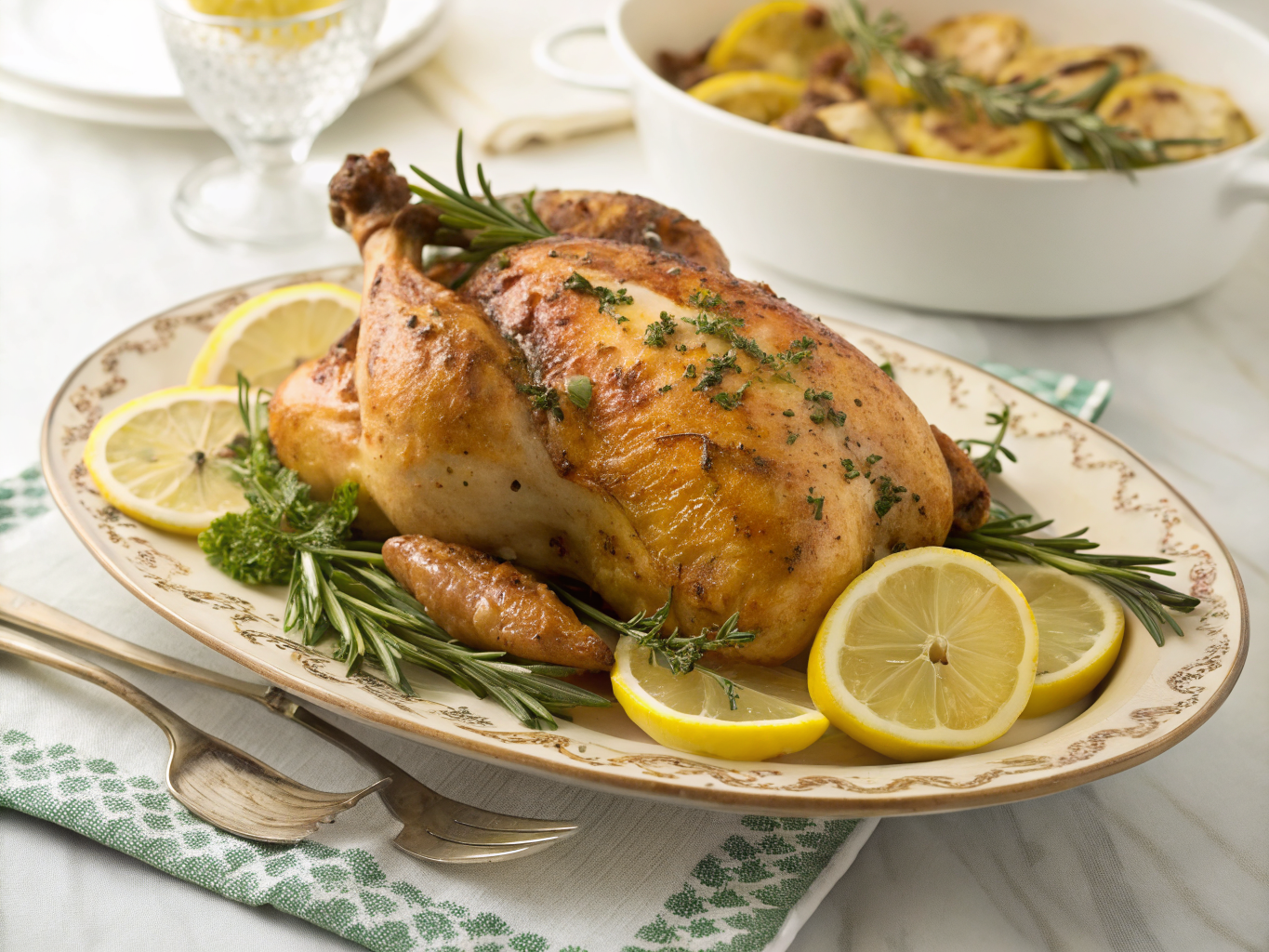
Lemon Herb Roasted Chicken
Ingredients
Method
- Preheat oven to 400°F (200°C). Pat the chicken dry thoroughly with paper towels. This helps achieve crispy skin.
- In a small bowl, combine olive oil, chopped rosemary, thyme, garlic powder, onion powder, salt, and pepper. Rub this mixture all over the chicken, including under the skin if desired.
- Place lemon wedges inside the cavity of the chicken. You can also place some around the chicken in the roasting pan.
- Place the chicken in a roasting pan or a cast-iron skillet. Roast for 60-75 minutes, or until the internal temperature reaches 165°F (74°C) in the thickest part of the thigh, without touching the bone.
- Once cooked, remove the chicken from the oven and tent it loosely with foil. Let it rest for 10-15 minutes before carving. This allows the juices to redistribute, resulting in a more tender and flavorful chicken.
Nutrition
Notes
Tried this recipe?
Let us know how it was!There are few dishes as consistently satisfying and universally loved as a perfectly cooked whole roasted chicken. But take that simple concept, infuse it with bright, zesty lemon and an aromatic medley of herbs, and you elevate it to an entirely new level. Lemon Herb Roasted Chicken isn’t just a meal; it’s an experience – a golden-brown masterpiece with crispy skin, incredibly juicy meat, and a fragrance that will make your kitchen the envy of the neighborhood. This dish is surprisingly easy to master, making it a go-to for weeknight dinners and special occasions alike.
Why Lemon Herb Roasted Chicken Reigns Supreme in Dinner Recipes
When it comes to dinner recipes, versatility and flavor are key. Lemon Herb Roasted Chicken delivers on both fronts, offering a meal that feels both comforting and sophisticated. The magic truly lies in the synergistic blend of simple, fresh ingredients that transform an ordinary chicken into something extraordinary.
The acidity from the lemon tenderizes the meat, while the herbs impart a deep, complex flavor that permeates every bite. Roasting at the right temperature ensures that coveted crispy skin, creating a delightful textural contrast with the succulent interior. This dish is also incredibly adaptable, pairing beautifully with a wide array of side dishes, from roasted vegetables to creamy mashed potatoes or a light, fresh salad.
The Culinary Journey: From Farm to Flavorful Feast
Our journey to the perfect Lemon Herb Roasted Chicken begins with understanding the core components. Each ingredient plays a crucial role, contributing to the overall success of the dish. Selecting high-quality, fresh ingredients is paramount to achieving the vibrant flavors we’re aiming for.
This recipe celebrates simplicity and the natural goodness of wholesome foods. It’s a testament to how fundamental techniques, combined with thoughtful flavor pairings, can yield incredibly impressive results. Let’s dive into what makes this dish truly special.
Unveiling the Core Ingredients for Your Masterpiece
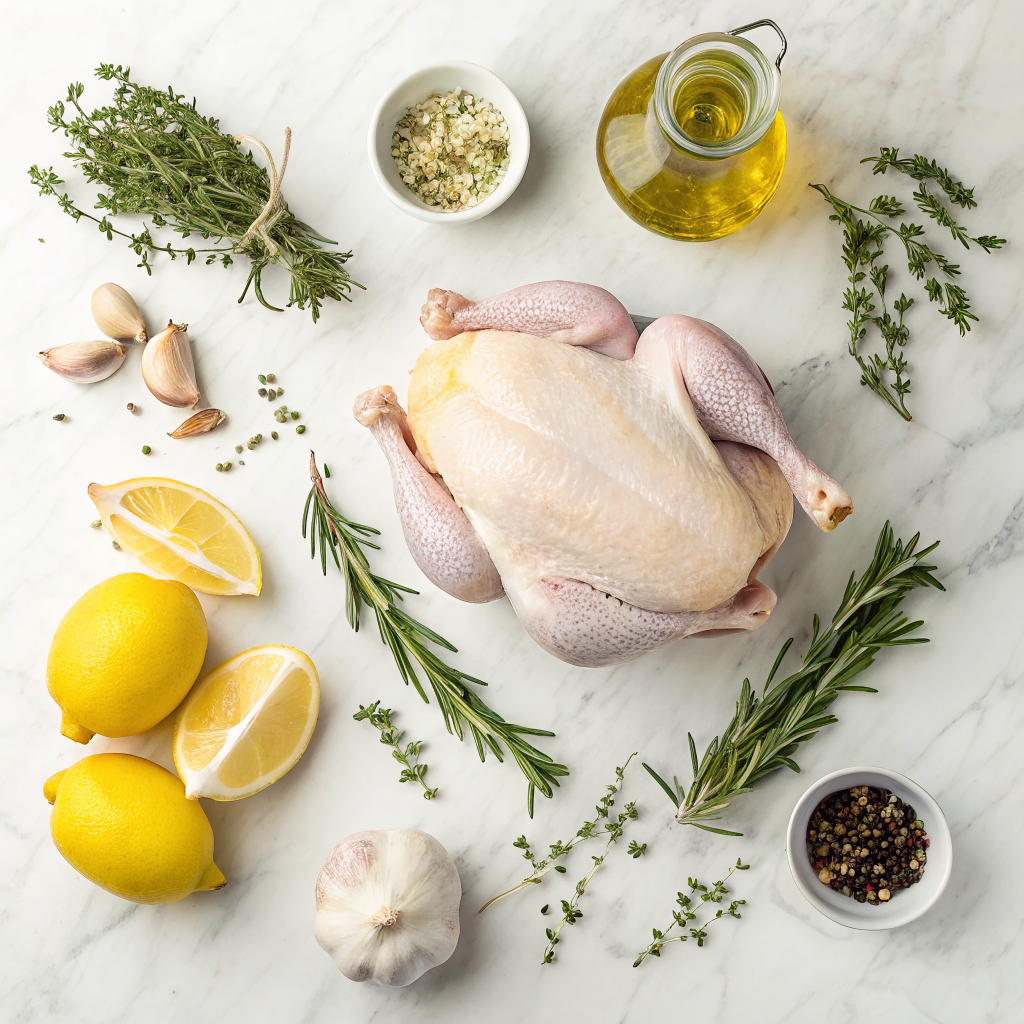
The beauty of this Lemon Herb Roasted Chicken recipe lies in its relatively short and accessible ingredient list. Each component works in harmony to build layers of flavor. Quality ingredients are your best friends here.
- Whole Chicken: Opt for a 3-4 pound (1.4-1.8 kg) whole chicken.
- Lemons: Fresh lemons are non-negotiable for their zest and juice.
- Fresh Herbs: Rosemary, thyme, and oregano are the classic trio.
- Garlic: Whole cloves, smashed, add depth and aroma.
- Olive Oil: Extra virgin olive oil for flavor and crisping.
- Butter: Unsalted butter, melted, helps with browning and texture.
- Salt: Kosher salt or sea salt, generously applied.
- Black Pepper: Freshly ground black pepper for a subtle kick.
These ingredients, seemingly simple, form the foundation of an unforgettable meal. Don’t skimp on freshness; it truly makes all the difference.
Equipment Essentials: Tools for Roasting Success
While you don’t need a professional kitchen, having the right tools can make the roasting process smoother and more enjoyable. These items are commonly found in most home kitchens.
- Roasting Pan with Rack: Essential for even cooking and crispy skin.
- Large Bowl: For mixing the herb butter.
- Small Bowl: For lemon juice and zest.
- Basting Brush: For applying the herb butter.
- Kitchen Twine: For trussing the chicken (optional, but recommended).
- Meat Thermometer: The ultimate tool for ensuring doneness.
- Sharp Knife: For carving the finished chicken.
- Cutting Board: A sturdy surface for prep work.
Investing in a good quality meat thermometer will save you from undercooked or overcooked chicken, guaranteeing perfect results every time. It’s truly a game-changer for poultry.
Step-by-Step Guide: Crafting Your Lemon Herb Roasted Chicken
Follow these detailed steps to achieve a mouthwatering Lemon Herb Roasted Chicken. Precision and a little patience will be rewarded with incredible flavor.
- Prepare the Chicken: Unpack the chicken, remove any giblets or neck from the cavity, and pat it thoroughly dry with paper towels. This step is crucial for crispy skin. Place the chicken on a clean cutting board.
- Make the Herb Butter: In a small bowl, combine the softened unsalted butter, finely chopped fresh rosemary, thyme, and oregano. Add the minced garlic, lemon zest from one lemon, a generous pinch of salt, and freshly ground black pepper. Mix until well combined.
- Season the Chicken: Gently separate the skin from the breast meat using your fingers, being careful not to tear it. Spoon about half of the herb butter mixture under the skin, spreading it evenly over the breast and thigh meat. This infuses incredible flavor and moisture directly into the meat.
- External Seasoning: Rub the remaining herb butter all over the exterior of the chicken, ensuring it’s evenly coated. Season the entire chicken generously with additional salt and black pepper. Don’t forget to season the cavity as well.
- Stuff the Cavity: Place the halved lemons (from which you zested), remaining herb sprigs, and smashed garlic cloves into the chicken cavity. This adds internal aroma and moisture during roasting.
- Truss (Optional but Recommended): Tie the chicken legs together with kitchen twine and tuck the wing tips under the breast. Trussing ensures a more compact shape for even cooking and better presentation. Learn more about trussing a chicken here.
- Preheat Oven & Prepare Pan: Preheat your oven to 400°F (200°C). Place the chicken in a roasting pan fitted with a rack. If you don’t have a rack, you can create one with chopped onions, carrots, or celery to elevate the chicken.
- Roast the Chicken: Roast for 60-90 minutes, or until a meat thermometer inserted into the thickest part of the thigh (without touching bone) registers 165°F (74°C). For the crispiest skin, you can increase the oven temperature to 425°F (220°C) for the last 10-15 minutes, but watch it carefully to prevent burning.
- Basting (Optional): You can baste the chicken every 20-30 minutes with the pan juices for added flavor and moisture, though it’s not strictly necessary for a juicy bird.
- Rest the Chicken: Once cooked, remove the chicken from the oven and transfer it to a cutting board. Tent it loosely with foil and let it rest for at least 15-20 minutes before carving. Resting allows the juices to redistribute, resulting in a more tender and moist chicken.
- Carve and Serve: Carve the chicken and serve immediately with the pan juices.
Expert Tips for Roasting Success: Elevate Your Game
Achieving roasted chicken perfection involves a few key details. These tips will help you consistently produce a moist chicken with beautifully crispy skin.
- Start with a Dry Bird: Excess moisture on the skin is the enemy of crispiness. Pat your chicken thoroughly dry, inside and out, with paper towels. You can even leave it uncovered in the fridge for a few hours or overnight to further dry the skin.
- Don’t Be Shy with Seasoning: Chicken can handle a lot of salt and pepper. Season generously, both under and over the skin.
- Room Temperature Chicken: Let your chicken sit out for about 30 minutes before roasting. Starting with a room-temperature bird promotes more even cooking.
- Trussing Matters: Trussing creates a more compact shape, ensuring the breast and thigh cook at a similar rate, preventing the breast from drying out.
- Use a Roasting Rack: Elevating the chicken allows air to circulate around it, ensuring crispy skin all around, not just on top.
- Probe Thermometer is Your Friend: This is the most crucial tip. Invest in a good instant-read meat thermometer. Visual cues are unreliable; internal temperature is the only way to guarantee safety and doneness.
- Rest, Rest, Rest: Post-roast resting is non-negotiable. It allows the muscle fibers to relax and reabsorb juices, making for a much juicier chicken. Don’t rush this step.
- High Heat Start (Optional): Some chefs prefer to start at a higher temperature (e.g., 425°F / 220°C) for 15-20 minutes, then lower it to 375°F (190°C) for the remainder of the cooking. This can help achieve extra crispy skin.
- Don’t Overcrowd the Pan: Give the chicken space in the roasting pan to ensure good airflow.
- Save the Pan Drippings: Those flavorful drippings are liquid gold! Use them to make a quick pan sauce or gravy, or simply spoon them over the carved chicken.
Flavorful Variations: Beyond the Classic Lemon Herb
While the classic Lemon Herb Roasted Chicken is undeniably delicious, don’t hesitate to experiment with other flavor profiles. The basic technique remains the same, allowing for endless culinary creativity.
- Spicy Kick: Add a pinch of red pepper flakes to your herb butter or a dash of cayenne pepper for a subtle heat.
- Mediterranean Twist: Incorporate sun-dried tomatoes, Kalamata olives, and a sprinkle of dried oregano into the cavity or butter.
- Smoky Paprika: Mix sweet or smoked paprika into your herb butter for a rich, earthy flavor and beautiful color. This pairs wonderfully with a hint of onion powder.
- Garlic Lover’s Dream: Increase the garlic cloves significantly, mincing some and leaving others whole in the cavity. You can even roast whole heads of garlic alongside the chicken.
- Mustard Rub: Instead of olive oil, try rubbing the chicken with Dijon mustard before applying the herb mixture. The mustard adds a tangy depth and helps to crisp the skin.
- Citrus Swap: Experiment with oranges or limes in place of or in addition to lemons for a different citrus note.
- Asian Inspired: Incorporate ginger, soy sauce, a touch of honey, and five-spice powder for an exciting departure from the traditional.
The beauty of roasting a whole chicken is its forgiving nature. Feel free to play with the spices and aromatics that appeal most to your palate.
Perfect Pairings: What to Serve with Your Roasted Chicken
A magnificent Lemon Herb Roasted Chicken deserves equally delicious companions. These side dishes will complete your meal and create a truly memorable dining experience.
- Roasted Root Vegetables: Carrots, potatoes, parsnips, and sweet potatoes roasted alongside the chicken or in a separate pan soak up the pan juices and become incredibly flavorful.
- Creamy Mashed Potatoes: A classic for a reason, fluffy mashed potatoes provide a comforting contrast to the savory chicken.
- Green Bean Almondine: Lightly blanched green beans tossed with toasted almonds and a touch of butter add freshness and texture.
- Simple Green Salad: A crisp green salad with a vinaigrette dressing cuts through the richness of the chicken and provides a refreshing counterpoint. Check out this collection of healthy salad recipes.
- Wild Mushroom Risotto: For a more indulgent meal, a creamy mushroom risotto is an excellent choice.
- Couscous or Quinoa: Light and fluffy grains are perfect for soaking up all those delicious pan juices.
- Crusty Bread: Don’t forget a good loaf of crusty bread to sop up every last drop of the flavorful juices.
Nutritional Highlights: More Than Just Delicious
Beyond its incredible taste, Lemon Herb Roasted Chicken offers significant nutritional benefits, making it an excellent choice for a balanced diet. Here’s a brief look at what this dish brings to the table.
- Protein Powerhouse: Chicken is an excellent source of lean protein, essential for muscle repair, growth, and overall body function. Eating enough protein helps you feel full and satisfied. Read more about the health benefits of protein.
- Vitamin and Mineral Rich: Chicken provides essential B vitamins (Niacin, B6, B12), phosphorus, and selenium. These nutrients support energy metabolism, nerve function, and immune health.
- Healthy Fats (in moderation): While chicken skin contains fat, the meat itself is relatively lean, especially the breast. The olive oil adds healthy monounsaturated fats.
- Antioxidants from Herbs: Rosemary, thyme, and oregano are packed with antioxidants and anti-inflammatory compounds, contributing to overall health. Discover the power of herbs.
- Vitamin C from Lemon: Lemons boost the flavor and provide a good dose of Vitamin C, an important antioxidant and immune booster.
Choosing lean cuts and removing skin if desired can further reduce fat content, but a little crispy skin is often considered a delicious indulgence in moderation. This dish offers a wholesome and satisfying meal that can be incorporated into a variety of dietary plans.
Storage and Reheating: Enjoying Leftovers
Leftover Lemon Herb Roasted Chicken is just as delicious and versatile as the freshly cooked meal. Proper storage and reheating ensure safety and maintain flavor.
- Storage: Allow the chicken to cool completely (within 2 hours of cooking). Remove the meat from the bones and store it in an airtight container in the refrigerator for up to 3-4 days.
- Reheating in the Oven: For best results, reheat carved chicken in an oven preheated to 300°F (150°C). Place the chicken in an oven-safe dish with a splash of chicken broth or water, cover with foil, and heat until warmed through (about 15-20 minutes).
- Reheating in the Microwave: While convenient, the microwave can sometimes dry out chicken. Heat in short intervals (30-60 seconds) until just warmed through, stirring occasionally.
- Serving Cold: Leftover chicken is fantastic cold in sandwiches, salads, or wraps. It’s a great meal prep option. Explore more quick chicken recipes.
Never leave cooked chicken at room temperature for longer than 2 hours to prevent bacterial growth. Proper handling ensures continued enjoyment of your delicious leftovers.
Chef’s Note: The Magic of Dry Brining
For an exceptionally juicy and flavorful chicken with incredibly crispy skin, consider dry brining. Pat the chicken thoroughly dry, then generously rub it all over with kosher salt (about 1 tablespoon for a 3-4 lb bird). Place it on a rack in a baking sheet, uncovered, in the refrigerator for 12-24 hours. The salt draws out moisture, then reabsorbs it, tenderizing the meat and enhancing flavor, while the air circulation further dries the skin for ultimate crispiness. Rinse lightly before proceeding with the recipe.
Lemon Herb Roasted Chicken FAQs
Q: My chicken skin isn’t crispy. What went wrong?
A: The most common culprits are insufficient drying of the chicken skin before roasting, not using a roasting rack, or roasting at too low a temperature for too long. Ensure the chicken is bone-dry and elevated. You can also finish with a blast of high heat (425-450°F) for the last 10-15 minutes.
Q: How do I prevent the chicken breast from drying out?
A: Several strategies help:
- Rubbing herb butter under the skin.
- Trussing the chicken for even cooking.
- Not overcooking – use a meat thermometer!
- Resting the chicken adequately after roasting.
These combined efforts will yield a juicy breast.
Q: Can I use dried herbs instead of fresh?
A: Yes, but the flavor will be less vibrant. Use about one-third the amount of dried herbs compared to fresh (e.g., 1 tsp dried for every 1 tbsp fresh). Fresh herbs are highly recommended for this recipe’s intended flavor profile.
Q: What if I don’t have a roasting rack?
A: You can create a makeshift rack by layering thick slices of onion, carrot, or celery at the bottom of the roasting pan. This elevates the chicken and adds flavor to the pan drippings.
Q: How do I know when the chicken is fully cooked?
A: The only reliable way is to use a meat thermometer. Insert it into the thickest part of the thigh, avoiding the bone. The chicken is done when it reaches an internal temperature of 165°F (74°C). The juices should also run clear when punctured.
Q: Can I prepare the chicken ahead of time?
A: You can prepare the chicken up to the point of roasting (herb butter rub, stuffing, trussing) and refrigerate it for up to 24 hours. Let it come to room temperature for about 30 minutes before roasting for best results.
Q: How much salt should I use?
A: For a 3-4 pound chicken, start with about 1.5 to 2 teaspoons of kosher salt liberally rubbed over and under the skin, plus a pinch for the cavity. Adjust to your taste, remembering that roasting benefits from generous seasoning.
Q: My pan drippings are burning. What should I do?
A: If the drippings are burning, you can add a splash of water, chicken broth, or white wine to the bottom of the pan to deglaze it and prevent scorching. This also helps create a flavorful base for a sauce.
Q: Is it better to roast breast-side up or down?
A: Most recipes call for breast-side up, as this allows the skin to crisp and brown beautifully. Some argue that starting breast-side down helps keep the breast meat juicier, but then you would need to flip it, which can be tricky with a hot bird. A properly trussed and seasoned chicken roasted breast-side up with adequate resting will yield a juicy result.
Q: Can I add vegetables to the roasting pan with the chicken?
A: Absolutely! This is a fantastic way to cook a complete meal in one pan. Diced potatoes, carrots, onions, and bell peppers tossed with a little olive oil, salt, and pepper can be added to the bottom of the pan around the chicken. They will cook in the chicken drippings and become incredibly flavorful.
